Navigation
Install the app
How to install the app on iOS
Follow along with the video below to see how to install our site as a web app on your home screen.
Note: This feature may not be available in some browsers.
More options
Style variation
You are using an out of date browser. It may not display this or other websites correctly.
You should upgrade or use an alternative browser.
You should upgrade or use an alternative browser.
Made in KSA
- Thread starter The SC
- Start date
More options
Who Replied?

The SC
INT'L MOD
- Thread starter
- #1,232
Saudi Arabia's Shield of Life Company
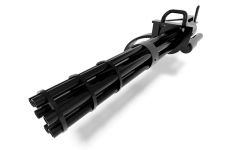
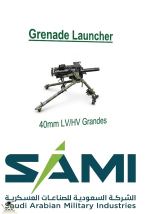
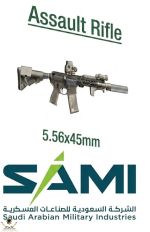
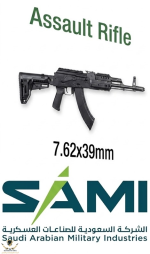
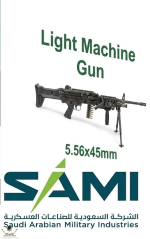
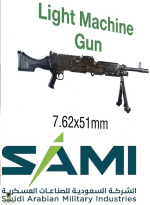
The LS 556 is a compact, lightweight NATO 5.56×45mm rotary weapon system designed for rapid response scenarios where mobility and firepower are critical. Offering rates of fire ranging from 2,000 to 2,500 rounds per minute, the LS 556 is optimized for integration with light vehicles, airborne platforms, and tactical outposts. Its low weight, high reliability, and user-friendly interface make it a suitable choice for armed forces seeking to enhance close- to medium-range firepower. Constructed with military-grade materials, it balances lethality and efficiency for fast-moving combat situations and urban warfare environments.
The SC
INT'L MOD
- Thread starter
- #1,238
SAMI and L3Harris Partner to Manufacture Thousands of Military Radios in Saudi Arabia and Expand into Artificial Intelligence
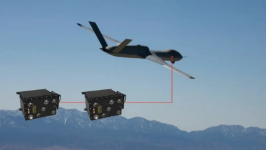
Arab Defense Website – November 18, 2026: The partnership between the Saudi Arabian Military Industries Company (SAMI) and the American company L3Harris Technologies is entering a new phase of localizing defense industries, following the transition from supplying systems to local manufacturing, engineering development, and maintenance within the Kingdom of Saudi Arabia.
The collaboration has already resulted in the establishment of a Saudi production line for military communications and radio systems, which has successfully delivered thousands of devices to the Saudi Ministry of Defense. The partnership is now focused on expanding manufacturing and technology transfer to include artificial intelligence (AI) applications, command, control, communications, computers, intelligence, surveillance, and reconnaissance (C4ISR) solutions.
The areas of cooperation include a range of defense technologies, most notably software-defined tactical radio and communications (SDR) systems. These systems have already entered the local manufacturing phase in Saudi Arabia, although no official announcement has been made regarding the specific models being produced within the Kingdom.
The cooperation also encompasses WESCAM MX systems for electro-optical/infrared (EO/IR) surveillance, reconnaissance, and targeting. These multi-sensor systems include the MX-8, MX-10, MX-15, MX-20, and MX-25 models, designed for air, land, and sea platforms.
The products also include the WESCAM MX-15D RSTA system for reconnaissance, surveillance, and target acquisition. This system can be integrated onto combat, reconnaissance, and amphibious vehicles, offering multispectral imaging capabilities and day/night operation. Furthermore, the cooperation includes flexible communications and networking solutions, mission and sensing systems, missile defense, and technologies operating across air, land, sea, space, and cyber domains.
On August 28, 2023, SAMI inaugurated its Software-Defined Radio (SDR) production line at the Advanced Electronics Company (AEC) factory, in partnership with the Ministry of Defense, represented by the Royal Saudi Land Forces, and with the support of the General Authority for Military Industries (GAMI), in collaboration with SAMI L3Harris Technologies and L3Harris Technologies of the United States.
The inauguration of the line marked a practical transition from the stage of agreements and technology transfer to production within the Kingdom. The local manufacturing line has successfully delivered several thousand radios to the Saudi Ministry of Defense.
The collaboration extended beyond device manufacturing to include radio wave development and the execution of engineering activities within Saudi Arabia, supporting the development of national capabilities in military communications technologies.
The partnership also expanded to include electro-optical and thermal (EO/IR) sensing technologies and special mission systems, in addition to the establishment of an authorized maintenance, repair, and overhaul (MRO) center within the Kingdom for WESCAM multi-sensor systems, making Saudi Arabia one of only 10 countries to host such an authorized center.
The next stage is to expand the scope of local manufacturing and development to include artificial intelligence applications and C4ISR systems, opening the way for developing Saudi capabilities in military communications, sensing, command and control.
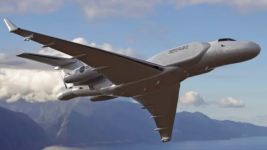
L3Harris Technologies, a leading American defense and military electronics company, boasts a broad portfolio of products and technologies spanning air, land, sea, space, and cyber domains. Its activities extend beyond manufacturing military equipment to include the development of communications, command and control, reconnaissance, electronic warfare, and missile defense systems.
Among its most prominent products are tactical radio and communications systems, including the Falcon III and Falcon IV families, which provide secure, jam-resistant voice and data communications. The company also develops Link 16 tactical data exchange systems, used to connect aircraft, ships, and military units for field information sharing. Furthermore, L3Harris develops multi-channel radios such as the AN/PRC-163, as well as satellite communication solutions and military networks.
In the field of reconnaissance and targeting, the company is renowned for its WESCAM MX series, which includes multi-sensor electro-optical and thermal imaging systems such as the MX-10, MX-15, MX-20, and MX-25, designed for aircraft, helicopters, drones, and maritime and land-based platforms. These systems provide thermal and daytime imaging capabilities, target acquisition, and target tracking and positioning, supporting intelligence, surveillance, and reconnaissance (ISR) missions.
In the field of electronic warfare, L3Harris develops advanced systems such as the Viper Shield AN/ALQ-254, designed to protect F-16 fighter jets from radar and missile threats by detecting and analyzing threats and providing electronic countermeasures and jamming. Its products also include CORVUS electronic warfare systems, Signal Detection, Analysis, and Electronic Intelligence (SIGINT) technologies, and counter-drone systems.
In the field of air and missile defense, the company is involved in the development and production of components and systems related to missile interception, including rocket propulsion systems for PAC-3 MSE missile engines and GMLRS rocket engines. It also contributes to US missile defense programs, including THAAD and advanced missile interception programs.
The company's portfolio also includes night vision and thermal imaging systems, such as ENVG-B night vision goggles, sensor and radar systems, jam-resistant navigation and positioning equipment, aircraft control and mission systems, and electronics for ships and submarines.
In the maritime sector, the company develops autonomous underwater vehicles, maritime sonar and communication systems, and ship management, power, and control systems. Its space activities include satellite communication technologies, missile early warning systems, and space-based sensing.
L3Harris also develops autonomous systems, artificial intelligence, and data processing solutions, along with Modular Open Systems Architecture (MOSA) technologies, which enable the integration and modernization of hardware and software from different vendors without requiring a complete system redesign.
The company's product portfolio spans from military radios and optical sensors to electronic warfare, missile defense, and space communications systems, making it a supplier of a wide range of technologies and components used in equipping fighter jets, ships, submarines, military vehicles, and unmanned aerial vehicles.
The SC
INT'L MOD
- Thread starter
- #1,239
Saudi Arabia is interested in the Turkish "Korkut 25 mm" system.
Localization of manufacturing and transfer of technology on the table
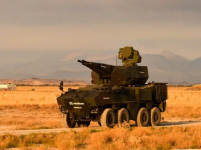
The system provides short-range, mobile air defense capabilities, with a particular focus on countering small and micro-drones, using a 25mm gun and ATOM aerial blast munitions.
Localization of manufacturing and transfer of technology on the table
The system provides short-range, mobile air defense capabilities, with a particular focus on countering small and micro-drones, using a 25mm gun and ATOM aerial blast munitions.
The SC
INT'L MOD
- Thread starter
- #1,240
Saudi Arabia aims to manufacture more than 70% of the components of the American Paveway II Plus bombs locally
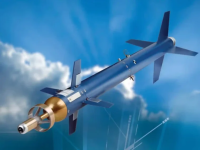
The Kingdom of Saudi Arabia continues its efforts to localize the manufacture of precision air munitions, through a project to jointly manufacture components of the Paveway II Plus laser guidance system, in cooperation with the American company "Lockheed Martin", and with the participation of the Saudi company "Wahaj", with the goal of exceeding 70% of the local content when the project reaches its full operational capacity.
The Paveway II Plus is a laser guidance system developed by Lockheed Martin that aims to convert conventional unguided bombs into precision air-to-ground munitions by adding a semi-active laser seeker, control unit and guidance ailerons, allowing for improved target hit accuracy.
The project focuses on the local manufacturing of tail assemblies and mechanical components for guidance units, a move aimed at technology transfer and developing national expertise in the production of precision-guided munitions. According to Lockheed Martin, which announced the agreement, the project aims to achieve a localization rate exceeding 70% when operating at full production capacity. This is a target, not a publicly announced actual achievement.
The Paveway II Plus system includes a semi-active laser target seeker, a field-programmable computer control unit, pneumatically controlled fins, and extendable tail wings for lift and stability during flight. It also features flexible armament and can be integrated with multiple Paveway II family configurations, including Mark 80 bombs and BLU-109 bunker-buster munitions.
The project represents an important step in Saudi Arabia's efforts to develop its defense industries, as it combines technology transfer, joint manufacturing, and the development of national capabilities, which enhances the independence of military supply chains and reduces dependence on imports in the field of precision air munitions.
The SC
INT'L MOD
- Thread starter
- #1,241
SAMI Thales Electronic Systems begins. Saudi-French partnership to localize 70% of defense electronics technologies within the Kingdom..including Air defense systems and radars ..
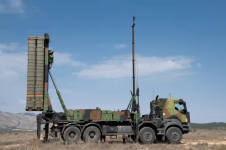
In its efforts to accelerate the localization of military industries and the transfer of advanced defense technologies, the Kingdom of Saudi Arabia is developing strategic partnerships with major global defense companies, including the French Thales Group, through the joint venture SAMI Thales Electronic Systems (STES) with the Saudi Arabian Military Industries Company (SAMI). The project aims to localize up to 70% of the technologies and related activities within the Kingdom, while building national capabilities in the manufacturing and development of radars, air defense systems, military communications, and command and control systems. This step enhances the independence of the Saudi defense sector and supports its ambitions to become a regional hub for advanced military industries.
The SAMI Thales Electronic Systems (STES) project represents one of the most prominent defense industrial cooperation projects between the Kingdom of Saudi Arabia and France. It brings together the Saudi Arabian Military Industries Company (SAMI) and the French Thales Group, with the goal of building national capabilities in the field of defense electronics, transferring advanced technologies, and developing local manufacturing.
The scope of cooperation covers a wide range of defense technologies, including short-range air defense radars, anti-missile systems, command and control (C2) systems, multi-mission missiles, guided bomb fuses, and interconnection systems. It also includes investment in industrial facilities and equipment within the Kingdom, supporting the development of a specialized national industrial base for military electronics.
The project's activities extend to several advanced defense sectors, most notably air defense systems, radars and surveillance, electro-optical systems, military communications, airborne command, control, intelligence, surveillance, and reconnaissance (C4ISR) systems, as well as weapon fuses and sonar technologies.
The SC
INT'L MOD
- Thread starter
- #1,242
Vector Introduces BOMBARD Long-Range Strike System
Vector unveils BOMBARD, a jet-powered, long-range precision strike system designed to deliver scalable, affordable unmanned capabilities for modern warfare.
 www.tfvector.com
The SC
INT'L MOD
- Thread starter
- #1,244
Wing Long 3 Saudi Arabia: What are the details of the Chinese drone factory in Jeddah?
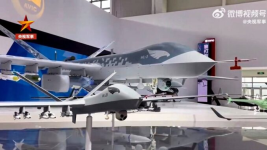
Reports indicate that China and Saudi Arabia have signed a $5 billion agreement to establish an assembly line for the Wing Loong-3 combat drone in Jeddah, a move that shifts cooperation between the two countries from arms procurement to joint manufacturing. The reported agreement links the Aviation Industry Corporation of China (AVIC) and the Saudi General Authority for Military Industries (GAMI), but has not been officially confirmed by either Beijing or Riyadh.
Key Information
Reported value of the agreement: $5 billion
Production: Approximately 48 aircraft per year in Jeddah
Range: Over 10,000 km
Endurance: At least 40 hours
Maximum payload: 2,300 kg
Maximum number of missiles or bombs: 16
From arms procurement to local manufacturing
According to a report by Defense Security Asia published in March 2026, the agreement will enable the production of approximately 48 long-range combat drones annually within Saudi Arabia. It also includes integrating avionics systems, building a maintenance infrastructure, and developing training programs for Saudi personnel.
The report suggests that the program, if confirmed, reflects a shift in Saudi Arabia's force development priorities, combining the deployment of long-endurance attack drones with the development of a local manufacturing capacity. This could expand Riyadh's ability to monitor and strike targets over the Red Sea and the Gulf, amid regional tensions involving Iran.
The project is linked to Vision 2030, which aims to localize approximately 50% of military production by the end of the decade, as part of the Kingdom's ongoing efforts to localize its military industries. The lack of official confirmation leaves the program's details and timeline uncertain, according to the report. Al-Monitor noted in June 2026 that Beijing and Riyadh had not officially confirmed the agreement.
Specifications of the Wing Loong-3: Range exceeding 10,000 kilometers
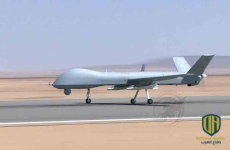
Developed by the Chengdu Aircraft Industry Group, a subsidiary of the Chinese company, it is, according to the report, the largest and most advanced in the Wing Loong family. It belongs to the medium-altitude, long-endurance (MALE) drone class and performs intelligence, surveillance, reconnaissance, and precision strike missions.
It is approximately 12.2 meters long, with a wingspan of 24 meters and a height of about 4.3 meters. Its maximum takeoff weight is approximately 6,200 kilograms. Its declared range exceeds 10,000 kilometers, and its endurance is at least 40 hours, with a cruising speed between 260 and 400 kilometers per hour and a service ceiling of approximately 10,000 meters.
Its sensor suite includes electro-optical and infrared sensors with synthetic aperture radar, enabling day and night surveillance.
Payload capacity: up to 2,300 kilograms and multiple armaments
The aircraft can carry up to 2,300 kilograms of sensors, weapons, and equipment, including approximately 2,000 kilograms externally on nine hardpoints and approximately 300 kilograms internally. It can carry up to 16 missiles or bombs per mission.
According to the report, it is compatible with PL-10E air-to-air missiles, BA-7 or HJ-10 anti-tank missiles, as well as AG-300 missiles and guided bombs.
Desert Endurance and Jamming Resistance
The aircraft utilizes an intelligent identification system that locks onto targets in approximately 0.3 seconds and boasts a 40% improvement in jamming resistance compared to previous systems, according to the report. It also features multi-stage dust protection and enhanced cooling systems that enable operation in temperatures up to 50 degrees Celsius and during sandstorms.
Riyadh selected the aircraft, the report states, after tests involving simulations with over 200 drones to assess accuracy in combat conditions and while flying over mountainous terrain and harsh environments. News24, citing defense reports, indicated that the aircraft demonstrated the ability to strike multiple targets, including radar stations and armored vehicles, within minutes during one exercise.
A Record of Defense Cooperation Between Beijing and Riyadh
Saudi Arabia has been associated with Chinese drones since at least 2016, when it became the first Arab country to acquire aircraft from the Wing Loong family. This was followed by an order for Wing Loong II drones in 2017, a deal that, according to the report, represented China’s largest arms export at the time. In 2022, a joint venture was established with the China Electronics Technology Group (CETG) in the field of drones and counter-drone technology.
Riyadh is diversifying its defense partnerships away from the United States, including joint production arrangements involving Turkish Karayel drones and Chinese CH-4 systems. China showcased several drones at the World Defense Show in Saudi Arabia in February 2026, including the Wing Loong-X anti-submarine version.
The Western advantage remains.
Al-Monitor argues that the war has helped China solidify its role in Gulf defense by offering cheaper, faster, and less restrictive drones. According to the Israeli Institute for National Security Studies, Gulf states accounted for more than 80% of Chinese defense exports to the Middle East between 2016 and 2025, with Saudi Arabia being the largest importer, followed by the UAE and Qatar.
In contrast, drone expert Seth Frantzman argues that large Chinese drones have often failed to live up to expectations in challenging desert environments. His analysis cites a 2019 US Inspector General report that found only one in ten CH-4 drones deployed in Iraq was operational due to maintenance issues. He concludes that Gulf militaries remain reliant on US and Western systems for their long-term security, and that Chinese technology is currently being used as a complement, not a replacement.
Some analysts interpret this expansion as a potential challenge to Western dominance of the region's arms markets, within the context of China's drone diplomacy, through which it is reshaping Middle Eastern security. For more information on the Kingdom’s armament, see the Saudi military strength: armament, air, land and naval forces.
Reports indicate that China and Saudi Arabia have signed a $5 billion agreement to establish an assembly line for the Wing Loong-3 combat drone in Jeddah, a move that shifts cooperation between the two countries from arms procurement to joint manufacturing. The reported agreement links the Aviation Industry Corporation of China (AVIC) and the Saudi General Authority for Military Industries (GAMI), but has not been officially confirmed by either Beijing or Riyadh.
Key Information
Reported value of the agreement: $5 billion
Production: Approximately 48 aircraft per year in Jeddah
Range: Over 10,000 km
Endurance: At least 40 hours
Maximum payload: 2,300 kg
Maximum number of missiles or bombs: 16
From arms procurement to local manufacturing
According to a report by Defense Security Asia published in March 2026, the agreement will enable the production of approximately 48 long-range combat drones annually within Saudi Arabia. It also includes integrating avionics systems, building a maintenance infrastructure, and developing training programs for Saudi personnel.
The report suggests that the program, if confirmed, reflects a shift in Saudi Arabia's force development priorities, combining the deployment of long-endurance attack drones with the development of a local manufacturing capacity. This could expand Riyadh's ability to monitor and strike targets over the Red Sea and the Gulf, amid regional tensions involving Iran.
The project is linked to Vision 2030, which aims to localize approximately 50% of military production by the end of the decade, as part of the Kingdom's ongoing efforts to localize its military industries. The lack of official confirmation leaves the program's details and timeline uncertain, according to the report. Al-Monitor noted in June 2026 that Beijing and Riyadh had not officially confirmed the agreement.
Specifications of the Wing Loong-3: Range exceeding 10,000 kilometers
Developed by the Chengdu Aircraft Industry Group, a subsidiary of the Chinese company, it is, according to the report, the largest and most advanced in the Wing Loong family. It belongs to the medium-altitude, long-endurance (MALE) drone class and performs intelligence, surveillance, reconnaissance, and precision strike missions.
It is approximately 12.2 meters long, with a wingspan of 24 meters and a height of about 4.3 meters. Its maximum takeoff weight is approximately 6,200 kilograms. Its declared range exceeds 10,000 kilometers, and its endurance is at least 40 hours, with a cruising speed between 260 and 400 kilometers per hour and a service ceiling of approximately 10,000 meters.
Its sensor suite includes electro-optical and infrared sensors with synthetic aperture radar, enabling day and night surveillance.
Payload capacity: up to 2,300 kilograms and multiple armaments
The aircraft can carry up to 2,300 kilograms of sensors, weapons, and equipment, including approximately 2,000 kilograms externally on nine hardpoints and approximately 300 kilograms internally. It can carry up to 16 missiles or bombs per mission.
According to the report, it is compatible with PL-10E air-to-air missiles, BA-7 or HJ-10 anti-tank missiles, as well as AG-300 missiles and guided bombs.
Desert Endurance and Jamming Resistance
The aircraft utilizes an intelligent identification system that locks onto targets in approximately 0.3 seconds and boasts a 40% improvement in jamming resistance compared to previous systems, according to the report. It also features multi-stage dust protection and enhanced cooling systems that enable operation in temperatures up to 50 degrees Celsius and during sandstorms.
Riyadh selected the aircraft, the report states, after tests involving simulations with over 200 drones to assess accuracy in combat conditions and while flying over mountainous terrain and harsh environments. News24, citing defense reports, indicated that the aircraft demonstrated the ability to strike multiple targets, including radar stations and armored vehicles, within minutes during one exercise.
A Record of Defense Cooperation Between Beijing and Riyadh
Saudi Arabia has been associated with Chinese drones since at least 2016, when it became the first Arab country to acquire aircraft from the Wing Loong family. This was followed by an order for Wing Loong II drones in 2017, a deal that, according to the report, represented China’s largest arms export at the time. In 2022, a joint venture was established with the China Electronics Technology Group (CETG) in the field of drones and counter-drone technology.
Riyadh is diversifying its defense partnerships away from the United States, including joint production arrangements involving Turkish Karayel drones and Chinese CH-4 systems. China showcased several drones at the World Defense Show in Saudi Arabia in February 2026, including the Wing Loong-X anti-submarine version.
The Western advantage remains.
Al-Monitor argues that the war has helped China solidify its role in Gulf defense by offering cheaper, faster, and less restrictive drones. According to the Israeli Institute for National Security Studies, Gulf states accounted for more than 80% of Chinese defense exports to the Middle East between 2016 and 2025, with Saudi Arabia being the largest importer, followed by the UAE and Qatar.
In contrast, drone expert Seth Frantzman argues that large Chinese drones have often failed to live up to expectations in challenging desert environments. His analysis cites a 2019 US Inspector General report that found only one in ten CH-4 drones deployed in Iraq was operational due to maintenance issues. He concludes that Gulf militaries remain reliant on US and Western systems for their long-term security, and that Chinese technology is currently being used as a complement, not a replacement.
Some analysts interpret this expansion as a potential challenge to Western dominance of the region's arms markets, within the context of China's drone diplomacy, through which it is reshaping Middle Eastern security. For more information on the Kingdom’s armament, see the Saudi military strength: armament, air, land and naval forces.
The SC
INT'L MOD
- Thread starter
- #1,245
Saudi Arabia is moving to localize the construction of South Korean heavy frigates HDF-6000 in Ras Al-Khair
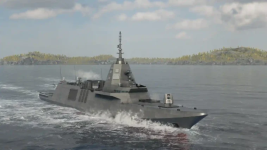
Saudi Arabia is moving towards localizing the construction of South Korean HDF-6000 heavy combat frigates at Ras Al-Khair, as part of an industrial project aimed at transferring naval shipbuilding capabilities from the hull manufacturing stage to the production of engines, components, support systems, and maintenance within the Kingdom.
South Korea’s HD Hyundai Heavy Industries is competing to win the Royal Saudi Navy’s program to supply five heavy combat frigates, valued at more than 3 trillion South Korean won, with a bid that includes technology transfer and local manufacturing. The company faces competition from major European companies, including France’s Naval Group, Spain’s Navantia, and Italy’s Fincantieri, in addition to interest from Germany’s TKMS.
A Saudi-Korean Partnership to Localize Industry
As part of this initiative, Hyundai and Saudi Arabia’s Makin signed a memorandum of understanding in July 2026 to localize the technologies for the new-generation frigate engines. Under the agreement, the Korean company will design the ships, develop propulsion technologies, and transfer industrial knowledge, while Makin will provide the production infrastructure, facilities, and national workforce in Ras Al-Khair. The plan includes a feasibility study for building the first frigate in South Korea, with subsequent shipbuilding operations to be transferred to the International Maritime Industries (IMI) shipyard. This will be accompanied by a gradual expansion of local manufacturing within the program, which encompasses five frigates.
The cooperation extends beyond hulls and engines to include local components, equipment, and suppliers. It also involves establishing an industrial supply chain in collaboration with the Ministry of Investment and 12 Korean companies, including LIG Nex1 and STX Engine. Furthermore, it encompasses the transfer of maintenance, repair, and overhaul (MRO) capabilities, and the training of Saudi engineers and technicians in manufacturing, operation, and technical support.
The HDF-6000 is a multi-mission frigate designed for long-range naval operations, with a displacement of between 6,000 and 6,500 tons, a length of 139 meters, and a beam of 18.6 meters.
Its design is based on the DDH-II hull and the development expertise of the Korean KDDX project, incorporating radar-evading capabilities, an integrated mast, a helicopter hangar, and a dedicated space for unmanned systems, along with an optional hybrid propulsion system to improve fuel efficiency and reduce noise.
It has a maximum speed of 29 knots and a range of approximately 7,000 nautical miles, with an endurance of up to 45 days at sea without needing to return to port.
Armament and Combat Capabilities
The combat package includes 48 Vertical Launching Stations (VLSs), which can be configured for air defense missiles, ballistic missile interception, and long-range strikes, along with a dual-band C/X multi-function radar for detection, tracking, and engagement management.
The armament also includes eight anti-ship missiles launched from tiltrotor launchers, a 76mm main gun, a 35mm CIWS (Central Intercept System) for close-in weaponry, and two counter-drone systems.
In the area of anti-submarine warfare, the frigate can be equipped with light torpedo launchers, a forward-mounted sonar system, and a towed sonar system at the stern, enabling the detection and countering of underwater threats.
It also features a comprehensive electronic warfare and intelligence suite, including ESM, ECM, ELINT, and COMINT systems, providing early warning, electronic jamming, signal interception, and intelligence gathering capabilities.
At the military level, the HDF-6000 provides a multi-mission heavy naval platform, combining air defense, anti-ship and anti-submarine warfare, counter-drone capabilities, and electronic warfare capabilities, with the ability to conduct long-term maritime operations.
At the industrial level, the significance of the project lies in linking the frigate's design, construction, engine and component production, and maintenance to an integrated Saudi industrial system. This opens the door to developing local capabilities in the field of heavy combat vessels, rather than relying solely on importing ready-made platforms.
Project Development Stages and Partnership
The industrial foundation for this initiative began during the period 2017–2020 with the establishment of the International Maritime Industries (IMI) Company, in partnership with Saudi Aramco, Bahri, HD Korea, and Lamprell, to develop shipbuilding and offshore platform capabilities within the Kingdom.
In February 2026, Hyundai presented the HDF-6000 design in Riyadh and offered the possibility of local construction through IMI, coinciding with the signing of a memorandum of understanding with the Ministry of Investment and 12 Korean companies to develop an industrial supply chain.
In July 2026, a memorandum of understanding was signed with Makin to localize engine technologies and establish a Saudi production base in Ras Al-Khair.
In October 2026, IMI secured contracts to build large vessels, including three oil tankers for Bahri, valued at SAR 1.692 billion, with deliveries scheduled between 2029 and 2030.
These steps mark a new phase in the Kingdom's maritime industry development. The Korean offer goes beyond simply supplying five frigates; it encompasses building a comprehensive production and support system, from hull design and manufacturing to engines, components, and supply chains, culminating in maintenance, repair, and technical training for Saudi personnel throughout the vessels' lifecycle.
Pakistan Defence Latest


Country Watch Latest
-

-
-
-
 Iran Cyber Security and Artificial Intelligence (civilian and military) (7 Viewers)
- Latest: Professor Jiang
-

Latest Posts
-
Former UAE presidential aide's post mocking Pakistan exposes unease over Mecca pact (19 Viewers)
- Latest: Blain2
-
-
 Federal cabinet gives nod to imposition of emergency in KP; summary sent to president (18 Viewers)
- Latest: flyingorca
-
-
