From Brazil to Paris: UAE's EDGE is building a transcontinental defense empire

EDGE is moving in a clear direction in its strategy to develop its capabilities and expand its activities and relations with the region and the world. It is currently adopting a strategy of distributing industrial capabilities outside the borders, then reconnecting them within the UAE in a central base. This is considered a development that goes beyond the importance of individual interim deals, to reveal a radical shift in the way the UAE's industrial power is built in the security and defense sector.
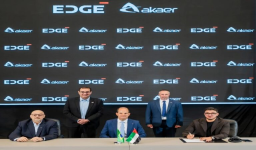
On September 4, 2026, EDGE announced the completion of its acquisition of AKAER, a Brazilian aerospace engineering company. Founded in 1992, AKAER has accumulated over 10 million hours of engineering experience in military and commercial programs, including work on the Gripen NG, Hürjet, Super Tucano, and KC-390, among others. According to EDGE, AKAER boasts a multidisciplinary engineering team covering the entire product lifecycle, from design to industrial manufacturing.
These figures carry strategic significance beyond the purely commercial aspect of the acquisition. Ten million engineering hours represent a timeframe that no country or company can shorten simply by investing in a new factory. The accumulated knowledge in design, testing, troubleshooting, systems integration, and handling the complex requirements of aerospace programs constitutes a significant military asset. This is why EDGE chose to acquire the capability rather than wait for it to be built gradually.
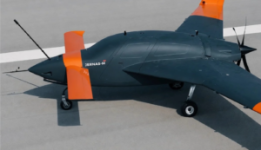
Most importantly, AKAER was not a separate entity from the EDGE Group. The latter announced that the Brazilian company was already working with them on the development and manufacturing of unmanned systems, meaning the acquisition came after testing an existing technical relationship, not as a separate investment venture. The deal also expands EDGE's capabilities in electro-optical and thermal systems, space technologies, and unmanned systems.
The first rules of the new industrial strategy appeared at EDGE, by purchasing ready-made expertise when the time to build it is longer than the time to achieve the requirements of the company's vision, as this expertise requires a long time to acquire, and thus acquiring and annexing it completely becomes an inevitable and unparalleled option.
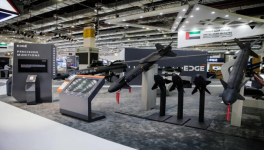
However, EDGE does not follow an acquisition model alone. On June 17, 2026, the group signed a joint venture agreement with Spain's EM&E in the UAE. The project involves a technology transfer that will allow parts of weapons stations to be manufactured within the UAE, while other components will continue to be manufactured in Spain. EDGE says the project's business opportunity portfolio has grown to $1.725 billion.The equation here is different, and the strategy works in several directions. In Brazil, EDGE enters knowledge; in the UAE, it receives technology. In both cases, the result is an expansion of the production and development cycle under one umbrella. Then comes the partnership with Leonardo to add a more sensitive layer. In June, the two companies announced plans for a joint venture to develop, manufacture and market advanced sensor and defence systems, including aerial radars for next-generation platforms, the Kronos Grand Mobile HP radar, combat management systems and multi-mission aircraft sensors. The project has contracts guaranteed for hundreds of millions of euros, with a target portfolio exceeding 4 billion euros over five years.
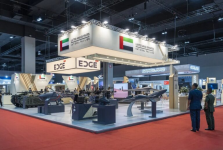
However, this picture shouldn't be interpreted simply as commercial expansion into multiple markets. These steps must be analyzed to understand the true objectives of this strategy. It is undeniably a strategy for building a geographically distributed, diversified, and multi-expert defense value chain, strategically positioned to ensure balanced relationships and markets. This is particularly relevant in an era where military technology has become a gateway to scientific advancement and a key to political, economic, and defense independence. This model gives EDGE an advantage that would be difficult to achieve through purely local expansion. Brazil provides an engineering base and connections within one of the most important air and defense environments in Latin America; Europe grants access to a deep industrial and technological infrastructure; and the UAE provides a hub for financing, integration, production, program management, and access to regional markets.
Further confirming this trend, it became even more pronounced with the launch of EDGE Europe in June 2026, headquartered in Paris and with an engineering and manufacturing facility in Bordeaux. EDGE states that its European presence is also based on investments and partnerships in Estonia, Switzerland, Poland, and Italy, in addition to partnerships with Leonardo, Safran, Fincantieri, and Indra. Crucially, the key elements of this strategy are that knowledge, financing, integration, and industrial decision-making are all concentrated within a system controlled by the group.
From here, it must be taken into consideration that geography is part of power. Industrial capabilities that depend on a single location can be affected by the limitations, restrictions, and geopolitical conditions of that location. The industrial network adopted by EDGE distributes knowledge, supply chains, human resources, markets, and development centers across more than one environment, thus building beyond horizontal expansion. It is an attempt to build strategic industrial depth. The final, most important, and decisive consideration is not measured by the number of companies acquired by EDGE, but by the time required to manufacture the product within critical deadlines. In modern warfare, industrial time has become part of combat power. Therefore, what EDGE buys outside the UAE is not factories or shares in companies; it buys manufacturing time and deadlines for fulfilling the security and defense requirements of its clients.
Report by Colonel M. Zafir Murad


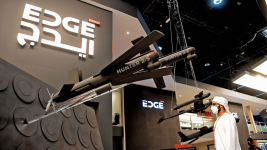

 will collaborate with the UAE's EDGE Defence Group
  to create an integrated air defense network for the UAE, covering long-range and medium-range threats as well as anti-drone defenses.