Made in UAE

85% of Iranian drones that were shot down with Emirati-made weapons. Edge proves to the world that it is a real power​


1781186364596.png

Iran launched 537 ballistic missiles, 26 cruise missiles, and 2,256 drones at the UAE, killing 10 civilians, two members of the UAE armed forces, and a Moroccan civilian contractor working for the army. This was not a hypothetical scenario being run in simulation rooms; It was the most severe test for a defense system that was established only six years ago.

The result was shocking in its positive sense: more than 85% of the Iranian drones that targeted the UAE were neutralized by the “EDGE” group’s systems, while the group’s electronic jamming and geo-fencing capabilities contributed to significantly curbing the extent of the damage.

Executive Director Hamad Al-Marar said in a statement to The National: “All of this was manufactured in the UAE and was deployed in record time. We are very proud that we were prepared in such moments.”

1781186441297.png

Yesterday, Trump described him twice as a "warrior," and said he was surprised that he was the one dropping bombs on Iran!
This man is "sharp and resolute"..

 
The Talon Synapse Task Force... Washington and Abu Dhabi launch the first bilateral military cooperation in artificial intelligence

1785376672096.png
​
On Tuesday, July 28, 2026, the US Central Command (Centcom) announced that it had reached an agreement with the United Arab Emirates to establish the first bilateral task force concerned with accelerating the development of artificial intelligence applications in the military field, in a step that reflects the deepening of the defense partnership between the two countries.

During a visit to the region last month, US Central Command also held meetings with leaders of companies specializing in artificial intelligence and Emirati officials in the defense sector, in preparation for the launch of the initiative.

According to a statement issued by the US Central Command, the task force, called “Task Force Talon Synapse,” is scheduled to officially launch in the coming weeks, with the work team being stationed in Abu Dhabi and including about 20 American and Emirati experts specializing in artificial intelligence, data, and cybersecurity.

Centcom indicates, as confirmed by the military company in its statement, indicates that the task force will focus on integrating artificial intelligence applications into three main axes: supporting intelligence, protecting vital infrastructure, and monitoring the security environment in the region. This step comes in a broader context of defense and technical rapprochement between Washington and Abu Dhabi, which recently witnessed the US Department of Commerce expanding the UAE’s access to advanced military and space technologies, reflecting a shift in the UAE’s classification among the United States’ main defense partners.
 
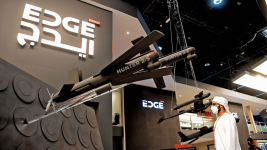
Hanwha Systems 🇰🇷 will collaborate with the UAE's EDGE Defence Group 🇦🇪 to create an integrated air defense network for the UAE, covering long-range and medium-range threats as well as anti-drone defenses.

 
Excellent - EDGE and Safran are collaborating on missile and coastal defense technologies

1790784806821.png
 
Edge expands its strategic cooperation in Brazil through a new agreement between SIATT and Safran Electronics & Defense.

The partnership will explore opportunities for collaboration in the field of advanced defense technologies, including solid rocket motors, missile systems, loitering munitions, maritime surveillance and coastal defense, in a manner that supports Brazil's sovereign capabilities and its defense industrial base.

 
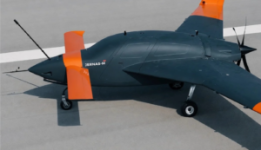
Jernas-M plane.. UAE unveils new drone with 20-hour flight capacity


Operational specifications that compete with larger platforms. According to the announced data, the maximum take-off weight is about 1,200 kilograms

While the operational load reaches 280 kilograms.

The direct control range reaches about 200 kilometers

This places the Gernas-M within the category of medium-altitude, long-stay aircraft.

In contrast, many armies rely on this class to carry out continuous surveillance missions

Therefore, low operational efficiency may give the aircraft a competitive advantage in international markets.

1790785354320.png
 
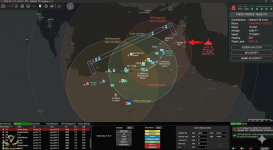
The electronic mind of the UAE's C5I air and missile defense operations (EDGE)

This system is not just a radar or launch pad, but an "integrated, cloud-based electronic mind." Its function is to connect all air and missile defense systems together to form a single, homogeneous network.

Main characteristics:
• Open architecture (Open Architecture): It can be connected with any radar, missile or aircraft, whether old or modern.
◦ • Combat Cloud (combat cloud): Allows all units (ships, aircraft, air defense) to share the same tactical image simultaneously.
◦ • Multi-Sensor Data Fusion: Combine data from multiple radars to create a single, highly accurate image of combined targets

1790785858854.png
 
1790786516690.png

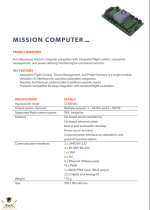
Meeting these standards (such as MIL-STD-1316 or MIL-STD-1901) means the device has undergone rigorous testing, including:

Withstanding extreme temperatures (e.g., from -40°C to +70°C).

Withstanding severe vibrations and shocks.

Resistance to electromagnetic interference (to prevent explosion due to nearby radio waves or radar).

Key Features:

Local Design: Developed and manufactured internally (in the UAE, as indicated).

Independence: Owning intellectual property rights and avoiding import/export issues.

Cost: A low-cost system compared to global alternatives.
 
EDGE and Safran outline the next generation of smart weapons

1790786785496.png

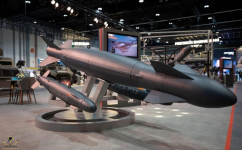
In the heart of the UAE capital, Abu Dhabi, and from within the EDGE Group headquarters, the global defense sector has witnessed the birth of a new strategic alliance aimed at breaking the traditional rules of the arms market. EDGE Group, a regional leader in advanced defense technology, and Safran Electronics & Defense France announced the signing of a historic Memorandum of Understanding (MoU) aimed at joint cooperation in the development, production, and marketing of advanced air-to-ground weapons systems (Advanced Air-to-Ground Weapon Systems).

This alliance's ambitious roadmap includes moving from developing conventional air-to-surface munitions to entering the field of surface-to-air missiles (Surface-to-Air Missiles), all the way to creating the next generation of smart weapons (Next-Generation Smart Weapons) that will rely extensively on Artificial intelligence and autonomous navigation technologies.
 
Shadow 3 UAE… One drone for two missions: air interception and precision strikes​


1791067799493.png

The Emirati Edge Group, through its company Adasi, unveiled the Shadow 3 drone during the ADEX 2026 Defense Industries Exhibition in the Azerbaijani capital, Baku, on September 30, 2026, presenting a vertical take-off and landing aerial platform, designed to carry out multiple missions including intercepting enemy drones, electronic warfare, and carrying out precise strikes on ground targets.

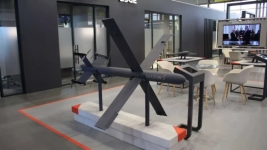
The Shadow 3 features a modular design that allows it to be equipped with either electric or turbojet propulsion, a payload of up to 3 kg, a range exceeding 30 km, and an endurance of up to 20 minutes, according to published data.

Its speed exceeds 200 km/h in the electric version and over 400 km/h in the turbojet-powered version, allowing for performance variations depending on the mission and engagement requirements.

Regarding its guidance systems, the drone utilizes GNSS satellite navigation, along with anti-jamming technologies for GPS signals, an optical seeker, and computer vision and target recognition technologies. This enables it to track moving targets and correct its course during the terminal phase of the mission.

External radar data can also be integrated to pinpoint the location of aerial threats and guide the drone toward the anticipated interception zone, before optical sensor systems take over.

At the field application level, the Shadow 3 was previously showcased at IDEX 2025 in Abu Dhabi, mounted on the Nimr Ajban 442A vehicle, equipped with three vertical launch containers and a threat detection system. This design allows for drone launch from a moving vehicle, eliminating the need for pre-guided horizontal launch platforms.

The Shadow 3's role is not limited to intercepting aerial targets. In March 2025, Edge demonstrated the drone striking two stacked shipping containers during a flight test, indicating its potential to conduct strikes against ground targets as well.

ADASI is showcasing its Shadow 25 and Shadow 50 drones at ADEX 2026, as part of the Emirati group's strategy to expand its solutions in the field of unmanned aerial systems and counter-drone capabilities.

Despite the system's numerous missions and declared capabilities, some technical details remain unavailable, including its target acquisition range using the optical seeker, its maneuverability, and its mechanism for destroying enemy drones. This means that evaluating the system's actual performance depends on further data and testing.
 
From Brazil to Paris: UAE's EDGE is building a transcontinental defense empire

1791068537949.png

EDGE is moving in a clear direction in its strategy to develop its capabilities and expand its activities and relations with the region and the world. It is currently adopting a strategy of distributing industrial capabilities outside the borders, then reconnecting them within the UAE in a central base. This is considered a development that goes beyond the importance of individual interim deals, to reveal a radical shift in the way the UAE's industrial power is built in the security and defense sector.
1791068630311.png

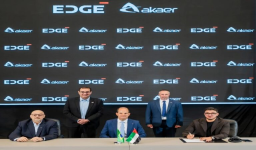
On September 4, 2026, EDGE announced the completion of its acquisition of AKAER, a Brazilian aerospace engineering company. Founded in 1992, AKAER has accumulated over 10 million hours of engineering experience in military and commercial programs, including work on the Gripen NG, Hürjet, Super Tucano, and KC-390, among others. According to EDGE, AKAER boasts a multidisciplinary engineering team covering the entire product lifecycle, from design to industrial manufacturing.

These figures carry strategic significance beyond the purely commercial aspect of the acquisition. Ten million engineering hours represent a timeframe that no country or company can shorten simply by investing in a new factory. The accumulated knowledge in design, testing, troubleshooting, systems integration, and handling the complex requirements of aerospace programs constitutes a significant military asset. This is why EDGE chose to acquire the capability rather than wait for it to be built gradually.

Most importantly, AKAER was not a separate entity from the EDGE Group. The latter announced that the Brazilian company was already working with them on the development and manufacturing of unmanned systems, meaning the acquisition came after testing an existing technical relationship, not as a separate investment venture. The deal also expands EDGE's capabilities in electro-optical and thermal systems, space technologies, and unmanned systems.

The first rules of the new industrial strategy appeared at EDGE, by purchasing ready-made expertise when the time to build it is longer than the time to achieve the requirements of the company's vision, as this expertise requires a long time to acquire, and thus acquiring and annexing it completely becomes an inevitable and unparalleled option.
1791068743212.png

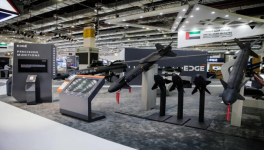
However, EDGE does not follow an acquisition model alone. On June 17, 2026, the group signed a joint venture agreement with Spain's EM&E in the UAE. The project involves a technology transfer that will allow parts of weapons stations to be manufactured within the UAE, while other components will continue to be manufactured in Spain. EDGE says the project's business opportunity portfolio has grown to $1.725 billion.The equation here is different, and the strategy works in several directions. In Brazil, EDGE enters knowledge; in the UAE, it receives technology. In both cases, the result is an expansion of the production and development cycle under one umbrella. Then comes the partnership with Leonardo to add a more sensitive layer. In June, the two companies announced plans for a joint venture to develop, manufacture and market advanced sensor and defence systems, including aerial radars for next-generation platforms, the Kronos Grand Mobile HP radar, combat management systems and multi-mission aircraft sensors. The project has contracts guaranteed for hundreds of millions of euros, with a target portfolio exceeding 4 billion euros over five years.

1791068796222.png

However, this picture shouldn't be interpreted simply as commercial expansion into multiple markets. These steps must be analyzed to understand the true objectives of this strategy. It is undeniably a strategy for building a geographically distributed, diversified, and multi-expert defense value chain, strategically positioned to ensure balanced relationships and markets. This is particularly relevant in an era where military technology has become a gateway to scientific advancement and a key to political, economic, and defense independence. This model gives EDGE an advantage that would be difficult to achieve through purely local expansion. Brazil provides an engineering base and connections within one of the most important air and defense environments in Latin America; Europe grants access to a deep industrial and technological infrastructure; and the UAE provides a hub for financing, integration, production, program management, and access to regional markets.

Further confirming this trend, it became even more pronounced with the launch of EDGE Europe in June 2026, headquartered in Paris and with an engineering and manufacturing facility in Bordeaux. EDGE states that its European presence is also based on investments and partnerships in Estonia, Switzerland, Poland, and Italy, in addition to partnerships with Leonardo, Safran, Fincantieri, and Indra. Crucially, the key elements of this strategy are that knowledge, financing, integration, and industrial decision-making are all concentrated within a system controlled by the group.

From here, it must be taken into consideration that geography is part of power. Industrial capabilities that depend on a single location can be affected by the limitations, restrictions, and geopolitical conditions of that location. The industrial network adopted by EDGE distributes knowledge, supply chains, human resources, markets, and development centers across more than one environment, thus building beyond horizontal expansion. It is an attempt to build strategic industrial depth. The final, most important, and decisive consideration is not measured by the number of companies acquired by EDGE, but by the time required to manufacture the product within critical deadlines. In modern warfare, industrial time has become part of combat power. Therefore, what EDGE buys outside the UAE is not factories or shares in companies; it buys manufacturing time and deadlines for fulfilling the security and defense requirements of its clients.

Report by Colonel M. Zafir Murad
 

Users who are viewing this thread

Country Watch Latest

Back
Top