Morocco strategic Projects: news, discussions & updates

Morocco: Airbus decides to establish a factory to produce helicopters


1710381957939.jpeg

Airbus Helicopters is preparing to base itself in Morocco to produce helicopters made in Morocco.

In addition to production, the factory will also be used for maintenance, repair and modernization of helicopters.

Airbus Helicopters is the helicopter manufacturer of Airbus, the largest in the industry in terms of revenues and turboprop helicopter deliveries. Its headquarters are located at Marseille Provence-Marignan Airport, France, near Marseille.

Airbus Helicopters delivers the most efficient helicopter solutions to its customers who serve, protect, save lives and carry passengers in challenging environments.
Airbus helicopters are in service in more than 150 countries around the world, performing every possible type of vertical flight mission.

1710382170583.jpeg

The company's product line includes a full range of rotorcraft solutions for civil, government, military, law enforcement and public service applications.

Morocco had purchased from Airbus 12 H135M helicopters, of which, on Monday, September 4, two of the helicopters arrived at Perpignon Airport in France before heading to Almeria in Spain on their way to the Kingdom.

1710382013014.jpeg

The two helicopters were acquired as part of 12 helicopters ordered by the Royal Air Force as part of a plan to renew the helicopter fleet, where the new H135M helicopters will operate for training and transport missions, as well as search and rescue.

This delivery comes after the deal previously announced by the multinational company Airbus, in a previous statement, in which it confirmed that the Royal Moroccan Air Force had acquired a fleet of H135 aircraft for initial military training missions, which is a light helicopter with two engines that is standard in its class. The deal also includes An advanced training and equipment system, without revealing the number.

To view this content we will need your consent to set third party cookies.
For more detailed information, see our cookies page.
 
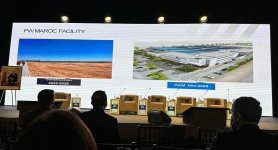
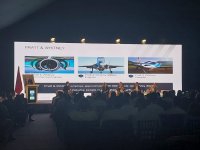
Construction of the Pratt & Whitney factory in Casablanca is expected to be completed in 2025
1710382429171.jpeg


1710382455126.jpeg
 
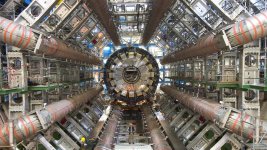
Morocco and Egypt aspire to CERN membership

1710382749193.jpeg
The two countries have shown "interest" in applying for associate membership, Manfred Kramer, head of CERN's Experimental Physics Department, said at the 6th World Conference on Technology and Instrumentation in Particle Physics held in Cape Town, South Africa, from September 4-6.

Affiliate members pay a discounted membership fee to CERN. They are members of its council but do not have the right to vote. Current associate members are Croatia, India, Latvia, Lithuania, Pakistan, Turkey and Ukraine. Cyprus, Estonia and Slovenia are all in the preliminary stages of associate membership.

South Africa, which has signed a cooperation agreement with CERN since 2008 and represents more than half of the 100 Africans who use the facility, does not yet have formal plans to join.

CERN membership “will come with additional expenses but also additional returns,” Bruce Mellado, director of the Collider Particle Physics Institute at the University of the Witwatersrand and a senior scientist at iThemba Laboratories in South Africa, told Research Professional News.

These revenues will include greater access to knowledge and technology, he said, adding that "the time has come" to talk about engagement. “We as a community are trying to develop a strategy that will allow us to get there.”

Kramer told the conference that membership diversity is a primary goal of CERN. The facility was established in the wake of World War II as a way to heal Europe through scientific cooperation.

He added that CERN wants to expand its presence in Africa. He said that Sudan, Tanzania and Rwanda have currently expressed their interest in entering into cooperation agreements with CERN, while CERN runs several training programs on the continent.

Hosting a TIPP conference in Africa for the first time is a step in the right direction, said Maxime Titov, Research Director at CEA, the French Atomic Energy Commission.


https://www.researchprofessionalnew...and-egypt-signal-interest-in-cern-membership/
 
Aeronautics: Diamoutil sets up in Morocco
1710383237497.png
1710383078560.jpeg

To view this content we will need your consent to set third party cookies.
For more detailed information, see our cookies page.


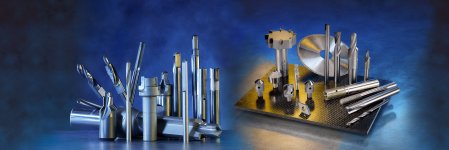
Named Morocco Precision Tools (MPT), the new Casablanca-based subsidiary aims to provide technical support to aerospace customers of the company, both in Morocco and Tunisia.

It will also enable the establishment of off-site stocks to ensure greater responsiveness in meeting customer needs.

1710383477218.jpeg

French Aeronautics Firm Diamoutils Open New Subsidiary in Morocco​


https://www.moroccoworldnews.com/20...irm-diamoutils-open-new-subsidiary-in-morocco
 
Embraer is looking forward to civil and military manufacturing in Morocco


The Brazilian Embraer is eyeing the Moroccan civil and military aeronautical ecosystem

To view this content we will need your consent to set third party cookies.
For more detailed information, see our cookies page.


* After the Brazilian and Israeli companies. German companies also requested to open factories in Morocco during the recent visit of a German military official to Rabat last week. According to Lodiyi, several international companies have submitted applications to open civilian and military production factories in Morocco.
 
Projects with universities and private research centers companies working in the civil sector, could be transferred to the military sector, such as ATLAN space.

To view this content we will need your consent to set third party cookies.
For more detailed information, see our cookies page.
 

In Morocco, The Dream Of An African Silicon Valley Rises From The Earth​


1711322062582.jpeg

Located between Marrakech and Casablanca, the Mohammed VI Polytechnic University is trying to replicate the recipes that have made the United States’ Silicon Valley successful, fusing research and business — with special attention given to green energies and food sovereignty.​


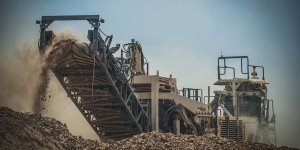
Under a blazing sun, the "Marion" is extracting several cubic meters of rock with a deafening crash. From the 64-meter height of its crane, the 700-ton steel monster drops the blocks at the top of a mound, raising a cloud of dust so large that it covers the sight of stones rolling down the enormous already-formed pile. The dragline excavator, as it is called in mining jargon, is named after the U.S. construction equipment manufacturer, which has been based in Ohio since 1884: Marion Power Shovel Company was taken over in 1997 by the mining equipment company Bucyrus, bought in 2010 by the famous Caterpillar brand.

Marion, which can move its enormous mass at 100 meters per hour thanks to two gigantic articulated legs, and extract up to 550m3 of material per hour, is one of the four mechanical excavators operating at the Ben Guerir phosphate mine. Since 1979, the state-owned OCP Group (formerly known as Office Chérifien des Phosphates) has been exploiting some 9,000 hectares there — first underground and then open-air — to extract phosphate, one of Morocco's most strategic resources.

The country has nearly 70% of the known reserves of this mineral, which is essential in the production of fertilizer for agriculture.

A few kilometers away, in an almost desert landscape near the town of Ben Guerir, an hour by car from Marrakech to the south, and two hours from Casablanca to the north, the Mohammed VI Polytechnic University (UM6P) emerged from the ground in 2017. Its monumental buildings, looking like large ocher-colored cubes, house offices, amphitheaters, laboratories, hotels, restaurants and sports facilities, including outdoor swimming pools that are like oases of freshness in this mineral universe.

1711322163761.jpeg

There, some 6,000 students from 30 nationalities (60% female and 40% male) are preparing to become the African elite of tomorrow, in fields ranging from research and teaching to entrepreneurship. An estimated 60% of these students receive full scholarships, 20% are semi-scholarship holders, while the remaining 20% pay the equivalent of 8,000 to 12,000 euros in annual tuition.

But what is the connection between this world of academic excellence and the harsh and rather crude mining sector? It's a major player in the Moroccan economy: the OCP Group. The global company, chaired by Moroccan businessman Mostafa Terrab, is 95% owned by the Kingdom of Morocco and reached revenues of 114.5 billion dirhams in 2022 (around $31 billion).

It is also the developer of the UM6P.

The origin of the project goes back to the 2009-2012 period, explains Khalid Baddou, director of institutional affairs at the the university, and chief of staff of its president Hicham El Habti. “The OCP Group manages 60% of the world's phosphate reserves," Baddou explained. "And it wanted to refocus its strategy to reduce dependency on exports, and to process phosphate within Morocco, in order to bring more added value to the country.”

A 3.5-billion-euro corporate foundation​

After envisioning at first a corporate university, where teaching and research would focus on the company's activities, the OCP Group was asked by Morocco's King Mohammed VI to develop a more global project.

That’s how the UM6P was founded, on the outskirts of Ben Guerir, where the company donated some 1,000 hectares of land to its corporate foundation to carry out this project. The non-profit foundation owns 100% of the university.

To date, it has been allocated 3.5 billion euros and has invested in ultra-modern premises and equipment on the Ben Guerir campus, but also in Rabat and Casablanca on the site of the OCP Group’s former headquarters.

Its ambitions are not limited to Morocco, where the UM6P has partnered with the country's 12 public universities. Three years ago, the institution launched the Excellence in Africa initiative, a joint project with the Swiss Federal Institute of Technology in Lausanne. It includes three components: the digitalization of education in Africa, the “Hundred PHDs for Africa” project dedicated to identifying and training 100 doctoral students who will be able to stay in their native countries and contribute to their development, and finally, the “Junior Faculty” that aims at training future teachers in African universities.

One of the ingredients of the Silicon Valley’s success is the proximity between academics and industries.
Beyond the African continent, the UM6P has established partnerships with several prestigious institutions in the United States, Canada, Brazil, the United Kingdom, Spain, Switzerland and of course, France. Among them, the Ecole Normale Supérieure, the Ecole des Ponts ParisTech, the Ecole Polytechnique, Mines ParisTech and HEC Paris. The Moroccan university even opened a branch in France last year, with headquarters in Paris.
1711322022779.jpeg
The OCP Group, 95% owned by the Kingdom of Morocco, is also the developer of the UM6P

Partner of the Californian Plug and Play fund​

The university, which the Kingdom declared of “public interest,” aims to be the spearhead of an even greater ambition: making Ben Guerir the African Silicon Valley. “One of the ingredients of the Silicon Valley’s success in California is the proximity between academics and industries. It was built over the course of about thirty years. We are trying to shorten this time,” Khalid Baddou says.

To do this, the director of institutional affairs adds, “the UM6P is a partner of one of Silicon Valley's investment funds, Plug and Play, which incubated Google in its early days and with whom we set up Plug and Play Africa. We rely on its network, its strike force, its expertise, and the fund, on the innovation ecosystem surrounding the university.”

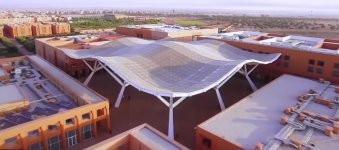
Solar panels are deployed, with unique shapes that resemble a flower whose petals turn towards the sun.
1711322322364.jpeg

The UM6P has set up an investment fund within the Californian Silicon Valley itself. “Bidra (*seed in Arabic) buys stakes in much more mature start-ups with the aim of being able to finance them on future technologies or to bring them into the university’s ecosystem,” Khalid Baddou explains.

Photovoltaic energy​

The Ben Guerir site includes the African Supercomputing Center, the largest data center in Morocco, which was inaugurated in 2021, and its Toubkal supercomputer — the most powerful in Africa — which is operating with 30% of green energy and 100% recycled water.

The site also includes a six-hectare experimental farm, a Green Energy Park (GEP) and, very close by, a Green and Smart Building Park where new construction materials and energy-saving solutions are tested in about 30 small houses — all across 12 hectares.

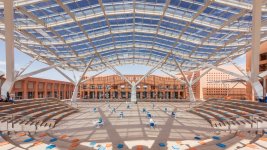
The Green Energy Park is a good example of the ecosystems built around the UM6P. Solar panels are deployed on the site, some with unique shapes that resemble a flower whose petals turn towards the sun. The panels supply a thermodynamic solar power plant in the start-up phase. The electricity produced by the photovoltaic panels on-site already generates 1 megawatt, powering the university buildings.

Some of these panels are undergoing certification testing, in particular to meet the demands of the ONCF, the Moroccan National Railways Office, and France’s national state-owned railway company SNCF for the roofs of their stations, or even to supply the Renault automobile factory in Tangier.

The GEP also has a partnership with French multinational utility company Engie for panel cleaning solutions. While the Green Energy Park works mainly on solar energy, it also has a green hydrogen pilot unit in the middle of this forest of panels.

1711322460058.jpeg

About 20 start-ups incubated​

There is also activity in the field of charging stations, carried out by iSmart, a start-up created in the UM6P ecosystem. It has developed low-voltage terminals that can be installed at home (two equip the GEP car park) and has a production capacity of at least 2,000 stations per year for a purchase cost of around 800 euros.

iSmart is also working on prototypes of superchargers for service stations, which are made of 80% of parts manufactured in Morocco. The start-up attracted a lot of interest, notably from the Moroccan oil group Afriquia, but iSmart shareholders put an end to the discussions.

“We have supported more than 600 project leaders," explains Khalid Baddou. "This led to the creation of about 20 start-ups that we incubated, accompanied and boosted with investment funds.”


Soil modeling to improve agronomic practices​

Food sovereignty is another major challenge for the African continent. The UM6P School of Agriculture, Fertilization and Environmental Sciences was created nine months ago by gathering together 12 research entities in the field of agriculture and environmental sciences which used to work independently.

About 20 start-ups incubated​

There is also activity in the field of charging stations, carried out by iSmart, a start-up created in the UM6P ecosystem. It has developed low-voltage terminals that can be installed at home (two equip the GEP car park) and has a production capacity of at least 2,000 stations per year for a purchase cost of around 800 euros.
iSmart is also working on prototypes of superchargers for service stations, which are made of 80% of parts manufactured in Morocco. The start-up attracted a lot of interest, notably from the Moroccan oil group Afriquia, but iSmart shareholders put an end to the discussions.
“We have supported more than 600 project leaders," explains Khalid Baddou. "This led to the creation of about 20 start-ups that we incubated, accompanied and boosted with investment funds.”

Soil modeling to improve agronomic practices​

Food sovereignty is another major challenge for the African continent. The UM6P School of Agriculture, Fertilization and Environmental Sciences was created nine months ago by gathering together 12 research entities in the field of agriculture and environmental sciences which used to work independently.

The aim is to “de-risk” agricultural production by taking into account the impact of climate change.

“In addition to research, we want to work in a more integrated way to develop solutions via numerous partnerships in Africa and internationally,” says the school’s dean, Belgian professor Bruno Gérard. "Innovation and entrepreneurship are our two pillars."

The institution has a dual objective: to promote better agronomic practices and “de-risk” agricultural production by taking into account the impact of climate change.

At the Center of Excellence in Soil and Fertilizer Research in Africa (CESFRA), one of the school’s entities, laboratory manager Laila Tajeddine explains that a “Moroccan soil library has no less than 800 samples that allow modeling using mathematical algorithms and machine learning.”

This allowed the development of maps of the entire country in order to determine the most fertile regions. But also, to complete the picture with the OCP Group's main activity, the establishment of a program to rehabilitate land exploited by phosphate mines.

In Ben Guerir, 3,000 hectares will ultimately be covered by this rehabilitation program. Olive and argan trees can now be seen growing where Marion, the dragline excavator, has finished its job.


https://worldcrunch.com/tech-science/morocco-african-silicon-valley
 
To view this content we will need your consent to set third party cookies.
For more detailed information, see our cookies page.
 
In the last ten years, Morocco has succeeded in entering the world of computers and advanced technology through the establishment of a diversified industrial base that was brilliantly distinguished in attracting major international companies that flocked to this Arab Kingdom looking for a place for themselves, especially in light of Morocco’s dominance in the first ranks on the African continent in several areas. Industrial fields and its trend towards global competition at a high level of efficiency and professionalism.
What is the secret of that success and where will Morocco reach in this industry?

To view this content we will need your consent to set third party cookies.
For more detailed information, see our cookies page.
 
France offers Morocco a partnership to develop nuclear reactors

1714376394054.jpeg

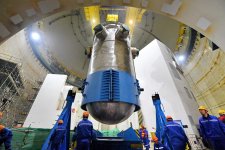
During the visit of Bruno Le Maire, the French Minister of Economy, Finance, Industrial and Digital Sovereignty to Mohammed VI Polydisciplinary University, he stated that nuclear energy is the most sensitive and strategic of all, and that it is a distinguished field for the French nation since the era of General de Gaulle until now, as he announced the establishment of 6 new nuclear reactors. in France. His responsibility is to ensure the completion of these reactors, and for this reason he proposed opening the way for scientific and industrial cooperation between Morocco and France, especially in the field of SMR reactors, small modular reactors, which are small and medium-power reactors that are completely compatible with the needs of a medium-sized city or industrial area, and this is the first field of Areas of cooperation that he came to place at the disposal of the government. He also stressed that Morocco's approach to this option is a sovereign decision that remains in the hands of His Majesty the King and the government.

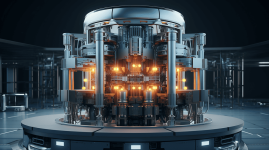
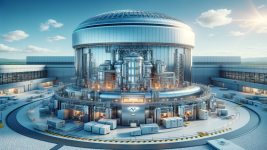
Small modular reactors are advanced nuclear reactors with an electrical capacity of up to 300 megawatts (electrical) per unit, which is about a third of the generating capacity of traditional nuclear reactors. Small modular reactors, which can produce a large amount of low-carbon electricity, are characterized by:
_ It is small - that is, in terms of size, it represents only a small part of the size of a conventional nuclear power reactor.
- They are modular - meaning their systems and components can be assembled in a factory and then transported as a unit to the site for installation.
- They are reactors - that is, nuclear fission is harnessed to generate heat to produce energy.

To view this content we will need your consent to set third party cookies.
For more detailed information, see our cookies page.


To view this content we will need your consent to set third party cookies.
For more detailed information, see our cookies page.


1714188112504.png

Technical features​


  • Electrical power output: 2 x 170 MWe
  • Thermal Power: 2 x 540 MWth
  • Plant design availability: ≥ 90%
  • Primary system: Integrated primary loop
  • Operation cycle length: Up to 24 months
  • Design service life: 60 years
  • Instrumentation & Control: Fully digital
  • Fuel assemblies in core: 76 assemblies

1714188226641.png
 
🔵Morocco is the second largest producer of medicines in Africa, and it is classified as a European region according to the latest classification of the World Health Organization.
Source: Moroccan Agency for Investment and Export Development.

To view this content we will need your consent to set third party cookies.
For more detailed information, see our cookies page.
 
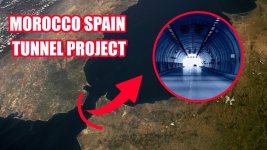
According to studies conducted by Secegsa, construction work for the Morocco-Spain Continental Tunnel will begin next year and be completed within five years.

Source: MOROCCO WORLD NEWS.
For more information about the project, follow this X's ⬇️

To view this content we will need your consent to set third party cookies.
For more detailed information, see our cookies page.


A modification was made to the project, where instead of the traditional axes, the project will connect Madrid and Casablanca directly with the high-speed line (one undivided high-speed train line), and the travel time when the project is completed between the two cities will be about five and a half hours. .

The project will include four main stations: Madrid station, Algeciras station, Tangier station and Casablanca station.

1714467897467.jpeg
 
Work is on the final stage on the Fez Smart Factory project, which is the first system for the fourth generation of industry in Morocco, dedicated to embracing smart and sustainable factories.

To view this content we will need your consent to set third party cookies.
For more detailed information, see our cookies page.


The Fez Smart Factory project, which extends over an area of 11 hectares, includes a building of 8,000 square meters, which will embrace services directed to innovative fourth-generation companies, including a project incubator, a unit for launching innovative emerging companies, engineering services dedicated to industry, and laboratories for research and development.
 
The third French channel 🇫🇷 affiliated with the government

1714469010448.jpeg

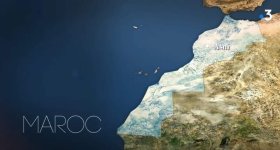
Renewable energy projects to be implemented in the Moroccan Western Sahara in the period between 2024 and 2030:

The wind field in Dakhla, with a capacity of 60 megawatts, is exclusively designated for operating a seawater desalination plant for agricultural irrigation (5,200 hectares). The project is under completion and will be operational in the first third of 2025.

The wind field in Bir Anzeran 1, with a capacity of 360 megawatts, east of the city of Dakhla, is dedicated exclusively to pumping electricity into the national grid in order to operate the new seawater desalination plant in Casablanca. The project is under completion and will be operational in 2026.

The wind field in Bir Anzeran 2, with a capacity of 200 megawatts, is intended to supply electrical energy to the national grid and transmit it to the north...

Tiskrad wind field with a capacity of 100 MW near the city of Laayoune

The Gharad Jarad wind field with a capacity of 80 MW in Foum El Oued in the Laayoune region (the field belongs to the Office Chérifien des Phosphates)

The Iftisat 3 wind field, with a capacity of 200 MW, south of Boujdour province

The Akhfnir 3 wind field, with a capacity of 50 MW, in the Laayoune region

The Boujdour solar power station, with a capacity of 350 megawatts, is the second in the region. The first has a capacity of 20 megawatts

The electrical energy resulting from the operation of these projects will be transmitted through the Dakhla-Casablanca electrical interconnection with a capacity of 3,000 megawatts and a length of 1,400 kilometers.

The Moroccan Sahara will be one of the reasons for prosperity and development in the country after it was a burden before the year 2000. The equation has been reversed. There is much and general goodness coming from Western Sahara that Moroccans will enjoy the coming years: phosphates, minerals, lithium, marine fishing and marine resources. A huge port, tourism, free zones, agriculture under greenhouses, border crossings, renewable energies, and who knows, perhaps oil, natural gas, and gold mines..
 
A wonderful report from the famous American journalist Courtney Fingar about the port of Tangier Med. The journalist specializes in the field of foreign direct investment (FDI).

To view this content we will need your consent to set third party cookies.
For more detailed information, see our cookies page.
 

Users who are viewing this thread

Back
Top