NASA Space Program

The problem is SpaceX may retire the Falcon 9 when the Starship comes online...so Vast is understating what could be launched.
 

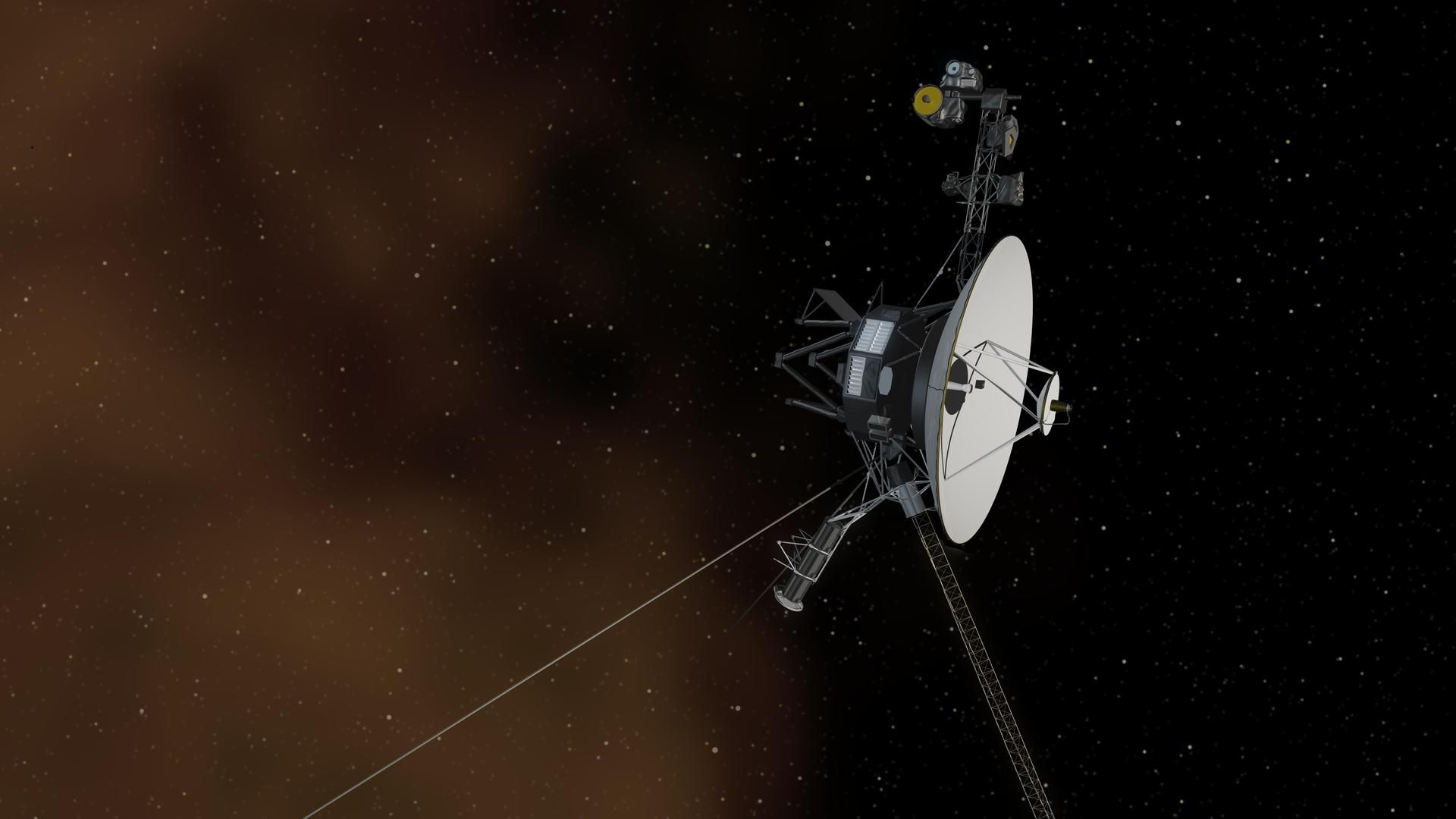
Voyager 1 spacecraft phones home with transmitter that hasn't been used since 1981​


Following recent communication issues, NASA's Voyager 1 spacecraft resorted to using a backup radio transmitter that has been inactive since 1981.


The interstellar explorer experienced a brief pause in communications after putting itself in a protective state to conserve power. This was triggered by a command sent on Oct. 16 from NASA's Deep Space Network (DSN) — a global array of giant radio antennas — instructing the spacecraft to turn on one of its heaters.


The mission's flight team first realized there was an issue with Voyager 1 on Oct. 18, when the spacecraft failed to respond to that command. The team later discovered that the spacecraft had turned off its primary X-band radio transmitter and instead switched over to its secondary S-band radio transmitter, which uses less power, according to a statement from NASA.

"The transmitter shut-off seems to have been prompted by the spacecraft's fault protection system, which autonomously responds to onboard issues," NASA officials said in the statement. "The team is now working to gather information that will help them figure out what happened and return Voyager 1 to normal operations."

Voyager 1's fault protection system can be triggered for a number of reasons, such as if the spacecraft overdraws its power supply. If that happens, the spacecraft will turn off all non-essential systems to conserve power and remain in flight.

After sending instructions to Voyager 1 on Oct. 16, the team expected to receive data back from the spacecraft within a couple of days; it normally takes about 23 hours for a command to travel more than 15 billion miles (24 billion kilometers) to reach the spacecraft in interstellar space, and then another 23 hours for the flight team on Earth to receive a signal back.

However, on Oct. 18, the team was unable to detect Voyager 1's signal on the X-band frequency that the DSN antennas were listening for. This was because, to use less power, the spacecraft's fault protection system lowered the rate at which its radio transmitter was sending back data. The flight team was able to locate a signal later that day – but then, on Oct. 19, communication with Voyager 1 stopped entirely when its X-band transmitter was turned off.

The spacecraft's fault protection system is believed to have been triggered twice more, ultimately causing it to switch to the S-band radio transmitter, which, prior to that date, hadn't been used since 1981. Given the spacecraft is located much farther away in interstellar space today than it was 43 years ago, the flight team was not sure a signal on the S-band frequency could be detected — especially because it transmits a significantly fainter signal while using less power.

However, the team didn't want to risk sending another signal to the X-band transmitter and triggering the fault protection system again. So, instead, a command was sent to the S-band transmitter on Oct. 22. Two days later, on Oct. 24, the team was finally able to reconnect with Voyager 1.

Now, the team will investigate what may have triggered the spacecraft's fault protection system in the first place, given Voyager 1 should have had ample power to operate the heater. However, it may be weeks before operators identify the underlying issue, according to the statement.

Voyager 1, which launched in 1977, ventured into interstellar space in 2012, becoming the first spacecraft to cross the boundary of our solar system. Its time in deep space has taken a toll on its instruments and caused an increasing number of technical issues. Earlier this year, the team had to fix a separate communications glitch that was causing the spacecraft to transmit gibberish.

While spacecraft's advanced age and distance from Earth can make maintenance challenging, Voyager 1 continues to return vital data from beyond the solar system.
 

NASA's next-gen Nancy Grace Roman Space Telescope gets its powerful eye (photos)​


"A high point of our journey [has been] witnessing the entire telescope come together as an aligned system — a moment that crystallized years of dedication from hundreds of individuals."


Technicians in white stand around a large apparatus with black metal framework.

NASA optical engineer Bente Eegholm inspects the surface of the primary mirror for NASA’s Nancy Grace Roman Space Telescope. (Image credit: NASA/Chris Gunn)
Scientists working on NASA's Nancy Grace Roman Space Telescope have achieved a significant milestone in assembling the next-generation observatory, which aims to address critical questions about dark matter, exoplanets and infrared astrophysics.


The Optical Telescope Assembly, a key component of the Nancy Grace Roman Space Telescope, or Roman for short, was successfully delivered to NASA's Goddard Space Flight Center in Greenbelt, Maryland, in early November from Rochester, New York, where it was designed and built by the company L3Harris Technologies.

This advanced assembly includes a state-of-the-art primary mirror, designed to capture and focus faint infrared light from the distant cosmos, as well as nine additional precision-engineered mirrors. Together with its structural supports and sophisticated electronics, the assembly will serve as the telescope's "eye," enabling groundbreaking observations and unlocking the mysteries of the universe.

The delivery marks a crucial step toward completing the Roman Space Telescope, which is expected to expand our understanding of the cosmos and revolutionize the study of dark energy, galaxy formation, and planetary systems beyond our solar system.

"Projects of this magnitude demand excellence in virtually every aspect," J. Scott Smith, the assembly's telescope manager at NASA Goddard, told Space.com via email. "This drive for perfection is intensified when building and delivering a space telescope that pushes engineering boundaries to answer seemingly impossible scientific questions."

Roman will surpass its predecessor, the Hubble Space Telescope, with its advanced capabilities for conducting large-scale sky surveys.

"Much like a cell phone has multiple cameras to capture a wide angle and zoomed image, Webb and Roman will work together to explore our universe with different views," said Smith, referring to NASA's $10 billion James Webb Space Telescope, which launched in December 2021. "Roman's technology and scientific capabilities will also serve as the next critical step towards the Habitable Worlds Observatory, which would enhance our understanding of the universe even further and advance the search for planets that could support life."


many technicians in white stand around a large aperatus with


The Optical Telescope Assembly for NASA’s Nancy Grace Roman Space Telescope was recently delivered to the largest clean room at the agency’s Goddard Space Flight Center in Greenbelt, Md. (Image credit: Future)
Equipped with a Wide Field Instrument featuring a 300-megapixel infrared camera, Roman will cover a much broader area of the night sky. Additionally, the telescope is designed to operate at extremely low temperatures, minimizing internal noise and making it easier to detect faint, distant objects.

"The wide field of view allows the Observatory to collect in a single image what would take Hubble several hundred, and after accounting for how fast the Roman Observatory can point to a new target, it further improves the efficiency," explained Smith. "One of Roman's main survey campaigns, the High Latitude Wide Area Survey, will cover 2,000 square degrees (about 5% of the sky) in just over seven months. It would take Hubble or Webb hundreds of years to image such a large sky area."

The telescope's coronagraph, which has already been installed, will allow it to block out the bright light from stars, enabling direct observation of faint objects like exoplanets and distant galaxies with greater clarity.

The design and performance of the assembly will play a crucial role in determining the quality of the mission's results, making the manufacturing and testing processes exceptionally rigorous. Achieving success in such a complex project requires flawless alignment of countless elements, despite the inevitable challenges that arise.


Technicians in white stand around a large apparatus with black metal framework.


Upon arrival at NASA’s Goddard Space Flight Center, the Optical Telescope Assembly for the agency’s Nancy Grace Roman Space Telescope was lifted out of the shipping fixture and placed with other mission hardware in Goddard’s largest clean room. (Image credit: NASA/Chris Gunn)
"Success requires millions of elements to align perfectly, yet the work is executed by people and machines — both inherently imperfect," Smith said. "Human error, accidents, and mechanical failures are inevitable realities we must contend with. [But] it's not just about preventing mistakes, but about how we respond and recover when they occur. This is where our team truly excelled."

To minimize the likelihood of error, each individual component was meticulously tested before assembly. The entire telescope was then subjected to rigorous tests designed to simulate the intense shaking and vibrations it will endure during launch, ensuring it arrives in its desired orbit intact and functions as intended.

NASA reports that the telescope underwent a month-long thermal vacuum test to ensure it will withstand the temperature and pressure environment of space, while maintaining its own temperature to within a fraction of a degree. This means the telescope will be able to maintain a stable focus to capture its high-resolution images.

This careful coordination and extensive testing is key to ensuring the telescope's performance, especially when it comes to stability. "The Roman telescope represents the pinnacle of telescope stability, a claim substantiated by extensive ground-based testing," Smith added. "To achieve this unprecedented level of stability, we pioneered innovative methods in hardware construction and testing, significantly advancing the state of the art in telescope engineering."

The next steps involve integrating the optical assembly into Roman's instrument carrier, the structural skeleton of the observatory. According to the team, they remain on track for the telescope's highly anticipated launch in early 2027, atop a SpaceX Falcon Heavy rocket.

"A high point of our journey [has been] witnessing the entire telescope come together as an aligned system — a moment that crystallized years of dedication from hundreds of individuals," Smith said. "During this process, the alignment team experienced something truly extraordinary: They were able to look through the telescope in double-pass and see their own reflection. Double-pass is kind of like taking a selfie in a mirror, where you use the telescope to look at itself.

"When I had the opportunity to look through the telescope myself, it was nothing short of a transcendent experience," he continued. "Observing the technician re-imaged with such incredible precision and clarity, reduced to just a few inches in size, was surreal. It was a moment that not only showcased the telescope's extraordinary capabilities but also connected us viscerally to the magnitude of our achievement. This experience went beyond mere scientific accomplishment — it touched upon the very essence of human curiosity and our relentless pursuit to understand the cosmos."
 

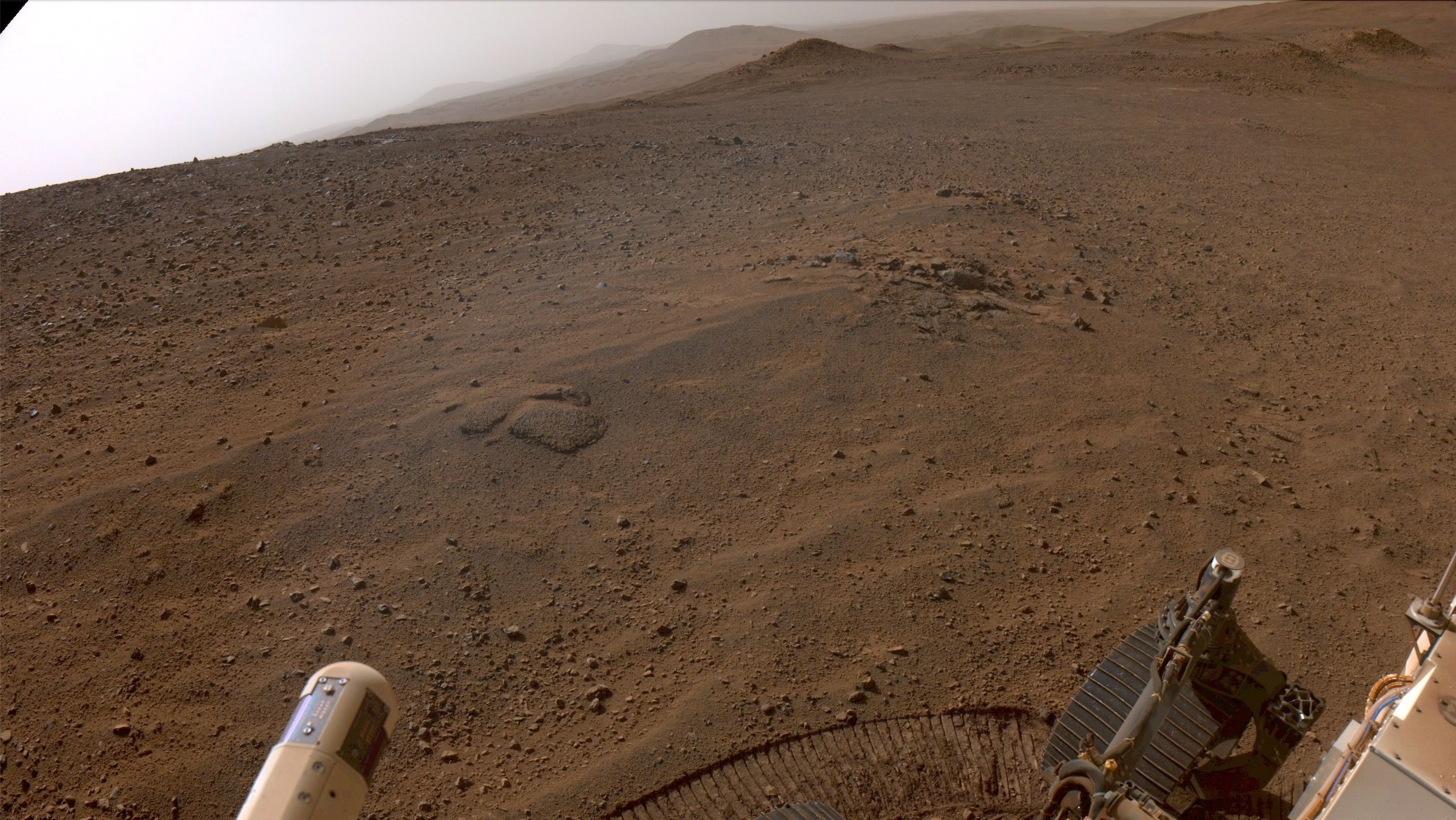
Up and over! NASA's Mars rover Perseverance reaches rim of its Jezero Crater home (video)​


To view this content we will need your consent to set third party cookies.
For more detailed information, see our cookies page.

See Perseverance rover's view from Jezero Crater's rim in amazing 4K panorama​


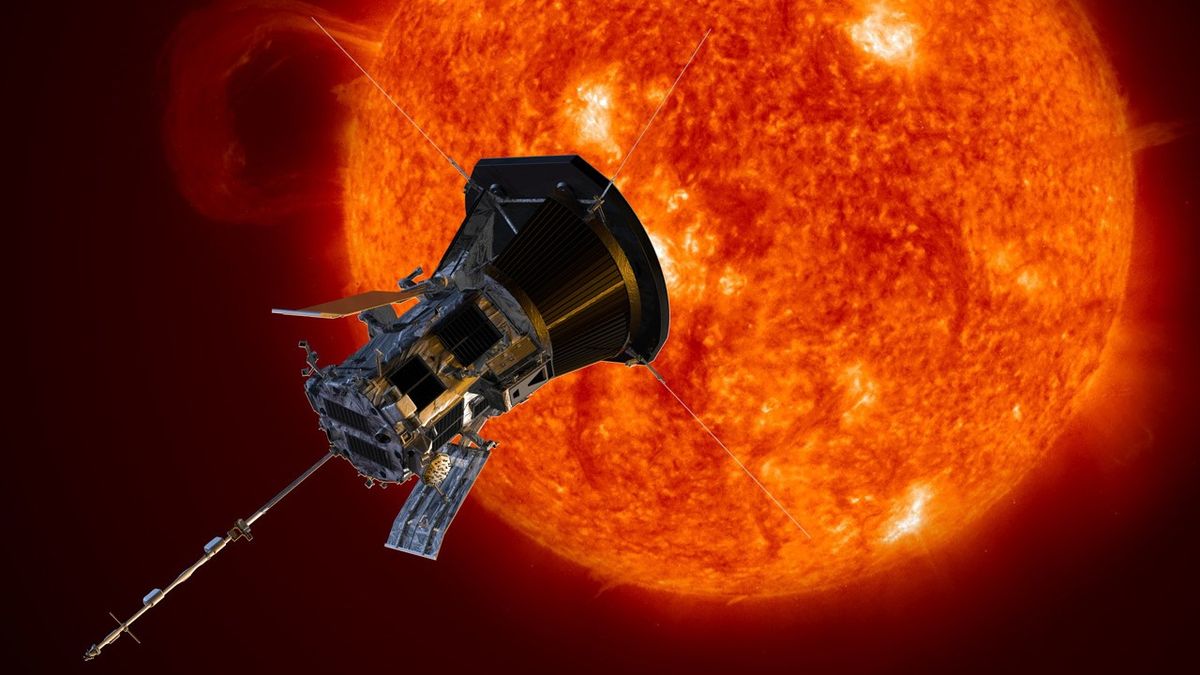
NASA's Parker Solar Probe phones home after surviving historic close sun flyby. It's alive!​


The spacecraft flew within 3.8 million miles (6.1 million kilometers) of the solar surface to "touch the sun" on Christmas Eve.

NASA's Parker Solar Probe launched on August 12, 2018 on a mission to study the sun.

(Image credit: NASA/Johns Hopkins APL/Steve Gribben)

NASA's Parker Solar Probe is alive!


Two days after an historic Christmas Eve sun flyby that flew closer to the star than any spacecraft in history — taking the car-sized spacecraft nearly 10 times closer to the sun than Mercury — the Parker Solar Probe phoned home for the first time since its solar encounter. The spacesent sent a simple yet highly-anticipated beacon tone to Earth just before midnight late Thursday (Dec. 26).


Scientists on Earth were out of contact with the Parker Solar Probe since Dec. 20, when the spaceraft began its automated flyby of the sun, so the signal is a crucial confirmation that the spacecraft survived, and is in "good health and operating normally," NASA shared in an update early Friday (Dec. 27).

Mission control at the Johns Hopkins Applied Physics Laboratory (APL) in Laurel, Maryland received the signal just before midnight ET on the night of Dec. 26, the statement read.

To view this content we will need your consent to set third party cookies.
For more detailed information, see our cookies page.


The spacecraft is programmed to send home a more detailed status update on New Year's Day, Jan. 1. It's only then that scientists will know whether the spacecraft indeed collected the expected observations of the sun from the flyby, Michael Buckley, a spokesperson at JHUAPL, which oversees the Parker Solar Probe mission, told Space.com in an email. "This gives the team a better picture of overall spacecraft and subsystem/instrument health, including whether Parker's data recorders are full."


The probe should transmit the bulk of the images and science data in late January, when it will have swung away to a safe distance from the sun.

Around 6:53 a.m. EST (1153 GMT) on Christmas Eve, the spacecraft accomplished what it was designed for: It swooped to within 3.8 million miles (6.1 million kilometers) of the sun's surface. And it did so while traveling at a whopping 430,000 mph (690,000 kph) — breaking its own personal best as the fastest object ever built by human hands.

"It's just a total 'Yay! We did it' moment," Nicola Fox, NASA's associate administrator for science missions, said in a video update on Dec. 24.

The fact that the spacecraft survived such a close pass by the sun is a testament to the mission team's engineering, including a custom, 4.5-inch-thick heat shield and an autonomous system that protects the probe from the sun's intense heat while allowing it to point toward our star and let the coronal material touch the spacecraft. While the heat shield allows the spacecraft to endure temperatures up to 2,500 degrees Fahrenheit (1,371 degrees Celsius), the probe likely ended up experiencing lower — but nevertheless sizzling — temperatures of up to 1,800 degrees Fahrenheit (980 degrees Celsius), the mission team has previously said.

"No human-made object has ever passed this close to a star, so Parker will truly be returning data from uncharted territory," Nick Pinkine, the Parker Solar Probe mission operations manager at APL in Maryland, said in a Dec. 20 statement.

Since its launch in 2018, the Parker Solar Probe has helped decode longstanding mysteries about our star, chiefly why its outermost layer, the corona, gets hundreds of times hotter the farther it moves from the sun's surface. Enroute to the sun, the probe serendipitously also caught rare closeups of passing comets and shed light on how Venus, Earth's hellish twin, may have lost its water.

On Christmas Eve, scientists expect Parker to have flown through plumes of plasma still attached to the sun. It may have also observed different types of solar winds and solar storms thanks to ongoing increased turbulence on the sun's surface, the mission team told reporters earlier this month at the annual AGU meeting.

"We can’t wait to receive that first status update from the spacecraft and start receiving the science data in the coming weeks," Parker Solar Probe program scientist Arik Posner at NASA Headquarters in Washington said in the statement.
 

Vast signs agreement with SpaceX for private astronaut missions to the ISS​


Commercial space station developer Vast Space has signed a deal with SpaceX for two private astronaut missions to the International Space Station, pending NASA approval.

Vast announced Dec. 19 that it completed an agreement with SpaceX to fly two Crew Dragon spacecraft to the ISS on what NASA calls private astronaut missions, or PAMs. These are short-duration missions to the station and serve as a stepping-stone to future commercial space stations.

“Enabling payload and crewed missions to the ISS is a key part of Vast’s strategy, allowing us to further our collaboration with NASA and global space agencies,” Max Haot, chief executive of Vast, said in a statement. “These missions not only strengthen our expertise in human spaceflight operations and collaboration with NASA but also position Vast as a leading contender to deliver the next-generation successor to the ISS.”

“I am excited to work with Vast as they build more opportunities and destinations for more people to travel amongst the stars,” Gwynne Shotwell, president and chief operating officer of SpaceX, said in the same statement.

Those missions are contingent on winning NASA approval. The agency has to date awarded four PAM opportunities, all to Axiom Space and with little or no competition from other providers. Axiom has flown three of those missions and is preparing for the fourth, Ax-4, scheduled for launch in the spring of 2025. All of those missions have used Crew Dragon spacecraft.

Haot announced in February Vast’s intent to bid for future PAM opportunities. NASA has yet to issue a solicitation for any future missions, although the agency has previously said it would support up to two PAMs a year. In practice, the agency has allowed one mission a year so far.

Vast will face competition from Axiom for PAM opportunities. That company announced Dec. 18 revised plans to assemble its own commercial space station, which previously involved docking a series of habitat and research modules to the ISS that would form the core of a later standalone station. Axiom now plans to install a power and payload module to the ISS that will not have crew accommodations, later removing it to dock with a habitat module to form a free-flying station.

Axiom executives said in an interview about the plans that they would continue to rely on PAM opportunities to visit the ISS. “Our plan is to continue to compete for PAM missions as long as they make them available,” said Mark Greeley, chief operating officer of Axiom Space and program manager for Axiom Station.

Vast said its agreement with SpaceX for Crew Dragon missions to the ISS is in addition to an earlier contract with the company for the launch of its Haven-1 module and at least one Crew Dragon mission to it. Haven-1, scheduled for launch as soon as late 2025, will be able to support up to four short-duration visits, helping Vast test technologies and gain experience for its larger Haven-2 space station it is proposing to NASA’s Commercial Low Earth Orbit Destinations program.

Vast said it is in “active discussions” with government space agencies about participating on any private astronaut missions it flies to the ISS. It cited as one example the Czech Republic, which signed an agreement with Vast in November to examine potential flight opportunities for Czech astronauts on Vast missions.
 
Looks neat
Definately a huge upgrade from ISS.
 
Looks neat
Definately a huge upgrade from ISS.

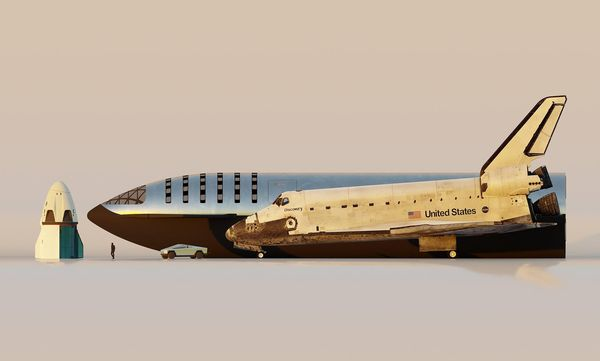
This is nothing. A single Starship with its fuel tank emptied after getting into orbit would have an internal volume larger than the entire ISS. There is no reason to need the fuel tank area anymore as it would never be refueled to land.

startship-size-comparison-cybertruck.PNG

Look how huge it would be.

Also Skylab was 6.6 meters in diameter while the Starship is 9 meters!!

To view this content we will need your consent to set third party cookies.
For more detailed information, see our cookies page.
 
Last edited:
This is nothing. A single Starship with its fuel tank emptied after getting into orbit would have an internal volume larger than the entire ISS. There is no reason to need the fuel tank area anymore as it would never be refueled to land.

startship-size-comparison-cybertruck.PNG

Look how huge it would be.

Also Skylab was 6.6 meters in diameter while the Starship is 9 meters!!

To view this content we will need your consent to set third party cookies.
For more detailed information, see our cookies page.

all the huha over a PPT. Brag when it is completed :rofl:
 
This is nothing. A single Starship with its fuel tank emptied after getting into orbit would have an internal volume larger than the entire ISS. There is no reason to need the fuel tank area anymore as it would never be refueled to land.

startship-size-comparison-cybertruck.PNG

Look how huge it would be.

Also Skylab was 6.6 meters in diameter while the Starship is 9 meters!!

To view this content we will need your consent to set third party cookies.
For more detailed information, see our cookies page.


Seven months have passed, may I ask if the United States has succeeded in rescuing their two astronauts stranded in space?

I see that the last time I saw them in their current state, I was worried that they were going to have to die of starvation.

aa7a58d8fd306380.webp
 
Seven months have passed, may I ask if the United States has succeeded in rescuing their two astronauts stranded in space?

I see that the last time I saw them in their current state, I was worried that they were going to have to die of starvation.

View attachment 92589

The great thing is the ISS can easily handle the extra people..meanwhile the small and inadequate Chinese station is limited to 6 at most.

66f1080947a18-nasa-astronaut-sunita-williams-becomes-international-space-station-commander-231743985-16x9.png

Hmm... I count 12 people (including Sunita)....someday maybe China will actually have the tech to support this.

Do you want to troll this Americas forum thread more...like a typical juvenile Chinese PDF member??

:unsure: Maybe you'd like to see me troll the Chinese space station threads in the China&Far East forum...in return.
 
Last edited:
This is nothing. A single Starship with its fuel tank emptied after getting into orbit would have an internal volume larger than the entire ISS. There is no reason to need the fuel tank area anymore as it would never be refueled to land.

startship-size-comparison-cybertruck.PNG

Look how huge it would be.

Also Skylab was 6.6 meters in diameter while the Starship is 9 meters!!

To view this content we will need your consent to set third party cookies.
For more detailed information, see our cookies page.


You are thinking about setting up starship internally to act as an space station, if i see it correctly. Which if course is a possibility given its gargantuan size. But then it would need a significant internal tech upgrade to allow long term human habitation in space.
 
You are thinking about setting up starship internally to act as an space station, if i see it correctly. Which if course is a possibility given its gargantuan size. But then it would need a significant internal tech upgrade to allow long term human habitation in space.

It can carry a payload of over 100 tons per launch (150 if the booster is thrown away). That's alot of equipment that could be placed internally in just one launch.

The entire ISS weighs ~400 tons and probably most of that is the structure which of course isn't even counted in the Starship payload capacity.

Also Elon Musk is obsessed with robots and efficient automated metal welding.
He may have a plan to have robots build or modify things in orbit.

To view this content we will need your consent to set third party cookies.
For more detailed information, see our cookies page.

SpaceX New Upgrade On Starship V3 WELDING totally Thrilling Scientist's Minds...​

 
Last edited:
To view this content we will need your consent to set third party cookies.
For more detailed information, see our cookies page.
 
To view this content we will need your consent to set third party cookies.
For more detailed information, see our cookies page.


LOL! He only made it because he got super-triggered over videos like this
To view this content we will need your consent to set third party cookies.
For more detailed information, see our cookies page.

Thunderf00t is sad and miserable | Starship Flight 5​


youclown.png
Liberal-left Elon Musk hater "Thunderf00t" live-streamed during the Starship 5 tower landing attempt because he was positive it would never work..and he wanted to be there to laugh at everybody in the comment section when it crashed.

AngryLiberalTears.png
However when it worked...people were making sure to let him have it!


Which i posted here
 
Last edited:

Users who are viewing this thread

Back
Top