GYEONGJU, South Korea: United States tech giant Nvidia said on Friday (Oct 31) it will supply 260,000 of its most cutting-edge chips to South Korea, as CEO Jensen Huang met President Lee Jae Myung and the heads of the country's biggest companies on the sidelines of the Asia-Pacific Economic...

www.channelnewsasia.com
Nvidia to supply 260,000 cutting-edge chips to South Korea
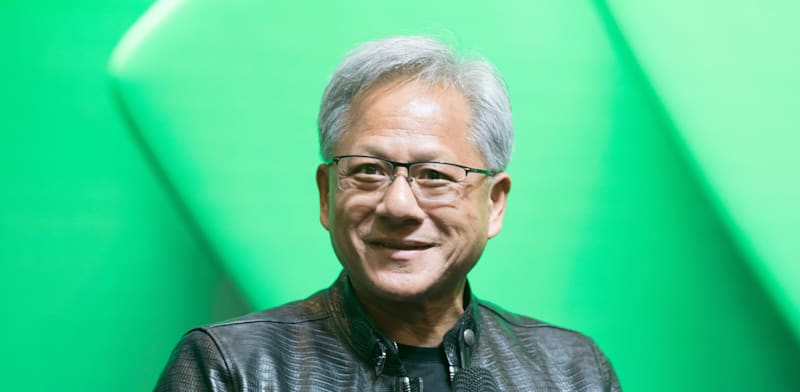
South Korean President Lee Jae Myung (right) shakes hands with Nvidia founder and CEO Jensen Huang during their meeting on the sidelines of the Asia-Pacific Economic Cooperation (APEC) summit in Gyeongju, South Korea, on Oct 31, 2025
GYEONGJU, South Korea: United States tech giant Nvidia said on Friday (Oct 31) it will supply 260,000 of its most cutting-edge chips to South Korea, as CEO Jensen Huang met President Lee Jae Myung and the heads of the country's biggest companies on the sidelines of the Asia-Pacific Economic Cooperation (APEC) summit.
South Korea is home to two of the world's leading memory chip makers - Samsung Electronics and SK hynix - which manufacture chips essential for artificial intelligence products and the data centres that the fast-evolving industry relies on.
Lee has also expressed his hope that the country can become the world's third AI power after the US and China.
Speaking to media after the announcement, Huang said that the goal was "ambitious".
But, he said, "there's no reason why Korea cannot achieve it - you have the technology, you have the software expertise, and you also have a natural ability to build manufacturing plants".
Nvidia has been caught in the middle of that geopolitical tussle.
Its chips are currently not sold in China due to a combination of
Beijing government bans, US national security concerns and ongoing trade tensions.
Nvidia CEO Jensen Huang, Samsung Electronics Chairman Jay Y Lee and Hyundai Motor Group Executive Chair Euisun Chung make a toast at a fried chicken restaurant in Seoul, South Korea, on Oct 30, 2025. (Photo: Reuters/Yonhap)
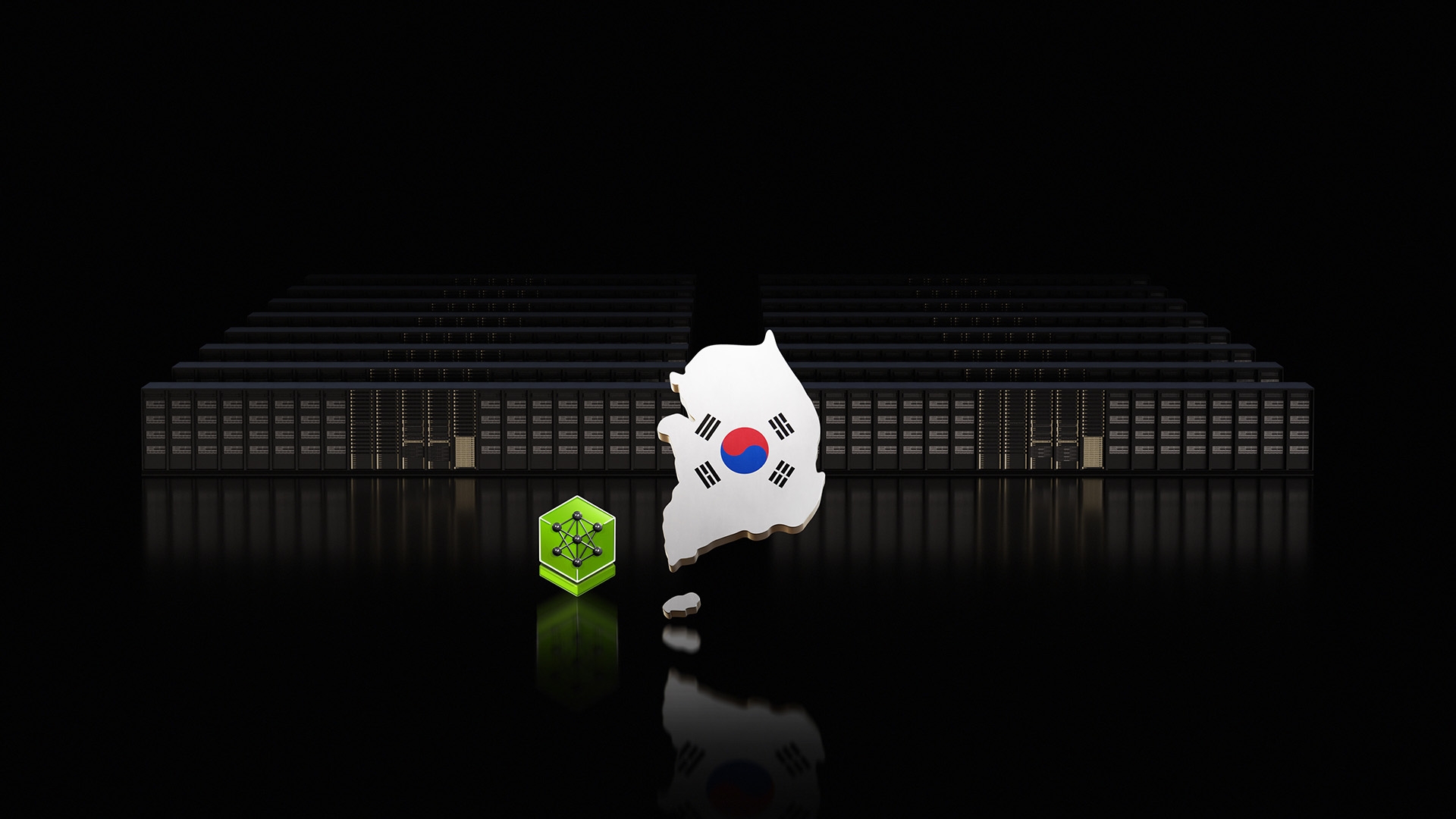
NVIDIA today announced that it is working with South Korea to expand the nation’s AI infrastructure with over a quarter-million NVIDIA GPUs across its sovereign clouds and AI factories.

nvidianews.nvidia.com
NVIDIA, South Korea Government and Industrial Giants Build AI Infrastructure and Ecosystem to Fuel Korea Innovation, Industries and Jobs
Korea Government, Computing and Manufacturing Leaders Adding Over 260,000 NVIDIA GPUs for Physical and Agentic AI
News Summary:
- The Korean government, through the Ministry of Science and ICT, is investing in sovereign AI infrastructure with over 50,000 of the latest NVIDIA GPUs to be deployed across the National AI Computing Center and Korean cloud service and IT providers NHN Cloud, Kakao Corp. and NAVER Cloud.
- Samsung Electronics is building an AI factory with over 50,000 GPUs to accelerate its AI, semiconductor and digital transformation roadmap.
- SK Group is building an AI factory featuring over 50,000 NVIDIA GPUs and Asia’s first industrial AI cloud featuring NVIDIA RTX PRO 6000 Blackwell Server Edition GPUs for physical AI and robotics workloads.
- Hyundai Motor Group is collaborating with NVIDIA and the Korean government in building an NVIDIA AI factory with 50,000 NVIDIA Blackwell GPUs to enable integrated AI model training, validation and deployment for manufacturing and autonomous driving.
- NAVER Cloud is expanding its NVIDIA AI infrastructure with over 60,000 GPUs for enterprise and physical AI workloads.
- NAVER Cloud, LG AI Research, SK Telecom, NC AI, Upstage and NVIDIA are developing Korean foundation LLMs to accelerate Korean AI applications through public-private partnerships.
- The Korea Institute of Science and Technology Information is establishing a Center of Excellence for the advancement of quantum computing and science.
APEC Summit—NVIDIA today announced that it is working with South Korea to expand the nation’s AI infrastructure with over a quarter-million NVIDIA GPUs across its sovereign clouds and AI factories. Built with public- and private-sector deployments, the infrastructure forms the foundation for AI-enabled economic growth and innovation across Korea’s industries, including automotive, manufacturing and telecommunications.
“Korea’s leadership in technology and manufacturing positions it at the heart of the AI industrial revolution — where accelerated computing infrastructure becomes as vital as power grids and broadband,” said Jensen Huang, founder and CEO of NVIDIA. “Just as Korea’s physical factories have inspired the world with sophisticated ships, cars, chips and electronics, the nation can now produce intelligence as a new export that will drive global transformation.”
“Now that AI has gone beyond mere innovation and become the foundation of future industries, South Korea stands at the threshold of transformation,” said Bae Kyung-hoon, Korea Deputy Prime Minister, and Minister of Science and Information and Communication Technologies. “Expanding our national AI infrastructure and developing technologies with NVIDIA is an investment that will further reinforce South Korea’s strengths, including its manufacturing capabilities. This will support South Korea’s prosperity as it strives to become one of the top three global AI powerhouses.”
Announced as world leaders gather in South Korea for the APEC Summit, the Ministry of Science and ICT (MSIT) is accelerating its plans to deploy up to 50,000 of the latest NVIDIA GPUs to accelerate sovereign AI development for enterprises and industries. The AI infrastructure deployment will grow over the next several years from an initial deployment of 13,000
NVIDIA Blackwell and other GPUs by
NVIDIA Cloud Partner NAVER Cloud, together with NHN Cloud and Kakao Corp., to expand computing infrastructure on the nation’s sovereign clouds through initiatives such as the establishment of Korea’s National AI Computing Center.
Research institutes, startups and AI companies will be able to use the sovereign infrastructure to build models and applications, supporting Korea’s national strategy to boost AI capabilities and infrastructure.
In addition, NVIDIA is working with industries, academia and research institutions in Korea on AI-RAN and 6G infrastructure. NVIDIA is collaborating with Samsung, SK Telecom, ETRI, KT, LGU+ and Yonsei University to develop intelligent, low-power AI-RAN network technology that can reduce computing costs and extend device battery life by offloading GPU computation tasks to the network’s base station.
Korea’s Industry Titans Build NVIDIA AI Factories for Advanced Manufacturing
Automotive, manufacturing and telecommunications leaders in Korea are developing significant AI infrastructure investments and expansions to accelerate enterprise and physical AI development.
Samsung is building a semiconductor AI factory with over 50,000 GPUs to advance intelligent manufacturing and bring AI to its products and services. It is using NVIDIA technologies, including
NVIDIA Nemotron™ post-training datasets,
NVIDIA CUDA-X™, the
NVIDIA cuLitho library and
NVIDIA Omniverse™, to build digital twins that improve the speed and yields of sophisticated semiconductor manufacturing processes. Samsung is also using
NVIDIA Cosmos™,
NVIDIA Isaac Sim™ and
NVIDIA Isaac Lab to advance its home robot development portfolio.
SK Group is designing an AI factory that can host over 50,000 NVIDIA GPUs to advance semiconductor research, development and production, as well as cloud infrastructure to support digital twin and AI agent development. SK Telecom plans to provide sovereign infrastructure featuring
NVIDIA RTX PRO™ 6000 Blackwell Server Edition GPUs, enabling domestic manufacturers to tap into NVIDIA Omniverse. The company will offer industrial cloud infrastructure to accelerate digital twin and robotics projects for startups, enterprises and government agencies.
Hyundai Motor Group and NVIDIA are entering a new phase of deepened collaboration and will codevelop AI capabilities across mobility, smart factories and on-device semiconductors, powered by 50,000 Blackwell GPUs for AI model training and deployment. In support of the Korean government’s initiative to build a national physical AI cluster, Hyundai Motor Group and NVIDIA will work closely with government stakeholders to accelerate ecosystem development. This will result in an approximately $3 billion investment to advance the physical AI landscape in Korea. Key initiatives include the creation of an NVIDIA AI Technology Center, Hyundai Motor Group Physical AI Application Center and regional AI data centers.
NAVER Cloud is also expanding its NVIDIA AI infrastructure and plans to deploy over 60,000 GPUs — including NVIDIA RTX PRO 6000 Blackwell and other NVIDIA Blackwell GPUs — for sovereign and physical AI. NAVER Cloud is preparing for the next stage of sovereign AI development in Korea, powered by NVIDIA Nemotron open models running on its NVIDIA AI infrastructure. NAVER Cloud plans to develop industry-specific AI models like shipbuilding and security, with a focus on inclusive AI for Korea’s citizens.
Korea Government and Developers Advance LLM Research With NVIDIA
Teaming with NVIDIA, Korea’s MSIT is advancing its Sovereign AI Foundation Models project to develop sovereign language models. The project will incorporate
NVIDIA NeMo™ and open NVIDIA Nemotron datasets to tap local data for developing and distilling reasoning models.
LG AI Research, NAVER Cloud, NC AI, SK Telecom and Upstage are participating in the project to support sovereign model development. Enterprises, researchers and startups will be able to contribute to and use the models to create AI agents with speech, reasoning and other capabilities.
LG is working with NVIDIA to foster physical AI technology development and support the physical AI ecosystem. NVIDIA and LG are also working together to support startups and academia with LG’s EXAONE models — including the EXAONE Path healthcare model, built with the MONAI framework — to support cancer diagnosis.
Korea and NVIDIA Advance Quantum Computing and Scientific Research
The Korea Institute of Science and Technology Information (KISTI) is working with NVIDIA to establish a Center of Excellence designed to foster research collaboration using Korea's sixth-generation national supercomputer, HANGANG, which features NVIDIA accelerated computing.
KISTI also announced support for the new
NVIDIA NVQLink™ open architecture for connecting quantum processors and GPU supercomputing. Working with the
NVIDIA CUDA-Q™ platform, NVQLink equips KISTI to deepen research in areas like quantum error correction and hybrid application development to accelerate the development of tomorrow’s quantum-GPU supercomputers.
KISTI will also build foundation models for scientific research and development, and support researchers on developing physics-informed AI models using the open-source
NVIDIA PhysicsNeMo™ framework.
New Startup Alliance Supports Korean Development
Furthering economic development and opportunities in Korea, NVIDIA and its partners are establishing an alliance to foster startups through the
NVIDIA Inception program. Members will be able to access accelerated computing infrastructure from NVIDIA Cloud Partners including SK Telecom, with support from NVIDIA Inception and VC Alliance members including IMM Investment, Korea Investment Partners and SBVA. Startups will also have access to NVIDIA software and expertise, speeding growth for the next generation of companies.
Building on its work through the
NVIDIA Inception program for startups, NVIDIA also plans to work with the Korean government to support the next generation of companies. It will participate in the N-Up AI startup incubation program operated by the Korea Ministry of SMEs and Startups.


 www.visualcapitalist.com