Old/New Articles and News item about PAF

cont'd...

After Retirement from PAF​


06-743x1024.png


After retiring from the PAF, Asghar Khan was appointed as the President of PIA. During his tenure, PIA implemented high standards of aviation safety and was able to achieve lowest aircraft accident rates. Net profits also soared in his tenure and PIA became a respected competitor in the global air travel business. In addition, Asghar Khan briefly served as the Director-General of the Civil Aviation Authority (CAA). He eventually retired from both his positions in 1968.

It was apparent to all that Asghar Khan had a staunch moral sense. In this spirit, he was a part of multiple political and resistance after his retirement. He fought for what he believed was right, in the face of all odds.

As an Author​

Asghar Khan has numerous books to his name. These books have been read widely and accepted as essential reading for any individual interested in delving deeper into state affairs. They remain as relevant today as when they were written.

The Legacy of the Legend​


In 1946, Asghar Khan married Amina Shamsie with whom he found marital bliss and would go on to have four children, two daughters and two sons. His eldest son Omar, like his father, was a deeply ambitious and persistent man.

He graduated from Cambridge University and went on to become a cabinet minister. Unfortunately, he died at a young age. Asghar Khan’s younger son, Ali Asghar, is a skilled architect by profession who graduated from British Architects, UK. Presently, he is pursuing his career as a politician. Both his daughters are happily married.

The father of PAF passed away at ninety-seven years of age in January 2018 in Islamabad. His funeral was attended by the President of Pakistan, high-ranking officers from armed forces and other government institutions at Nur Khan Air Base. The burial was undertaken his native village Nawanshehr, Abbotabad with full military honors, where a fly-past of K-8 and T-37s from PAF Academy also took place. A year before his demise, PAF Academy was renamed as PAF Academy Asghar Khan, a great honor which he truly deserved.

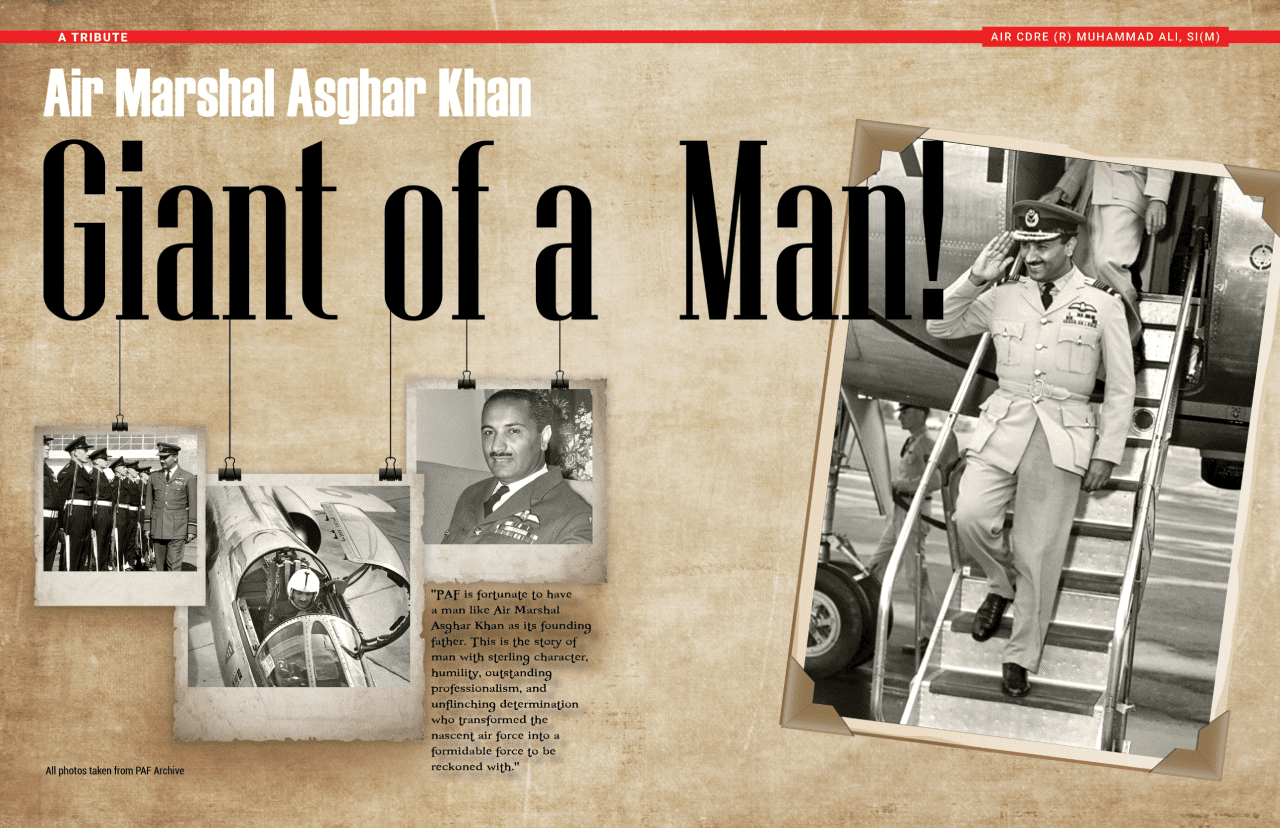
PAF is fortunate to have a man like Air Marshal Asghar Khan as its founding father. A man of sterling character, humility, outstanding professionalism, and unflinching determination who transformed the nascent air force into a formidable force to be reckoned with. He truly made the PAF, ‘Second to None’ as envisioned by great Quaid decades ago.

The entire PAF owes him profusely for the countless contributions he made for this great service; owing to his great achievements, he would truly be regarded as the ‘Father of Pakistan Air Force’ for the times to come.

08-2-1024x528.png

Author​


Air Cdre (R) Muhammad Ali, SI(M)


FEATURE STORY
Bristol Freighter service

The story of Bristol Freighter service in RPAF is nothing short of spectacular. For decades, this 'Work Horse' remained the backbone of all RPAF air transport operations, gradually fading away in obscurity, paving the way for its more versatile predecessor, the 'C-130 Hercules'
by Franciszek Grabowsk

Among the aircraft operated by the Royal Pakistan Air Force, the story of Bristol Freighter is probably the most exciting one. The aircraft was thought of as a development of Bristol Bombay transport aircraft, albeit with a fuselage large enough to accommodate large sized cargo, and capable of operations from improvised airstrips.

The study that became Bristol Type 170 attracted interest of the Air Ministry of UK, which required some changes but otherwise found the aircraft most promising. RAF wanted to use it in the World War II against Japan. Unfortunately, the aircraft arrived too late for the war, being first flown in December 1945. This ultimately sealed the fate of the aircraft. Post-war cuts in the RAF structure rendered the aircraft unnecessary Healising that, Bristol immediately began studies on modifying the aircraft for civilian operators

The aircraft was ultimately manufactured in a total of 214 pieces. A marginal number to WWII standards, it was still a big success, especially in the commercial market, where previously demobbed Dakotas dominated. The last Freighter was withdrawn from use in 2004.

The aircraft is in immaculate condition in a standard silver finish of the type. Noticeably, the panels behind the engines and gondolas s are painted in black, in order to make the aircraft look neat, making oil spills and exhaust settlements invisible.

Freighter 31M of No 12 Sqn taxiing along the line up of other Freighters. The aircraft are devoid of code letters, suggesting the photo was taken soon after the delivery in mid 1950s.

Deliveries continued with G-788-G793 arriving in July 1950, 6794-6800 during June to September 1951, and G801 and 6802 in February and March 1952 respectively.

In 1951-52 No 6 Son came up with an original and ingenious idea to train cadets from RPAF Risalpur. Titled The Flying Class, the cadets were flown from Lahore in a Freghter specially modified for this purpose, Instructors included navigation instructor Fig Off Abdul Majid and airbome map reading instructor Pit Off Sultan Muhammad, adepta at the task assigned to them. The cadets accumulated real- time practical navigation and map-reading skills aboard the Freighter.

Final aircraft G804-G806 were delivered in the period December 1 1952-January 1953, while the last three G807-G809 were delivered in April-May 1953. An aircrew training unit was formed as Transport Conversion Flight of Conversion School at RAF Mauripur. Wg Odr Mohammad Kyber Khan was appointed ars its first chief instructor who personally selected the One factor which supremely surpasses Dakota, was freighter's clamshell nose doors.

These doors could open up sideways allowing large-sized cargo like 3-ton trucks, large military vehicles to be loaded/offloaded with ease and efficiency. This facility proved to be a huge benefit during 1948 Kashmir war.1800 kg bombs being hanged onto Freighter a wato Lahore, 3 December 1955.

2: Lahore, 30 September 1950, debriefing after a mission. Fig Off Abdul Rashed Siddiqui GD(P), Fig Off ot Mazhar Army Photo: Daud Shah) GD(P) and Capt
3: Personnel Son e in front of a Freightes early 1950s (Photo: PAF Archives)
Soon after induction, to carry a some of the Freighter were Photograph shows details of a recce camera installation in a Freighter 21P during C-in-C's visit on 21 March 1950 Photo: PAF Archiv
Freighter 210 6781 remaining faculty members During 1952 floods, No 6 Son was employed in large-scale food supply drops for which the squadron received an award. presented on 17 August 1952 by the Governor of the West Pakistan. Another large operation of No 6 Sqn was Show Drop which began on 15 November 1953 and involved dropping supplies in Pakistan's Northem Areas from RPAF Chaklala.

The operation concluded on 30 November with 363,000 kg of supplies being freighted by Freighters to Gilgit and Skardu.

The next aircraft ordered were 38 improved Mik 37Ms which received new range of serials between $4401 and 54438. They were delivered from December 1953 to June 1955, usually in batches of three or four aircraft.

The last one, 54438 was handed over on 29 June 1955 in a ceremony attended by the Pakistan High Commission in London, His Excellency Mohammed Ikramullah. With this the number of Bristol Freighter in the Inventory of RPAF inflated to 1 It seems that some of those aircraft were delivered in a distinctive Bristol style pattern, with white upper fuselage with thin green trim, and green spinnent, while the rest wern camouflaged, with a disruptive pattern of Dark Green and Dark Sea Grey on upper surfaces and PRU Blue on the bottom Camouflaged Freight 56420.V of No 6 Sign during a amit to RAF

On 14 December 1949 Freighter 0781 was flown from Lahore via Chaklala to Gilgit and on the next day to Skardu and back to Lahore vie Chaklala. On board was Ronald C.W. Ellison Assistant Chief Test Pilot Bristol Aircraft Company, who visited Pakistan to examine Freighter operations in World's toughest routes/ valleys captain was Fig Off Syed Mahmood Ahmad GD(P), Pilot Officer A. Rashid GD(N).


Pakistan Begins JF-17 Avionics Production​

Pakistan has begun producing avionics and other important equipment for the JF-17 Thunder at the Pakistan Aeronautical Complex (PAC) in Kamra. Super-7, or the JF-17 Thunder, has been developed by the Chengdu Aircraft Industry Corporation, under a joint venture between China and Pakistan
June 2, 2010
news86766-html

Pakistan has begun producing avionics and other important equipment for the JF-17 Thunder at the Pakistan Aeronautical Complex (PAC) in Kamra.
Super-7, or the JF-17 Thunder, has been developed by the Chengdu Aircraft Industry Corporation, under a joint venture between China and Pakistan.


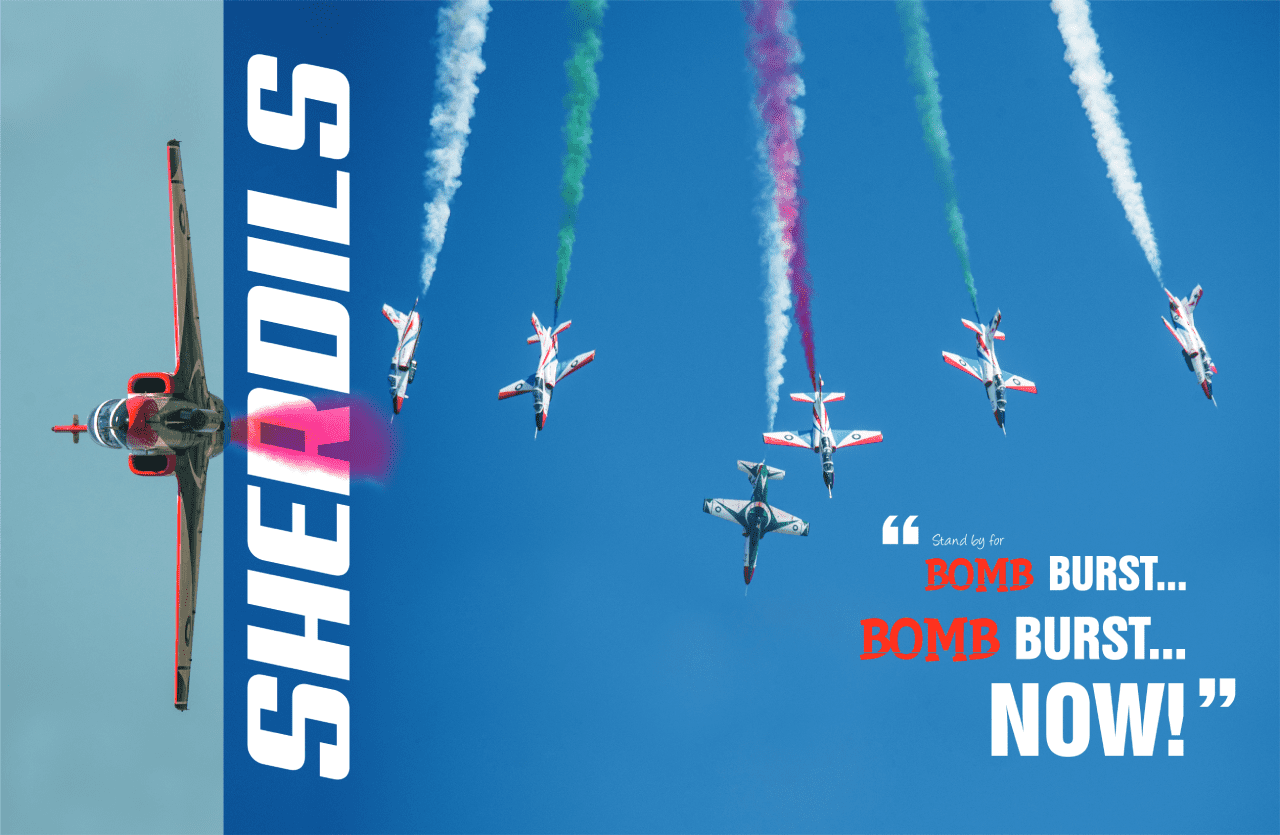
Tribute to Sherdils: Bomb Burst..Bomb Burst… NOW!​

Sherdil-cover-01.png


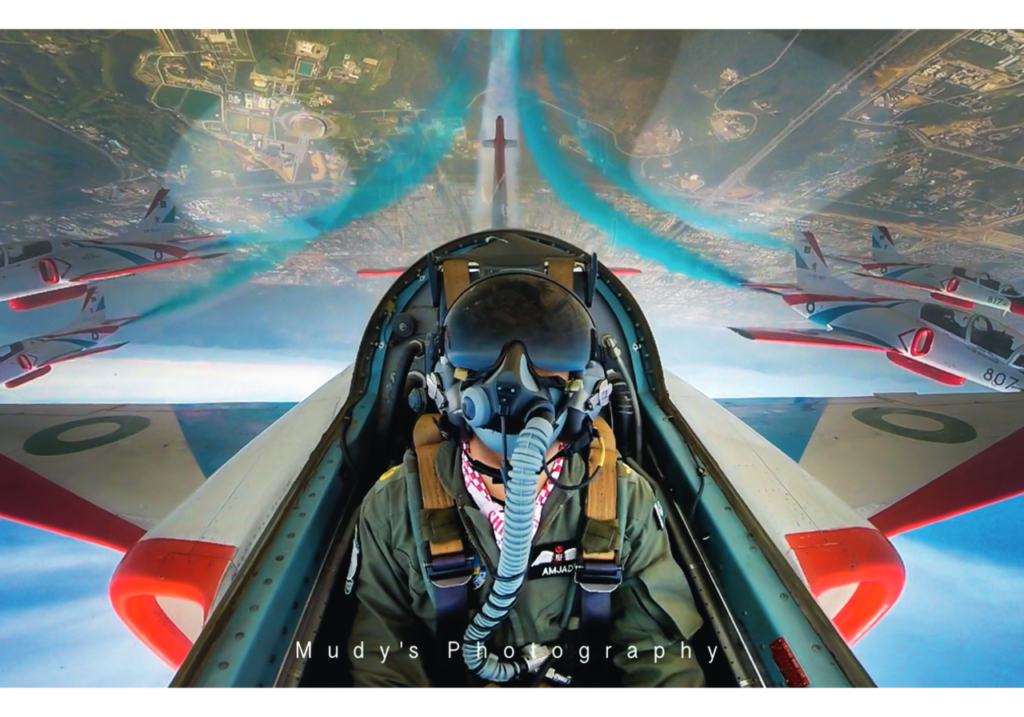
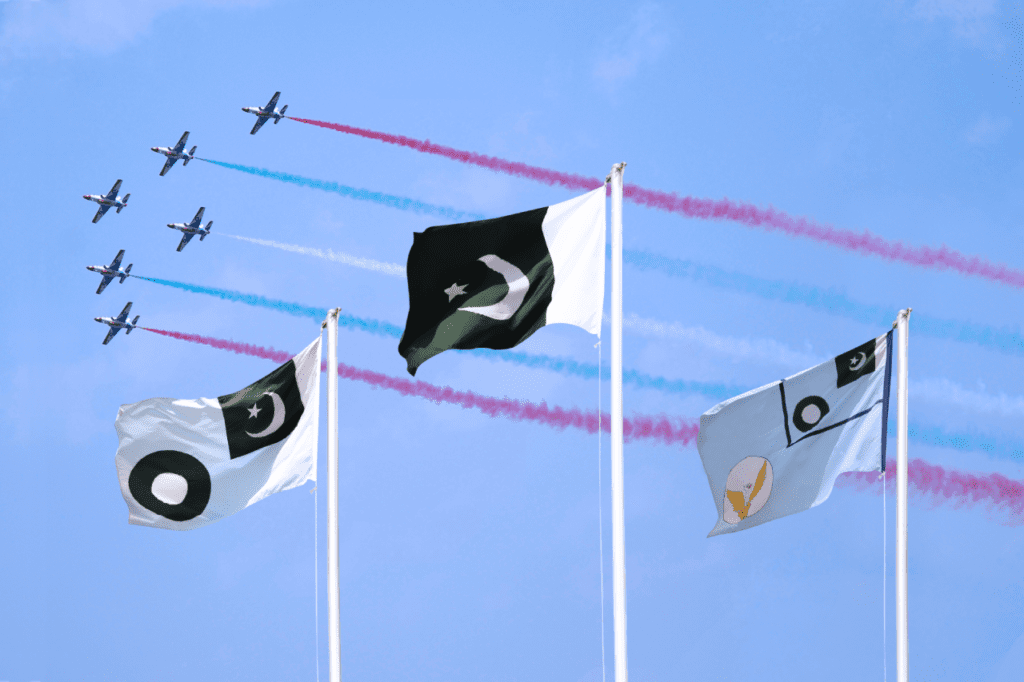
This is not patriotism talking; the Sherdils know that they are the world beating air force fighter pilots. How do they fly so close and perform manoeuvres with such precision? It is part training and the rest is enormous trust in each other. Flying beautifully and gracefully, and moving like one wing, Sherdils bowl over audiences every time they make their arrowhead formation entrances.

With the call, “Pull up…Pull up…Pull up…Now,” begins an aerial performance that has won the hearts of millions across the globe. It has left even more wondering how they execute manoeuvres from the first loop to the last death-defying bomb burst. It is no idle boast that the Sherdils, the aerobatics display team of the Pakistan Air Force, are world renowned.

The team comprises a selected group of instructor pilots from the Advanced Jet Training Squadron of PAF Academy Asghar Khan in Risalpur. Their whole lives are built around flying. The best of the best have choreographed performances in air shows around the world.

History

The idea of formation aerobatics team was carved into reality by an Academy instructor, Sqn Ldr Bahar-Ul-Haq, who was on an exchange tour of RAF College Cranwell Aerobatics Team in 1970’s. It was then decided to put up a brief show on graduation parades at the academy to demonstrate outstanding skills of academy instructors. After several months of practice, Wg Cdr Imtiaz A Bhatti, led a team of four instructor pilots in T-37 aircraft aka ‘Tweety Birds’, and put up an impressive show, flying wing tip to wing tip, twisting and turning over the skies of the PAF Academy on 17th August, 1972.

For over two years, these daredevils performed with the call-sign of its formation leader. It was bestowed the befitting name – The Sherdils – on 19th September, 1974. The team continued to perform up until December 1991, when sanctions were imposed on the sale of military equipment to Pakistan. It took five years for the sanctions to be lifted and the Sherdils could blaze into the skies once again.

Aircraft Used
02-1-1024x717.png

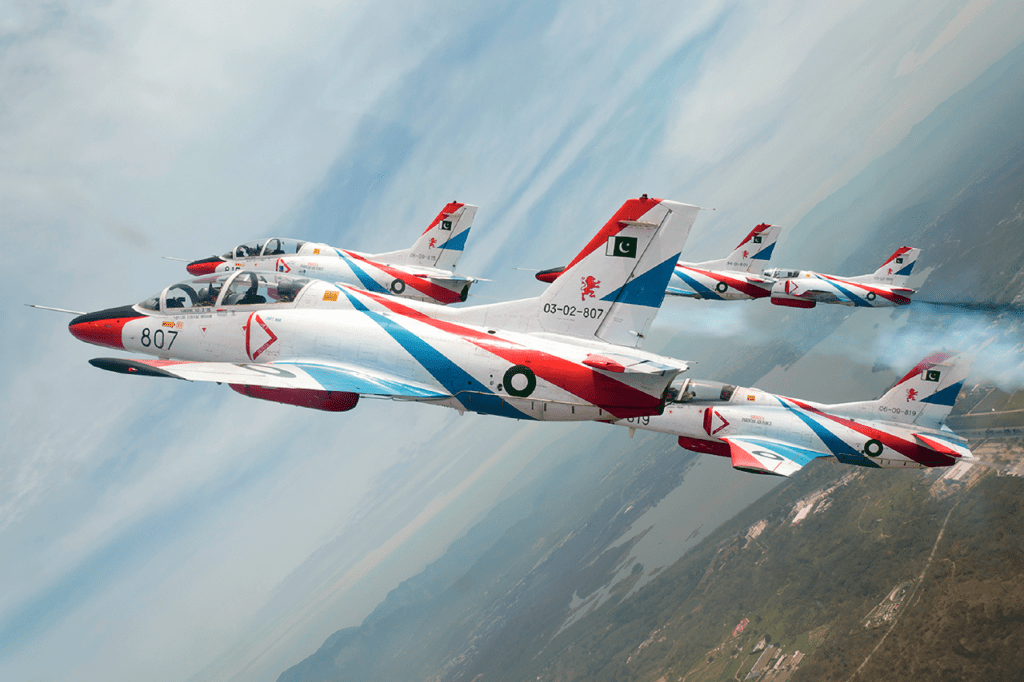
Tweety-Bird served Sherdils for nearly 37 years. During this period, it performed on various national occasions such as Academy Graduation Parades, for visiting heads-of-states, Pakistan Day and Defence Day celebrations. In the late 90s, PAF Academy had inducted the modern K-8P aircraft for jet training; in parallel to old T-37s. With the turn of the century, the idea emerged to trade T-37 with K-8P for the Sherdils’ team.

After extensive studies on power-margin and throttle in-puts available to the formatting flyers as well as better performance capabilities of K-8 jet as an aerobatic platform, the change-over from the old T-37 to K-8 was a logical choice. On 18th November, 2009, the first ever 4-ship K-8 pulled up for a loop in diamond formation to the thrill of the audience with Sqn Ldr Amir Misbah as leader.

From Four to Nine Ship

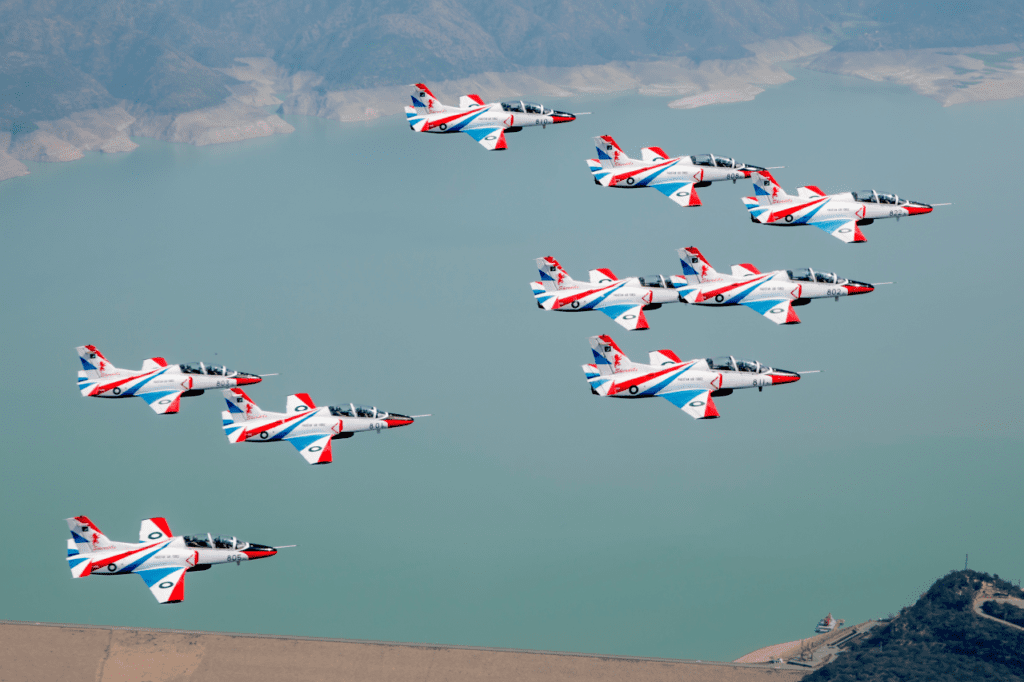
On 27th March, 2004, a new milestone was achieved when Wg Cdr Tariq Chaudhary, led six aircraft into formation aerobatics instead of four for the first time. The present Sherdil Formation Aerobatics team comprises of nine aircraft, which is being led by Wg Cdr Mohammad Irfan Pattal. The run-ins are executed by all nine out of which three peel-off and the remaining six-ship formation perform the aerobatics sequence.

05-1024x682.png

The Sherdils’ Sequence

Moving in prescribed pieces of air space, the 6-ship adjusts for a wing over towards the left side. Just as the audience is catching its breath, two Sherdil pilots appear at high speeds over the site. Throttles pushed into the corner, they cross each other at an accumulated speed of 1,000 km/h above a euphoric crowd.

They fly on to perform a high-G turn known as a Carousel, while in the backdrop, keeping tight formation, the 6-ship have completed a parallel loop over the site. When the primary formation makes an exit with a high-G turn to the right side, a Sherdil pilot who had earlier broken off makes an abrupt entrance from the rear at 600 km/h and implements what is known as the ‘Tail-slide’.

This is complemented by the 6-ship formation that once again enters the scene and carries out the Barrel Roll manoeuvre. As the Barrel Roll is done, Sherdil 8 and 9 enter the fray and dash into the course at 500 feet high. They perform ‘Shaheen-Break’ in the middle of the air show site. The aerobatics concludes with the final act, the moment audiences sit on the edge of their chairs for. The 6-ship formation enters the arena one last time and pull up to perform possibly the most gutsy move of the show, the Bomb Burst Loop.

Sherdils Performances

Led by Wg Cdr Ali Zaidi, formatting Sherdil twisted and turned over Thal Range for the Fire Power Demonstration on 6th May, 2010, before an excited audience. From 16th to 21st November, 2010, the Sherdils were tasked to perform at the Zhuhai Air Show, China 2,300 nautical miles (NM) away. The aerobatic formation was led by Sqn Ldr Khalid Matin.

03-1-1024x682.png


Driven by the consumption to be the world’s best airmen, the manoeuvres executed by the Sherdils rattle even the pros. These sequences are variations of the manoeuvres that every airman learns during his training as a fighter pilot. Their moves are undertakings with no room for errors. Flying just 500 feet above ground, the sequence starts with the first run-in of the 9-ship formation at over 600 km/h. As the team enters the arena, the leader gives a ‘Pull-up’ call that audiences hear in real-time thrice before the front 6-ship formation pulls up for a complete loop and the rear 3-ship formation performs a lateral bomb burst manoeuvre.

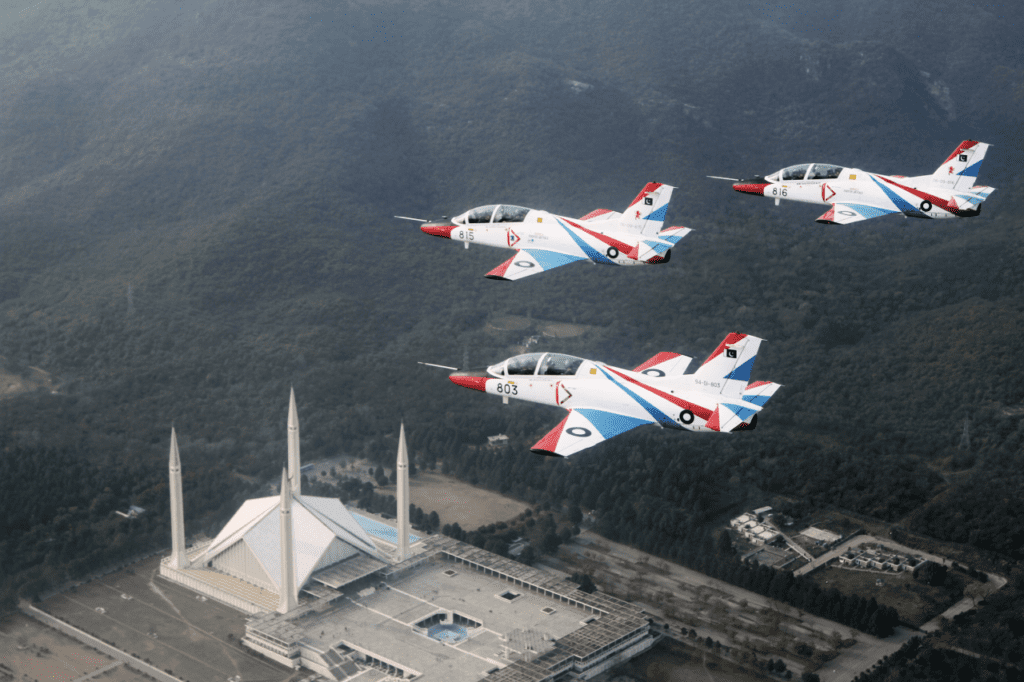
Sherdils participated in the Pakistan Day fly-past over the Presidency, Islamabad, in a 7-ship formation on 23rd March, 2014, led by Wg Cdr Asim Zia. Subsequently, international audiences witnessed the formation aerobatics on Pakistan Day Parades in the years 2015 and 2016. On 6th September, 2015, Sherdils participated in the Golden Jubilee celebrations of the 1965 war. The 9-ship formation, led by Wg Cdr Amjad Mehmood, awed the audience gathered at F-9 Park, Islamabad.
On 7th December 2015, Sherdils performed on the occasion of Fire Power Demonstration – 2015, at PAF Air to Ground Firing Range Sonmiani, led by Sqn Ldr Hammad Khurshid. The Sherdils performed flawlessly, in the backdrop of the Arabian Sea, to the delight of national and international dignitaries.

In March 2016, Sherdils flew in their highly responsive K-8 at short notice to the Kingdom of Saudi Arabia, to participate in the culmination ceremony of Exercise Raad-Al-Shamaal. The team led by Sqn Ldr Taimur Nawaz Khan, performed for a gathering of monarchs, political leaders and top military commanders.

Over a span of 47 year, Sherdils have performed on graduation parades, air shows, visits of foreign dignitaries, Defence Day and Pakistan Day parades etc. They have demonstrated with Turkish Air Force F-16 on 7th September, 1997, and with the Red Arrows on 24th November, 1997, in Islamabad. They have had the honour of flying aerobatics on the 100 years of Flight Celebrations held at Al Ain Air show on 14th December, 2003, Dubai air show in 2007, Fire Power Demo 2010- 16-19, on the 70th Independence Day, Karachi and also IDEAS 2018, in Karachi.

IMG_2768-1-1024x682.png


Becoming a Sherdil

Being a Sherdil is no easy task. They possess experience, knowledge and finesse to maintain their thrust to be world’s best flyers. It entails what the Sherdils’ crew term as ‘Wits of a warrior and Guts of a Gladiator.’ Candidates must have an impeccable record and at least a thousand flying hours to their name. They must meet stringent criteria before they are inducted. Practicing routines take total dedication of their time.

The training commences in well-planned steps. It is initiated with the basic level of two-ship formation and then moves on to four-ship, six-ship and, finally, to nine-ship formation flying. These training sessions are all conducted at higher altitudes. As the pilots become adept, the altitude is decreased gradually to as low as 500 feet above ground.

Brave Hearts

In order to keep the aerobatics skill alive for Basic Flying Training (BFT) instructor pilots, T-37 formation aerobatics team was revived in October, 2018.

08-1024x682.png


Supplementing the existing Sherdil team, the ‘Bravehearts’ provide flexibility at selected occasions during formation aerobatics. The Bravehearts comprise four T-37 aircraft, which perform initial run in, pull up for loop, barrel roll, clover leaf and linear bomb burst loop. Integration of Bravehearts in Sherdils’ display profile was well appreciated at PAF as well as the national level.

However, to further add colour and variety to overall display, a few manoeuvres were added in previous profile, this year. The ‘Twister’ manoeuvre was added in sequence instead of parallel-loop and steep-turn. The previously inducted ‘carousel’ (circle of no-joy) manoeuvre was replaced with the more dynamic and appealing 5-6G 360° turn and level inverted pass.

Whether it is the tightness of the graceful diamond roll providing an amazing angle to photograph or the ballet-like precision of the bomb burst, what the Sherdils do is wondrously beautiful. Keep in mind that behind the beauty of each move, the Sherdils are executing perfected combat flying skills. Call it dedication, skill, team work, attention to detail, they all fit. That is why any PAF pilot will tell you, it is a proud privilege to be a ‘Sherdil’.


Rockwell to upgrade Pakistan Air Force’s C-130 aircraft fleet with Flight2 avionics suite​

Rockwell Collins has been selected to modernise the Pakistan Air Force's C-130E and C-130B aircraft fleet.
April 3, 2017

main-816.jpg

Rockwell_Pakistan.jpg

Rockwell Collins has been selected to modernise the Pakistan Air Force's C-130E and C-130B aircraft fleet.
The company will provide Flight2 avionics system to Pakistan under the new arrangement, which will be used to upgrade up to 11 C-130E and five C-130B aircraft.

Rockwell noted the Flight2 integrated avionics suite will provide the Pakistan C-130 aircraft with unrestricted access to global airspace by meeting current communication, navigation, surveillance / air traffic management airspace requirements.

Rockwell Collins Airborne Solutions vice-president and general manager Dave Schreck said: “Pakistan Air Force pilots will experience greater situational awareness and communications capabilities with the highly advanced avionics on-board these aircraft.
“Through our work with the Pakistan Air Force, we look forward to continuing our long legacy of helping C-130 pilots achieve their missions with these important upgrades.”

"Pakistan Air Force pilots will experience greater situational awareness and communications capabilities with the highly advanced avionics on-board these aircraft."
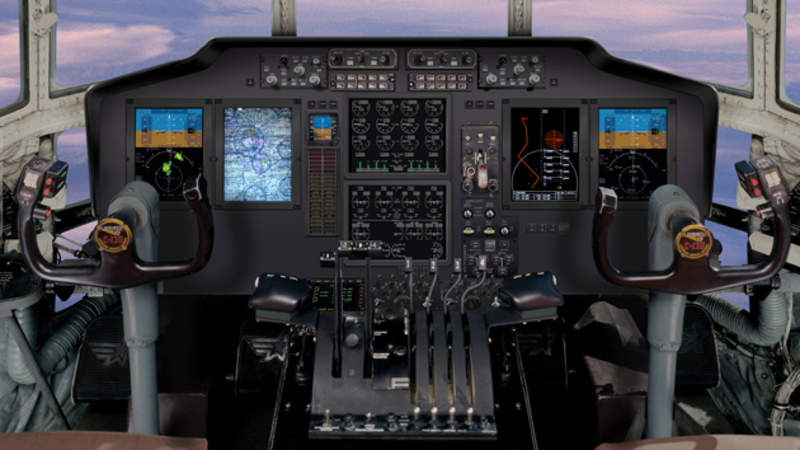
The avionics upgrade will see the C-130 aircraft equipped with a full glass cockpit with new primary flight displays and a required navigation performance area navigation flight management system with high altitude release point, as well as computed air release point precision airdrop software.

Rockwell will also provide a modern digital autopilot, high frequency and very high frequency, and SATCOM communications, navigation sensors, and safety and surveillance systems, as well as weather radar, traffic collision avoidance systems, a terrain awareness and warning system and digital map.
Additionally, the company have agreed to supply the consolidated flight manuals, checklists and maintenance supplements required to operate and maintain the fleet.

The upgrade work will be performed in Pakistan and is expected to be completed by the end of 2020.

Image: Rockwell Collins’ Flight2 avionics system has been selected by the Pakistan Air Force. Photo: courtesy of Rockwell Collins.
 
To view this content we will need your consent to set third party cookies.
For more detailed information, see our cookies page.
 

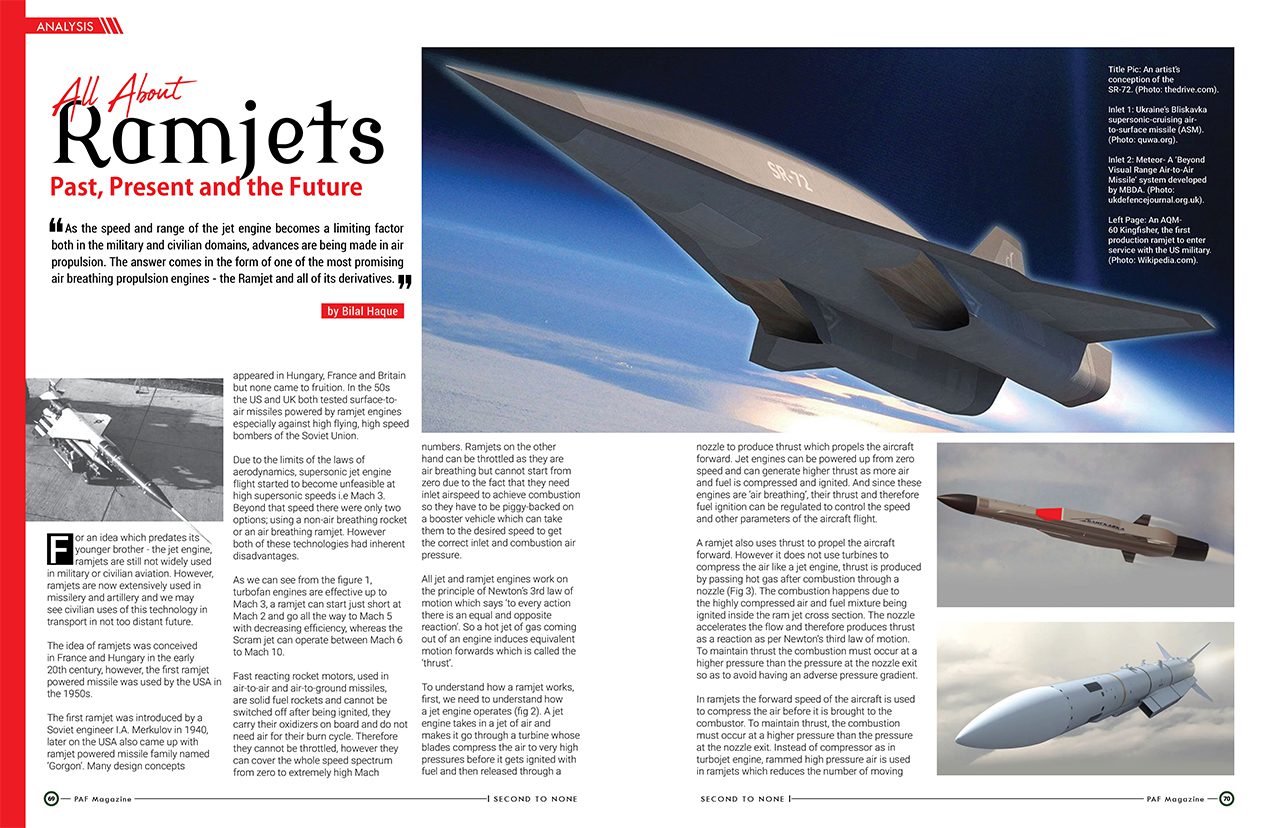
All About Ramjets Past, Present & The Future​

All About Ramjets Past, Present and the Future


As the speed and range of the jet engine becomes a limiting factor both in the military and civilian domains, advances are being made in air propulsion. The answer comes in the form of one of the most promising air breathing propulsion engines – the Ramjet and all of its derivatives.

For an idea which predates its younger brother – the jet engine, ramjets are still not widely used in military or civilian aviation. However, ramjets are now extensively used in missilery and artillery and we may see civilian uses of this technology in transport in not too distant future.

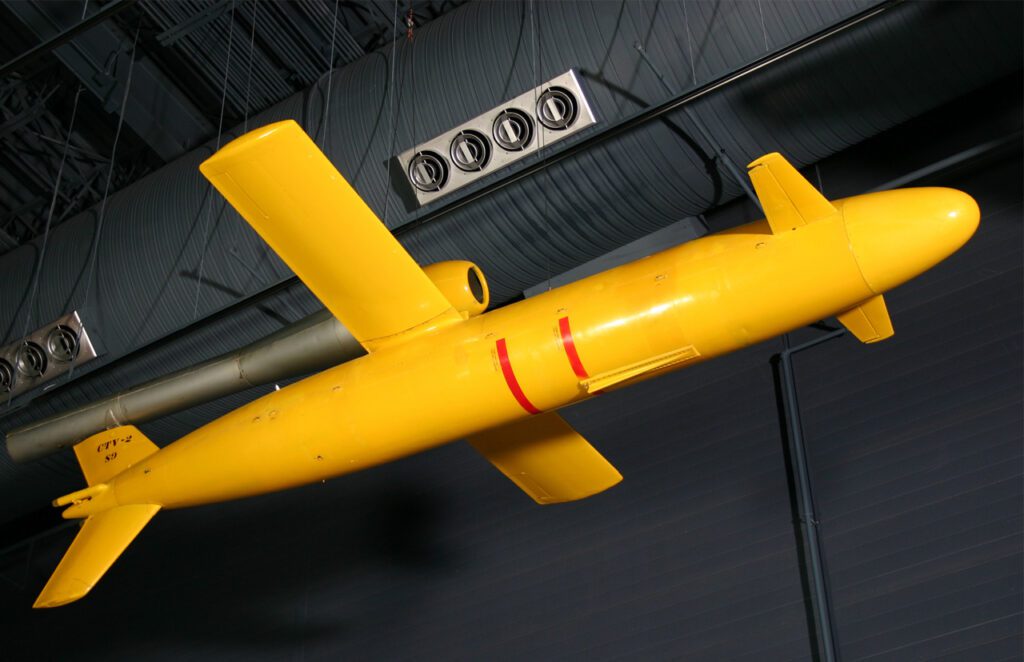
The idea of ramjets was conceived in France and Hungary in the early 20th century, however, the first ramjet powered missile was used by the USA in the 1950s.

The first ramjet was introduced by a Soviet engineer I.A. Merkulov in 1940, later on the USA also came up with ramjet powered missile family named ‘Gorgon’. Many design concepts appeared in Hungary, France and Britain but none came to fruition. In the 50s the US and UK both tested surface-to-air missiles powered by ramjet engines especially against high flying, high speed bombers of the Soviet Union.

Due to the limits of the laws of aerodynamics, supersonic jet engine flight started to become unfeasible at high supersonic speeds i.e Mach 3. Beyond that speed there were only two options; using a non-air breathing rocket or an air breathing ramjet. However both of these technologies had inherent disadvantages.

1-2-1024x662.jpg


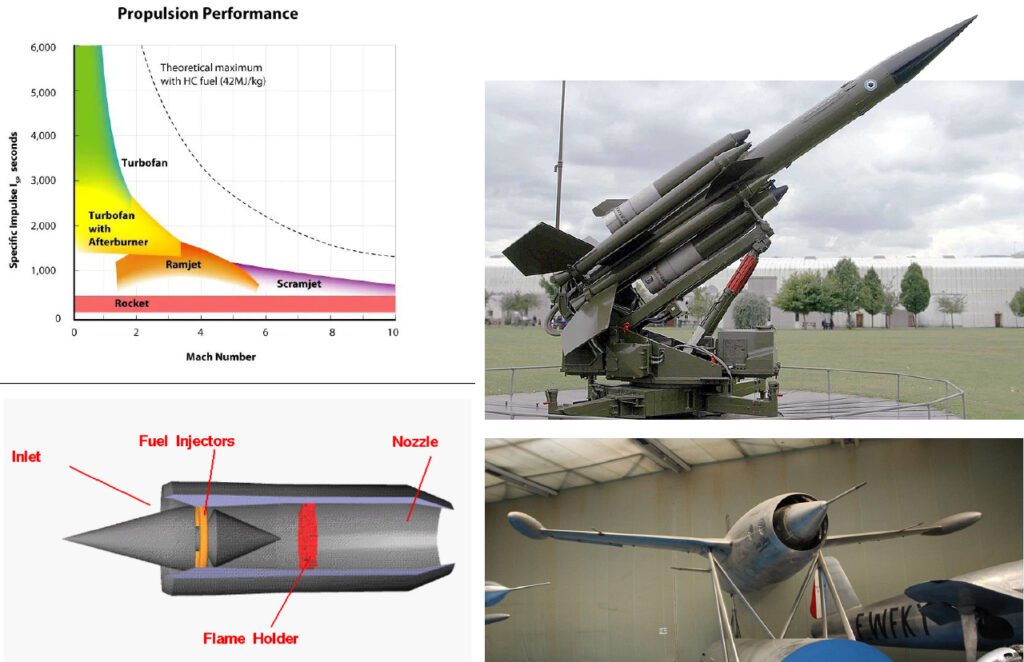
As we can see from the figure 1, turbofan engines are effective up to Mach 3, a ramjet can start just short at Mach 2 and go all the way to Mach 5 with decreasing efficiency, whereas the Scram jet can operate between Mach 6 to Mach 10.

Fast reacting rocket motors, used in air-to-air and air-to-ground missiles, are solid fuel rockets and cannot be switched off after being ignited, they carry their oxidizers on board and do not need air for their burn cycle. Therefore they cannot be throttled, however they can cover the whole speed spectrum from zero to extremely high Mach numbers.

Ramjets on the other hand can be throttled as they are air breathing but cannot start from zero due to the fact that they need inlet airspeed to achieve combustion so they have to be piggy-backed on a booster vehicle which can take them to the desired speed to get the correct inlet and combustion air pressure.

All jet and ramjet engines work on the principle of Newton’s 3rd law of motion which says ‘to every action there is an equal and opposite reaction’. So a hot jet of gas coming out of an engine induces equivalent motion forwards which is called the ‘thrust’.

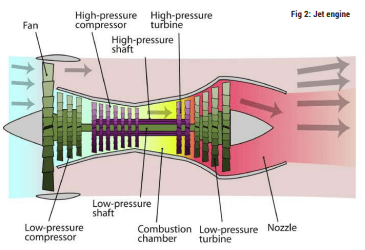
To understand how a ramjet works, first, we need to understand how a jet engine operates (fig 2). A jet engine takes in a jet of air and makes it go through a turbine whose blades compress the air to very high pressures before it gets ignited with fuel and then released through a nozzle to produce thrust which propels the aircraft forward. Jet engines can be powered up from zero speed and can generate higher thrust as more air and fuel is compressed and ignited. And since these engines are ‘air breathing’, their thrust and therefore fuel ignition can be regulated to control the speed and other parameters of the aircraft flight.

A ramjet also uses thrust to propel the aircraft forward. However it does not use turbines to compress the air like a jet engine, thrust is produced by passing hot gas after combustion through a nozzle (Fig 3). The combustion happens due to the highly compressed air and fuel mixture being ignited inside the ram jet cross section. The nozzle accelerates the flow and therefore produces thrust as a reaction as per Newton’s third law of motion.

To maintain thrust the combustion must occur at a higher pressure than the pressure at the nozzle exit so as to avoid having an adverse pressure gradient.
In ramjets the forward speed of the aircraft is used to compress the air before it is brought to the combustor.

To maintain thrust, the combustion must occur at a higher pressure than the pressure at the nozzle exit. Instead of compressor as in turbojet engine, rammed high pressure air is used in ramjets which reduces the number of moving parts and makes them simpler in architecture. However, that means that the ramjet powered vehicle needs to be brought to flight and to a certain speed using some other kind of propulsion so as to give air enough pressure to be combusted in the combustion chamber.


image-1.png


However the combustion in the ramjet occurs at subsonic speed, for high supersonic speeds the air needs to be slowed down by the ramjet inlet to be usable, later. However, above Mach 5 the ramjets become inefficient due to the supersonic velocity of the air coming in. Answer to this problem is supersonic combustion ramjet, the Scramjet (Fig 4).

The difference between a ramjet and a Scramjet, basically, lies in the speed of air at which combustion takes place. As previously discussed, a ramjet slows down supersonic inlet air speed to achieve combustion, whereas the Scramjet does not need to slow down the air and can achieve combustion with supersonic inlet speeds therefore proving extremely effective at high hypersonic speeds.

That’s why we can see ramjets having a launch propulsion system that engages before the ramjet takes over, so as to take the ramjet at a speed at which the inlet air speed is enough for its own combustion to take over. These ‘piggy back’ propulsion systems are normally jet engines or rocket engines.

In the world of missilery we have the example of ramjet powered missile and a dual pulse rocket motor powered missile as contrasting examples.

The dual pulse missile uses two solid fuel rocket motors which are fired at separate times to give the missile enough range, but since they are solid rocket fuelled and not ‘air breathing’ they cannot be throttled. Therefore it maintains the same rate of combustion during motor firing time, making them easier and cheaper to manufacture.

However, during the burn phase it is hard to maneuver the missile due to the rockets forward momentum and after the burn time, its glide time with optimum energy is lower than that of a throttle-able ‘air breathing’ engine which uses the air as the oxidizer. This means that the ‘No Escape Zone’ for the dual pulse rocket motor engine would be smaller than that of an air breathing propulsion system such as a ramjet. Because in ramjets, the speed can be optimized till it gets to the terminal phase of its flight to have enough energy to engage a maneuverable target with a bigger ‘No Escape Zone’.

The ‘No Escape Zone’ being the area in which the missile cannot be beaten by the kinetic energy as it has enough energy to target a maneuvering aircraft.

2-2-1024x662.jpg


We might see ramjet powered antiramjet missiles in the future, so its’ going to be very interesting to see how things move forward on the ramjet missile defense due to high supersonic speeds ramjets get to. The fastest commercial planes we have seen so far have been the Anglo French Concorde and the Russian Tu144. Both could sustain Mach 2 but were commercially unsuccessful. Therefore we still see commercial aircraft speeds at subsonic levels and long flights of up to 15 hours or more.

With the existing levels of technology we can still not make supersonic commercial aircraft which will be economically viable. However things are changing rapidly in the military domain, it wasn’t long ago when Lockheed’s skunk works designed SR-71 was the king of the world in terms of top and sustained speed, believed to be in excess of Mach 3. To go faster, jet engines showed limitations and needed a rocket engine which also had its own inherent limitations.

That’s why, today we see the development of the successor of SR-71, the SR-72.
Researchers predict it will reach Mach 6 and if stationed in different parts of the world, will be able to reach any trouble spot for strike in an hour and will be able to circumnavigate the world in 6 hours flat! Try chasing that!

Rumor also has it that it will be powered by a hybrid turbofan/Scram jet engine with common inlets and nozzles. Apparently the same hybrid engine will be used to power the next generation of hypersonic missiles and hypersonic glide vehicles coming out of USA.

However, it won’t be long before we can manufacture aircrafts which is not only fast but economically viable in commercial use as well.

It is perceived that such an aircraft would be equipped with the hybrid of jet and ramjet technology that would reduce travel times for circumnavigating the globe to a couple of hours.

As technology improves we can safely say that future of commercial and military air propulsion will be driven by ramjets and scramjets.

Author​

Bilal Haque
 
'Warbirds' listed in sections below are not complete since there are additional aircraft on display in various cities and PAF bases and that there are also large quantity of old fighter/comber wrecks rusting away at various PAF bases.


airforce-bullet.gif
[H3]Fighter & Bomber Aircraft[/H3]

TypeVersionTail.No.RemarksPlace/City
Breguet Atlantic-?On display at PN MuseumKarachi
B-57 Canberra-53-11957On display at PAF MuseumKarachi
B-57 Canberra-53-956Preserved at PAF Base MasroorKarachi
B-57 Canberra-53-947Preserved at PAF Base MasroorKarachi
F-104 StarfighterF-104 B57-1309Two Seater TrainerKarachi
F-104 StarfighterF-104 B57-1312Last seen preserved at PAF Base Faisal in early 1990'sKarachi?
F-104 StarfighterF-104 A8-862Gifted by Turkey - Pole MountedKarachi
F-104 StarfighterF-104 A56-798On display at PAF Museum- Inside HangarKarachi
F-104 StarfighterF-104 A56-875On display at Air HQ Chaklala - mounted on a poleChaklala
F-104 StarfighterF-104 A56-874Preserved at Peshawar ABPeshawar
F-104 StarfighterF-104 A56-879Preserved at PAF Base MasroorKarachi
F-86 SabreCL-13B-61267Preserved at PAF Base MalirKarachi
F-86 SabreCL-13B-61595Masroor AB, decoyKarachi
F-86 SabreCL-13B-61596Preserved at PAF Base KohatKohat
F-86 SabreCL-13B-61626On display at PAF MuseumKarachi
F-86 SabreCL-13B-61629Preserved at Masroor Air BaseKarachi
F-86 SabreCL-13B-61632Main Defence Roundabout.Karachi
F-86 SabreCL-13B-61639On display at Shaheen ChowkSargodha
F-86 SabreCL-13B-61655On display at Chawinda War MemorialSialkot/Chawinda
F-86 SabreCL-13B-61656On display at Madina-ul-Hikmat UniversityKarachi
F-86 SabreCL-13B-61670Outside Fortress Stadium LahoreLahore
F-86 SabreCL-13B-61693Preserved at School of Artillery, Malir Karachi
F-86 SabreCL-13B-61701On display at NED UniversityKarachi
F-86 SabreCL-13B-61702On display in Shikarpur cityShikarpur
F-86 SabreCL-13B-61705Displayed at Company BaghFaisalabad
F-86 SabreCL-13B-61709On display in Fizagath Park, Mingora, SwatMingora
F-86 SabreCL-13B-61722On disply in front of ISSB office Malir CanttKarachi
F-86 SabreCL-13B-61728On Pole in front of Lahore Metropolitan Corporation BuildingLahore
F-86 SabreCL-13B-61733On display in front of Officers Mess, AHQIslamabad
F-86 SabreCL-13B-61739Masroor AB, decoyKarachi
F-86 SabreCL-13B-61747Preserved at PAF Base SamungliQuetta
F-86 SabreCL-13B-61751On display in KMC GardenKarachi
F-86 SabreCL-13B-61754Preserved at Masroor Air Base, base schoolKarachi
F-86 SabreCL-13B-61756On display at PAF Museum - Internal HangarKarachi
F-86 SabreCL-13B-61764Preserved at PAF Base MalirKarachi
F-86 SabreCL-13B-61769Preserved at Masroor College [Tail Number also reported as 1789]Karachi
F-86 SabreCL-13B-61778On display in Sehwan Sharif, SindhSehwan Sharif
F-86 SabreCL-13B-61783Donated to Chinese National Air MuseumBeijing
F-86 SabreCL-13B-61790Preserved at PAF Base MasroorKarachi
F-86 SabreCL-13B-61790Preserved at PAF Base KalabaghKalabagh
F-86 SabreCL-13B-61792On external display at PAF Museum - Black Color SchemeKarachi
F-86 SabreCL-13B-61794Faisal AB, PAF WorkshopsKarachi
F-86 SabreCL-13B-61797On display in Mianwali CityMianwali
F-86 SabreCL-13B-61809PAF College SargodhaSargodha
F-86 SabreCL-13B-61810Korangi Creek AB, gate guardKarachi
F-86 SabreCL-13B-61815?Gifted to WCAM Canada by PAF. Tail number also said to be 1615Canada
F-86 Sabre 25031Preserved at PAF College Lower Topa. Original Tail.No. 52-5031Lower Topa
F-86 SabreF-86F51-13226Preserved at PAF College SargodhaSargodha
F-86 SabreF-86F51-13315On display at F-6 rebuild factory KamraKamra
F-86 SabreF-86F51-13407Preserved at PAF Base LahoreLahore
F-86 SabreF-86F51-13447Sargodha Air Base, gate guard, on poleSargodha
F-86 SabreF-86F52-5412Preserved at PAF Academy RisalpurRisalpur
F-86 SabreF-86F53-1102On display in Mansera - placed on 21 August 1990Mansera
F-86 SabreF-86F53-1105Faisal AB, ex 26 SqnKarachi
F-86 SabreF-86F53-1107RAHQ, PeshawarPeshawar
F-86 SabreF-86F53-1109On display at Engineering University, PeshawarPeshawar
F-86 SabreF-86F53-1125On display at Joint Services HQRawalpindi
F-86 SabreF-86F53-1127On display in Gulshan-e-Iqbal, SialkotSialkot
F-86 SabreF-86F53-1163Main Guard Room, Risalpur Air BaseRisalpur
F-86 SabreF-86F53-1176Korangi Creek AB, gate guardKarachi
F-86 SabreF-86F53-1182CCS, PAF Base SargodhaSargodha
F-86 SabreF-86F53-1192Preservd at PAF Base SamungliQuetta
F-86 SabreF-86F53-1216Preserved at HQ 2 Corps, MultanMultan
F-86 SabreF-86F53-1632Defence Phase-2 Market round about, KarachiKarachi
F-86 SabreF-86F55-3850On display at VIP Entrance to Faisal Air BaseKarachi
F-86 SabreF-86F55-3854On display in front of ISSB office, GujranwalaGujranwala
F-86 SabreF-86F55-4018On display in front of ISSB office, KohatKohat
F-86 SabreF-86F55-4029On display in Toba Take SinghToba Take Singh
F-86 SabreF-86F55-4993Preserved at Fazel-e-Haq College, MardanMardan
F-86 SabreF-86F55-4996On display in Rani Bagh, HyderabadHyderabad
F-86 SabreF-86F55-5001On display in front of Municipal Corp building, PeshawarPeshawar
F-86 SabreF-86F55-5005Was at Peshawar AB but now shifted to PAF MuseumKarachi
MiG-21Bis 957Ex Afghan Air ForceKarachi
Mirage 5PA 424On display at PAF MuseumKarachi
Shenyang F-6 4109On display at Cadet College, KohatKohat
Shenyang F-6 ?On display at GIK Institute of Tech, Swabi, Topi Swabi
Shenyang F-6 3811Displayed on Pole at PAF Base MasroorKarachi
Shenyang F-6 ?Displayed on Pole at the entrance of Southern Air Command HQKarachi
Shenyang F-6 ?Base Commanders Office, PAF AcademyRisalpur
Shenyang F-6 5519Mounted on Pole at PAF Museum GateKarachi
Shenyang F-6 1083On display at PAF MuseumKarachi
Shenyang FT-6 10103On display at PAF MuseumKarachi
Shenyang F-6 4120On display at PAF MuseumKarachi
Shenyang F-6 1003On display at PAF MuseumKarachi
Shenyang F-6 1606On display at PAF MuseumKarachi
Shenyang F-6 1613Preserved outside CCS at Sargodha Air BaseSargodha
Shenyang F-6 10434On display at PAF MuseumKarachi
Shenyang F-6 1610Traffic Roundabout at China ChowkLahore
Shenyang F-6 ?Another F-6 said to be on display near Fortress StadiumLahore
Shenyang F-6 1910Jhelum CityJhelum
Shenyang F-6 1504Officers Mess, Sargodha Air BaseSargodha
Shenyang F-6 7110It's a Czech MiG-19 in PAF markings on display at Cerbailola Museum, Italy.Italy
Shenyang F-6 1825Officers Mess, AHQ, IslamabadIslamabad
Shenyang F-6 ?Put on display at Cadet College Hasanabdal during 1996/7Hasanabdal
Shenyang FT-6 10118On display at Children's Library ComplexLahore
 

Mirages at War​


"Enemy pilots should see it, but never catch up with it.” [MARCEL DASSAULT]


At the outbreak of the 1971 Indo-Pak War, <Mirage IIIEs> were the newest and most advanced combat aircraft in the PAF inventory. Besides performing a wide variety of missions, they could generate a higher daily sortie rate compared to the aging F-86s, F-104s and B-57s. They could navigate accurately to relatively deeper targets, and after the attack, egress at high speed.

They could carry out straight line, hit-and-run intercepts against raiders as adeptly as the F-104s, though the radar performance of both fighters was suspect against low-flying targets in ground clutter. Coupled with marginal performance of the five-odd low level AR-1 air defence radars which were interspersed with yawning gaps, the Mirages' intercept capability was of consequence during day only; at night-time, it was a chance in a million, as it were. Surface attack weaponry of the Mirage was not yet commensurate with the more capable platform that it was. PAF relied on the old vintage Mk-117 (750-lbs) high explosive bombs delivered from critical dive angles. Specialist anti-runway weapons had not been not been marketed by the French as yet. Air-to-air weapons included first generation AIM-9B Sidewinder heat-seeking missiles, whose two-degree wide field of view allowed only dead line astern attacks against backgrounds free of extraneous heat sources.

Employment of the semi-active radar-guided Matra R-530 missile was found to be impractical in combat situations due to its stringent launch parameters and very short range, particularly at low level, where most of the interceptions were expected. It never saw operational use other than, what amounted to virtual jettisoning in one combat situation.

High expectations from these modern Mirages were also tempered by the stark reality of having just one squadron to fulfil the myriad tasks. 23 Mirages – one aircraft had been lost earlier in a flying accident – were a meagre 8% of the 276 combat aircraft available at the outbreak of war. How the PAF would dovetail its much vaunted front-line element into the military’s overall strategic reckoning had to be carefully articulated in its concept of air operations.

Strategic Compulsion


Cognizant of the improbability of successfully holding its eastern wing against a determined Indian onslaught and a vigorous insurgency, Pakistani military planners came to be grounded in the conviction that ‘defence of the East lies in the West’. In practical terms, this aphorism meant that Pakistan would launch a major offensive into India from the western wing at the outset of any conflict.

By threatening vital Indian assets in Kashmir and the Punjab, the Pakistan Army planners hoped to draw Indian forces away from the east, and gain enough time for outside powers to restrain an unmistakably rampant India. Additionally, any territory seized in the west could be offered as a sop to the countrymen for losses in East Pakistan.

PAF’s concept of operations gave over-riding priority to supporting the Army’s proposed offensive. Air cover was sought to be established over the Army’s deep thrust till such time that it had dug in and established its own defences. It was also felt necessary to attack 4-5 Indian airfields that directly threatened the offensive once it was underway. To prevent timely arrival of logistic reinforcements, PAF was to interdict supplies directly serving the Indian forces; this meant attacking rail yards and other supply nodes soon after start of the offensive. Until the army’s offensive was launched, limited close air support during holding operations was to be provided. Tactical recce was to be conducted regularly to determine the changing disposition of enemy formations.

Finally, PAF was to maintain pressure on the IAF with sustained disruptive strikes against some of its forward and rear bases, to accrue a measure of psychological ascendancy in the conduct of air operations. From PAF’s standpoint, it was easy to see that the modern Mirages were the weapon of choice for operations during the critical land battle planned for the western theatre. Yet, far from singling out these vital assets for the critical stage of the war only, it was boldly decided to employ them to the hilt in all phases.

The bulk of No 5 Squadron was deployed at its parent Base, Sargodha, under command of Wg Cdr Hakimullah, formerly an old hand on the F-104s. A detachment of six aircraft, led by Sqn Ldr Farooq F Khan, was moved to the deeper located satellite Base of Mianwali to provide redundancy in the night intercept role, and also as a back-up strike element for the all-important land offensive. Mirages were thus poised to be at the forefront of PAF’s ‘coup de main’.

Softening Up

Contrary to the general perception, PAF’s dusk strikes of 3 December against some of the forward Indian airfields were not pre-emptory at all, as the Indian invasion of East Pakistan had already taken place in earnest, on 21 November. While these strikes were, of course, aimed at cratering runways and destroying radars, they also had an intrinsic ‘provocative’ element which the PAF planned to cleverly exploit through its well-prepared air defences, when IAF retaliated the following morning.

Mirages got a small share of 8 airfield strike sorties in the opening round of the counter-air operations campaign that also included 24 airfield strikes by F-86s and 4 radar strikes by F-104s. Wg Cdr Hakimullah led a flight of 4 Mirages to Amritsar, while his flight commander, Sqn Ldr Aftab Alam, led another flight of 4 Mirages to Pathankot. Heading east into fast-fading light, Wg Cdr Hakimullah was able to take a cue from Amritsar runway lights, which were inexplicably glimmering when it should have been a complete black-out.

His formation pulled up for a dive attack to deliver two 750-lb bombs each. Except for No 4, whose bombs did not release due to some malfunction, the rest were able to put in the attacks in the beginning of the runway. Sqn Ldr Aftab Alam’s formation did not have the good fortune of catching Pathankot with its lights on, and could not execute a proper attack in the evening haze and low light. The bombs fell in the general vicinity of the airfield. Given the very short distance from the border, IAF was unable to scramble interceptors from the ground, so standing patrols should have been a sensible option. With no interceptors, all raiding aircraft came back unscathed. The disruptive raids were continued into the night by the B-57s. The missed strike at Pathankot was repeated by Sqn Ldr Aftab Alam’s formation the next afternoon. This time, all the bombs found their mark on the runway and taxi track. As they were exiting after delivering the attack, Nos 3 and 4 found a Gnat closing in behind them, with guns blazing.

Thanks to their swift Mirages, they were easily able to get out of harm’s way. Mirages continued with the airfield strikes, flying for five more days. A mission each was flown on 5, 6, 8, 9 and 10 December. Awantipura airfield was added to the usual list of Amritsar and Pathankot. Wg Cdr Hakimullah, alongwith attached senior squadron pilots, Sqn Ldr Rao Akhtar and Sqn Ldr Arif Manzoor alternated as mission leaders for these subsequent strikes. With the threat of enemy interceptors increasing, it was decided to add a pair of escorts during the airfield strikes. Altogether, 38 strike sorties (including 8 escorts) were flown by Mirages against three forward airfields. This was almost one-fourth of the total daytime counter-air effort of 158 sorties flown by the PAF.

As stated earlier, these airfield strikes were largely disruptive in nature and served the purpose of softening up, before the actual neutralisation that was to come later with the army’s offensive. Seen in that context, they do not seem measly in quantum, though where they fell short was in the ‘punch’. There is no reason to doubt the IAF assessment of the effects as “negligible/slight damage.” The runways were never out of operation for more than a few hours. The damage could have been longer lasting if special runway penetrating ordnance had been used, as the Israeli Air Force had done in 1967. Non-availability of such weapons led the PAF to resort to conventional iron bombs which would bounce off the runway and explode above the surface, causing more blast and less breach. Also, delivery from shallow dive angles to avoid exposure to Anti Aircraft Artillery (AAA) made the bombs skip off the surface even farther.

The disruptive raids seem well worth the effort, however, considering that operational and maintenance activity on IAF forward bases was hampered, and no PAF aircraft was lost while conducting these very dangerous missions. On a few occasions when enemy interceptors managed to get behind an odd Mirage, the latter was able to outpace them, much like Dassault had imagined in his desert vision of a mirage whereby, “enemy pilots should see it but never catch up with it!”

Defending the Skies


Despite a biggish nose which housed a sizeable antenna promising long range pick-up at higher altitudes, the Cyrano II radar of the Mirage lacked the ability to distinguish low flying targets against ground clutter. This drawback rendered the Mirage completely dependent on ground-controlled interception at low level, much like its spares-stricken counterpart, the F-104. PAF’s five low level ground radars could cover just 7% of the eastern border of West Pakistan and were, therefore, deployed at the main bases and a few vulnerable approaches only.

Air defence was, thus, largely a function of Combat Air Patrols (CAPs) being able to respond to chance pick-up of low flying targets by ground radars. Once vectored on to its target by ground control, the Mirage could accelerate fast enough to chase an intruder for whom there was little hope of escape. The test of the Mirage’s capabilities as an interceptor came on the night of 4 December, when Flt Lt Naeem Atta was scrambled from Mianwali. The ground controller, Flt Lt Khalid Kashmiri, vectored Atta on to an intruder heading west, towards Mianwali. The controller was able to position the Mirage three miles astern of the low flying target, but even with a nearly full moon, there was no prospect of visual contact at that distance. As the Salt Range loomed ahead, the target started climbing to avoid the hilly terrain. Fortuitously for Atta, this meant that the target was also easing out of ground clutter and there was a good probability that it would be ‘painted’ by the Cyrano radar.

Unknown to Atta, his radar had been in standby mode, as he had not been careful in selecting his switches in a hurry. On the radar controller's reminder, Atta rechecked the selection to transmit mode, and was soon able to report a blip on his radar scope at an optimum IR-missile shooting distance of one-and-a-half mile, dead tail-on. Following radar lock-on, the missile’s seeker head swung to the heat source, and a growl in Atta’s earphones confirmed a launch-ready condition; the intruder’s fate was sealed. Moments after launching the AIM-9B Sidewinder, Atta saw a huge fireball silhouetting an aircraft in the night sky. Next morning, the wreckage of a Canberra (IF 916) was confirmed at the village of Nara located at the western edge of the Salt Range, not too far from Khushab town. The aircrew, including the pilot Flt Lt Lloyd Sasoon and navigator Flt Lt Ram Advani, belonging to the Agra-based Jet Bomber Conversion Unit, were killed on impact. [1]


Not far from Mianwali is Sakesar, a small PAF Base perched on the picturesque Salt Range at an elevation of 5,000 feet. The Base housed a high-powered FPS-20 radar as well as the vital Sector Operations Centre – North. At mid-day on 5 December, the IAF had made an attempt at attacking the radar, which cost it dearly, as two Hunters were shot down by a patrolling pair of F-6s. Later that afternoon, a lone intrepid Hunter was able to sneak in for a successful rocketing attack. After the attack a clean getaway for a singleton, right under the noses of patrolling interceptors, was an improbable prospect. As expected, the Hunter was intercepted by two Mirages scrambled from Mianwali. The pair was led by Flt Lt Safdar Mahmood, with Flg Off Sohail Hameed as his wingman. Diving down from the hills, the Hunter had built up speed, but not enough to elude the far swifter Mirages. With the help of instructions from the ground controller Flt Lt Shaukat Jamil, Safdar was able to catch up and settle behind the Hunter, to start his shooting drill. A couple of well-placed bursts of the 30-mm cannon got the Hunter smoking. As Safdar held off while watching his quarry in its last throes, Sohail picked up the smouldering aircraft and let off a Sidewinder missile to finish it off. Just before the aircraft impacted the ground, the pilot ejected but it was too late. Sqn Ldr Jal Mistry of No 20 Squadron was found fatally injured. The wreckage of the Hunter (A 1014) was strewn near the small town of Kattha Saghral.


Chamb was one of the few sectors where Pak Army had made significant advances and the Indian XV Corps desperately sought destruction of heavy guns that had been reported in the area. On 6 December, a pair of Su-7s from Adampur-based No 101 Sqn was tasked to locate and destroy the guns. The Su-7s sought out what appeared like hutments concealing the artillery pieces and were rocketing the place. Flt Lt Salimuddin Awan and his wingman Flt Lt Riazuddin Shaikh, who were patrolling in their Mirages over Gujranwala-Sheikhupura area, were vectored by ground radar onto the two Su-7s. Salimuddin, who was carrying a R-530 radar-guided missile alongwith two Sidewinders, decided to get rid of the bulky weapon by just blindly firing it off, so as to lighten up for the chase. Spotting the Mirages, the Su-7s jettisoned their drop tanks and rocket pods, and started exiting east. With the Su-7s doing full speed, a long chase ensued till Riazuddin found himself close enough to fire a missile, but it went straight into the ground. Salimuddin then moved in, and on hearing the lock-on growl, pressed the missile launch button, not once but twice, to be sure. Two Sidewinder missiles shot off from the rails, and moments later, Riazuddin called out that one of the Su-7s had been hit. Salimuddin instantly switched to the other Su-7 and fired his 30-mm cannon. Just then, Salimuddin noted the outlines of Madhopur Headworks near Pathankot, which was not surprising, as they had been chasing the Su-7s for several minutes inside enemy territory, along the Jammu-Kathua Road. Recollecting themselves, the Mirages turned back and recovered at Sargodha with precariously low fuel. Monitoring of VHF radio confirmed a message transmitted to Adampur that an Su-7 had been “fired at … the pilot ejected”. It was later learnt that the wingman, Flt Lt Vijay Wahi had succumbed to his ejection injuries. The leader, Sqn Ldr Ashok Shinde, was lucky to bring back his Su-7 which had been damaged by bullet hits. High-speed pursuit was a forte of the Mirage, a lesson learnt by the IAF the hard way, and one time too late.

Mirages flew a total of 317 air defence sorties (221 during day, 96 at night) which was 18% of the overall air defence effort. [2] With three IAF aircraft shot down, the Mirage kill rate, based on the total air defence sorties flown, came to be 0.95%. This compares quite favourably with kill rates of other PAF fighters which performed air defence missions:- F-86F: 1.2%, F-86E: 1.1% and F-6: 0.74%.
Scouting the Troops
PAF had three Mirage IIIRs, which were equipped with five OMERA Type 31 optical cameras mounted in the nose. With a Doppler navigation radar available, getting to a destination was fairly easy. Magnesium flares provided enough illumination at night to confer a round-the-clock tactical reconnaissance capability. The number of aircraft was, however, on the low side and did not sufficiently cater for unserviceabilities. A month prior to the outbreak of all-out war, the PAF had started to fly cross-border photo recce sorties, some of which were in the vital Chamb Sector, where the Pak Army’s 23 Division had planned a secondary ‘diversionary’ offensive. With the disposition of forces well-known, the attack resulted in significant advances that threatened India’s overland links to Kashmir, besides depriving Indian forces from establishing a launch pad for offensive operations towards the vital lines of communication passing through nearby Gujrat. Early in the war, another important breakthrough came in the Suleimanki-Fazilka Sector, where 105 Independent Infantry Brigade (IV Corps) was able to surprise the Indian ‘Foxtrot’ Force, and made a firm foothold in the area of Pak II Corps’ planned main offensive. While the Indian forces desperately carried out repeated counter attacks, PAF Mirages conducted regular photo recce missions in Ferozepur area to update the ground commanders about Indian reinforcement efforts aimed at vacating the incursion. In the event, a badly demoralised and confused Foxtrot Force could not make any headway and the Pakistani brigade was able to safeguard the vital Suleimanki Headworks, which was only a mile from the border. In preparation for the main offensive, PAF Mirages fervently conducted photo recce missions along Ferozepur-Kot Kapura, Ferozepur-Fazilka and Fazilka-Muktasar railway networks, as well as in general areas of Ferozepur and Sri Ganganagar, for the latest disposition of forces. An important mission involved recce of crossing points over Gang Canal for a careful scrutiny of obstacles across the waterway that could possibly impede the movement of II Corps. The main offensive could, however, not materialise as explained later, and most of the photo recce effort was rendered worthless.

Two pilots who played a sterling role in the photo recce operations were the squadron’s ‘slide rule wizards’, Sqn Ldr Farooq Umar and Flt Lt Najib Akhtar. Of the 30 photo recce sorties (besides 15 escorts) flown by No 5 Squadron before and during the war, 22 were considered successful. [3] Although most of the singleton recce Mirages were escorted by another Mirage, yet some of the missions had to be aborted due to intense enemy air activity. In Shakargarh Sector, a few night recce missions were attempted with partial success. In one such mission on the night of 11 December, an IAF MiG-21 scrambled to intercept a Mirage flown by Sqn Ldr Farooq Umar, ended up shooting down one of its own MiG-21s flown by Flt Lt A B Dhavle, which was patrolling in the vicinity. Four-odd Bomb Damage Assessment missions were also flown following the initial strikes on runways. These helped in better planning of subsequent airfield strike missions.

 
Interdiction of Supplies


One of the hugely successful missions of the war was an attack on Mukerian Railway Station. On 15 December, Wg Cdr Hakimullah was tasked to lead a four-ship mission to attack Bhangala Railway Station on Jalandhar-Pathankot railway line. After pulling up for the attack, he was dismayed to discover that there was no rolling stock in sight, but he decided to try his luck further south along the railway line.

Having flown a mere 30 seconds, he overflew Mukerian Railway Station which was bustling with trains. Peeling off into the attack pattern, the four Mirages set themselves for single-pass dive attacks with two 750-lb bombs each. According to Hakimullah's estimate, there were at least 100 freight bogies latched to different trains berthed adjacent to each other. The Mirages released their bombs one by one, though No 4, who had hung ordnance, pulled off dry. The impact of the bombs on fuel and ammunition laden trains was so furious that the blasts shook the aircraft; No 2's drop tanks sheared off with the shock wave but he was able to fly back without any further damage. The Mirages had so far been striking at shallow targets, but with the time for the main offensive running out, it was decided to use them more audaciously. It was ironic that one of the most significant interdiction missions was also the one and only flown by Mirages, before the curtain fell two days later.

Drop Scene
Pakistan Army's plan in the west called for the beginning of offensive operations five or six days after an Indian attack in the east. These, however, were meant to be secondary operations, essentially distractions, designed to fix the enemy and to divert his attention away from the intended site of the main attack by II Corps. With one armoured and two infantry divisions, II Corps was to strike into India from the Bahawalnagar area approximately three days after the secondary attacks. II Corps was to drive east to cross the international border, before turning to the northeast to push for Bhatinda and wishfully, beyond. It was expected that most of India's armoured reserves would have become embroiled in Pakistan's defences in the Shakargarh salient during this three-day interval between the secondary attacks and the main effort. After much prodding by the Army's field formation commanders as well as the PAF C-in-C, the vacillating GHQ reluctantly issued orders for II Corps to shift to its forward assembly areas on 14 December; elements of 1 Armoured Division began to move the following day. By this time, however, the other major component of II Corps ie, 33 Division, had already been detached to reinforce the beleaguered I Corps in the north and 18 Division in the south, where things were not going well for the Pakistan Army. A

s a consequence, II Corps was deprived of almost one third of its striking power before the offensive had even begun. On the evening of 16 December, however, new instructions arrived from GHQ, "freezing all movements" until further notice. Following capitulation of forces in the Eastern Wing, Pakistan accepted a cease fire on 17 December. Mirages – which were expected to reduce the IAF's weight of attack by neutralising 4-5 IAF airfields once the main offensive was underway – could, thus, not be utilised for the critical task that had been meticulously planned for months.

Report Card
During the 14-day war, Mirages flew a total of 390 sorties which was 13% of PAF's overall war effort of 2,955 sorties. [5] For a relatively new and modern weapon system, the Mirage achieved a modest aircraft Utilisation Rate of 1.6 sorties per aircraft per day during the war. [4] While it fell short of the planned 2.2 daily sorties, it reflected a cautious conduct of the war whereby the PAF was held back, so that everything could be thrown in during the army's main offensive which, in the event, never came through. Wg Cdr Hakimullah, who very ably commanded the Mirage squadron during the war, and also led several dangerous missions in enemy territory, was awarded the Sitara-i-Jur'at (Star of Valour). That coveted award also went to Sqn Ldr Farooq Umar, the senior flight commander of the squadron, who had flown many useful photo recce missions in enemy areas infested with patrolling fighters. The three pilots who shot down IAF aircraft were content with having joined the elite club of fighter pilots with aerial kills. A month after the war, the PAF was able to line up 22 Mirages for all to see on the tarmac at Sargodha, while the 23rd Mirage was under maintenance in a hangar.[6] The impressive sight belied claims of any losses that had been incurred by the Mirage fleet during the war.

____________________
[1] The Canberra's 'Orange Putter' tail warning radar (an active device) was prone to picking up ground clutter, and was usually turned off by the pilots at lower altitudes. It is likely that Sasoon had also turned it off, to avoid false alarms that would have been triggered over the hilly terrain.
[2] Official PAF Records.
[3] Ibid.
[4] Ibid.
[5] Utilisation Rate is based on an average aircraft serviceability of 75%. The Mirage-III wartime UR is calculated thus: UR = 395 sorties ÷ 17 aircraft ÷ 14 days = 1.6.
[6] A picture of the lined-up Mirages appeared in Air Enthusiast, May 1972 issue.

This article was published in Defence Journal, May 2009 issue, and Shaheen - Journal of the Pakistan Air Force, Vol 60.
 
DOWN MEMORY LANE

Air force patriarch leaves deep imprint​


ByJamal Khan
February 10, 2018
0
213

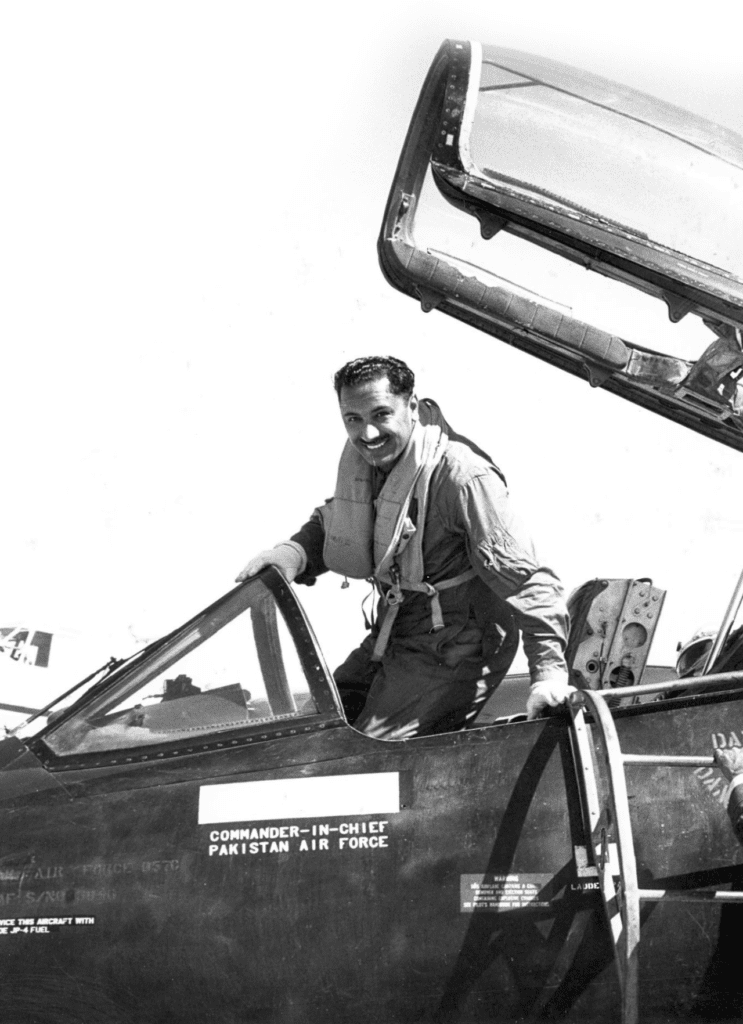
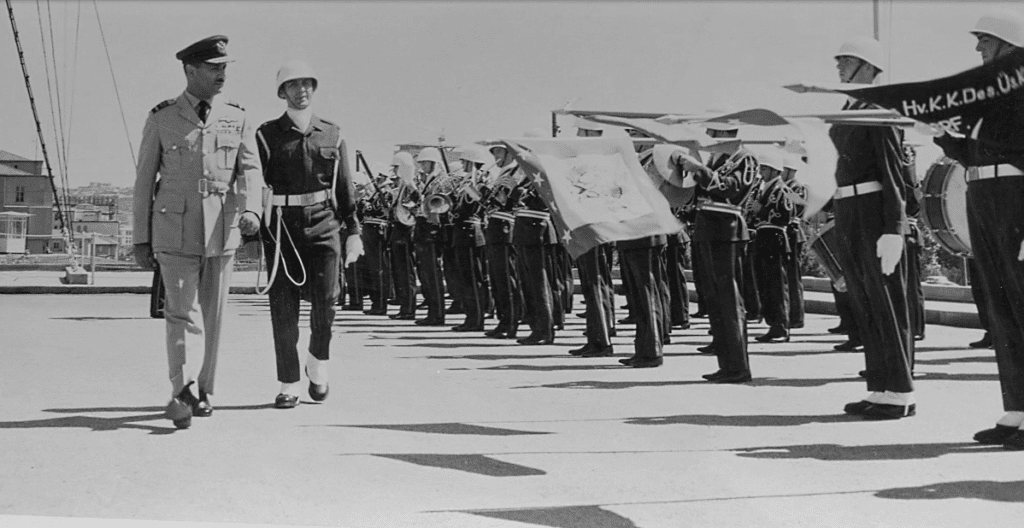
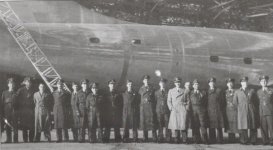
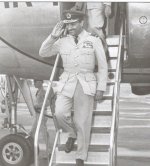
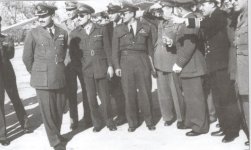
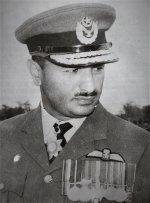
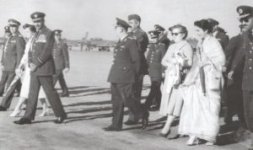
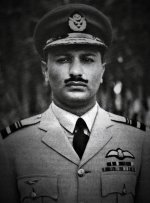
The man who for seven decades cast a far-reaching shadow on the Pakistan Air Force is no more. The PAF recognised Air Marshal Asghar Khan’s leadership throughout his lifetime and honoured him with a deeply sombre burial this week. Over the eight years of his air force command, Asghar Khan re-forged the PAF, giving it a distinctive character. After that, all Pakistanis who experienced his leadership gained in some way by his qualities as a military and then political leader, a civil rights activist and a human being.
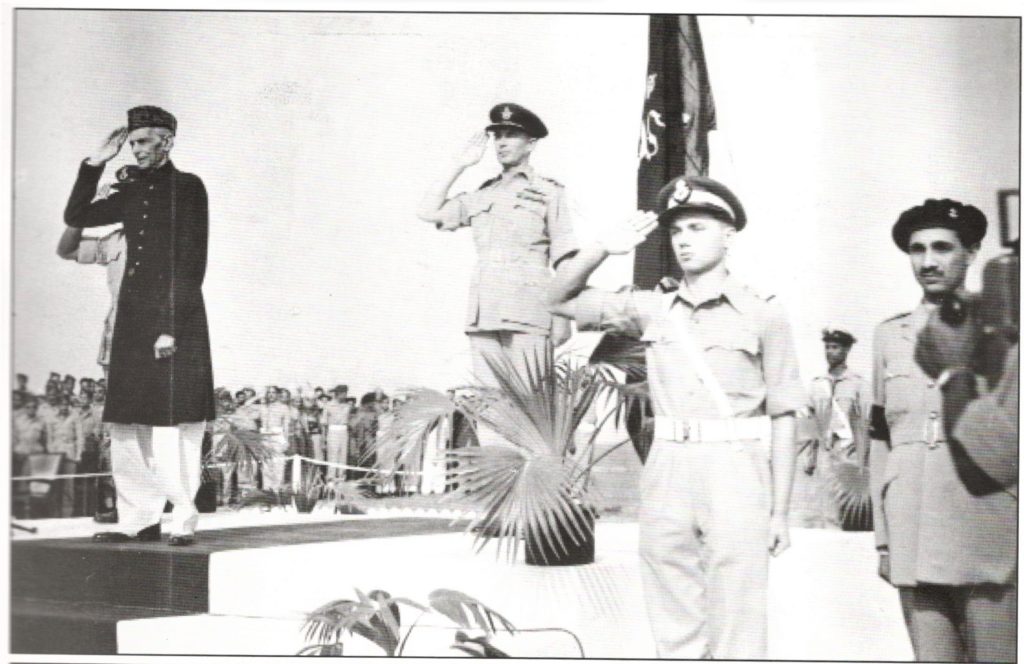
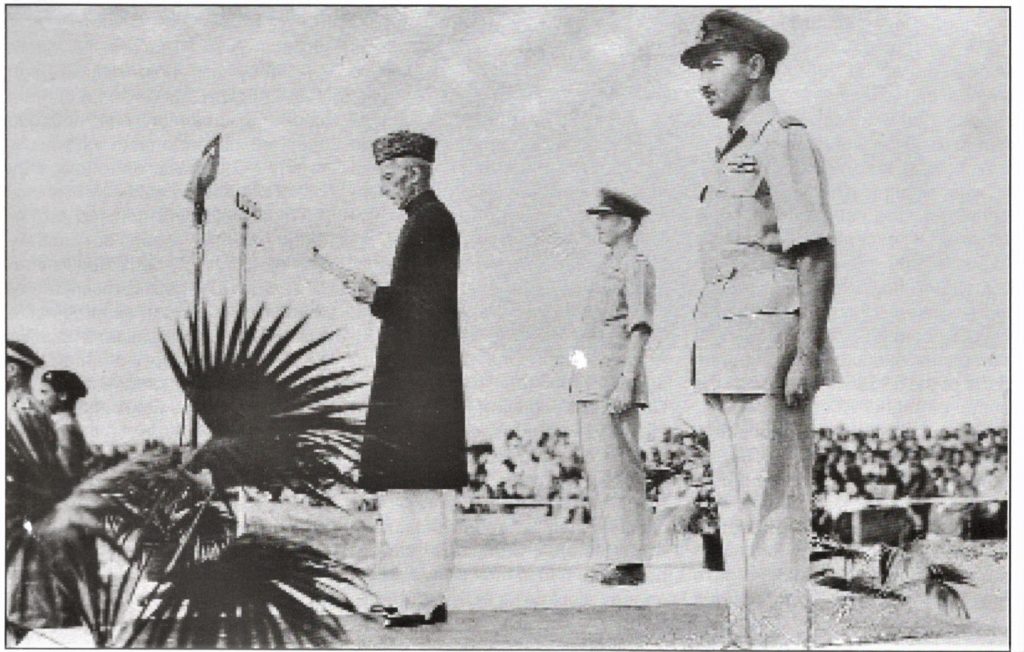
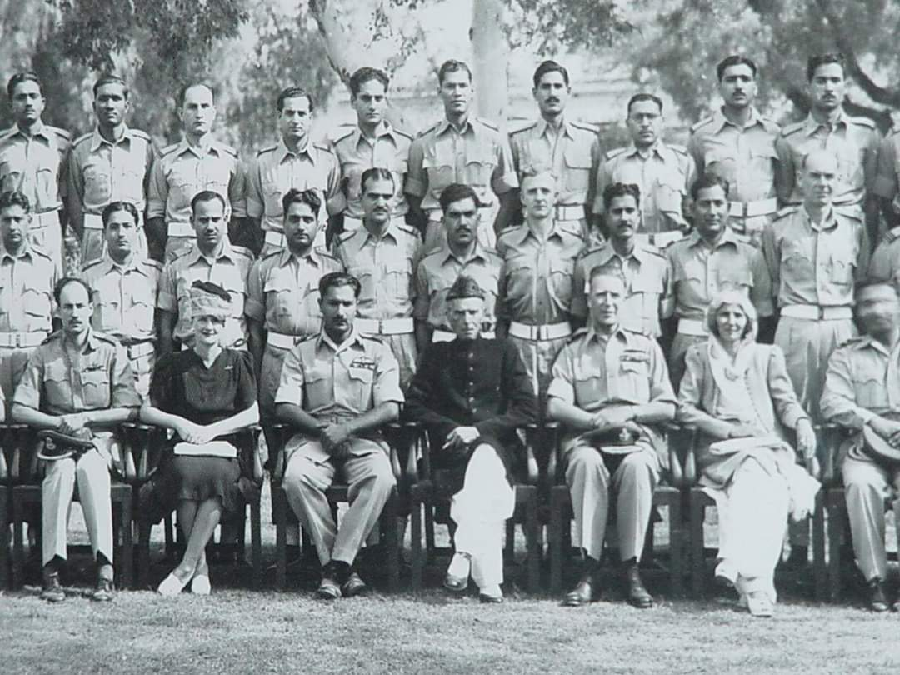
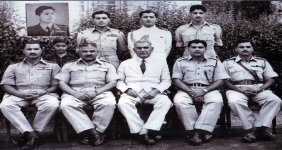
On Pakistan’s creation, this WW2 fighter squadron commander (just 26 years of age) was given the task of setting up the young nation’s first flying training school at Risalpur. He proudly showed it in April 1948 to the visiting Quaid-e-Azam who, recognising the unit’s importance and Asghar Khan’s work, upgraded it to the level of a college. Reflecting its sound foundations, the institution now called the PAF Academy (and recently named after him) is recognised among the world’s best. Advancing rapidly during the next nine years through top-level staff courses and key operational assignments in the fledgeling force, Asghar Khan now stepped into its highest office.
During the eight years of his command (1957–1965), Air Marshal Asghar Khan re-shaped the PAF to give it a distinctive character that, with the spirited additional reinforcements by all his successors, lasts to this day.
Many in the air force were initially shaken a bit by the stern, unbending standards that Asghar Khan imposed on his service but soon began to enjoy the demanding environment. The new air chief began by giving its first doctrinal inspiration to the PAF. Until then, his British predecessors had popularised a cricket-inspired exhortation that one saw displayed on signboards in all air bases. The slogan asked, “Are You on the Ball?” presumably demanding a confirmation that all of us were alert and instantly ready for any challenge.
Asghar-Khan.jpg

Asghar Khan was more direct and realistic. He too used simple language but chose more relevant and precise words. His dictum for the PAF was as fiery as it was blunt: “Train to fight outnumbered.” This premise was to become central to the PAF’s general and operational doctrines.
Before the focus could transform the operational style of the PAF, all personnel needed first to undergo a change in how they saw the role of their air force in national defence and support of the sister services. Rather than implant a model of the British or American practices among his airmen, Asghar Khan closely interacted with to ingrain the recognition that their nation’s defence problems were unique and that these required original initiatives. The impact of the resulting awareness took some time to set in but eventually, a strong culture emerged where only genuine professionalism and verifiable advocacies began to guide all the decision making. At both senior and junior levels, mediocre leaders began regularly to be identified and eliminated before they could slow down the others. Everyone in blue uniform began to live by the ethic of purposeful hard work, while never being disheartened by failures or by their skimpy resources, and always striving for the highest quality in everything they did.
Scan-01-1024x1024.jpg

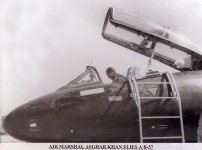
It was thus not easy in the initial years to translate the C-in-C’s operational ideas into credible operational capacities owing to scarce country resources and our noticeably shallow technology base, but everyone learned quickly to find indigenous solutions that were adopted after careful testing. Commanders remained focused and ruthlessly dealt with complacency, ensuring that air and ground crews worked by standards that were not easy to achieve. Asghar Khan was frequently seen in our crew rooms in those days, joining us in quiz tests on the F-86 fighter or the B-57 bomber, both of which he flew as a regular pilot. In the process of our growing self-confidence in internationally competitive military exercises, Asghar Khan was always there closely to observe our performance, shortcomings and their underlying causes.
Scan1-1024x664.jpg

As his doctrine-premise seeped down, it was elaborated in much detail through realistic exercise scenarios, weapon acquisition policies, commander-selection criteria, organisational corrections, training standardisation and the establishment of the Fighter Leaders School (forerunner of today’s Combat Commanders School), of which I was honoured to be a founding member. Consequently, when the 1965 war broke out, the air force was seen to be the most well-trained and effectively applied arm of the national defence. Air Marshal Nur Khan the worthy successor now commanded the air force, but it was Asghar Khan’s PAF that delivered the stunning performance that exceeded everyone’s expectations. A month after his retirement from the PAF, professional observers could see that the way our combat crews and support personnel executed the different parts of the 1965 war plan bore the stamp of Asghar Khan.
In its many updated doctrinal forms, Asghar Khan’s ideas on how the men and women of the air force should think, work and live have become deeply imbedded in the PAF’s professional and community cultures. Those ideas have always resonated strongly with them and have received powerful invigoration from each successive air chief.
Scan0002-1-1024x652.jpg

After his retirement, countless Pakistanis in the public domain who experienced his leadership gained in some way by his inspiring example as a political leader, a civil rights activist and a patriot determined to remove our many infirmities. I believe that except for the air force, the country failed to benefit fully from the large presence of Asghar Khan. One has sadly to agree with the late Ardeshir Cowasjee’s comment that “given the environment, the atmosphere that prevails and the mindset of the majority” he was denied a major role in national affairs. Only a few would remember today that many of Pakistan’s prominent current politicians had in their early careers eagerly flocked to Asghar Khan’s political party. There is no doubt that they still hold him in high esteem, even though some of them chose to abandon him because they felt uncomfortable with his integrity-clad conduct and knew they could not always abide by it.
Asghar-Khan-51609776183-1.png

Most Pakistanis admired Asghar Khan as the nation’s exemplary patriot, unfailingly dedicated to public service. Despite his recent retirement from public life, he remained a consistent spade-caller, impunity-challenger, judiciary-shamer and demagogue-deflator, repeatedly rising to fight for the rights of the regular Pakistanis. Many of them also deeply admired the humanity, charm and natural graciousness of the air marshal and his loving wife, Begum Amina Asghar Khan.
Courtesy: The News
The author is a former Chief of the Air Staff (1985-88).
Jamal Khan
 

Users who are viewing this thread

Pakistan Defence Latest

Back
Top