Navigation
Install the app
How to install the app on iOS
Follow along with the video below to see how to install our site as a web app on your home screen.
Note: This feature may not be available in some browsers.
More options
Style variation
You are using an out of date browser. It may not display this or other websites correctly.
You should upgrade or use an alternative browser.
You should upgrade or use an alternative browser.
Old/New Articles and News item about PAF
- Thread starter ghazi52
- Start date
More options
Who Replied?


ghazi52
THINK TANK: CONSULTANT
- Thread starter
- #47
| Train to Fight - Fight to Kill! |
'Train to Fight - Fight to Kill!' The quality of its men is the secret weapon of the Pakistan Air Force (PAF) and training is the key to their success. Manpower is Pakistan's most valuable resource. By investing heavily in its young men, the PAF maintains a decisive edge over potential enemies. Flight training is rigorous and simulates the combat arena as closely as possible. Emphasis is placed on utilizing simulators and on squeezing every ounce of training from each precious flight hour. A single F-16 flight hour, for example, costs $2,200. Formal training for PAF fighter pilots is based on three primary stages: 1. Primary and basic training at the Pakistan Air Force Academy, Risalpur; 2. Combat training at No. 37 (Combat Training) Wing, Mianwali; and 3. Advanced tactics and weapons training at the Combat Commanders' School (CCS), Sargodha. Formal training for PAF transport pilots is based on three primary stages: 1. Primary and basic training at the Pakistan Air Force Academy, Risalpur; 2. Combat training at No. 37 Combat Training Wing, Mianwali; and 3. Tactical transport training at the Transport Conversion School (TCS), Chaklala. Formal training for PAF aeronautical engineers is based on two primary stages: 1. Bachelor of Science (BSc.) qualification in Aeronautical Engineering at the Pakistan Air Force Academy, Risalpur; and 2. Postgraduate qualification (MSc. and/or Ph.D. in a domestic or foreign academic institution. The Pakistan Air Force also operates the Air War College (formerly 'Air Force Staff College') at Karachi for post-graduate academic training for PAF officers. In addition, there is constant operational unit-level training which continues throughout the career of a PAF fighter pilot and aeronautical engineer. Competition for places in this elite air force is intense. The highest standards are demanded for pilot material. Potential PAF pilots undergo a rigorous screening process before they begin their military service. The Inter-Services Selection Board (ISSB) selects outstanding teenagers for pilot training. Only the most intelligent and healthiest candidates get through. PAF takes its pick of the finest minds and fittest bodies in the land. Many want to join, yet few are chosen. After a series of gruelling written and physical examinations, including a study of the candidate's behavioural tendencies and psychological profile, the successful ones go before a commission board for short-listing and those chosen attend a final selection panel of the PAF Directorate of Recruitment at Air Headquarters, Rawalpindi. The recruitment board which selects a particular candidate is composed of three personnel, including a psychologist and a specialist. Then begins the rigorous 3 years training at the PAF Academy at Risalpur. Once in, the gruelling which begins tests their mettle both as individuals and as members of a group. Many are washed out. The Pakistan Air Force Academy, Risalpur The PAF Academy was established in 1947 at Risalpur. The PAF Academy is made up of two colleges: 1. College of Flying Training (CFT) 2. College of Aeronautical Engineering (CAE) The primary mission of the PAF Academy is to train and qualify general duties pilots (GDPs) and aeronautical engineers. Flying and engineering, however, are only part of the story. A major emphasis is placed on training young men to be officers and leaders. The ultimate graduate is first a fighter - then a pilot. College of Flying Training (CFT) Responsibility for transforming new cadets into potential officer material and imparting basic flying skills is entrusted to the College of Flying Training (CFT). Based since 1947 at Risalpur, the CFT controls the Flying Training Wing (FTW) which was established at Risalpur on 19 July 1955. The FTW itself is divided into two separate and distinct training organizations, namely the Primary Flying Training Wing (PFTW) operating the PAC MFI-17 'Mushshak' and the MFI-395 'Super Mushshak' primary trainers and the Basic Flying Training Wing (BFTW) operating the PAC/NAMC K-8 ('Karakorum-8') intermediate and advanced jet trainer (AJT). One common element for all trainees is the constant pressure to excel. Only 10-15% of the original candidates succeed in earning their wings. In other words, of the original entry of 100 cadets only 10-15 survive to become pilots in the PAF. Only the best become PAF pilots, and only the best of the best become PAF fighter pilots. Primary Flying Training (GDP Training Stage 1) Candidates for pilot training with the CFT (which typically has two 80-student intakes per annum) actually spend well over three years at the Academy, beginning with a two-year Bachelor of Science (BSc.) degree course. During that time, they study a number of aviation-related disciplines such as aerodynamics, engines and navigation but the course also includes general subjects like English language, physics and mathematics as well as specialized interests which embrace topics like Islam's philosophy, Pakistan's history and international affairs. After attending no fewer than 2,640 academic classes, cadets sit the final written examination which is set and conducted by the University of Peshawar. Only on successfully negotiating that hurdle are they permitted to move on to flying training, beginning with a one-month grading course which entails some 7-10 hours of flying. Accomplished on the PAC MFI-17 Mushshaks and MFI-395 Super Mushshaks of the PFTW, this is designed to establish whether they have the aptitude for a flying career and somewhere in the region of 20-25 percent are 'scratched' at this point. The MFI-17 Mushshak was inducted into the PAF in 1974 whereas the MFI-395 Super Mushshak was inducted into PAF service in 1997 and in 1998 delivery was still under way. The PAF has a requirement of 80 Super Mushshaks. For those 'survivors' who remain, the next 4-5 months prove highly testing, for the rest of the PFTW course requires them to log about 50 hours on the Super Mushak. Perhaps the most notable highlight is going 'solo', which should ideally be accomplished in 12-13 hours although it can be extended to 14 hours if the cadet is particularly keen and shows considerable promise in other areas such as academic studies. Failure to 'solo' in this time inevitably results in suspension and wastage is still quite high, generally being the order of 20 percent during the PFTW phase, which also includes some simple navigation exercises, simulated 'engine out' recovery procedures and, as a preliminary to the next stage of training, a few hours of basic instrument flying. |
ghazi52
THINK TANK: CONSULTANT
- Thread starter
- #48
Basic Flying Training (GDP Training Stage 2)
By the time they reach the BFTW, it is not unknown for the initial intake of 80 to have fallen to half. Those who remain are now introduced to the PAC/NAMC K-8 intermediate and advanced jet trainer (AJT) with No. 1 Basic Flying Training Squadron and in the next year those who stay the course accumulate some 130-135 hours on the K-8. Previously this basic flying training was accomplished on the Lockheed T-33As which were retired from service in 1993 and Cessna T-37s which are in the twilight of their service careers and will be retired by 2000.
The K-8 is jointly produced by Pakistan and China and was inducted into the PAF on 25 January 1995 to replace the T-33A and the T-37 as PAF's basic and intermediate jet trainer. Again, 'solo flight' should be accomplished in 13 hours, after which the syllabus includes instrument, night and formation flying as well as some aerobatics, medium and low level navigation and a considerable amount of 'circuit bashing'. Wastage in this period is lower but typically attrition rates are around 15-17 percent and may go considerably higher - as an example, sometimes in a batch of 20 students who begin a course with No. 1 Basic Flying Training Squadron, only 10 eventually qualify.
Those cadets at the PAF Academy, Risalpur who have learnt to fly and successfully 'pass out', earn their 'wings' and are given the rank of Flying Officer. At the end of their basic flying training, cadets are bifurcated into the combat and tactical transport fields, the former demanding higher standards than the latter, but the latter no less selective. They then proceed to No. 37 (Combat Training) Wing at Mianwali for the next stage of their training. Here they begin learning how to fly and fight, under the tutelage of the instructors of No. 37 (Combat Training) Wing.
College of Aeronautical Engineering (CAE)
Flying training is not the only training activity that is undertaken at Risalpur. The College of Aeronautical Engineering (CAE) is also there. Established on 1 March 1965 at Korangi Creek on the outskirts of Karachi, the CAE moved north to Risalpur in 11 May 1966 and is now an important part of the overall PAF Academy organization.
Basically, it has responsibility for the training of officers who will specialize in the fields of aeronautical, electrical and mechanical engineering and avionics and it normally offers two courses per year with a typical intake numbering some 60-65 students, After some three-and-a-half years of study, the successful students leave with a BSc. (Bachelor of Science) degree in their chosen field.
In addition, the CAE also provides an extensive selection of specialist short courses for PAF officers and individuals from friendly nations. Lasting from 1-7 weeks in duration, these cover a variety of technical subjects and disciplines, with aerospace engineering and avionics engineering being prominent among the list.
The CAE has also been the source for maintenance personnel since the first days of the PAF. Through the years, the overall mission of the CAE has broadened considerably. Today its scope goes beyond the initial qualification of engineering and ground crews. CAE has become a major academic institution, providing recognized certification in several technical fields. It also provides intensive refresher training for field personnel and conducts basic and advanced officers training courses. There is a special course for training maintenance instructors as well.
Today's cadets must be prepared to maintain tomorrow's technology. Utilizing advanced training methods and equipment, the CAE constantly improves the quality of its graduates. These are the men who give PAF pilots the edge in today's high-tech battle arena.
Advanced Training No. 37 (Combat Training) Wing, Mianwali (GDP Training Stage 3)
The process of transforming the still basically inexperienced Flying Officer into a fighter pilot occupies just under a year and this period of advanced training starts with No. 1 Fighter Conversion Unit (No.1 FCU) of No. 37 (Combat Training) Wing, Mianwali. This usually runs two courses of about 20 students per course during a typical year but there is sufficient flexibility in the system to permit that limit of activity to be increased.
However, since the FCU is dependant upon the PAF Academy for its 'raw material' input, the likelihood of that additional capacity being taken up seems slight, unless there is a drastic revision of the PAF's entire training system.
On arrival at Mianwali, students first complete two weeks of ground school before they are introduced to the two-seat Shenyang FT-5 and FT-6 fighter conversion trainers. The FT-5, a somewhat unattractive but very durable machine, has been in PAF service since 1975. It has a 23 mm gun plus a simple radar-ranging gunsight and can carry two AIM-9 Sidewinder infra-red homing air-to-air missiles - even though it is an old aircraft and not particularly advanced, the PAF is generally quite content with it as a fighter conversion trainer.
Perhaps the latest reservation voiced by some personnel of No. 1 FCU related to the fact that it is 'short-legged', with the result that training sorties seldom exceed 40 minutes. In the early stages of the course, when the learning curve is at its steepest, that is probably more than enough but as students progress and gain confidence in the FT-5s and their own ability, longer sorties would almost certainly be beneficial.
The FT-5s are now being augmented by FT-6s from No. 25 (F-6 OCU) Squadron. No. 25 has now become the OCU squadron for F-7MPs as the PAF retires the F-6 from operational duty. The FT-6, first inducted into the PAF in 1966, is a more formidable fighter trainer and will do well to replace the FT-5 as the PAF's primary advanced jet fighter conversion trainer. However, the induction of the FT-6 into the No. 1 FCU is temporary. It is thought that both the FT-5 and FT-6, which are due to be retired by 2005 from No. 1 FCU, may be replaced by an advanced 'spruced up' combat version of the PAC/NAMC K-8 AJT with a more powerful engine and superior avionics.
At Mianwali, the Flying Officers log approximately 85 sorties over a period of about 5 months on the FT-5 and FT-6, the course being broken down into a number of distinct phases. These consist of transition (24 sorties), instrument flying (16), close formation flying (14), battle formation flying (6), high altitude navigation (3), low altitude navigation (2) and advanced handling including aerobatics (20). Finally, it is common to fly five or six 'flex' sorties as a lead-in to the next phase training.
Inevitably, there is wastage, the level presently running rate of around 15-20 per cent - FCU instructors are not happy with this situation and efforts are being made to cut the failure rate and obtain a greater return on investment. One thing the PAF will never do, however, is to lower its standards.
The final stage of advanced training is the prerogative of No. 25 (OCU) Squadron, which flies a mixture of Chengdu FT-7Ps and F-7MPs, it being PAF policy to assign all first-tour pilots to a Chinese system (ideally the F-7MP but also including the A-5III/C). In the past, the Shenyang F-6 constituted the backbone of the PAF as well as of No. 25 (OCU) Sqn. but this type is now being phased out and will be retired from PAF service by the year 2001, having been replaced by the more advanced F-7PG fighter.
Those who will become fighter pilots proceed to the PAF's F-7MP and A-5III/C OCU squadrons - a rare few being chosen for conversion to the more modern Mirage III multi-role fighters and Mirage 5 ground-attack fighters and an even rarer elite going forward for F-16 conversion. But there is no conceit among those so chosen. Their diffidence and lack of arrogance is counterpoint to their determination.
Those who will become transport pilots proceed to the Transport Conversion School at Chaklala. Here they learn to fly and handle tactical transport aircraft such as the C-130 Hercules.
Three or four years later, these Flying Officers are elevated to their first operational duty rank of Flight Lieutenants and thus begins their operational careers in the PAF and a few may opt to go back to the PAF Academy, Risalpur as Flying Instructors.
By the time they reach the BFTW, it is not unknown for the initial intake of 80 to have fallen to half. Those who remain are now introduced to the PAC/NAMC K-8 intermediate and advanced jet trainer (AJT) with No. 1 Basic Flying Training Squadron and in the next year those who stay the course accumulate some 130-135 hours on the K-8. Previously this basic flying training was accomplished on the Lockheed T-33As which were retired from service in 1993 and Cessna T-37s which are in the twilight of their service careers and will be retired by 2000.
The K-8 is jointly produced by Pakistan and China and was inducted into the PAF on 25 January 1995 to replace the T-33A and the T-37 as PAF's basic and intermediate jet trainer. Again, 'solo flight' should be accomplished in 13 hours, after which the syllabus includes instrument, night and formation flying as well as some aerobatics, medium and low level navigation and a considerable amount of 'circuit bashing'. Wastage in this period is lower but typically attrition rates are around 15-17 percent and may go considerably higher - as an example, sometimes in a batch of 20 students who begin a course with No. 1 Basic Flying Training Squadron, only 10 eventually qualify.
Those cadets at the PAF Academy, Risalpur who have learnt to fly and successfully 'pass out', earn their 'wings' and are given the rank of Flying Officer. At the end of their basic flying training, cadets are bifurcated into the combat and tactical transport fields, the former demanding higher standards than the latter, but the latter no less selective. They then proceed to No. 37 (Combat Training) Wing at Mianwali for the next stage of their training. Here they begin learning how to fly and fight, under the tutelage of the instructors of No. 37 (Combat Training) Wing.
College of Aeronautical Engineering (CAE)
Flying training is not the only training activity that is undertaken at Risalpur. The College of Aeronautical Engineering (CAE) is also there. Established on 1 March 1965 at Korangi Creek on the outskirts of Karachi, the CAE moved north to Risalpur in 11 May 1966 and is now an important part of the overall PAF Academy organization.
Basically, it has responsibility for the training of officers who will specialize in the fields of aeronautical, electrical and mechanical engineering and avionics and it normally offers two courses per year with a typical intake numbering some 60-65 students, After some three-and-a-half years of study, the successful students leave with a BSc. (Bachelor of Science) degree in their chosen field.
In addition, the CAE also provides an extensive selection of specialist short courses for PAF officers and individuals from friendly nations. Lasting from 1-7 weeks in duration, these cover a variety of technical subjects and disciplines, with aerospace engineering and avionics engineering being prominent among the list.
The CAE has also been the source for maintenance personnel since the first days of the PAF. Through the years, the overall mission of the CAE has broadened considerably. Today its scope goes beyond the initial qualification of engineering and ground crews. CAE has become a major academic institution, providing recognized certification in several technical fields. It also provides intensive refresher training for field personnel and conducts basic and advanced officers training courses. There is a special course for training maintenance instructors as well.
Today's cadets must be prepared to maintain tomorrow's technology. Utilizing advanced training methods and equipment, the CAE constantly improves the quality of its graduates. These are the men who give PAF pilots the edge in today's high-tech battle arena.
Advanced Training No. 37 (Combat Training) Wing, Mianwali (GDP Training Stage 3)
The process of transforming the still basically inexperienced Flying Officer into a fighter pilot occupies just under a year and this period of advanced training starts with No. 1 Fighter Conversion Unit (No.1 FCU) of No. 37 (Combat Training) Wing, Mianwali. This usually runs two courses of about 20 students per course during a typical year but there is sufficient flexibility in the system to permit that limit of activity to be increased.
However, since the FCU is dependant upon the PAF Academy for its 'raw material' input, the likelihood of that additional capacity being taken up seems slight, unless there is a drastic revision of the PAF's entire training system.
On arrival at Mianwali, students first complete two weeks of ground school before they are introduced to the two-seat Shenyang FT-5 and FT-6 fighter conversion trainers. The FT-5, a somewhat unattractive but very durable machine, has been in PAF service since 1975. It has a 23 mm gun plus a simple radar-ranging gunsight and can carry two AIM-9 Sidewinder infra-red homing air-to-air missiles - even though it is an old aircraft and not particularly advanced, the PAF is generally quite content with it as a fighter conversion trainer.
Perhaps the latest reservation voiced by some personnel of No. 1 FCU related to the fact that it is 'short-legged', with the result that training sorties seldom exceed 40 minutes. In the early stages of the course, when the learning curve is at its steepest, that is probably more than enough but as students progress and gain confidence in the FT-5s and their own ability, longer sorties would almost certainly be beneficial.
The FT-5s are now being augmented by FT-6s from No. 25 (F-6 OCU) Squadron. No. 25 has now become the OCU squadron for F-7MPs as the PAF retires the F-6 from operational duty. The FT-6, first inducted into the PAF in 1966, is a more formidable fighter trainer and will do well to replace the FT-5 as the PAF's primary advanced jet fighter conversion trainer. However, the induction of the FT-6 into the No. 1 FCU is temporary. It is thought that both the FT-5 and FT-6, which are due to be retired by 2005 from No. 1 FCU, may be replaced by an advanced 'spruced up' combat version of the PAC/NAMC K-8 AJT with a more powerful engine and superior avionics.
At Mianwali, the Flying Officers log approximately 85 sorties over a period of about 5 months on the FT-5 and FT-6, the course being broken down into a number of distinct phases. These consist of transition (24 sorties), instrument flying (16), close formation flying (14), battle formation flying (6), high altitude navigation (3), low altitude navigation (2) and advanced handling including aerobatics (20). Finally, it is common to fly five or six 'flex' sorties as a lead-in to the next phase training.
Inevitably, there is wastage, the level presently running rate of around 15-20 per cent - FCU instructors are not happy with this situation and efforts are being made to cut the failure rate and obtain a greater return on investment. One thing the PAF will never do, however, is to lower its standards.
The final stage of advanced training is the prerogative of No. 25 (OCU) Squadron, which flies a mixture of Chengdu FT-7Ps and F-7MPs, it being PAF policy to assign all first-tour pilots to a Chinese system (ideally the F-7MP but also including the A-5III/C). In the past, the Shenyang F-6 constituted the backbone of the PAF as well as of No. 25 (OCU) Sqn. but this type is now being phased out and will be retired from PAF service by the year 2001, having been replaced by the more advanced F-7PG fighter.
Those who will become fighter pilots proceed to the PAF's F-7MP and A-5III/C OCU squadrons - a rare few being chosen for conversion to the more modern Mirage III multi-role fighters and Mirage 5 ground-attack fighters and an even rarer elite going forward for F-16 conversion. But there is no conceit among those so chosen. Their diffidence and lack of arrogance is counterpoint to their determination.
Those who will become transport pilots proceed to the Transport Conversion School at Chaklala. Here they learn to fly and handle tactical transport aircraft such as the C-130 Hercules.
Three or four years later, these Flying Officers are elevated to their first operational duty rank of Flight Lieutenants and thus begins their operational careers in the PAF and a few may opt to go back to the PAF Academy, Risalpur as Flying Instructors.
ghazi52
THINK TANK: CONSULTANT
- Thread starter
- #49
Instructor Training - Flying Instructors' School (FIS), Mianwali
One other important organization comes under CFT control, this being the Flying Instructors' School (FIS). Established on 15 April 1952, the FIS, as its title implies, is responsible for 'teaching the teachers' and is mainly concerned with turning out Qualified Flying Instructors (QFIs) for service with the PAF as well as the Pakistan Army and Navy as well as the air forces of friendly countries.
FIS graduates are usually posted first to either the PFTW or BFTW so as to build up instructional experience. Later, many move on to No. 1 FCU, to one of the OCUs or even to the FIS itself. In addition to its teaching task, the FIS ensures that standards are maintained and it achieves this by periodic StanEval checks of instructional staff at Risalpur and Mianwali which are the PAF's two principal flying training establishments.
Candidates for the FIS are drawn from across the PAF, since it is usual for a pilot to complete one 3-year tour of duty as an instructor during his flying career. Course duration is 22 weeks and features three distinct phases. Academics almost inevitably play a part, as does flying, with about 80 hours being logged.
Perhaps most important, however, is the subject of instructional technique and much attention is devoted polishing of teaching skills. Nevertheless, there are failures, for good pilots do not necessarily make good instructors just as good students do not necessarily make good teachers. Intakes vary from 18 to 25 students and these are usually split fairly evenly between the Super Mushak and the K-8 although a particular course may be 'weighted' towards a particular type, depending on the need for qualified instructional personnel at the time.
Transport Training - Transport Conversion School (TCS), Chaklala
The PAF's tactical airlift resources are consolidated with No. 35 (Composite Air Transport) Wing at Chaklala, conveniently close to Air Headquarters where the Director Air Transport looks after tasking matters. The Transport Conversion School (TCS) is also located at Chaklala and provides qualified aircrew for the Hercules as and when required using aircraft 'borrowed' from No. 6 Sqn. It is here that pilots are also trained for conversion to tactical transport aircraft - the primary being the C-130.
As it has done for many years, the Lockheed C-130 Hercules serves as the PAF's workhorse, No. 6 (Air Transport Support) Sqn. operating a mixed fleet of C-130Bs, C-130Es and former Pakistan International Airlines (PIA) IA L-382B-4Cs, some of which have been in service for almost 30 years.
As its title implies, No. 12 (VVIP Communications) Sqn. is concerned mostly with moving high-ranking officials and dignitaries. Its assets include the Presidential Flight Boeing 707, the Prime Ministerial Flight Boeing 737-200, two Fokker F-27 Friendships and a Dassault Falcon 20 as well as a King Air 200 and another pair of Boeing 707s. The latter were also obtained from the national airline, one having a VIP interior while the other is mainly used on long-haul cargo trips.
Transport elements are completed by No. 41 (Light Communications) Sqn. which operates single examples of the Beech Baron and Piper Seneca as well as a trio of Cessna 172s.
Combat Commanders' School (CCS), Sargodha (GDP Training Stage 4)
Once pilots have passed their combat training at No. 37 (Combat Training) Wing, Mianwali, pilots begin their operational careers with the PAF as Flight Lieutenants. In essence they have become fighter pilots. However, this is not the end of their formal training. Midway in their career, section leaders of the PAF frontline combat squadrons are chosen for advanced tactical training at the prestigious Combat Commanders' School, Sargodha, where they learn the fineness and art of air combat during an intensive and rigorous course lasting six months.
The Combat Commanders' School (CCS) was set up at Sargodha on 5 May 1976. It is the successor of the Flight Leaders' School (FLS) which was established at Sargodha on 15 June 1958. The CCS is a mid-career advanced fighter tactics and weapons school for PAF pilots. The CCS is at the top end of the PAF training scale and represents the pinnacle of the PAF pilot quality.
One other important organization comes under CFT control, this being the Flying Instructors' School (FIS). Established on 15 April 1952, the FIS, as its title implies, is responsible for 'teaching the teachers' and is mainly concerned with turning out Qualified Flying Instructors (QFIs) for service with the PAF as well as the Pakistan Army and Navy as well as the air forces of friendly countries.
FIS graduates are usually posted first to either the PFTW or BFTW so as to build up instructional experience. Later, many move on to No. 1 FCU, to one of the OCUs or even to the FIS itself. In addition to its teaching task, the FIS ensures that standards are maintained and it achieves this by periodic StanEval checks of instructional staff at Risalpur and Mianwali which are the PAF's two principal flying training establishments.
Candidates for the FIS are drawn from across the PAF, since it is usual for a pilot to complete one 3-year tour of duty as an instructor during his flying career. Course duration is 22 weeks and features three distinct phases. Academics almost inevitably play a part, as does flying, with about 80 hours being logged.
Perhaps most important, however, is the subject of instructional technique and much attention is devoted polishing of teaching skills. Nevertheless, there are failures, for good pilots do not necessarily make good instructors just as good students do not necessarily make good teachers. Intakes vary from 18 to 25 students and these are usually split fairly evenly between the Super Mushak and the K-8 although a particular course may be 'weighted' towards a particular type, depending on the need for qualified instructional personnel at the time.
Transport Training - Transport Conversion School (TCS), Chaklala
The PAF's tactical airlift resources are consolidated with No. 35 (Composite Air Transport) Wing at Chaklala, conveniently close to Air Headquarters where the Director Air Transport looks after tasking matters. The Transport Conversion School (TCS) is also located at Chaklala and provides qualified aircrew for the Hercules as and when required using aircraft 'borrowed' from No. 6 Sqn. It is here that pilots are also trained for conversion to tactical transport aircraft - the primary being the C-130.
As it has done for many years, the Lockheed C-130 Hercules serves as the PAF's workhorse, No. 6 (Air Transport Support) Sqn. operating a mixed fleet of C-130Bs, C-130Es and former Pakistan International Airlines (PIA) IA L-382B-4Cs, some of which have been in service for almost 30 years.
As its title implies, No. 12 (VVIP Communications) Sqn. is concerned mostly with moving high-ranking officials and dignitaries. Its assets include the Presidential Flight Boeing 707, the Prime Ministerial Flight Boeing 737-200, two Fokker F-27 Friendships and a Dassault Falcon 20 as well as a King Air 200 and another pair of Boeing 707s. The latter were also obtained from the national airline, one having a VIP interior while the other is mainly used on long-haul cargo trips.
Transport elements are completed by No. 41 (Light Communications) Sqn. which operates single examples of the Beech Baron and Piper Seneca as well as a trio of Cessna 172s.
Combat Commanders' School (CCS), Sargodha (GDP Training Stage 4)
Once pilots have passed their combat training at No. 37 (Combat Training) Wing, Mianwali, pilots begin their operational careers with the PAF as Flight Lieutenants. In essence they have become fighter pilots. However, this is not the end of their formal training. Midway in their career, section leaders of the PAF frontline combat squadrons are chosen for advanced tactical training at the prestigious Combat Commanders' School, Sargodha, where they learn the fineness and art of air combat during an intensive and rigorous course lasting six months.
The Combat Commanders' School (CCS) was set up at Sargodha on 5 May 1976. It is the successor of the Flight Leaders' School (FLS) which was established at Sargodha on 15 June 1958. The CCS is a mid-career advanced fighter tactics and weapons school for PAF pilots. The CCS is at the top end of the PAF training scale and represents the pinnacle of the PAF pilot quality.
ghazi52
THINK TANK: CONSULTANT
- Thread starter
- #50
The Combat Commanders' School (CCS) was set up at Sargodha on 5 May 1976. It is the successor of the Flight Leaders' School (FLS) which was established at Sargodha on 15 June 1958. The CCS is a mid-career advanced fighter tactics and weapons school for PAF pilots. The CCS is at the top end of the PAF training scale and represents the pinnacle of the PAF pilot quality.
The CCS was established after it was felt that the skills gained by the PAF elite combat squadrons and crack fighter-pilots should be passed on in an institutionalized form to the rest of the PAF squadrons and pilots. It is today ranked as the world's best GCI/pilot training school and is considered by the international military aviation community to be one of the world's best fighter tactics and weapons school. The CCS is an elite within an elite.
The CCS has three subordinate units, specifically the 'F-16 Squadron' (with F-16As), the 'Mirage Squadron' (with Mirage 5PAs) and the 'F-7 Squadron' (with F-7MPs). Instructor staff at the CCS are generally acknowledged to be the 'best of the best' and would also have a war role to fulfil in the event of a conflict.
Although the CCS was established to 'further polish the skills of the already polished', it has transformed into a major and vital organization within the PAF training establishment - so much so that no PAF pilot can hope to remain with or progress to the PAF's frontline fighter squadrons without passing the gruelling CCS training curriculum.
The training system and curriculum of the CCS is classified and as such the CCS is not open to pilots from even friendly foreign air forces. The CCS trains both combat commanders (fighter pilots) and combat controllers (forward air controllers). Competition even within the CCS is encouraged. Each year there is a trophy for the 'Best Combat Commander' and 'Best Combat Controller' which is awarded at a formal annual graduation ceremony. Much has been learnt and improved upon by observing the US Naval Air Station (USNAS) at Miramar, California. What is certain is that there are no books involved and little reading to do at CCS. The primary emphasis is on training and fighting in the air i.e. on 'practice' rather than 'theory'. The best of the best are pitted against each other in a gruelling schedule in which there is no room for second-best. A CCS instructor best summed up the CCS:
"Only the best of PAF comes to CCS. They are trained to fight and fly as if they are fighting and flying against the best air force in the world. At CCS the cream of the PAF are pitted against each other. Each pilot and each unit trying to do their best to outfly, outgun and outthink the other. At CCS, there are no points for second place - either you do it right or you don't. If you can't do it right, you're out. We don't give a second chance to our pilots because up there the enemy will not give them a second chance". However, even at CCS there is pilot wastage, although very low at around 2-5% i.e. out of every 20 PAF pilots who enter CCS, on average only 2-3 fail to pass.
This, however, is considered an acceptable student attrition rate at CCS. In addition to merit, the formal criterion for entry into the CCS is that a pilot must:
1. Be a PAF commissioned officer;
2. Have the rank of Squadron Leader, Wing Commander or Group Captain;
3. Be a fighter pilot in one of the frontline fighter squadrons (i.e. transport, helicopter (known as 'blowdryers' at CCS) and VIP flight pilots do not enter CCS).
As the name suggests, the Combat Commanders' School is for section leaders who will be leading from the front in the event of combat. It is felt that anyone who does not have the stomach for the CCS experience does not have the ability to lead his units. When they graduate, the Combat Commanders go back to their squadrons to pass on their new-found skills to their colleagues.
Thus, it is the duty of all Squadron Leaders, Wing Commanders and Group Captains to learn from the CCS and then impart what they have learnt to the pilots in their units. Those that do really well are posted to the School for two years as instructors.
Unit Training and Operational Conversion
Unit-level training is a continuous process, whereby the individual sharpens his basic skills with formal and informal on-the-job training. Commanders at every level are responsible for the ongoing training program. This ensures the high standard of professionalism required to operate a sophisticated, high-tech air force.
There are 5 Operational Conversion Units (OCUs) in the PAF and a good proportion of their effort is directed towards providing a steady stream of qualified aircrew to frontline outfits. Each of the five major aircraft types in the PAF inventory is supported by an 'OCU squadron' and these units comprise of the following squadrons:
No. 19 Squadron - F-7MP OCU
No. 11 Squadron - F-16 OCU
No. 22 Squadron - Mirage III OCU
No. 7 Squadron - Mirage 5 OCU
Harking back to the varying amount of energy directed towards training, with only 32 F-16s in service, the need for new pilots in any given year is modest and No. 11 Squadron is unlikely to find this task too taxing. As a result, it is therefore able to devote time to operational duties, such as annual gunnery qualification at Masroor and, on occasion, air defence alert.
The PAF has a policy of maintaining a minimum pilot to cockpit ratio of 2:1 at all times. Thus, for every aircraft in the PAF inventory, the PAF always has two pilots to fly it
The CCS was established after it was felt that the skills gained by the PAF elite combat squadrons and crack fighter-pilots should be passed on in an institutionalized form to the rest of the PAF squadrons and pilots. It is today ranked as the world's best GCI/pilot training school and is considered by the international military aviation community to be one of the world's best fighter tactics and weapons school. The CCS is an elite within an elite.
The CCS has three subordinate units, specifically the 'F-16 Squadron' (with F-16As), the 'Mirage Squadron' (with Mirage 5PAs) and the 'F-7 Squadron' (with F-7MPs). Instructor staff at the CCS are generally acknowledged to be the 'best of the best' and would also have a war role to fulfil in the event of a conflict.
Although the CCS was established to 'further polish the skills of the already polished', it has transformed into a major and vital organization within the PAF training establishment - so much so that no PAF pilot can hope to remain with or progress to the PAF's frontline fighter squadrons without passing the gruelling CCS training curriculum.
The training system and curriculum of the CCS is classified and as such the CCS is not open to pilots from even friendly foreign air forces. The CCS trains both combat commanders (fighter pilots) and combat controllers (forward air controllers). Competition even within the CCS is encouraged. Each year there is a trophy for the 'Best Combat Commander' and 'Best Combat Controller' which is awarded at a formal annual graduation ceremony. Much has been learnt and improved upon by observing the US Naval Air Station (USNAS) at Miramar, California. What is certain is that there are no books involved and little reading to do at CCS. The primary emphasis is on training and fighting in the air i.e. on 'practice' rather than 'theory'. The best of the best are pitted against each other in a gruelling schedule in which there is no room for second-best. A CCS instructor best summed up the CCS:
"Only the best of PAF comes to CCS. They are trained to fight and fly as if they are fighting and flying against the best air force in the world. At CCS the cream of the PAF are pitted against each other. Each pilot and each unit trying to do their best to outfly, outgun and outthink the other. At CCS, there are no points for second place - either you do it right or you don't. If you can't do it right, you're out. We don't give a second chance to our pilots because up there the enemy will not give them a second chance". However, even at CCS there is pilot wastage, although very low at around 2-5% i.e. out of every 20 PAF pilots who enter CCS, on average only 2-3 fail to pass.
This, however, is considered an acceptable student attrition rate at CCS. In addition to merit, the formal criterion for entry into the CCS is that a pilot must:
1. Be a PAF commissioned officer;
2. Have the rank of Squadron Leader, Wing Commander or Group Captain;
3. Be a fighter pilot in one of the frontline fighter squadrons (i.e. transport, helicopter (known as 'blowdryers' at CCS) and VIP flight pilots do not enter CCS).
As the name suggests, the Combat Commanders' School is for section leaders who will be leading from the front in the event of combat. It is felt that anyone who does not have the stomach for the CCS experience does not have the ability to lead his units. When they graduate, the Combat Commanders go back to their squadrons to pass on their new-found skills to their colleagues.
Thus, it is the duty of all Squadron Leaders, Wing Commanders and Group Captains to learn from the CCS and then impart what they have learnt to the pilots in their units. Those that do really well are posted to the School for two years as instructors.
Unit Training and Operational Conversion
Unit-level training is a continuous process, whereby the individual sharpens his basic skills with formal and informal on-the-job training. Commanders at every level are responsible for the ongoing training program. This ensures the high standard of professionalism required to operate a sophisticated, high-tech air force.
There are 5 Operational Conversion Units (OCUs) in the PAF and a good proportion of their effort is directed towards providing a steady stream of qualified aircrew to frontline outfits. Each of the five major aircraft types in the PAF inventory is supported by an 'OCU squadron' and these units comprise of the following squadrons:
No. 19 Squadron - F-7MP OCU
No. 11 Squadron - F-16 OCU
No. 22 Squadron - Mirage III OCU
No. 7 Squadron - Mirage 5 OCU
Harking back to the varying amount of energy directed towards training, with only 32 F-16s in service, the need for new pilots in any given year is modest and No. 11 Squadron is unlikely to find this task too taxing. As a result, it is therefore able to devote time to operational duties, such as annual gunnery qualification at Masroor and, on occasion, air defence alert.
The PAF has a policy of maintaining a minimum pilot to cockpit ratio of 2:1 at all times. Thus, for every aircraft in the PAF inventory, the PAF always has two pilots to fly it
ghazi52
THINK TANK: CONSULTANT
- Thread starter
- #51
Pakistan Air Force flying higher than the Himalayas
By PSF
November 20, 2020
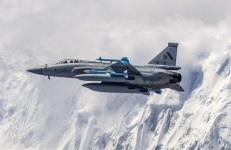
Pakistan Air Force flying higher than the Himalayas
Pakistan Airforce has always lived up to the expectations of the nation in the hour of need. It has stood up against the odds in the face of better trained and equipped adversaries since 1947. Its history is lightened with examples of tremendous bravery and sacrifice in the line of duty. PAF’S Eagle-eyed pilots wrote epic stories of valor on the enemy’s heart and its skies anywhere in the world. The remarkable role of PAF’s pilot in the Indo-Pak war of 1965 & 1971 will be a shining path for future cadres of officers as well as a sign of pride for generations.
During 1965 war PAF’s role can never be diminished. Although operation Gibraltar brought initial setbacks for military leadership, the PAF stood ready to impose a heavy cost on any belligerent enemy. The increased hostility of Indians across the LOC was a harbinger for PAF leadership to prepare their emergency response.
Soon after the launch of the Army’s Operation Grand Slam along the LOC, PAF leadership became fully aware of the future possible direction. The air force chief, Air Marshall Nur Khan made necessary arrangements to help ground forces in an enemy encounter.
According to former Air Commodore Sajjad Haider, the then Sqn.LDR, the PAF strategy was to hit the Indian Airforce bases at twilight so that IAF would not be able to retaliate as there were no fighter jets in their inventory that could carry out precision strikes on PAF bases at night. This strategy could help PAF in achieving air superiority against a numerically far superior enemy.
With full-blown war on the night of 6th September 1965, when Indian forces crossed the international border to capture Lahore. In response to Indian aggression, PAF jets were scrambled from Peshawar and Sargodha airbase to hit the Indian Army advancing towards Lahore. Two F-86 Sabres from Peshawar airbase, later joined by an F-104 starfighter from Sargodha, attacked the advancing Indian troops, inflicting heavy losses on the adversary thus, halting their further advance.
As per the PAF’s war strategy, three PAF bases (Sargodha, Peshawar, and Mauripur) were given the green signal to carry out air raids on the major IAF bases. No.19 Squadron, under the command of Squadron Leader Sajjad Haider, was given the task to hit the Indian Airforce base at Pathankot. After a detailed briefing, Sqn.LDR Sajjad Haider and his colleagues gathered to have final words before taking off. After analyzing the sensitivity of the mission, 8 F-86 Sabres of No.19 Squadron, under the command of Sqn.LDR Sajjad Haider, took off from the PAF base Peshawar to carry out the very first air raid across the border in the history of the Pakistan Airforce.
The valiant sons who took part in this mission were Sqn.LDR Sajjad Haider, Flt/lt Dilawar Hussain, Flt/lt Mohammad Akbar, Flt/lt Ghani Akbar, Flt/lt Abbas Khattak, Flt/lt Mazhar Abbas, F/O Arshad Chaudhary, F/O Khalid Latif while The two escort pilots namely W/C MG Tawab and Flt/lt Arshad Sami were providing air cover to the strike formation.
Pasrur was selected as a descent point by the squadron commander from where the strike formation turned their course to Pathankot. This was done to evade the enemy radars and aerial engagement with the scrambled IAF jets. Indian radar controller in Amritsar contacted the station commander of IAF base Pathankot and informed him about a possible air raid as he had detected the PAF aircraft before descending at Pasrur. Here, the station commander of IAF base Pathankot, W/C Suri made a historic mistake by ignoring the threat and not allowing IAF CAPs (Combat Air Patrols) to fly.
At 1705 hours, September 6, PAF strike formation reached Pathankot and caught Indians by surprise. No resistance was offered by the IAF during the strike formation position. At this moment, Squadron Leader Sajjad Haider opened fire on the parked IAF Mystere aircrafts on the Pathankot airfield.
Later, followed by another massive attack from the other members of the strike formations. Meanwhile, F/O Arshad Chaudhary on turning back for the second strike saw 2 IAF Mig-21s getting refueled on the ground. He targeted the Indian Migs and turned them into ashes followed by a similar attack on the ATC (Air Traffic Control) building. During the attack, at least 13 IAF aircrafts (7 Mig-21, 5 Mystere, and 1 C119 transport aircraft) were destroyed before taking off. After accomplishing their assigned task, the PAF fighter jets returned safely to Peshawar Base. The PAF officers of the strike formation along with the 2 providing air cover were later awarded gallantry awards for their such act of valor.
The devastation on Pathankot airfield has a unique importance in the history of the Pakistan Airforce as this was the very first air raid across the international border. The successful attack not only boosted the morale of PAF’s leadership but also assist them in achieving air superiority against the better-equipped foe. The professionalism of PAF pilots showed that the true strength lies not only in numerical superiority but in the courage and valor of those sitting in cockpits. From the first show of power and capability till today PAF’s has maintained its credibility as a professional air force amongst elite trained air forces of the world.
Author: Syed Hani Hussain Zaidi
By PSF
November 20, 2020
Pakistan Air Force flying higher than the Himalayas
Pakistan Airforce has always lived up to the expectations of the nation in the hour of need. It has stood up against the odds in the face of better trained and equipped adversaries since 1947. Its history is lightened with examples of tremendous bravery and sacrifice in the line of duty. PAF’S Eagle-eyed pilots wrote epic stories of valor on the enemy’s heart and its skies anywhere in the world. The remarkable role of PAF’s pilot in the Indo-Pak war of 1965 & 1971 will be a shining path for future cadres of officers as well as a sign of pride for generations.
During 1965 war PAF’s role can never be diminished. Although operation Gibraltar brought initial setbacks for military leadership, the PAF stood ready to impose a heavy cost on any belligerent enemy. The increased hostility of Indians across the LOC was a harbinger for PAF leadership to prepare their emergency response.
Soon after the launch of the Army’s Operation Grand Slam along the LOC, PAF leadership became fully aware of the future possible direction. The air force chief, Air Marshall Nur Khan made necessary arrangements to help ground forces in an enemy encounter.
According to former Air Commodore Sajjad Haider, the then Sqn.LDR, the PAF strategy was to hit the Indian Airforce bases at twilight so that IAF would not be able to retaliate as there were no fighter jets in their inventory that could carry out precision strikes on PAF bases at night. This strategy could help PAF in achieving air superiority against a numerically far superior enemy.
With full-blown war on the night of 6th September 1965, when Indian forces crossed the international border to capture Lahore. In response to Indian aggression, PAF jets were scrambled from Peshawar and Sargodha airbase to hit the Indian Army advancing towards Lahore. Two F-86 Sabres from Peshawar airbase, later joined by an F-104 starfighter from Sargodha, attacked the advancing Indian troops, inflicting heavy losses on the adversary thus, halting their further advance.
As per the PAF’s war strategy, three PAF bases (Sargodha, Peshawar, and Mauripur) were given the green signal to carry out air raids on the major IAF bases. No.19 Squadron, under the command of Squadron Leader Sajjad Haider, was given the task to hit the Indian Airforce base at Pathankot. After a detailed briefing, Sqn.LDR Sajjad Haider and his colleagues gathered to have final words before taking off. After analyzing the sensitivity of the mission, 8 F-86 Sabres of No.19 Squadron, under the command of Sqn.LDR Sajjad Haider, took off from the PAF base Peshawar to carry out the very first air raid across the border in the history of the Pakistan Airforce.
The valiant sons who took part in this mission were Sqn.LDR Sajjad Haider, Flt/lt Dilawar Hussain, Flt/lt Mohammad Akbar, Flt/lt Ghani Akbar, Flt/lt Abbas Khattak, Flt/lt Mazhar Abbas, F/O Arshad Chaudhary, F/O Khalid Latif while The two escort pilots namely W/C MG Tawab and Flt/lt Arshad Sami were providing air cover to the strike formation.
Pasrur was selected as a descent point by the squadron commander from where the strike formation turned their course to Pathankot. This was done to evade the enemy radars and aerial engagement with the scrambled IAF jets. Indian radar controller in Amritsar contacted the station commander of IAF base Pathankot and informed him about a possible air raid as he had detected the PAF aircraft before descending at Pasrur. Here, the station commander of IAF base Pathankot, W/C Suri made a historic mistake by ignoring the threat and not allowing IAF CAPs (Combat Air Patrols) to fly.
At 1705 hours, September 6, PAF strike formation reached Pathankot and caught Indians by surprise. No resistance was offered by the IAF during the strike formation position. At this moment, Squadron Leader Sajjad Haider opened fire on the parked IAF Mystere aircrafts on the Pathankot airfield.
Later, followed by another massive attack from the other members of the strike formations. Meanwhile, F/O Arshad Chaudhary on turning back for the second strike saw 2 IAF Mig-21s getting refueled on the ground. He targeted the Indian Migs and turned them into ashes followed by a similar attack on the ATC (Air Traffic Control) building. During the attack, at least 13 IAF aircrafts (7 Mig-21, 5 Mystere, and 1 C119 transport aircraft) were destroyed before taking off. After accomplishing their assigned task, the PAF fighter jets returned safely to Peshawar Base. The PAF officers of the strike formation along with the 2 providing air cover were later awarded gallantry awards for their such act of valor.
The devastation on Pathankot airfield has a unique importance in the history of the Pakistan Airforce as this was the very first air raid across the international border. The successful attack not only boosted the morale of PAF’s leadership but also assist them in achieving air superiority against the better-equipped foe. The professionalism of PAF pilots showed that the true strength lies not only in numerical superiority but in the courage and valor of those sitting in cockpits. From the first show of power and capability till today PAF’s has maintained its credibility as a professional air force amongst elite trained air forces of the world.
Author: Syed Hani Hussain Zaidi

Windjammer
VIP Member

Northop F-20 TigerShark in PAF Colours
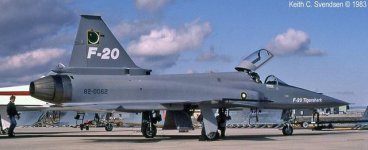
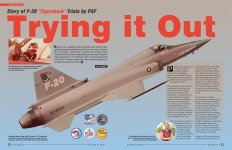
Between 1982 and 1984, the F-20 was extensively evaluated by the Pakistan Air Force, which was considering procuring 100 units. AVM Abbas Mirza (Retd), then a Group Captain was sent to the US and deputed with Northrop to test fly the F-20 and submit an assessment. However, the Tigershark fell short in certain areas of operational requirements of the PAF, and the procurement was shelved.
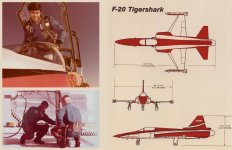
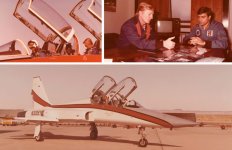
Between 1982 and 1984, the F-20 was extensively evaluated by the Pakistan Air Force, which was considering procuring 100 units. AVM Abbas Mirza (Retd), then a Group Captain was sent to the US and deputed with Northrop to test fly the F-20 and submit an assessment. However, the Tigershark fell short in certain areas of operational requirements of the PAF, and the procurement was shelved.
Blain2
THINK TANK: CONSULTANT
Great find! Thanks for sharing.Northop F-20 TigerShark in PAF Colours
View attachment 141720
View attachment 141721
Between 1982 and 1984, the F-20 was extensively evaluated by the Pakistan Air Force, which was considering procuring 100 units. AVM Abbas Mirza (Retd), then a Group Captain was sent to the US and deputed with Northrop to test fly the F-20 and submit an assessment. However, the Tigershark fell short in certain areas of operational requirements of the PAF, and the procurement was shelved.
View attachment 141722
View attachment 141723

Quwa
Research Partner

The PAF was willing to keep testing the F-20, but unfortunately they couldn't get to weapon tests by the time the remaining prototype crashed. By that point, Northrop shelved the program.
However, the test team's view was that the F-20 had the potential, but results were inconclusive due to the lack of weapons delivery tests. So, then Group Captain Abbas Mirza couldn't give it a green (literally due to incomplete info), but was open to test it further if allowed.
I remember him or another officer involved in the tests saying that they had really hoped the PAF would procure the F-20 with ToT.
However, the test team's view was that the F-20 had the potential, but results were inconclusive due to the lack of weapons delivery tests. So, then Group Captain Abbas Mirza couldn't give it a green (literally due to incomplete info), but was open to test it further if allowed.
I remember him or another officer involved in the tests saying that they had really hoped the PAF would procure the F-20 with ToT.

Yasser76
Elite Member
The PAF was willing to keep testing the F-20, but unfortunately they couldn't get to weapon tests by the time the remaining prototype crashed. By that point, Northrop shelved the program.
However, the test team's view was that the F-20 had the potential, but results were inconclusive due to the lack of weapons delivery tests. So, then Group Captain Abbas Mirza couldn't give it a green (literally due to incomplete info), but was open to test it further if allowed.
I remember him or another officer involved in the tests saying that they had really hoped the PAF would procure the F-20 with ToT.
Great insight, thanks for sharing, if we had gone for F-20 we would have been the first (and maybe only?) export customer and it would have been instead of the F-16 right?
headshot
Registered Member
Yes, watched his interview on air commodore (r) khalid chishti's channel a while back he said though the plane performed well,weapons integration was pending so he basically asked the PAF to wait and watch,but later F-16 beat the F-20 in the contract for navy aggressor squadron(general dynamics won the contract by offering F-16 at insanely low price and bearing the loss)as well as in USAF and air national guard competitions,the prototypes crashed and program was shelved.The PAF was willing to keep testing the F-20, but unfortunately they couldn't get to weapon tests by the time the remaining prototype crashed. By that point, Northrop shelved the program.
However, the test team's view was that the F-20 had the potential, but results were inconclusive due to the lack of weapons delivery tests. So, then Group Captain Abbas Mirza couldn't give it a green (literally due to incomplete info), but was open to test it further if allowed.
I remember him or another officer involved in the tests saying that they had really hoped the PAF would procure the F-20 with ToT.
Windjammer
VIP Member
Albeit not related to the OP
Nonetheless it may surprise some of you to learn that sometimes in the 90s AM Shahid Latif was sent to Sweden to evaluate the SAAB Grippen for the PAF.
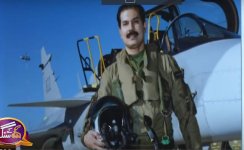
Nonetheless it may surprise some of you to learn that sometimes in the 90s AM Shahid Latif was sent to Sweden to evaluate the SAAB Grippen for the PAF.
Users who are viewing this thread
Total: 1 (members: 0, guests: 1)
Pakistan Defence Latest
-

-
-

-
KP govt backs out of counterterrorism commitments during talks: Naqvi (9 Viewers)
- Latest: SteppeWolff
-


