Operation Ghazab Lil Haq (Pakistan - Afghanistan War)

off topic but watched the UN assembly speech of both our and the Indian reprensentative and for the first time in many years our side got owned like the word Form 47 government pretty much made of mockery of us
 
He calls it a complex problem. It's not complicated at all. This is what happens when you seek parity with savages.

Pakistan should have its own version of guantanamo bay. Any afghans complicit in attacks should be sent along with their tribal elders. You have to humiliate and dominate their tribal hierarchy so the lesson trickles down.

 
Once again - No coherent argument from you other than usual cultist
"I need an enemy".

No good arguments - just low level bazari bs.

But makes sense considering the family history - its religious inherited belief - not informed choice.

Hence - CULT.

PTI wasnt created long before I was born so its not some religious belief - I saw the genesis in front of me - and its downfall too.

Also - I would skip toffees - adults dont carry those around in their pocket - grow up.

Cult, cult, cult, cult cult. It's all you guys have at this point. Come up with new material. Also, if me supporting PTI because my parents liked Imran Khan is a cult...so does that mean Pakistan Army is also a cult? They have big culture of sons following their fathers. They even get assigned to the same units don't they? Some cult like shit right there.


It has been almost 4+ years since he is out of office still everything that is the problem in Pakistan is his fault
Your post is an indirect way of giving lumber 1 a pass even after they hoarded so much power in civilian government still are unable to come up with a coherent plan to take out or at least minimize TTP and BLA half ass ops into afghanistan with no clear goals while they have become so confident that they launch frankenstein suicide drones in our airspace economy is a complete mess petrols rates keep rising while the lund leaguers cooks up a new excuse everyday last but not least signed a pact with the saudis when we have such a big internal mess now we are bound by it to support or even directly participate in their Yemen adventure
The only saving grace is a brief diplomatic win in some areas but as saying goes Peace/stability abroad does not mean peace and stability at home
And as for your point that PTI supporters does not own up to their mistakes they do and try to have their constituents try to rectify it
that is all

Oscar is not a fauj-eet but his attempts to pass himself as some sort of flawless centrist are where he falls short. I don't make any attempt to hide which side I support and which side I quite visibly detest. Nothing two-faced about it.

I can respect the fauj-eets too. They like the army and they want it to run Pakistan. End of the day, thats their opinion man. I'll even throw a bone here. For better or worse Pakistan progressed the most under Ayub, Zia and Musharaf. That is fact.

But this moral high-ground "i am better than you all because i criticise everyone" shtick is so pretentious.
 
Cult, cult, cult, cult cult. It's all you guys have at this point. Come up with new material. Also, if me supporting PTI because my parents liked Imran Khan is a cult...so does that mean Pakistan Army is also a cult? They have big culture of sons following their fathers. They even get assigned to the same units don't they? Some cult like shit right there.


Oscar is not a fauj-eet but his attempts to pass himself as some sort of flawless centrist are where he falls short. I don't make any attempt to hide which side I support and which side I quite visibly detest. Nothing two-faced about it.

I can respect the fauj-eets too. They like the army and they want it to run Pakistan. End of the day, thats their opinion man. I'll even throw a bone here. For better or worse Pakistan progressed the most under Ayub, Zia and Musharaf. That is fact.

But this moral high-ground "i am better than you all because i criticise everyone" shtick is so pretentious.
Under Zia country briefly entered the medievel times
 
Looks like regime priority is gunning down the PTI protest not taking out the cavemen head honchos

It's the same people

Treat them all the same

Kick out every Afghan
Create a powerful internal security system to launch IBO after IBO and just tear through the enemies of PAKISTAN
 
It's the same people

Treat them all the same

Kick out every Afghan
Create a powerful internal security system to launch IBO after IBO and just tear through the enemies of PAKISTAN

Rumours are a final solution is being prepared for both the taliban and KPK. They are waiting for SS to return to sign it off.

I urge the establishment to follow through with this while the iron is hot. We may not get this opportunity again after Trump leaves office.

Pakistan cannot progress when half of its country lives like bandits and barter with its enemies. Citizens of KPK have suffered the most out of everyone. They deserve to live in a peaceful and developed environment free from extortionists, smugglers, illegals and terrorists. An educated and civilized middle class will rise up and take the lead, free for cultists, ethnofascists and tribal boomers.

Once they they have full control of KPK's security, dismantle the drug production in FATA, cleanse it of afghan settlers, we will obliterate every trace of the taliban in the border belt and demilitarize it. Afghan women and children will be emancipated. This will fix Balochistan too and then finally Pakistan will have peace after decades of this never ending bullshit and constant source of humiliation.
 
It's the same people

Treat them all the same

Kick out every Afghan
Create a powerful internal security system to launch IBO after IBO and just tear through the enemies of PAKISTAN

Some of you may disagree with me, and that's completely fine. But let's ask an honest question... even if every Afghan were removed from Pakistan tomorrow, would that suddenly solve all of our problems? Would inflation disappear? Would political instability end? Would governance improve? Would corruption vanish? We all know the answer.

Many of the crises Pakistan faces today are not imported problems. They are largely self-inflicted wounds that have accumulated over decades. Most of this chaos is man-made, and much of it could have been avoided if difficult conversations had been held years ago instead of being repeatedly swept under the rug.

In my view, this time the establishment has bitten off more than it can chew. The old methods of managing political, economic, and security challenges are no longer producing the same results. The cracks that were once hidden are now visible to everyone.

One of our biggest problems is that we often confuse showcase projects with genuine development. If our entire gauge of progress revolves around slogans like, "Lahore is Pakistan's Paris," then we are already in trouble. A country does not become developed because one city has nice roads, metro buses, flyovers, or attractive commercial districts. Real development means functioning institutions, quality education, access to healthcare, reliable local governments, economic opportunities, and equal treatment of citizens regardless of which province they live in.

A nation succeeds when development reaches Quetta, Peshawar, Sukkur, Gwadar, Interior Sindh, South Punjab, and the remote districts that rarely make headlines. If all the investment, attention, and narrative are concentrated in a few urban centers while the rest of the country feels neglected, resentment naturally grows.

Ten years ago, if I had this conversation, I would have focused on provincial grievances, feelings of exclusion, unequal treatment, and the lack of ownership many citizens feel toward the state. These were issues that people whispered about privately. Today, they are discussed openly in interviews, podcasts, newspaper columns, and public forums.

For decades, many people in Sindh, Khyber Pakhtunkhwa, and Balochistan have felt that they were treated as territories to be managed rather than equal stakeholders in the federation. Whether one agrees with that perception or not, the feeling exists and cannot simply be dismissed.

Sindh was effectively left to PPP and MQM. Many critics argue that MQM repeatedly traded long-term structural reforms, such as a stronger local government system, fair census representation, and greater administrative autonomy for Karachi, for short-term political arrangements and ministerial positions. Consequently, Karachi continues to face many of the same governance problems despite its importance to Pakistan's economy.

In Balochistan, people have long complained that despite the province's strategic location and natural resources, local communities have not seen proportional benefits. The province became associated with smuggling routes, informal trade networks, and chronic underdevelopment, while trust between the center and local populations continued to deteriorate.

Khyber Pakhtunkhwa spent decades bearing the consequences of regional conflicts, militancy, refugee flows, and security operations. Yet whenever law and order deteriorates, the blame is often placed entirely on the provincial government. What is frequently overlooked is that border management and national security are fundamentally federal responsibilities. The federal government, military, and security agencies all have central roles in securing and managing the country's borders.

The irony is that Pakistan's leadership has often searched for external explanations for internal failures. It's easier to blame refugees, foreign conspiracies, neighboring countries, or political opponents than it is to confront decades of policy mistakes, weak governance, institutional dysfunction, and uneven development.

Pakistan's problems are far too deep to be solved by finding a scapegoat. Expelling Afghans will not automatically fix corruption, economic mismanagement, weak institutions, poor governance, or provincial grievances. Those problems existed before the refugee issue became politically convenient, and they will remain afterward unless they are addressed honestly.

At some point, Pakistan must stop measuring success through optics and start measuring it through results. The real question is not whether Lahore looks like Paris. The real question is whether every Pakistani, regardless of province or ethnicity, feels that Pakistan belongs to them and that they have a fair stake in its future. Only then will meaningful and lasting stability be possible.

What really bewilders me is that some people talk about these issues without understanding the regional history, geopolitics, or the long-term consequences of state actions. Imposing Governor's Rule or an emergency in KPK might satisfy certain political interests in the short term, but it would come at a significant cost. It could fuel resentment against the federal government and the establishment, strengthen feelings of political disenfranchisement, and create unnecessary hostility among the people. History shows that coercive political solutions often generate more problems than they solve, especially in regions where trust between citizens and the state is already fragile.

After read some of the comments, I was going to write some pretty nasty words, but I didn't because it's becoming clearer that these people are living in their own bubble unaware of the ground realities. I always give an example of "The Matrix".

My 34 EZ model will fix majority of the problems including development in all 34 Economic Zones, not just "Lahore".
 
Last edited:
Some of you may disagree with me, and that's completely fine. But let's ask an honest question... even if every Afghan were removed from Pakistan tomorrow, would that suddenly solve all of our problems? Would inflation disappear? Would political instability end? Would governance improve? Would corruption vanish? We all know the answer.

Many of the crises Pakistan faces today are not imported problems. They are largely self-inflicted wounds that have accumulated over decades. Most of this chaos is man-made, and much of it could have been avoided if difficult conversations had been held years ago instead of being repeatedly swept under the rug.

In my view, this time the establishment has bitten off more than it can chew. The old methods of managing political, economic, and security challenges are no longer producing the same results. The cracks that were once hidden are now visible to everyone.

One of our biggest problems is that we often confuse showcase projects with genuine development. If our entire gauge of progress revolves around slogans like, "Lahore is Pakistan's Paris," then we are already in trouble. A country does not become developed because one city has nice roads, metro buses, flyovers, or attractive commercial districts. Real development means functioning institutions, quality education, access to healthcare, reliable local governments, economic opportunities, and equal treatment of citizens regardless of which province they live in.

A nation succeeds when development reaches Quetta, Peshawar, Sukkur, Gwadar, Interior Sindh, South Punjab, and the remote districts that rarely make headlines. If all the investment, attention, and narrative are concentrated in a few urban centers while the rest of the country feels neglected, resentment naturally grows.

Ten years ago, if I had this conversation, I would have focused on provincial grievances, feelings of exclusion, unequal treatment, and the lack of ownership many citizens feel toward the state. These were issues that people whispered about privately. Today, they are discussed openly in interviews, podcasts, newspaper columns, and public forums.

For decades, many people in Sindh, Khyber Pakhtunkhwa, and Balochistan have felt that they were treated as territories to be managed rather than equal stakeholders in the federation. Whether one agrees with that perception or not, the feeling exists and cannot simply be dismissed.

Sindh was effectively left to PPP and MQM. Many critics argue that MQM repeatedly traded long-term structural reforms, such as a stronger local government system, fair census representation, and greater administrative autonomy for Karachi, for short-term political arrangements and ministerial positions. Consequently, Karachi continues to face many of the same governance problems despite its importance to Pakistan's economy.

In Balochistan, people have long complained that despite the province's strategic location and natural resources, local communities have not seen proportional benefits. The province became associated with smuggling routes, informal trade networks, and chronic underdevelopment, while trust between the center and local populations continued to deteriorate.

Khyber Pakhtunkhwa spent decades bearing the consequences of regional conflicts, militancy, refugee flows, and security operations. Yet whenever law and order deteriorates, the blame is often placed entirely on the provincial government. What is frequently overlooked is that border management and national security are fundamentally federal responsibilities. The federal government, military, and security agencies all have central roles in securing and managing the country's borders.

The irony is that Pakistan's leadership has often searched for external explanations for internal failures. It's easier to blame refugees, foreign conspiracies, neighboring countries, or political opponents than it is to confront decades of policy mistakes, weak governance, institutional dysfunction, and uneven development.

Pakistan's problems are far too deep to be solved by finding a scapegoat. Expelling Afghans will not automatically fix corruption, economic mismanagement, weak institutions, poor governance, or provincial grievances. Those problems existed before the refugee issue became politically convenient, and they will remain afterward unless they are addressed honestly.

At some point, Pakistan must stop measuring success through optics and start measuring it through results. The real question is not whether Lahore looks like Paris. The real question is whether every Pakistani, regardless of province or ethnicity, feels that Pakistan belongs to them and that they have a fair stake in its future. Only then will meaningful and lasting stability be possible.

What really bewilders me is that some people talk about these issues without understanding the regional history, geopolitics, or the long-term consequences of state actions. Imposing Governor's Rule or an emergency in KPK might satisfy certain political interests in the short term, but it would come at a significant cost. It could fuel resentment against the federal government and the establishment, strengthen feelings of political disenfranchisement, and create unnecessary hostility among the people. History shows that coercive political solutions often generate more problems than they solve, especially in regions where trust between citizens and the state is already fragile.

After read some of the comments, I was going to write some pretty nasty words, but I didn't because it's becoming clearer that these people are living in their own bubble unaware of the ground realities. I always give an example of "The Matrix".

My 34 EZ model will fix majority of the problems including development in all 34 Economic Zones, not just "Lahore".
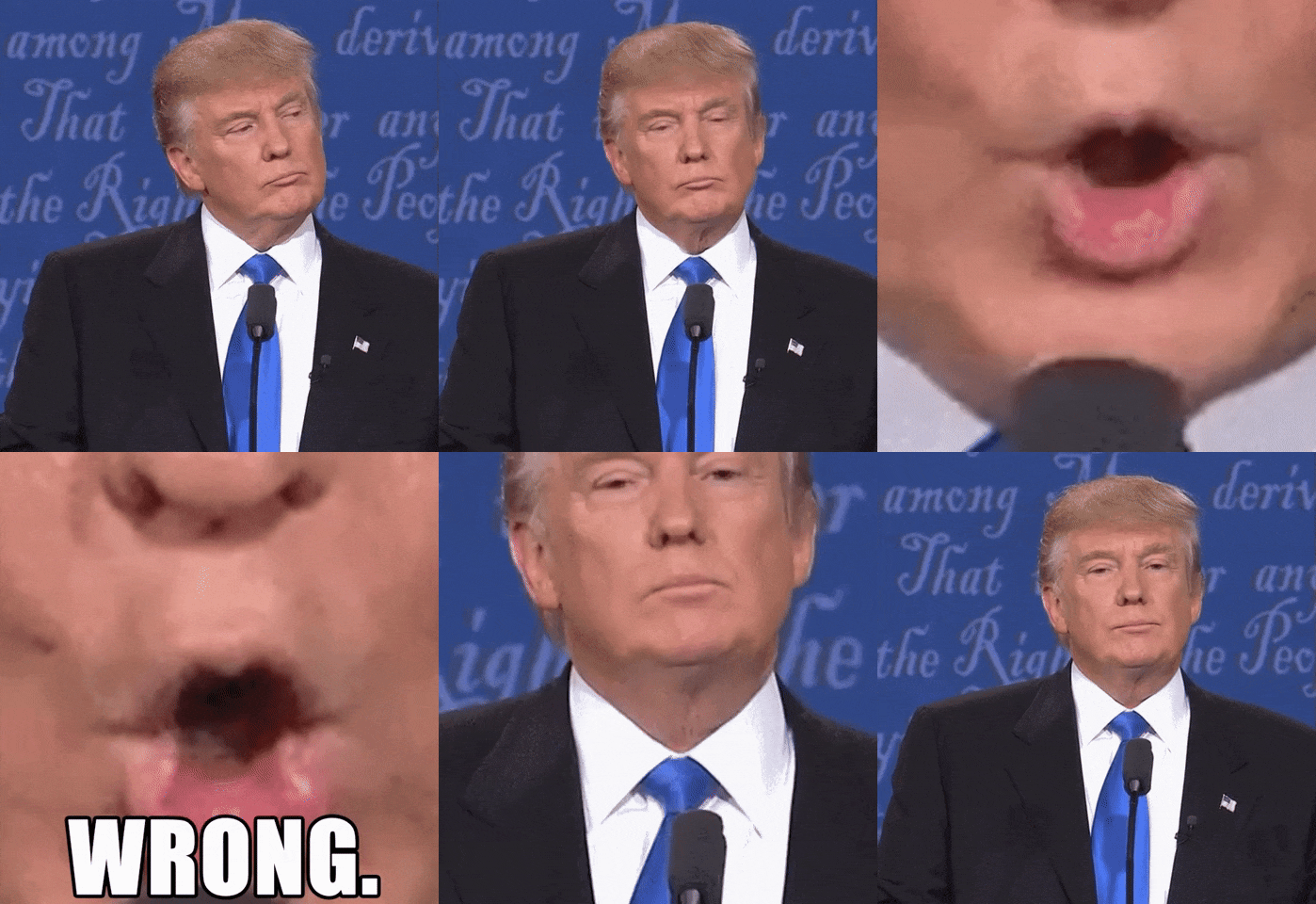
giphy.gif


This is a proxy war. Lets not attempt to rationalize it. It really is that simple.

When the UK and US were being attacked during the WOT, was it for a lack of development? No it was a lack of counter terrorism capabilities which they promptly fixed instead of negotiating with their enemies.
 
But let's ask an honest question... even if every Afghan were removed from Pakistan tomorrow, would that suddenly solve all of our problems?
I'll take this bet. Please institute this academic experiment, posthaste. If all our problems are not solved by this, I owe you a coke.
 

Users who are viewing this thread

Back
Top