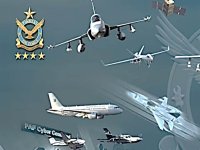
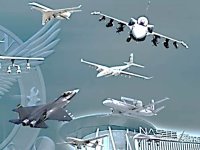
PAF Future Acquisition Plans

im kind of against J-10 procurements, i wish we hadnt to start with. Now obviously the situation is what it is but...

Chinese are losing interest in the J-10, the OEM's have bigger fish to fry, the PLAAF has more demanding requirements and the smaller suppliers will also probably switch to more lucrative contracts on the newer aircraft.

This means support for the J-10c will start to dwindle, it will become more costly and also more difficult to sustain. Beyond this, there is not a clear picture for the future of the J-10C, 15,20,30 years down the line- obviously there wont be a SLEP, so structural life is limited, there may not be an avionics upgrade either as likely PAF will be the only, or one of a few customers, meaning the OEM's dont have the incentive to do so either. Its a very grey platform atm, i cant tell what the future will be like. I suspect, within the next decade or two, alot of J-10c sustainment will come from cannibalised chinese aircraft being split to support the in service airframes in China and Abroad.

In my ideal world we would have taken the Typhoon when offered to us under ACM Aman. It was a good package with extra aircraft (Tranche 1's) thrown in for free.

Beyond this, the Euros are locking into Typhoon, with 2/3 upgrades in the works. Bare in mind Tranche 3 and J-10c we're close ish in release dates. The Euros OTOH are predicting a service life well into the 2060's for their typhoons, this basically outlines that the fleets will be ok, includes MLU's, SLEPs, assured support etc. We cant say this for J-10c's.

If i could, id have still negotiated a deal with the UK specifically- the BAE plant was in danger of being shut down because the RAF wasn't placing orders, so Türkiye got a bloody good deal. This could have easily been us.

Now, no point in could have should have would have, going forward, in my ideal world, we will pick up some used F-16's, SLEP+V upg, then by no other choice, more J-10s.

Remember, we will probably retire some F-16s, alongside our Block 1's in the next decade, its a serious fleet shortfall and with no planned replacement- if the PAF does not bulk up its J-10 numbers asap ish, theres a real possibility that if J-10 line closes, PAF will need to rely on used aircraft, or alltogether look at procuring another platform, of which most have 5-10 year waitlists. This is why you dont buy the last birds off the production line, becuse you end up like India and their Mirages lol
J-10 is the most capable and embargo safe aircraft at the moment for which PAF can get almost any armament it wants as it has the capacity for weaponry which JFT even can't carry at the moment. Frankly, JFT Block III has limitations (capacity/range) and May 2025 would have turned out differently if J-10 wasn't flying in the skies.

If Indonesia and Bangladesh have shown interest to buy it, and they sign the deals then why should the production be endangered.

F-16s have to get upgraded at some stage. The new AMRAAM will need to get mated with new or upgraded radars unless AWACs can take control to give it inputs for long range engagements. Anyways F-16 upgradation is a lengthy topic.

J-35 is expensive in every sense. Expensive to buy, maintain, base etc but its the future and PAF has to get a stealth aircraft at some stage. J-35 squadron will be spread all around Pakistan in detachments to save it from surface strikes by IAF. They will be IAF's prime targets. Its the threat factor for IAF which J-35 brings and for that IAF trains with F-35B of RN. J-35 will be fatal for SU30 and likes of Mig-29, Mirage2000 etc. IAF wll require a 5th gen fighter to fly in the air when PAF acquires J-35.

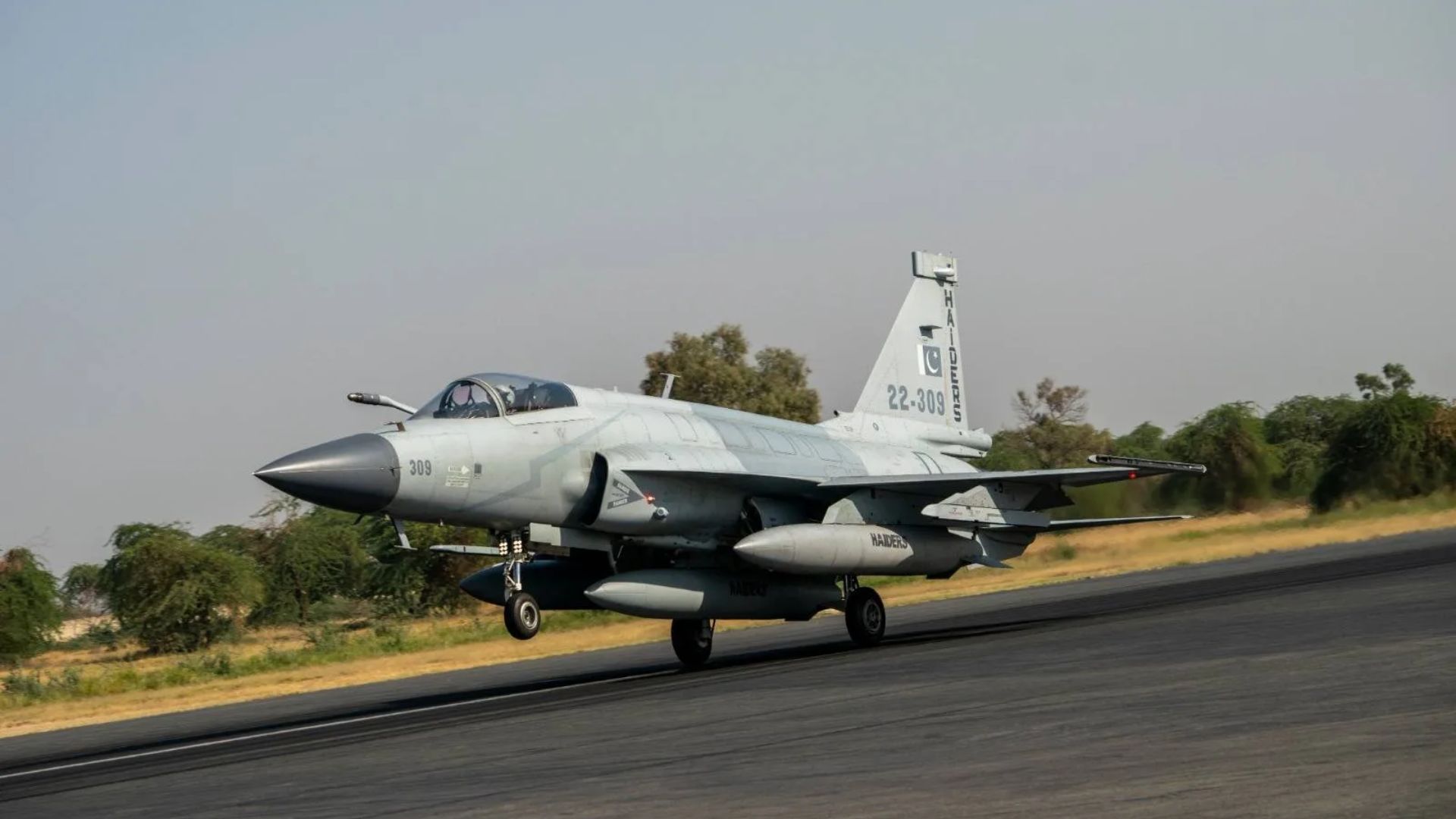
While F-16 got heavier for strike payload capacity, and increased range with CFTs in later blocks (Block 40 onwards), the JFT has smaller payload capacity and lesser range to begin with. The upgradation on JFT has its limits and its not wise to invest in change of design since J-10 can do the job easily. F-16s nose, and J-10s nose are still larger than JFT to house a bigger radar. JFT is adequate as a back up for J-10 carrying long range AAMs which could be guided by J-10 or AWACs through data link since JFT radar has smaller range. PAF designed and bought JFT to fill in numbers with a BVR capable fighter replacing A-5, F-7 and Mirages in the absence of originally planned 101 x F-16s but eventually made a fighter which although is an export success but leaves a lot to be desired when entering 2030's.

PAF has used F-16s in the recent conflict for strike roles in Afghanistan. F-16s A2G armament in PAF is very restricted. It can deliver 2000 lb bombs but cannot fire long range A2G missiles since USA didn't clear any for PAF. There was a debate about if PAF F-16s could carry and fire 100+ km Harpoon anti-ship missile which PN P-3 Orions could shoot. JFT as well as Mirage-V can carry long range A2G missiles since PAF can tweak them comfortably without stringent permissions. J-10s didnt take part in Afghanistan conflict since their main role is Air superiority which wasnt required. The EW and self protection pods are up to date on PAFs F-16s but will need upgrading beyond 2030s.

Every PAF aircraft has some primary role to perform suited for all conflicts.
 
"Not my opinion"

To view this content we will need your consent to set third party cookies.
For more detailed information, see our cookies page.


BS again … it Shows Most likely already older footage of several PLAAF J-35A & PLAN NA J-35 under construction and Not Even a Single Word in all These Reports even mentioned Pakistan or deliveries.

It‘s agai much adu about nothing and the stupid ones again try to cain clicks, likes, attention or simply don’t understand the Reality.
 
BS again … it Shows Most likely already older footage of several PLAAF J-35A & PLAN NA J-35 under construction and Not Even a Single Word in all These Reports even mentioned Pakistan or deliveries.

It‘s agai much adu about nothing and the stupid ones again try to cain clicks, likes, attention or simply don’t understand the Reality.
How many J-35 so far deilvered to both PLAAF and PLAN? are you counting? any estimate you have in your mind?
 
How many J-35 so far deilvered to both PLAAF and PLAN? are you counting? any estimate you have in your mind?

Per identified numbers both services operate four each, but we know the construction numbers 0011 & 0012 so I erstinstanzliche that about two dozen are already built.
 
Per identified numbers both services operate four each, but we know the construction numbers 0011 & 0012 so I erstinstanzliche that about two dozen are already built.
Thank You. so around next 2 to 3 years they can cross 100 in total. hopefully. but it depends on their fully satisfied version tested on these LRIP versions only then they will enter into mass production but stil their LRIP production is also high. i assume both will now have not more than 6 each. Thanks for the information
 
How many J-35 so far deilvered to both PLAAF and PLAN? are you counting? any estimate you have in your mind?
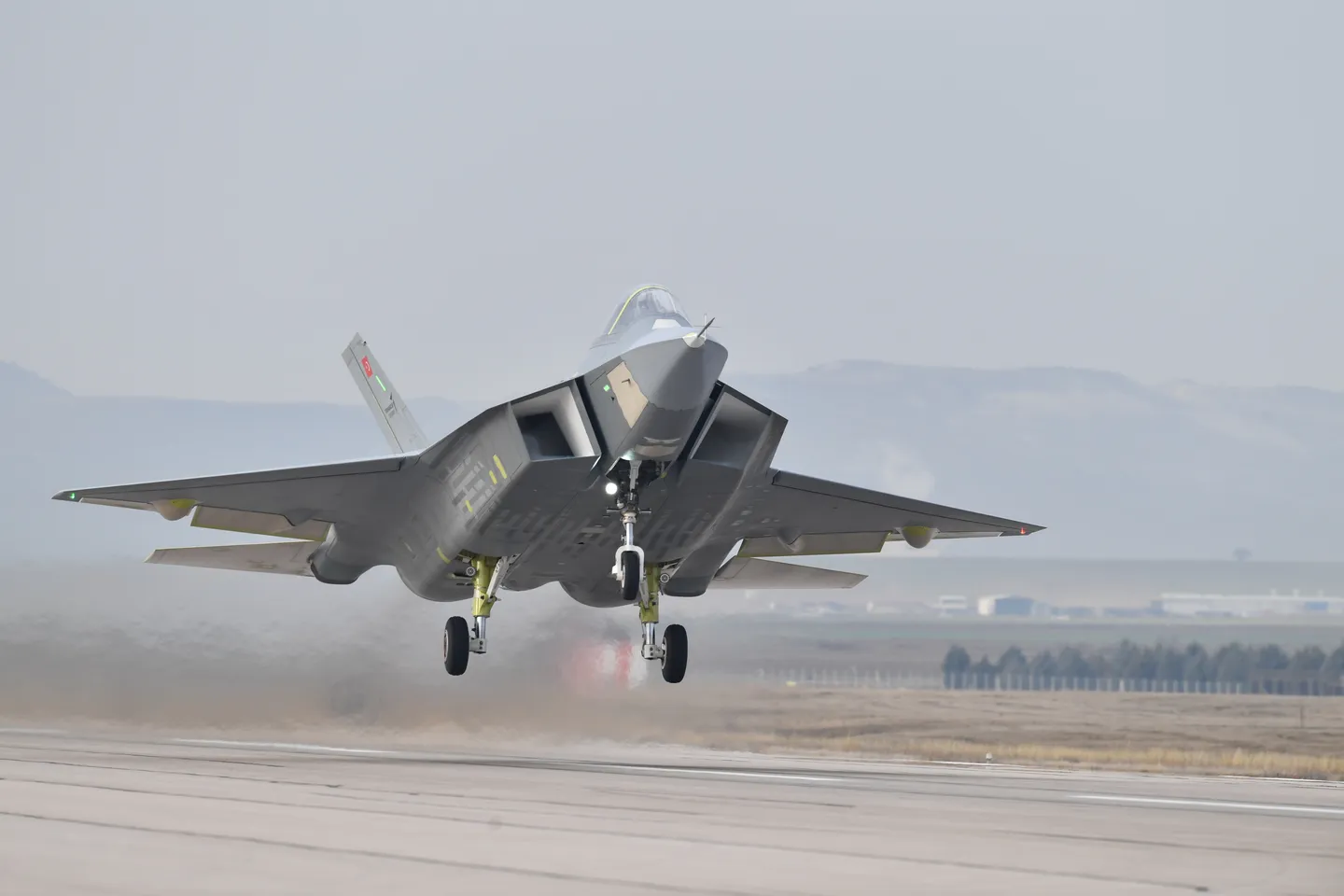
The J-35 series fighter jets will develop very quickly.

Unlike the J-20 series fighter jets, the J-35 series fighter jets utilize almost all mature Chinese technology. This requires less time to validate these technologies. Many subsystem technical validations have already been completed on other Chinese fighter platforms, such as the J-20 and J-16. Engineers only need to perform relevant integration work. ------ Even the most complex WS-19 engine, which borrows a lot of technology from the WS-15 engine, is developing much faster than the WS-15 engine.

When China developed the J-20 fighter jet, many subsystem technologies had to be developed from scratch, which took a considerable amount of time.

In recent years, China has been vigorously promoting "Smart Manufacturing in China." This will significantly increase the production speed of the J-35 series fighter jets. In the near future, the production capacity of the J-35 series fighter jets will surpass that of the J-20 series fighter jets.

Maybe. The answer I give you today may be different tomorrow.
 
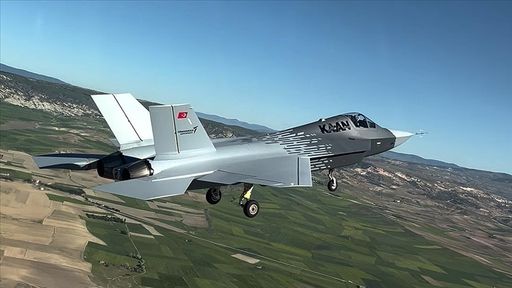
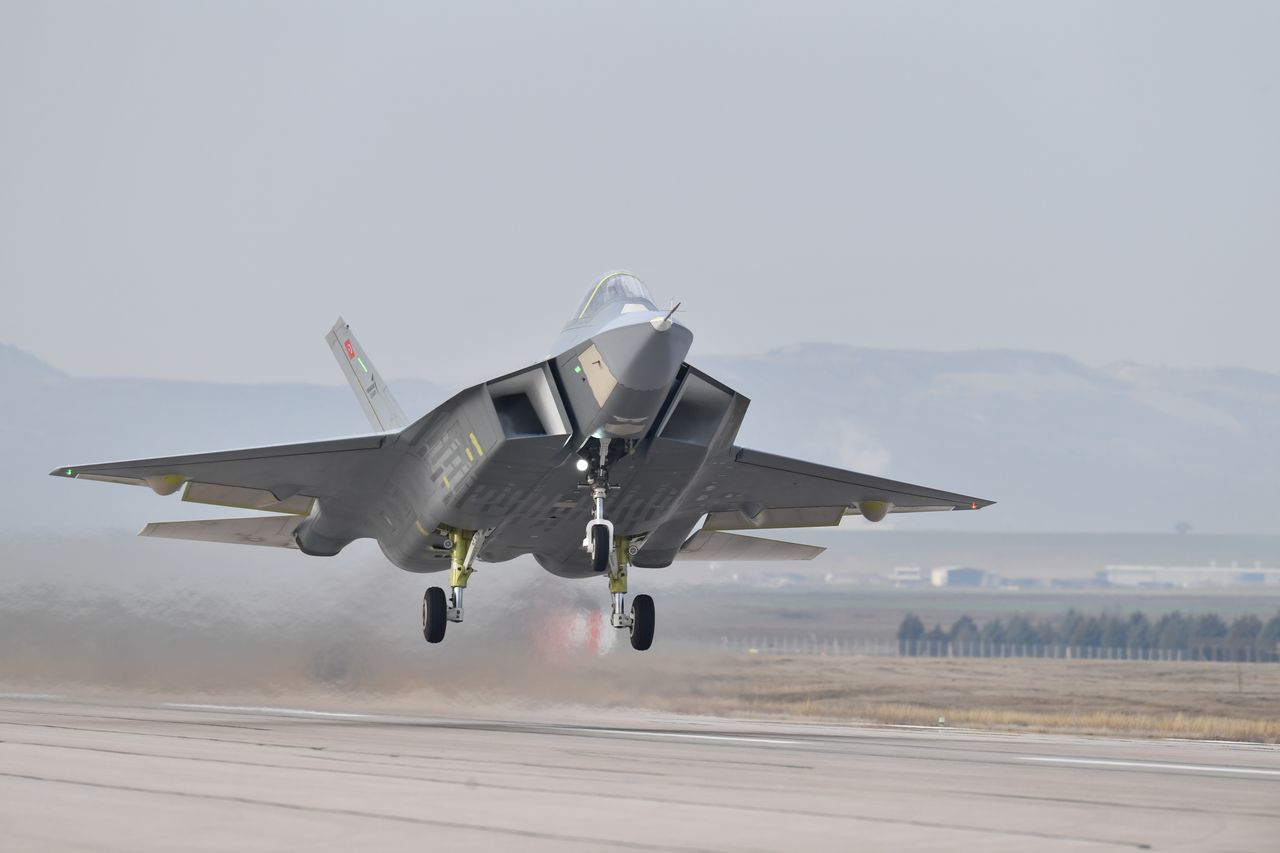
Good article on PAF and other nations' interest in KAAN and KAAN's evolution to a 6th gen platform.

Why Türkiye’s homegrown KAAN fighter could reshape Asia's airpower calculus
Indonesia, Pakistan and Saudi Arabia are putting their trust in the Turkish jet. It could also be the answer to Japan’s needs in a volatile region.

Share
Why Türkiye’s homegrown KAAN fighter could reshape Asia's airpower calculus
KAAN began as a fifth-generation project but has now unveiled a sixth-generation model. / Turkish Aerospace Industries

February 25, 2026
The race to deploy sixth-generation fighter aircraft is no longer just an aspiration. It is a live, high-stakes competition whose winners and losers will determine the strategic landscape of the 2030s and beyond.

Yet, as ambitious programmes multiply and political fault lines widen, one contender is advancing with a clarity of purpose that many across the world are taking note of: Türkiye's homegrown fighter jet KAAN.

And there are very good reasons for this faith in Kaan.

KAAN began as a fifth-generation project. It has now unveiled a sixth-generation model.

The global landscape is crowded but uneven. The United States is forging ahead with its Next Generation Air Dominance programme (NGAD).

Meanwhile, Europe is divided between the Franco-German-Spanish FCAS and the UK-Italy-Japan Global Combat Air Programme (GCAP).

However, 'crowded' does not mean 'stable'. Europe's ambitions for a sixth-generation fighter jet are facing structural challenges.

Disputes over industrial workshare, budgetary stress, and the perpetual difficulty of coordinating sovereign defence priorities across multiple governments are taking their toll.

Reports now suggest that Italy, the UK and Japan are manoeuvring to bring Germany into the GCAP programme, even though Berlin is still involved in the competing FCAS project. This reflects a lack of coherence in European airpower planning.

Japan, for its part, finds itself at a crossroads. While GCAP offers credible technology and a partnership with NATO, the programme is not without complications.

Attempting to add Germany or Saudi Arabia to the programme would introduce governance complexity at a time when momentum matters most.

The GCAP programme is scheduled to enter service in 2035, and the window for adding partners without missing this deadline is closing.


A programme that keeps moving

Against this backdrop, KAAN's trajectory is notable for its orderliness.

Türkiye has unveiled new prototypes, signed a procurement contract with Indonesia for 48 aircraft and announced joint production plans withPakistan.

It is also in the final stages of negotiations with Saudi Arabia regarding their participation in the programme.

This is a significant international footprint for a programme that is still maturing. It suggests more than just diplomatic activity. It reflects genuine confidence in KAAN's viability across very different strategic cultures.

Despite Washington reportedly urging its Gulf partners to reconsider their participation in negotiations on Turkish and Pakistani fighter programmes, talks are ongoing.

This kind of resilience in the face of geopolitical pressure is precisely what countries seeking strategic autonomy would expect from a long-term partner. It also suggests that a wider change is afoot.

This means that nations across the Middle East and Asia are no longer willing to allow Washington to dictate their defence portfolios.

What Japan needs

This matters specifically for Japan. Tokyo is located in one of the world's most challenging security environments.

North Korea's missile programme, China's growing air and naval capabilities, and the wider uncertainty surrounding deterrence in the Indo-Pacific region mean that capable platforms and resilient partnerships are both required.
Overreliance on US systems carries well-documented risks, such as export controls, political conditionality, and the ever-present possibility that foreign policy friction will interrupt supply chains.

While European partnerships are technologically sophisticated, they remain hostage to EU consensus dynamics that are slow-moving andvulnerable to internal disruption.

The KAAN's architecture is based on a different philosophy.

Rather than being conceived as an isolated platform, the aircraft is viewed as the centrepiece of a networked combat system.

Türkiye's jet-powered unmanned combat vehicle, the Kizilelma unmannedfighter jet, is designed to operate alongside the KAAN as a loyal wingman.

This represents a serious attempt to incorporate manned–unmanned teaming into the programme from the outset.

This is not just a conceptual addition, but an operational doctrine that has been incorporated into the development roadmap.

For Japan, which is planning to develop its own manned–unmanned teaming concepts in response to the security situation in the Indo-Pacific, this Turkish collaboration presents significant cooperation opportunities.

Sceptics will point out that Türkiye still relies on imported engines while itsown engine programme matures. They will also highlight the size difference between TAI and the companies behind the GCAP or FCASprogrammes.

However, scepticism once surrounded Türkiye's drone sector, too.


RELATEDTRT World - Prototype to power-broker: How Türkiye’s indigenous fighter jet KAAN earned global trust
The Bayraktar TB2 has since transformed battlefield tactics everywhere, from Ukraine to the Sahel.

It is institutional learning, supply chain discipline and export culture that enabled this success, which now underpin KAAN's development. The trajectory is familiar.

None of this requires Japan to abandon the GCAP. Strategic diversification is a prudent move, not a betrayal.

By engaging with KAAN through technology cooperation, observer participation, or parallel procurement, Tokyo could leverage its existing partnerships, mitigate the risk of schedule delays, and strengthen an emerging Asia-centred aerospace dialogue (involving Indonesia, Pakistan, and Saudi Arabia) that is independent of Washington and Brussels.

Spain has already expressed interest in the KAAN platform. The notion that KAAN's relevance is confined to its immediate neighbourhood is becoming increasingly difficult to justify.

What lies ahead

Sixth-generation aviation may ultimately be defined less by any single technology, such as stealth, directed energy or quantum sensing, and more by the ability of programmes to remain politically, financially and industrially viable over the course of a decade of development.

In other words, it will be about which programmes can remain politically, financially and industrially viable over the course of a decade of development. Many will not succeed.

Despite the challenges it sometimes faces, KAAN has demonstrated its ability to attract partners, sign contracts and maintain progress.

In a field where momentum is the rarest commodity, this counts for more than it might seem.

For Japan and other major Asian middle powers with sizeable defence industries, the question is no longer whether to diversify, but how to do so. Japan has advanced technology and strategies that are complementary to Türkiye's.

Cooperation with KAAN could mitigate the country's vulnerability to GCAP. This constitutes strategic autonomy, providing manoeuvring room in today's international system.

 
Last edited:

PAF lays out next procurement plans
 

PAF lays out next procurement plans
More J-10 C, JF-17 Alpha, J-35, plus our own 5th generation platform, for that we would need collaborations. Most likely Turkiye
 
No news they gave about new air defense system inductions which needs a focus strange.
 
No news they gave about new air defense system inductions which needs a focus strange.
No it's just that you have been living under a K2 sized rock.

Here are the confirmed AD procurements

Additional HQ-9B squadron (2 batteries probably)

2 HQ-16FE batteries

Unknown number and different types of Shorad inductions

Potential procurement of the land CAMM-ER by the Navy

Hundreds of new CUAS systems.
 
Last edited:

Users who are viewing this thread

Pakistan Defence Latest

Country Watch Latest

Latest Posts

Back
Top