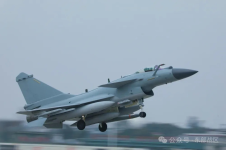
PAF J-10CE News, Updates and Discussion

Status
Not open for further replies.
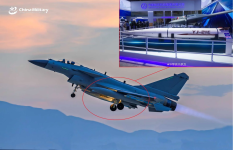
But the question remains, was it a weight & shape representing indeed the YJ-12E?
Due to limited imagery, it's difficult to determine exactly which type of missile it is. However, it cannot be the YJ-21 hypersonic missile or the so-called "miniature" version of the YJ-21 hypersonic missile.

Original image
1766999604182.png
1. Regarding the missile itself: A hypersonic missile needs sufficient range (>800 km) and sufficient destructive power to be militarily effective. These factors dictate that it cannot be too light. It is generally estimated that the air-launched version of the YJ-21 weighs between 2 and 4 tons.

2. From the image, we can see that the missile is mounted on the second hardpoint of the wing. When a fighter jet carries heavy payloads, it can only use the hardpoints near the wing root or the hardpoints under the fuselage. Mounting a heavy payload on the second hardpoint would put excessive stress on the wing and could easily lead to flight accidents. (@HemlockKhalid/AeronautIR A pilot could probably explain this better.)
When a fighter jet carries a payload on its wings, the further the hardpoint is from the fuselage, the lighter the payload it can carry. Conversely, the closer the hardpoint is to the fuselage, the heavier the payload it can carry.
=======================================================
The J-10C/CE aircraft has three hardpoints on each wing.

Inner hardpoint:
Has the strongest load-bearing capacity. Typically used for carrying external fuel tanks, heavy air-to-ground munitions, etc.

Middle hardpoint:
Has a medium load-bearing capacity. Typically used for carrying BVR air-to-air missiles, light air-to-ground munitions, electronic warfare pods, etc.

Outer hardpoint:
Has the weakest load-bearing capacity. Typically used for carrying short-range air-to-air combat missiles.
=======================================================
Therefore, the missile in the image cannot be a hypersonic missile.
 
Last edited:
Pakistan wanted 20. It ordered 20. It got 20.
The end.

I don't know where people got this 36 figure from and why people are so so sure about it.
Previously, in some cases, PAF has had a min Sqdn strength of 18, and a full Sqdn of 36. So to stay relevant, some people have to spread sensationalism, or speculate.
 
F15 and F16s both are compatible.
They had integrated these missiles to both F16s and F15s. Before LORA.
Hmm... Never saw a pic of F-16 carrying this. LORA is actual ALBM while Sparrow series has v different purpose. Blue Sparrow was developed to act as target missile to refine Arrow ABM/ADS. The actual missile based on Blue Sparrow booster is known as ROCKS (manufactured by Rafael). This was the system most probably used against Iran in 2024 which was confused with Blue Sparrow, IMO.
 
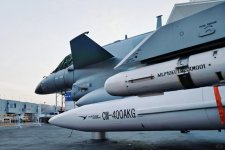
The pylon under the wing of the J-10 has the capability to carry missiles in the 2000-pound class, such as the CM-400AKG.

View attachment 168203

Let's calculate it.

Since the J-10C is equipped with CM-400AKG, it will inevitably require a long-distance raid. So it needs to mount two 800L auxiliary fuel tanks on the inside of its wings.

Then there is the electronic warfare pod, which should be hung below the air intake. And CM-400AKG can only be hung on the central axis of the fuselage.

Attach two PL-10 and two PL-15 self-defense weapons to the wings.

Okay, everything is fully loaded, I haven't calculated the weight yet.
 
This is the argument has been had for ages. Please see my earlier post in the F-16 thread on the subject for information. I would kindly request to please dispute it technically and with figures if you wish to do so. I cannot reply to "I don't like the US relationship" or plain emotional discourse.

Here is a summary:
Pakistan has operated the F-16 for more than 40 years. That alone should give pause to anyone casually suggesting a wholesale replacement. Four decades is not just fleet age. It is accumulated investment, sunk cost, institutional muscle memory, and a fully amortized ecosystem that most air forces would hesitate to walk away from.

Pakistan already has hardened shelters, maintenance depots, simulators, ground equipment, software systems, and trained personnel built specifically around the F-16. That investment is already paid for. A new platform does not fit neatly into that structure. It requires new tooling, new diagnostic equipment, new simulators, new software licenses, and often new base modifications. None of this is optional. All of it costs money.

There is also the cost of lost efficiency. Pakistan’s engineers, technicians, and pilots understand the F-16 deeply. They know how it behaves at the edge of the envelope. They know which components fail first in local conditions. They know how to stretch availability during surge operations. That kind of expertise does not show up in procurement spreadsheets, but it has real financial value. Losing it means higher error rates, lower availability, and more expensive maintenance during the early years of a new platform.

If the F-16 were only a bomb truck, then yes, systems like Akinci or the S2 paired with Al-Rasoob make financial sense. Unmanned platforms are cheaper per flight hour, don’t risk pilots, and are well suited for permissive strike roles. For stand-off weapons delivery against fixed targets, they are efficient and increasingly capable.

But the F-16 has never been just a bomb truck in PAF service. Its value sits in air defense, strike escort, counter-air, and high-end deterrence roles. That is where drones, even advanced ones, still fall short. Akinci carrying munitions does not replace a manned fighter with radar, electronic warfare, data fusion, and the ability to dynamically react in contested airspace.

On cost, this is where the argument usually flips. Buying new F-16s is expensive and politically constrained. That is a given. But upgrading existing airframes is a very different financial profile. A deep upgrade package is a fraction of the cost of introducing a new manned fighter type. More importantly, Pakistan already paid for the infrastructure, training, spares, and doctrine around the F-16. Walking away from that ecosystem to replace it with either a new fighter or drones does not save as much money as it appears once sustainment and readiness are factored in.

Drones and fighters are not interchangeable line items. They solve different problems. Akinci can supplement the force. It can take on strike and ISR roles and free up F-16 hours. That actually strengthens the case for keeping the F-16 fleet, because it reduces wear while preserving high-end capability.

On the C7 point, that is not new information. Pakistan was never going to receive the latest F-16 variants. But that does not make the current fleet obsolete. Modern radars, avionics refreshes, electronic warfare upgrades, and weapons integration can keep existing jets credible for another decade or more.

So the real question is not “do we need new F-16s?” It is “do we need to throw away 40 years of sunk cost and institutional experience?” Drones should complement the F-16, not be used as an argument to retire it. The cheapest and most stable option remains upgrading what Pakistan already understands, operates, and can sustain.

But us document already makes clear that Pakistan will likely retire the f-16 fleet by 2040s so trying to purchase new aircraft for effiectively 10 years of service is pointless. Pakistan doesnt need to buy new f-16s to keep using that infrastructure. I would argue for getting more used airframes for cheap or upgrading more of our fleet but simply getting new airframes because we have the infrastructure already is just sunk cost fallacy in effect. The paf must look big picture and for decades to come not for immediate short term benefit. You say Pakistan will never get the most mordern version of equipment from us if so why not go to china which has much better record of giving us equipment closer to its most mordern even if they dont give us the top of line stuff they give us 2nd best the us only gives us the bare minimum
 
But us document already makes clear that Pakistan will likely retire the f-16 fleet by 2040s so trying to purchase new aircraft for effiectively 10 years of service is pointless. Pakistan doesnt need to buy new f-16s to keep using that infrastructure. I would argue for getting more used airframes for cheap or upgrading more of our fleet but simply getting new airframes because we have the infrastructure already is just sunk cost fallacy in effect. The paf must look big picture and for decades to come not for immediate short term benefit. You say Pakistan will never get the most mordern version of equipment from us if so why not go to china which has much better record of giving us equipment closer to its most mordern even if they dont give us the top of line stuff they give us 2nd best the us only gives us the bare minimum

Buying new F-16 fighters is foolish. Pakistan must put full effort in acquiring J-35 fighters. The air force already has access to JF-17 and J-10C. The only argument that makes sense is to upgrade the existing F-16 fleet.
 
Status
Not open for further replies.

Users who are viewing this thread

Back
Top