PAF J-35AE - News, Updates and Discussions

One of the supposed parts of CPEC was to set up a production line in Pakistan that would manufacture a next-gen fighter for the PAF and other markets.


Ultimately, I think we'll see a situation where a fighter production line will be set up within Pakistan, but away from the hands of PAC (and, by extension, the PAF leadership). There's a 'bigger shark' in all this and that's the Army leadership, which is basically the guarantor for NESCOM, SUPARCO, and HIT.

Not the ideal scenario (see the results in HIT and SUPARCO), but okay, it may be better than leaving anything with PAC.

With NESCOM rolling out more products, I can see a scenario where NESCOM becomes the principal manufacturer of a next-gen fighter and UCAV via a new subdivision.
Just because nytimes said it, it is more likely to be false. Besides, why would people ignore the big "E" in CPEC?
 
Everyone is writing a thesis here.

Here is an article dated 2017, describing technical steps taken that transform RD33 to WS13/WS21 with optional thrust from 96kn to 111kn.


The tortuous legend of WS-13: Rebirth with a foreign shell​

2017-10-31 21:00
Source: Dashui

ab2c1795673340d1a53332755f7d6e8b.jpeg


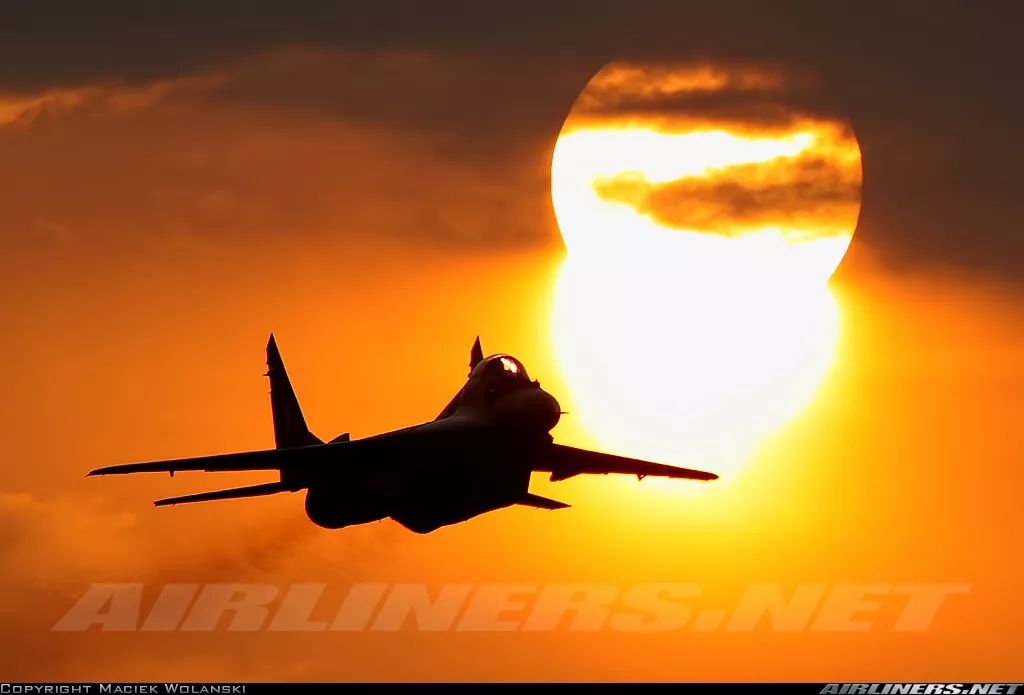
The MiG-29 fighter is not well-known in China, and is overshadowed by the Su-27. The only thing that has borne fruit is the engine RD-33.

A few days ago, we talked about the story of WS12 and high thrust. In 1993, they were affected by the China-Russia aviation technology cooperation agreement and both were terminated. Part of the WS12 technology was transferred to the subsequent WP13 high thrust modification, and the other part was turned into a research topic that continued slowly.

Sino-Russian aviation technology cooperation has given us the opportunity to receive Soviet equipment and technology again after 40 years. In terms of aviation engines, Russia has a large number of mature engineering models for selection and reference. Due to China's introduction of the Su-27 and Russia's economic difficulties after the disintegration of the Soviet Union, especially the long-term sluggish sales of the MiG-29, my country has obtained a series of RD33 data at a relatively low cost. However, China no longer has aircraft that can use this engine at this time, so the introduction of technology and data is basically carried out in a purely research and academic manner.

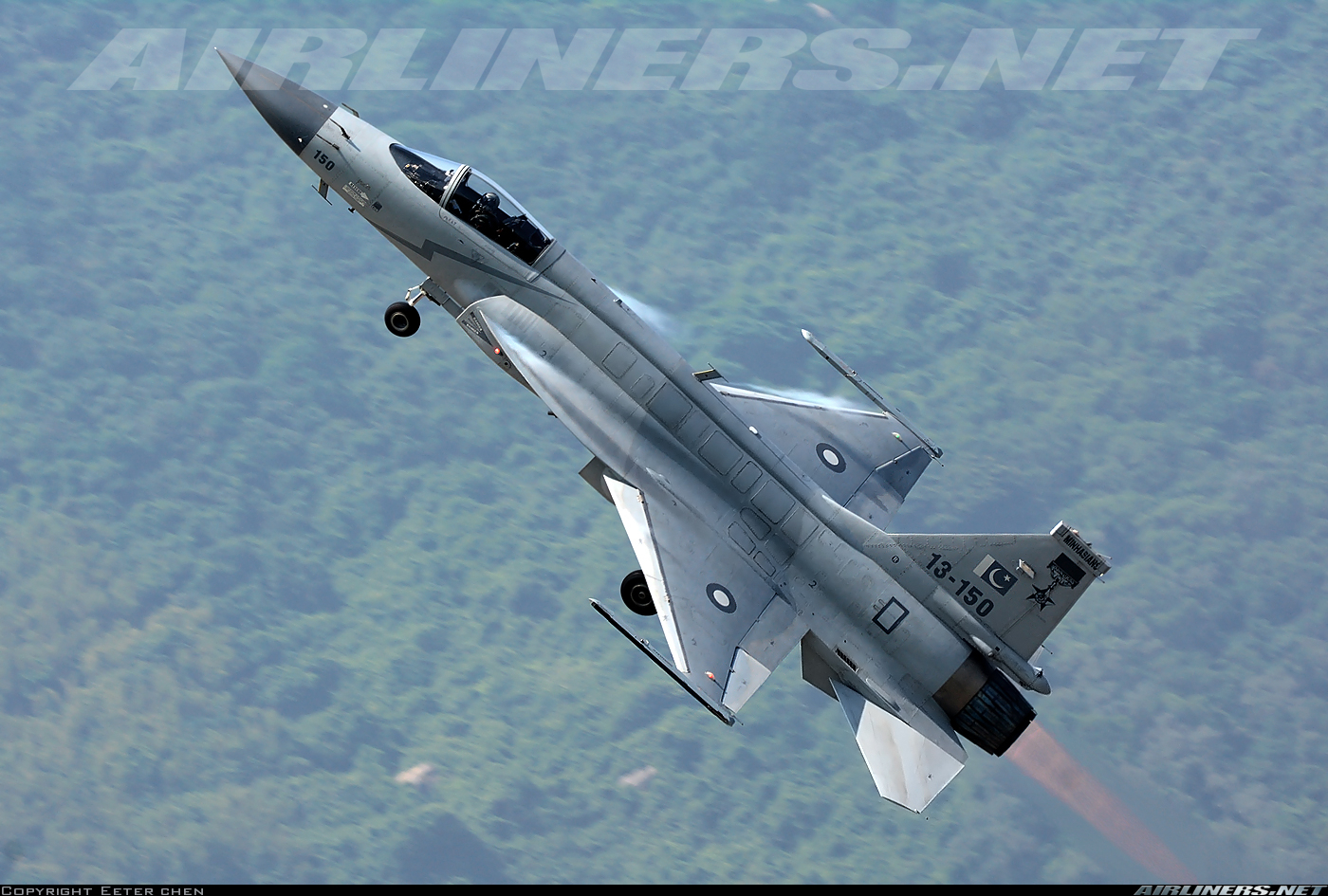
In 1998, the FC1 fighter jet jointly developed by China and Pakistan was determined to use the Russian RD93 engine. This was an excellent opportunity. It would consume a total of 200 engines. Originally, Russia was reluctant to provide it due to its military trade relationship with India, but they really did not want to give up this huge deal. As a result, they took a compromise route and exported 100 RD93 engines to China, regardless of whether China would export the product or use it for itself. China was responsible for the subsequent maintenance and repair of this batch of products. Since it needed to be exported from China, the engine was given a domestic engine number WS-13.

RD33 is a small bypass ratio turbofan engine designed by Russia in the 1970s. It has stable performance, strong operation and a large surge margin. However, due to its early design age, some technologies are relatively conservative and outdated. The research and development of WS12 was basically carried out in the 1980s. The component level is one level higher than that of RD33. The thrust of the two are similar, and the cycle parameters, flow rate and size are very close. Therefore, 624 and Guiyang Liming want to use this platform to replace unit parts in small steps to realize the transfer of WS12 technology to practical application, so as to finally make the previous efforts worthwhile and exchange them for a new, advanced medium-thrust engine.

122127903b4c402bb4f7dab2c1c66426.jpeg


The Sino-Pakistani Xiaolong fighter uses the RD-93 engine, which has high thrust and good high-altitude and high-speed performance.

The first step was to replace the RD33's four-stage fan with the three-stage fan originally used for WS12. Although the RD33's four-stage fan used blades without shoulders, the aspect ratio was relatively large, the fan blade strength was relatively low, and the resistance to debris and bird strikes was very poor, forcing the MiG-29 to use complex and bulky inlet baffles. Even so, the RD33 fan was still very fragile, and a bird the size of a sparrow would cause the fan to shatter, which was significantly different from later engines.

The first stage of the new three-stage fan uses wide-chord, shoulder-free blades, which are more than 10 times more impact-resistant than the first stage of the original fan, and can withstand bird impacts directly to the latest standards. The new fan reduces the engine length by 44 mm. Considering the installation structure of the engine itself, the size of the engine casing has not been adjusted, but the four guide blades in front of the fan that fix the support shaft have become forward-swept, which is an identification feature. The new fan has a slightly higher pressure ratio than the original fan, with a similar surge margin and a flow rate that is 6KG higher. The non-afterburner thrust is increased from 49.4KN to 54KN, and the afterburner thrust is 88.94KN. The experiment started in 1996 and passed the first test run in 1998.

If we look carefully, we can find that the thrust of this engine is basically the same as that of the RD33MK currently installed by Klimov on the MiG-29K and MiG-35, but the technical approaches to achieve the two are different. Klimov achieved it by adjusting the performance of the original RD33's 4-stage fan, while WS13 achieved it by replacing the fan. It was originally planned to arrange for WS13 to pass the finalization with this new fan mode, but because it is a pure export model, the 100% localization process is very slow, and the finalization work has been delayed from the late 1990s to 2015.

34ab836d43bb47a6a12d39600b5af6ee.jpeg


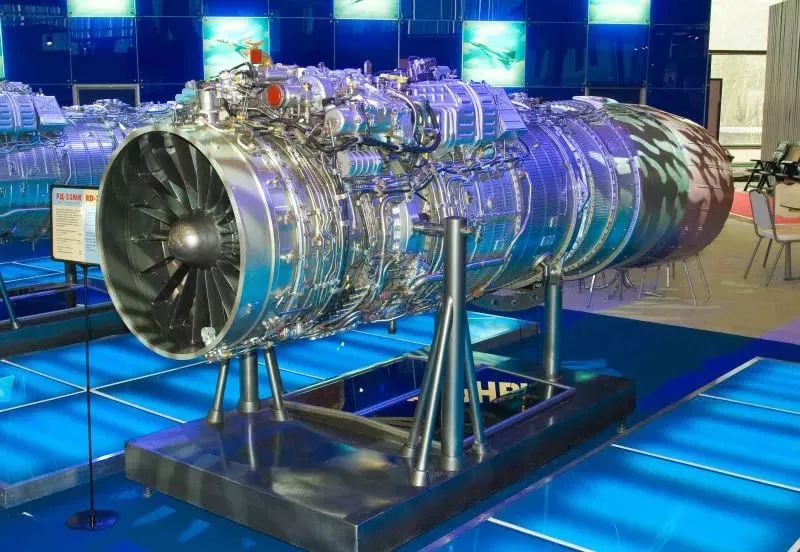
Russian RD33MK engine, engine performance has been slightly improved

Although the finalization work was not smooth due to the problem of the proportion of localization, the research on the engine did not stop. The second step is to adopt a new low-pressure turbine designed in cooperation with Russia. The operating temperature of the new low-pressure turbine can be increased by 70 degrees, and the working efficiency is also higher than the original turbine. The use of this turbine can further unleash the potential of the new three-stage fan. It is reported that this turbine is actually the one that Klimov is currently using on the RD33MK. After replacing the new low-pressure turbine, the maximum thrust of the engine has increased to 91.1KN. The engine test began in 2002.

There is no public report on when this experiment was completed, but in an effort to make FC1 a light multi-purpose fighter for the Chinese Air Force to replace the Q-5, AVIC submitted data in 2004 that showed the performance of FC1 was 5.5 tons of external load and 91.1KN of engine thrust. Due to changes in combat thinking and needs, the Chinese Air Force switched to JH7 to replace the Q-5, and the originally planned light multi-purpose fighter was cancelled. AVIC then promoted this plan to overseas users. Pakistan agreed to accept this plan, but was unwilling to invest in research for it. They were more willing to put limited funds into upgrading the avionics system. As a phased upgrade, FC1 only increased the external load from 3.8 to 4.5 tons at the current stage.

00b4ed2cc722442499105a5a180121fa.jpeg


The Pakistani Air Force is unable to support the new engine thrust increase plan due to tight funding, resulting in the loss of performance of the Xiaolong fighter.

Since it is a research and development cooperation, Klimov actually accepted the Chinese proposal, so he also adopted the three-stage fan solution and launched the RD33MKM. There is no installation target yet, but it can be selected by customers at any time and matched with the MiG-35. The next improvement will involve the core engine, which is twice as difficult. The first thing to be improved is the combustion chamber. The original RD33 combustion chamber design is too old, and the efficiency is low when the fuel is lean and the fuel is rich. Therefore, there is always thick black smoke, which has become the symbol of RD33. The newly designed combustion chamber can completely change this problem and make the gas temperature distribution more stable and uniform. The modification of the combustion chamber cannot increase the thrust, but it can greatly improve the fuel consumption and engine life.

At the same time, single crystal turbine blades replaced the original directionally solidified turbine blades, which allowed the turbine operating temperature to be increased by 50-70 degrees and the engine thrust to reach 93-94KN. The work on the combustion chamber was completed in China, and the work on the high-pressure turbine was completed in Russia. The first engine with a thrust of 94KN was bench tested in 2008. This thrust model was named RD93MKN by Klimov.

de4c317bfde244ffbe4da2f511e3c2d4.jpeg


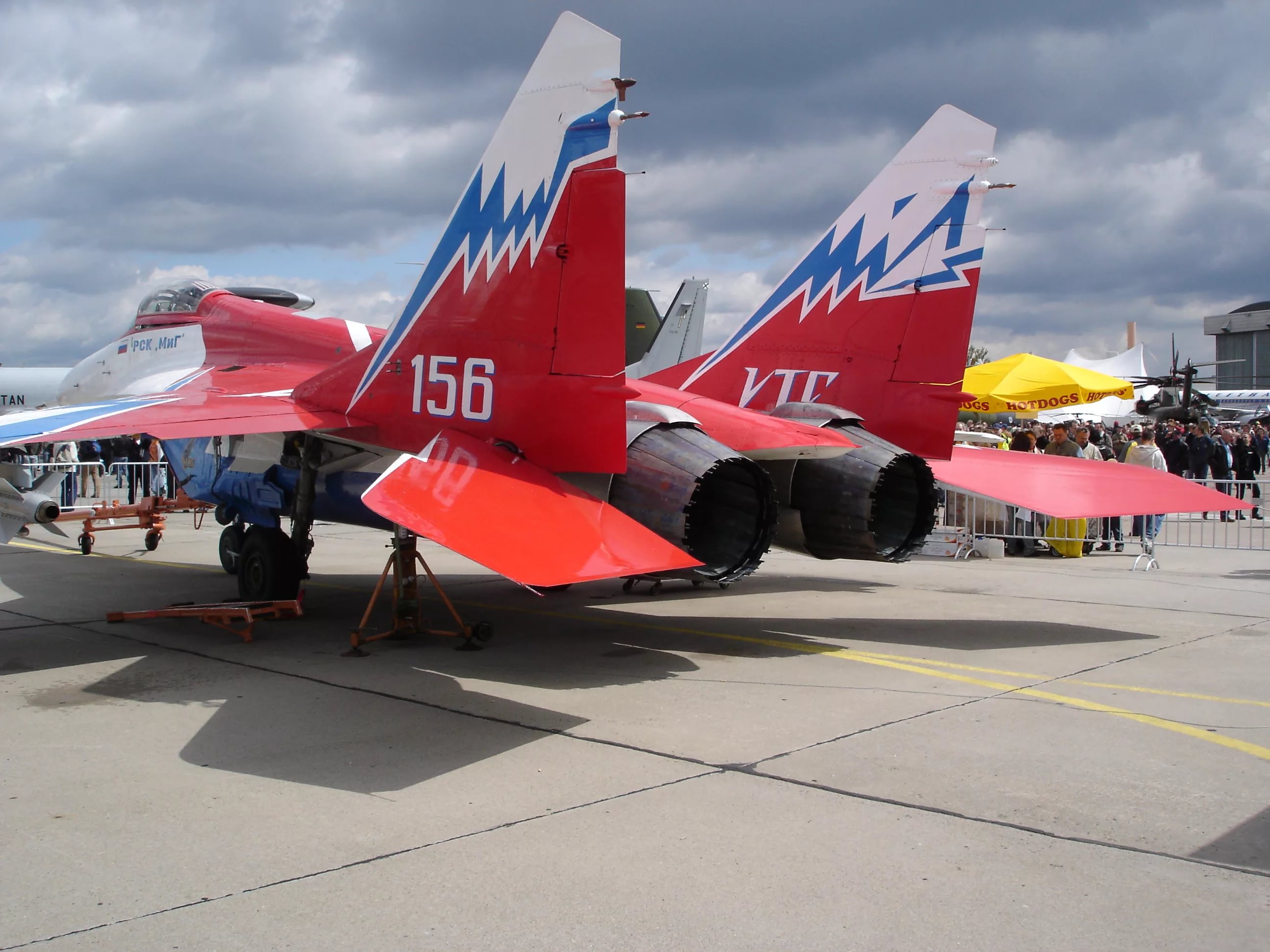
The latest RD93MKM is equipped on the MiG-35 aircraft. After the combustion chamber is improved, the black smoke has basically disappeared.

my country exhibited the FC31 stealth fighter at the 2014 Zhuhai Air Show. The engine it hopes to equip is a medium-thrust engine with a thrust of 9,500KG. The confidence in this engine comes from the continuous research and development between WS13 and RD33.

But only here, the road to rebirth is only halfway gone. In 1996, 624 redesigned the medium-thrust high-pressure compressor, reducing the 7-stage compressor by one stage to a 6-stage compressor, and the core engine speed was increased from 14,000 rpm to 17,000 rpm. Not only did the performance of the compressor not decline, but it was improved. The redesigned shaft system changed the backward architecture of RD33. The engine became shorter and the total length was reduced to less than 4 meters. At the same time, the core engine bleed air flow was increased, and the high-pressure turbine cooling scheme using single-crystal blades was also changed. The cooling capacity was increased from 350 degrees to 480 degrees, and the temperature before the turbine was increased from 1600K to 1800K.

With the redesigned afterburner section, the entire engine has no similarities with the original RD33 from beginning to end. The engine has become a completely new engine. The engine thrust is optional from 96KN to 111KN, and the engine thrust-to-weight ratio is also increased from the original RD33's 6.6 to 8.6. This part of the experiment is still in the confidential stage, and the cooperation partner has also added a partner in addition to Klimov, the Progress Design Bureau of Ukraine.

80513b4117fb4c739d41a3e886760f90.jpeg


沈阳的FC-31战斗机,现阶段只有RD93发动机可用

Although there is no clear installation target, the importance of medium-thrust engines to my country is still extremely high. A large number of unmanned aerial vehicles in the future will need engines of this thrust level. The difficult development route from WS12 to WS13 also provides a new development idea for my country's development of aviation engines. What my country's aviation engines lack most is the link from technical research to engineering application. Klimov's cooperation is actually educating and guiding my country's aviation engines on how to achieve engineering and practical application, which can play a decisive role in my country's current situation. The state has invested very little in the entire WS13 project. If it can be reborn by borrowing a chicken to lay eggs and reborn by borrowing a shell, all those who are strategizing can be called heroes of the country. However, the journey of a hundred miles begins with a single step. WS13 is still far from being successful. It can only be truly nirvana if it can be completed step by step, be down-to-earth, and come up with a result.
 
One of the supposed parts of CPEC was to set up a production line in Pakistan that would manufacture a next-gen fighter for the PAF and other markets.


Ultimately, I think we'll see a situation where a fighter production line will be set up within Pakistan, but away from the hands of PAC (and, by extension, the PAF leadership). There's a 'bigger shark' in all this and that's the Army leadership, which is basically the guarantor for NESCOM, SUPARCO, and HIT.

Not the ideal scenario (see the results in HIT and SUPARCO), but okay, it may be better than leaving anything with PAC.

With NESCOM rolling out more products, I can see a scenario where NESCOM becomes the principal manufacturer of a next-gen fighter and UCAV via a new subdivision.

When the J-35A(landbased variant) adopted a new body structure design, the wings and fuselage were integrated and inseparable.How can you transport this kind of extra wide cargo with a transport plane?

20241119142043129.jpeg
 
Since it is NOT available for any export customer !
Hi,

In english it is means that " it is not available till it becomes available and by that time you really don't see the need for it---".

Secondly---Paf chose the P&W a less powerful engine over the GE---.

So---your post is intended as another insult to pakistan and Paf---.
 
Last edited:
Hi,

In english it is means that " it is not available till it becomes available and by that time you really don't see the need for it---".

Secondly---Paf chose the P&W a less powerful engine over the GE---.

So---your post is intended as another insult to pakistan and Paf---.
Sir, easy with the nonsense. The last sentence is of no need.

PAF settled for F-16A/Bs which was only powered by PW at the time. They picked the Block 52+ variant years later and that too for engine commonality regarding maintenance workshops, Sargodha was their only hub for that and they had trouble setting up shop for regular hauls to Kamra due to the squadron ops.

By that logic....your post was also an insult to Pakistan and the very PAF I grew up in.....
 
Sir, easy with the nonsense. The last sentence is of no need.

PAF settled for F-16A/Bs which was only powered by PW at the time. They picked the Block 52+ variant years later and that too for engine commonality regarding maintenance workshops, Sargodha was their only hub for that and they had trouble setting up shop for regular hauls to Kamra due to the squadron ops.

By that logic....your post was also an insult to Pakistan and the very PAF I grew up in.....
also the USAF was operating the PW too, so it was a kind of assured support/supply too.
 
Sir, easy with the nonsense. The last sentence is of no need.

PAF settled for F-16A/Bs which was only powered by PW at the time. They picked the Block 52+ variant years later and that too for engine commonality regarding maintenance workshops, Sargodha was their only hub for that and they had trouble setting up shop for regular hauls to Kamra due to the squadron ops.

By that logic....your post was also an insult to Pakistan and the very PAF I grew up in.....
Explain---use your logic and not mine.
 
Sir, easy with the nonsense. The last sentence is of no need.

PAF settled for F-16A/Bs which was only powered by PW at the time. They picked the Block 52+ variant years later and that too for engine commonality regarding maintenance workshops, Sargodha was their only hub for that and they had trouble setting up shop for regular hauls to Kamra due to the squadron ops.

By that logic....your post was also an insult to Pakistan and the very PAF I grew up in.....
Why not go for ge f110 once for all in 2006
 

Users who are viewing this thread

Pakistan Defence Latest

Back
Top