PAF SAM based Air Defense System - News, Discussion & Updates

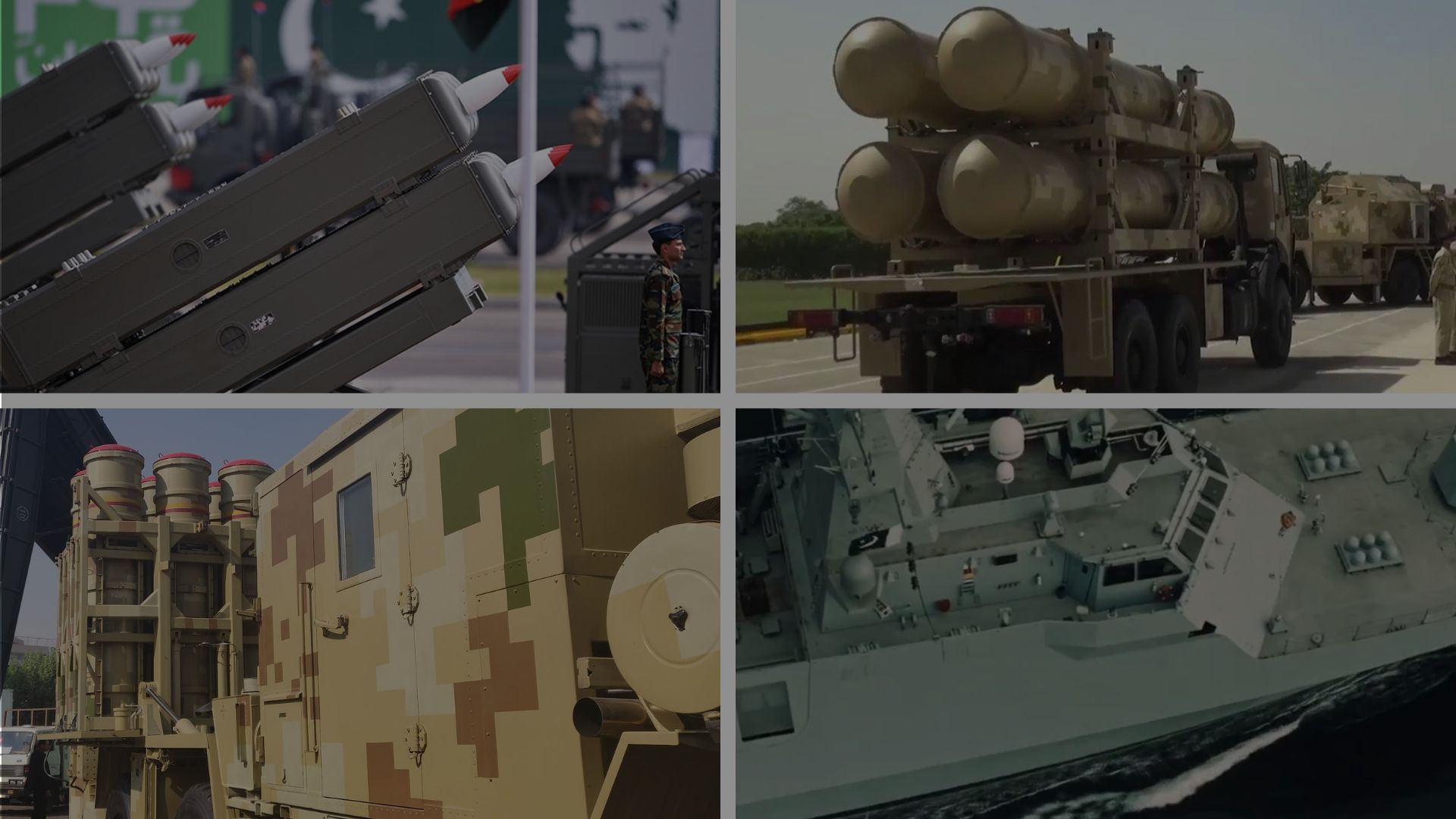
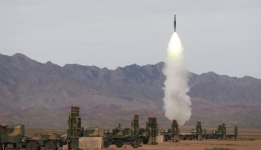
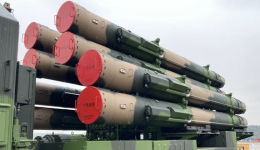
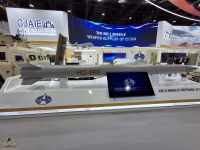
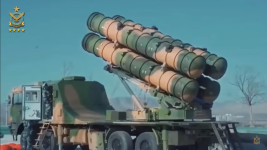
Red Banner-16FE medium-range surface-to-air missile [SAM] system
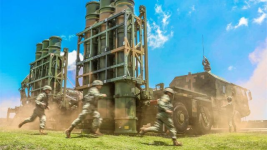
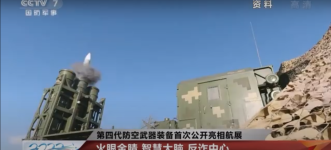
“SAST” HQ-16FE 4th Generation Integrated Medium Range Air Defense system which can intercept TBMs.

HQ-16FE air defense system has excellent anti-saturation, anti-jamming and automatic combat performance, and can efficiently intercept precision-guided munitions, ballistic missiles, combat aircraft, etc.
1734659555913.png
  • Range: 3.5 km to 160 km (against aircraft)
  • Altitude: from 15 m to 27 km
  • Final stage guidance SARH + ARH
  • Radar range: 250 km +
  • Cold vertical launch
  • 5 radars (1 for search + 4 for guidance)
  • The system can track 12 targets simultaneously and intercept 8 of them
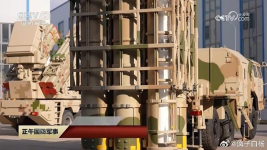
  • Equipped with 6 missiles [Two Sections ; No Wings ; Only Tail fin ]

1734659960709.png

To view this content we will need your consent to set third party cookies.
For more detailed information, see our cookies page.


The HQ-16FE’s missile has a weight of 650 kg, a length of 5.2 m, and a diameter of 0.34 m. It can intercept flying targets at altitudes ranging from 15 m to 18 km.

To view this content we will need your consent to set third party cookies.
For more detailed information, see our cookies page.


"The system’s maximum range extends up to 70 kilometers for aerial targets and about 40 kilometers for cruise missiles, with a maximum intercept altitude of 18 kilometers. The HQ-16FE’s missiles achieve a speed of approximately 1,200 meters per second, allowing for effective interception of high-speed threats.
1734658119939.png


Last edited:
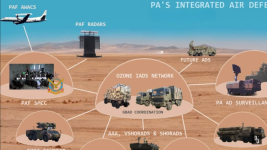
How does PAF plan to use these air defense systems? As far as I know deconfliction/IFF is difficult/impossible and in an area in a give time you either have your aircraft or you have your air defense active. I say this from looking at Ukraine. Also India shooting down it's own helicopter. For Iran it makes sense to emphasize air defense since they have no realistically capable air force. Russia focuses on them because they have large areas to cover. China focuses on them because they want to make any aircraft flying over mainland impossible - area denial. Famously USA does not have great land based air defenses but has exceptional sea based air defense because those ships are often operating without aircraft cover and when they do I guess USAs battlespace management is top notch.

Which begs my initial question: what does PAF intent to do with all of these air defense batteries? Are there really large regions of Pakistan that can't be covered by aircraft and won't be covered with aircraft? Or is PAF supremely confident in their battlespace management with regards to IFF?
The system developed is able to classify tracks fairly well but whether it can prevent the airliner shootdown type incident in Iran is a question mark.

Which is why you see Pakistan more open immediately to airspace shutdown(also easier) than other folks because it relatively a smaller area with much less domestic traffic.

This civil traffic was mentioned as a reason why possibly the wayward brahmos was not launched against citing the Iranian incident as cautionary procedure although I suspect it had to do with capability at the time since its pretty clear you can track a supersonic missiles speed and path along with your airliners.
Perhaps its even more complex with the command structure that is in place. There are SAM systems of two different military commands. The army air defense operates LY-80 & H-Q9Ps among other stuff. The airforce has its own line of SAM systems. So if there is a breach of airspace, there must be single command that take cares of it. At such situations you don't have any time that one service communicates with other to hold your horses, we are taking care of it. There's no time for communication, there should be a defined protocol which I hope already should be the case. But I think that as airforce is primary defender of the airspace, so long range SAMs should all be under airforce. The H-Q9Ps under army air defense don't make much sense. Ly-80 and medium to small range SAMs can be in army air-defense to protect specific command centers & installations. HIMAD should be airforce category, they'll know when to scramble fighters or when to use SAM solution. Back in 90s, ADA in every operational base required 6 minutes to be airborne. Perhaps its the same today, enemy knows this window of timing and will do the operation accordingly, so I assume the first responder could be the SAM solution when its a surprise attack and not an all out war. Rules of engagement in an all out war maybe even more tricky.
 
Ukraine and Israeli conflict has shown there is no air defense system that guarantees 100% interception western (Israeli /USA) and eastern (Russian/Ukrainian western ) Moscow and Kiev constant being hit

The only difference is which country has better economy and can absorbs the blow 😉

A country first need to be an economic power before it can claim military power 😉
otherwise these toys are just toys for display
Syrian / Afghanistan conflict shown you can buy corrupt military so corrupt military will melt away 😉

Caio
 
This is indeed scary - I always thought our forces stayed away from long-range air-defense missiles precisely because of the fear of friendly fire and the confidence in their air force. I wonder, which one or both have changed or not.
 
Red Banner-16FE medium-range surface-to-air missile [SAM] system
Here's a little problem.

红旗, a word that has a special meaning in the Chinese. It has very strong political significance in China. It is not allowed to be translated at will. There are two officially licensed translation methods, the direct translation method translates it as “Red Flag” and the pinyin method translates it as “HongQi”.

It can only be called “Red Flag” or “HongQi”. “Red Banner” is a wrong translation.
 
This is indeed scary - I always thought our forces stayed away from long-range air-defense missiles precisely because of the fear of friendly fire and the confidence in their air force. I wonder, which one or both have changed or not.
I think what changed is that majority of damage is not done by fighter jets dropping a bomb in modern conflict but cruise missiles, loitering munitions and drones. To intercept these you need to cast a wide net, and fighters are not sufficient. You need need a multi tiered air defense. If it was just MI and M2K dropping cluster bombs we may only see shorad systems still.
 
Perhaps its even more complex with the command structure that is in place. There are SAM systems of two different military commands. The army air defense operates LY-80 & H-Q9Ps among other stuff. The airforce has its own line of SAM systems. So if there is a breach of airspace, there must be single command that take cares of it. At such situations you don't have any time that one service communicates with other to hold your horses, we are taking care of it. There's no time for communication, there should be a defined protocol which I hope already should be the case. But I think that as airforce is primary defender of the airspace, so long range SAMs should all be under airforce. The H-Q9Ps under army air defense don't make much sense. Ly-80 and medium to small range SAMs can be in army air-defense to protect specific command centers & installations. HIMAD should be airforce category, they'll know when to scramble fighters or when to use SAM solution. Back in 90s, ADA in every operational base required 6 minutes to be airborne. Perhaps its the same today, enemy knows this window of timing and will do the operation accordingly, so I assume the first responder could be the SAM solution when its a surprise attack and not an all out war. Rules of engagement in an all out war maybe even more tricky.
"At such situations you don't have any time that one service communicates with other to hold your horses, we are taking care of it. There's no time for communication, there should be a defined protocol which I hope already should be the case."

You made a fair point and there is big challenge faced in ABM or A2/AD scenarios. When you have huge volumes of multi-layered and complex information/data spread through out the battle space, it gets tough to get the information/data, filter it out, identify and prioritize it and then find the most capable or suitable solution/effector to eliminate incoming aerial threats ranging from SRBM to ICBM or small artillery shells (especially during wartime when time is critical).

Even the US is currently working to address this and they are building something called IBCS (Integrated Battle Command System). The IBCS's goal is to integrate multiple sensors and weapons systems (from across multiple commands like Airforce, Navy and Army) into a single network with a C&C making faster decision making. Basically its going to create a "networked" spider web of different systems like Patriot, THAAD, AEGIS, F35, AEWACS, Ground Radars that are all linked together and all services are going to communicate and pass info/data through their respective radars/sensors. The US is calling it a game changer and tests are already undergoing.

I think Pakistan is leagues behind to come up with something to be able to pass that challenge that you mentioned or maybe I am wrong and our military command is already working on it.

For more details on IBCS, refer to link below:

Integrated Battle Command System (IBCS)
 
Last edited:

Users who are viewing this thread

Pakistan Defence Latest

Back
Top