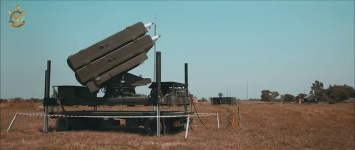
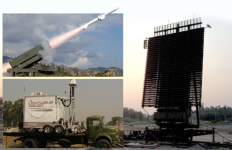
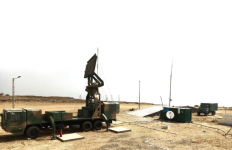
Unlike the older HT-XXX series of guidance radars found on the FD-2000, the HQ-9BE uses the JSG-400 TDR guidance radar, which is designed for TBM interceptions, and the JPG-600 TDR surveillance radar. Furthermore, the battery utilizes a command-and-control (C2) system and electronic counter-countermeasures (ECCM) system, plus several decoy vehicles.
QUWA
CASIC disclosed a new radar JSG400 involved in the TBM role of HQ-9BE SAM system during the China Zhuhai airshow.
При сильном затоплении водой следует немедленно разобрать пол из ламината, дабы предотвратить впитывание панелями влаги. Ламинат имеет защитный слой с двух сторон панели, однако же, его торцы не всегда бывают надежно защищены от влаги. Именно поэтому рекомендуется использовать герметик для пола при укладке покрытия. Он не склеивает соседние панели, но предохраняет торцы от воздействия сырости
При сильном затоплении водой следует немедленно разобрать пол из ламината, дабы предотвратить впитывание панелями влаги. Ламинат имеет защитный слой с двух сторон панели, однако же, его торцы не всегда бывают надежно защищены от влаги. Именно поэтому рекомендуется использовать герметик для пола при укладке покрытия. Он не склеивает соседние панели, но предохраняет торцы от воздействия сырости
After careful study and evaluation, PAF finalized the HQ-9B/E system, signing the necessary contracts. This versatile system is designed to intercept Fighter Aircraft, Cruise Missiles, and Theatre Ballistic Missiles at various altitudes. What sets it apart is its ability to engage multiple targets simultaneously, making it an invaluable asset for both theatre defence and point defence. In an era where threats can come from multiple directions simultaneously, such capabilities are paramount.
Collaborating with institutions like PAF NASTP (National Aerospace Science & Technology Park) and AWC (Air Weapon Complex), alongside other defence production units, PAF is actively involved in the development of VHF and Low-Level Radars. One such indigenous low-level radar system has already achieved major milestones and is currently in the evaluation phase. This strategic move aims to reduce dependence on foreign sources for sensor procurement and maintenance, ensuring operational autonomy.
The heart of PAF’s Air Defence are its radar systems. As soon as enter an ADOC, you’re greeted by a bank of screens, each representing a radar station. These radars are our sentinels across the nation. They continuously scan the skies, monitoring every aircraft, every blip, every movement. They provide us with a real-time picture of what’s happening in the nation’s skies at any given second. These radars, positioned strategically across Pakistan’s vast expanse, are the first line of defence. They scan the skies with an unblinking eye, ensuring that no intruder goes unnoticed. The data they provide is relayed instantly to the ADOC, where it is meticulously analysed and acted upon. But ADOC goes far beyond mere surveillance. It’s a place of coordination and communication. It’s where intelligence meets strategy, where raw data is transformed into actionable insights. The men of ADOC are not just passively watching, they’re constantly orchestrating. When a threat is detected, it’s these men who that decide how to respond.
I never trusted air defense systems that much, I always thought of it as trying to shoot a bullet out of the sky with another bullet
The Ukraine war has shown the importance of such systems and how useful and limited they can be
It all depends on the amount of system and support systems you have on their own they a limited but as part of a network can be very effective
The amount of sheer data both the west and Russia is getting from the Ukraine war is incredible and they will put it to use in their future weapons manufacture
We all need to keep a close eye on Ukraine, learn the lessons and implement what worked in Ukraine and cover the areas that didn't
Apart from the new nature of the system - the Turks wanted to charge an arm and a leg( depending upon which side has your sympathies) for the SIPER and it petered out within Pakistan.
Apart from the new nature of the system - the Turks wanted to charge an arm and a leg( depending upon which side has your sympathies) for the SIPER and it petered out within Pakistan.
I think SIPER will likely appeal to the PN more than the PAF or PA.
The PN does not need as many launch systems or missiles compared to the PA and PAF, and the SIPER may be better fit for the space constraints onboard surface warships.
That said, I wouldn't discount the possibility of the PN getting a competing Western long-range SAM.
For example, the MBDA CAMM-series is evolving via the CAMM-MR (i.e., 100+ km range). Yes, it would need to work through MBDA UK rather than MBDA Italy, but the UK is overtly engaging the PN (e.g., marketing RR engines for future PN ships, Hensoldt sensor sales, etc).
This site uses cookies to help personalise content, tailor your experience and to keep you logged in if you register.
By continuing to use this site, you are consenting to our use of cookies.