PAF SAM based Air Defense System - News, Discussion & Updates

Apart from the new nature of the system - the Turks wanted to charge an arm and a leg( depending upon which side has your sympathies) for the SIPER and it petered out within Pakistan.

Interesting, I didn't know it was considered.
 
I think SIPER will likely appeal to the PN more than the PAF or PA.

The PN does not need as many launch systems or missiles compared to the PA and PAF, and the SIPER may be better fit for the space constraints onboard surface warships.

That said, I wouldn't discount the possibility of the PN getting a competing Western long-range SAM.

For example, the MBDA CAMM-series is evolving via the CAMM-MR (i.e., 100+ km range). Yes, it would need to work through MBDA UK rather than MBDA Italy, but the UK is overtly engaging the PN (e.g., marketing RR engines for future PN ships, Hensoldt sensor sales, etc).

What do you think is the possibility of Hisar series and Siper induction by Pakistan army and PAF? How would both systems compare to the Chinese systems currently deployed by Pakistan?
 
What do you think is the possibility of Hisar series and Siper induction by Pakistan army and PAF? How would both systems compare to the Chinese systems currently deployed by Pakistan?
IMO the best scenario would be for NESCOM to engage Tubitak SAGE, Roketsan, and Aselsan for help with the LoMADS and FAAZ programs. That way, some of the Super and Hisar know-how could be leveraged to build good SAMs and AAMs at home.
 
To view this content we will need your consent to set third party cookies.
For more detailed information, see our cookies page.
 
  • Like
Reactions: Waz
To view this content we will need your consent to set third party cookies.
For more detailed information, see our cookies page.


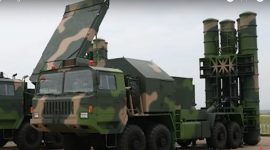
This is fire control radar of HQ-9BE. Cheeseboard is not the fire control radar of SA-21 Growler.

Plus, this is AESA. Able to engage 8 targets with 16 missiles simultaneously. Compared to 6 targets/12 interceptors simultaneous engagement capability of Gravestone.
 
HQ-9BE is marketed by CASIC China as a "Limited theater air defence solution that could intercept fighter aircraft and long-range munitions."

CASIC further claims that HQ-9BE can intercept TBMs with ranges of up to 1,000 km. The HQ-9BE can respond against TBMs in 10 seconds and non-TBMs within 15 seconds.

Hence Basically the PAF’s most advanced SAM system.


1729987917910.png

HQ-9BE uses the JSG-400 TDR AESA guidance radar, which is designed for TBM interceptions, and the JPG-600 TDR surveillance radar

1729988527187.png

HQ-9BE missile’s guidance suite uses an inertial navigation system (INS) aided by a land-based targeting radar via datalink and a terminal-stage active radar-homing (ARH) seeker.


HQ-9BE HIMAD.jpg
 
Last edited:
The terminal-stage active radar-homing (ARH) seeker makes this thing a beast for sure.
 
I think SIPER will likely appeal to the PN more than the PAF or PA.

The PN does not need as many launch systems or missiles compared to the PA and PAF, and the SIPER may be better fit for the space constraints onboard surface warships.

That said, I wouldn't discount the possibility of the PN getting a competing Western long-range SAM.

For example, the MBDA CAMM-series is evolving via the CAMM-MR (i.e., 100+ km range). Yes, it would need to work through MBDA UK rather than MBDA Italy, but the UK is overtly engaging the PN (e.g., marketing RR engines for future PN ships, Hensoldt sensor sales, etc).
All those deals would make sense if the PN is considering to go for at least 4 TF-2000 destroyer as their primary air defense platform. Perhaps the PN will then try to get 4 Type 054B but fitted with china’s 32 UVLS units and an enhanced radar layout, to not just “Split the difference”, but maintain two supply chains for air defense and anti-ballistic missile defense, and with different radar frequencies, could use CEC (Cooperative engagement capability) could better find and engage threats faster.
 
Last edited:
View attachment 46080

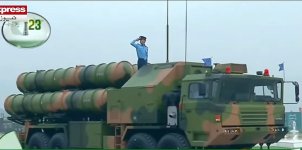
After careful study and evaluation, PAF finalized the HQ-9B/E system, signing the necessary contracts. This versatile system is designed to intercept Fighter Aircraft, Cruise Missiles, and Theatre Ballistic Missiles at various altitudes. What sets it apart is its ability to engage multiple targets simultaneously, making it an invaluable asset for both theatre defence and point defence. In an era where threats can come from multiple directions simultaneously, such capabilities are paramount.

View attachment 46081
Collaborating with institutions like PAF NASTP (National Aerospace Science & Technology Park) and AWC (Air Weapon Complex), alongside other defence production units, PAF is actively involved in the development of VHF and Low-Level Radars. One such indigenous low-level radar system has already achieved major milestones and is currently in the evaluation phase. This strategic move aims to reduce dependence on foreign sources for sensor procurement and maintenance, ensuring operational autonomy.

View attachment 46082

The heart of PAF’s Air Defence are its radar systems. As soon as enter an ADOC, you’re greeted by a bank of screens, each representing a radar station. These radars are our sentinels across the nation. They continuously scan the skies, monitoring every aircraft, every blip, every movement. They provide us with a real-time picture of what’s happening in the nation’s skies at any given second. These radars, positioned strategically across Pakistan’s vast expanse, are the first line of defence. They scan the skies with an unblinking eye, ensuring that no intruder goes unnoticed. The data they provide is relayed instantly to the ADOC, where it is meticulously analysed and acted upon. But ADOC goes far beyond mere surveillance. It’s a place of coordination and communication. It’s where intelligence meets strategy, where raw data is transformed into actionable insights. The men of ADOC are not just passively watching, they’re constantly orchestrating. When a threat is detected, it’s these men who that decide how to respond.

View attachment 46083


Hopefully Pakistan can supplement each battery’s radars with the new 285 km range Chinese IRST system, to protect against radar jamming and give a second method of detection, that could be fused to confirm real targets from decoys.
 
Last edited:
HQ-9BE is marketed by CASIC China as a "Limited theater air defence solution that could intercept fighter aircraft and long-range munitions."

CASIC further claims that HQ-9BE can intercept TBMs with ranges of up to 1,000 km. The HQ-9BE can respond against TBMs in 10 seconds and non-TBMs within 15 seconds.

Hence Basically the PAF’s most advanced SAM system.


View attachment 75272

HQ-9BE uses the JSG-400 TDR AESA guidance radar, which is designed for TBM interceptions, and the JPG-600 TDR surveillance radar

View attachment 75274

HQ-9BE missile’s guidance suite uses an inertial navigation system (INS) aided by a land-based targeting radar via datalink and a terminal-stage active radar-homing (ARH) seeker.


View attachment 75275
How many units we have total of this system .
 
Pakistan adding some serious weapons to arsenal
J31 beyond 2030
J10 already added
Turkish drones
And now more Chinese s400 equivalent systems

That some seriously dangerous air defense

Not convinced India can win air ware with these additions anymore

When consider the enormous disparity in budgets it's remarkable effort by Pakistan
 
Pakistan adding some serious weapons to arsenal
J31 beyond 2030
J10 already added
Turkish drones
And now more Chinese s400 equivalent systems

That some seriously dangerous air defense

Not convinced India can win air ware with these additions anymore

When consider the enormous disparity in budgets it's remarkable effort by Pakistan
Pakistan should also try to beef up its internal security. IMO they should develop underground bunkers to protect its assets sort of like Iran does or else India will try to use terrorists to attack air bases like the one we saw in Kamra. Recent attack in Turkiye is also an eye opener.
 

Users who are viewing this thread

Back
Top