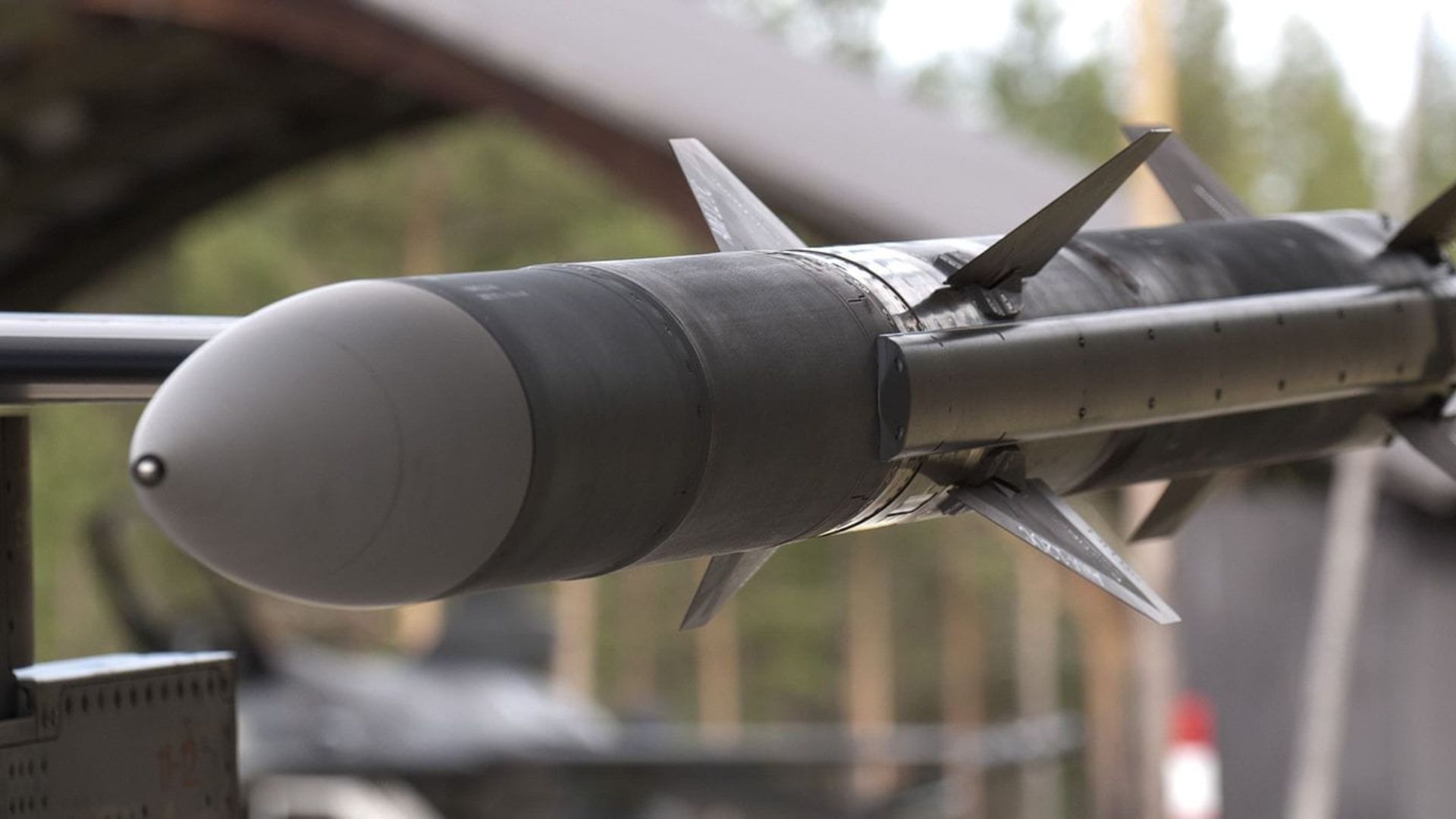
PAF Very Own A2A Missiles [WVR, BVR & ALCM Stand off] News, Updates & Discussions

The private industry which cannot even make simple motorbike engines currently you mean?
That is too much of an unfair comment to them. Technically they could but its simply not cost effective nor do enabling environments exist. Existing Sharks(including Fauji led or mixed interests) don’t want any serious competition nor do they want any new avenues unless their pockets are being filled as well to the eventuality that they can take it all over.
 
The ones developing it? Name a private Company that can make it in "millions and in a few years"
like the ones who failed azm? or those who used to send their designs to china to be cross-checked and verified? or those who import drone controllers and parts and assemble them? or those who tout designing (not manufacturing) long range radars, but have absolutely no capability to do so?

about cost: I provided a generalized comparison about how the govt departments waste money. the entire tendering process is rigged. with commissions and other expenses built into the procurement process. wastes thrice the amount of money that is normally spent on such things.

but, yes, the private industry will be able to make it in far less than what PAC or NESCOM can manage. otherwise feel free to keep on trying for another decade.

News flash for you, this is how a govt deptt works: import kits from china, assemble them and put their own name on top. the much-touted capability is nothing but carrying out integrations.

employees of these deptts have set up private companies, and corporations. they can easily be used to off-load work. nescom itself can act as a project management and integration setup.
 
Last edited:
with zero critical thinking skills to be able to apply if its valid to Pakistan's unique context.
have you been inside the private firms of pakistan? have been inside any govt deptt of pakistan?

you have no idea what the private sector can and cannot do. they have 100s of billions of rupees lying around which they do not reinvest, or they invest this money abroad. or buy up land. they can throw money around that the govt cannot. they can attract top talent from around the world.

all they need is a kick in the behind and govt incentives. keep dumping money into govt sector and see it getting wasted. do you know how much people nescom, nrtc, pac, nastp etc. employ? they have 100 people for what 25 can do. their output, as compared to manpower employed by them, isnt very good.
 
Last edited:
I wouldn't be surprised if those auto manufacturers maybe give a cut to some important dude so these low effort favourable policies aren't touched. Again it's a rotten system to serve the few that's chronically failing.
they do. to MoIP and EDB. and others involved. all are involved with the military in one way or the other.
 
Astra Mk1 is a well-designed missile with modern features like a dual-mode RF seeker and a bidirectional datalink, allowing it to receive updates mid-flight and hit targets with precision. Its range is impressive too—110 km when launched from 15 km altitude.

Now, comparing it to AIM-120C5, there’s a clear difference. The AIM-120C5 uses an all-boost motor that burns very quickly, in under 10 seconds, to achieve its maximum speed. However, this quick burn means it loses energy faster and struggles to hit 80 km when launched at 10 km altitude. On the other hand, Astra Mk1 carries about 20% more propellant, which gives it better energy retention and speeds over Mach 4.5.

The AIM-120D takes a different approach. Unlike earlier AMRAAMs, which used a boost-sustain motor, the AIM-120D uses an all-boost grain. This burns out even faster, in about 6-7 seconds, but the design focuses on achieving a high climb rate during its lofted flight path. This lofted profile helps maximize range, pushing the missile to nearly 200 km—almost double the range of the AIM-120C5.

Astra Mk2 also has significant improvements. While its seeker and fore-section have the same 178 mm diameter as Mk1, the mid-section is thicker at 190 mm, which should allow it to carry slightly more fuel than Mk1. It uses a two-pulse motor design—pulse-1 burns slower to conserve energy early on, and pulse-2 burns faster to regain speed later. This setup, combined with its design, enables Astra Mk2 to achieve significantly greater range while maintaining agility.

Now, about Chinese missiles like PL-12A and PL-15E—they’re much heavier, weighing over 210 kg compared to Astra Mk1’s 154 kg. This extra weight makes them less agile and affects their speed. It seems China prioritizes raw range over optimizing weight and design efficiency, which is why their missiles lag behind in these areas.

In short, the Astra series is highly efficient, lighter, and more modern compared to both the AIM-120C5 and Chinese missiles. The AIM-120D has excellent range because of its high-speed climb, but Astra’s design balances range, weight, and agility better, making it a very competitive missile. The lighter, more agile design of Astra also gives it an edge over the bulkier Chinese missiles.

So it turns out your prediction was 100% spot on. PL15 not only shot down Rafales but Su30 Mig29 and Mirage2000 while Astra was joyriding on Su30 Mig29 😂
 
Don't you guys think PAF is seriously lacking in stand off munitions like ALCMs and ALBMs like our adversaries are investing heavily in them...weather it be SCALP,HAMMER,ROCKS,LORA,BRAHMOS,RAMPAGE etc and we don't have more than 2 to 3...the cm400akg has been the only new toy we got...we have reserved raad for nuke role and i haven't seen a working Taimoor ,while there are concepts like rasoob ,sarfarosh and what not but they will take years before they become reality....it was a very bad day for me when i got to know india attacked our airbases with brahmos (whether it was launched from air or ground idk) ,rampage and scalp...we did downed some but it still hurts to think about how we couldn't give them a proper response after that...
 
To view this content we will need your consent to set third party cookies.
For more detailed information, see our cookies page.

off topic but is this Confirmed
 
Don't you guys think PAF is seriously lacking in stand off munitions like ALCMs and ALBMs like our adversaries are investing heavily in them...weather it be SCALP,HAMMER,ROCKS,LORA,BRAHMOS,RAMPAGE etc and we don't have more than 2 to 3...the cm400akg has been the only new toy we got...we have reserved raad for nuke role and i haven't seen a working Taimoor ,while there are concepts like rasoob ,sarfarosh and what not but they will take years before they become reality....it was a very bad day for me when i got to know india attacked our airbases with brahmos (whether it was launched from air or ground idk) ,rampage and scalp...we did downed some but it still hurts to think about how we couldn't give them a proper response after that...

There were plethora of options. Only reason we didn't respond because our leadership decided to not escalate further.

RAADs are not reserved only for nuclear. While these can carry nukes but they are essentially tactical CMs for conventional strikes. Same for Babur CMs. Cruise missiles are accurate only because they are intended to be used against critical locations like airbases, ports, command centers etc. You don't need such accuracy for nuclear strike. Pakistan's nuclear weapons launch vehicles are its BMs like Gharis / Shaheens / Ababeels.

Now, we should obviously procure supersonic CMs too but we still had plenty of options to strike india. RAADs as ALCMs and Baburs as ground based ones.

Also I wonder why many in this forum label our cruise missiles and say oh no we could not have used this because it was for nuclear use lol. Cruise missiles by design are to take out specific targets, they are tactical by design and not strategic weapons. Nuclear capable doesn't mean it's reserved for that role. India blatantly used its nuclear-capable Brahmos all over the place. We sure could have used any of our nuclear-capable missile if there was a will and there was any direction given from high command.
 
There were plethora of options. Only reason we didn't respond because our leadership decided to not escalate further.

RAADs are not reserved only for nuclear. While these can carry nukes but they are essentially tactical CMs for conventional strikes. Same for Babur CMs. Cruise missiles are accurate only because they are intended to be used against critical locations like airbases, ports, command centers etc. You don't need such accuracy for nuclear strike. Pakistan's nuclear weapons launch vehicles are its BMs like Gharis / Shaheens / Ababeels.

Now, we should obviously procure supersonic CMs too but we still had plenty of options to strike india. RAADs as ALCMs and Baburs as ground based ones.

Also I wonder why many in this forum label our cruise missiles and say oh no we could not have used this because it was for nuclear use lol. Cruise missiles by design are to take out specific targets, they are tactical by design and not strategic weapons. Nuclear capable doesn't mean it's reserved for that role. India blatantly used its nuclear-capable Brahmos all over the place. We sure could have used any of our nuclear-capable missile if there was a will and there was any direction given from high command.
IMO they were like afraid to use the raads and baburs due to the fear of them getting shotdown and them learning about our tech..its just a theory tho
 
IMO they were like afraid to use the raads and baburs due to the fear of them getting shotdown and them learning about our tech..its just a theory tho
There was no fear. Babur series is a strategic capability and strategic forces were not part of the operation. I suppose this is why the new rocket/missile force is created, one that is custodian of conventional surface to surface missiles.
 
IMO they were like afraid to use the raads and baburs due to the fear of them getting shotdown and them learning about our tech..its just a theory tho

That's why we now have a rocket force. It will respond to conventional threats, conventionally. All strategic escalations and strategic assets will be responded to differently.

We have like 5+ types of loitering munitions, similar types of stand off weapons and a big product line of cruise, supersonic cruise, and various range ballistic missiles (short, medium, long), soon to add hypersonics.

This forum has a thread of 14th August weapon's display in Islo. Check out all pictures of a full video, and you'll see so many things.
 
To view this content we will need your consent to set third party cookies.
For more detailed information, see our cookies page.

off topic but is this Confirmed

No.

No official sources have confirmed it, and seems to be just media speculation coming from a single Pakistani source.

Multiple Sudanese media outlets have since deleted their articles, as they had no evidence and all cited this one unconfirmed source.
 
Skip to contentSkip to footer

Quwa


AIM-120C8-or-AIM-120D-to-Pakistan.jpg

US Adds Pakistan to Large-Scale AIM-120C8/D Contract​

Pakistan Air Force News by Bilal Khan

Bilal Khan​

On 06 October, the United States Department of War (DoW)/Department of Defense (DoD) quietly added Pakistan to a list of buyers for the Raytheon (RTX) AIM-120C8/D3 Advanced Medium-Range Air-to-Air Missile (AMRAAM).


Pakistan’s inclusion came through a $41.68 million adjustment (P00026) to a previously awarded contract (FA8675-23-C-0037) now worth $2.51 billion for AIM-120C8/D to recent NATO and non-NATO customers of the missile.


It is not known how many units of the new AMRAAM the Pakistan Air Force (PAF) could be getting, if at all. However, this announcement might indicate the start of the PAF’s efforts to upgrade its 18 F-16C/D Block-52, which it ordered in 2006-2007 under the Peace Drive program. Under the deal, the PAF acquired 500 AIM-120C5 AMRAAM air-to-air missiles, which it utilized operationally in 2019 by shooting down an Indian Air Force MiG-21bis.


The AIM-120C8 is the export variant of the AIM-120D, the current mainstay AMRAAM variant used by the United States. Raytheon (RTX) began testing the C8/D platform in 2023 and the variant has seen orders from a large, and evidently growing, assortment of U.S. allies and partners.


It is unlikely that this specific contract adjustment includes much for the PAF aside from initial administrative/regulatory processes and, potentially, some units for training or acclimation. However, it does signal that the U.S DoW is willing to support Pakistan with new – and cutting-edge – weapons sales. In other words, this contract may be a prelude to a larger deal approved by the U.S. Department of State. It is worth noting that the PAF’s Chief of Air Staff (CAS), Air Chief Marshal (ACM) Zaheer Ahmed Babar, visited the U.S. State Department in July. Thus, a larger arms package could be in the works.
 
Skip to contentSkip to footer
Quwa


AIM-120C8-or-AIM-120D-to-Pakistan.jpg

US Adds Pakistan to Large-Scale AIM-120C8/D Contract​

Pakistan Air Force News by Bilal Khan

Bilal Khan​

On 06 October, the United States Department of War (DoW)/Department of Defense (DoD) quietly added Pakistan to a list of buyers for the Raytheon (RTX) AIM-120C8/D3 Advanced Medium-Range Air-to-Air Missile (AMRAAM).


Pakistan’s inclusion came through a $41.68 million adjustment (P00026) to a previously awarded contract (FA8675-23-C-0037) now worth $2.51 billion for AIM-120C8/D to recent NATO and non-NATO customers of the missile.


It is not known how many units of the new AMRAAM the Pakistan Air Force (PAF) could be getting, if at all. However, this announcement might indicate the start of the PAF’s efforts to upgrade its 18 F-16C/D Block-52, which it ordered in 2006-2007 under the Peace Drive program. Under the deal, the PAF acquired 500 AIM-120C5 AMRAAM air-to-air missiles, which it utilized operationally in 2019 by shooting down an Indian Air Force MiG-21bis.


The AIM-120C8 is the export variant of the AIM-120D, the current mainstay AMRAAM variant used by the United States. Raytheon (RTX) began testing the C8/D platform in 2023 and the variant has seen orders from a large, and evidently growing, assortment of U.S. allies and partners.


It is unlikely that this specific contract adjustment includes much for the PAF aside from initial administrative/regulatory processes and, potentially, some units for training or acclimation. However, it does signal that the U.S DoW is willing to support Pakistan with new – and cutting-edge – weapons sales. In other words, this contract may be a prelude to a larger deal approved by the U.S. Department of State. It is worth noting that the PAF’s Chief of Air Staff (CAS), Air Chief Marshal (ACM) Zaheer Ahmed Babar, visited the U.S. State Department in July. Thus, a larger arms package could be in the works.
For how long Pak would be able to juggle with two balls and not letting anyone fall off
 

Users who are viewing this thread

Back
Top