PAF Very Own A2A Missiles [WVR, BVR & ALCM Stand off] News, Updates & Discussions

To view this content we will need your consent to set third party cookies.
For more detailed information, see our cookies page.

Meteor has better performance at medium altitudes and its energy curve is better until it’s motor stops - then it drops off much faster
 
View attachment 40000

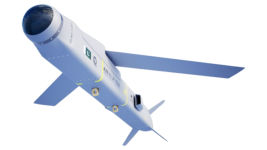
"Taimur Air-Launched Cruise Missile (ALCM), developed by Pakistan’s state-owned Global Industrial & Defence Solutions (GIDS) is a low observable, subsonic anti-surface weapon system.

Taimur Air-Launched Cruise Missile (ALCM) is an anti-ship, export variant of Pakistan’s nuclear-capable RAAD-II ALCM (600 km) optimized for deployment via fixed-wing aircraft for air-to-surface operations. It serves as both an anti-ship and land-attack cruise missile. Designed for stand-off engagements, it allows the launch platform to effectively engage distant targets up to 290 km.
Taimur is Equipped with an imaging infrared (IIR) seeker for high-accuracy terminal guidance. It is also capable of terrain-hugging and sea-skimming capabilities, enabling it to fly at low altitudes while hugging the terrain or skimming over the sea surface. Operating at low altitudes, it maintains stealth and stability at subsonic speeds throughout its cruise.

  • Length: 4.38 M
  • Weight: 1100 Kg
  • Wing Span: 3.2 M
The missile’s advanced INS/GNSS guidance system, coupled with its low observability, allows it to penetrate sophisticated air defense networks with high precision and reduced chances of interception. Based on a modular design, it is the third variation of the RAAD series of missiles, which is a testament to its upgradability, ensuring its relevance and effectiveness in rapidly evolving warfare."
Such missiles, coupled with unmanned surface vehicles, have destroyed 35% of the Russian fleet in the Black Sea while Ukraine being without a navy....
 
1732446299420.png

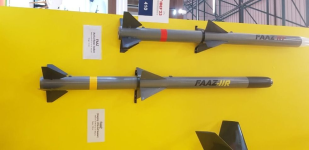
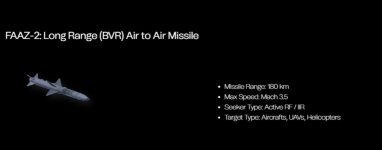
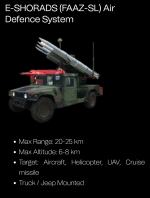
FAAZ is intended to be used by air platforms as an air-to-air missile, and by ground-based air defense (GBAD) system units as a surface-to-air missile.

The FAAZ-2 has a similar layout to the GÖKDOĞAN and AIM-120 AMRAAM missiles.

FAAAZ - I BVR.jpg


----------------------------------

AZB-81LR: Pakistan’s Small Diameter Cruise Missile​

1732446776086.png
 
Skip to contentSkip to footer
Quwa


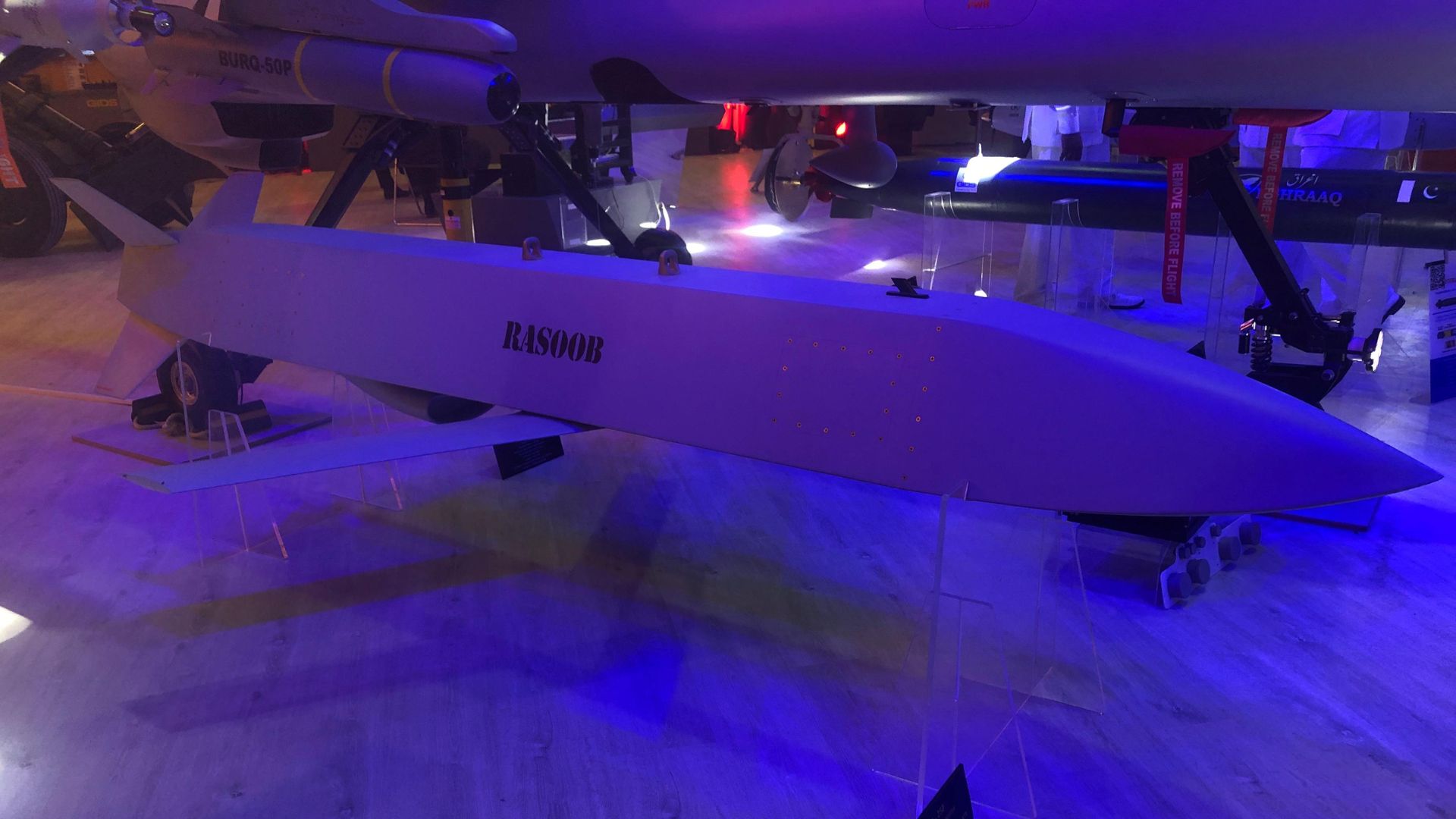
Photo of the GIDS Rasoob 250 air-launched cruise missile or ALCM.

GIDS Rasoob 250 Air-Launched Cruise Missile (ALCM)​

Global Industrial Defence Solutions (GIDS) Pakistan Defence Industry Pakistani Munitions Quwa Premium by Bilal Khan


Bilal Khan​


Linkedin Twitter
Global Industrial Defence Solutions (GIDS) revealed the Rasoob 250 air-launched cruise missile (ALCM) at the 2024 International Defence Exhibition and Seminar (IDEAS 2024).


Know Where Your Defence Market is Heading​

Gain market share in South Asian defence markets with factual insights, verified data, and objective forecasting.
Click Here
The Rasoob 250 is the third of Pakistan’s mainline ALCMs, following the strategically-focused Ra’ad-I/II and the export-centric Taimoor. The Ra’ad-series and Taimoor were developed by Air Weapons Complex (AWC), a subsidiary of the National Engineering and Scientific Commission (NESCOM).

Therefore, it is likely that the Rasoob 250 was also developed by AWC, which could draw on its existing technology stack to design the new lightweight ALCM relatively quicker.

From a design standpoint, the Rasoob 250 seems to take on the “X” tail-stock configuration of the Ra’ad-II and Taimoor. But there is also a stronger emphasis on low-observability (LO) in the Rasoob 250’s airframe design. This is apparent in the more angular characteristics of the airframe and its smaller size, which may result in a relatively low radar cross-section (RCS).

GIDS did not release the length and width specifications of the Rasoob 250. However, given its weight and intended use from slow-flying aircraft, it bears conceptual similarity to the Turkish Roketsan Çakır, another lightweight cruise missile. In fact, the Çakır has a total weight of 275 kg, about 10 kg less than the Rasoob 250. The MBDA Italia Marte-series is also close in range and weight to the Rasoob 250.

Rasoob 250 Specifications​

  • Range: 350 km
  • Weight: 285 kg (with booster)
  • Warhead Weight: 75 kg
  • Warhead Type: Semi-Armour Piercing
  • Cruise Speed: Mach 0.7
  • Accuracy: Under 5 m CEP
  • Powerplant: TBD (possibly NESCOM NTJ-V1)
  • Length: TBD (possibly 3-4 m like the Roketsan Çakır)
  • Width: TBD (possibly 200-275 mm like the Roketsan Çakır)
  • Seeker: TBD (possibly GNSS, INS, TERCOM/DSMAC, and/or IIR)


Key Capabilities of the Rasoob 250​


Flexible Platform Compatibility​

The Rasoob 250 was designed so that it can be deployed from lighter weight and slower flying aircraft, such as the Shahpar-III medium-altitude long-endurance (MALE) unmanned aerial vehicle (UAV), Sea King naval helicopters, and the RAS-72 Sea Eagle maritime patrol aircraft (MPA).

This capability stands in clear contrast to the Taimoor and Ra’ad-series, which were designed to launch from fast-jet aircraft, like the JF-17 Thunder and the Mirage III/5.

Low-Observability on Radar​

Like the Taimoor and Ra’ad-series, the Rasoob 250 bears a ‘stealthy’ airframe. It is likely that the ALCM draws on composite materials to help reduce its RCS. In addition, its smaller size compared to the Ra’ad and Taimoor could further reduce its RCS compared to its larger counterparts.

Accuracy Over Explosive-Yield​

Besides giving a wider variety of platforms a stand-off range weapon (SOW), the growing presence of small guided munitions is also being driven by a greater focus on accuracy. The intended concept is to increase the munition’s accuracy and, in turn, depend less on explosive yield as a means of destroying targets. This allows designers to reduce the size and weight of the warhead.

With the SOEs behind GIDS working on a growing portfolio of loitering munitions with autonomous and more precise targeting, it is possible that these learnings are making their way to Pakistan’s ALCMs.

News Updates, Comments, and Analysis​

The stated range of the Rasoob 250 exceeds the limits established by the Missile Technology Control Regime (MTCR). Thus, it is likely that the Rasoob 250 was developed for a domestic end-user first and foremost, potentially the PN. However, a MTCR-compliant version will likely follow shortly…
 
likely costs high 3 figs to low 4 figs per round btw.

per kill cost could be comparable to manpads really
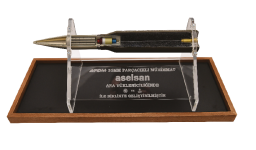
I'm not sure how much these 35mm rounds cost. But, the Turkish forces are firing them abundantly and generously inside the Northern Iraq against the PPK's, supported by the USA, France, Germany, Israil etc., mini drones with 100% success. They generate a cloud of shrapnel (each round carrying up to 100), the timing of burst being individually programmed as per radar input before firing them, to take down the drones...

General Features​

MULTI MISSION 35MM WEAPON SYSTEM General Features
  • Multi-purpose usage against air, surface and ground threats.
  • Target detection and precise tracking with Integrated Precision Stabilized Mechanism
  • Adjustable Detecting/Tracking algorithms and gun firing speed for the target set (60-550 rounds per minute)
  • Linkless Ammunition Feeding Mechanism
  • Suitable for using with different 35mm ammunition types (TP-T, HEI, ATOM, ATOM-AntiUAV)
1732515148599.png
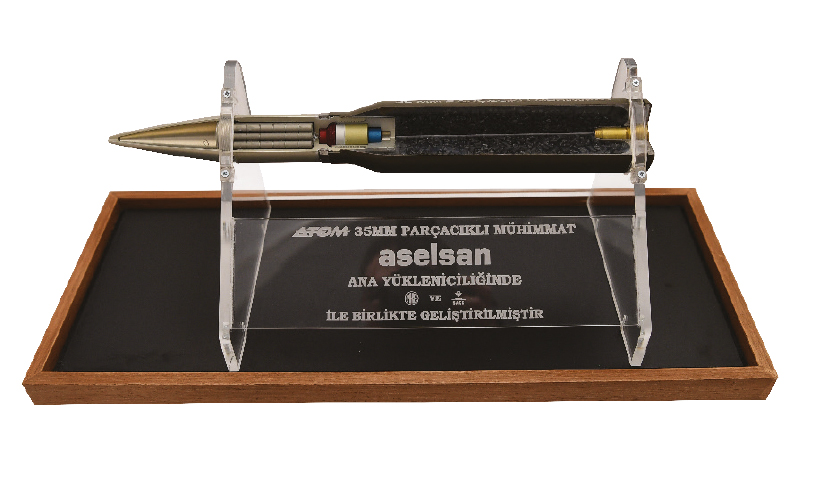
Within the scope of the 35 mm Air Defense System Modernization (HSSM) and Particle Ammunition Supply (PMT) Contract conducted by Aselsan under the guidance of the Presidency of Defense Industries, 100 thousand ATOM 35 mm Air Burst Munition electronics were manufactured at Aselsan facilities.

ATOM 35mm Air Burst Ammunition provides high hit probability against various types of air and land targets, with the ability of precise time counting and the capability of being programmed during firing by taking the muzzle velocity into consideration. Thus, barreled systems can be used as effective air defense weapons. Modernized Towed Guns and KORKUT Systems, when used with ATOM 35 mm Air Burst Ammunition, become effective against traditional air targets such as fighter jets and helicopters, as well as modern air threats such as air-to-ground missiles, cruise missiles and unmanned aerial vehicles. ATOM 35 mm Air Burst Ammunition was developed by Aselsan as the main contractor and by subcontractors MKEK and TÜBİTAK SAGE and has become an important element in layered air defense.


Last edited:
Skip to contentSkip to footer
Quwa


Illustration of the GIDS Taimoor air-launched cruise missile (ALCM).

GIDS Taimoor Air-Launched Cruise Missile (ALCM)​

Global Industrial Defence Solutions (GIDS) Pakistan Defence Industry Pakistani Munitions Quwa Premium by Quwa Team


Quwa Team​


Linkedin Twitter
Global Industrial & Defence Solutions (GIDS) first revealed the Taimoor air-launched cruise missile (ALCM) at the 2022 International Defence Exhibition and Seminar (IDEAS 2022).

Like its sibling weapon, the GIDS Harbah NG anti-ship cruising missile (ASCM), the Taimoor is being promoted for export. The Taimoor is capable of both land-attack and anti-ship roles.

Track Pakistan's Major Defence Programs​

Get visibility on suppliers, technical requirements, and timelines.
Click Here

GIDS Taimoor Design Background​

The GIDS Taimoor is likely an export variant of the Air Weapons Complex (AWC) Ra’ad-II, one of the Pakistan Air Force’s (PAF) ALCMs.

The two missiles share several design features, notably, the “X”-type tail control surfaces, mid-body foldable wings, and underslung air-inlet for a miniature turbojet engine. Likewise, the Taimoor also uses some low-observability (LO) design attributes in its airframe, which are aimed at reducing its radar cross-section (RCS).

However, the Ra’ad-II has a range of 550-600 km. To comply with the Missile Technology Control Regime’s (MTCR) guidelines, the Taimoor’s range was capped to 290 km. Despite that, however, the Taimoor still leverages many of the key technologies of the Ra’ad-series, like terrain-hugging flight and guidance systems, which include TERCOM and DSMAC.

Therefore, the GIDS Taimoor is a credible long-range strike solution, one that can still drive strategic impacts for its end-users, despite the range limitation.

Finally, it is likely that AWC is reusing many of the same core inputs for its stand-off range weapons (SOW). For example, the GIDS Taimoor could be using the same turbojet engine and guidance stack of the Harbah NG. Likewise, the Taimoor’s imaging infrared (IIR) seeker may be finding its way to other applications, like the AZB-81LR.

GIDS Taimoor Specifications​

Physical Dimensions​

  • Length: 4.38 meters
  • Wingspan: 3.20 meters
  • Weight: 1,100-1,200 kg

Performance Parameters​

  • Range: 290 km
  • Cruise Speed: Mach 0.7-0.8 (450-500 knots)
  • Terminal Speed: Mach 0.8 (500 knots)
  • Launch Altitude: 610-7,620 meters (2,000-25,000 ft)
  • Cruise Altitude: 152-6,096 meters (500-20,000 ft)

Key Technical Inputs​

  • Mid-course: INS aided with GNSS/GPS & DSMAC/TERCOM
  • Warhead Types: Blast fragmentation, penetration & pre-fragmentation
  • Terminal: Imaging Infrared (IIR) seeker
  • Propulsion: Unknown miniature turbojet (possibly NESCOM NTJ-V1)

Key Capabilities of the GIDS Taimoor ALCM​


Dual Land-Attack and Anti-Ship Targeting​

The GIDS Taimoor ALCM was designed to engage both fixed and moving targets, including surface warships. For the latter, the Taimoor uses an IIR seeker in terminal-stage flight.

The satellite-aided inertial navigation system (INS) guides the missile’s flight until it reaches the terminal-stage. The TERCOM and DSMAC stack likely helps with providing the Taimoor more resilience in environments where GNSS/GPS links are not reliable, such as electronic warfare (EW)-dense scenarios where there is GNSS/GPS jamming.

Long-Range and Heavy Payload​

GIDS did not disclose the Taimoor’s warhead weight. However, the overall weight of the Taimoor (and, by extension, the Ra’ad-II) is less than 1,200 kg, which is comparable to the mass of the MBDA SCALP and MBDA/Taurus KEPD-350, which weigh 1,300 kg and 1,400 kg, respectively. These ALCMs can deliver warheads weighing around 450-500 kg, so it is reasonable to assume that the Taimoor/Ra’ad-II could carry a comparable amount.

As an export-oriented system, the Taimoor’s range was capped to under 300 km, while the PAF’s Ra’ad-II can reach up to 600 km. In either case, the point of this ALCM family was to offer the end-user a flexible means to carry out long-range strikes, be it through their fighter aircraft or at stand-off range (i.e., away from contested air space or enemy anti-air threats).

Low-Observability (LO) Design​

The LO elements of the GIDS Taimoor manifest in two key ways. First, its airframe’s angular design helps with reducing its radar cross-section (RCS), making it more difficult to detect at long-range on radar. Second, the Taimoor has terrain-hugging flight capability (via TERCOM and DSMAC), allowing it to fly at low-altitudes and, in turn, exploit radar coverage gaps.

Flexible Launch Platform Integration​

While Pakistan would love to see the GIDS Taimoor drive interest in the JF-17, GIDS will be happy with securing sales from a wider subset of customers. One advantage of focusing on becoming a munitions exporter is that Pakistan can approach countries that do not use any of its big-ticket platforms. Instead, the Pakistani industry can lean on its custom integration services to pair the Taimoor to a wider variety of fighter platforms.

News Updates, Comments, and Analysis​

For GIDS, the marketability advantage of the GIDS Taimoor is two-fold:

First, the Taimoor is an uncommon – yet high-demand – type of weapon. Most states cannot readily procure ALCMs of this type due to cost and/or supply-side restrictions (especially as most of the vendors are Western).

Second, GIDS can also potentially market the Taimoor as a flexible system, one Pakistan can integrate to many aircraft upon the buyer’s request. The GIDS Taimoor also reinforces the value proposition of the JF-17 Thunder by giving it the ability to undertake high-impact missions, such as deep-strike.

Comment - November 2024​

At IDEAS 2024, GIDS expanded its lineup of cruise missiles and other SOW products. One addition was the Rasoob 250, a smaller ALCM design that retained – if not improved upon – the LO design elements of the GIDS Taimoor.

With these new additions, GIDS is building a credible portfolio of air-launched SOW products that cover a wide spectrum of ranges, payload capacities, and mission-specific capabilities.
 

Users who are viewing this thread

Back
Top