PAF Very Own A2A Missiles [WVR, BVR & ALCM Stand off] News, Updates & Discussions

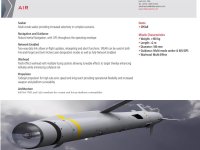
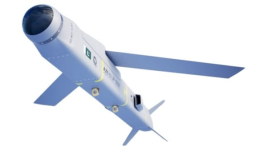
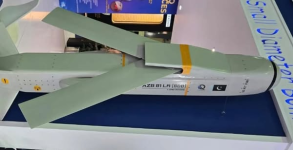
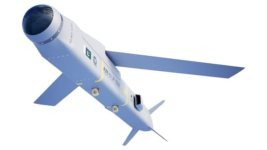
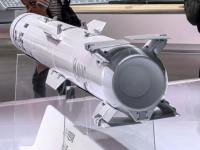
".....Similar to European MBDA Select Precision Effects at Range (SPEAR) platform, especially SPEAR-3.
SPEAR.jpg


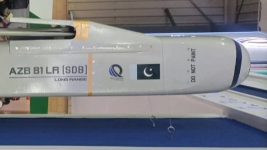
The precision-guided munition has a 250-lbs weight and has a standoff attack range of 200 kilometers, with an imaging infrared (IIR) seeker.

1734661883900.png

AZB-81LR will be able to function in a network-enabled warfare system, including swarming manoeuvres.

1734661394355.png

Its guidance stack likely combines a global navigation satellite system (GNSS) with an imaging infrared (IIR) seeker.

Qaswa Industries also emphasizes that it designed the AZB-81LR by using “fifth-generation technologies”, likely referring to low observability (LO) on radar or reduced radar cross-section (RCS).

1734661408942.png
 

Attachments

  • 1734661378890.png
    1734661378890.png
    75.4 KB · Views: 9
Last edited:
That picture is a joke that I photoshopped.

I was very much inclined to let people buy the kool-aid up but I am just too afraid of the gullibility of our people. So at least this post will be here, slightly removed from the original post lol.
Man , you sent me to cloud nine for a short time , thanks for that .
 
ALCM Taimoor

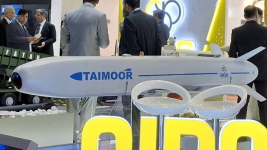
".....At the 2024 International Defense Exhibition and Seminar [IDEAS] in Karachi, Pakistan, Global Industrial and Defence Solutions [GIDS] showcased the Taimoor

1734838402436.png

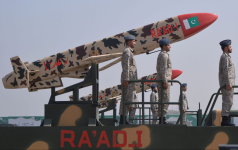
Pakistan’s cruise missile inventory includes short-range land and sea-launched Babur, and short-range air-launched Ra’ad missiles. These missiles are aimed at providing credible deterrence against a wide spectrum of threats from India that include supersonic cruise missiles, acquisition of advanced air defence systems and conventional superiority as well. In a recent development, Pakistan successfully test-fired Ra’ad-II air-launched cruise missile (ALCM) on February 17, 2020, with a reported range of 600 km and capable of delivering multiple types of warheads.

1734839180712.png

The Ra’ad-II cruise missile, which is an advanced version of the Ra’ad-I, is believed to be a ‘stealth’ with pinpoint accuracy. It is described as terrain hugging as well as a highly maneuverable missile. At present, the Ra’ad-II is attachable to Pakistan’s Air Force’s (PAF) Mirage-III aircraft with a provision to be integrated with the JF-17 thunder jets as well.

It is worth mentioning here that cruise missiles, unlike ballistic missiles, fly an essentially horizontal cruise path for most of the duration of their flights and can maneuver like a fighter jet through various waypoints. They are difficult to be located and provide a distinct advantage over ballistic missiles. Moreover, due to their varying altitudes during the flight, they are believed to be complex as far as their detection and interception are concerned, with the provision of air defence systems. This has been evident in how Iran’s cruise missiles reportedly penetrated the US Patriot surface-to-air system (PAC-2) – one of the most advanced air defence systems in the world, in September 2019.

The PAC-2 has spectacularly failed to deter and defend against the reported cruise missiles attacks by Iran. The lapse was such that even the US Secretary of State Michael Pompeo had to justify it by admitting that some of the finest air defence systems do fail sometimes when it comes to providing defence shield against the cruise missiles.

Coming to the relevance of air defence systems vis-à-vis cruise missiles in the South Asian context, it would be significant to highlight some prevalent factors. India is investing heavily in the provision of a sophisticated air defence shield aimed at deterring Pakistan. In this regard, at present, India possesses and intends to acquire some advanced air defence systems in its missile defence inventory that would likely cover a broad range of spectrums including cruise missiles.

These include indigenously developed ballistic missile defence systems such as the Prithvi Air Defence (PAD) missiles, the Advanced Air Defence (AAD) Ashwin missiles and the Barak-8 missile defence system which has been jointly developed with Israel. Furthermore, to enhance its future capabilities which would also cover the spectrum of cruise missiles, India had also signed an agreement with Russia for the acquisition of the S-400 anti-missile system back in October 2018, the delivery of which will start by the end of 2021. In another significant development, India reportedly intends to acquire the medium-range ‘National Advanced Surface to Air Missile System-II (NASAMS-II) from the US. This system once acquired, would be an addition to India’s air defence inventory specifically focused on cruise missiles.


1734838735284.png

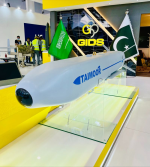
GIDS Taimoor is likely an export variant of the Air Weapons Complex (AWC) Ra’ad-II, one of the Pakistan Air Force’s (PAF) ALCMs.
Taimoor is capable of both land-attack and anti-ship roles.

Taimoor turbojet-powered ALCM is a highly accurate, long-range, INS/GNAS-guided, all-weather ALCM. It is able to carry multiple types of conventional warheads for land attack precision missions on high-value targets. The terminal guidance is via an imaging infrared (IIR) seeker.

.

1734837784378.jpeg

Taimoor ALCM weapon system weighs 2,500 lbs. The weapon is equipped with different warheads designed for lethality against specific targets including pre-fragmented, fragmentation blast, and penetrator warheads. The missile system technical specifications include a 290 kilometre range (MTCR exportable restricted range), an average cruise speed of Mach 0.7, a terminal speed of Mach 0.8.

The weapon can fly very low over ground at a programmable height using terrain contour matching (TERCOM) and Digital Scene Matching Area Correlator (DSMAC), thus reducing the detection probability and increasing survivability

Essentially it is a low observable, subsonic anti-surface weapon system. First unveiled at the IDEAS 2022, Taimur is a direct competitor to MBDA Storm-Shadow/SCALP and Roketsan SOM (Stand-off Missile) in the export market.

The Taimur Air-Launched Cruise Missile (ALCM) is an anti-ship, export variant of Pakistan’s nuclear-capable RAAD-II ALCM (600 km) optimized for deployment via fixed-wing aircraft for air-to-surface operations. It serves as both an anti-ship and land-attack cruise missile. Designed for stand-off engagements, it allows the launch platform to effectively engage distant targets up to 290 km.

1734838492240.png

Taimur is Equipped with an imaging infrared (IIR) seeker for high-accuracy terminal guidance. It is also capable of terrain-hugging and sea-skimming capabilities, enabling it to fly at low altitudes while hugging the terrain or skimming over the sea surface. Operating at low altitudes, it maintains stealth and stability at subsonic speeds throughout its cruise.

Technical Specifications:​

  • Range: 290 Km
  • Warhead Type: Blast: Fragmentation
  • Navigation System: Ins / Gnss
  • Length: 4.38 M
  • Weight: 1100 Kg
  • Wing Span: 3.2 M


1734838149778.png

The missile’s advanced INS/GNSS guidance system, coupled with its low observability, allows it to penetrate sophisticated air defense networks with high precision and reduced chances of interception. Based on a modular design, it is the third variation of the RAAD series of missiles, which is a testament to its upgradability, ensuring its relevance and effectiveness in rapidly evolving warfare."


-------------------------------


Last edited:
Sub Continent witnesses the race for Beyond Visual Range dominance for dominance in contested Airspace


"... The inception of Beyond-Visual-Range (BVR) missiles marked the advent of relatively simplistic beam-riding designs as the first step in their development. However, these early BVR missile prototypes were swiftly succeeded by more advanced models featuring semi-active radar homing (SARH) technology.

1734843102679.png

SARH operates through the launching aircraft’s radar system, which locks onto the target in a single target track (STT) mode, meticulously directing radar energy towards the intended target.

This energy is then reflected off the target and detected by the missile seeker. Throughout the engagement process, the radar antenna must maintain continuous illumination of the target until the missile achieves impact, ensuring precise tracking and guidance.


Advancements in guidance systems, propulsion technology, and miniaturization throughout the latter half of the 20th century and into the 21st century have facilitated the development of more sophisticated Beyond-Visual-Range (BVR) Air-to-Air Missiles (AAMs).

1734842005382.png

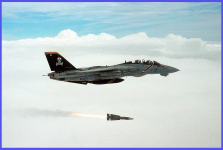
The first operational air-to-air missile to introduce a terminal active seeker was the AIM-54 Phoenix, specifically engineered for the F-14 Tomcat of the US Navy, which became operational in 1972. This innovation alleviated the launch platform’s requirement to illuminate the target until impact, thus reducing its vulnerability.


Another significant advancement came with the introduction of the AIM-120 AMRAAM (Advanced Medium-Range Air-to-Air Missile) by the US in the 1990s, featuring active radar homing capability and offering improved range and lethality.

In parallel, other countries such as Russia, India, China, Turkey, Israel and European nations have developed their own BVR AAMs with newer fire-and-forget technology, including the R-37 Axehead, ASTRA, PL-15 , Gokdogan, Derby and Meteor missiles, respectively. These missiles incorporate advanced features such as ramjet propulsion, data links for mid-course updates, and enhanced counter-countermeasures

1734842367376.png

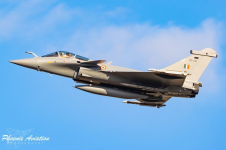
In the region - Indians got hold of Meteor with Rafale induction while PAF responded with Chinese PL-15Es on J-10CPs.

On the Indian side -
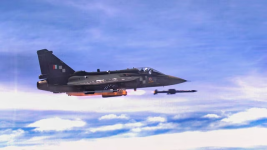
In August 2023, the Tejas LSP-7 successfully test-fired the Astra missile off the coast of Goa, demonstrating its capability to engage targets beyond 100 kilometers.

Building on this success, the Indian Air Force has cleared BDL to produce an additional 200 Astra-Mark 1 missiles. The Defense Acquisition Council approved this project, valued at over Rs 2,900 crore ($362.5 million), in 2022-23. Once produced, these Astra missiles will be integrated into both the Russian-origin Su-30 and the indigenous LCA Tejas fighter aircraft.

While the previous version of Astra missile has a range of about 110 km, its advanced variant can strike targets 160 km away. Equipped with improved jammer resistance and dual pulse motor having thrust vector control, the Astra Mk II is latest among the air-to-air missiles of its class. The DRDO has developed an indigenous seeker to improve the performance of the missile and replace the Russian radio frequency seeker used in the Astra Mk I.


1734842705964.png

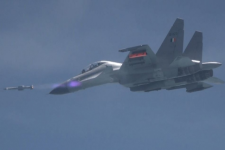
The missile will be powered by Solid Fuel Ducted Ramjet (SFDR), which will enhance its performance and increase the strike range. Procurement of Astra Mk I for the IAF was approved after it completed ground tests and air trial from a Sukhoi 30 MKI aircraft. Process is on to integrate the missile with the Made in India Tejas fighter jet.


Developed by China, the PL-15 is one of the BVR missiles featuring an active electronically scanned array (AESA) radar seeker and a dual-pulse rocket motor. At the Zhuhai Airshow, held in the Guangdong Province of southern China, a significant development was unveiled: the export version of the PL-15 air-to-air missile, now known as the PL-15E. While the original PL-15 boasts an impressive range of up to 300 kilometers, the PL-15E is reportedly designed to engage targets within a reduced range, likely capping out at around 145 kilometers beyond visual range [BVR], according to open sources.

A photograph recently posted on social media offered a closer look at the PL-15E’s unique design feature: its “folding tail” structure. This missile is a critical part of China’s evolving air strategy, engineered to provide Chinese fighter jets with a decisive edge in long-range engagements. The PL-15E integrates cutting-edge technology with advanced aerodynamics to ensure that it remains a formidable weapon in aerial combat.

1734843042863.png


The folding tail of the PL-15E is particularly noteworthy. This design allows the missile to be stored more efficiently within the internal weapon bays of stealth aircraft such as the J-20 fighter. By housing the missile internally, the aircraft retains its low radar signature—an essential feature for conducting operations in contested environments, where avoiding detection is paramount

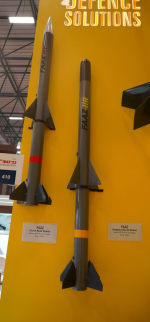
On PAF Side - GIDS Faaz seems to be the inhouse effort to counter Astra development on other side of border.

1734842932948.png

Faaz design appears to have been partly inspired by the Chinese SD-10/PL-12 weapon, which is produced under license by Pakistan Aeronautical Complex. GIDS said its products are locally developed and owns the intellectual property rights.

Currently, the companies GIDS from Pakistan and TUBITAK SAGE from Turkey are each developing their own long-range air-to-air missiles. GIDS is working on the “FAAZ-2,” while TUBITAK SAGE is developing the “GOKDOGAN.

The Faaz-RF is an active radar-guided missile, while the Faaz-IIR features an imaging infrared seeker. Both have a range exceeding 100 kilometers (62 miles), can reach a speech of Mach 3.5 and can fly 6,000 feet above sea level, according to GIDS.

 
Last edited:
Sub Continent witnesses the race for Beyond Visual Range dominance for dominance in contested Airspace


"... The inception of Beyond-Visual-Range (BVR) missiles marked the advent of relatively simplistic beam-riding designs as the first step in their development. However, these early BVR missile prototypes were swiftly succeeded by more advanced models featuring semi-active radar homing (SARH) technology.

View attachment 90088

SARH operates through the launching aircraft’s radar system, which locks onto the target in a single target track (STT) mode, meticulously directing radar energy towards the intended target.

This energy is then reflected off the target and detected by the missile seeker. Throughout the engagement process, the radar antenna must maintain continuous illumination of the target until the missile achieves impact, ensuring precise tracking and guidance.


Advancements in guidance systems, propulsion technology, and miniaturization throughout the latter half of the 20th century and into the 21st century have facilitated the development of more sophisticated Beyond-Visual-Range (BVR) Air-to-Air Missiles (AAMs).

View attachment 90080

The first operational air-to-air missile to introduce a terminal active seeker was the AIM-54 Phoenix, specifically engineered for the F-14 Tomcat of the US Navy, which became operational in 1972. This innovation alleviated the launch platform’s requirement to illuminate the target until impact, thus reducing its vulnerability.


Another significant advancement came with the introduction of the AIM-120 AMRAAM (Advanced Medium-Range Air-to-Air Missile) by the US in the 1990s, featuring active radar homing capability and offering improved range and lethality.

In parallel, other countries such as Russia, India, China, Turkey, Israel and European nations have developed their own BVR AAMs with newer fire-and-forget technology, including the R-37 Axehead, ASTRA, PL-15 , Gokdogan, Derby and Meteor missiles, respectively. These missiles incorporate advanced features such as ramjet propulsion, data links for mid-course updates, and enhanced counter-countermeasures

View attachment 90082

In the region - Indians got hold of Meteor with Rafale induction while PAF responded with Chinese PL-15Es on J-10CPs.

On the Indian side -
In August 2023, the Tejas LSP-7 successfully test-fired the Astra missile off the coast of Goa, demonstrating its capability to engage targets beyond 100 kilometers.

Building on this success, the Indian Air Force has cleared BDL to produce an additional 200 Astra-Mark 1 missiles. The Defense Acquisition Council approved this project, valued at over Rs 2,900 crore ($362.5 million), in 2022-23. Once produced, these Astra missiles will be integrated into both the Russian-origin Su-30 and the indigenous LCA Tejas fighter aircraft.

While the previous version of Astra missile has a range of about 110 km, its advanced variant can strike targets 160 km away. Equipped with improved jammer resistance and dual pulse motor having thrust vector control, the Astra Mk II is latest among the air-to-air missiles of its class. The DRDO has developed an indigenous seeker to improve the performance of the missile and replace the Russian radio frequency seeker used in the Astra Mk I.


View attachment 90083

The missile will be powered by Solid Fuel Ducted Ramjet (SFDR), which will enhance its performance and increase the strike range. Procurement of Astra Mk I for the IAF was approved after it completed ground tests and air trial from a Sukhoi 30 MKI aircraft. Process is on to integrate the missile with the Made in India Tejas fighter jet.


Developed by China, the PL-15 is one of the BVR missiles featuring an active electronically scanned array (AESA) radar seeker and a dual-pulse rocket motor. At the Zhuhai Airshow, held in the Guangdong Province of southern China, a significant development was unveiled: the export version of the PL-15 air-to-air missile, now known as the PL-15E. While the original PL-15 boasts an impressive range of up to 300 kilometers, the PL-15E is reportedly designed to engage targets within a reduced range, likely capping out at around 145 kilometers beyond visual range [BVR], according to open sources.

A photograph recently posted on social media offered a closer look at the PL-15E’s unique design feature: its “folding tail” structure. This missile is a critical part of China’s evolving air strategy, engineered to provide Chinese fighter jets with a decisive edge in long-range engagements. The PL-15E integrates cutting-edge technology with advanced aerodynamics to ensure that it remains a formidable weapon in aerial combat.

View attachment 90087


The folding tail of the PL-15E is particularly noteworthy. This design allows the missile to be stored more efficiently within the internal weapon bays of stealth aircraft such as the J-20 fighter. By housing the missile internally, the aircraft retains its low radar signature—an essential feature for conducting operations in contested environments, where avoiding detection is paramount

On PAF Side - GIDS Faaz seems to be the inhouse effort to counter Astra development on other side of border.

View attachment 90086

Faaz design appears to have been partly inspired by the Chinese SD-10/PL-12 weapon, which is produced under license by Pakistan Aeronautical Complex. GIDS said its products are locally developed and owns the intellectual property rights.

Currently, the companies GIDS from Pakistan and TUBITAK SAGE from Turkey are each developing their own long-range air-to-air missiles. GIDS is working on the “FAAZ-2,” while TUBITAK SAGE is developing the “GOKDOGAN.

The Faaz-RF is an active radar-guided missile, while the Faaz-IIR features an imaging infrared seeker. Both have a range exceeding 100 kilometers (62 miles), can reach a speech of Mach 3.5 and can fly 6,000 feet above sea level, according to GIDS.

Thanks for giving us no nonsense honest information .
 
On the Indian side -
In August 2023, the Tejas LSP-7 successfully test-fired the Astra missile off the coast of Goa, demonstrating its capability to engage targets beyond 100 kilometers.

While the previous version of Astra missile has a range of about 110 km, its advanced variant can strike targets 160 km away. Equipped with improved jammer resistance and dual pulse motor having thrust vector control, the Astra Mk II is latest among the air-to-air missiles of its class. The DRDO has developed an indigenous seeker to improve the performance of the missile and replace the Russian radio frequency seeker used in the Astra Mk I.

View attachment 90083
Developed by China, the PL-15 is one of the BVR missiles featuring an active electronically scanned array (AESA) radar seeker and a dual-pulse rocket motor. At the Zhuhai Airshow, held in the Guangdong Province of southern China, a significant development was unveiled: the export version of the PL-15 air-to-air missile, now known as the PL-15E. While the original PL-15 boasts an impressive range of up to 300 kilometers, the PL-15E is reportedly designed to engage targets within a reduced range, likely capping out at around 145 kilometers beyond visual range [BVR], according to open sources.

A photograph recently posted on social media offered a closer look at the PL-15E’s unique design feature: its “folding tail” structure. This missile is a critical part of China’s evolving air strategy, engineered to provide Chinese fighter jets with a decisive edge in long-range engagements. The PL-15E integrates cutting-edge technology with advanced aerodynamics to ensure that it remains a formidable weapon in aerial combat.

View attachment 90087


The folding tail of the PL-15E is particularly noteworthy. This design allows the missile to be stored more efficiently within the internal weapon bays of stealth aircraft such as the J-20 fighter. By housing the missile internally, the aircraft retains its low radar signature—an essential feature for conducting operations in contested environments, where avoiding detection is paramount

On PAF Side - GIDS Faaz seems to be the inhouse effort to counter Astra development on other side of border.

Astra Mk1 is a well-designed missile with modern features like a dual-mode RF seeker and a bidirectional datalink, allowing it to receive updates mid-flight and hit targets with precision. Its range is impressive too—110 km when launched from 15 km altitude.

Now, comparing it to AIM-120C5, there’s a clear difference. The AIM-120C5 uses an all-boost motor that burns very quickly, in under 10 seconds, to achieve its maximum speed. However, this quick burn means it loses energy faster and struggles to hit 80 km when launched at 10 km altitude. On the other hand, Astra Mk1 carries about 20% more propellant, which gives it better energy retention and speeds over Mach 4.5.

The AIM-120D takes a different approach. Unlike earlier AMRAAMs, which used a boost-sustain motor, the AIM-120D uses an all-boost grain. This burns out even faster, in about 6-7 seconds, but the design focuses on achieving a high climb rate during its lofted flight path. This lofted profile helps maximize range, pushing the missile to nearly 200 km—almost double the range of the AIM-120C5.

Astra Mk2 also has significant improvements. While its seeker and fore-section have the same 178 mm diameter as Mk1, the mid-section is thicker at 190 mm, which should allow it to carry slightly more fuel than Mk1. It uses a two-pulse motor design—pulse-1 burns slower to conserve energy early on, and pulse-2 burns faster to regain speed later. This setup, combined with its design, enables Astra Mk2 to achieve significantly greater range while maintaining agility.

Now, about Chinese missiles like PL-12A and PL-15E—they’re much heavier, weighing over 210 kg compared to Astra Mk1’s 154 kg. This extra weight makes them less agile and affects their speed. It seems China prioritizes raw range over optimizing weight and design efficiency, which is why their missiles lag behind in these areas.

In short, the Astra series is highly efficient, lighter, and more modern compared to both the AIM-120C5 and Chinese missiles. The AIM-120D has excellent range because of its high-speed climb, but Astra’s design balances range, weight, and agility better, making it a very competitive missile. The lighter, more agile design of Astra also gives it an edge over the bulkier Chinese missiles.
 
In the region - Indians got hold of Meteor with Rafale induction while PAF responded with Chinese PL-15Es on J-10CPs.
It’s interesting you mentioned Meteor vs PL-15E. Let’s break it down for a moment. Meteor clearly outclasses the export variant of the PL-15 with its impressive range of over 200 km and a significantly larger NEZ. The sustained ramjet propulsion ensures that Meteor has unmatched maneuverability, making it a real headache for PAF interceptors.
To view this content we will need your consent to set third party cookies.
For more detailed information, see our cookies page.


Adding to your woes, India is now going to buy additional Meteors under its 26 Rafale M order for the Indian Navy. With BNET AR onboard all IAF platforms, we dominate the electromagnetic spectrum and situational awareness. Vayulink further enhances this, ensuring seamless communication and coordination.

Not to forget, IAF has achieved cutting-edge NCW capabilities through systems like IACCS, Afnet, and now Indian Army’s Akashteer. With homegrown gems like Astra BVRAAM, IAF is setting the standard for battlefield dominance.
 
Astra Mk1 is a well-designed missile with modern features like a dual-mode RF seeker and a bidirectional datalink, allowing it to receive updates mid-flight and hit targets with precision. Its range is impressive too—110 km when launched from 15 km altitude.
Astra mk1 doesn't uses a dual-mode RF seeker but only a RF seeker.
Astra Mk1 carries about 20% more propellant, which gives it better energy retention and speeds over Mach 4.5.
from which source are you claiming this? your claim has no weight.
 
It’s interesting you mentioned Meteor vs PL-15E. Let’s break it down for a moment. Meteor clearly outclasses the export variant of the PL-15 with its impressive range of over 200 km and a significantly larger NEZ. The sustained ramjet propulsion ensures that Meteor has unmatched maneuverability, making it a real headache for PAF interceptors.
To view this content we will need your consent to set third party cookies.
For more detailed information, see our cookies page.


Adding to your woes, India is now going to buy additional Meteors under its 26 Rafale M order for the Indian Navy. With BNET AR onboard all IAF platforms, we dominate the electromagnetic spectrum and situational awareness. Vayulink further enhances this, ensuring seamless communication and coordination.

Not to forget, IAF has achieved cutting-edge NCW capabilities through systems like IACCS, Afnet, and now Indian Army’s Akashteer. With homegrown gems like Astra BVRAAM, IAF is setting the standard for battlefield dominance.

Whenever someome brings up "nez" in a debate thats when you know you can discard their points.

Since people love parroting this stuff, do quote us official numbers from MBDA, CATIC and Raytheon.

Its also seriously amazing, that after decades, the IAF is suddenly introducing SDR's and Datalinks and that makes it the dominant force lol. The PAF has been deploying SDR's and Homegrown TDL across all of its assets for 10 years now... The usual moronic chest thumping. The IAF could introduce an electric toothbrush and it would be the dominant force.

Thanks
 
It’s interesting you mentioned Meteor vs PL-15E. Let’s break it down for a moment. Meteor clearly outclasses the export variant of the PL-15 with its impressive range of over 200 km and a significantly larger NEZ. The sustained ramjet propulsion ensures that Meteor has unmatched maneuverability, making it a real headache for PAF interceptors.
To view this content we will need your consent to set third party cookies.
For more detailed information, see our cookies page.


Adding to your woes, India is now going to buy additional Meteors under its 26 Rafale M order for the Indian Navy. With BNET AR onboard all IAF platforms, we dominate the electromagnetic spectrum and situational awareness. Vayulink further enhances this, ensuring seamless communication and coordination.

Not to forget, IAF has achieved cutting-edge NCW capabilities through systems like IACCS, Afnet, and now Indian Army’s Akashteer. With homegrown gems like Astra BVRAAM, IAF is setting the standard for battlefield dominance.

Meteor has not 200+ km range most defense websites tells that it has a range of 150 km, even MBDA website claims it has a range of 150 km, and what about drag because of air intake of ramjet it loses momentum (kinetic energy) and speed as it goes further
 
Finish developing basic a2a first.

I really hope GIDS doesn't end up like HAL, overpromising and underdelivering.
Sorry my friend lol:
That picture is a joke that I photoshopped.

I was very much inclined to let people buy the kool-aid up but I am just too afraid of the gullibility of our people. So at least this post will be here, slightly removed from the original post lol.
 

Users who are viewing this thread

Latest Posts

Back
Top