I’ve been observing this forum for some time, along with discussions on Twitter, and I visit Pakistan annually, where I interact with people directly. A concerning trend I’ve noticed, especially in the last 7-8 pages of conversations here, is the polarized mindset among Pakistanis. Broadly, there are two groups: those who are pro-establishment, often with strong anti-Imran Khan sentiments and unwavering support for figures like Asim Munir, and PTI supporters who idolize Imran Khan. Additionally, some individuals display extreme prejudice, unfairly blaming Pashtuns and Baloch for societal issues.
A core issue is the lack of accountability. While an FIR can be filed against a prime minister or any civilian, no one dares or can file one against a serving military officer, even a captain (captain hamad example below). When any group is placed above the law, justice cannot prevail. Similarly, PTI supporters must acknowledge that Imran Khan has made questionable decisions and is not some messiah, such as appointing Pervez Khattak, a political opportunist who switched parties multiple times before taking oath as Chief Minister, or Ali Amin Gandapur, whose leadership has been controversial. koyi aik b sahe bandha nahi lagaya. aur has done alot of blunders and many decisions.
My main message is this: as Muslims, our primary loyalty should be to Allah, His Prophet, and Islam. As Pakistanis, our second loyalty should be to Pakistan—not to any political party, leader, or establishment. Support whom you wish, but if you are Muslim and Pakistani, fear Allah aur hamesha haq aur sachayi ka saath dein and secondly prioritize Pakistan’s well-being. Stop blindly defending every action of your chosen leaders; no one is infallible. I’ve said this before and will repeat: after Prophet Muhammad (PBUH) the last prophet, until the arrival of Imam Mahdi or Prophet Isa (AS), the best system for Muslims is one based on consultation (shura), mutual deliberation, and a democratic process akin to a board of governors, where no individual has absolute authority, regardless of their status. aap beshak ghaus e azam iss waqt kay ya iss dour kay mujjadad ko laga kay dictator bana dein wo bairha ghark kar dega mukammal naik nayeti say b.
This younger generation seems unaware of the historical context especailly those pro establishment, e.g the Zia era and its consequences, as they haven’t studied history. the first TLP naik muhammad was the fruit of zia USSR war which was trained by army for afghanistan war and later killed while peace was negotiated by US drone. and then this TTP is born the baakiyat of afghan war and the gift of establishment to the people of KPK. phir kahtay ye kpk walay saaray esay hain.
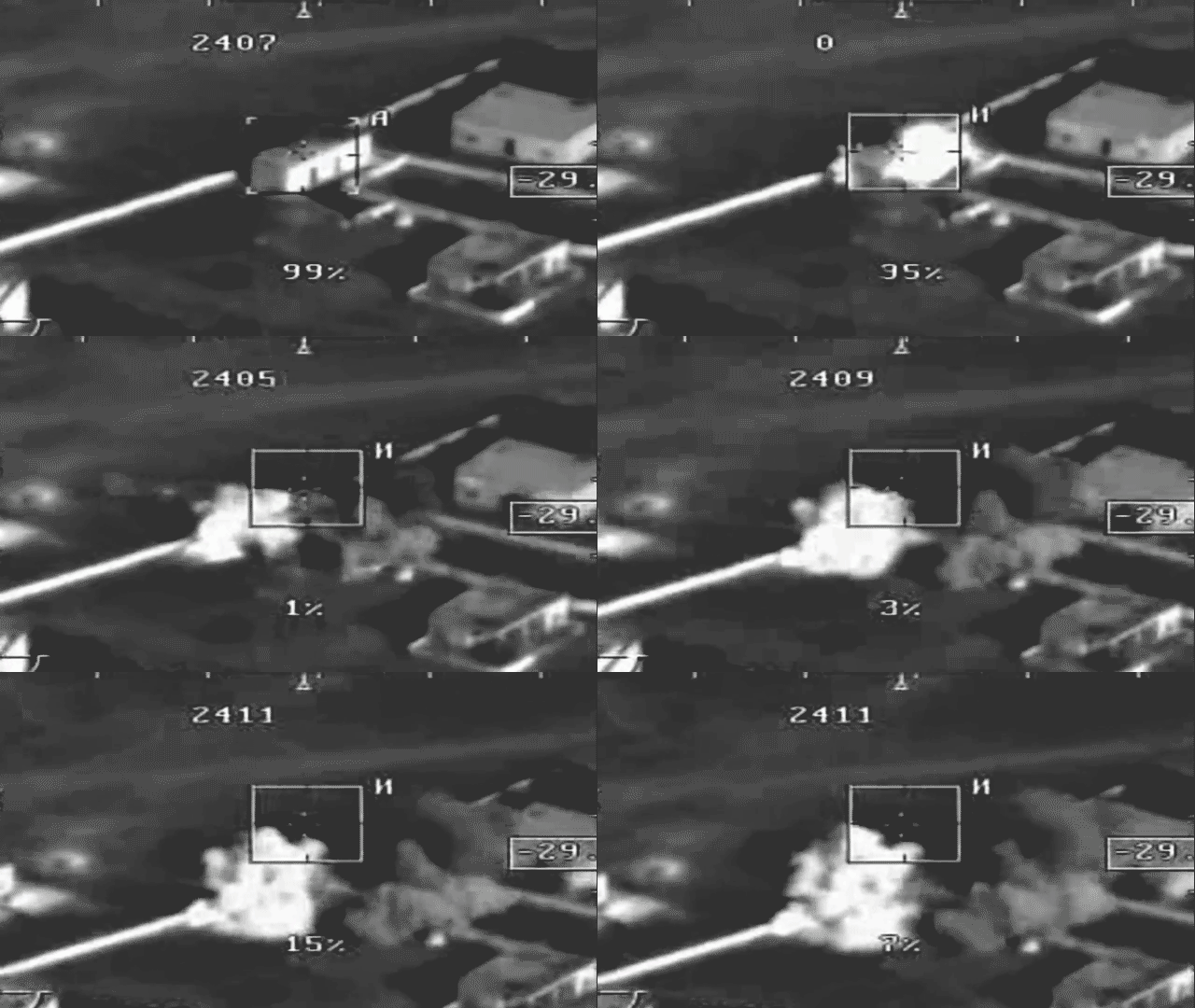
Similarly for afghanistan, I recommend reviewing the historical context below. Had Najibullah not been removed and had Pakistan avoided meddling in Afghanistan post-USSR, fostering friendly relations instead, the deep-seated resentment among Afghans might have been avoided. Also, Musharraf’s actions, such as in balochistan protecting Captain Hamad in the Dr. Shazia rape case, and later resorting to miliatry action led to the deaths and disappearances of many Baloch, marking the beginning of enforced disappearances that continue today. the bajaur 70 children killed by US drone accepted by pakistan army balkay us waqt ISPR ki press conference abi b hai kay sab terrorist thay? ab unkay family main kayio nay uskay baad gun utha li hogi?
Gulbuddin Hekmatyar, a controversial figure, has been accused of causing significant destruction and civilian deaths in Kabul during the early 1990s who was supported and armed by your favourite general hamid gul, who as earned the title "Butcher of Kabul" by some analysts (Coll, 2004). According to Peter Tomsen, the U.S. Special Envoy to Afghanistan (1989–1992), Pakistan’s Inter-Services Intelligence (ISI) hired Hekmatyar in 1990 to conquer Afghanistan in pursuit of Pakistani interests. This plan was delayed until 1992 due to U.S. pressure (Tomsen, 2011).
Shahnawaz Tanai, a member of the Khalq faction of the People’s Democratic Party of Afghanistan, was a hardline nationalist and anti-mujahideen figure. Despite his ideological differences, Tanai formed an unlikely alliance with Hekmatyar’s Hezb-e Islami Gulbuddin in 1990 to overthrow Najibullah’s regime. Tanai rejected peace initiatives, favoring a military solution. Hekmatyar intensified attacks on Kabul to support Tanai’s coup, which followed a failed Khalqist coup attempt in December 1989 (Rubin, 2002). This coup took place a year after the Soviet withdrawal from Afghanistan (Giustozzi, 2000).
**Sources:**
1. Coll, S. (2004). Ghost Wars: The Secret History of the CIA, Afghanistan, and Bin Laden, from the Soviet Invasion to September 10, 2001.
2. Tomsen, P. (2011). The Wars of Afghanistan: Messianic Terrorism, Tribal Conflicts, and the Failures of Great Powers.
3. Rubin, B. R. (2002). The Fragmentation of Afghanistan: State Formation and Collapse in the International System. Yale University Press.
4. Giustozzi, A. (2000). War, Politics and Society in Afghanistan, 1978–1992. Georgetown University Press.