Pakistan Afghanistan Relations

I hope this is not some confused narrative which claims that Pakistan is doing this at American bidding.

Pakistanis are dying in the hundreds (and thousands over the past 4 years). Pakistan has no choice but to take hard action. This is not being done at anyone's behest but for our own people. If anything, Pakistan has been on the losing end of "financial gain". MNCs are leaving because of uncertainty and security situation. So what gain do we get from the situation imposed on us by TTP et-al?

Blood money. Money talks, BS walks. That's the real world.
 

Pakistan presents firm stance on cross-border terrorism in Istanbul talks​


Defence Minister Khawaja Asif warns of 'open war' with Afghanistan if peace talks fail in Turkiye

Khalid Mehmood/Reuters
October 25, 2025

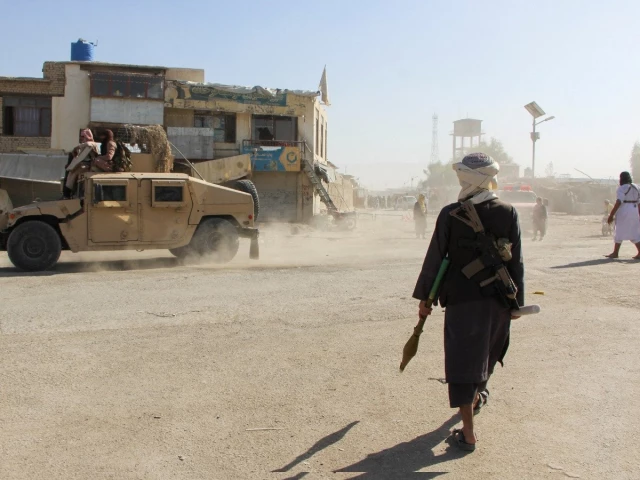
afghan taliban fighters patrol near the afghanistan pakistan border in spin boldak kandahar province following exchanges of fire between pakistani and afghan forces in afghanistan on october 15 photo reuters


Afghan Taliban fighters patrol near the Afghanistan-Pakistan border in Spin Boldak, Kandahar Province, following exchanges of fire between Pakistani and Afghan forces in Afghanistan on October 15. Photo: Reuters

Pakistan has presented a firm stance on cross-border terrorism during talks in Istanbul, with discussions focusing on threats posed by terrorist groups operating in the region, including Fitna al Khwarij.

The second round of talks between Pakistani and Afghanistan concluded in Türkiye on Saturday, however, discussions are expected to continue for another two days. The dialogue, seen as crucial given recent tensions between Islamabad and Kabul, was facilitated by the Turkish government.

According to sources, Pakistan’s delegation comprised seven members, including representatives from the Ministry of Foreign Affairs and security agencies. The Afghan Taliban delegation included six officials.

During the talks, Pakistan presented its ‘clear and firm stance’ on the threat posed by the terrorist group Fitna al Khwarij and other terrorist organisations operating in the region, sources added.

The discussions focused on enhancing security coordination, improving border cooperation, and formulating a joint strategy to promote peace and stability in the region.

Sources familiar with the matter said the aim of the negotiations is to establish a consensus on mechanisms that would help address cross-border security challenges and prevent terrorist activities.
Further deliberations are expected to take place over the next two days as both sides seek common ground on key security issues.
 
Asif warns of 'open war' with Afghanistan if peace talks fail

Meanwhile, Defence Minister Khawaja Asif said on Saturday he believes Afghanistan wants peace but that failure to reach an agreement during talks in Istanbul would mean "open war," days after both sides agreed to a ceasefire following deadly border clashes.

He said there had been no incidents in the four to five days since it was agreed, and both sides were complying with the truce.

"We have the option, if no agreement takes place, we have an open war with them," he said in televised remarks from Pakistan. "But I saw that they want peace."

Doha Talks

The Istanbul dialogues follow Pakistan and Afghanistan’s agreement on an immediate ceasefire during Doha talks, after a week of intense border clashes — the worst since the Taliban took power in Kabul in 2021.

The ceasefire "has been finalised", Pakistan's Defence Minister Khawaja Asif posted on X on last Sunday, saying both sides would meet again on October 25 in Istanbul to discuss "detailed matters".

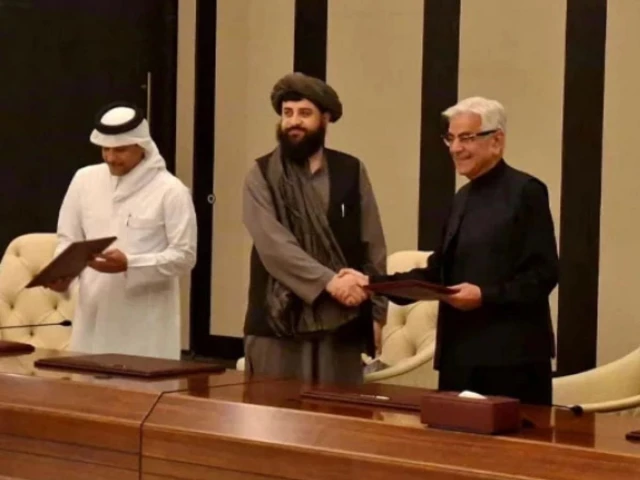
Pakistani delegation, led by Khawaja Asif, including other senior officials. On the Afghan side, the talks were headed by Acting Defence Minister Mullah Yaqoob, accompanied by other representatives.
 
Pakistani officials raised the issue of cross-border terrorist attacks originating from Afghanistan, pointing in particular to groups such as the Gul Bahadur faction and the Tehreek-e-Taliban Pakistan (TTP). Islamabad maintains that these groups have been involved in multiple deadly incidents inside Pakistan in recent months.

Sources familiar with the talks said Pakistan presented a ‘single-point agenda’ focused on the dismantling of terrorist networks. “Pakistan has made it clear that the Afghan government must eliminate terrorist organisations and their hideouts,” sources said.

Taliban spokesperson Zabihullah Mujahid said in a statement that the parties agreed on a complete and meaningful ceasefire.

Tensions escalated after unprovoked firing by Afghan Taliban regime

Tensions along the Pak-Afghan border escalated on October 12, when clashes erupted after the Afghan Taliban regime opened unprovoked fire at multiple locations in Khyber-Pakhtunkhwa (K-P) and Balochistan, prompting a swift and forceful response from the Pakistan Army, which destroyed several Afghan posts and killed dozens of Afghan soldiers and militants.

The coordinated assault originated across several key sectors, including Angoor Adda, Bajaur, Kurram, Dir, Chitral in Khyber-Pakhtunkhwa, and Baramcha in Balochistan. The firing, security sources said, was aimed at facilitating the illegal entry of Khwarij — the state-designated term for the banned Tehreek-i-Taliban Pakistan (TTP) — into Pakistani territory.

“The Pakistan Army responded immediately and decisively,” security sources said. “The counteroffensive effectively targeted and destroyed multiple Afghan posts on the border. Dozens of Afghan soldiers and Khwarij were killed in retaliatory fire”.
 

Pakistan, Afghanistan begin second round of talks in Istanbul​


Talks take place at local Istanbul hotel between delegations from both countries

Web Desk
October 25, 2025


tribune


The second round of peace talks between Pakistan and Afghanistan began in Istanbul on Saturday under the auspices of Türkiye, aimed at reviewing progress on the points agreed during earlier negotiations in Doha.

According to sources, the discussions are taking place at a local hotel in Istanbul between delegations from both countries.

The Afghan delegation is led by Deputy Interior Minister Rahmatullah Mujib and includes Anas Haqqani, brother of the Afghan Interior Minister, Noor Ahmad Noor.

Defence Ministry official Noorur Rahman Nusrat, the acting head of the Afghan Embassy in Qatar, and a spokesperson from Afghanistan’s Ministry of Foreign Affairs.

Pakistan is represented by a two-member delegation of security officials, who are expected to present proposals on cross-border attacks originating from Afghanistan, monitoring mechanisms, and frameworks to strengthen security cooperation.
 
The Istanbul dialogues follow Pakistan and Afghanistan’s agreement on an immediate ceasefire during Doha talks, after a week of intense border clashes — the worst since the Taliban took power in Kabul in 2021.

The ceasefire "has been finalised", Pakistan's Defence Minister Khawaja Asif posted on X on Sunday, saying both sides would meet again on October 25 in Istanbul to discuss "detailed matters".

Pakistani delegation, led by Khawaja Asif, including other senior officials. On the Afghan side, the talks were headed by Acting Defence Minister Mullah Yaqoob, accompanied by other representatives.

Pakistani officials raised the issue of cross-border terrorist attacks originating from Afghanistan, pointing in particular to groups such as the Gul Bahadur faction and the Tehreek-e-Taliban Pakistan (TTP). Islamabad maintains that these groups have been involved in multiple deadly incidents inside Pakistan in recent months.

Sources familiar with the talks said Pakistan presented a ‘single-point agenda’ focused on the dismantling of terrorist networks. “Pakistan has made it clear that the Afghan government must eliminate terrorist organisations and their hideouts,” sources said.

Taliban spokesperson Zabihullah Mujahid said in a statement that the parties agreed on a complete and meaningful ceasefire.

Qatar's foreign ministry, which mediated talks along with Turkey, said the follow-up meetings were meant "to ensure the sustainability of the ceasefire and verify its implementation in a reliable and sustainable manner".
 
Militant attacks and air strikes

Pakistan and Afghanistan are seeking a way forward after the clashes killed dozens and wounded hundreds. The talks were led by Asif and his Afghan counterpart, Mullah Muhammad Yaqoob, both sides said.

The ground fighting between the one-time allies and Pakistani airstrikes across their contested 2,600-km (1,600-mile) frontier were triggered after Islamabad demanded that Kabul rein in militants who had stepped up attacks in Pakistan, saying they operated from havens in Afghanistan.

The Taliban denies giving haven to militants to attack Pakistan and accuses the Pakistani military of spreading misinformation about Afghanistan and sheltering Islamic State-linked militants to undermine its stability and sovereignty. Islamabad denies the accusations.

Militants have been waging a war for years against the Pakistani state in a bid to overthrow the government and replace it with their strict brand of Islamic governance.

A suicide attack near the border killed seven Pakistani soldiers and wounded 13, security officials said.

"The Afghan regime must rein in the proxies who have sanctuaries in Afghanistan and are using Afghan soil to perpetrate heinous attacks inside Pakistan," the Pakistan Army chief, Field Marshal Asim Munir, addressing a graduation ceremony of cadets.
 
Eagle Eye
@zarrar_11PK

Why the Istanbul Talks Collapsed

🚨🚨
The breakdown of the Türkiye negotiations had nothing to do with Pakistan’s diplomacy. The real reason was internal fractures and backstage power-play inside the Afghan regime.

📮From the very first session it became clear that the Afghan delegation was not negotiating with one voice. Three competing blocs - Kandahar, Kabul and Khost - were all feeding separate instructions to the delegates.

🔸 The Turning Point

📮When the talks reached the stage of written guarantees on TTP safe havens, the Kandahar faction had signalled quiet willingness to proceed - but then, during a break, the Kabul group staged a manufactured complication:

They suddenly insisted that

_“no agreement can be signed unless the United States joins as a formal guarantor.”_

📮This was not part of the agenda, nor had it been raised in previous rounds. Afghan Social Media accounts reporting about US drones is testimony to this fact.

📮The move caught the mediators by surprise because this wasn’t about security - it was about reopening a financial corridor through Washington.

📮They tried to turn a bilateral-security negotiation into a three-party donor-linked arrangement - essentially transforming the security file into a bargaining chip for aid.

🔸 Internal Drama Behind Closed Doors

📮Witnesses say there was visible confusion on the Afghan benches. One delegate was taking instructions on a handwritten chit from a handler sitting outside the official delegation. Another repeatedly left the room to speak on phone to Kabul.

📮After those phone calls:
•Every agreed clause was suddenly “reopened”
•Already-cleared points were put “under review”
•And timing was dragged intentionally.

📮It became obvious that the aim was to stall progress until outside actors (including India) could be looped in - not to reach a settlement.

🔸 Why They Want the US Involved

📮This push for an American “guarantor” has nothing to do with sovereignty.
It is a financial reinsertion tactic:

✔ If the US is added, the Taliban can claim “cooperation”
✔ If cooperation begins, talks for “economic assistance” reopen
✔ Once money flows, pressure on internal factions reduces

📮So instead of countering TTP, they are trying to monetize TTP’s existence to revive a flow of dollars.

🔸 Mediators’ Private Assessment

📮Both Qatari and Turkish facilitators privately acknowledged three points:
1.Pakistan’s demands are legitimate & fully aligned with international norms
2.The Afghan side is not blocked by substance, but by internal insecurity
3.The Kabul faction specifically wants the file dragged toward Washington for financial leverage

❗️ Bottom Line ❗

The talks did not fail because of diplomacy. They failed because:

🔻 The Afghan regime is internally divided
🔻 Key factions want to pull the US back in to restart the dollar pipeline
🔻 They are unwilling to act against TTP because TTP is their last bargaining chip and Insurance of Indian Money

📮Until Kabul resolves its internal power struggle and stops trying to convert terrorism into political currency, no progress is possible.
 
I hope this is not some confused narrative which claims that Pakistan is doing this at American bidding.

Pakistanis are dying in the hundreds (and thousands over the past 4 years). Pakistan has no choice but to take hard action. This is not being done at anyone's behest but for our own people. If anything, Pakistan has been on the losing end of "financial gain". MNCs are leaving because of uncertainty and security situation. So what gain do we get from the situation imposed on us by TTP et-al?

Pakistan saw the worst wave of terrorism from 2005 to 2015 when tens of thousands of Pakistanis were dying.Can I ask why no such kinetic action was taken then???
 
I hope this is not some confused narrative which claims that Pakistan is doing this at American bidding.

Pakistanis are dying in the hundreds (and thousands over the past 4 years). Pakistan has no choice but to take hard action. This is not being done at anyone's behest but for our own people. If anything, Pakistan has been on the losing end of "financial gain". MNCs are leaving because of uncertainty and security situation. So what gain do we get from the situation imposed on us by TTP et-al?
Pakistanis have been dying since 2002
 
To view this content we will need your consent to set third party cookies.
For more detailed information, see our cookies page.
 
➡️ Terrorism from Afghan soil is unacceptable.
➡️ Pakistan’s red lines are non-negotiable.
➡️ Dialogue — yes, but only for firm guarantees, not optics.

Islamabad’s approach remains principled, not pressured —firm on sovereignty, focused on a peaceful, stable, terror-free region.
 

Pak-Afghan talks in Istanbul may resume if Kabul signals shift in attitude: Defence Minister Asif


Dawn.com | Abdullah Momand
Published October 30, 2025

Defence Minister Khawaja Asif on Thursday said talks between Pakistan and Afghanistan on cross-border terrorism could resume if Kabul signalled a shift in its attitude.

Discussions between Pakistani and Afghan Taliban delegations had begun in Istanbul on Saturday, but Islamabad’s long-standing concern of terror attacks emanating from Afghanistan had been a bone of contention, resulting in a stalemate.

“While the talks have not begun [again], our delegation is still in Istanbul,” Asif said in an exclusive interview with Geo News.

He added that “discussions could still restart” if there was “some development that indicates a material change in Kabul’s attitude on the insistence of these two friendly countries (Turkiye and Qatar)”.


“Our stance, that there will not be any attacks on us (Pakistan) from their land and they will not back such attacks, is a sticking point. If an understanding can be reached on that, [well and good], it will be a good thing,” Asif said.

The minister noted, “There has been no breakthrough so far. There has been no development that you can have high hopes from.”

However, he added that the defence ministers and intelligence chiefs of the mediating countries were making efforts to end the stalemate in talks.

Asif said the Pakistani delegation had even reached the airport in Istanbul to depart, but a request was made by Turkiye and Qatar to “give us one more chance”. He said Turkish officials offered to speak to Kabul’s delegation and “pave a way out”.

The minister noted that bilateral trade and investment should take place, but added that it was in the “hands of Kabul if it wanted to play a constructive role in this”.
 

Users who are viewing this thread

Pakistan Defence Latest

Latest Posts

Back
Top