Pakistan Agriculture News / Discussions

Global agritech company devotes to optimize China-Pak agriculture coop model :2024 CISCE​

China Economic Net
Nov 27, 2024

BEIJING, Plump rice grains, full-bodied peppers, fragrant sesames... an endless stream of visitors were full of praise for the dazzling array of agricultural products at the ongoing 2024 China International Supply Chain Expo (CISCE).

“From high-quality seeds, premium agricultural inputs to the Agriculture Value Chain (AVC) comprehensive business, Syngenta Group is committed to building a win-win framework between China and Pakistan, not only helping local farmers open up new sales channels as well as increase their income, but also enriching Chinese consumers’ dining tables, and making China’s oilseed and cash crop import sources more diverse,” a staff at Syngenta Group China, told China Economic Net reporter.


Global agritech company devotes to optimize China-Pak agriculture coop model :2024 CISCE


Syngenta Group at 2024 CISCE [Photo provided to CEN]

“By supplying inputs and production services to growers, bartering with entities in core producing areas in exchange for key agricultural products, while linking China’s agricultural product market demand and opening up the global upstream and downstream chains, the AVC model has brought practical benefits to farmers in Pakistan.”

Sesame cultivation in Pakistan has tripled in the past 5 years. As most Pakistan sesame is for export, with more than 1/3 goes to China, AVC aims to link the quality sesame from Pakistani growers served by Syngenta with international value chain partners especially in China.

In May 2023, APAC’s first Centrigo Flagship Center of Syngenta launched in Okara, Punjab, serving more than 500 farmers across over 10,000 acres of farming on potato, corn, rice, vegetables and sesame. All of them get top-quality agronomy inputs including seeds, fertilizer, crop protection, and services such as drones spraying and farm mechanization.

“I have 20 acres of sesame. By using drones to spray insecticides provided by Centrigo, my yields increased by 10 percent. Owe to the improved quality of exported sesame, I received a price 30 percent higher than the average market price.” Mian Bashir Ahmad, one of Centrigo growers, said.
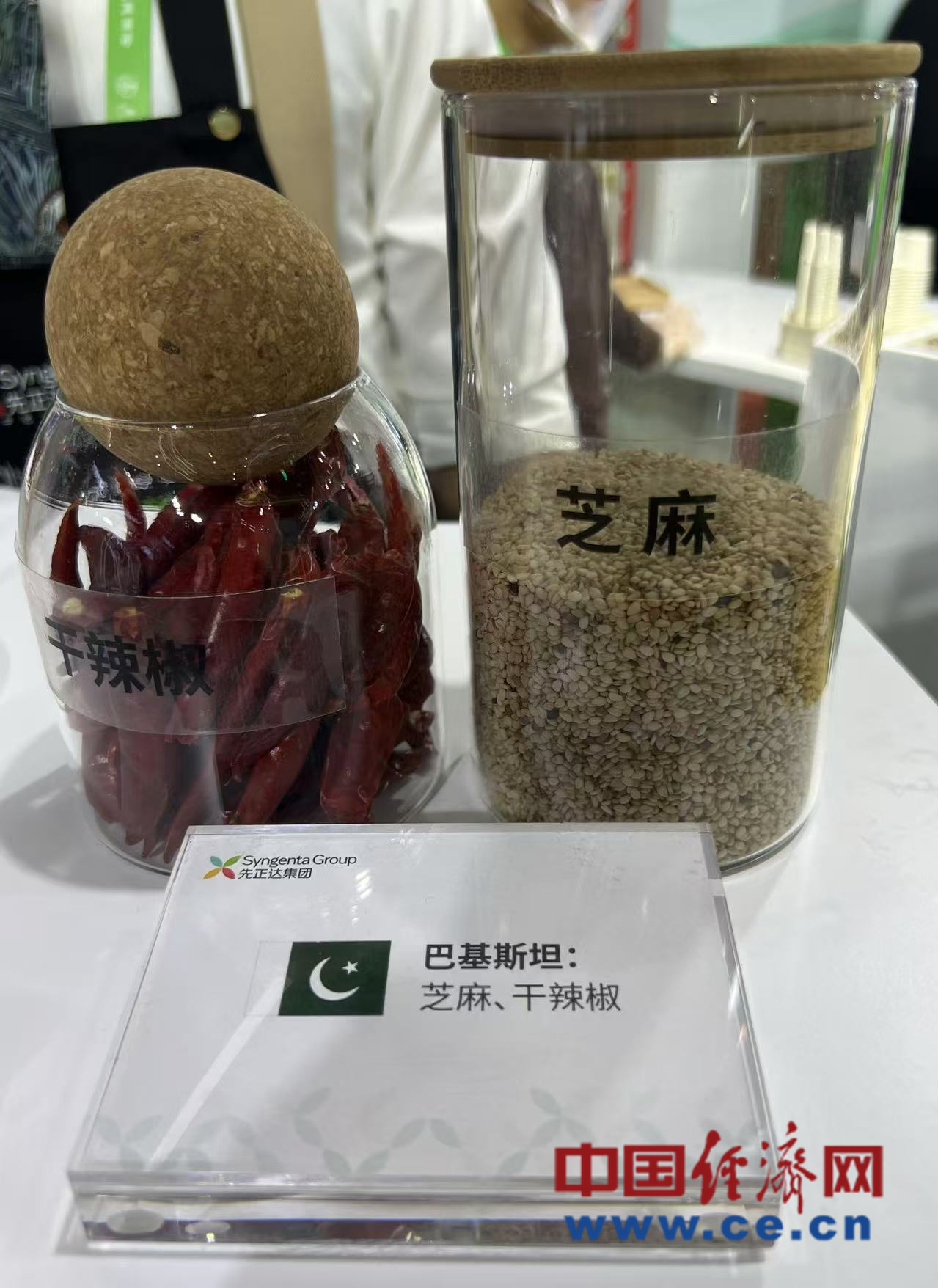
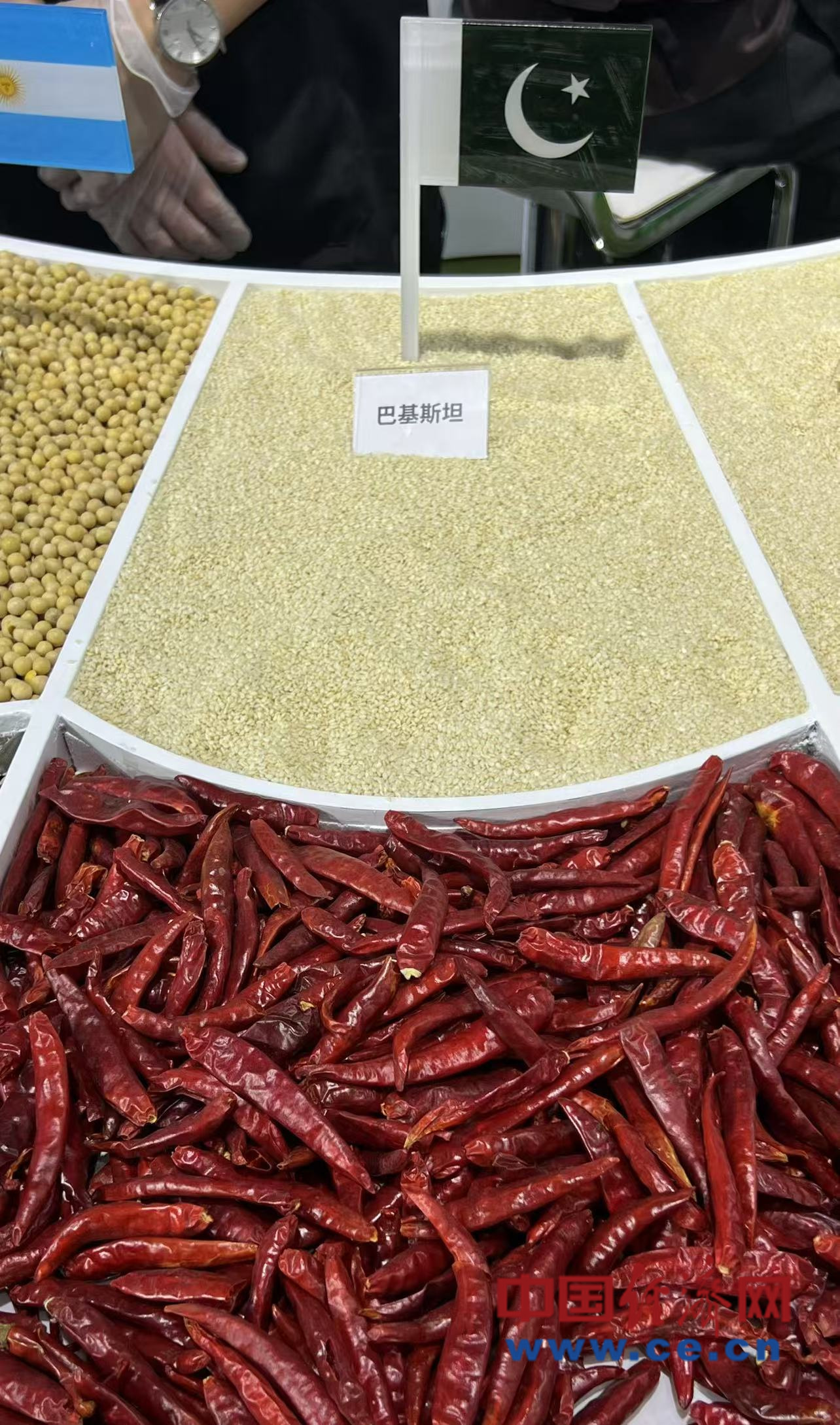
Global agritech company devotes to optimize China-Pak agriculture coop model :2024 CISCE


Pakistani sesame and peppers on display [Photo provided to CEN]

Other than the steadily advancing sesame project, Pakistani chilis have also emerged as an agricultural product favored by Chinese consumers. “Syngenta is exploring collaborations with Chinese companies for potential chili contract farming in Pakistan. The initiative aims to develop varieties suited to Chinese tastes, with the goal of enhancing agricultural supply and value chain resilience.” the staff introduced, pointing to the Pakistani dried chilis on the booth.

“During this process, we are devoted to boost the interests of local farmers and promote the upgrading of the global agricultural supply chain.”
 

Chinese company to set up plant in Punjab to manufacture robotic agricultural tools​


December 10, 2024


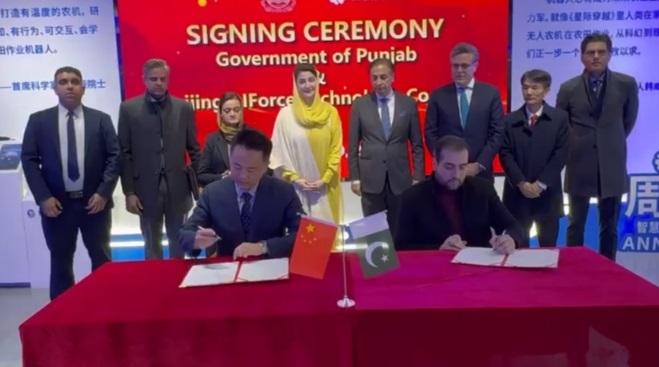
A Chinese company has announced plans to establish a manufacturing plant in Punjab for producing robotic agricultural equipment, marking a significant step in the province’s adoption of modern farming technologies.

The announcement was made during Punjab Chief Minister Maryam Nawaz’s ongoing visit to China.

On the first day of her visit, a Memorandum of Understanding (MoU) was signed between the Punjab Agriculture Department and China’s AI Force Tech. The MoU outlines the collaboration for the development and production of robotic equipment aimed at enhancing agricultural efficiency in the region.

Chief Minister Maryam Nawaz witnessed the MoU signing and expressed her government’s full support for the establishment of the robotic plant. The move is expected to modernize the agricultural sector in Punjab, improve productivity, and help address challenges faced by farmers in the province.

The Punjab Chief Minister inspected advanced robotic agricultural machinery and tools and reaffirmed her commitment to introducing such innovations in the province’s agriculture sector.

Maryam Nawaz stated on the occasion, “Our commitment is to ensure the prosperity of farmers by adopting modern technology in the agriculture sector.”

She added that AI Force Tech will establish a robotic agricultural equipment manufacturing plant in Punjab. In this regard, a delegation from AI Force Tech will soon visit Punjab at the invitation of the Chief Minister.
 
The International Monetary Fund (IMF) has again asked Pakistan to submit a plan for orderly transition from the agricultural support price mechanism to market-determined rates of commodities aimed at preventing farmers from losses and supply chain disruption.

In the absence of any such plan, there is a policy paralysis and no decision has been taken on the quantum of maintaining the strategic reserves of wheat.

The global lender inquired about the agricultural transition plan late last month during a virtual meeting, two months after the deadline to prepare and submit the plan lapsed, according to the government sources.

The plan had to be submitted by the end of September 2024 but so far the Ministry of National Food Security and Research has not submitted any such document, according to sources in food and finance ministries.

However, the food ministry has prepared a brief for provinces, where it emphasised the need for maintaining strategic reserves but there is no consensus that could determine the volume of reserves and give farmers a plan to deal with the end to the support price mechanism.

Sources said that the IMF held a virtual meeting three weeks ago and inquired about the plan. It also emerged that during talks for the $7 billion loan programme, the food ministry had certain reservations about ending the current agricultural policies. But those views were overruled and Pakistan signed the loan agreement. It is now bound to meet the agreed deadlines.
 
Pakistani authorities also held internal discussions last week to discuss the challenges being faced in smooth implementation of the IMF programme. The issue of submitting the transition plan was also discussed.

The government last week transferred National Food Security Secretary Ali Tahir without attributing any reason, just three months after his posting. Prime Minister Shehbaz Sharif has been frequently transferring the food secretary after assuming the office.

Sources said that during the IMF meetings, the mission chief raised questions about the transition plan and building strategic reserves in case Pakistan Agricultural Storage and Services Corporation (Passco) was closed down.
 

Punjab farmers to receive subsidised agri machinery

Recorder Report

6767136191be6.jpg


LAHORE: The Punjab Agriculture Department announced that farmers will receive agricultural machinery and equipment worth billions of rupees at a 60% subsidy under the chief minister’s mechanized farming program. Individual farmers can avail subsidies of up to PKR 500,000.

To ensure transparency, district-level balloting is being conducted in the presence of elected representatives based on allocated quotas for each district. Today, a balloting ceremony was held in Multan to select farmers for

subsidized agricultural machinery.

Out of 305 applications received from farmers at nine centers in Multan district, 238 qualified for the subsidy. Through a transparent lottery process, 27 farmers were selected to receive the subsidized machinery.

Former member of the Provincial Assembly (MPA), Rana Ejaz Ahmed Noon, attended the Multan event as the chief guest. He stated, “the Transforming Punjab Agriculture Plan, launched by Chief Minister Maryam Nawaz Sharif, is a revolutionary initiative to enhance crop productivity through mechanized farming. This subsidy program demonstrates the Punjab government’s commitment to supporting farmers.”

Noon emphasized that mechanized farming will significantly improve agricultural efficiency by enabling farmers to perform tasks like land preparation and harvesting more effectively and timely.

Director of Agricultural Engineering, Haris Abdullah, informed that successful applicants can choose their preferred agricultural implements or machinery.
 

An exercise in fairness — revamping agri tax

Aijaz A. Nizamani
December 23, 2024

Modern states finance social services for their citizens by collecting taxes. The states that collect taxes while balancing economic growth and redistribution can serve their citizens for their welfare.

This category of countries can also meet the people’s security and development goals. Unfortunately, Pakistan has one of the lowest tax-to-GDP ratios in the world, less than 10 per cent and thus, unsurprisingly, some of the worst social indicators regarding human development.

Ideally, all sectors of the economy, ie manufacturing, services and agriculture, need to be taxed equally, but this doesn’t happen in the political nature of the economies. In our case, the result is that the manufacturing sector bears the bulk of the tax burden and contributes 60pc of taxes while its share of economic activity is only around 20pc.

Given our large fiscal deficit, the tax on agriculture is inevitable. The recent legislation in Punjab has done away with the exemptions that many people, I believe in the industry, have been using to park their incomes as agricultural income to avoid taxes.

The question is, what will be the modus operandi for revamping the agriculture tax collection?

The collection of agricultural revenue is over a century old, and the process is entirely manual, with lower revenue officials negotiating the amounts with farmers to achieve targets set by senior officials of the Board of Revenue. The senior officials, on their part, have been content with the bottom line of “achieving the target” without bothering with the ‘how’ part of the operation.

Hypothetically speaking, a farm may be 100 acres with 10 family members each holding 10 acres and would be shown in the data as ten ‘small’ farms

Pakistan’s documented economy is nearly $300 billion, and its agricultural contribution is around 22pc of the pie. Some foolishly argue that agricultural income tax collection should be proportionate to its size in the GDP.
 
Pakistan has around 8.26 million farms with a total area of 21.41m hectares and a cultivated area of 17.24m hectares with an average cultivated farm size of 2.1 hectares. The farm size data shows that 78pc farms are less than five hectares. The question would be, do they make enough money to be taxed?

The 2023 wheat crop was devastating in terms of the prices farmers got, and cotton was also severely impacted by unprecedented heat waves. Reports for current rice crop prices are also not encouraging as prices being attained by farmers are 25-30pc of last year’s prices.

Regarding the farm size debate, one thing no one has understood in Pakistan is that the area shown as farm size in government statistics is the farm shareholding, not the actual size of a farm. Hypothetically speaking, a farm may be 100 acres with 10 family members each holding 10 acres and would be shown in the data as ten “small” farms rather than one 100-acre farm.

This is going to be a challenge, and the government, with its manual ways of working, has no answer to this issue, and people will avoid tax falsely claiming the small nature of their farms.
 

Beyond the boom: Pakistan’s food export conundrum​

Despite a historic surge in FY23-24, longstanding issues raise questions about whether export success can be sustained

By Imdad Hussain |
December 22, 2024

KARACHI: Muhammad Arshad, a seasoned finance professional, barely had time to celebrate when his company received a multi-million-rupee order for meat exports – the biggest deal of his career. As the company’s finance and operation manager, he was thrilled with the opportunity and quickly mobilised his staff. But what followed was a crash course in the harsh realities of Pakistan's export infrastructure.

Securing enough livestock to fulfill the order became a major challenge first; he had no option but to rely on traditional, often chaotic animal markets due to Pakistan's lack of organised farming infrastructure. While Arshad managed to gather the necessary animals despite the challenges, his problems, unfortunately, did not just end there.

“When we added up the actual costs of transportation and everything else, we realised that the profit would be much lower than expected,” Arshad shared. “So we had to stop exports in January 2024.”

Untapped potential

Though the 2023-24 fiscal year saw Pakistan’s meat exports to the Middle East soar as high as $430.89 Million, the country has yet to harvest the sector’s full potential. The exports to the region can amount to $3 billion, according to the Dr M. Akram, the Husbandry Commissioner at the Ministry of Food Security. “They could be even higher, if issues of supply chain, farms, standards and others are addressed properly,” he said.

The struggle Arshad’s company faced is not isolated incident; it reflects a broader set of challenges that are hindering Pakistan’s food export sector from reaching its real potential. Federation of Pakistan Chamber of Commerce and Industry (FPCCI) Chairman Karim Aziz Malik pointed out that several food exporters have had to cut back on exports lately. Rising business costs and other factors are hurting their profit margins, he explained. “The export businesses will struggle if the infrastructure doesn’t improve. Unclear rules and regulations, along with poor infrastructure, could really slow things down.”
 
The 2023-24 boom

The challenges faced by businesses might make someone think things are looking bleak, there is still a surprise in store – Pakistan’s food exports are booming like never before. In 2023-24, Pakistan’s food exports saw historical high surge, hitting a staggering $8 billion, a massive 37 per cent increase over the previous year.

Astonishingly, the country exported a whopping $2.36 billion worth of food products in the first four months of this year by itself, according to Pakistan Bureau of Statistics (PBS). Rice alone brought in whopping $4 billion in 2023-24.

The year’s remarkable figures, driven by demand from diverse markets in Europe, China the Middle East and Africa, indicate a promising future for Pakistan’s food exports. Particularly exciting to see are Pakistani sesame seeds gaining popularity in China and other parts of the world with the country’s growing presence in the Middle East, Western Africa and Europe.

Nevertheless, it is paradoxical that despite ongoing issues and some dissatisfaction among exporters, food exports reached a record high. Several key factors played a role in this unexpected success story, including strategic government initiatives and a favourable marketplace, though threats exist that could potentially disrupt the growth momentum and prevent the industry from reaching its potential if issues on the ground are not addressed timely.

According to one commerce ministry official, to boost the exports further, the National Logistic Cell has improved its network for accessing CARS and Russian market. “Agro products are reaching to CARS, Afghanistan and Russia through this improved network connection,” he said. The government is also trying to explore a new trade route via Russia to Eastern European countries.

“[Besides other steps] we opted for effective marketing strategies to boost exports as well,” said Athar Khokar, the Director General Agro-Food at the Trade Development Authority of Pakistan (TDAP). TDAP facilitated the participation of exporters in international exhibitions –

last year, 164 exporters participated in 17 exhibitions in different parts of the world. It also facilitated visits of exporters to different parts of the world and created opportunities where buyers in large numbers could interact with Pakistani exporters.

Documents also reveal efforts of the TDAP and the government for product development through seminars and training in different parts of the country to meet criteria for exports. The TDAP senior official noted that some new countries for food export are being targeted after analysing their market needs. For example, Indonesia, Philippines, African Countries, EU, KSA, and Central Asia are being focused as destinations for rice, while fisheries exports are being made to China, Thailand, EU, US and UK, he said.

An official in the commerce ministry, on condition of anonymity, said special marketing initiatives were launched in China for sesame and the seed is now being exported to China, EU and South Korea.
 
How the opportunity arose?

With all those efforts, it is important to acknowledge the impact of international factors and growing conditions as well. First, India’s decision to restrict some food exports to stabilise prices in their own country, along with their non-compliance with international standards and the restrictions imposed by EU on their some products, unintentionally created an opportunity for Pakistani food products like rice and onion to gain a larger share of the global market.

Detection of pesticide residues in Indian products were reported as Indian shipments did not comply with the maximum residue limits (MRLs) — the permissible thresholds for pesticides — set by the EU. India’s shipments had a relatively higher non-compliance rate compared to that of Pakistan, two years back. In addition, the crisis in Ukraine also caused interruption in supplies from that region that created an opportunity for the surge in Pakistani agro-food exports. Internally, production in Pakistan this time was far better in rice and other products too.

The US Department of Agriculture (USDA) forecasted that Pakistan's milled rice production will increase 64 per cent to nine million metric tonnes (MT) in 2023–24. Fortunately, the actual production was slightly more than that estimate.
 
Can the success be sustained?

Yet, people who closely follow Pakistan’s exports are skeptical about whether the country can sustain the recent growth. How Pakistan can reach its ambitious goal of $25-30 billion in the next few years?

The answer is not simple as India has started improving things and decided to recapture the market by lifting limitations on its food exports. This year, rice shipments from Pakistan have triggered more alerts relating to the MRLs than those from India as well.

Dr. Abid Qaiyum Suleri, a researcher on food security and development and an executive director at SDPI, said that to improve food exports, Pakistan needs better arrangements for raw materials and value added products. “We don’t have such arrangements here. Also, the government should allow agents and also focus on quality and quantity to meet international standards.” Experts say it will take major effort to develop the infrastructure for food exports. According to them, this means Pakistan is far from reaching its full potential in food exports.

Some of the experts think that India’s decision to remove cap on its rice exports could significantly reduce Pakistan’s current exports. Karim Aziz Malik asked, “Can Pakistan sustain its $4 billion in rice exports? We can not compete with India’s non-basmati rice as it is $100 per tonne cheaper than ours. Now they have decided to increase export of the rice. Is it difficult to predict as what effect it would have on our total rice export?”

According to him Pakistan cannot hope for the best until prices of electricity and fuel are reduced for consumers in the country, interest rate is brought down to single digit, and basic issues are addressed, including tax structure for exporters.

Analysts maintain that at the movement, Pakistan cannot ignore conditions imposed by IMF and decisions on issues like tax relaxation are unlikely. Moreover, the Pakistani export sector is facing long-standing challenges – such as effective supply chain, storage facilities, farming and technology and others – that are hindering its growth.

Pakistan has been a top rice exporter for decades but even its rice industry faces basic issues. This raises questions the state of other export sectors. Rice Exporters Association of Pakistan (REAP) Senior Vice Chairman Muhammad Jawed Jilani said they have recently discussed some issues with TDAP, whose officials vowed to address their difficulties.

In November a delegation from REAP, met with TDAP officials, raising concerns about export challenges, particularly related to storage, infrastructure, logistics and supply chain inefficiencies. The rice exporters also demand streamlining export processes and role of technology for competitiveness and enhancing quality. TDAP’s DG Agro-Food, when asked about REAP’s recommendations, said, “We are planning to involve all major stakeholders linked to logistic network for improving our valuechain”.

However, experts agree that the problems REAP raised have been around for decades and should have should have been fixed a long time ago. They maintain that successful exports need an established industry and investor-friendly environment. The situation in the rice industry is a sign that other parts of the export sector could be in even worse shape.

An exporter on condition of anonmity, shared that besides other issues sometime operational efficiency also become a problem. “To reach the real potential in agro-food export, we need modern farming practices and digital tools besides addressing the basic issues in the sector”, he said.

The concerned officials in the Ministry of Commerce were not available to comment on how the government plans to address the basic issues in food export. On future activities for promotion of Pakistani food products, TDAP’s DG Agro-Food said his organisation intends to participate in 27 major food exhibitions to showcase Pakistani products.

Imdad Hussain is a freelance journalist and contributor
 

‘Punjab meets wheat sowing target’​

Dawn
Dec 24, 2024

Punjab Agriculture Minister Syed Ashiq Hussain Kirmani on Monday claimed the province has achieved nearly 99 per cent of the wheat sowing target set for the current season.

The provincial government had set a target of cultivating wheat on 16.5 million acres, he said, adding that wheat had already been sown on 16.25m acres according to the data provided by the agriculture department.

In a statement regarding wheat cultivation, the minister attributed this success to the farmer-friendly initiatives of Chief Minister Maryam Nawaz as under her leadership, several schemes such as Kissan Card and the Green Tractor Programmes were launched for the benefit of agriculturists.

He said Kissan Cards were provided to farmers owning up to 12.5 acres of land. He added that 1,000 laser-levellers of land would be distributed through a transparent balloting among the growers who had sown wheat on land between 12.5 and 25 acres.

Similarly, 1,000 tractors would be given free of cost through transparent balloting to the farmers with over 25 acres of wheat cultivation land.

During the cultivation, adequate availability of DAP and urea was being ensured and the inputs were being offered at lower prices.

The price of Punjab Seed Corporation’s wheat seed bags has been reduced from Rs6,300 to Rs4,500 per bag, he concluded.
 
Helping farmers get rich and stay rich was one early step Scandinavia did to create a foundation in which they created a sustainable economy. How? By allowing farmers to keep what they produce (not selling it to the local lord or the government) and having the farmer sell it for the highest price.

Creating the right mechanism that gamers reinvest into their farmers and the taxes farmers pay help fund the infrastructure to bring the services farmers need to do their work.

If farmers can get the most for their crops then they will have incentive to reinvest to maximize yields.

What we have to figure out as well is how will average people afford the higher prices. If only the economy grows and these regular workers can get good jobs or sell products to the world market.

Also as 60% of the population lives in rural areas, we have to look at expanding arable land and finding a way for people without their own land to get a piece of the new farm land. We have to save the 30% of farm land being lost to salinity.
 
Last edited:

ADB urges steps for sustainable agri growth


Amin Ahmed
December 29, 2024

ISLAMABAD: A recent study by the Asian Development Bank (ADB) has pointed out several policy measures necessary to promote sustainable agricultural development and improve farm performance in Pakistan.
 

Users who are viewing this thread

Pakistan Defence Latest

Country Watch Latest

Latest Posts

Back
Top