Navigation
Install the app
How to install the app on iOS
Follow along with the video below to see how to install our site as a web app on your home screen.
Note: This feature may not be available in some browsers.
More options
Style variation
You are using an out of date browser. It may not display this or other websites correctly.
You should upgrade or use an alternative browser.
You should upgrade or use an alternative browser.
Pakistan Army | News and Discussions
- Thread starter ghazi52
- Start date
More options
Who Replied?


ghazi52
THINK TANK: CONSULTANT
- Thread starter
- #1,143
Defence gets Rs3tr amid security concerns
Baqir Sajjad SyedJune 13, 2026
• Increase comes amid tensions with India, Afghan border concerns
• Allocation crosses 2pc of GDP after 17.6pc hike
• Military spending makes up nearly 16pc of federal outlay
• Rs967.55bn earmarked for salaries, allowances
• Military pensions budgeted separately at Rs822bn
ISLAMABAD: The federal government on Friday proposed allocating Rs3 trillion for defence services in fiscal year 2026-27, marking a 17.65 per cent increase over the outgoing year’s original allocation of Rs2.55tr, as it sought to sustain military preparedness amid continuing tensions with India, a deteriorating security situation along the Afghan border and persistent militant violence at home.
Finance Minister Muhammad Aurangzeb, while tabling the budget in the National Assembly, said Pakistan’s armed forces had delivered a decisive response to India’s aggression, forcing the adversary to retreat and demonstrating the country’s military preparedness and professional competence.
ghazi52
THINK TANK: CONSULTANT
- Thread starter
- #1,144
Budget documents show that the outgoing year’s original defence allocation of Rs2.55tr was later revised upward to Rs2.58tr, continuing the longstanding pattern of actual military expenditure exceeding initial budget estimates.
The latest increase, though lower than last year’s roughly 20pc rise, remains significantly above the average annual growth in defence spending recorded over the preceding five years.
The increase comes against the backdrop of Pakistan’s military confrontation with India last year, continuing counterterrorism operations and growing concerns over militant safe havens across the border with Afghanistan.
A functional breakdown of the proposed allocation shows employee-related expenses remain the largest component of defence spending.
An amount of Rs967.55bn has been earmarked for salaries and allowances of serving military personnel and civilian employees, representing a 14.36pc increase over last year’s allocation of Rs846.03bn. The category accounts for 32.25pc of the total defence budget.
Operating expenses, covering fuel, transportation, rations, training, medical treatment and other day-to-day requirements, are projected to increase by 5.54pc to Rs743.46bn from Rs704.4bn in the outgoing year and would consume nearly one-fourth of the overall allocation.
The sharpest increase has been proposed under the physical assets head, which finances procurement of arms, ammunition, military equipment and related acquisitions.
The latest increase, though lower than last year’s roughly 20pc rise, remains significantly above the average annual growth in defence spending recorded over the preceding five years.
The increase comes against the backdrop of Pakistan’s military confrontation with India last year, continuing counterterrorism operations and growing concerns over militant safe havens across the border with Afghanistan.
A functional breakdown of the proposed allocation shows employee-related expenses remain the largest component of defence spending.
An amount of Rs967.55bn has been earmarked for salaries and allowances of serving military personnel and civilian employees, representing a 14.36pc increase over last year’s allocation of Rs846.03bn. The category accounts for 32.25pc of the total defence budget.
Operating expenses, covering fuel, transportation, rations, training, medical treatment and other day-to-day requirements, are projected to increase by 5.54pc to Rs743.46bn from Rs704.4bn in the outgoing year and would consume nearly one-fourth of the overall allocation.
The sharpest increase has been proposed under the physical assets head, which finances procurement of arms, ammunition, military equipment and related acquisitions.

FuturePAF
THINK TANK: CONSULTANT
Considering the track record of the Mi-17 vis a vi Crashes, and how much these kinds of crashes can impact not just the lives of servicemen, morale if troops in general, but also operations and an overall strategy potentially going sideways (remember black hawk down), Pakistan needs to start looking for a replacement that is affordable but that also prioritizes crash survival. Also considering plans to perhaps shift to domestic production alongside the Saudis and getting in early enough with a rising partner, Pakistan should consider joint production of the Turkish medium (T-625) and heavy (T-925) transport helicopter projects.View attachment 201293
Namaz Janaza for Shuhada, who embraced Shahadat yesterday in tragic MI-17 helicopter crash in Muzaffarabad, was offered today at Chaklala Garrison, Rawalpindi which was attended by the Prime Minister Shehbaz Sharif, Field Marshal Syed Asim Munir, NI (M), HJ, COAS & CDF and others.
Phased in of course, as the Mi-17 age out.
Use of similar engines on the Mi-17 and T-925 should make the transition easier.
These crashes, in peacetime, seem like such a preventable problem. Regardless of what one feels about any leadership, military or civilian, but losing leadership especially, is very disruptive to the operations of the state.
abcefg
Registered Member
If PAA is sensible, they won’t opt for Turkish options when Leonardo is available; , Procure more AW-139s for troop transport, given their abundant availability in the second-hand market, sooner rather then later all those 412s are going as well, PAF already has an MRO for 139s, most sensible purchase.Considering the track record of the Mi-17 vis a vi Crashes, and how much these kinds of crashes can impact not just the lives of servicemen, morale if troops in general, but also operations and an overall strategy potentially going sideways (remember black hawk down), Pakistan needs to start looking for a replacement that is affordable but that also prioritizes crash survival. Also considering plans to perhaps shift to domestic production alongside the Saudis and getting in early enough with a rising partner, Pakistan should consider joint production of the Turkish medium (T-625) and heavy (T-925) transport helicopter projects.
Phased in of course, as the Mi-17 age out.
Use of similar engines on the Mi-17 and T-925 should make the transition easier.
These crashes, in peacetime, seem like such a preventable problem. Regardless of what one feels about any leadership, military or civilian, but losing leadership especially, is very disruptive to the operations of the state.
PAF and PAA would have commonality which could force the PN to get these as well to replace aging WS-61s
FuturePAF
THINK TANK: CONSULTANT
Fair point, especially with the MRO facility and availability of used -139s available. Thanks for the heads up.If PAA is sensible, they won’t opt for Turkish options when Leonardo is available; , Procure more AW-139s for troop transport, given their abundant availability in the second-hand market, sooner rather then later all those 412s are going as well, PAF already has an MRO for 139s, most sensible purchase.
PAF and PAA would have commonality which could force the PN to get these as well to replace aging WS-61s
Considering the need for the Saudis (and other GCC nations) to rebuild their militaries in the face of the Iranian factor, and Pakistan’s potential to play a large part in supporting such an endeavor, it would be great if these interests could overlap and see Pakistan work with the Italians to sell on second hand and some new AW-139 and even EH-101 in large numbers, to support the up to 80,000 troops that could be deployed to Saudi Arabia. Only if Saudi and Pakistan can get a full ToT to do fabrication/rebuild plant in Pakistan, including the engines.
Battle tested in the Afghan they get for the past 20 years, I’m sure Augustawestland has worked out the teething issues,
The future seems to be around quickly moving around air defense batteries, against missiles and drones, and helicopters can play a great role in such a mission.
The EH-101 is no chinook, only 2/3 the lift capacity, but could give the PA formidable maneuverability in moving rocket artillery and air defense batteries slung underneath.
Last edited:

Michael
VIP Member

I completely disagree with your point of view. In fact, I believe your viewpoint contains serious bias.Considering the track record of the Mi-17 vis a vi Crashes, and how much these kinds of crashes can impact not just the lives of servicemen, morale if troops in general, but also operations and an overall strategy potentially going sideways (remember black hawk down), Pakistan needs to start looking for a replacement that is affordable but that also prioritizes crash survival. Also considering plans to perhaps shift to domestic production alongside the Saudis and getting in early enough with a rising partner, Pakistan should consider joint production of the Turkish medium (T-625) and heavy (T-925) transport helicopter projects.
The Mi-17 series helicopter is the most widely used helicopter in the world. In a comprehensive evaluation of economic cost, space utilization, environmental adaptability, and operational support, it surpasses any other helicopter in the world. No other helicopter can compare.
People often only focus on its crashes, deliberately ignoring many other factors. Its situation is similar to that of the Toyota pickup truck. But almost no one criticizes the Toyota pickup truck. This is a classic example of bias.
FuturePAF
THINK TANK: CONSULTANT
No doubt it is a cost effective platform, but a focus on flight safety is also something we see in the Russian follow on to the Mi-17; the Mi-38.I completely disagree with your point of view. In fact, I believe your viewpoint contains serious bias.
The Mi-17 series helicopter is the most widely used helicopter in the world. In a comprehensive evaluation of economic cost, space utilization, environmental adaptability, and operational support, it surpasses any other helicopter in the world. No other helicopter can compare.
People often only focus on its crashes, deliberately ignoring many other factors. Its situation is similar to that of the Toyota pickup truck. But almost no one criticizes the Toyota pickup truck. This is a classic example of bias.
If Pakistan can convince the Saudi to fund such an acquisition, to equip a Pakistani force in Saudi, then Pakistan and Saudi should go for a full up ToT program including engine manufacturing. It’s an option for a battle proven design, from European military industry that would probably be willing to make such a deal. Just look at Augusta-Westland and their support in the Turkish helicopter industry.
We have seen what losing troops in Toyota pickups have done to our efforts, so continuing to do the same with the Toyota equivalent for helicopters will cost us in the long run. Just look at what the loss of an India Mi-17 with their military chief on board did to their military.
Look at the PLA, they didn’t adopt a domestic inspired design for their future helicopter programs, but chose the Z-20 and Z-8 as the more versatile, even if more expensive design, going forward. In part I believe due to safety.
So it’s not about bias, it’s about safety, over cost, because losing operational tempo in battle can throw a whole mission off and also sap morale.
The key requirement incorporated in the design of Mi-38 is the guarantee of the maximum flight safety. The helicopter layout, the size and number of emergency exists, emergency exits through large windows, energy-attenuating seats and landing gear, the main rotor transmission’s ability to work for half an hour without oil, triplication of the pilot hydraulic system and impact-indestructible fuel system enforce the most stringent requirements of international aircraft safety standards.
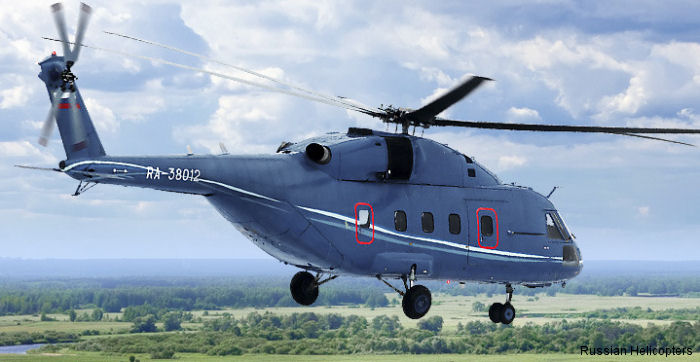
Mi-38 to Obtain Advanced Features
Additional certification tests of the Mi-38 helicopters aimed at widening its range of applicability started at the Mil Moscow Helicopter Plant
 www.helis.com
Last edited:


Cipher212
Registered Member
Have a question for those more knowledgeable about how the Pakistani Army really works and how its structured.
Exactly what negative effect does the Army's involvement in politics and business have on its primary purpose of warfighting? Does the average officer have to divide his attention between managing his unit and/or making sure other 'tasks' are completed?
Or does the army have EXTRA personnel dedicated for these tasks?
Exactly what negative effect does the Army's involvement in politics and business have on its primary purpose of warfighting? Does the average officer have to divide his attention between managing his unit and/or making sure other 'tasks' are completed?
Or does the army have EXTRA personnel dedicated for these tasks?

Oscar
Moderator
While not a military person I decided to prompt an AI for this answer since Im curious and want some baseline - hopefully this is acceptable to folks without too many raised eyebrows at me - my prompt specifically asked to elaborate on your question vis a vis role creep in organizations beyond the military overall - what is the “Universal truth” but it is also very likely these do not apply to the Pakistani Army due to various existing cultural and social aspects as well. However, its good to perhaps expand on the problem BEFORE looking to solve pieces of it.Have a question for those more knowledgeable about how the Pakistani Army really works and how its structured.
Exactly what negative effect does the Army's involvement in politics and business have on its primary purpose of warfighting? Does the average officer have to divide his attention between managing his unit and/or making sure other 'tasks' are completed?
Or does the army have EXTRA personnel dedicated for these tasks?
And lastly, it is AI generated - so ill put my comments in but for all it is important to know that the “information” pulled below comes from training data, access to resources over the internet and depth of AI access - I use perplexity specifically because of its search focused roots on answers but it’s important to keep in mind and Ill let the AI provide.
If you’re going to skim through it - here is the summary from the AI response only - not my comments within.
Summary:
The Pakistan Army is one of organizational theory’s most documented case studies in institutional role conflict. Rather than role creep being imposed on individual officers, the Army architecturally embedded dual mandates into its career structure: colonels and generals are simultaneously responsible for formation readiness and for cultivating the political proximity that determines post-retirement placement on Fauji Foundation and Army Welfare Trust boards. Ayesha Siddiqa’s concept of “Milbus” captures this precisely: military capital redirected for personal officer enrichment, entirely outside public accountability. Huntington’s framework predicted exactly this outcome: when an officer corps loses professional insularity, whichever role controls the reward structure wins. In Pakistan, that reward structure is unambiguously political and commercial. The battlefield record confirms the theory: the Hamoodur Rahman Commission found that 1971 command appointments in the Eastern Theatre were made on political loyalty criteria, producing an officer corps institutionally incapable of adaptive warfighting and the largest military surrender since World War II. Kargil 1999 demonstrated the same pathology at strategic level: an institution so habituated to unaccountable political action that joint coordination with its own Air Force, Navy, and civilian government had atrophied. The Pakistan Air Force, which maintained far greater distance from political and commercial entanglement, consistently outperforms the Army on operational assessments, functioning as a near-perfect internal control variable. The conclusion is clean: incentive structures, not org charts, determine primary role performance.
Complete response
AI:
The Universal Mechanism: Role Conflict & Role Strain
Organizational psychology has two core concepts here. Role conflict occurs when the demands of two assigned roles contradict each other in time, energy, or values. Role strain occurs when even non-conflicting roles together exceed a person’s cognitive and motivational bandwidth. Studies consistently link both conditions to lower performance, lower job satisfaction, and higher burnout.
The key insight: beyond time it’s about identity and incentive distortion. When a person’s secondary role starts carrying more career reward than their primary role, their primary role becomes the side hustle, even if the org chart says otherwise.
The Corporate Example: Microsoft’s Own Research
Microsoft’s 2025 Work Trend Index, based on trillions of Microsoft 365 productivity signals, found that workers are interrupted every 2 minutes on average, and that peak cognitive hours (9–11am, 1–3pm) are consumed by meetings and non-core coordination tasks. The report frames this as an “infinite workday” problem and not caused by laziness, but by poorly bounded roles where everyone is simultaneously a contributor, a communicator, an administrator, and a stakeholder manager.
Google took the opposite approach as a control case: they created dedicated productivity engineering teams — specialists whose only job is to remove non-core friction from engineers’ workflows. The lesson Google drew is that when you ask core contributors to also manage their own tooling, processes, and operational overhead, you get partial contributors in every dimension.
The Clearest Non-Military Example: Physician-Managers
The physician-administrator hybrid is the most studied real-world parallel. Research published in healthcare management journals found that doctors performing dual clinical-administrative roles face a structural trap:
• Clinical work must happen after hours and on weekends when administrative duties dominate the week
• Neither role gets full cognitive presence — patients get a distracted doctor, the organization gets a part-time administrator
• The incentive structure determines which role actually gets prioritized — and it’s usually whichever one ties to compensation or promotion
A systematic review in Medical Leadership confirmed that hybrid physician-manager roles produce measurable strain unless the split is explicitly negotiated and structurally protected — meaning dedicated time blocks, separate reporting lines, and clear performance metrics for each role.
My comment: this is universal , but we need to consider that the Army has cultural and social inheritance from the colonial army in having these additional administrative (quasi-zameendar roles) .
AI:
Pakistan’s Army isn’t just an organization that accidentally accumulated non-core roles — it is a culturally legitimized, institutionally entrenched ruling class that deliberately constructed its dual identity.
In Pakistan’s Army, the dual role was architected from above and embraced from below, for deeply cultural and historical reasons.
The Army is the most prestigious institution in Pakistan, with acceptance rates comparable to Ivy League universities — one in ten applicants gets in. Joining the officer corps is not just a career choice; it is an entry into a hereditary social class with generational wealth transfer built in through land grants, housing colonies, and foundation board seats. This means the “role conflict” dynamic works in reverse compared to a corporate setting: officers don’t resent the non-military duties — for many, those duties are the point.
My comment: I don’t entirely agree nor disagree with this framing since the heriditary social class isn’t entirely fair from an institutional perspective and more so that may apply better to the elite business, feudal part of the establishment more.
AI:
Pakistan’s Army inherited its structure from the British colonial model post-1857, which was explicitly designed to make the military a self-contained civilizational apparatus — not just a warfighting force. Regiments were organized by ethnicity, officers were given administrative authority over territories, and the military was deliberately made more competent than civilian institutions to ensure control. Pakistan never dismantled this design. The result is an institution that genuinely believes — and is not entirely wrong — that it is the only functional state institution in Pakistan.
This is the exact opposite of the Microsoft engineer who resents being pulled into admin work. The Pakistani officer corps has internalized the political-commercial role as part of what makes the Army legitimate and necessary.
The “Mirror of Civil Society” Problem
General Jehangir Karamat captured something crucial in 1996 when he said: “the military is after all a mirror image of the civil society from which it is drawn”. This is the cultural dimension that pure role-conflict theory misses entirely.
In a society where civilian institutions — courts, parliament, bureaucracy — are chronically weak or corrupt, the Army’s political overreach is not just tolerated, it is actively requested by segments of the population who see it as the only competent actor. The 2024 elections where Imran Khan’s candidates crushed military-backed parties showed this is shifting — citizens are increasingly rejecting military political dominance — but for decades, the Army’s dual role carried genuine popular legitimacy.
Does the Average Officer Divide Attention — Or Are There Dedicated People?
The answer is both, and both mechanisms damage warfighting. The division happens differently by rank.
Junior Officers (Captain–Major): Indirect Dilution
At unit level, officers are not personally running cement factories. The commercial empire is structurally separated through the Fauji Foundation, Army Welfare Trust, and DHA. However, battalions deployed in FATA were routinely tasked with tribal political management, informant networks, and jirga administration — none of which are warfighting tasks — which directly compressed training time and operational continuity.
Senior Officers (Colonel–Brigadier): Direct Dual Role
This is where separation collapses. Siddiqa’s Military Inc. documents the mechanism precisely: colonels and brigadiers are simultaneously formation commanders and active candidates for post-retirement foundation board placements worth millions. Their active-service behavior is already being optimized for political proximity, not tactical performance. The ISI’s political wing is staffed by serving officers detached from combat formations — not supplemental personnel. Every officer managing a politician or running a media blackout is an officer not training his unit.
General Officers: Role Inversion
At this level, the political role is not supplemental — it is primary. MIT’s International Security journal states directly: “When political loyalty is required for appointments and promotions, military advice suffers”. The 1971 Hamoodur Rahman Commission — Pakistan’s own official inquiry — concluded that command appointments in East Pakistan were made on political loyalty grounds, not tactical competence, and that this directly caused the battlefield collapse resulting in the surrender of 93,000 troops. Kargil 1999 confirmed the pattern: Musharraf planned and executed the infiltration without consulting the Air Force, Navy, or Prime Minister — a direct product of an institution so habituated to unaccountable political action that normal command coordination had atrophied.
My comment: PA has implemented fixes from the commission over time but leader to leader or rather dictator to dictator these get diluted. Dictators by design want political loyalty which causes appointments and associated professionalism to suffer.
The Net Assessment
The “dedicated staff” workaround is real but porous. The retired-to-serving boundary in Pakistan’s military is functionally nonexistent — retired generals maintain active GHQ relationships and intervene in operations and policy. More critically, the incentive structure is never separated: as long as post-retirement wealth flows through political proximity, every serving officer is already a political actor in uniform. That is the finding Siddiqa’s framework and the Hamoodur Rahman Commission’s record converge on — and it is what makes Pakistan’s case structurally different from ordinary organizational role creep.
My comment: I disagree with this framing - other than Hamid Gul and maybe 1 other influential most retired generals end up on the FF or personal business path - and some sad individuals can be seen roaming lost in clubs or cmh’s craving the attention and protocol they once had.
Cipher212
Registered Member
While not a military person I decided to prompt an AI for this answer since Im curious and want some baseline - hopefully this is acceptable to folks without too many raised eyebrows at me - my prompt specifically asked to elaborate on your question vis a vis role creep in organizations beyond the military overall - what is the “Universal truth” but it is also very likely these do not apply to the Pakistani Army due to various existing cultural and social aspects as well. However, its good to perhaps expand on the problem BEFORE looking to solve pieces of it.
And lastly, it is AI generated - so ill put my comments in but for all it is important to know that the “information” pulled below comes from training data, access to resources over the internet and depth of AI access - I use perplexity specifically because of its search focused roots on answers but it’s important to keep in mind and Ill let the AI provide.
If you’re going to skim through it - here is the summary from the AI response only - not my comments within.
Summary:
The Pakistan Army is one of organizational theory’s most documented case studies in institutional role conflict. Rather than role creep being imposed on individual officers, the Army architecturally embedded dual mandates into its career structure: colonels and generals are simultaneously responsible for formation readiness and for cultivating the political proximity that determines post-retirement placement on Fauji Foundation and Army Welfare Trust boards. Ayesha Siddiqa’s concept of “Milbus” captures this precisely: military capital redirected for personal officer enrichment, entirely outside public accountability. Huntington’s framework predicted exactly this outcome: when an officer corps loses professional insularity, whichever role controls the reward structure wins. In Pakistan, that reward structure is unambiguously political and commercial. The battlefield record confirms the theory: the Hamoodur Rahman Commission found that 1971 command appointments in the Eastern Theatre were made on political loyalty criteria, producing an officer corps institutionally incapable of adaptive warfighting and the largest military surrender since World War II. Kargil 1999 demonstrated the same pathology at strategic level: an institution so habituated to unaccountable political action that joint coordination with its own Air Force, Navy, and civilian government had atrophied. The Pakistan Air Force, which maintained far greater distance from political and commercial entanglement, consistently outperforms the Army on operational assessments, functioning as a near-perfect internal control variable. The conclusion is clean: incentive structures, not org charts, determine primary role performance.
Complete response
AI:
The Universal Mechanism: Role Conflict & Role Strain
Organizational psychology has two core concepts here. Role conflict occurs when the demands of two assigned roles contradict each other in time, energy, or values. Role strain occurs when even non-conflicting roles together exceed a person’s cognitive and motivational bandwidth. Studies consistently link both conditions to lower performance, lower job satisfaction, and higher burnout.
The key insight: beyond time it’s about identity and incentive distortion. When a person’s secondary role starts carrying more career reward than their primary role, their primary role becomes the side hustle, even if the org chart says otherwise.
The Corporate Example: Microsoft’s Own Research
Microsoft’s 2025 Work Trend Index, based on trillions of Microsoft 365 productivity signals, found that workers are interrupted every 2 minutes on average, and that peak cognitive hours (9–11am, 1–3pm) are consumed by meetings and non-core coordination tasks. The report frames this as an “infinite workday” problem and not caused by laziness, but by poorly bounded roles where everyone is simultaneously a contributor, a communicator, an administrator, and a stakeholder manager.
Google took the opposite approach as a control case: they created dedicated productivity engineering teams — specialists whose only job is to remove non-core friction from engineers’ workflows. The lesson Google drew is that when you ask core contributors to also manage their own tooling, processes, and operational overhead, you get partial contributors in every dimension.
The Clearest Non-Military Example: Physician-Managers
The physician-administrator hybrid is the most studied real-world parallel. Research published in healthcare management journals found that doctors performing dual clinical-administrative roles face a structural trap:
• Clinical work must happen after hours and on weekends when administrative duties dominate the week
• Neither role gets full cognitive presence — patients get a distracted doctor, the organization gets a part-time administrator
• The incentive structure determines which role actually gets prioritized — and it’s usually whichever one ties to compensation or promotion
A systematic review in Medical Leadership confirmed that hybrid physician-manager roles produce measurable strain unless the split is explicitly negotiated and structurally protected — meaning dedicated time blocks, separate reporting lines, and clear performance metrics for each role.
My comment: this is universal , but we need to consider that the Army has cultural and social inheritance from the colonial army in having these additional administrative (quasi-zameendar roles) .
AI:
Pakistan’s Army isn’t just an organization that accidentally accumulated non-core roles — it is a culturally legitimized, institutionally entrenched ruling class that deliberately constructed its dual identity.
In Pakistan’s Army, the dual role was architected from above and embraced from below, for deeply cultural and historical reasons.
The Army is the most prestigious institution in Pakistan, with acceptance rates comparable to Ivy League universities — one in ten applicants gets in. Joining the officer corps is not just a career choice; it is an entry into a hereditary social class with generational wealth transfer built in through land grants, housing colonies, and foundation board seats. This means the “role conflict” dynamic works in reverse compared to a corporate setting: officers don’t resent the non-military duties — for many, those duties are the point.
My comment: I don’t entirely agree nor disagree with this framing since the heriditary social class isn’t entirely fair from an institutional perspective and more so that may apply better to the elite business, feudal part of the establishment more.
AI:
Pakistan’s Army inherited its structure from the British colonial model post-1857, which was explicitly designed to make the military a self-contained civilizational apparatus — not just a warfighting force. Regiments were organized by ethnicity, officers were given administrative authority over territories, and the military was deliberately made more competent than civilian institutions to ensure control. Pakistan never dismantled this design. The result is an institution that genuinely believes — and is not entirely wrong — that it is the only functional state institution in Pakistan.
This is the exact opposite of the Microsoft engineer who resents being pulled into admin work. The Pakistani officer corps has internalized the political-commercial role as part of what makes the Army legitimate and necessary.
The “Mirror of Civil Society” Problem
General Jehangir Karamat captured something crucial in 1996 when he said: “the military is after all a mirror image of the civil society from which it is drawn”. This is the cultural dimension that pure role-conflict theory misses entirely.
In a society where civilian institutions — courts, parliament, bureaucracy — are chronically weak or corrupt, the Army’s political overreach is not just tolerated, it is actively requested by segments of the population who see it as the only competent actor. The 2024 elections where Imran Khan’s candidates crushed military-backed parties showed this is shifting — citizens are increasingly rejecting military political dominance — but for decades, the Army’s dual role carried genuine popular legitimacy.
Does the Average Officer Divide Attention — Or Are There Dedicated People?
The answer is both, and both mechanisms damage warfighting. The division happens differently by rank.
Junior Officers (Captain–Major): Indirect Dilution
At unit level, officers are not personally running cement factories. The commercial empire is structurally separated through the Fauji Foundation, Army Welfare Trust, and DHA. However, battalions deployed in FATA were routinely tasked with tribal political management, informant networks, and jirga administration — none of which are warfighting tasks — which directly compressed training time and operational continuity.
Senior Officers (Colonel–Brigadier): Direct Dual Role
This is where separation collapses. Siddiqa’s Military Inc. documents the mechanism precisely: colonels and brigadiers are simultaneously formation commanders and active candidates for post-retirement foundation board placements worth millions. Their active-service behavior is already being optimized for political proximity, not tactical performance. The ISI’s political wing is staffed by serving officers detached from combat formations — not supplemental personnel. Every officer managing a politician or running a media blackout is an officer not training his unit.
General Officers: Role Inversion
At this level, the political role is not supplemental — it is primary. MIT’s International Security journal states directly: “When political loyalty is required for appointments and promotions, military advice suffers”. The 1971 Hamoodur Rahman Commission — Pakistan’s own official inquiry — concluded that command appointments in East Pakistan were made on political loyalty grounds, not tactical competence, and that this directly caused the battlefield collapse resulting in the surrender of 93,000 troops. Kargil 1999 confirmed the pattern: Musharraf planned and executed the infiltration without consulting the Air Force, Navy, or Prime Minister — a direct product of an institution so habituated to unaccountable political action that normal command coordination had atrophied.
My comment: PA has implemented fixes from the commission over time but leader to leader or rather dictator to dictator these get diluted. Dictators by design want political loyalty which causes appointments and associated professionalism to suffer.
The Net Assessment
The “dedicated staff” workaround is real but porous. The retired-to-serving boundary in Pakistan’s military is functionally nonexistent — retired generals maintain active GHQ relationships and intervene in operations and policy. More critically, the incentive structure is never separated: as long as post-retirement wealth flows through political proximity, every serving officer is already a political actor in uniform. That is the finding Siddiqa’s framework and the Hamoodur Rahman Commission’s record converge on — and it is what makes Pakistan’s case structurally different from ordinary organizational role creep.
My comment: I disagree with this framing - other than Hamid Gul and maybe 1 other influential most retired generals end up on the FF or personal business path - and some sad individuals can be seen roaming lost in clubs or cmh’s craving the attention and protocol they once had.
That reads literally like some sort of Italian gang with 'made men' at the top. So essentially, the rot goes down all to the very lower ranks in some shape or form and is very present at the middle and higher ranks. There has to be some professional cost for all their extra-curricular activities, every man has the same 24 hours in a day.
At a personal level, I have found PAF officers to be far more professional and technical than PA (I've only ever met one retired Navy officer so can't say much about them). This 'divided attention' surely plays big part in this. However this trend is fast changing. PAF is starting to get into 'Shaheen Foundation' umbrella businesses and other shenanigans (still much less than Army).
Users who are viewing this thread
Total: 7 (members: 0, guests: 7)
Pakistan Defence Latest
-

-

-

-
KP govt backs out of counterterrorism commitments during talks: Naqvi (5 Viewers)
- Latest: SteppeWolff

Country Watch Latest
-
 Iran - Israel/US War: Israel-US declare war on Iran, Iran responds (91 Viewers)
- Latest: Persian Gulf
-

-
-

-
Latest Posts
-
H-1B visas must end’: Wife of US citizen shares plight of landing IT jobs (9 Viewers)
- Latest: TangoRomeo
-

-
