Pakistan Automobile Industries

Honda Atlas to launch hybrid model in Pakistan with advanced sensing tech


BR Web Desk
August 18, 2025

Honda Atlas Cars Limited (HCAR), a subsidiary of Honda Motor Co., Ltd, will launch a hybrid model in Pakistan in the near future, which will also feature Honda sensing, an advanced driver-assistance technology.

HCAR’s President and CEO, Masaya Wakuda, disclosed the development during the automaker’s annual general meeting (AGM).

Responding to queries raised by shareholders regarding the absence of a hybrid option in Honda’s current lineup, Wakuda said the company has been a leader in hybrid technology globally, particularly in the United States, and intends to bring that expertise to Pakistan.

“Apart from hybrid technology of Honda, the company is planning to introduce advanced Honda sensing in new hybrid model in Pakistan,” he said.

The announcement comes at a time when competitors, including Toyota Pakistan, have already unveiled investment plans in hybrid technology. Toyota recently announced plans to invest $100 million over the next few years in the South Asian country.

During the AGM, shareholders also raised concerns about the potential impact on the company following the government’s decision to allow the import of second-hand cars up to five years old in Pakistan.

The company’s chairman noted that “the commercial import of used vehicles has been permitted under specific conditions. He further stated that the new policy is expected to generate additional revenue and lead to an increase in the prices of reconditioned vehicles.”

On the regulatory side, Honda management highlighted that the current Automobile Policy will remain in effect until June 2026.

The government has imposed 1%~2% carbon tax on existing Internal Combustion Engines (ICE) to promote EV & Hybrid technology in Pakistan. Further, sales tax on small cars has been increased from 8.5% to 18% in the budget.

Last month, Pakistan unveiled its long-awaited New Energy Vehicle (NEV) Policy 2025–30, aimed at reducing emissions and fuel dependence.
 

Sazgar unveils Rs11.5b plan to double output by 2026​


Automaker bets on plug-in hybrids, EVs as govt finalises New Energy Vehicle policy

Usman Hanif
August 28, 2025


sazgar engineering works rickshaw photo sazgar engineering works


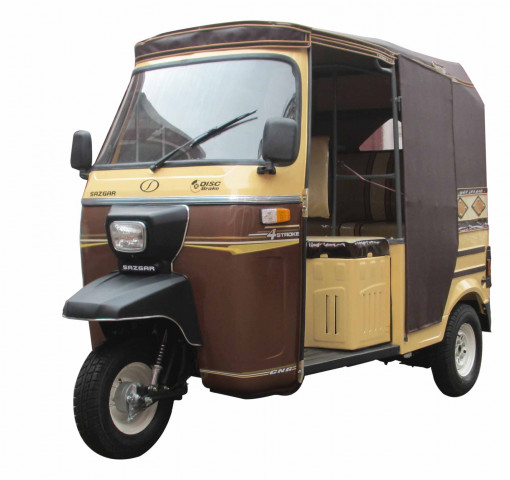
Sazgar Engineering Works rickshaw. PHOTO: Sazgar Engineering Works

KARACHI: Sazgar Engineering Works Limited (SAZEW), one of Pakistan's leading triwheel and tractor manufacturers, has announced a Rs11.5 billion expansion plan to more than double its vehicle production capacity by March 2026, with special focus on hybrid and electric vehicles.

According to Insight Securities, Sazgar intends to raise its daily production from roughly 40 vehicles to as many as 100 units within the next 18 months. The expansion will focus heavily on hybrid electric vehicles (HEVs), plug-in hybrid electric vehicles (PHEVs), and battery electric vehicles (BEVs). While the plan positions the company as a pioneer in Pakistan's shift to clean mobility, analysts caution that execution risks, volatile market dynamics, and uncertain government policy remain significant hurdles.

Central to Sazgar's strategy is the anticipated rollout of the government's New Energy Vehicle (NEV) policy. Analysts note that profitability projections hinge on incentives such as reduced customs duties on imported components, tax relief, and support for localisation of parts. If these incentives materialise, earnings per share could climb considerably.
 
Sazgar's strategy is its focus on plug-in hybrid electric vehicles (PHEVs), which the company sees as a practical bridge for Pakistani consumers hesitant to fully shift to EVs amid the lack of charging infrastructure.

The Haval H6 PHEV is the flagship of this transition, offering up to 100 kilometres of pure electric driving, enough to cover most urban commutes, while retaining a petrol engine for longer journeys. This dual advantage addresses range anxiety while delivering substantial fuel savings. Importantly, the minimal price gap between HEV and PHEV models is expected to tilt consumer preference in favour of PHEVs.

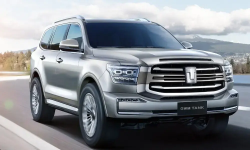
Sazgar has already introduced the fully electric Ora and the Tank-500 PHEV, while plans are underway to locally assemble new models, including the Canon Alpha pickup truck, which will also feature PHEV technology. By broadening its product lineup to cover premium SUVs, mass-market hybrids, and electric vehicles, the company aims to capture multiple consumer segments as preferences evolve under the forthcoming New Energy Vehicle (NEV) policy, noted Insight Securities.

Despite this aggressive growth push, challenges remain. The expiry of Greenfield incentives in June 2026 is expected to pressure margins in the near term. However, analysts believe profitability will be supported by higher volumes, new product launches, and incentives expected under the NEV policy for both EVs and PHEVs.

Key risks loom over the investment case. These include potential currency depreciation that could inflate costs of imported parts, weaker-than-expected consumer demand amid economic headwinds, sudden spikes in raw material prices, intensified competition from other automakers entering the hybrid and EV space, and changes in the regulatory framework. Analysts have also pointed out that in their base case, they assume normalised customs duty on non-PHEV parts post-FY26, given that the government has yet to formally disclose its full incentive structure under the NEV policy. If additional duty relief is offered, however, Sazgar's margins could improve even further.

Sazgar's forward-looking approach has consistently kept it ahead of its peers. After pioneering the launch of Pakistan's first locally assembled hybrid SUV, the company quickly expanded into EVs and is now aggressively marketing its PHEV models.

With most urban commuters in Pakistan travelling less than 100 km a day, Sazgar's PHEVs are well-suited to local conditions, offering consumers better efficiency, reduced fuel costs, and advanced features without the limitations of range dependency on charging networks.

While Sazgar has the first-mover advantage in locally assembling hybrids, it faces increasing competition from global brands such as MG, Hyundai, and Kia, all of which are eyeing Pakistan's nascent EV market. As the NEV policy takes shape, analysts expect new entrants to intensify competition, putting pressure on prices, marketing, and consumer choice.
 

Sales of BYD cars cross 2,000 in six months


The Newspaper's Staff Reporter
September 6, 2025

1757156934615.png

KARACHI: Hub Power Company (Hubco) has disclosed that BYD has sold over 2,000 cars in less than six months, while more than 500 orders have already been placed for its Shark model. The company is currently importing completely built units (CBUs) under the normal duty regime.

Hubco is setting up a completely knocked down (CKD) assembly plant in Gharo with an annual production capacity of 25,000 units.

According to a report by Asad Ali of Topline Securities, based on the company’s analyst briefing, financial close is expected in the last quarter of 2025. The project carries an estimated cost of $150 million, structured on a 60:40 debt-to-equity ratio.

Both foreign and local lenders are on board, with a term sheet already signed. Hubco expects CKD production to begin within 24 months.

Regarding ownership, the company clarified that the project is a 50:50 joint venture between Hub Power Holding — a wholly owned Hubco subsidiary — and Mega Conglomerate.

BYD has not taken an equity stake in the venture. Globally, BYD has pursued 100pc ownership in markets such as Thailand and Brazil, making this its first global partnership without equity participation.
 
On EV charging, the Hubco noted that while chargers were initially sourced from Europe, Chinese suppliers have now made them more affordable. It added that EV charging stations become financially viable with usage of three cars per day.

Hubco plans to install chargers every 150-200 kilometres along the Karachi-Peshawar motorway over the next six months.

Sazgar Engineering Works Ltd plans to roll out CKD models of the TANK-500 and CANNON plug-in hybrid vehicles (PHEVs) by March 31, 2026. The company had earlier launched its first CKD PHEV — the Haval H6 1.5L — on Aug 16, 2025, according to its FY25 annual report.
 

Yamaha discontinues bike assembly


Aamir Shafaat Khan
September 10, 2025

KARACHI: In a significant development for Pakistan’s organised auto sector, Yamaha Motor Pakistan Ltd (YMPL) has announced the discontinuation of its motorcycle assembly operations. The decision comes as part of a change in the company’s business strategy.

According to a letter posted on the company’s website and sent to its authorised dealers, Yamaha will continue to supply spare parts through its authorised network, ensuring adequate stock to meet dealer requirements. The company also reiterated its commitment to providing warranty services and customer support under the existing warranty scheme.

YMPL had been producing four models with prices ranging from Rs429,500 to Rs493,500. The Yamaha YBR125, initially launched at Rs129,400, saw its price rise to Rs471,500 due to the devaluation of the rupee and escalating production costs.

In 2012, Yamaha announced plans to invest $150 million in a new assembly plant at Bin Qasim Industrial Park in Karachi. The plant was initially expected to produce 45,000 units annually and achieve an 85pc localisation target within 10 years.
 
Many Chinese bike assemblers, unable to compete with Honda’s popular CDI70cc bike in terms of quality and reliability, had already shut down.

Currently, only 10-12 of the 70 cc licensed bike assemblers in Pakistan are active, with many others pivoting towards electric bikes (EVs). “The future is EV, and it may take two to three years to transition from petrol-powered to electric bikes,” said Sheikh, highlighting that even Atlas Honda, the leader in the petrol bike market, had ventured into electric vehicles.

A vendor, who wished to remain anonymous, pointed out that Yamaha’s localisation levels were low, which kept prices high as the company relied heavily on imported parts.

Additionally, the preference for larger bikes, capable of carrying multiple passengers, worked against Yamaha, whose models were seen as less practical for local consumers.

Despite these challenges, Pakistan’s motorcycle production rose to 1.692 million units in FY25, up from 1.234 million in FY24, reflecting the growing demand in the sector.
 
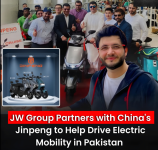
JW Group Pakistan has entered into a partnership with Jinpeng Group, China’s largest electric tricycle manufacturer, to introduce both electric and gasoline powered two and three wheelers in the country.

According to the companies, production has already begun at JW Group’s facilities in Lahore. The move is being described as a notable development for Pakistan’s two- and three-wheeler market, which has long been dominated by conventional motorcycles and rickshaws.


1758223792886.png
 
JW-SEZ, a diversified Pakistani conglomerate, has previously partnered with Chinese companies in automobiles, appliances and manufacturing, including MG Motors, Haier and Foton. The latest collaboration builds on that portfolio under the China-Pakistan Economic Corridor’s industrial cooperation framework.

Founded in 2004 and headquartered in Jiangsu Province, Jinpeng is the world’s largest electric tricycle manufacturer, with multiple production bases in China and an annual capacity of 3 million vehicles. Its lineup includes e-bikes, tricycles, new energy vehicles and forklifts.

Under the joint venture, three electric two-wheeler models have been launched in Pakistan: Ride, Cruise and Swift.
 
To view this content we will need your consent to set third party cookies.
For more detailed information, see our cookies page.
 
Car sales in Pakistan surged by 62% year-on-year (YoY) and 27% month-on-month (MoM) in August 2025 amid improving consumer sentiment and availability of bank financing.

According to Pakistan Automotive Manufacturers Association (pama) data, car sales (including LCVs, vans, and jeeps) stood at 14,050 units in August 2025, up from 8,699 units in August 2024 and 11,034 units in July 2025.

The PAMA’s report for August 2025 also revealed a 140% YoY increase in the truck sales to 596 units from 249 units recorded in August 2024.
 

Bestway Cement to enter Pakistan auto sector


BR Web Desk

Bestway Cement Limited, one of Pakistan’s largest cement producers, has announced to venture into the country’s auto sector with the incorporation of a new company and has committed Rs10 billion in this regard.

The listed company disclosed the development in its notice to the Pakistan Stock Exchange (PSX) on Monday.

“We wish to inform you that the Board of Directors of Bestway Cement Limited, in their meeting held on Friday, September 19, 2025, has decided to incorporate a wholly owned subsidiary as a private limited company to undertake business/investments in the automobile sector in Pakistan,” read the notice.
 

Pakistan’s Sazgar eyes new export markets in Philippines, Mexico and Afghanistan


BR Web Desk
September 25, 2025

1758806637468.png


Sazgar Engineering Works Limited (SAZEW), a Pakistani automaker, announced plans to expand into new export markets, including the Philippines, Mexico, and Afghanistan, as part of its strategy to strengthen growth and diversify revenues.

The update was provided in an analyst’s briefing attended by Topline Securities on Thursday.

As per the brokerage house, Sazgar’s management said that despite recent floods, deliveries remained largely unaffected except for temporary disruption when the Karachi–Lahore road was closed.

Recent floods in Pakistan have severely disrupted supply chains, leading to transportation delays amid damage to infrastructure, including roads.

Meanwhile, Sazgar, which at present offers six variants, i.e. four Haval models and two Jolion models, shared that strong demand has pushed delivery timelines from 2-3 months to 4 months.

The company informed that its four-wheeler production capacity stands at 40 vehicles a day, but current output has reached 60 daily, pushing management to consider expanding production.
 
Sazgar, which at present offers six variants, i.e. four Haval models and two Jolion models, shared that strong demand has pushed delivery timelines from 2-3 months to 4 months.

The company informed that its four-wheeler production capacity stands at 40 vehicles a day, but current output has reached 60 daily, pushing management to consider expanding production.

“With bookings exceeding this level, the company’s expansion plans will raise production to 100–120 vehicles per day, with the possibility of double shifts if demand continues to grow,” said Topline.

Management also highlighted upcoming introductions, including Tank and Canon Alpha models, targeted for March 2026.

Financially, the company reported an 89% rise in turnover to Rs109 billion and a 106% increase in profit after tax (PAT) to Rs16 billion, driven mainly by Haval sales.
 

The Truth Behind Pakistan’s Auto Market Surge


To view this content we will need your consent to set third party cookies.
For more detailed information, see our cookies page.


Pakistan’s automobile market is booming with a 45% surge in sales but why are car prices still skyrocketing?In this episode of On My Radar, Kamran Khan sits down with Suhail Munj, Co-Founder and Chairman of PakWheels, Pakistan’s top digital car trading platform.They discuss:
  • Why Pakistan’s car sales are hitting record highs
  • How falling interest rates and rising auto financing are driving the market
  • The influx of luxury SUVs vs. the struggle to afford small family cars
  • “Own money” premiums, price hikes, and policy issues fueling inequality
Will Pakistan’s auto industry finally bring affordable, safe cars to the middle class or remain a playground for the elite?
 

Users who are viewing this thread

Latest Posts

Back
Top