Pakistan China cooperation / Investments in various fields

First session of China-Pak seed training program welcome a fruitful conclusion​

By Staff Reporter | China Economic NetDec 4, 2025

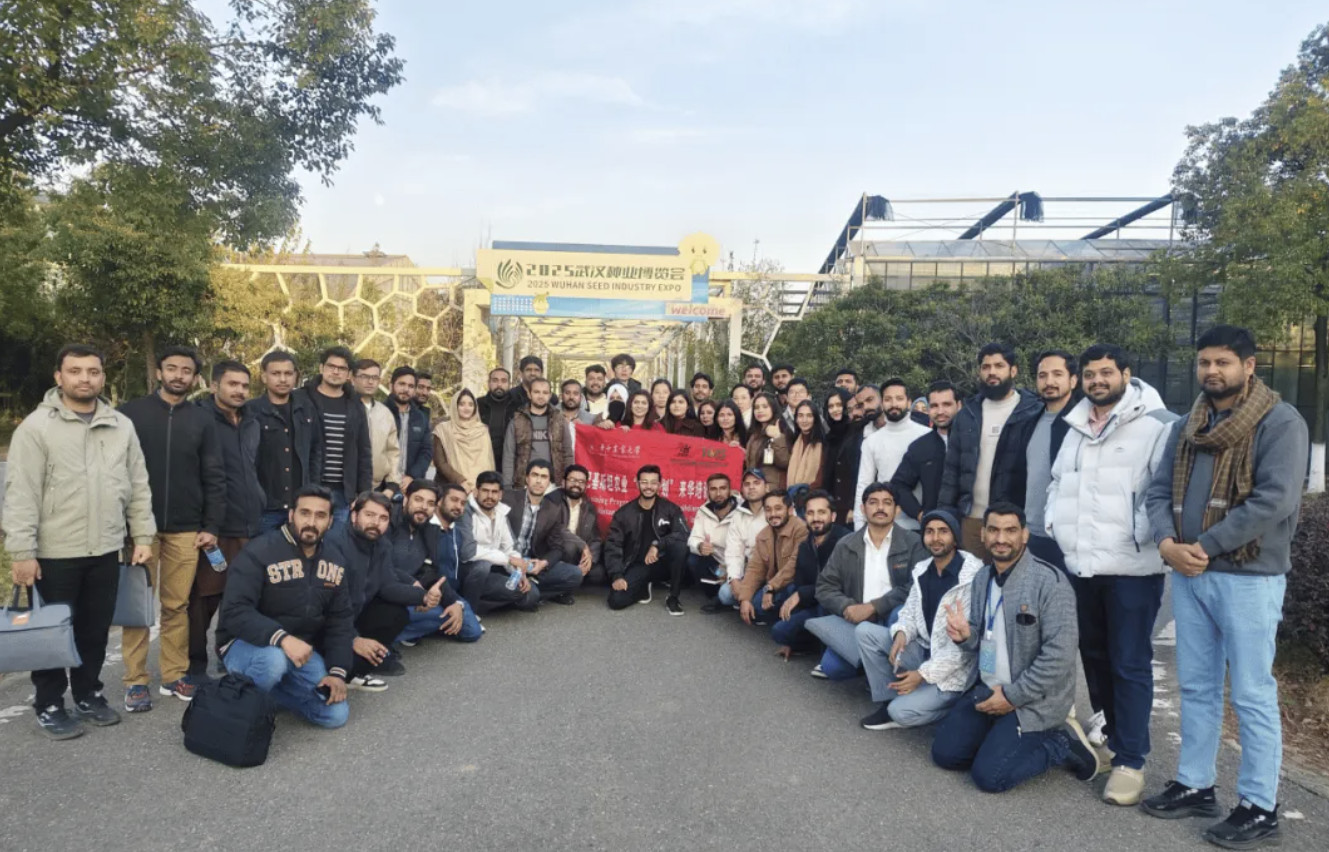
WUHAN, Dec. 4 (China Economic Net) – On December 3, the first training session of the Pakistan Agricultural Thousand Talents Program training project (Seed Production and Processing Technology Training Course), jointly organized by Huazhong Agricultural University and Wuhan Qingfa Hesheng Agricultural Development Co., Ltd., concluded at the Wuhan Academy of Agricultural Sciences.
First session of China-Pak seed training program welcome a fruitful conclusion


The Pakistani trainees [Photo provided to CEN]

At the opening ceremony held not long ago, Shafqat Abbas, Deputy Secretary of the Ministry of National Food Security and Research (MNFSR), behalf of the MNFSR, stated that the Pakistan Agricultural Thousand Talents Program training program in China is of great significance and importance.

“The seed industry is a top priority for the Pakistani government, and it is hoped that this practical and hands-on training will strengthen talent development in the seed sector.”

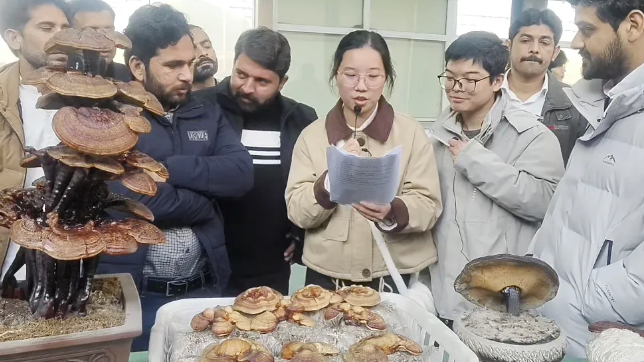
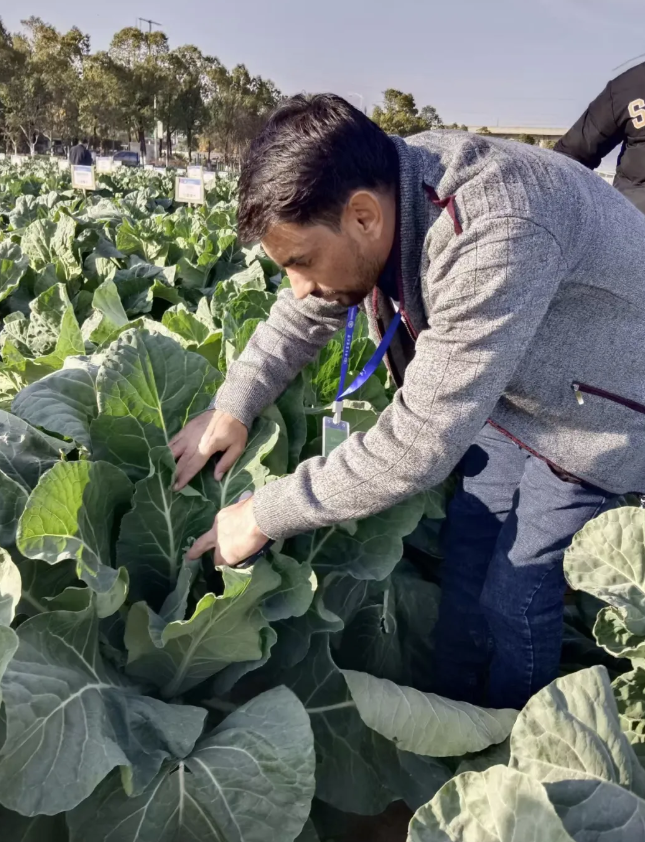
Under the guidance of professionals, the trainees went to the vegetable field area, the vegetable exhibition center, and the edible fungi exhibition platform for systematic learning.

Throughout the practice, all members maintained a positive and enthusiastic attitude, energetically asking questions and taking notes.
First session of China-Pak seed training program welcome a fruitful conclusion


Trainees participate in practical courses [Photo provided to CEN]

It is understood that this training course is a concrete practice of implementing the consensus reached by the leaders of China and Pakistan on agricultural cooperation.

Qingfa Hesheng has provided support through diverse methods such as on-site teaching and field practice to help Pakistani trainees gain a deeper understanding of the latest developments and cutting-edge achievements in seed production and processing, agricultural research and development.

To date, the Training Program for 1,000 Agricultural Talents in China conducted by MNFSR has sent approximately 700 Pakistani graduates to China.

Next, the organizers will invite trainees to visit laboratories in universities, research institutions, as well as high-quality enterprises to enhance their practical agricultural production skills, and make every effort to ensure the effective implementation of the training course, thus building a bridge for agricultural cooperation between Hubei and Pakistan.
 

Pak experts trained by Chinese Company set up VitaGene Farms​

By Yasir Habib Khan | Gwadar Pro
Dec 7, 2025

ISLAMABAD - In connection with Pakistan-China livestock genetics initiative, local Pakistani experts have established VitaGene farms under the training of Royal Cell Biotechnology (Pakistan)— one of the pioneers of buffalo IVF technology in Pakistan.

With a moto of shaping the future of livestock genetics, the VitaGene farms, a state-of-the-art embryo production and research facility, have been established in various part of country including Lahore.

Cutting-edge technology, machinery and equipment are being brought in the VitaGene Farms. Buffalo and cattle embryo will be produced in the world class IVF lab.

Royal Cell Biotechnology (Pakistan) Project Directo Dr. Qaisar told Gwadar Pro that VitaGene Farms will produce elite cattle and buffalo embryos, accelerating genetic improvement and supporting the development of high-performance livestock across Pakistan.

This milestone reflects the growing strength of Pakistan’s biotechnology ecosystem and the long-term impact of modern reproductive technologies on our livestock sector.


Pakistani veterinary scholars gain practical expertise through advanced training in China​

By Mariam Raheem | Gwadar Pro
Dec 11, 2025

URUMQI, Dec 11 (Gwadar Pro) - Seven postgraduate and doctoral researchers from the University of Agriculture, Faisalabad completed a 15-day “Silk Road Fellowship, Shared Tianshan Journey” elite academic program at Xinjiang Agricultural University, which ended on December 9. The program provided Pakistani scholars with comprehensive training in advanced animal medicine and livestock management through a combination of academic lectures, laboratory practice and field visits.

Pakistani veterinary scholars gain practical expertise through advanced training in China


A professor from Xinjiang Agricultural University delivers a specialized lecture on modern veterinary science to Pakistani researchers. [Photo provided to GP]

Professors from the College of Veterinary Medicine delivered specialized lectures on cutting-edge fields such as intestinal microbiomics, efficient livestock breeding, parasitic disease prevention and control, and traditional Chinese veterinary medicine. For better understanding, tailored sessions on professional Chinese terms were also held.

Pakistani veterinary scholars gain practical expertise through advanced training in China


A moment from the laboratory session at Xinjiang Agricultural University’s “Silk Road Fellowship” program. [Photo provided to GP]

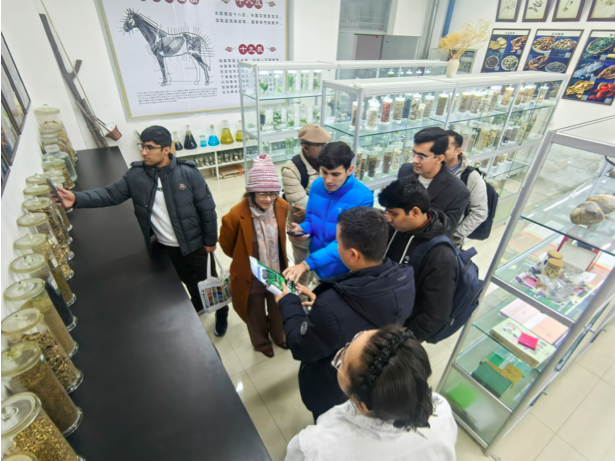
During the practical segment, the delegation visited well-equipped laboratories and animal hospitals, where they observed advanced research facilities and clinical procedures. An academic exchange forum further enabled in-depth discussions between Chinese and Pakistani students on research and talent development.

Pakistani veterinary scholars gain practical expertise through advanced training in China


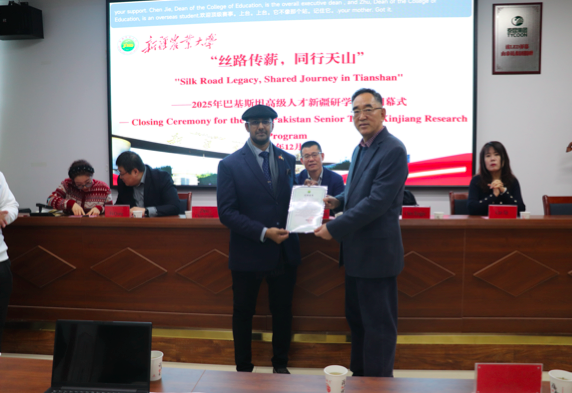
Closing Ceremony for the Pakistan Senior Talent Xinjiang Research Program. [Photo provided to GP]

The program also incorporated cultural activities, including visits to Urumqi city center, the Xinjiang Museum and the International Grand Bazaar, as well as hands-on experiences in traditional Chinese arts such as paper cutting, calligraphy and Tai Chi.

Pakistani veterinary scholars gain practical expertise through advanced training in China


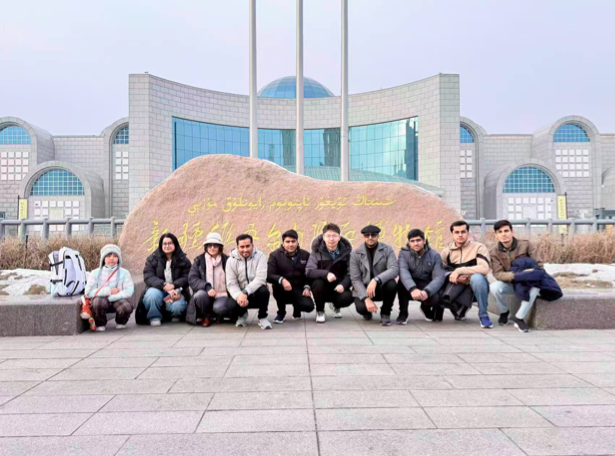
Delegates visit Xinjiang Museum. [Photo provided to GP]

Participants highlighted the relevance of the training to the agricultural needs of Pakistan and expressed their eagerness to apply the acquired expertise upon their return.

Both institutions reaffirmed their commitment to further cooperation in veterinary sciences and agricultural development to contribute to the shared goals of the two countries under the CPEC framework.
 

China-Pakistan Team Pioneers High-Efficiency Solar Heat Pump System​

By Tahir Ali | Gwadar Pro
Dec 10, 2025

CHENGDU- A team of Pakistani and Chinese researchers has jointly developed a high-performance solar-assisted heat pump system that could reshape clean heating in colder regions and contribute to low-carbon development, according to a newly published peer-reviewed study in Energy (Elsevier), Volume 340, 2025.

The collaborative research group, from Southwest Jiaotong University (China), the University of Engineering and Technology (Pakistan), and partner institutions, developed an indirect-expansion solar heat pump integrated with a parabolic dish concentrator and a high-concentration conical cavity tube receiver.

According to the authors, combining a high-concentration solar receiver with an indirect heat-pump cycle is “a novel approach which has never been studied” and provides a sustainable path for efficient solar-heating applications.

Testing conducted in China showed that the system achieved 65.35% thermal efficiency, 9.05% exergy efficiency, and a coefficient of performance (COP) of up to 4.86, significantly higher than conventional solar-heating systems.

The researchers explain that the parabolic dish concentrator focuses sunlight onto a small focal area, while the specially designed conical receiver improves heat capture and transfer. The study found that increasing the concentration ratio from 20 to 40 boosted thermal efficiency by 32%–71%, increased temperature lift by 10–18.5°C, and raised the COP from 3.86 to 5.4. The model’s results were in close agreement with experimental testing.

Lead author Dr. Sajid Abbas noted that the results offer a strong case for applying concentrated solar systems in cold-region heating. “Our system offers an innovative methodological and experimental basis for utilizing high-concentration solar thermal collectors in heat-pump applications,” he wrote in the paper.

According to the study, solar heat pumps are a promising route for decarbonizing heating in line with China’s climate commitments. The work supports China’s goals of peaking emissions by 2030 and achieving carbon neutrality by 2060 and aligns with international clean-energy objectives highlighted within global climate agreements.

The authors conclude that the integrated parabolic dish and indirect-expansion heat pump system provides “better thermal efficiency and higher temperature lift” than conventional designs, and can be scaled for residential, agricultural, and industrial applications.

The research was supported by the China Postdoctoral Council, the Southwest Jiaotong University Foundation, and the Fundamental Research Funds for the Central Universities.

China and Pakistan are deepening environmental cooperation under the new Action Plan (2025–2029), which commits both sides to “strengthen communication and cooperation on environment and make joint contributions to the improvement of the environment in both countries and beyond,” and welcomes Pakistan’s participation in the BRI International Green Development Coalition.
 

Chinese group eyes €2bn integrated maritime project at Pakistan’s Port Qasim

  • If approved, project could represent one of the largest investments in Pakistan’s maritime sector

BR Web Desk
December 18, 2025

China’s Shandong Xinxu Group has pitched a multi-billion-euro integrated maritime and industrial project at Port Qasim, one of Pakistan’s key ports, marking one of the largest proposed foreign investments in Pakistan’s maritime sector in recent years.

A five-member delegation from China’s Shandong Xinxu Group has met Federal Minister for Maritime Affairs, Muhammad Junaid Chaudhry to discuss a proposed Integrated Maritime Industrial Complex (IMIC) at Port Qasim.

According to a statement released on Thursday, the delegation, led by the company’s chairman Hou Jianxin, discussed a proposal for the project, estimated to cost between €1 billion and €2 billion, aimed at revitalising Pakistan’s maritime and heavy industrial base.

The proposed IMIC would comprise three main components, including the revival of the Iron Ore and Coal Berth (IOCB) Jetty, commonly referred to as the steel jetty, the establishment of shipbuilding and shipbreaking facilities, and the setting up of a steel mill integrated with port operations.

As per the statement, the IOCB was designed to handle bulk cargo, including iron ore and coal, primarily for Pakistan Steel Mills (PSM). The jetty can accommodate vessels ranging between 55,000 and 75,000 deadweight tons (DWT) and is connected to the steel mill through a dedicated conveyor system spanning approximately 4.5 to 8 kilometres, linking directly to stockyards and blast furnaces.
 
It is pertinent to mention that Shandong Xinxu Group, a major Chinese high-tech enterprise involved in renewable energy, battery manufacturing equipment, and industrial projects, particularly known for driving significant investment and development in Pakistan’s maritime, mining, and industrial sectors.

During the meeting, the federal minister welcomed the interest shown by the Chinese group and asked the delegation to submit an unsolicited proposal outlining plans and a comprehensive roadmap for the proposed project.

Chaudhry emphasised that the roadmap should include clearly defined core concepts, detailed implementation plans and feasibility studies covering technical, financial and environmental aspects.

Following the submission of the comprehensive report, a committee comprising members from the Ministry of Maritime Affairs and Shandong Xinxu Group, led by Additional Secretary Umar Zafar Sheikh, will review the proposal.

The minister underscored the importance of ensuring that the project aligns with Pakistan’s broader industrial and sustainability goals, particularly in terms of job creation, value addition and environmentally responsible development.

The IMIC concept was first unveiled by the minister in November 2025 at an event hosted by Port Qasim Authority in Karachi to mark the port’s recognition as the world’s ninth most improved container port.

If approved, the project could represent one of the largest recent investments in Pakistan’s maritime and industrial sectors, strengthening Port Qasim’s role as a regional hub for heavy industry and logistics.
 

1,000 agri trainees sent to China​


Seed tech programme under joint initiative has already trained 700 professionals

NEWSDESK
December 26, 2025

tribune


WUHAN: Pakistan is significantly enhancing its agricultural modernisation efforts by deploying 1,000 specialists to China for specialised training under a key bilateral initiative backed by the leadership of both countries.

The multi-phase programme is aimed at building expertise in advanced agricultural technologies, biotechnology and sustainable practices. Around 700 professionals have already returned to Pakistan after completing their training, while new groups continue to arrive in China for ongoing and upcoming sessions.

A central component of the initiative is the current training programme on seed production and processing technology.

Jointly organised by Huazhong Agricultural University, a leading Chinese institution in agricultural sciences, and Wuhan Qingfa-Hesheng Seed Co Ltd, which has more than two decades of collaboration experience with Pakistan, the programme is running from November 10 through next February.

The training adopts an integrated "theory plus practice" approach to strengthen the professional competencies of 56 Pakistani participants.

All trainees hold at least a master's degree and represent a wide range of sectors, including government, businesses, academia and civil society organisations from across Pakistan. The group also includes 11 women, reflecting the growing participation of women in agricultural innovation.
 

China, Pakistan Sign Package of MoUs to Deepen Industry Education Integration in Vocational Training​

By Zafar Hussain | Gwadar Pro
Dec 23, 2025

China and Pakistan on Tuesday signed a package of cooperation documents and launched joint programs to advance vocational education, with a focus on integrating industry needs with skills training.

The agreements were announced at the “Seminar on International Cooperation and Exchange: Integration of Industry and Education in Vocational Education between China and Pakistan” held in Beijing.

At the ceremony 21 items were signed and five cooperation platforms were unveiled, covering professional standards, shared teaching resources, faculty and curriculum development, and enterprise-linked training bases.

Under the Professional Standards and International Teaching Resource Database track, partners agreed to develop standards and resources in disciplines such as Culinary Arts & Nutrition, Fashion and Costume Design, Food Inspection and Testing, Supply Chain Operation, Fine Chemical Technology, Modern Agriculture Production, and Information Security Technology

Applications, with participation from Pakistani authorities including NAVTTC and provincial technical education and training bodies.
 

World alliances shift, but the China-Pakistan partnership holds steady​


Action Plan formalises a “shared future” vision while CPEC-II shifts attention to inclusive industry and livelihoods

Shakeel Ahmad Ramay
December 29, 2025

tribune


ISLAMABAD: The world is undergoing rapid and multifaceted change, described by President Xi as a once-in-a-century transformation. State relationships are shifting. Friends are becoming foes, and foes are becoming friends.

Old hegemonic alliances, such as NATO, are under strain. New partnerships are emerging, including the Shanghai Cooperation Organisation (SCO).

However, some relationships have resisted this pressure and remained stable. The China-Pakistan relationship is one such case.

In 2025, this relationship entered a new era with two major milestones: the launch of CPEC-II and the signing of the Action Plan to foster an even closer China-Pakistan community with a shared future in the new era.

CPEC-II has been launched with a renewed focus and aims to foster sustainable development, shared prosperity, and a stable and peaceful Pakistan.

It has several distinctive features that make it future-oriented and transformative. While retaining elements of CPEC-I, the second phase places greater emphasis on inclusive industrial and socio-economic development.

It is closely aligned with Pakistan's Five Es: Employment, Education, Energy, Economy, and Environment.

CPEC-II is also designed to create synergies with five corridors envisioned by Pakistan: Growth, Livelihoods, Innovation, Green, and Open and Regional Connectivity.

These corridors aim to realise the vision of a prosperous and peaceful Pakistan. They seek to accelerate growth by fast-tracking industrialisation, enhancing exports, and entering new and future industries.

At the same time, the framework focuses on creating decent livelihood opportunities and promoting future-ready skills. It emphasises equal opportunities and job creation, particularly for youth, through investments in education and health. Innovation and green growth are also central pillars.

Despite its broad scope, the primary focus of CPEC-II remains on people's well-being. A closer review suggests that synergy creation will be easier, as the initiative is structured around these interconnected areas. Youth empowerment is a core priority under CPEC-II.

The initiative aims to ensure youth participation in future technologies such as artificial intelligence, quantum computing, and fintech. Future-oriented skill development is a key area of cooperation. This focus is essential for preparing Pakistan's workforce for the demands of the fourth industrial revolution.
 
Climate-smart and green agricultural development is another major area of collaboration. Both countries plan to work together to produce high-quality agricultural inputs, strengthen research and development, and share technical expertise. China has also committed to opening its food and agriculture market to Pakistani exporters.

This presents a valuable opportunity, provided exporters meet China's customs and food safety standards. In addition, the green transition and innovation-driven growth will receive special attention. Green industries, climate-smart agriculture, and technology-based sectors are expected to be prioritised.

All efforts under CPEC-II aim to serve people by investing in human resources and creating decent livelihoods. In this regard, Pakistan can benefit from China's people-centric governance model.

The second milestone, the signing of the Action Plan, further reinforces CPEC-II and related initiatives. A closer examination reveals two defining concepts: a community with a shared future and the new era.

These visions guide China's modernisation process and national rejuvenation. Under these frameworks, China is transitioning away from large-scale infrastructure-led growth, export dependence, and traditional industries.

It is moving towards intelligent, AI-based industries, smart investment, domestic consumption-led growth, and green development. New energy sources, innovation-driven growth, and advanced technologies are central to this transition.
 
The Action Plan indicates that China wants Pakistan to be part of this journey.

China seeks to share its development experience and extend access to emerging opportunities and markets.

It also reflects China's readiness to support Pakistan's entry into the fourth industrial revolution with confidence and dignity. This commitment highlights the depth of the ironclad brotherhood.

Together, CPEC-II and the Action Plan offer Pakistan an opportunity to reverse its economic crisis, fast-track industrialisation, pursue green transition and improve people's welfare.

They can also help address Pakistan's long-standing state-owned enterprise (SOEs) problems. However, realising these gains requires Pakistan to overcome several domestic challenges.

First, Pakistan needs to ensure a genuinely business-friendly environment. Currently, the business climate remains discouraging. Inefficiencies in electricity, gas supply, and licensing persist. Export and import procedures remain time-consuming.

Weak human resource capacity in public institutions and rent-seeking behaviour further undermine investor confidence. Despite repeated claims, meaningful improvement remains limited.

Special initiatives such as the Special Investment Facilitation Council were created to address these issues. However, they have not delivered the expected outcomes. Although SIFC is a powerful body with high-level representation, structural weaknesses and a shortage of professionals have limited its effectiveness.
 
To succeed, SIFC must be granted clear decision-making and implementation authority. Other institutions should be required to follow its directives, and professional expertise must be inducted.

Second, Pakistan needs to address political instability and terrorism. Both deter investment and create uncertainty.

In recent years, foreign-funded groups have targeted Chinese investors and businesses. These attacks aim to disrupt investment and strain Pakistan-China relations. Ensuring political stability and providing foolproof security to Chinese nationals is critical.

Third, Pakistan can request China to jointly launch an SOEs-to-SOEs corridor. China has developed effective models for managing SOEs on merit and competitiveness. Such cooperation could help Pakistan reform and revive its own SOEs.

Beyond these challenges, Pakistan should not allow any country to use the China-Pakistan relationship as a bargaining chip. In the past, the United States asked Pakistan to disengage from CPEC. As bilateral ties evolve, similar pressures may re-emerge. Pakistan must therefore draw clear lines on acceptable engagement. The China-Pakistan relationship is immune to circumstances and trustworthy.
 
To view this content we will need your consent to set third party cookies.
For more detailed information, see our cookies page.
 

Chinese firm inks cooperation deal in Pakistan on smart agriculture, drone technology​

By Tahir Ali | Gwadar Pro
Jan 2, 2026

Chinese firm inks cooperation deal in Pakistan on smart agriculture, drone technology


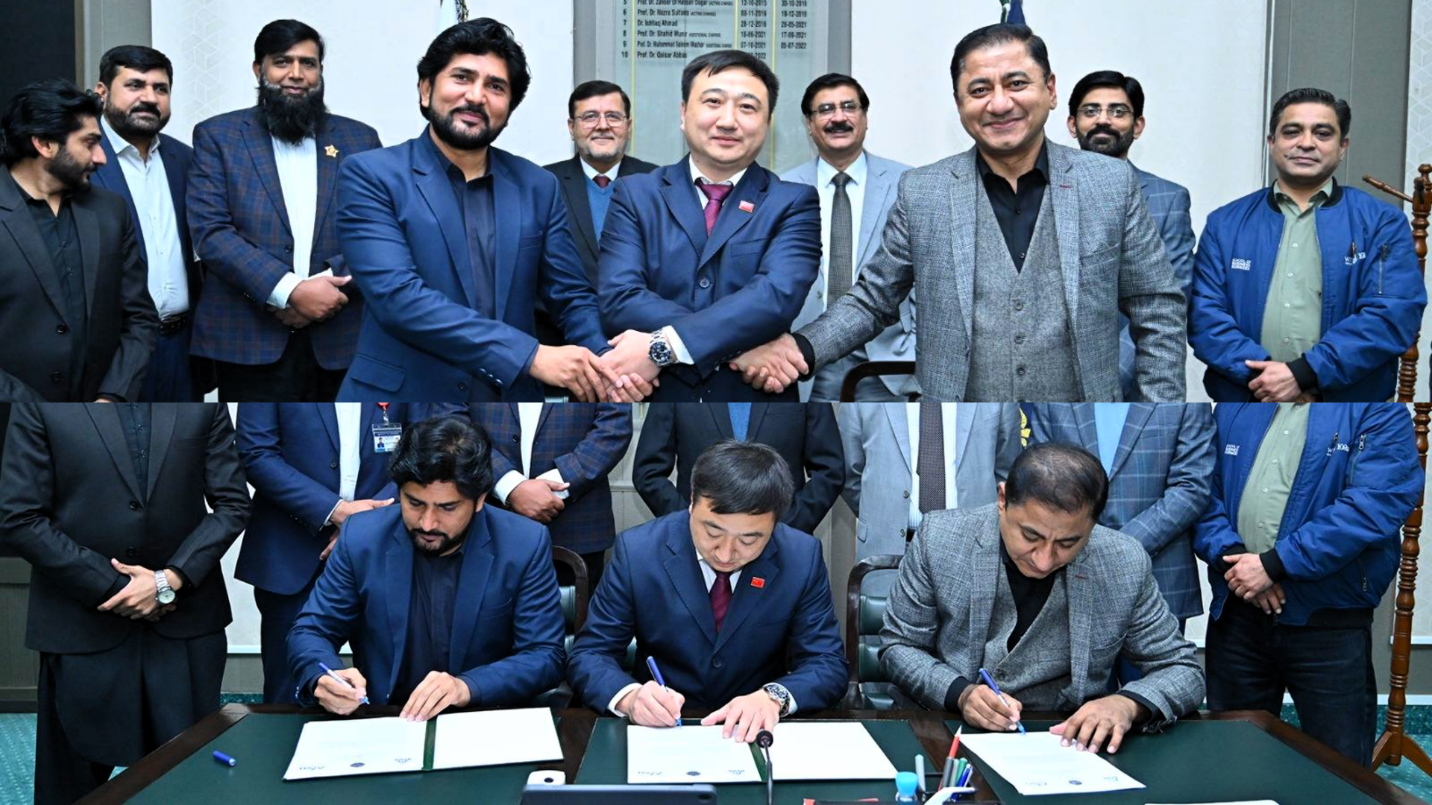
Representatives of Chengdu Yihe Technology Co. Ltd., the UoS and Pak Agro Fertilizer sign IoC in Sargodha. [Photo/UOS]


SARGODHA - China’s Chengdu Yihe Technology Co. Ltd. has signed a bilateral and tri-party Intent of Cooperation (IoC) with the University of Sargodha and Pak Agro Fertilizer and Chemical Industries to expand collaboration in advanced agricultural and industrial technologies.

The agreement was signed Thursday in the presence of University of Sargodha Vice Chancellor Prof. Dr. Qaisar Abbas and Pro Vice Chancellor Prof. Dr. Masood Sarwar Awan, who witnessed the ceremony and “appreciated the initiative.”

Under the IoC, Chengdu Yihe Technology Co. Ltd. “will establish a Research and Training Center at the University of Sargodha, aimed at enhancing applied research, skills development, and technology transfer,” the partners said.

At the same time, the Chinese company will work with Pak Agro Fertilizer and Chemical Industries to set up a Drone Technology Manufacturing Facility in Sargodha focused on UAVs, UGVs and crop mechanization technologies.

The initiative seeks to “promote smart agriculture, industrial innovation, capacity building, and commercialization,” contributing to rural development and sustainable economic growth in the region, according to the statement.

The cooperation follows a recent visit by a University of Sargodha delegation to China, where the university signed multiple agreements with Chinese institutions to deepen academic, industrial and research partnerships.

The latest IoC is viewed as part of those ongoing efforts to strengthen Pakistan-China collaboration in agricultural modernization.
 

Chinese aerospace firm eyes up to $10bn investment in Pakistan

  • Aerospace Development Industry Investment Group is an international investment group with an AAA corporate credit rating
BR Web Desk
March 6, 2026

A Chinese aerospace company is exploring a potential $5–10 billion investment in Pakistan.

The development came during a meeting between Federal Minister for Board of Investment Qaiser Ahmed Sheikh with a high-level delegation of the Chinese company Aerospace Development Industry Investment Group Co., led by Lu Jinhai, Party Secretary and Chairman of the Board.

According to a statement, the Chinese delegation briefed the minister on the global profile and operations of their company. They informed that Aerospace Development Industry Investment Group is an international investment group with an AAA corporate credit rating, engaged in strategic industrial investments in areas including advanced technologies, aerospace development, artificial intelligence, electric vehicles, drone technologies, and energy projects.

“The delegation expressed keen interest in investing between $5 billion to $10 billion in Pakistan across multiple sectors, including mining and minerals, advanced technology industries, and industrial development,” read the statement.
 

Users who are viewing this thread

Back
Top