Pakistan China cooperation / Investments in various fields

“The delegation expressed keen interest in investing between $5 billion to $10 billion in Pakistan across multiple sectors, including mining and minerals, advanced technology industries, and industrial development,” read the statement.

The Chinese delegation also emphasised its interest in collaborating with Pakistan on skill development initiatives, highlighting its long-term vision of contributing to Pakistan’s economic development and technological advancement.

They further expressed their willingness to work with Pakistan to support the objectives of the One Belt One Road (OBOR) initiative and enhance regional connectivity and economic cooperation.
 

Pakistan, China sign 3 MoUs to boost desalination, agri technology, tea sector cooperation

APP
April 27, 2026

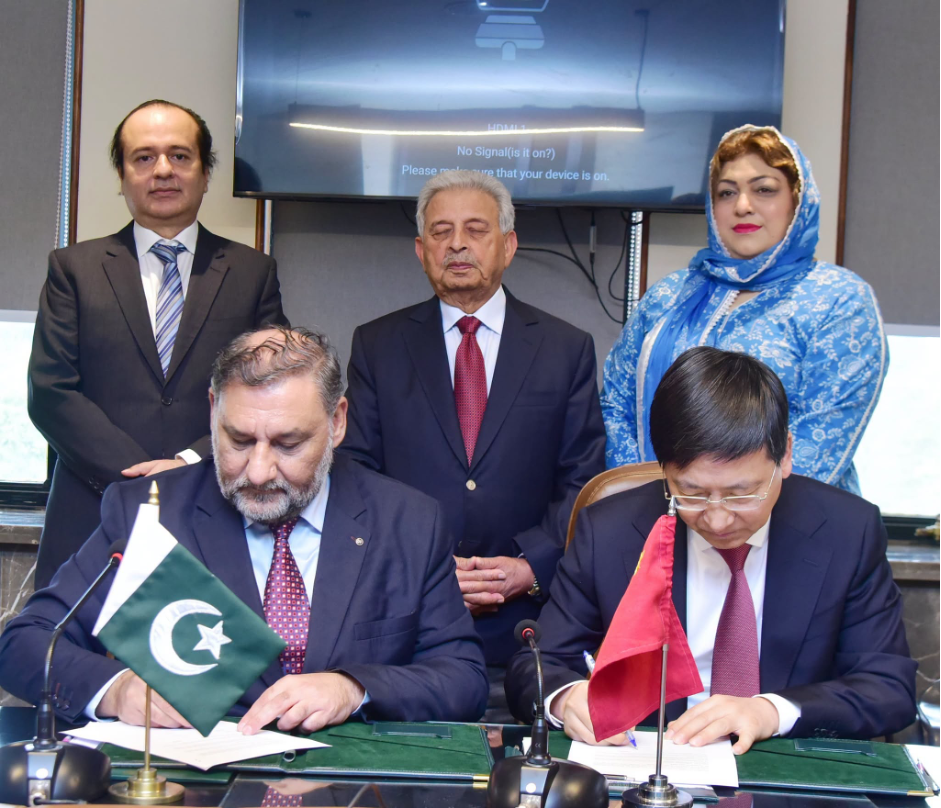
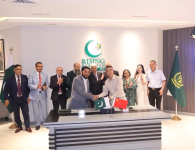
President Asif Ali Zardari witnesses the signing of an MoU between the Sindh local government and LUCION TDR Environ-Tech (Anhui) Group for a seawater desalination project in Karachi to augment water supply. —@PresOfPakistan/X

Pakistan and China on Monday signed three memoranda of understanding (MoUs) to strengthen bilateral cooperation in water desalination, agricultural technology, and the tea industry.

President Asif Ali Zardari, who is on a week-long visit to China until May 1, witnessed the signing of the MoUs between Pakistani and Chinese entities. The MoUs reflect a focused effort to advance practical collaboration in key sectors.

The first MoU was concluded between the Sindh local government and Lucion Environmental Technology Group for collaboration on a seawater desalination project in Karachi, aimed at increasing the city’s water supply.
 

Pakistan, China sign 3 MoUs to boost desalination, agri technology, tea sector cooperation

APP
April 27, 2026

President Asif Ali Zardari witnesses the signing of an MoU between the Sindh local government and LUCION TDR Environ-Tech (Anhui) Group for a seawater desalination project in Karachi to augment water supply. —@PresOfPakistan/X

Pakistan and China on Monday signed three memoranda of understanding (MoUs) to strengthen bilateral cooperation in water desalination, agricultural technology, and the tea industry.

President Asif Ali Zardari, who is on a week-long visit to China until May 1, witnessed the signing of the MoUs between Pakistani and Chinese entities. The MoUs reflect a focused effort to advance practical collaboration in key sectors.

The first MoU was concluded between the Sindh local government and Lucion Environmental Technology Group for collaboration on a seawater desalination project in Karachi, aimed at increasing the city’s water supply.

Is Zardari trying to pressure water tanker mafia to get a better cut?
 
Last edited:

Pakistan issues first Panda Bond in China’s onshore capital market

  • Inaugural Panda Bond is a 3-year fixed-rate instrument, making it Pakistan’s first-ever RMB-denominated sovereign issuance in China’s onshore capital market, Khurram Schehzad says
May 14, 2026
By BR Web Desk

Pakistan issued on Thursday its first Panda Bond in China’s onshore capital market, Advisor to the Finance Minister Khurram Schehzad announced.

“The inaugural Panda Bond is a 3-year fixed-rate instrument, making it Pakistan’s first-ever RMB-denominated sovereign issuance in China’s onshore capital market,” Schehzad wrote in a post on X.
 
To view this content we will need your consent to set third party cookies.
For more detailed information, see our cookies page.


🤝
 

PM Shehbaz hails $440mn Pakistan-China pharma deals, says partnership to advance CPEC 2.0

  • Security of Chinese nationals working in Pakistan remains govt's top priority, premier says
July 17, 2026

1784301336588.png

ISLAMABAD: Prime Minister Muhammad Shehbaz Sharif witnesses the signing and exchange of agreements between Chinese and Pakistani pharmaceutical companies at the Pak China Pharmaceutical B2B Conference on 17 July 2026. - Photo: PMO

APP
BRecorder

Prime Minister Shehbaz Sharif on Friday hailed the signing of nine agreements worth around $440 million between Pakistani and Chinese private enterprises in the pharmaceutical sector, describing the development as a major step towards strengthening bilateral economic cooperation and advancing the next phase of the China-Pakistan Economic Corridor (CPEC 2.0).

Addressing the Pakistan-China Pharmaceutical Business-to-Business Conference in Islamabad, the prime minister expressed confidence that the agreements would turn into practical projects, saying they would boost investment in pharmaceutical manufacturing, vaccines, research and development, and help Pakistan emerge as a regional centre for the production and export of life-saving medicines.

“I think this will ultimately result into manufacturing life saving medicines, vaccines, research and development and become a center of excellence for exporting our wonderful products to neighboring countries,” he said.

He said China had consistently stood by Pakistan during difficult times and had already invested more than $30 billion under first phase of CPEC, calling the new partnerships another milestone in expanding economic cooperation.
 

PM Shehbaz hails $440mn Pakistan-China pharma deals, says partnership to advance CPEC 2.0

  • Security of Chinese nationals working in Pakistan remains govt's top priority, premier says
July 17, 2026

View attachment 206755

ISLAMABAD: Prime Minister Muhammad Shehbaz Sharif witnesses the signing and exchange of agreements between Chinese and Pakistani pharmaceutical companies at the Pak China Pharmaceutical B2B Conference on 17 July 2026. - Photo: PMO

APP
BRecorder

Prime Minister Shehbaz Sharif on Friday hailed the signing of nine agreements worth around $440 million between Pakistani and Chinese private enterprises in the pharmaceutical sector, describing the development as a major step towards strengthening bilateral economic cooperation and advancing the next phase of the China-Pakistan Economic Corridor (CPEC 2.0).

Addressing the Pakistan-China Pharmaceutical Business-to-Business Conference in Islamabad, the prime minister expressed confidence that the agreements would turn into practical projects, saying they would boost investment in pharmaceutical manufacturing, vaccines, research and development, and help Pakistan emerge as a regional centre for the production and export of life-saving medicines.

“I think this will ultimately result into manufacturing life saving medicines, vaccines, research and development and become a center of excellence for exporting our wonderful products to neighboring countries,” he said.

He said China had consistently stood by Pakistan during difficult times and had already invested more than $30 billion under first phase of CPEC, calling the new partnerships another milestone in expanding economic cooperation.

These are not MOU

Nature of the Deals: Agreements, not just MoUs​

While earlier exploratory talks in May 2026 yielded several Memorandums of Understanding (MoUs), the recent $440 million package consists of nine formalized B2B agreements between private Pakistani and Chinese enterprises.

Rather than broad government-to-government diplomatic MoUs, these are commercial contracts and partnerships aimed at immediate, practical implementation. The focus is on foreign direct investment, joint ventures, and localized production in Pakistan.

Key Areas of Collaboration​

The nine agreements focus heavily on making Pakistan self-reliant in healthcare and reducing its dependency on imported raw materials. The specific areas covered include:

  • Vaccine Production: Agreements for local vaccine manufacturing, including a specific collaboration regarding Pakistan's national program for protective vaccines and the prevention of hepatitis.
  • Active Pharmaceutical Ingredients (APIs): A major push toward local production of APIs (the raw materials used to make drugs). Currently, China supplies up to 90% of Pakistan's API needs. A notable flagship project within this initiative includes a partnership between Unichem Pharmaceuticals Pakistan and China's Xinxu Group to locally produce Omeprazole API.
  • Technology Transfer & Biotech: Exchanges of technology to upgrade Pakistan's drug manufacturing capabilities and expand into biotechnology.
  • Export Hub Ambitions: Establishing Pakistan as a regional manufacturing hub to export medicines and vaccines to neighboring countries.
 

Users who are viewing this thread

Back
Top