Pakistan China cooperation / Investments in various fields

ghazi52

THINK TANK: CONSULTANT
Joined
Mar 21, 2007
Messages
159,010
Reaction score
208,478
Reputation
9,176.3
Country of Origin
Country of Residence

Pakistan, China reach wheat lab deal​


Through cooperation, the efficiency of wheat varieties can be lifted.

China Economic NetF
ebruary 22, 2025

photo file


BAODING: An agreement on China-Pakistan Joint Laboratory for Wheat Germplasm Innovation and Biological Breeding was recently reached, marking a significant step in boosting the development of wheat seed industry and related sectors.

"Due to different geographical conditions, there is genetic diversity in wheat germplasm resources between the two countries, exhibiting great potential for wheat variety improvement through germplasm exchange," said Professor Liu Dongcheng, Dean at Hebau College of Agronomy.

As Liu observed, China boasts advantages in basic research and molecular breeding while Pakistan has rich experience in soilless cultivation and tissue culture. Through cooperation, the efficiency of wheat varieties can be lifted.
 

KIU and CPJRC sign DoU to establish Karakoram Research Station on Natural Hazards and Environment​

By Tahir Ali | Gwadar Pro
Feb 21, 2025

KIU and CPJRC sign DoU to establish Karakoram Research Station on Natural Hazards and Environment


Prof. Dr. Attaullah Shah with CPJRC’s officials.

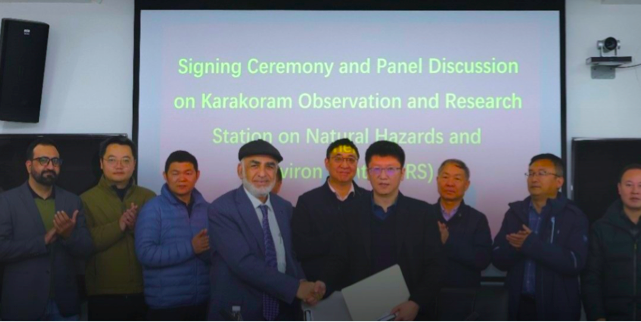
CHENGDU - Karakoram International University (KIU) and China-Pakistan Joint Research Centre (CPJRC) signed a Document of Understanding (DoU) to establish Karakoram Observation and Research Station on Natural Hazards and Environment (KORS) under the Government of Pakistan approved project.

The DoU Signing Ceremony and Panel Discussion were held at Chinese Academy of Sciences (CAS), Chengdu, China on February 19, according to an official statement from KIU released on Thursday.

The cooperation agreement was signed by Engr. Professor Dr. Attaullah Shah, Vice-Chancellor KIU, and Prof. Su Lijun, Director-General of CPJRC. As per details, the state-of-the-art research Centre will be built at KIU under the collaboration framework between KIU and CPJRC, a joint project of China and Pakistan approved under Public Sector Development Program (PSDP) of Pakistan.

The research center will serve as a hub for collaborative research, bringing together experts from both countries to address pressing global challenges.
 

China-Pak jointly developed agricultural app equipped with cutting-edge AI tool​

By Staff Reporter | Gwadar Pro
Feb 19, 2025

FAISALABAD–In the vast wheat fields of Punjab Province, drones are patrolling the air, and intelligent systems have replaced manual labor to take care of crops. Free from the pain of field labor during the broiling summer season, local farmers could accurately monitor crop health, fertilization and irrigation with just a few clicks on their mobile phones or tablets.

“Previously, I could only see which fields performed well when it was almost harvest time. Now, I check crop health regularly on my mobile and can fix problems early, which has helped me improve yields and reduce losses,” Muhammad Taj from Gujranwala, Punjab, marvels at the new agricultural artificial intelligence app, Kisan360, newly installed on his phone.
 
The China-Pakistan cooperation project “High Throughput Crop Monitoring using Computer Vision for Climate Smart Agriculture” funded by ADPC, World Bank has injected sci-tech element into Punjab’s farmland, with Kisan360 is the result of their painstaking efforts. “We leverage satellite data and drone imagery for intelligent crop monitoring and management.

Our solutions enhance cultivation practices by providing near real-time insights into crop health, water, and nitrogen requirements,” introduced Dr. Wu Jun, the Chinese project leader.

China-Pak jointly developed agricultural app equipped with cutting-edge AI tool


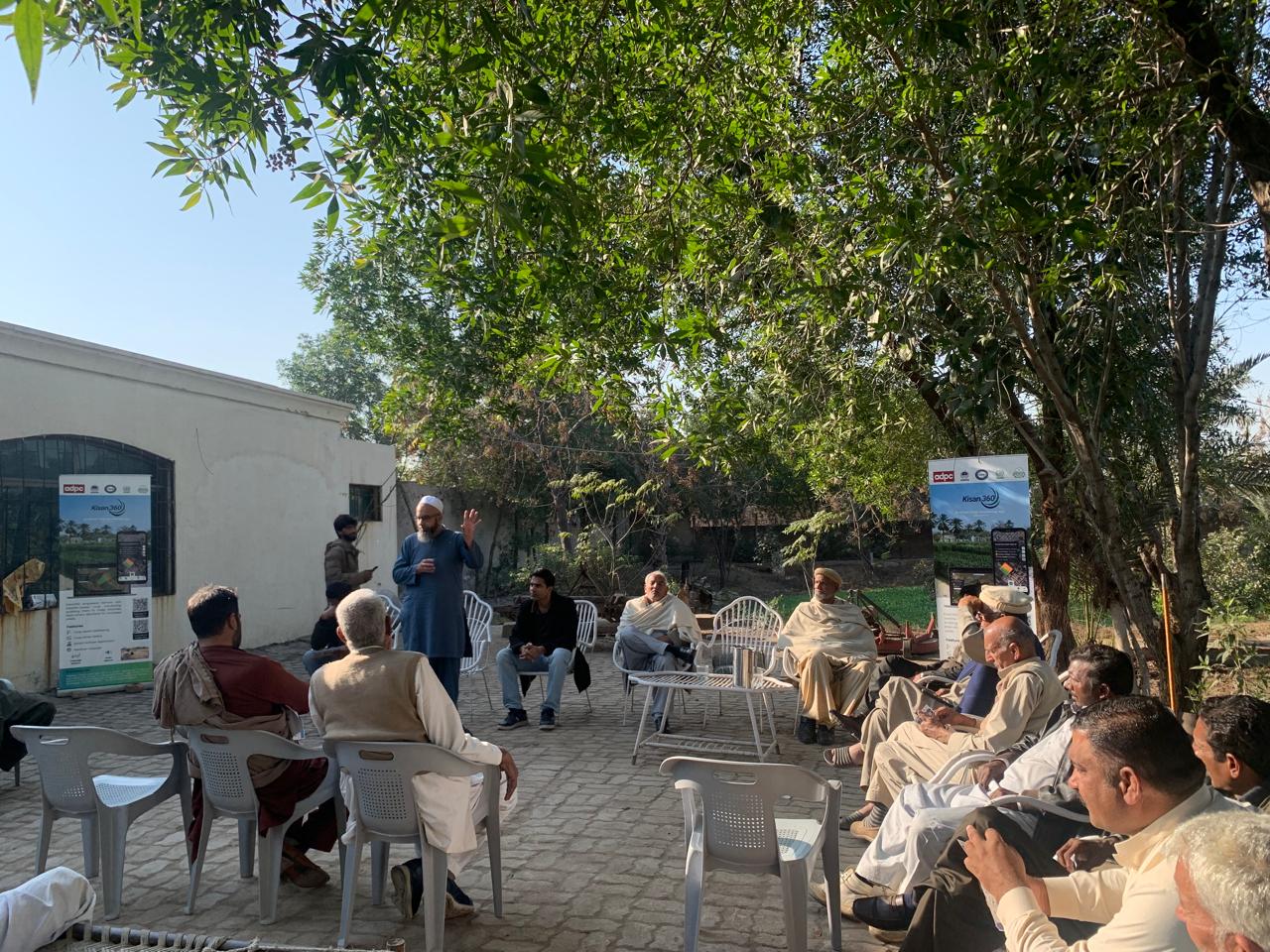
More and more local farmers are learning to use the app through seminars [Photo provided to GP]

Initially, local farmers expressed doubts about smart technology. “It’s too complicated for us, and its effectiveness and practicality have not been proven.

” The Pakistani team addressed their doubts by producing text guides and audio-visual materials on crop health maps in the local dialect and sharing them with farmers in real time.

“I come from a farming family, understanding very well the problems faced by Pakistani farmers today, with severe heat waves and water shortages becoming our main challenges.

Providing farmers with near real-time data to help them optimize their planting decisions and ensure food security for their communities is urgent,” Dr. Saqib Ali, a Pakistani researcher at the China-Pakistan Joint Lab for AI & Smart Agriculture, told Gwadar Pro.

“Our Kisan360 APP is now live on the Apple App Store and Android Play Store. We have conducted training sessions in Punjab, Sindh, and Islamabad, with a user base of approximately 1,000 farmers.”
 
“Pakistan is currently in urgent need of agricultural practices driven by advanced technology. This project is an opportunity for Pakistan.

After promotion, more and more farmers will be interested in it, which can bring substantial changes to local agriculture.” said Dr. Sultan Habibullah Khan, Director of the Center for Agricultural and Food Security Research at the University of Agriculture, Faisalabad.

Dr. Wu Jun told GP that the World Bank and the Asian Disaster Management Center have provided funding support for this project, emphasizing the importance of this innovative solution in addressing climate challenges and enhancing agricultural sustainability.

“In the future, our China-Pakistan Joint Lab for AI & Smart Agriculture plans to promote this technology throughout Pakistan within two years, to comprehensively promote sustainable agricultural development through AI+, as a new tool under the new era.”
 

Pakistan-China Virtual B2B Forum held to boost mineral trade and processing collaboration​

By Mariam Raheem | Gwadar Pro
Feb 18, 2025

GUANGZHOU- “Pakistan is home to some of the world’s richest mineral resources, and we are eager to collaborate with Chinese investors to unlock this potential,” said Azhar Ali Dahar, Director General of the Engineering & Minerals Division at the Trade Development Authority of Pakistan (TDAP), during a Pakistan-China Virtual B2B Forum on February 13.

The event, hosted by TDAP in collaboration with the Consulate General of Pakistan in Guangzhou, brought together 45 key stakeholders from both countries to explore trade and investment opportunities in Pakistan’s mineral sector.

According to the Pakistan Mineral Development Corporation, the country’s mineral resources are estimated to be worth over $6 trillion. Despite this potential, the sector remains underdeveloped, contributing less than 3% to Pakistan’s GDP.

Muhammad Yousuf, Assistant Manager of TDAP’s Engineering & Minerals Division, emphasized the need for value addition in the sector, particularly in bauxite processing. Pakistan possesses over 74 million tons of bauxite reserves; however, the country lacks sufficient infrastructure to process the raw material into alumina and aluminum. “This is an area where Chinese expertise and investment can make a significant impact,” he said.

On the occasion, Iqbal Sarwar, Director of Business Facilitation at the Khyber Pakhtunkhwa (KP) Board of Investment & Trade, highlighted the mineral potential of KP province, which is rich in gemstones, marble, and limestone.

Industry leaders shared their perspectives on market trends and collaborative opportunities.

The forum concluded with an engaging Q&A session and the announcement of the Minerals Investment Pavilion at the Health, Engineering & Minerals Show, scheduled for April 17-19, 2025, at the Expo Center in Lahore.
 
“Pakistan operates six nuclear reactors with a combined (net) capacity of 3.3 gigawatts (GW). Nuclear electricity production has increased from 21.3TWh in 2023 to a new all-time high of 21.7TWh (net) in 2024,” it said, adding Pakistan started developing another 1200MW plant in December 2024 with Chinese support.

The share of electricity from nuclear power plants to the commercial grid increased from the 16.2pc peak in 2023 to a record 17pc in 2024, it said, adding all operating reactors were built by the China National Nuclear Corporation (CNNC). This includes two Hualong One reactors (Kanupp-2 and Kanupp-3) outside Karachi and four CNP-300 nuclear reactors in Chashma.

CNNC was also building another 1200-MW Hualong One reactor in Chashma (Unit 5). The agreement to build this reactor dates back to 2017, but it took over seven years to progress to the formal construction start, i.e. first pour of concrete for the base slab of the reactor building, which occurred on December 30, 2024.

It is China’s only ongoing nuclear newbuild project abroad and represents the first non-Russian construction start anywhere in the world in the past five years.

In January this year, the National Electric Power Regulatory Authority published an estimated overnight cost of Rs966 billion ($3.4bn) for the Chashma-5 project and the total cost (including financing and other costs) of Rs1.125 trillion ($4 billion).

The majority of the cost is planned to be covered by credit from China for the project to start production by 2030, the report said, adding the project had been criticised for its high cost of power, and shelving renewable energy projects to make way for it.
 

China’s YFTC to host 40 Pakistani Students for Forestry, Agriculture Training​


By Tahir Ali | Gwadar Pro
Sep 24, 2025

China’s YFTC to host 40 Pakistani Students for Forestry, Agriculture Training


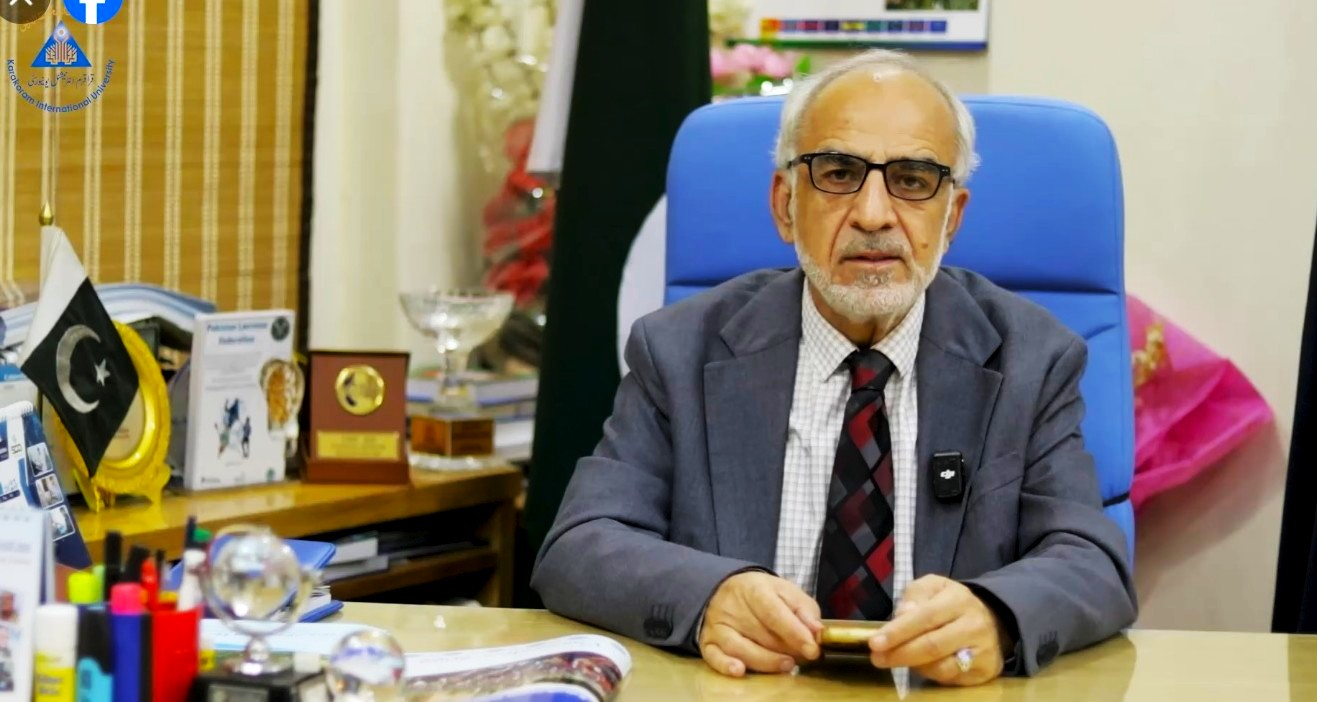
GILGIT) - Yunnan Forestry Technological College (YFTC), China, will host 40 students from Karakoram International University (KIU), Pakistan for a year-long program in forestry and agriculture, KIU Vice Chancellor Prof. Dr. Attaullah Shah announced in a congratulatory video message marking Chinese college’s 70th anniversary on September 23.

“Under this partnership, our 40 students in forestry and agriculture will study at YFTC for one year, across two semesters, where they will be taught modern technologies in forestry and agriculture,” Shah said. “We deeply value this collaboration because learning from each other for the development and improvement of this region is very important.”

The Vice Chancellor praised YFTC’s seven decades of excellence, highlighting its contributions to nurturing “both forests and talents” as well as improving health in the region. “I have visited Yunnan province and this college twice, and I was very inspired to see the hard work being done by the university president and the entire academic team,” he said.

Calling it “high time” to learn from one another’s experiences, Shah emphasized the importance of academic exchanges. “We exchange students, we exchange faculty, we develop each other’s programs, and we learn from the lessons of history,” he said.

He added that the partnership would not remain limited to forestry and agriculture. “We will further expand this collaboration to other disciplines, such as tourism and hospitality, business management, and economics,” Shah said, expressing hope that in the future YFTC students would also study at KIU.

“As Yunnan Forestry Technological College marks this important milestone, I look forward to more collaboration in other fields,” he added. “Certainly, once our students arrive at YFTC, they will become part of this collaborative partnership.”
 

BGI Offers 500 Genomics, Biotechnology Training Scholarships for Pakistan​


By Tahir Ali | Gwadar Pro
Sep 24, 2025

BGI Offers 500 Genomics, Biotechnology Training Scholarships for Pakistan


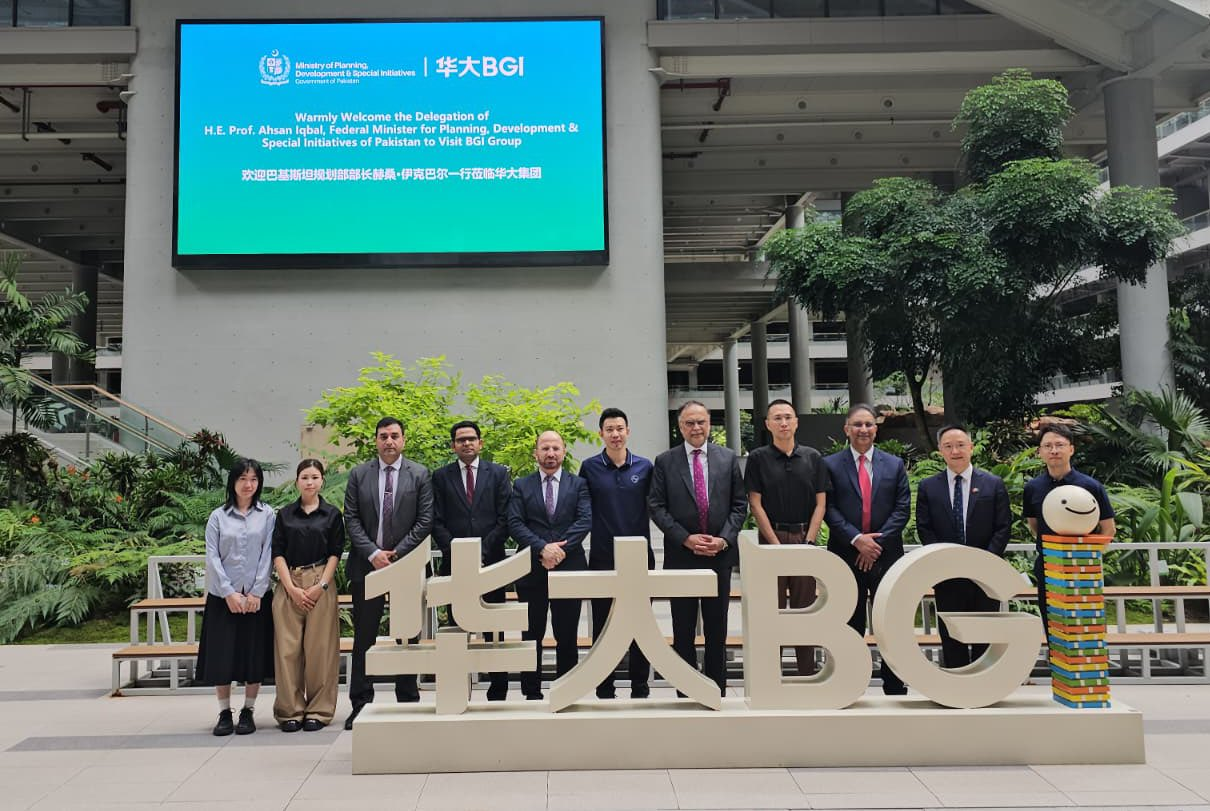
GUANGZHOU - The Beijing Genomics Institute (BGI) has announced 500 training scholarships for Pakistani experts in genomics and biotechnology, marking a new frontier in the China-Pakistan Economic Corridor (CPEC) that extends cooperation beyond infrastructure into health, food security, and advanced science.

According to a statement from the Ministry of Planning, Development and Special Initiatives issued on September 23, Federal Minister Prof. Ahsan Iqbal, during his visit to BGI headquarters in Guangzhou, hailed the initiative as a milestone for Pakistan’s development. “CPEC 2.0, with its focus on genomics and biotechnology, will illuminate the future of health, food security, and innovation for our people,” he said. “From building infrastructure to decoding life itself, Pakistan and China are entering a new chapter in scientific cooperation.”

The minister emphasized that genomics will play a defining role in shaping the future of healthcare, food security, and overall prosperity in Pakistan, and expressed gratitude to Chinese partners for supporting Pakistani experts through training opportunities.

Iqbal is currently on an official visit to China to co-chair the 14th meeting of the Joint Cooperation Committee (JCC) on CPEC. His trip includes a series of engagements in Guangzhou, Zhuzhou, and Changsha aimed at deepening cooperation in science, technology, and socioeconomic development.
 

Pakistan's flaxseed production may revive with Chinese high-yield varieties​


By Wang Xiaotong | China Economic Net
Sep 23, 2025

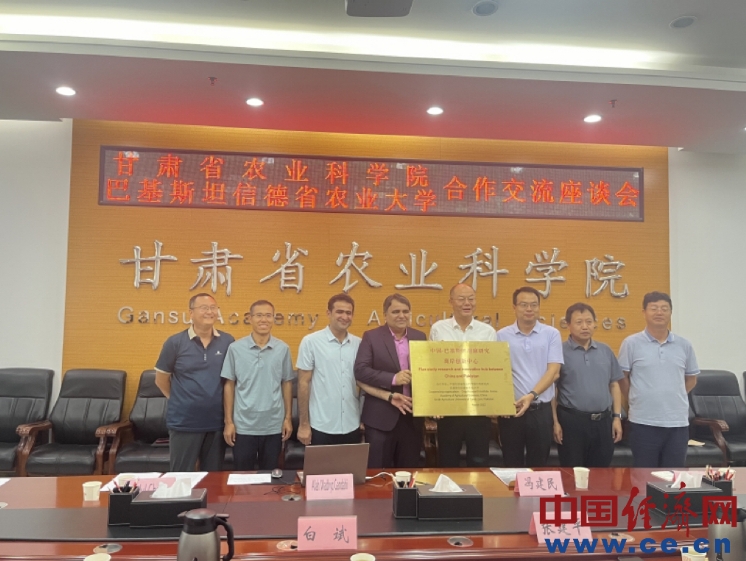
TANDOJAM & LANZHOU - A recent field experiment conducted in Sindh, Pakistan, has demonstrated that three Chinese flaxseed varieties - Longya-10, Longya-14, and Longxuan-1 - outperform the local check variety Ilsi-90 when applied with balanced NPK and boron fertilization. Led by Gansu Academy of Agricultural Sciences (GAAS) and Sindh Agriculture University (SAU), the study aims to address the declining flaxseed cultivation in Pakistan, where productivity (692 kg/ha) lags far behind global leaders like China (1,000 kg/ha) and Canada (1,385 kg/ha).

The experiment adopted a standard randomized block design with three replications and five fertilizer treatments. Data on agronomic traits including plant height, branches per plant and grain yield, as well as nutrient concentrations in leaves and seeds were collected.

Longya-14 stood out among all tested varieties: under optimal fertilization, it reached a plant height of 78.5 cm, with 17 branches and 12 seed pods per plant. Its 1000-seed weight hit 7.5 g, grain yield reached 1,089.3 kg/ha, and oil content touched 40.12%. Plus, its leaves and seeds contained higher levels of nitrogen (N), phosphorus (P), and potassium (K) than Ilsi-90. Ilsi-90 showed lower productivity and nutrient uptake efficiency even under improved fertilization; it only exhibited higher leaf boron concentration under the optimal treatment but failed to match the overall performance of Chinese varieties

Pakistan's flaxseed production may revive with Chinese high-yield varieties


The Flax Study Research and Innovation Hub between China and Pakistan by Gansu Academy of Agricultural Sciences and Sindh Agriculture University is unveiled in July, 2024. [Photo provided by Zhao Wei]

The study, published in the Journal of Ecological Engineering in August, 2025, confirms that combining balanced NPK fertilizer with boron - together with nutrient-responsive Chinese varieties (especially Longya-14) - can substantially enhance flax yield and seed nutritional quality in Sindh’s nutrient-deficient soils, providing a practical solution to revitalize Pakistan’s flaxseed industry.
 

Pakistan, China move closer to laptop manufacturing partnership​


By Shafqat Ali | Gwadar Pro
Sep 22, 2025

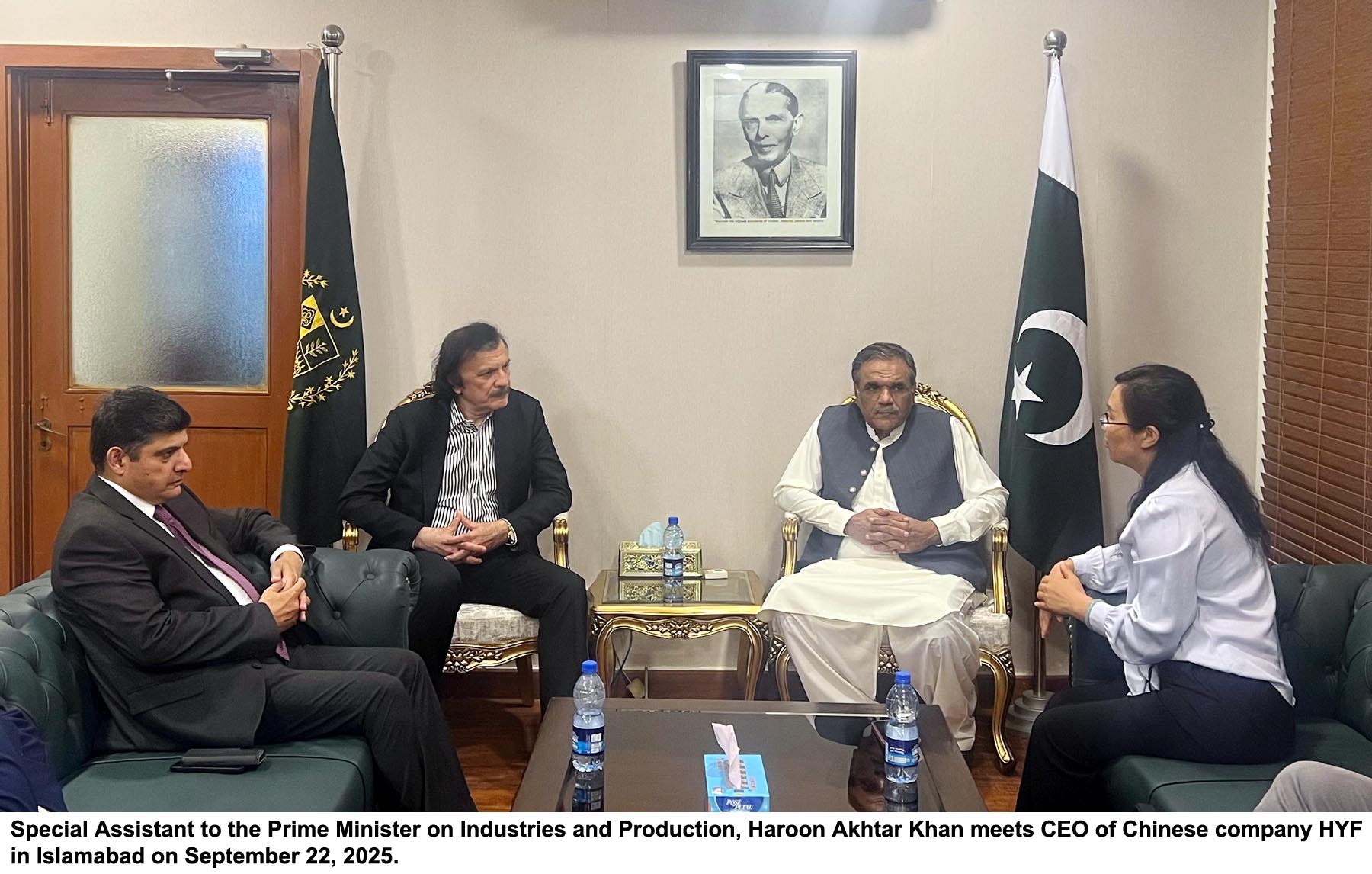
ISLAMABAD - In a key development for Pakistan’s technology sector, Special Assistant to the Prime Minister (SAPM) Haroon Akhtar Khan on Monday afternoon held talks with the CEO of HYF, a leading Chinese electronics firm, on setting up a laptop and tablet manufacturing plant in Pakistan.

Pakistan, China move closer to laptop manufacturing partnership


The Chinese company specializes in laptops, fingerprint devices, and digital tablets, and is now considering investing in local production facilities in Pakistan. Haroon Akhtar reassured the visiting delegation that Prime Minister Shehbaz Sharif has directed full facilitation for Chinese investors, declaring them “a top priority” for Pakistan’s economic agenda.

He announced that a new Mobile Device Policy, covering laptops and tablets in addition to smartphones, will soon be unveiled, creating an enabling environment for investors. He also highlighted that visa procedures for Chinese businesspersons had been streamlined, with visit and business visas now processed within 24 to 72 hours.

According to an official statement, the SAPM instructed the Pakistan Industrial Development Corporation (PIDC) and the Engineering Development Board (EDB) to extend full support for HYF’s entry into Pakistan. Analysts note that this move could not only reduce Pakistan’s reliance on imported electronics but also create jobs, boost technology transfer, and enhance local skills training.

The initiative reflects a growing trend of Chinese companies shifting from infrastructure investments to high-tech industrial cooperation in Pakistan, thereby diversifying the scope of bilateral economic engagement.
 
Pakistan will launch its first Hyperspectral Satellite (HS-1) from the Jiuquan Satellite Launch Centre (JSLC), China, on October 19, the Space and Upper Atmosphere Research Commission (SUPARCO) announced on Wednesday.

“This landmark mission represents a transformative milestone in Pakistan’s national space programme, propelling the country into a new era of advanced space-based applications in agriculture, disaster management, urban development, and environmental monitoring,” SUPARCO said.

It said that the HS-1 will enable precision farming through high-resolution hyperspectral data acquisition and calibration.


“The satellite will provide detailed insights into crop health, soil moisture, and irrigation patterns—enhancing yield estimation by 15–20% and contributing significantly to food security.”


For urban development, SUPARCO said that the satellite’s cutting-edge sensors will help monitor environmental changes, map infrastructure, and assess urban growth patterns.

By capturing unique spectral signatures of man-made structures, HS-1 will support sustainable city planning, land-use assessment, and efficient resource management, it added.

HS-1 will also serve as a vital tool in environmental monitoring and disaster management for early warning and rapid response.

The statement said that the satellites’ advanced imaging capabilities will aid in flood prediction, landslide tracking, and geo-hazard assessment, particularly across the Karakoram Highway and northern Pakistan.

The satellite will also enhance post-disaster assessment, transportation network analysis, and water resource modeling—providing timely data on floods, earthquakes, deforestation, and land degradation, SUPARCO added.

The integration of HS-1 into Pakistan’s expanding remote sensing fleet—comprising PRSS-1 (launched Jul 2018), EO-1 (launched Jan 2025), and KS-1 (launched Jul 2025)—will significantly strengthen the nation’s space-based infrastructure.

“The mission aligns with the National Space Policy and SUPARCO’s Vision 2047, which aim to position Pakistan at the forefront of space technology and innovation for sustainable national development.”
 
Hint, hint! Interesting times.
 
Precise agriculture! Well, you should be able to find pests in the crops,lol
 
To view this content we will need your consent to set third party cookies.
For more detailed information, see our cookies page.
 

Users who are viewing this thread

Back
Top