Navigation
Install the app
How to install the app on iOS
Follow along with the video below to see how to install our site as a web app on your home screen.
Note: This feature may not be available in some browsers.
More options
Style variation
You are using an out of date browser. It may not display this or other websites correctly.
You should upgrade or use an alternative browser.
You should upgrade or use an alternative browser.
Pakistan Education updates
- Thread starter ghazi52
- Start date
More options
Who Replied?


ghazi52
THINK TANK: CONSULTANT
- Thread starter
- #18
1955 , Khyber Medical College, Peshawar University..
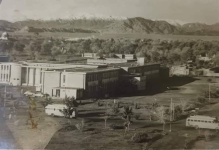
In 1954, the foundation stone of Khyber Medical College, as faculty of Medicine, of Peshawar University, was laid by the then Governor General of Pakistan, Mr. Ghulam Muhammad.
The College started functioning in 1955 with enrollment of fifty students with meager facilities.
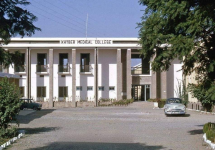
In 1954, the foundation stone of Khyber Medical College, as faculty of Medicine, of Peshawar University, was laid by the then Governor General of Pakistan, Mr. Ghulam Muhammad.
The College started functioning in 1955 with enrollment of fifty students with meager facilities.
ghazi52
THINK TANK: CONSULTANT
- Thread starter
- #19
The Pakistan Forest Institute, Peshawar
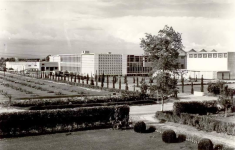
Front View Of The Main Building Of Pakistan Forest Institute, Peshawar,1960's (c).
There is a ROSE Garden on the left side of the Forest Institute building.
A sprawling Rose Garden is visible in the photo; It stretches along the road up to the end of frontline. It grows a wide variety of roses, planted with such a precision that viewers get a fantastic display of colours in flower arrangement. Total of nearly 250 samples of Roses..
There were many beautiful flowers and cactus plants from all over the world. Black and green roses in the rose garden.
The fragrance in air was just like a perfume from heaven.
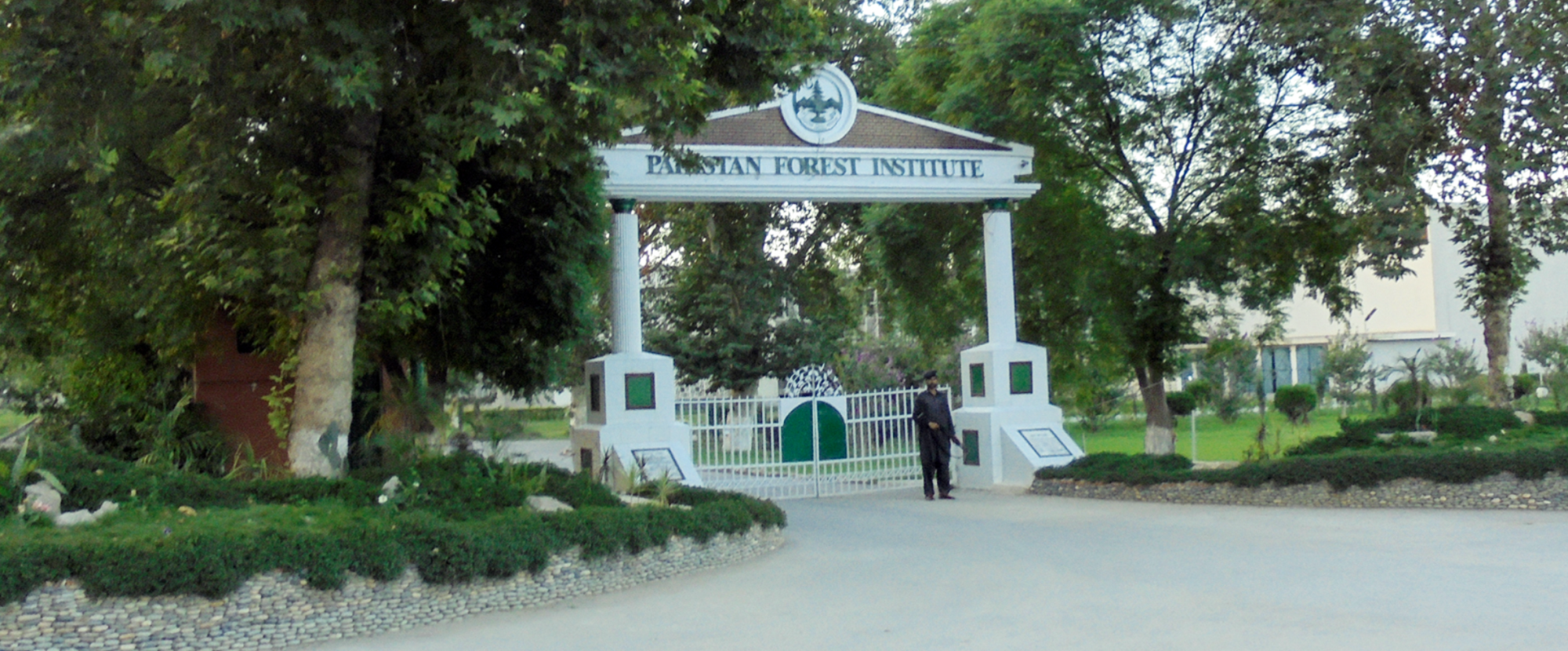
Pakistan Forest Institute (PFI) was established in 1947 at Faisalabad in order to complete the training of the students who had migrated to Pakistan after independence. In April, 1948 the PFI was shifted to Upper Topa, Murree hills and then in October, 1951 to Abbottabad.
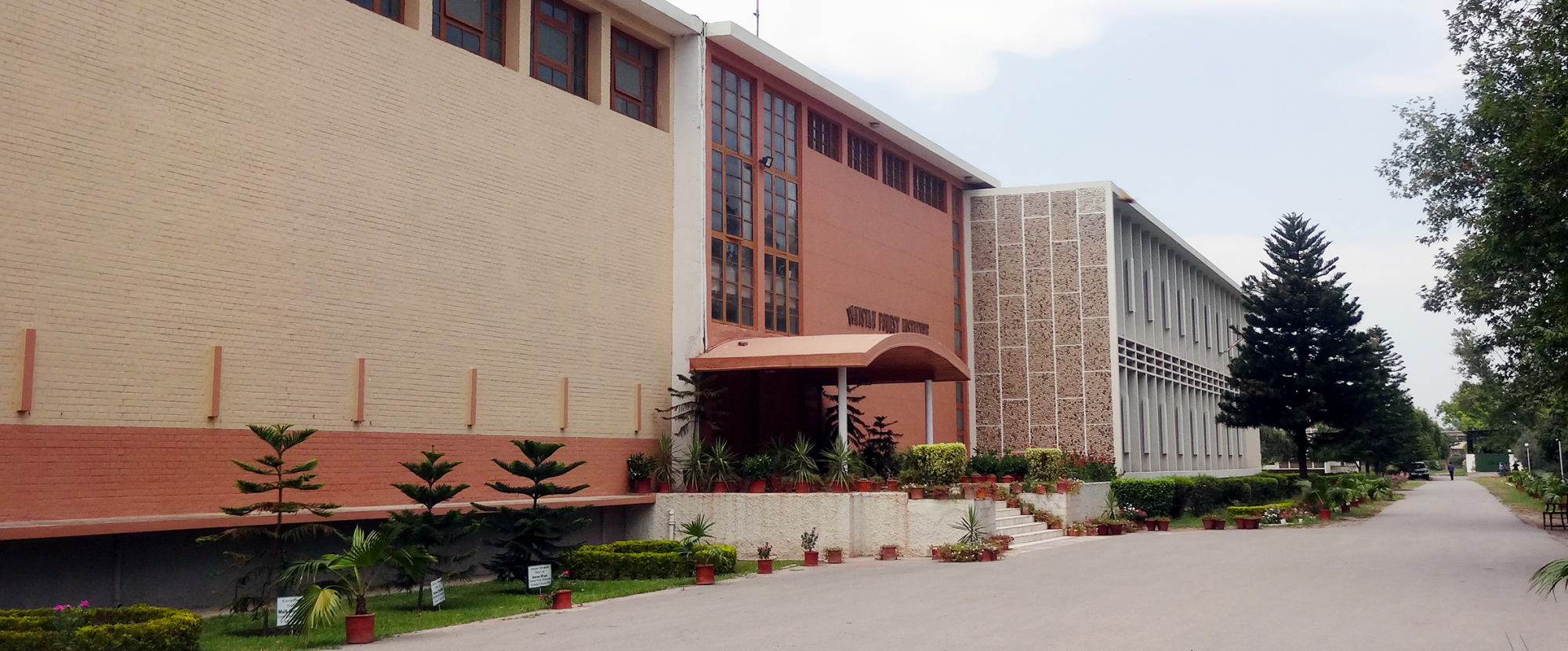
The construction of its present permanent building complex in the Peshawar University Campus was started in 1955 and completed over a period of about 10 years. During this period, main building consisting of offices, laboratories and workshops, students’ hostels and residential colony were constructed.
It started as a training institution, however, research was started soon after its establishment when research branches were created in it e.g., Forest Utilization (1947), Forest Entomology (1949), Forest Botany (1951), Forest Chemistry (1952), Medicinal Plants (1953) and Silviculture (1956). The staff of these branches also participate in training activities through teaching of the subjects of their specialization to the students of the Institute in addition to conducting research. The Institute is affiliated with the University of Peshawar since 1958 for the purpose of examinations and award of degrees in Forestry.
Pakistan Forest Institute is a Provincial Government Organization of which the administration changed hands many times. For instance, it was administered initially by the Federal Ministry of Food and Agriculture. It was transferred to the Provincial Agriculture Department of Government of West Pakistan in 1965, and then to the Agriculture Department of N.W.F.P. (Board of Governor) in 1969.
The Institute was transferred back to the Ministry of Food, Agriculture and Cooperatives, Government of Pakistan on 1st July, 1977. From September, 1995 to February 1997, it remained under the control of Ministry of Environment, Urban Affairs, Forestry and Wildlife.
Since March, 1997 to 30th June, 2011 it was under Ministry of Environment, Government of Pakistan, Islamabad. The institute has been devolved to Forestry, Environment and Wildlife Department, Khyber Pakhtunkhwa with effect from 1st July, 2011.
Front View Of The Main Building Of Pakistan Forest Institute, Peshawar,1960's (c).
There is a ROSE Garden on the left side of the Forest Institute building.
A sprawling Rose Garden is visible in the photo; It stretches along the road up to the end of frontline. It grows a wide variety of roses, planted with such a precision that viewers get a fantastic display of colours in flower arrangement. Total of nearly 250 samples of Roses..
There were many beautiful flowers and cactus plants from all over the world. Black and green roses in the rose garden.
The fragrance in air was just like a perfume from heaven.
Pakistan Forest Institute (PFI) was established in 1947 at Faisalabad in order to complete the training of the students who had migrated to Pakistan after independence. In April, 1948 the PFI was shifted to Upper Topa, Murree hills and then in October, 1951 to Abbottabad.
The construction of its present permanent building complex in the Peshawar University Campus was started in 1955 and completed over a period of about 10 years. During this period, main building consisting of offices, laboratories and workshops, students’ hostels and residential colony were constructed.
It started as a training institution, however, research was started soon after its establishment when research branches were created in it e.g., Forest Utilization (1947), Forest Entomology (1949), Forest Botany (1951), Forest Chemistry (1952), Medicinal Plants (1953) and Silviculture (1956). The staff of these branches also participate in training activities through teaching of the subjects of their specialization to the students of the Institute in addition to conducting research. The Institute is affiliated with the University of Peshawar since 1958 for the purpose of examinations and award of degrees in Forestry.
Pakistan Forest Institute is a Provincial Government Organization of which the administration changed hands many times. For instance, it was administered initially by the Federal Ministry of Food and Agriculture. It was transferred to the Provincial Agriculture Department of Government of West Pakistan in 1965, and then to the Agriculture Department of N.W.F.P. (Board of Governor) in 1969.
The Institute was transferred back to the Ministry of Food, Agriculture and Cooperatives, Government of Pakistan on 1st July, 1977. From September, 1995 to February 1997, it remained under the control of Ministry of Environment, Urban Affairs, Forestry and Wildlife.
Since March, 1997 to 30th June, 2011 it was under Ministry of Environment, Government of Pakistan, Islamabad. The institute has been devolved to Forestry, Environment and Wildlife Department, Khyber Pakhtunkhwa with effect from 1st July, 2011.
ghazi52
THINK TANK: CONSULTANT
- Thread starter
- #20
Pakistan Council of Scientific & Industrial Research.PCSIR
Pakistan Council of Scientific Industrial Research (PCSIR) was established 1953 under societies act to promote the cause of science and technology in the country. Since 1973, it is functioning under the act of parliament which was amended in 1984. Chief Executive of the council is the Chairman who is appointed by the Federal Government. The 21- member council is the policy making body of the PCSIR, which is composed of Chairman, three member of the Governing Body, four Director Generals of PCSIR Laboratories, four representatives from four ministers, four Directors of Industries, on from each province and six representative of the industry. The Governing Body is the executive organ of the council and comprises of the Chairman and three full-time members viz member (Science), Member (Technology) and Member (Finance), nominated by the Government. The Head office of the PCSIR is functioning at Islamabad where offices of the Chairman, Member (Science), Member (Technology) and Member (Finance) and Secretary PCSIR are located.
There are eleven laboratories / Units and five HRD Centres established throughout the country, headed by Director Generals/ Directors who directly report to the Chairman
The Lahore Laboratories Complex formerly known as the West Regional Laboratories started functioning with staff in a wing of the Punjab Universities, Institute of Chemistry in 1953. This setup was shifting in 1956 to the present permanent site for which 68.5 acres of the land were earmarked by the Punjab Government in 1955.
The Lahore unit of PCSIR has as commendable record of achievements. Its scientists and technologists boost of having completed more than 500 processes. Many of these are in commercial production. As many as 100 processes have been patented. In addition to applied research, their level of accomplishment in basis research, the feedback for applied research, is further evident from more than 3500 research publication in journal of national and international stands.
The laboratories are assisting the academic institutions by providing facilities to their M.Sc., MPhil and Phd. students which to date can be counted in thousands Various Centres and Divisions are manned by highly trained researchers. Necessary additional facilities such as workshops, libraries and pilot plants are adequately available to meet the R&D support needs.
Besides this LLC is also assigning the industry in public / private sector and Government department for compliance the products according to WTO regimes like TBT & SPS for their sustainability in the global market. For the purpose, quality services under ISO/ IEC 17025 : 2005 are being extended to the exporters, importers and manufacturers etc., throughout Pakistan multidimensional areas of testing and calibration. PCSIR labs. Complex lahore is also certified under ISO 9001:2008 by TUV nord Germany
PCSIR Labs Complex Lahore has the following functional centres under its umbrella:
PCSIR has realigned itself as a cost effective technology solution provider for public and private industrial sector especially for SMEs.
Objective Of PCSIR
From 1953 to 2000 the institution developed 647 technological processes (average 15 per year ) and obtained about 360 patents (Average 8 per year). About 3750 research papers were published between 1953-2000 by PCSIR ( Average 80 per year).
Pakistan Council of Scientific Industrial Research (PCSIR) was established 1953 under societies act to promote the cause of science and technology in the country. Since 1973, it is functioning under the act of parliament which was amended in 1984. Chief Executive of the council is the Chairman who is appointed by the Federal Government. The 21- member council is the policy making body of the PCSIR, which is composed of Chairman, three member of the Governing Body, four Director Generals of PCSIR Laboratories, four representatives from four ministers, four Directors of Industries, on from each province and six representative of the industry. The Governing Body is the executive organ of the council and comprises of the Chairman and three full-time members viz member (Science), Member (Technology) and Member (Finance), nominated by the Government. The Head office of the PCSIR is functioning at Islamabad where offices of the Chairman, Member (Science), Member (Technology) and Member (Finance) and Secretary PCSIR are located.
There are eleven laboratories / Units and five HRD Centres established throughout the country, headed by Director Generals/ Directors who directly report to the Chairman
The Lahore Laboratories Complex formerly known as the West Regional Laboratories started functioning with staff in a wing of the Punjab Universities, Institute of Chemistry in 1953. This setup was shifting in 1956 to the present permanent site for which 68.5 acres of the land were earmarked by the Punjab Government in 1955.
The Lahore unit of PCSIR has as commendable record of achievements. Its scientists and technologists boost of having completed more than 500 processes. Many of these are in commercial production. As many as 100 processes have been patented. In addition to applied research, their level of accomplishment in basis research, the feedback for applied research, is further evident from more than 3500 research publication in journal of national and international stands.
The laboratories are assisting the academic institutions by providing facilities to their M.Sc., MPhil and Phd. students which to date can be counted in thousands Various Centres and Divisions are manned by highly trained researchers. Necessary additional facilities such as workshops, libraries and pilot plants are adequately available to meet the R&D support needs.
Besides this LLC is also assigning the industry in public / private sector and Government department for compliance the products according to WTO regimes like TBT & SPS for their sustainability in the global market. For the purpose, quality services under ISO/ IEC 17025 : 2005 are being extended to the exporters, importers and manufacturers etc., throughout Pakistan multidimensional areas of testing and calibration. PCSIR labs. Complex lahore is also certified under ISO 9001:2008 by TUV nord Germany
PCSIR Labs Complex Lahore has the following functional centres under its umbrella:
- Applied Chemistry Research Centre
- Applied Physics, Computers and Research Centre
- Centre for Environmental Protection Studies
- Centre for Development of Laboratory Equipment
- Electrical Measurement Test Laboratory
- Engineering Services Centre
- Food and Biotechnology Research Centre
- Glass & Ceramics Research Centre
- Mineral Processing Research Centre
- Pakistan Institute of Technology for Minerals & Advance Engineering Materials (PITMAEM)
PCSIR has realigned itself as a cost effective technology solution provider for public and private industrial sector especially for SMEs.
Objective Of PCSIR
- Optimum utilization of indigenous raw material resources for the development of industrial processes.
- Development of technologies around local resources from bench to pilot plant stages, and leasing them out for industrial exploitation leading to import substitution and export enhancement.
- To conduct R&D work on problems faced by the industrial sector and maintain linkages through seminars, workshops, publications and provision of assistance to academic institutions
- To undertake cooperative research with local and foreign R&D organizations and commerce-industrial outfits on projects of national interest
- Human resource development organized training courses and diffusive on-job grooming of manpower for industry and research centres to broaden the science & technology base in the country
From 1953 to 2000 the institution developed 647 technological processes (average 15 per year ) and obtained about 360 patents (Average 8 per year). About 3750 research papers were published between 1953-2000 by PCSIR ( Average 80 per year).
ghazi52
THINK TANK: CONSULTANT
- Thread starter
- #21
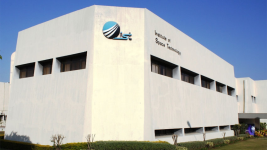
Karakoram University announces separate campus for girls
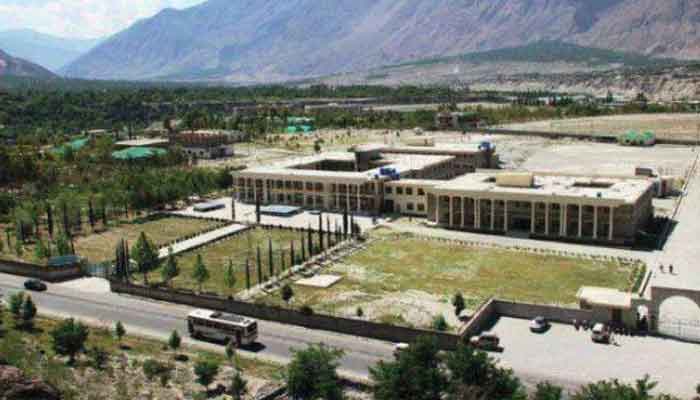
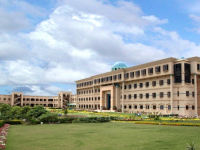
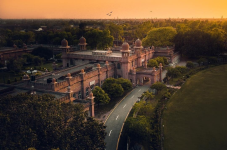
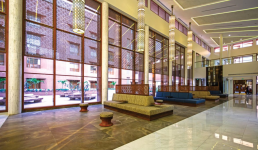
ASTOR: Karakoram University Professor Dr Attaullah Shah Wednesday announced establishment of separate campus for girls and a special package of admission for third divisiones students.
Talking to APP, the Vice Chancellor said that the government was promoting education and providing facilities to students.
The VC informed that said that admissions would be started in Diamer Campus in March so the third divisions could take admissions adding 50 percent fee would be paid by provincial government.
ASTOR: Karakoram University Professor Dr Attaullah Shah Wednesday announced establishment of separate campus for girls and a special package of admission for third divisiones students.
Talking to APP, the Vice Chancellor said that the government was promoting education and providing facilities to students.
The VC informed that said that admissions would be started in Diamer Campus in March so the third divisions could take admissions adding 50 percent fee would be paid by provincial government.

ghazi52
THINK TANK: CONSULTANT
- Thread starter
- #29
Punjab University - Lahore
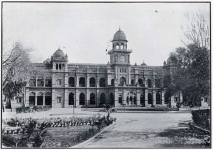
It was established in Lahore in 1882. It was from the beginning both a teaching and an examining body, and it was the first higher education institution in India in a majority Muslim area.
In the early days of the university, it received donations by ruling princes and individuals.
Key figures in iits later academic development were G.W. Leitner, an Englishman of Hungarian origin who was the first registrar, and Professor A.C. Woolner, vice-chancellor in 1928–36.
It was established in Lahore in 1882. It was from the beginning both a teaching and an examining body, and it was the first higher education institution in India in a majority Muslim area.
In the early days of the university, it received donations by ruling princes and individuals.
Key figures in iits later academic development were G.W. Leitner, an Englishman of Hungarian origin who was the first registrar, and Professor A.C. Woolner, vice-chancellor in 1928–36.
ghazi52
THINK TANK: CONSULTANT
- Thread starter
- #30
Panjab University: Journey and evolution
Chaman Lal
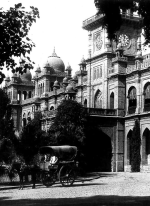
The University of Punjab at Lahore was set up on October 14, 1882. It was the fourth university of India although it was the first university that expanded its scope from being an examining university to teaching and examining both. Preceding it were the University of Calcutta (set up on January 24, 1857), the University of Bombay (July 24, 1857) and University of Madras (September 5, 1857).
The evolution of higher education in India is interesting. Till 1904, all universities had their own statutes. Thereafter, all five universities (the aforementioned four and Allahabad University (established November 16, 1889) were brought under the Indian Universities Act VIII of 1904. Many features still continue with all these five universities. These include elected Senate and Syndicates in these institutions. Till 1947, the British established in India 496 colleges and 21 universities, the last one being Sagar University in 1946.
At present, there are more than 750 universities, including private, deemed ones and more than 35,000 colleges in divided part of India. If Pakistan and Bangladeshi institutions are counted, it might cross 1,000 universities and 50,000 plus colleges!
Birth of an institution
Advertisement
It was the setting up of a Government College in Lahore on January 1, 1864, as part of the British scheme of expanding higher education in India that eventually led to the establishment of Punjab University. The college was housed in Dhyan Singh Haveli. It was renamed Lahore University College by 1869, and thereafter became Punjab University College, Lahore. There was a systematic campaign to upgrade the college to university for 13 long years before the University of the Punjab came about on October 14, 1882.
In between, the Oriental College, Lahore, was set up in 1870. It focussed on Indian languages like Sanskrit, Arabic, Persian, Punjabi, Hindi. Gurmukhi was recognised by Oriental College as early as in 1877 and Punjabi (Gurmukhi) department was opened in Oriental College in 1879. It was renamed Punjabi Language and Culture Department after Partition. The Hindi department has been functioning in the college since 1983.
Punjab Governor Sir Charles Umpherston Aitchison was appointed the first Chancellor of the university. He appointed Sir James Bradwood Lyall as the first Vice-Chancellor. He was succeeded by Sir Baden Henry Powell.
Gottlieb Wilhelm Leitner, Professor of Arabic at King’s College London, was named the first Principal of Panjab University College. He later took over as the first Registrar of University of the Punjab in 1882 and contributed immensely to the university’s development.
Set up in 1875, Mahindra College, Patiala, was the university’s first affiliate college. St. Stephen’s College, Delhi, was established in 1881.
Distinguished Punjabis became the first Fellows/Senators of the university. They included Maharaja Ranbir Singh of Kashmir, Maharaja Rajinder Singh of Patiala, Raja Hira Singh of Nabha, Raja Jagatjit Singh of Kapurthala, Raja Raghbir Singh of Jind, Nawab Mohd. Siddique Khan of Bahawalpur, Nawab Ibrahim Khan of Malerkotla, Raja Bikram Singh of Faridkot, Munshi Hukam Chand and Sodhi Hukam Singh among others.
It took a quarter of a century for the first Indian Vice-Chancellor, Sir P C Chatterjee, to be appointed in 1907. Dr Umar Hayat Malik took over as the first Vice-Chancellor in September 1947 at Lahore in post-Partition period. Punjab University, Lahore, as it was popularly known, catered the vast area in pre-Partition India. Apart from the undivided Punjab, which was a huge state, it also covered the Delhi region till 1922, Jammu and Kashmir, Baluchistan, North-West Frontier Province (NWFP), now known as Pakhtunwa in Pakistan, till 1947.
It is sometimes believed that the University of Lahore was spelled as ‘Punjab’ and it changed to ‘Panjab’ in Chandigarh to differentiate! This, however, is not true. Both spellings are in use in pre-Partition Punjab University records.
In times of trauma
After Partition, Punjab University went through traumatic times, particularly in East Punjab, the Indian part of Punjab. It was agreed at the time of Partition that examinations will be conducted by the University of the Punjab, Lahore, on both sides. For this purpose, Registrar (Examinations) of the University Madan Gopal Singh, who was in India at the time of Partition, travelled to Lahore from Shimla, leaving a note for eminent artist Krishan Khanna’s father — ‘See you when I get back, that is, if I get back’! He was murdered by his personal assistant in his office in the university!
Progressive economist Professor Brij Narayan, who was the head of the economics department and wrote on ‘Sufferings of Peasants’, had opted to stay back in Lahore. He too was similarly murdered in his office.
The long shadow of hatred destroyed the University of Lahore’s humanist tradition and the nascent government in East Punjab was compelled to bring an ordinance to set up East Punjab University on September 27, 1947, which came into existence on October 1, 1947. Sir Chandu Lal Trivedi, Governor of East Punjab, became its first Chancellor. The administrative offices of the university were set up in a camp in Shimla. Justice Teja Singh was appointed Honorary Vice-Chancellor of the university from February 8, 1948 till March 31, 1949, when he was appointed first Chief Justice of Pepsu High Court. The first convocation of the university was held on March 5, 1949, in the presence of Deputy Prime Minister Vallabhbhai Patel. Justice Teja Singh was succeeded by G C Chatterjee for four months and then Dewan Anand Kumar for eight years, followed by the legendary Amar Chand Joshi for another eight years. Since 2016, economist Dr. Zaffar Mueen Nasir has been heading the PU Lahore as Vice-Chancellor while scientist Prof. Arun Kumar Grover has been the Vice-Chancellor of PU Chandigarh since 2012.
Both universities have expanded a lot since their inception. Punjab University, Lahore, has now five campuses — two in Lahore and three outside Lahore-Gujranwala, Jhelum and Khanaspur. Its original location Government College, Lahore, has now turned into a full-fledged research-oriented university named as Government College University, Lahore.
The Indian odyssey
PU administrative offices shifted to cantonment in Solan after 1947. The departments were also located in various places — Department of Chemical Engineering was located in Delhi Polytechnic, Delhi; Botany, Zoology and Chemistry departments started in Khalsa College Amritsar, so was Punjabi department agriculture college was also set up at Amritsar. Government College, Hoshiarpur, took care of many PG departments like economics, English, zoology, before all departments finally shifted to the present campus of Panjab University at Chandigarh by 1960.
Despite scoring almost equal to central universities like JNU, Hyderabad, Delhi University in academic world in rankings, Panjab University at Chandigarh is being given a step-motherly treatment by both the state and central governments. The Punjab Government has literally stopped contributing its 40 per cent budgetary share to the university since long and even the reduced meagre 8 per cent is not being paid by it. The central government, which is taking care of 92 per cent of university’s financial needs, keeps choking it of funds due to political reasons as it is not directly controlled by the MHRD.
Role in freedom struggle
During the freedom struggle, Punjab University Lahore, played a brilliant role. From the calendar of 1932, one reads the Senate proceedings relating to October 8, 1930, an incident in DAV College, Lahore, when the police entered the campus and beat up a professor and some students in his classroom. The context was: on October 7, the Lahore Conspiracy case tribunal had announced its verdict — committing Bhagat Singh, Sukhdev and Rajguru to gallows. Protests by students and teachers in Lahore was natural and the police tried to suppress these by entering the classrooms on October 8. Condemning the police act, the University of Punjab Senate protested and passed a strongly worded resolution that without the Principal’s consent, the police couldn’t enter the campus!
A forgotten legacy
Sadly Panjab University, Chandigarh, has not even put any plaques in the university in memory of Prof. M G Singh, Prof. Brij Narain, who became victims of Partition-induced hatred and were assassinated in their offices in PU, Lahore, nor about Bhagat Singh’s comrade Prem Dutt Verma, who taught in Panjab University, Chandigarh, after his release from jail.
The Lahore website of the university proudly claims Pakistani scientist Abdus Salam and Indian scientist Hargobind Khurana as its alumni Nobel laureates of 1968 and 1979 with photographs and brief biographies. The Chandigarh website does not even mention Hargobind Khurana.
— The writer is a retired Professor from JNU, New Delhi, and Fellow of Panjab University Chandigarh
Chaman Lal
The University of Punjab at Lahore was set up on October 14, 1882. It was the fourth university of India although it was the first university that expanded its scope from being an examining university to teaching and examining both. Preceding it were the University of Calcutta (set up on January 24, 1857), the University of Bombay (July 24, 1857) and University of Madras (September 5, 1857).
The evolution of higher education in India is interesting. Till 1904, all universities had their own statutes. Thereafter, all five universities (the aforementioned four and Allahabad University (established November 16, 1889) were brought under the Indian Universities Act VIII of 1904. Many features still continue with all these five universities. These include elected Senate and Syndicates in these institutions. Till 1947, the British established in India 496 colleges and 21 universities, the last one being Sagar University in 1946.
At present, there are more than 750 universities, including private, deemed ones and more than 35,000 colleges in divided part of India. If Pakistan and Bangladeshi institutions are counted, it might cross 1,000 universities and 50,000 plus colleges!
Birth of an institution
Advertisement
It was the setting up of a Government College in Lahore on January 1, 1864, as part of the British scheme of expanding higher education in India that eventually led to the establishment of Punjab University. The college was housed in Dhyan Singh Haveli. It was renamed Lahore University College by 1869, and thereafter became Punjab University College, Lahore. There was a systematic campaign to upgrade the college to university for 13 long years before the University of the Punjab came about on October 14, 1882.
In between, the Oriental College, Lahore, was set up in 1870. It focussed on Indian languages like Sanskrit, Arabic, Persian, Punjabi, Hindi. Gurmukhi was recognised by Oriental College as early as in 1877 and Punjabi (Gurmukhi) department was opened in Oriental College in 1879. It was renamed Punjabi Language and Culture Department after Partition. The Hindi department has been functioning in the college since 1983.
Punjab Governor Sir Charles Umpherston Aitchison was appointed the first Chancellor of the university. He appointed Sir James Bradwood Lyall as the first Vice-Chancellor. He was succeeded by Sir Baden Henry Powell.
Gottlieb Wilhelm Leitner, Professor of Arabic at King’s College London, was named the first Principal of Panjab University College. He later took over as the first Registrar of University of the Punjab in 1882 and contributed immensely to the university’s development.
Set up in 1875, Mahindra College, Patiala, was the university’s first affiliate college. St. Stephen’s College, Delhi, was established in 1881.
Distinguished Punjabis became the first Fellows/Senators of the university. They included Maharaja Ranbir Singh of Kashmir, Maharaja Rajinder Singh of Patiala, Raja Hira Singh of Nabha, Raja Jagatjit Singh of Kapurthala, Raja Raghbir Singh of Jind, Nawab Mohd. Siddique Khan of Bahawalpur, Nawab Ibrahim Khan of Malerkotla, Raja Bikram Singh of Faridkot, Munshi Hukam Chand and Sodhi Hukam Singh among others.
It took a quarter of a century for the first Indian Vice-Chancellor, Sir P C Chatterjee, to be appointed in 1907. Dr Umar Hayat Malik took over as the first Vice-Chancellor in September 1947 at Lahore in post-Partition period. Punjab University, Lahore, as it was popularly known, catered the vast area in pre-Partition India. Apart from the undivided Punjab, which was a huge state, it also covered the Delhi region till 1922, Jammu and Kashmir, Baluchistan, North-West Frontier Province (NWFP), now known as Pakhtunwa in Pakistan, till 1947.
It is sometimes believed that the University of Lahore was spelled as ‘Punjab’ and it changed to ‘Panjab’ in Chandigarh to differentiate! This, however, is not true. Both spellings are in use in pre-Partition Punjab University records.
In times of trauma
After Partition, Punjab University went through traumatic times, particularly in East Punjab, the Indian part of Punjab. It was agreed at the time of Partition that examinations will be conducted by the University of the Punjab, Lahore, on both sides. For this purpose, Registrar (Examinations) of the University Madan Gopal Singh, who was in India at the time of Partition, travelled to Lahore from Shimla, leaving a note for eminent artist Krishan Khanna’s father — ‘See you when I get back, that is, if I get back’! He was murdered by his personal assistant in his office in the university!
Progressive economist Professor Brij Narayan, who was the head of the economics department and wrote on ‘Sufferings of Peasants’, had opted to stay back in Lahore. He too was similarly murdered in his office.
The long shadow of hatred destroyed the University of Lahore’s humanist tradition and the nascent government in East Punjab was compelled to bring an ordinance to set up East Punjab University on September 27, 1947, which came into existence on October 1, 1947. Sir Chandu Lal Trivedi, Governor of East Punjab, became its first Chancellor. The administrative offices of the university were set up in a camp in Shimla. Justice Teja Singh was appointed Honorary Vice-Chancellor of the university from February 8, 1948 till March 31, 1949, when he was appointed first Chief Justice of Pepsu High Court. The first convocation of the university was held on March 5, 1949, in the presence of Deputy Prime Minister Vallabhbhai Patel. Justice Teja Singh was succeeded by G C Chatterjee for four months and then Dewan Anand Kumar for eight years, followed by the legendary Amar Chand Joshi for another eight years. Since 2016, economist Dr. Zaffar Mueen Nasir has been heading the PU Lahore as Vice-Chancellor while scientist Prof. Arun Kumar Grover has been the Vice-Chancellor of PU Chandigarh since 2012.
Both universities have expanded a lot since their inception. Punjab University, Lahore, has now five campuses — two in Lahore and three outside Lahore-Gujranwala, Jhelum and Khanaspur. Its original location Government College, Lahore, has now turned into a full-fledged research-oriented university named as Government College University, Lahore.
The Indian odyssey
PU administrative offices shifted to cantonment in Solan after 1947. The departments were also located in various places — Department of Chemical Engineering was located in Delhi Polytechnic, Delhi; Botany, Zoology and Chemistry departments started in Khalsa College Amritsar, so was Punjabi department agriculture college was also set up at Amritsar. Government College, Hoshiarpur, took care of many PG departments like economics, English, zoology, before all departments finally shifted to the present campus of Panjab University at Chandigarh by 1960.
Despite scoring almost equal to central universities like JNU, Hyderabad, Delhi University in academic world in rankings, Panjab University at Chandigarh is being given a step-motherly treatment by both the state and central governments. The Punjab Government has literally stopped contributing its 40 per cent budgetary share to the university since long and even the reduced meagre 8 per cent is not being paid by it. The central government, which is taking care of 92 per cent of university’s financial needs, keeps choking it of funds due to political reasons as it is not directly controlled by the MHRD.
Role in freedom struggle
During the freedom struggle, Punjab University Lahore, played a brilliant role. From the calendar of 1932, one reads the Senate proceedings relating to October 8, 1930, an incident in DAV College, Lahore, when the police entered the campus and beat up a professor and some students in his classroom. The context was: on October 7, the Lahore Conspiracy case tribunal had announced its verdict — committing Bhagat Singh, Sukhdev and Rajguru to gallows. Protests by students and teachers in Lahore was natural and the police tried to suppress these by entering the classrooms on October 8. Condemning the police act, the University of Punjab Senate protested and passed a strongly worded resolution that without the Principal’s consent, the police couldn’t enter the campus!
A forgotten legacy
Sadly Panjab University, Chandigarh, has not even put any plaques in the university in memory of Prof. M G Singh, Prof. Brij Narain, who became victims of Partition-induced hatred and were assassinated in their offices in PU, Lahore, nor about Bhagat Singh’s comrade Prem Dutt Verma, who taught in Panjab University, Chandigarh, after his release from jail.
The Lahore website of the university proudly claims Pakistani scientist Abdus Salam and Indian scientist Hargobind Khurana as its alumni Nobel laureates of 1968 and 1979 with photographs and brief biographies. The Chandigarh website does not even mention Hargobind Khurana.
— The writer is a retired Professor from JNU, New Delhi, and Fellow of Panjab University Chandigarh
Users who are viewing this thread
Total: 3 (members: 0, guests: 3)
Pakistan Defence Latest
-

-

-
Al - Haider VT-4 MBT - The Premier PA Ground Asset [Developments] (3 Viewers)
- Latest: RandomThoughts7
-

-
Country Watch Latest
-
-
-
India's big bet: Opens up conventional missile production to private industry (5 Viewers)
- Latest: Faani83
-

-
Latest Posts
-
-
-
-
 The Murders of Female Social Media Influencers: Pakistan's War Against Women (6 Viewers)
- Latest: gangsta_rap
-
Western communist soldier says China's Military Isn't Ready for Combat (3 Viewers)
- Latest: gangsta_rap