Pakistan Exports / Imports - Updates

In the South Asian region, Pakistan exported $313.998m worth of goods to Bangladesh as compared to last year’s $241.960m. While exports to Afghanistan were recorded at $406.67m against $234.563m last year.

Regarding European states, Pakistan exported goods worth $707.649m to Germany, signifying an increase from the previous year. Meanwhile, exports to Spain were recorded at $600.871m.

Similarly, the exports to France during the months under review were recorded at $230.857m against $207.183m while the exports to Belgium stood at $257.895m against $236.207m.

Exports to Turkiye stood at $136.769m against $158.843m last year.
 
Pakistan has achieved record-high Monthly 🧑‍💻 IT exports of US$ 348 million in December 2024.

This marks a 15% year-on-year increase and a 12% rise compared to the previous month.
 

Textile exports up by 10.6pc to $10.77b in seven months​


By Staff Reporter | The Nation
Feb 23, 2025

Textile exports witnessed an increase of 10.60 percent during the first seven months of the current financial year (2024-25) as compared to the corresponding period of last year, Pakistan Bureau of Statistics (PBS) reported Tuesday.

The textile exports from the country were recorded at $10,770.472 million during July-January (2024-25) against the exports of $9,738.542 million during July-January (2023-24).

The textile commodities that contributed in trade growth included cotton cloth the export of which increased by 3.99 percent to $1,129.728 million from $1,086.396 million while the export of knitwear surged by 18.16 percent to $3,033.951 million from $2,567.576 million.

The other commodities that witnessed growth in trade included bed wear, the export of which rose by 14.71 percent to $1,868.894 million from $1,629.185 million, towels by 6 percent to $631.973 million from $596.203 million, tents, canvas, and tarpaulin up by 18.91 percent to $83.539 million this year compared to the exports of $ 70.256 million last year.
 
export of readymade garments grew by 21.90 percent to $ 2,441.304 million from $ 2,002.662 million, art, silk and synthetic textile rose by 12.91 percent to $236.799 million from $209.722 million, made up articles (excl. towels and bed wear) increased by 10.98 percent to $460.331 million from $414.788 million while the export of other textile materials went up by 4.55 percent to $432.758 million from $413.924 million.

The textile commodities that witnessed negative trade growth included raw cotton the exports of which declined by 98.90 percent to $0.616 million from $55.752 million. Likewise, the exports of cotton yarn declined by 35.77 percent to $430.230 million from $669.825 million whereas the export of cotton carded or combed dipped by 98 percent from 0.595 million to 0.006 million during the period under review. The exports of yarn other than cotton yarn also declined by 6.07 percent to $20.343 million from $21.658 million.

Meanwhile, on year-on-year basis, the textile exports witnessed an increase of 15.85 percent during January 2025 as compared to the same month of last year. The textile exports from the country during January 2025 were recorded at $1,685.908 million against the exports of $1,455.296 million in January 2024. On a month-on-month basis, the textile exports from the country witnessed an increase of 14.12 percent during January 2024 as compared to the exports of $1,477.300 million recorded in December 2024, according to the data.
 

Food group exports surge by 18.17pc to $4.61b in seven months​

By Staff Reporter | The Nation
Feb 23, 2025

Food group exports from the country witnessed an increase of 18.17 percent during the first seven months of the current fiscal year (2024-25) as compared to the corresponding period of last year, the Pakistan Bureau of Statistics (PBS) reported.

The exports of various food commodities were recorded at $4.613 billion during July-January (2024-25) as compared to the exports of $4.265 billion in July-January (2023-24), according to PBS data.

The food commodities that contributed to positive growth in trade included rice, the exports of which grew by 3.73 percent, from $2.115 billion to $2.194 billion. The other food commodities that contributed to positive growth included fish and fish preparations, the exports of which increased by 1.25 percent, from $229.410 million to $232.273 million, whereas the exports of tobacco rose by 81.42 percent, from $56.525 million to $102.549 million. The exports of sugar increased by 1831.30 percent, from $21.069 million to $406.909 million, whereas the export of meat and meat preparations also surged by 2.60 percent, from $287.027 million to $294.497 million.

The food commodities that contributed to negative growth in trade included fruits, the exports of which decreased by 0.24 percent, from $211.037 million to $210.526 million. The exports of vegetables dipped by 18.14 percent, from $201.491 million to $164.935 million; spices by 15.92 percent, from $67.195 million to $56.498 million, oil seeds, nuts, and kernals by 14.63 percent, from $375.747 million to $320.775 million, whereas the exports of all other food items decreased by 9.97 percent, from $700.015 million to $630.232 million.

Meanwhile, on year-on-year basis, the exports of food commodities witnessed a decrease of 16.86 percent during the month of January 2025 as compared to the same month of last year. The food group exports during January 2025 were recorded at $653.623 million against the exports of $786.189 million. On month-on-month basis, the exports of food commodities also dipped by 18.79 percent in January 2025 when compared to the exports of $804.857 million in December 2024, PBS reported.
 

Potassium sulphate at Gwadar Port: Export approval likely for 2 firms under close watch


Mushtaq Ghumman

1504184730d3a32.jpg


ISLAMABAD: The federal government is likely to allow two companies to export potassium sulphate from Gwadar Port along with strict monitoring of quantitative restrictions to be put in place in customs WeBOC system in order to check export data on real-time basis, sources told Business Recorder.

Sharing the details, sources said, two major industries namely M/S Agven Private Limited (fertilizer) and M/S Hangeng Trade Company Private Limited (meat and agriculture processing) are fully established and operational in the Gwadar North Free Zone.

M/s Agven is a fertilizer production company registered in North Free Zone. The company has started production of potassium sulphate from its plant with a capacity of producing 20,000 tons per annum.
 
Pakistan's cement exports jumped 28% in value ($230m) & 40% in volume (6.48M tons) during Jul-Mar FY25 vs last year. March 2025 alone saw +41% YoY growth.
 
No wonder whay bharatia attacked you as your economy is really bouncing back.
 
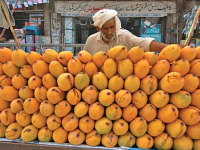
Pakistan to begin mango exports from May 25, per Ministry of Commerce. Around 130,000 tons exported annually, earning \$90M+ last year. Key markets include UAE, UK, US, Iran & Afghanistan.


1747516794773.png
 

Sesame seed exports to China hit $49 million​


Pakistan's rise in China's sesame import market has been dramatic.

China Economic Net
May 22, 2025

photo reuters file

Photo: Reuters/File

BEIJING: Pakistan's sesame seed exports to China have soared to unprecedented levels, reaching nearly $49 million between January and April 2025. This surge marks a major milestone in the growing agricultural trade between the two countries.

Pakistan's Ambassador to China, Khalil Hashmi, credited the growth to domestic innovation and China's rising demand for quality imports. He praised the contributions of local research institutions, such as the Ayub Agricultural Research Institute (AARI) and its Oilseeds Research Institute (ORI) team, for driving productivity through improved seed varieties and advanced farming techniques.

"While supply-side developments such as improved seed varieties and research-led farming techniques have played a vital role, it is China's growing consumer demand, preference for high-quality imports, and competitive pricing that are driving this record-setting trend," he said.

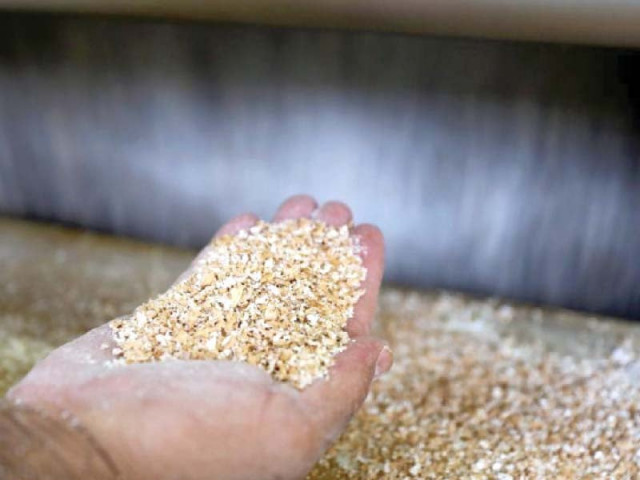
Pakistan's rise in China's sesame import market has been dramatic. In 2019, it ranked 14th with $4.6 million in exports. By 2024, it climbed to third by value at $226.53 million, and second by volume, with 177,640 tonnes exported. From January to April 2025, exports hit 38,828 tonnes, valued at $48.58 million, a 337% year-on-year increase. Gopal Khamuani, Chairman of Pakistan Sesame Exporters Association, cited Pakistan's advantage in average export price at $1,300 per tonne, fast 1520 day transit via sea and land, and 510 day processing times.

Hashmi outlined a strategic roadmap to deepen trade ties through better seed quality, value-added processing, expanded e-commerce, and joint ventures. "Our goal must be to move beyond raw exports and tap into China's booming sesame-based product market, valued between $4.7 and $9.5 billion annually," he said. He also highlighted key initiatives, including the September 2024 trade event that secured $28 million in deals and registration of 177 Pakistani sesame companies in China.

"Our sesame trade with China is more than an export story - it's a blueprint for shared prosperity," Hashmi concluded.
 

Currently rice export third largest sector in country’s economy: REAP leaders​

Associated Press Of Pakistan
Dec 5, 2023

Rice Export Association of Pakistan (REAP) on Tuesday said that rice export is currently the third largest sector in the country’s economy, which should be given the status of an industry.

According to the rice exporter organization, REAPs leaders, Pakistan has an export potential of rice worth $4.5 billion, which can be further improved through the use of technology and modern methods.

According to the REAP leaders, government support is necessary to increase the production of rice in Pakistan and to find new markets, which if fully available, rice export can become the largest sector in Pakistan’s economy.

Meanwhile addressing the press conference on this occasion, REAP Chairman Chela Ram Kelwani said that despite the floods in the recent past, we have managed to achieve the annual target of $2.5 billion, which is a major success for REAP.

Chairman REAPS said that rice export is currently the third largest sector in the country’s economy, and the government is still in the process of giving industry status.

He said that 15 years ago the export of rice was $300 million, which today stands at $2.5 billion, which will be taken up to $5 billion under the patronage of the government.

Chela Ram said that Pakistan’s “Basmati” is very popular all over the world and Pakistani basmati is consumed in the markets of Southeast Asia, Europe and Central Asia.

He said that Punjab is the centre of “Basmati” and the area along the GT-road Punjabis known in the world for the cultivation of Basmati, but at present housing societies are being formed in the areas of rice cultivation.

He said that the export of rice is facing challenges like tariff increases, export issues on the seaports and Bank interest rates and high-priced electricity, which “we need government support to resolve.”

He said that we have defeated India in the European market, and now they cannot sell our rice to the world with their branding.

On this occasion, REAP leader Abdul Rahim Janu said that REAP was founded in 1989 and today it is a representative organization of major rice exporters of the country.

He said that he is doing charity work through the platform of REAP, which includes eye treatment and other medicines for poor patients.

On this occasion, REAP leader Haseeb Ali Khan said that the time is not far when the rice export sector will be the largest sector of the country’s economy.

President National Press Club, Islamabad Anwar Raza while addressing this occasion said that it is a good omen to meet the target of rice export this year 2023 and the time is not far when we will achieve the target of more than $4 billion in rice export.

He assured REAP and Rice will have the full support of the Islamabad Press Club, Islamabad and its journalists.
Meanwhile, Finance Secretary National Press Club, Nayyar Ali, said that the export of rice earns foreign exchange and this sector has a very significant role in the national economy.

Meanwhile, REAP leader Sabi-ur-Rehman said that the export of rice is playing an important role in the country’s exchange and economy. The book “The Rice Story” was also launched on the occasion.
Huge drop in exports
 
Huge drop in exports

May I ?

Exports comprise of : Raw Minerals OR Agricultural goods OR Processed goods OR Services.

Raw Material: In Pakistan's case, Mineral development has been non existent and a part of provincial government chapter. Thus almost all mining licenses are with Feudal lords whose kin saturate the provincial assemblies.

Agricultural Goods : Same as above.

Processed goods: Comprise of industrial and other sectors. The cost of electricity and highest possible rate of tax coupled with corruption and procedural inefficiencies make it almost impossible to compete. Not to mention lack of skilled manpower, covered below.

Services Sector: This is almost equal to the manpower we export. Fact of the matter is the majority are blue collar jobs. The World doesn't need a lot of blue collar anymore, Industry 4.0 and beyond don't count people. Also from previous point, we don't produce enough capable engineers and our secondary education system will put central Sahara to shame.

So, my dear friends please press your MNA and MPA, to fix these issues. otherwise it's nothing more than hogwash. If you keep accepting these dramas without questioning you will eventually suffer.

Cheers.
 
We are a nation of 250m people and many live on 1 meal a day and here we are exporting food stuff because we have nothing else to offer.
 
We are a nation of 250m people and many live on 1 meal a day and here we are exporting food stuff because we have nothing else to offer.

Then organise and get to work.

Find out what India export, make it cheaper, quicker and better.
 

Users who are viewing this thread

Back
Top