

The eternal question:
With a 7:1 superiority, numerically, technically, economically in population and geographically why does India allow Pakistan to exist at all after 4 wars over 7 decades? Why a "ceasefire " every time?
Each time Infian generals threaten total destruction and "erasing from the map " and then accept a ceasefire.
Pakistan is still around, last we checked.
@Corax @hnn
@Meengla
Navigation
Install the app
How to install the app on iOS
Follow along with the video below to see how to install our site as a web app on your home screen.
Note: This feature may not be available in some browsers.
More options
Style variation
You are using an out of date browser. It may not display this or other websites correctly.
You should upgrade or use an alternative browser.
You should upgrade or use an alternative browser.
Pakistan-India Conflict 2025: News Updates and Discussion
- Thread starter Ali_Baba
- Start date
More options
Who Replied?Baibers_1260
Trusted Member

Doesn't India have nukes? Which country went nuclear first?Because Pakistan has nukes.
Same level? With same "level of machinery"?Post 1947 Indo-Pak armies were squarely on the same level with the same level of machinery.
On August 14th 1947 Pakistan had no Air Force ( apart from 12 DH Tiger Moths at the Risalpur training base and three "end of life" C-47 Dakotas), and was facing the Indian Air Force equipped with 90-100 Spitfires, Tempest fighters, Liberator Bombers, and at least 3 squadrons of C-47-C-46 Transports. Pakistan also did not have any armor, or motorized transport. Apart from some mule pack and ancient 25 pounder towed artillery, the Pakistan Army was pretty much a 19th century foot soldier infantry force armed with bolt action rifles ( Mark 3 SMLE), just a few dozen ancient Vickers water cooled machine guns with primitive signal gear, and no mountain cold weather apparel. Pakistan's communications were so primitive the Pakistan Army was still using heliographs, and runners for field communications. Apart from two small gunboats Pakistan had no navy. The Indian Army inherited 90% of the British era late World War 2 standard military assets of the Royal Indian Army with tanks, infantry fighting vehicles, transport, light and heavy machine guns, sub-machine guns, sniper rifles, towed and self propelled artillery, advanced encrypted field portable wireless communications as well as an advanced network of signals and landlines connecting command and control centers.
With India demonetizing all British era colonial currency and coins, all the cash circulating in Pakistan was worthless scraps of paper, and Pakistan couldn't even pay the salaries for its troops even though it attempted to rubber stamp some currency notes .
It was barter only and Pakistani farmers rose to the occasion to deliver food to the armed forces on credit.
Pakistan had no fuel or means to pay for them. Diesel was siphoned from foreign merchant ships on a barter basis exchanged directly with bales of cotton from the harvest. With India stopping coal shipments, the entire railway system in Pakistan ground to a halt as there were no diesel engine locomotives to haul the troop trains. Pakistani engineers jerry-rigged diesel burners to fire the boilers in the steam locomotives, using the water tanks to store diesel fuel directly siphoned from merchant vessels.
Pakistan was cut off from East Pakistan as there were no passenger ships or merchant vessels to carry passengers and freight,; rail and road links through India were snapped, and overflights (requiring multiple refueling stops by DC-3 aircraft) were blocked by India.
Also snapped were telephone and telegraph cables as well as radio telephone relay tower links by India. Pakistan had ZERO ( repeat ZERO) foreign currency reserves to buy fuel, medicines, and essential goods such as baby formula. Buying weapons, or spares were a distant dream Pakistan was saddled with 10 million refugees from India on the verge of starvation and without shelter in the monsoon rains,
Pakistan was facing an invasion from Afghanistan which had refused to recognize Pakistan or its western frontier .
The Pakistan army lacked senior officers and all officers from Colonel rank up were British and this was the same situation in the Navy and Air Force. None of the British officers, pilots and naval personnel had any inclination to fight for Pakistan against a well armed India, which also had British officers serving in equivalent positions though in much smaller proportion.
YET as a bankrupt nation on the brink of failure, Pakistan with a primitive army fought a two front campaign, and captured 85,846 sq km of Kashmir ( including Gilgit and Baltistan ) from India. Pakistan beat the stuffing out of Afghanistan and its Fakir of Ipi proxy driving its forces back across the Durand Line .Pakistan fought the war in Kashmir for two years sending India to the United Nations for assistance in 1949. The credit goes to Pakistan's brilliant COAS Major General Douglas Gracie. His legacy lives on.
NONE of the wars fought since, 1965, 1971, 1999, 2019, 2025 has altered the status in India's favor despite Pakistan continuing to be a "bankrupt beggar state" per Indian social media, and India being a $4 trillion economy.
The border of Pakistan administered Azad Kashmir has been defined since 1949 by the following events:
- Tashkent Agreement in 1965 confirmed the "ceasefire line "
- The Simla Agreement 1972 confirmed the "ceasefire line" (CFL) as the Line of Control (LOC) .
The Indian Parliament voted in 1991 to authorize the Indian Armed Forces to retake Pakistan Administered Kashmir, and so far the Indian Armed Forces haven't delivered
Was J & K secured, considering that 85,100 sq.km is enemy occupied ( as well as 38,000 sq.km occupied by China)? Has J & K been secured considering the ongoing militancy or "terrorism" as India calls it?Operation Brasstacks was the last window of opportunity for India to launch an all out offensive.
India's objectives in 1947, 1965, 1971, and 1999 were limited
1947: Stop Pakistani irregulars and secure J&K.
Which status quo was restored? The pre-1949 border? The Haji Pir Pass ? What exactly did the Indian Prime Minister sign off at Tashkent before he left for his heavenly abode?1965: Repel infiltration and restore the status quo. Pakistani "Operation Gibraltar" and "Grand Slam" failed, India held more territory
Did the refugees return to Bangladesh ( East Pakistan) given the demographic issues being faced in Assam, Tripura, and West Bengal? Has the Eastern Front been neutralized with a hostile Bangladesh armed forces numerically three times the number of Pakistani troops stationed there before 1971 and equipped with air and naval assets three times what Pakistan had stationed there. Only 93000 Pakistani prisoners were taken by India of which half were combatants. Today Bangladesh has 163,000 armed forces combat personnel, 65,000 reserves and 100,000 paramilitary combat trained personnel. This is not counting an unspecified number of religiously motivated armed non-state militias of various religious fundamentalist outfits. How does Bangladesh with a 4000 km border with India figure today in the strategic sense with an active defense collaboration with Pakistan rapidly acquiring cutting edge technology weapons from China ? Were the objectives of the 1971 war achieved? Did India recover the Chambh Jhaurian corridor from Pakistan?1971: Protect East Pakistan's refugees, support Bangladesh, and neutralize Pakistan's eastern front. India achieved this completely.
So Pakistan withdrew under global pressure, not because of a military defeat ( despite fighting without air support). Well then the Kargil war was a stalemate.1999: Evict intruders from Kargil. India recaptured all Kargil heights, Pakistan withdrew under global pressure.
Read the first part of my post how India tried to strangle Pakistan at its inception, Today the effort to starve Pakistan of water by reneging on the Indus Water Treaty continues.At no point was India's war objective to "destroy Pakistan".
The Nuclear Escalation started when India introduced nuclear weapons into the subcontinent. BOTH the USA and Russia lauded India's nuclear tests in 1974 and 1998 because in their perception India's nuclear weapons were to be used against China. India was supposed to have been built up as a counter weight to China ( a role it has since failed miserably in ). In fact India's war posturing is aimed solely at Pakistan and its destruction.Also no major power among the USA, Russia or China would allow the subcontinent to collapse into total war, especially with nuclear escalation risks.
India under the present regime believes it can "win " a nuclear war with Pakistan, and in a moment of utter insanity a nuclear war WILL be launched. There is nothing China, Russia or the USA can do to prevent such a disaster. Only the people of India can prevent this inevitable slide into the greatest holocaust known in human history by voting out an insane fundamentalist fascist regime driven by a mindset of mad desire for vengeance born by distorted perception of 800 years of medieval history. Unfortunately the masses in India are afflicted with the same malaise.
@Master Chief @hnn @PK781 @Yasser76
Last edited:
Baibers_1260
Trusted Member
Great hobby !Kindly educate me what basic facts I'm missing on then.
I write about whatever I read up upon from multiple sources. I'd prefer a discussion over a monologue anyways. Ain't this a discussion forum?
I follow upon military and geopolitical affairs as a pastime hobby. I never claimed being an expert on such affairs.
Please answer my comments in the post below:. A little patience would be needed to read it. Would welcome comments from @Vkdindian1 @SoulSpokesman @harpy1 @vasanthm and other Indians here.
Post in thread 'Pakistan-India Conflict 2025: News Updates and Discussion'
https://defencepk.com/forums/thread...ews-updates-and-discussion.21640/post-1030462

flyingorca
Trusted Member
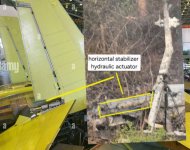
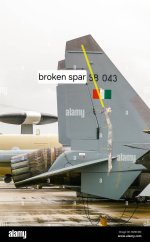
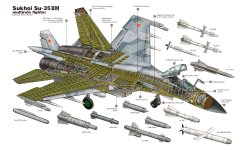
My obsession with Su30 MKI wreckage is not ending anytime soon.
The famous saying, "saar its just a drone"
The famous saying, "saar its just a drone"
Attachments


Doesn't India have nukes? Which country went nuclear first?
Same level? With same "level of machinery"?
On August 14th 1947 Pakistan had no Air Force ( apart from 12 DH Tiger Moths at the Risalpur training base and three "end of life" C-47 Dakotas), and was facing the Indian Air Force equipped with 90-100 Spitfires, Tempest fighters, Liberator Bombers, and at least 3 squadrons of C-47-C-46 Transports. Pakistan also did not have any armor, or motorized transport. Apart from some mule pack and ancient 25 pounder towed artillery, the Pakistan Army was pretty much a 19th century foot soldier infantry force armed with bolt action rifles ( Mark 3 SMLE), just a few dozen ancient Vickers water cooled machine guns with primitive signal gear, and no mountain cold weather apparel. Pakistan's communications were so primitive the Pakistan Army was still using heliographs, and runners for field communications. Apart from two small gunboats Pakistan had no navy. The Indian Army inherited 90% of the British era late World War 2 standard military assets of the Royal Indian Army with tanks, infantry fighting vehicles, transport, light and heavy machine guns, sub-machine guns, sniper rifles, towed and self propelled artillery, advanced encrypted field portable wireless communications as well as an advanced network of signals and landlines connecting command and control centers.
With India demonetizing all British era colonial currency and coins, all the cash circulating in Pakistan was worthless scraps of paper, and Pakistan couldn't even pay the salaries for its troops even though it attempted to rubber stamp some currency notes .
It was barter only and Pakistani farmers rose to the occasion to deliver food to the armed forces on credit.
Pakistan had no fuel or means to pay for them. Diesel was siphoned from foreign merchant ships on a barter basis exchanged directly with bales of cotton from the harvest. With India stopping coal shipments, the entire railway system in Pakistan ground to a halt as there were no diesel engine locomotives to haul the troop trains. Pakistani engineers jerry-rigged diesel burners to fire the boilers in the steam locomotives, using the water tanks to store diesel fuel directly siphoned from merchant vessels.
Pakistan was cut off from East Pakistan as there were no passenger ships or merchant vessels to carry passengers and freight,; rail and road links through India were snapped, and overflights (requiring multiple refueling stops by DC-3 aircraft) were blocked by India.
Also snapped were telephone and telegraph cables as well as radio telephone relay tower links by India. Pakistan had ZERO ( repeat ZERO) foreign currency reserves to buy fuel, medicines, and essential goods such as baby formula. Buying weapons, or spares were a distant dream Pakistan was saddled with 10 million refugees from India on the verge of starvation and without shelter in the monsoon rains,
Pakistan was facing an invasion from Afghanistan which had refused to recognize Pakistan or its western frontier .
The Pakistan army lacked senior officers and all officers from Colonel rank up were British and this was the same situation in the Navy and Air Force. None of the British officers, pilots and naval personnel had any inclination to fight for Pakistan against a well armed India, which also had British officers serving in equivalent positions though in much smaller proportion.
YET as a bankrupt nation on the brink of failure, Pakistan with a primitive army fought a two front campaign, and captured 85,846 sq km of Kashmir ( including Gilgit and Baltistan ) from India. Pakistan beat the stuffing out of Afghanistan and its Fakir of Ipi proxy driving its forces back across the Durand Line .Pakistan fought the war in Kashmir for two years sending India to the United Nations for assistance in 1949. The credit goes to Pakistan's brilliant COAS Major General Douglas Gracie. His legacy lives on.
NONE of the wars fought since, 1965, 1971, 1999, 2019, 2025 has altered the status in India's favor despite Pakistan continuing to be a "bankrupt beggar state" per Indian social media, and India being a $4 trillion economy.
The border of Pakistan administered Azad Kashmir has been defined since 1949 by the following events:
- Tashkent Agreement in 1965 confirmed the "ceasefire line "
- The Simla Agreement 1972 confirmed the "ceasefire line" (CFL) as the Line of Control (LOC) .
The Indian Parliament voted in 1991 to authorize the Indian Armed Forces to retake Pakistan Administered Kashmir, and so far the Indian Armed Forces haven't delivered
Was J & K secured, considering that 85,100 sq.km is enemy occupied ( as well as 38,000 sq.km occupied by China)? Has J & K been secured considering the ongoing militancy or "terrorism" as India calls it?
Which status quo was restored? The pre-1949 border? The Haji Pir Pass ? What exactly did the Indian Prime Minister sign off at Tashkent before he left for his heavenly abode?
Did the refugees return to Bangladesh ( East Pakistan) given the demographic issues being faced in Assam, Tripura, and West Bengal? Has the Eastern Front been neutralized with a hostile Bangladesh armed forces numerically three times the number of Pakistani troops stationed there before 1971 and equipped with air and naval assets three times what Pakistan had stationed there. Only 93000 Pakistani prisoners were taken by India of which half were combatants. Today Bangladesh has 163,000 armed forces combat personnel, 65,000 reserves and 100,000 paramilitary combat trained personnel. This is not counting an unspecified number of religiously motivated armed non-state militias of various religious fundamentalist outfits. How does Bangladesh with a 4000 km border with India figure today in the strategic sense with an active defense collaboration with Pakistan rapidly acquiring cutting edge technology weapons from China ? Were the objectives of the 1971 war achieved? Did India recover the Chambh Jhaurian corridor from Pakistan?
So Pakistan withdrew under global pressure, not because of a military defeat ( despite fighting without air support). Well then the Kargil war was a stalemate.
Read the first part of my post how India tried to strangle Pakistan at its inception, Today the effort to starve Pakistan of water by reneging on the Indus Water Treaty continues.
The Nuclear Escalation started when India introduced nuclear weapons into the subcontinent. BOTH the USA and Russia lauded India's nuclear tests in 1974 and 1998 because in their perception India's nuclear weapons were to be used against China. India was supposed to have been built up as a counter weight to China ( a role it has since failed miserably in ). In fact India's war posturing is aimed solely at Pakistan and its destruction.
India under the present regime believes it can "win " a nuclear war with Pakistan, and in a moment of utter insanity a nuclear war WILL be launched. There is nothing China, Russia or the USA can do to prevent such a disaster. Only the people of India can prevent this inevitable slide into the greatest holocaust known in human history by voting out an insane fundamentalist fascist regime driven by a mindset of mad desire for vengeance born by distorted perception of 800 years of medieval history. Unfortunately the masses in India are afflicted with the same malaise.
@Master Chief @hnn @PK781 @Yasser76
Hands down one of the best posts in this thread. I'll only make a fool and embarrass myself with trying to add anything more to what you have already said


Starlord
Trusted Member
Sanjay Dutt is Chaudhry Aslam

oh those poor things, I can't wait to see Pakistani's who say things like Ammi jaan, Janab, Abbu Jaan, with prayer cap, surmaa, and ghamcha and taveez.

Mighty_Dragon_Strike
Trusted Member
My obsession with Su30 MKI wreckage is not ending anytime soon.
The famous saying, "saar its just a drone"
one ind. here was adamant, it was a drone wheel!
*sigh*
flyingorca
Trusted Member

Cipher212
Registered Member
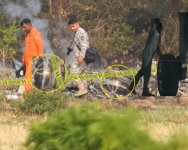
Bro I've been just as obsessed with it, mainly because it was not clear what type it was. Second issue is, the shootdown locations in PAF briefing were not fully matching the actual crash sites.My obsession with Su30 MKI wreckage is not ending anytime soon.
The famous saying, "saar its just a drone"
I think you have matched it. That spar in addition to the air brake panel confirm this as an Su-30. There is no other aircraft in IAF inventory that has both those things.
flyingorca
Trusted Member
Dont forget the huge Su30 wheels.Bro I've been just as obsessed with it, mainly because it was not clear what type it was. Second issue is, the shootdown locations in PAF briefing were not fully matching the actual crash sites.
I think you have matched it. That spar in addition to the air brake panel confirm this as an Su-30. There is no other aircraft in IAF inventory that has both those things.
Attachments
DAVIDBENGURION
Registered Member

well put, except for two omissions. The border did change in India's favour with the Siachen conflict where India wrested control of 3000 sq km of contested land which is basically unassailable due to its terrain.Doesn't India have nukes? Which country went nuclear first?
Same level? With same "level of machinery"?
On August 14th 1947 Pakistan had no Air Force ( apart from 12 DH Tiger Moths at the Risalpur training base and three "end of life" C-47 Dakotas), and was facing the Indian Air Force equipped with 90-100 Spitfires, Tempest fighters, Liberator Bombers, and at least 3 squadrons of C-47-C-46 Transports. Pakistan also did not have any armor, or motorized transport. Apart from some mule pack and ancient 25 pounder towed artillery, the Pakistan Army was pretty much a 19th century foot soldier infantry force armed with bolt action rifles ( Mark 3 SMLE), just a few dozen ancient Vickers water cooled machine guns with primitive signal gear, and no mountain cold weather apparel. Pakistan's communications were so primitive the Pakistan Army was still using heliographs, and runners for field communications. Apart from two small gunboats Pakistan had no navy. The Indian Army inherited 90% of the British era late World War 2 standard military assets of the Royal Indian Army with tanks, infantry fighting vehicles, transport, light and heavy machine guns, sub-machine guns, sniper rifles, towed and self propelled artillery, advanced encrypted field portable wireless communications as well as an advanced network of signals and landlines connecting command and control centers.
With India demonetizing all British era colonial currency and coins, all the cash circulating in Pakistan was worthless scraps of paper, and Pakistan couldn't even pay the salaries for its troops even though it attempted to rubber stamp some currency notes .
It was barter only and Pakistani farmers rose to the occasion to deliver food to the armed forces on credit.
Pakistan had no fuel or means to pay for them. Diesel was siphoned from foreign merchant ships on a barter basis exchanged directly with bales of cotton from the harvest. With India stopping coal shipments, the entire railway system in Pakistan ground to a halt as there were no diesel engine locomotives to haul the troop trains. Pakistani engineers jerry-rigged diesel burners to fire the boilers in the steam locomotives, using the water tanks to store diesel fuel directly siphoned from merchant vessels.
Pakistan was cut off from East Pakistan as there were no passenger ships or merchant vessels to carry passengers and freight,; rail and road links through India were snapped, and overflights (requiring multiple refueling stops by DC-3 aircraft) were blocked by India.
Also snapped were telephone and telegraph cables as well as radio telephone relay tower links by India. Pakistan had ZERO ( repeat ZERO) foreign currency reserves to buy fuel, medicines, and essential goods such as baby formula. Buying weapons, or spares were a distant dream Pakistan was saddled with 10 million refugees from India on the verge of starvation and without shelter in the monsoon rains,
Pakistan was facing an invasion from Afghanistan which had refused to recognize Pakistan or its western frontier .
The Pakistan army lacked senior officers and all officers from Colonel rank up were British and this was the same situation in the Navy and Air Force. None of the British officers, pilots and naval personnel had any inclination to fight for Pakistan against a well armed India, which also had British officers serving in equivalent positions though in much smaller proportion.
YET as a bankrupt nation on the brink of failure, Pakistan with a primitive army fought a two front campaign, and captured 85,846 sq km of Kashmir ( including Gilgit and Baltistan ) from India. Pakistan beat the stuffing out of Afghanistan and its Fakir of Ipi proxy driving its forces back across the Durand Line .Pakistan fought the war in Kashmir for two years sending India to the United Nations for assistance in 1949. The credit goes to Pakistan's brilliant COAS Major General Douglas Gracie. His legacy lives on.
NONE of the wars fought since, 1965, 1971, 1999, 2019, 2025 has altered the status in India's favor despite Pakistan continuing to be a "bankrupt beggar state" per Indian social media, and India being a $4 trillion economy.
The border of Pakistan administered Azad Kashmir has been defined since 1949 by the following events:
- Tashkent Agreement in 1965 confirmed the "ceasefire line "
- The Simla Agreement 1972 confirmed the "ceasefire line" (CFL) as the Line of Control (LOC) .
The Indian Parliament voted in 1991 to authorize the Indian Armed Forces to retake Pakistan Administered Kashmir, and so far the Indian Armed Forces haven't delivered
Was J & K secured, considering that 85,100 sq.km is enemy occupied ( as well as 38,000 sq.km occupied by China)? Has J & K been secured considering the ongoing militancy or "terrorism" as India calls it?
Which status quo was restored? The pre-1949 border? The Haji Pir Pass ? What exactly did the Indian Prime Minister sign off at Tashkent before he left for his heavenly abode?
Did the refugees return to Bangladesh ( East Pakistan) given the demographic issues being faced in Assam, Tripura, and West Bengal? Has the Eastern Front been neutralized with a hostile Bangladesh armed forces numerically three times the number of Pakistani troops stationed there before 1971 and equipped with air and naval assets three times what Pakistan had stationed there. Only 93000 Pakistani prisoners were taken by India of which half were combatants. Today Bangladesh has 163,000 armed forces combat personnel, 65,000 reserves and 100,000 paramilitary combat trained personnel. This is not counting an unspecified number of religiously motivated armed non-state militias of various religious fundamentalist outfits. How does Bangladesh with a 4000 km border with India figure today in the strategic sense with an active defense collaboration with Pakistan rapidly acquiring cutting edge technology weapons from China ? Were the objectives of the 1971 war achieved? Did India recover the Chambh Jhaurian corridor from Pakistan?
So Pakistan withdrew under global pressure, not because of a military defeat ( despite fighting without air support). Well then the Kargil war was a stalemate.
Read the first part of my post how India tried to strangle Pakistan at its inception, Today the effort to starve Pakistan of water by reneging on the Indus Water Treaty continues.
The Nuclear Escalation started when India introduced nuclear weapons into the subcontinent. BOTH the USA and Russia lauded India's nuclear tests in 1974 and 1998 because in their perception India's nuclear weapons were to be used against China. India was supposed to have been built up as a counter weight to China ( a role it has since failed miserably in ). In fact India's war posturing is aimed solely at Pakistan and its destruction.
India under the present regime believes it can "win " a nuclear war with Pakistan, and in a moment of utter insanity a nuclear war WILL be launched. There is nothing China, Russia or the USA can do to prevent such a disaster. Only the people of India can prevent this inevitable slide into the greatest holocaust known in human history by voting out an insane fundamentalist fascist regime driven by a mindset of mad desire for vengeance born by distorted perception of 800 years of medieval history. Unfortunately the masses in India are afflicted with the same malaise.
@Master Chief @hnn @PK781 @Yasser76
Further, India also captured and retained Turturk (an area of around 800 sqkms) in the disputed Kashmir region in the 71 war, which had been in Pakistani control from the 48 war.
Baibers_1260
Trusted Member
1. Indo-Pak War 1971 220 sq.km Chambh Jhaurian corridor , captured by Pakistan, is far more strategic than Siachen ice and rocks, and the ice bound village of Turtuk. The Chambh Jhaurian area is vital because it provides access to the only bridge over the Chenab River at Akhnoor, which serves as the main line of communication and supply route for Indian forces in the western districts of Rajouri and Poonch. The Simla Agreement permanently recognized Pakistan's unchallenged control on the corridor. In a future conflict this corridor will be crucial to Pakistan to deter any incursion by India via Poonch or Rajauri.well put, except for two omissions. The border did change in India's favour with the Siachen conflict where India wrested control of 3000 sq km of contested land which is basically unassailable due to its terrain.
Further, India also captured and retained Turturk (an area of around 800 sqkms) in the disputed Kashmir region in the 71 war, which had been in Pakistani control from the 48 war.
2. Though not a Pakistani victory, but in 2020, Pakistan certainly helped its ally China indirectly, in capturing 1100 sq,km of Indian claimed territory in Galwan and Hot Springs area. The pressure of a Pakistani buildup on the LOC front that had been in place since 2019 kept India off balance in a potential 2 front scenario . This enabled Pakistan's ally China to up the ante in Galwan in the border skirmish where 20 Indian troops were killed and 110 captured. against 4 Chinese killed).
The capture of some portion of the glacier in Siachen does nothing to mitigate the challenge the Pakistani-China alliance is posing to India through infrastructure buildup such as , the Karakoram Highway, military airfields both in the Gilgit Baltistan area and the Western Theater command of China, The strategic picture changed after India abolished Article 370 in Kashmir and claimed China controlled Aksai Chin as Indian territory. Kashmir is no longer a "bilateral" India-Pakistan issue. China is now officially a party to the dispute. The LAC, LOC borders are now contested by three parties The Indian borders HAVE changed to India's detriment since 2020; especially since India accepted the 1959 border as claimed by China in that area as part of the 2021 Moscow summit agreement. The borders and territory of Arunachal ( Zhangan) in the North East remain disputed.
Last edited:

Users who are viewing this thread
Total: 10 (members: 0, guests: 10)
Pakistan Defence Latest
-
 Federal cabinet gives nod to imposition of emergency in KP; summary sent to president (16 Viewers)
- Latest: Goenitz
-

-
-

Country Watch Latest


Latest Posts
-

-

-
Türkiye - Azerbaijan | Strategic Partnership, Regional Alliance, Military Cooperation - News & Updates (13 Viewers)
- Latest: Anatolia
-
Federal cabinet gives nod to imposition of emergency in KP; summary sent to president (16 Viewers)
- Latest: Goenitz
-
