Pakistan Missiles - Updates, News & Discussion

It's interesting that there's (currently) no known supersonic-cruising ASCM project in the works and, apparently, the PN is moving all-in on ASBMs for supersonic (and possibly hypersonic) applications.

Any idea on why the PN might skip on backing a homegrown BrahMos or CM-302 equivalent? I get the need to add ASBMs into the mix (especially with HGVs one day), but why stop there?

@JamD @farooqbhai @Oscar
I believe it is because of universal problem of "scarcity of resources & choice".
 
LOL.bro when did israel sell barak-8 to Azerbaijan??care to disclose more??

Azerbaijan have purchased Barak systems in 2 phases now.

First contract was in 2012 valued at $1.6 billion, and was for Barak-8, 70 km range variant. Azerbaijan in fact became the first operator for land based Barak 8, long before India.

This video is from 2016:

To view this content we will need your consent to set third party cookies.
For more detailed information, see our cookies page.


The second contract, valued $1.2 billion, was signed in 2023. This time for Barak MX with new Barak ER missiles (150 km range and enhanced ABM capability).


Video from test fire of Barak ER in Azerbaijan (2023).

To view this content we will need your consent to set third party cookies.
For more detailed information, see our cookies page.


70 km range Barak LR is designated “İldırım” (Lightning), while 150 km range Barak ER is designated “Qalxan” (Shield) in Azerbaijani service.
 
Last edited:
I've got a news people, Caught up with batchmate of mine dudes in MES, According to him both of the NOTAMs were utilized, both were ballistics missiles, Impact point of the Tests was at Sonmaini.
 
I've got a news people, Caught up with batchmate of mine dudes in MES, According to him both of the NOTAMs were utilized, both were ballistics missiles, Impact point of the Tests was at Sonmaini.
If they do not disclose it there are some possibilities:

  1. The test failed to meet objectives (and failure has various levels) and they do not wish to disclose it.
  2. The test was successful but the capability is not to be declared beyond the NOTAM “hint” to the east along with whatever the east and the “west” has up in the air or in sea trying to monitor it
  3. The test is not from an operational platform perspective so is not a ready capability yet but they don’t want the primary threat to assume either way.
For 2&3 the focus is not just to cause some consternation in terms of capability but the rush to counter it - and for that rush be able to understand what they will try to get and counter it and develop counter counter measures
 
If they do not disclose it there are some possibilities:

  1. The test failed to meet objectives (and failure has various levels) and they do not wish to disclose it.
  2. The test was successful but the capability is not to be declared beyond the NOTAM “hint” to the east along with whatever the east and the “west” has up in the air or in sea trying to monitor it
  3. The test is not from an operational platform perspective so is not a ready capability yet but they don’t want the primary threat to assume either way.
For 2&3 the focus is not just to cause some consternation in terms of capability but the rush to counter it - and for that rush be able to understand what they will try to get and counter it and develop counter counter measures

I imagine as well that anything that has a range of say above 3,000km (the range beyond reaching the furtherest Indian target) we would certainly not want to shout about. There can be only one target for such a weapon.
 
On second test. I think either the test failed or it got cancelled. My guess it was supposed to be some 1500 KM range cruise missile.
 
If they do not disclose it there are some possibilities:

  1. The test failed to meet objectives (and failure has various levels) and they do not wish to disclose it.
  2. The test was successful but the capability is not to be declared beyond the NOTAM “hint” to the east along with whatever the east and the “west” has up in the air or in sea trying to monitor it
  3. The test is not from an operational platform perspective so is not a ready capability yet but they don’t want the primary threat to assume either way.
For 2&3 the focus is not just to cause some consternation in terms of capability but the rush to counter it - and for that rush be able to understand what they will try to get and counter it and develop counter counter measures
Tbh i couldn't more out of him, though he did mention the impact point for both the ballistic missiles was sonmiani, i think its more likely about point 2.
On second test. I think either the test failed or it got cancelled. My guess it was supposed to be some 1500 KM range cruise missile.
Nope it was a ballistic missile, test did took place. its just, it wasn't announced for the reasons oscars mentioned.
 
Tbh i couldn't more out of him, though he did mention the impact point for both the ballistic missiles was sonmiani, i think its more likely about point 2.

Nope it was a ballistic missile, test did took place. its just, it wasn't announced for the reasons oscars mentioned.
I've got a news people, Caught up with batchmate of mine dudes in MES, According to him both of the NOTAMs were utilized, both were ballistics missiles, Impact point of the Tests was at Sonmaini.
yea man thats not true, 2nd NOTAM was canceled. Just checked it.

Cancel Date UTC: 11/06/2024 0419
 
yea man thats not true, 2nd NOTAM was canceled. Just checked it.

Cancel Date UTC: 11/06/2024 0419
Nor was the impact point as mentioned above.

But hey, misinformation is also part of the game.

And yes, the launching platform was indeed a KSEW Zulfiquar Class Frigate.
 
1731088237323.jpeg

By Tahir Qureshi

New Delhi: India conducted five nuclear tests on 11 May 1998 and 13 May 1998 at Pokhran, Rajasthan and the news spread like wildfire. Pakistan PM Nawaz Sharif was under immense pressure from Pakistanis within the country and from outside the country as well to give a “befitting reply” to the arch-rivals.

Pakistan conducted its nuclear tests a few days later on 28 May 1998 and 30 May 1998 in the Chagai Hills of Balochistan Province.

In India, there was a joke doing the rounds:
Why did Pakistan take 17-18 days to blast their device?
Because the instructions were in Chinese.

Reportedly, China supplied a nuclear reactor to Pakistan in 1993 and nuclear technology before that for the Chashma Nuclear Power Plant helped to achieve it.


Whatever it was, it was over, now it was up to Pakistan’s missile programme as it conducted one missile test after the other which it said was to match India’s might.

Given the involvement of China in Pakistan’s defence sector, Pakistan’s missile programme has been under scrutiny and suspicion by defence experts.

The experts are of the view that Pakistan’s missiles have been based on imported technology, specifically China, and to some extent, North Korea.


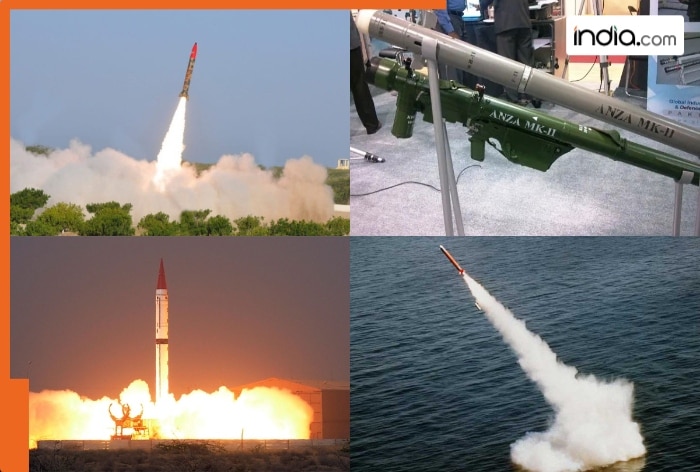
“Many of Pakistan’s missiles, ranging from man-portable air-defense systems (MANPADS) like the Anza series to its medium-range ballistic missiles (MRBMs), show signs of being repurposed or rebranded versions of Chinese missiles,” says idrw.org (Indian Defence Research Wing).

IDRW has pointed out that the following missile systems are taken from Chinese systems:
Anza man-portable air-defence systems (MANPADS) and the Chinese QW-1
The Anza is a series of shoulder-fired, man-portable surface-to-air missiles guided by an infrared homing seeker. It is a short-range missile used for air defence. The Anza series of MANPADS was initially presented as an indigenous creation. However, analysts have pointed out strong similarities between the Anza MK-I and MK-II systems and China’s QW-1 series. The Anza MK-III also shares similarities with the QW-2, an improved version of China’s own MANPADS.

2. The Shaheen Missile and the Chinese DF and M-Series

According to the IDRW, Pakistan’s Shaheen series, ranging from the short-range Shaheen-I to the medium-range Shaheen-III, shares many design and operational similarities with the Chinese DF-11 and DF-15 ballistic missiles.

3. Abdali Missile Series and China’s DF and M-Series

The Abdali missile series has the characteristics of the M-11 missile of China’s M-series.

The Abdali missile system was initially rejected by the Defense Ministry during which opted to acquire Chinese M-11 missiles in 1994. In 1993, the Pakistani government initiated discussions regarding the acquisition of M-11 missiles from China for rapid deployment. However, while Pakistan succeeded in procuring the M-11 missiles, attempts to reverse-engineer the Chinese system to extend its range and add nuclear capability were unsuccessful.

4. Ghauri and Shaheen medium-range ballistic missiles (MRBMs): Blending of Chinese and North Korean Designs

The Ghauri missile, one of Pakistan’s medium-range ballistic missile (MRBM) programs, has created a buzz that Ghauri and Shaheen MRBMs are based on Chinese and North Korean technologies.

5. Babur Missile has Stamps of China’s C-602 and C-802

Babur missile was tested by Pakistan in 2005 and its performance surprised even the USA and American analysts levelled serious allegations on China of helping Pakistan when they pointed out the similarities of the missile with Chinese and American designs, namely the DH-10 and Tomahawk, reports idrw.org.

“Pakistan’s entry into cruise missile technology also bears a Chinese influence, particularly in its Babur and Ra’ad series. The Babur cruise missile, designed for land-attack missions with a range of approximately 700 km, has structural and technical similarities with China’s C-602 cruise missile. Its range, guidance system, and flight profile closely mirror those of the Chinese missile, suggesting a transfer or adaptation of Chinese cruise missile technology,” adds the report.

6. Ra’ad Cruise Missiles and China’s C-802 missile

The Ra’ad is an air-launched cruise missile and has a striking resemblance to China’s C-802 missile. Both Ra’ad and C-802 are subsonic and low-flying designed to evade radar detection. These missiles provide Pakistan with a standoff capability against high-value targets, but they appear to be derived from China’s established cruise missile technologies.

7. The Nasr Tactical Ballistic Missile and China’s WS Series

The Nasr missile, developed for tactical nuclear warfare, has a short range of around 60-70 km and is designed to be highly mobile and quickly deployable. Many defence experts believe it draws from China’s WS-2 tactical ballistic missile. Both systems share similar launch platforms and capabilities, providing Pakistan with a tactical deterrent against conventional military incursions.

8. P-282 (SMASH) and China’s CM-401

Pakistan tested the SMASH missile, also known as P-282, on November 5. It is believed to be a copy of the Chinese CM-401 anti-ship ballistic missile (ASBM).

“Leaning on Chinese support for security, Pakistan conducted a test launch of a new ship-based ballistic missile, reportedly named ‘SMASH,’ with a range of 350 kilometers,” is how india.com described this missile.

According to IDRW and Indian Open Source Intelligence Networks (OSINT), the Pakistani Navy developed the missile with the help of Chinese technology, specifically the CM-401 Anti-Ship Ballistic Missile.


U.S. Sanctions Could Jeopardize Pakistan’s China-aided Missile Program​

Nov 08, 2024


  • Adnan Aamir

    Journalist and Researcher, Islamabad, Pakistan
The U.S. government recently imposed sanctions on Chinese companies allegedly aiding Pakistan’s ballistic missile program, a move that could potentially jeopardize the country’s defense initiatives.

In September, the U.S. State Department sanctioned four Chinese firms, one Pakistani firm, and one Chinese citizen for transferring equipment to Pakistan, which is controlled under missile technology control regimes. This was a major blow to Pakistan’s missile program, which has relied on China for its development and maintenance over the years.

U.S. sanctions have specifically targeted the procurement of equipment for testing rocket motors for Pakistan's Shaheen-3 and Ababeel missile systems. The Shaheen-3 is a land-based medium-range missile with a range of 2,750 kilometers specifically developed to target every corner of India, Pakistan’s arch-rival. The Ababeel is a land-based tactical ballistic missile with a normal range of 1,800 kilometers. With these sanctions, Pakistan will now struggle to get equipment for testing rocket motors, especially if Chinese firms comply.

Pakistan is China’s largest purchaser of major arms. Between 2018 and 2023, Pakistan received 58% of all major arms exports from China, according to the Stockholm International Peace Research Institute (SIPRI). Moreover, Pakistan and China are collaborating on the production of the JF-17 Thunder aircraft and the Al-Khalid main battle tank. Pakistan has also purchased 25 J-10C aircraft and Wing Loong II armed drones from China, ordered eight Hangor-class attack submarines, among other equipment, and its Haider battle tank is a variant of the Chinese VT-4.

Pakistan’s Ministry of Foreign Affairs termed the U.S. sanctions as biased and politically motivated. “Similar listings of commercial entities in the past were based on mere suspicion; they involved items not listed under any export control regime and yet were considered sensitive under broad, catch-all provisions,” said a statement from the ministry’s spokesperson.

The timing of these sanctions raises questions about why the U.S. has imposed them at this particular juncture in time. The first and foremost reason is that they are an extension of the existing U.S.-China geopolitical rivalry. Washington seemingly viewed the targeting of firms allegedly supplying equipment to Pakistan’s missile program as a crucial opportunity, representing a strategic maneuver in its ongoing geopolitical competition with China. And as the U.S. considers China a major threat to its influence in the Asia Pacific region, it’s likely policymakers will continue taking actions that undermine Chinese defense firms.

Another driving factor for the sanctions is the U.S.’ desire to secure its allies in the Indo-Pacific region from threats of ballistic missile programs. As previously noted, Pakistan's ballistic missile system is designed to target various regions within India. Furthermore, Pakistan aims to enhance its capabilities to reach distant areas, including strategic locations such as the Nicobar Islands in the Indian Ocean, should conflict arise. India, however, is a leading ally of the U.S. in the region. Consequently, Washington’s Indo-Pacific strategy. largely revolves around India, so it’s only natural for the U.S. to seek to protect the country from potential threats. Undermining Pakistan’s ballistic missile program by sanctioning Chinese firms is a way to achieve that target.

It’s also essential to analyze the impact of the U.S. sanctions. First, these sanctions will undoubtedly slow down the development of Pakistan’s missile program. Effective missiles require spare parts for regular maintenance, and the sanctions may complicate Pakistan's ability to get such components from China. Given the deep integration of Chinese firms into the global financial system, the prospect of exclusion from this system as a result of U.S. sanctions could dissuade these firms from providing the necessary spare parts to Pakistan.

Second, grant India a sense of security. Any efforts to slow down the development and upkeep of Pakistan’s India-centric missile program will be a sigh of relief for India. As a result, Pakistan may find it hard to maintain a huge stockpile of ballistic missiles due to spare parts shortages, which will undermine Pakistan’s defense needs while India can maintain a larger stockpile of similar missiles without any problems. Ultimately, this will protect the security interests of India vis-a-vis Pakistan. Once India feels protected from Pakistan, it can focus more on its defense preparations against China, which was part of Washington’s intent when applying the sanctions.

Third, Pakistan is collaborating with Beijing to build fighter aircraft jets, and has ordered eight submarines from China. Sanctions on missile programs have also raised fears that Chinese companies involved in aircraft and submarine sales to Pakistan may be sanctioned by the U.S. as well, which could potentially cripple Pakistan's defense production. So, these sanctions also have an indirect negative impact on wider Pak-China defense cooperation.

Last, the sanctions could indirectly push Pakistan closer towards China, which may be an unintended negative impact from Washington’s perspective. The U.S. is now targeting the means through which Pakistan gets defense supplies from China, which will compel Pakistan to further align with the Chinese to protect its interests, as the U.S. is firmly standing with India.

Overall, the recent U.S. sanctions on Chinese firms linked to Pakistan's missile program have far-reaching implications for the geopolitical landscape of South Asia. Given these circumstances, Pakistan is actually likely to deepen its defense collaboration with China and may be inclined to offer additional geopolitical concessions, which would be a win for Beijing. This shift highlights an opportunity cost for Washington in imposing sanctions on Pakistan's ballistic missile program, as it may inadvertently strengthen the Sino-Pakistani partnership.

 
View attachment 78245

By Tahir Qureshi

New Delhi: India conducted five nuclear tests on 11 May 1998 and 13 May 1998 at Pokhran, Rajasthan and the news spread like wildfire. Pakistan PM Nawaz Sharif was under immense pressure from Pakistanis within the country and from outside the country as well to give a “befitting reply” to the arch-rivals.

Pakistan conducted its nuclear tests a few days later on 28 May 1998 and 30 May 1998 in the Chagai Hills of Balochistan Province.

In India, there was a joke doing the rounds:
Why did Pakistan take 17-18 days to blast their device?
Because the instructions were in Chinese.

Reportedly, China supplied a nuclear reactor to Pakistan in 1993 and nuclear technology before that for the Chashma Nuclear Power Plant helped to achieve it.


Whatever it was, it was over, now it was up to Pakistan’s missile programme as it conducted one missile test after the other which it said was to match India’s might.

Given the involvement of China in Pakistan’s defence sector, Pakistan’s missile programme has been under scrutiny and suspicion by defence experts.

The experts are of the view that Pakistan’s missiles have been based on imported technology, specifically China, and to some extent, North Korea.


“Many of Pakistan’s missiles, ranging from man-portable air-defense systems (MANPADS) like the Anza series to its medium-range ballistic missiles (MRBMs), show signs of being repurposed or rebranded versions of Chinese missiles,” says idrw.org (Indian Defence Research Wing).

IDRW has pointed out that the following missile systems are taken from Chinese systems:
Anza man-portable air-defence systems (MANPADS) and the Chinese QW-1
The Anza is a series of shoulder-fired, man-portable surface-to-air missiles guided by an infrared homing seeker. It is a short-range missile used for air defence. The Anza series of MANPADS was initially presented as an indigenous creation. However, analysts have pointed out strong similarities between the Anza MK-I and MK-II systems and China’s QW-1 series. The Anza MK-III also shares similarities with the QW-2, an improved version of China’s own MANPADS.

2. The Shaheen Missile and the Chinese DF and M-Series

According to the IDRW, Pakistan’s Shaheen series, ranging from the short-range Shaheen-I to the medium-range Shaheen-III, shares many design and operational similarities with the Chinese DF-11 and DF-15 ballistic missiles.

3. Abdali Missile Series and China’s DF and M-Series

The Abdali missile series has the characteristics of the M-11 missile of China’s M-series.

The Abdali missile system was initially rejected by the Defense Ministry during which opted to acquire Chinese M-11 missiles in 1994. In 1993, the Pakistani government initiated discussions regarding the acquisition of M-11 missiles from China for rapid deployment. However, while Pakistan succeeded in procuring the M-11 missiles, attempts to reverse-engineer the Chinese system to extend its range and add nuclear capability were unsuccessful.

4. Ghauri and Shaheen medium-range ballistic missiles (MRBMs): Blending of Chinese and North Korean Designs

The Ghauri missile, one of Pakistan’s medium-range ballistic missile (MRBM) programs, has created a buzz that Ghauri and Shaheen MRBMs are based on Chinese and North Korean technologies.

5. Babur Missile has Stamps of China’s C-602 and C-802

Babur missile was tested by Pakistan in 2005 and its performance surprised even the USA and American analysts levelled serious allegations on China of helping Pakistan when they pointed out the similarities of the missile with Chinese and American designs, namely the DH-10 and Tomahawk, reports idrw.org.

“Pakistan’s entry into cruise missile technology also bears a Chinese influence, particularly in its Babur and Ra’ad series. The Babur cruise missile, designed for land-attack missions with a range of approximately 700 km, has structural and technical similarities with China’s C-602 cruise missile. Its range, guidance system, and flight profile closely mirror those of the Chinese missile, suggesting a transfer or adaptation of Chinese cruise missile technology,” adds the report.

6. Ra’ad Cruise Missiles and China’s C-802 missile

The Ra’ad is an air-launched cruise missile and has a striking resemblance to China’s C-802 missile. Both Ra’ad and C-802 are subsonic and low-flying designed to evade radar detection. These missiles provide Pakistan with a standoff capability against high-value targets, but they appear to be derived from China’s established cruise missile technologies.

7. The Nasr Tactical Ballistic Missile and China’s WS Series

The Nasr missile, developed for tactical nuclear warfare, has a short range of around 60-70 km and is designed to be highly mobile and quickly deployable. Many defence experts believe it draws from China’s WS-2 tactical ballistic missile. Both systems share similar launch platforms and capabilities, providing Pakistan with a tactical deterrent against conventional military incursions.

8. P-282 (SMASH) and China’s CM-401

Pakistan tested the SMASH missile, also known as P-282, on November 5. It is believed to be a copy of the Chinese CM-401 anti-ship ballistic missile (ASBM).

“Leaning on Chinese support for security, Pakistan conducted a test launch of a new ship-based ballistic missile, reportedly named ‘SMASH,’ with a range of 350 kilometers,” is how india.com described this missile.

According to IDRW and Indian Open Source Intelligence Networks (OSINT), the Pakistani Navy developed the missile with the help of Chinese technology, specifically the CM-401 Anti-Ship Ballistic Missile.


That's some seriously bias article. I don't understand the need to promote such non-sense. There's absolutely no input of Chinese in Pakistan's nuclear arsenal. There was a highly dedicated team of scientists which achieved this feat. Chinese did helped & installed the civil nuclear power plants though. Both are totally different. There's no link of civil nuclear plant with weapons program. The PNRA deals with civil nuclear plants like Chashma (which the article mentioned). This is not even remotely linked with the nuclear arsenal of the country. The author has very wild story cooked up in his mind with no real information. Infact, the chashma & others are approved by IAEA. What a comedy that author has put up by first mentioning about Pakistan's nucear tests and then saying China gave nuclear technology by installing Chashma to help achieve it. So basically author is so naive that he thinks IAEA helped Pakistan obtain nuclear arsenal. That's super crazy!

As far as missiles are concerned, yes there was some help. NK was the first country to help in PK's IRBM. Even then missile wasn't a copy, there was lot of in-house development, including its control systems, electronic systems, software, warhead and its re-entry mechanism etc. The next missiles from that point were obviously more focused on internal expertise.
 
If they do not disclose it there are some possibilities:

  1. The test failed to meet objectives (and failure has various levels) and they do not wish to disclose it.
  2. The test was successful but the capability is not to be declared beyond the NOTAM “hint” to the east along with whatever the east and the “west” has up in the air or in sea trying to monitor it
  3. The test is not from an operational platform perspective so is not a ready capability yet but they don’t want the primary threat to assume either way.
For 2&3 the focus is not just to cause some consternation in terms of capability but the rush to counter it - and for that rush be able to understand what they will try to get and counter it and develop counter counter measures
Thank You as always for an informative post, point No.2 is something I always suspected. Thank You for the confirmation!
 
View attachment 78245

By Tahir Qureshi

New Delhi: India conducted five nuclear tests on 11 May 1998 and 13 May 1998 at Pokhran, Rajasthan and the news spread like wildfire. Pakistan PM Nawaz Sharif was under immense pressure from Pakistanis within the country and from outside the country as well to give a “befitting reply” to the arch-rivals.

Pakistan conducted its nuclear tests a few days later on 28 May 1998 and 30 May 1998 in the Chagai Hills of Balochistan Province.

In India, there was a joke doing the rounds:
Why did Pakistan take 17-18 days to blast their device?
Because the instructions were in Chinese.

Reportedly, China supplied a nuclear reactor to Pakistan in 1993 and nuclear technology before that for the Chashma Nuclear Power Plant helped to achieve it.


Whatever it was, it was over, now it was up to Pakistan’s missile programme as it conducted one missile test after the other which it said was to match India’s might.

Given the involvement of China in Pakistan’s defence sector, Pakistan’s missile programme has been under scrutiny and suspicion by defence experts.

The experts are of the view that Pakistan’s missiles have been based on imported technology, specifically China, and to some extent, North Korea.


“Many of Pakistan’s missiles, ranging from man-portable air-defense systems (MANPADS) like the Anza series to its medium-range ballistic missiles (MRBMs), show signs of being repurposed or rebranded versions of Chinese missiles,” says idrw.org (Indian Defence Research Wing).

IDRW has pointed out that the following missile systems are taken from Chinese systems:
Anza man-portable air-defence systems (MANPADS) and the Chinese QW-1
The Anza is a series of shoulder-fired, man-portable surface-to-air missiles guided by an infrared homing seeker. It is a short-range missile used for air defence. The Anza series of MANPADS was initially presented as an indigenous creation. However, analysts have pointed out strong similarities between the Anza MK-I and MK-II systems and China’s QW-1 series. The Anza MK-III also shares similarities with the QW-2, an improved version of China’s own MANPADS.

2. The Shaheen Missile and the Chinese DF and M-Series

According to the IDRW, Pakistan’s Shaheen series, ranging from the short-range Shaheen-I to the medium-range Shaheen-III, shares many design and operational similarities with the Chinese DF-11 and DF-15 ballistic missiles.

3. Abdali Missile Series and China’s DF and M-Series

The Abdali missile series has the characteristics of the M-11 missile of China’s M-series.

The Abdali missile system was initially rejected by the Defense Ministry during which opted to acquire Chinese M-11 missiles in 1994. In 1993, the Pakistani government initiated discussions regarding the acquisition of M-11 missiles from China for rapid deployment. However, while Pakistan succeeded in procuring the M-11 missiles, attempts to reverse-engineer the Chinese system to extend its range and add nuclear capability were unsuccessful.

4. Ghauri and Shaheen medium-range ballistic missiles (MRBMs): Blending of Chinese and North Korean Designs

The Ghauri missile, one of Pakistan’s medium-range ballistic missile (MRBM) programs, has created a buzz that Ghauri and Shaheen MRBMs are based on Chinese and North Korean technologies.

5. Babur Missile has Stamps of China’s C-602 and C-802

Babur missile was tested by Pakistan in 2005 and its performance surprised even the USA and American analysts levelled serious allegations on China of helping Pakistan when they pointed out the similarities of the missile with Chinese and American designs, namely the DH-10 and Tomahawk, reports idrw.org.

“Pakistan’s entry into cruise missile technology also bears a Chinese influence, particularly in its Babur and Ra’ad series. The Babur cruise missile, designed for land-attack missions with a range of approximately 700 km, has structural and technical similarities with China’s C-602 cruise missile. Its range, guidance system, and flight profile closely mirror those of the Chinese missile, suggesting a transfer or adaptation of Chinese cruise missile technology,” adds the report.

6. Ra’ad Cruise Missiles and China’s C-802 missile

The Ra’ad is an air-launched cruise missile and has a striking resemblance to China’s C-802 missile. Both Ra’ad and C-802 are subsonic and low-flying designed to evade radar detection. These missiles provide Pakistan with a standoff capability against high-value targets, but they appear to be derived from China’s established cruise missile technologies.

7. The Nasr Tactical Ballistic Missile and China’s WS Series

The Nasr missile, developed for tactical nuclear warfare, has a short range of around 60-70 km and is designed to be highly mobile and quickly deployable. Many defence experts believe it draws from China’s WS-2 tactical ballistic missile. Both systems share similar launch platforms and capabilities, providing Pakistan with a tactical deterrent against conventional military incursions.

8. P-282 (SMASH) and China’s CM-401

Pakistan tested the SMASH missile, also known as P-282, on November 5. It is believed to be a copy of the Chinese CM-401 anti-ship ballistic missile (ASBM).

“Leaning on Chinese support for security, Pakistan conducted a test launch of a new ship-based ballistic missile, reportedly named ‘SMASH,’ with a range of 350 kilometers,” is how india.com described this missile.

According to IDRW and Indian Open Source Intelligence Networks (OSINT), the Pakistani Navy developed the missile with the help of Chinese technology, specifically the CM-401 Anti-Ship Ballistic Missile.

Bhai, Rab da wasta hai, tell Qureshi not to to give up his day job, and stick to his family profession.....
 
What happened to second NOTAM that was issued . After SMASH , we didn't heard any further Testing while India did testing of ALCM for 1500 KM range.
 

Users who are viewing this thread

Pakistan Defence Latest

Country Watch Latest

Back
Top