Usman
@usman_cph
These layers form because seawater differs in temperature, salinity, and pressure. Those variations create zones of density at different depths, each behaving slightly differently from the next.
Warm water is lighter than cold water, and fresh water is lighter than salt water. The result is a natural boundary that separates lighter upper water from the heavier water below.
This boundary, or “layer,” reflects sound much like a smooth surface reflects light. Sonar waves strike it and bend or bounce away rather than passing through.
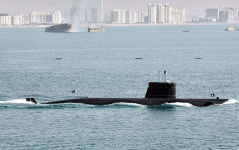
For submarines, this layer becomes a practical tool. Below it, sound travels differently, and detection by sonar from surface ships becomes more difficult.
When a submarine operates beneath the layer, it can listen safely while staying less visible to sensors above.
Submarines also use the layer for temperature control. By diving below it, the warmer water in ballast tanks can be replaced by cooler, denser water from deeper levels.
In some seas, the layer can be dense enough that submarines struggle to pass through, needing additional power and control adjustments.
The depth of this layer changes constantly, sometimes forming at 20 meters, other times at 60 or more, depending on weather, salinity, and current patterns.
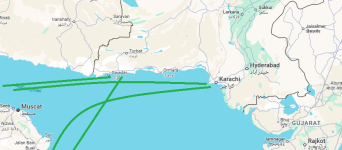
In the Arabian Sea, these shifting layers create acoustic conditions that affect how sound travels, influencing both detection and maneuvering.
For submarine crews, understanding these natural effects is critical. The ability to work with or around the layer can determine how effectively a mission is carried out.












 Oman examines JF-17 fighter jet purchase with Pakistan and China while operating F-16s and Eurofighters (30 Viewers)
 Federal cabinet gives nod to imposition of emergency in KP; summary sent to president (112 Viewers)

 Turkey, Pakistan, Qatar, and Indonesia forge ‘Badr’ Pact to Jointly Produce Weapons (6 Viewers)
 TF-X / KAAN / Hürjet Turkish Fighter & Trainer Aircrafts News & Discussions (5 Viewers)

 ‘War criminals shrine’: China’s replacement name for Yasukuni sharpens rhetoric against Japan (12 Viewers)
 The 21st Century Belongs to Asia, Pakistan Is Ready to Rise: Pravin Sawhney (34 Viewers)