Navigation
Install the app
How to install the app on iOS
Follow along with the video below to see how to install our site as a web app on your home screen.
Note: This feature may not be available in some browsers.
More options
Style variation
You are using an out of date browser. It may not display this or other websites correctly.
You should upgrade or use an alternative browser.
You should upgrade or use an alternative browser.
Pakistan Nuclear Power plants
- Thread starter ghazi52
- Start date
More options
Who Replied?


ghazi52
THINK TANK: CONSULTANT
- Thread starter
- #62
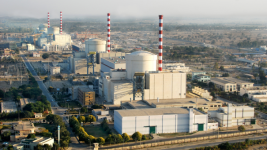
Each Hualong One unit is expected to generate nearly 10 billion kWh of electricity annually after being completed, which can meet the annual electricity demand of more than 4 million households in Pakistan – equivalent to reducing use of standard coal by 3.12 million tons, and reducing carbon dioxide emissions by 8.16 million tons every year. It is also the equivalent of planting more than 70 million trees, CNNC said.
It is of great significance for optimizing Pakistan's energy structure, as well as reaching carbon peak and carbon neutrality goals, CNNC added.
The success in construction and operation of the nuclear reactors in Pakistan will make the Hualong One technology better received in the global market, especially in countries and regions participating in the Belt and Road Initiative, observers said.
It is of great significance for optimizing Pakistan's energy structure, as well as reaching carbon peak and carbon neutrality goals, CNNC added.
The success in construction and operation of the nuclear reactors in Pakistan will make the Hualong One technology better received in the global market, especially in countries and regions participating in the Belt and Road Initiative, observers said.
ghazi52
THINK TANK: CONSULTANT
- Thread starter
- #63
"According to the agreement, CNNC will build a one-million-kilowatt-class nuclear power unit with HPR1000 technology at the Chashma Nuclear Power Plant in Pakistan," CNNC said yesterday. The reactor will be the seventh nuclear power unit that China has exported to Pakistan and the third HPR1000.
The Chinese-designed HPR1000 Hualong One reactor design is under construction in China, at Fuqing units 5 and 6 and Fangchenggang units 3 and 4. The first Hualong One unit, Fuqing 5, is expected to start up in 2019, with Fangchenggang 3 to follow the same year, and the other two units in 2020.
Chashma is already home to four Chinese-built CNP-300 units, while two HPR1000 units are under construction at Pakistan's Karachi nuclear power plant. Construction began on Karachi unit 2 in 2015 and unit 3 in 2016; the units entered commercial operation in 2021 and 2022, respectively.
The HPR1000 has also been proposed for construction at Bradwell in the UK, where it is undergoing Generic Design Assessment. UK national regulatory bodies the Office for Nuclear Regulation and the Environment Agency recently announced the start of the second, technical, phase of the assessment programme for the UK HPR1000.
Chashma 5 will be constructed by CNNC subsidiary CNNC China Zhongyuan Engineering Corp, the company said.
The Chinese-designed HPR1000 Hualong One reactor design is under construction in China, at Fuqing units 5 and 6 and Fangchenggang units 3 and 4. The first Hualong One unit, Fuqing 5, is expected to start up in 2019, with Fangchenggang 3 to follow the same year, and the other two units in 2020.
Chashma is already home to four Chinese-built CNP-300 units, while two HPR1000 units are under construction at Pakistan's Karachi nuclear power plant. Construction began on Karachi unit 2 in 2015 and unit 3 in 2016; the units entered commercial operation in 2021 and 2022, respectively.
The HPR1000 has also been proposed for construction at Bradwell in the UK, where it is undergoing Generic Design Assessment. UK national regulatory bodies the Office for Nuclear Regulation and the Environment Agency recently announced the start of the second, technical, phase of the assessment programme for the UK HPR1000.
Chashma 5 will be constructed by CNNC subsidiary CNNC China Zhongyuan Engineering Corp, the company said.

ghazi52
THINK TANK: CONSULTANT
- Thread starter
- #66
Virginia to host world’s first fusion power plant
Chesterfield project promises clean energy, billions in investment, and a solution to surging power demand.
By: Charlie Paullin
December 18, 2024

A rendering of the Commonwealth Fusion Systems proposal for Chesterfield County. (Courtesy of Commonwealth Fusion Systems)
Virginia could soon make history as the home of the world’s first nuclear fusion power plant, state officials and private sector leaders announced Tuesday.
Commonwealth Fusion Systems (CFS), a fusion power company founded in 2018 in Cambridge, Mass., unveiled plans to build the groundbreaking facility on a 100-acre site at James River Industrial Park in Chesterfield County. The plant, expected to generate 400 megawatts of electricity — enough to power 150,000 homes — could be operational by the early 2030s.
“Commonwealth Fusion Systems plans on building the world’s first grid scale commercial fusion power plant in the world, full stop, and it’s going to be right here in the commonwealth of Virginia,” Gov. Glenn Youngkin said at a presentation of the undertaking at Richmond’s Patrick Henry Building.
Unlike traditional nuclear power plants that rely on fission, fusion replicates the energy-producing process of the sun, offering a cleaner and more sustainable power source. The project, which would occupy about 25 acres of the site, signals Virginia’s growing role in shaping future energy solutions.
The announcement comes as Virginia’s energy needs are surging, driven by the rapid growth of data centers that power big tech operations. These facilities consume enormous amounts of electricity and water to process and cool computer systems.
 Republican Gov. Glenn Youngkin speaks during an announcement with Commonwealth Fusion Systems Tuesday. (Charlie Paullin/Virginia Mercury)
A report from the nonpartisan Joint Legislative Audit Review Commission (JLARC) released last week found that energy demand from data centers could triple from about 10,000 megawatts today to about 30,000 megawatts by 2040 if infrastructure, like new transmission lines, were already available.
Virginia’s two largest utilities, Dominion Energy and Appalachian Power Company, are already exploring small modular nuclear reactors to meet rising energy demands, with Dominion also investing in offshore wind, solar and natural gas.
Fusion power offers another path to clean energy, avoiding emissions that scientists link to climate change and its increasingly intense and frequent storms.
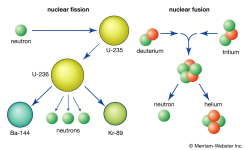
Fusion technology works by combining hydrogen isotopes — deuterium extracted from water and tritium from lithium — under extreme heat and pressure, using powerful magnets to fuse the elements. The process generates heat, which boils water to create steam that spins a turbine, producing electricity. The byproduct is helium.
“Our customers’ growing needs for reliable, carbon-free power benefits from as diverse a menu of power generation options as possible, and in that spirit, we are delighted to assist CFS in their efforts,” said Dominion Energy Virginia President Edward H. Baine, in a statement.
CFS selected the Chesterfield site after conducting a global search. The company will lease the land from Dominion Energy.
To secure the project, Virginia offered $1 million from the Virginia Energy Clean Energy Innovation Bank, $1 million from Chesterfield County, and a sales and use tax exemption for the plant’s equipment. The company has also received U.S. Department of Energy funding. Youngkin said the project would bring “billions” in economic development and create “hundreds” of jobs.
CFS is currently building its SPARC demonstration plant in Massachusetts, a project that will pave the way for the ARC technology planned for Chesterfield. While the Lawrence Livermore National Laboratory in California achieved a major milestone in 2022 by demonstrating fusion using lasers, CFS employs a different approach. Their technology relies on a donut-shaped device called a tokamak to confine and fuse molecules.
 A rendering of the ARC donut shaped tokamak technology. (Courtesy of Commonwealth Fusion Systems)
“You won’t need a pipeline to bring the fuel in, or a smokestack for the exhaust,” said CFS co-founder and Chief Executive Officer Bob Mumgaard.
Unlike fission, which splits heavy atoms like uranium to produce energy — and leaves behind radioactive waste — fusion creates energy by fusing light atoms, explained Alex Creely, CFS director of tokamak operations.
“One of the big advantages of fusion is that it doesn’t produce any long lived waste material, and there’s no risk of some kind of meltdown event,” Creely said. “It’s a very safe energy source — something that you can live right next to and feel very comfortable with.”
Del. Rip Sullivan, D-Fairfax, said in a statement Tuesday that he will introduce legislation to define fusion energy in state code. The energy source would be allowed as “zero-carbon electricity” under the Virginia Clean Economy Act, a 2020 law aimed at decarbonizing the state’s electric grid.
“Since the VCEA’s passage, we have succeeded in driving energy innovation in the commonwealth, and today marks another important step in what has been a remarkably successful effort — a step that would not have been possible had Virginia declined or abandoned the opportunity and responsibility it took to lead in clean energy,” Sullivan said.
Youngkin emphasized that the project will be financed entirely by CFS, with no cost passed on to Dominion Energy ratepayers. The facility will operate as an independent l power producer, selling its electricity to specific customers through power purchase agreements or directly into the regional PJM Interconnection market.
“It’s a reasonable hypothesis that the growth in data centers in Virginia will very happily take the power that is generated at this plant,” Youngkin said.
 Another rendering of the Commonwealth Fusion Systems proposal for Chesterfield County. (Courtesy of Commonwealth Fusion Systems)
Preston Bryant, senior vice president at McGuireWoods Consulting, which was involved in the site selection process, said Virginia was chosen in part because the Nuclear Regulatory Commission determined months ago that fusion technology does not require a federal license like fission and can instead be approved at the state level.
The project will still need several state permits, including a radioactive materials license from the Virginia Department of Health, and a certificate of convenience and public necessity from the State Corporation Commission.
Kristen Cullen, vice president of global policy and public affairs at CFS, said additional approvals may include an air permit from the Virginia Department of Environmental Quality for backup generators during emergencies and potentially a storm water discharge permit, depending on the site-design.
Bryant noted that it was “a coincidence” that the selected site was initially chosen by Dominion for a proposed natural gas plant before the utility relocated that project to the nearby, former coal-fired Chesterfield Power Station.
The announcement followed discussions with local environmental groups, which expressed some support for the project, but also raised questions about its impact.
“Considering rising energy demand in Virginia driven by data centers and that most folks in the environmental world are not in support of more gas infrastructure, SMRs or hydrogen energy, this seems like a promising solution, if and when it actually comes online,” said Melissa Thomas, senior organizer with Mothers out Front, a climate advocacy group.
Thomas also raised questions about whether the plant’s backup power would rely on gas-powered systems or electric alternatives.
ghazi52
THINK TANK: CONSULTANT
- Thread starter
- #67
Chashma Nuclear Power Plant, C-5
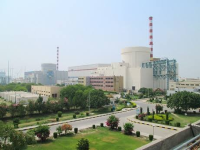
Pakistan is set to construct its largest nuclear power plant, Chashma Unit-5 (1,200MW), boosting clean, reliable energy!
The Pakistan Nuclear Regulatory Authority (PNRA) has issued the construction license for Unit 5 of the Chashma Nuclear Power Plant (C-5), according to an official statement.
The Pakistan Atomic Energy Commission (PAEC) had submitted its application for the C-5 license in April 2024, the statement said.
Once operational, the C-5 unit will be Pakistan’s largest nuclear power plant, with a capacity of 1,200 megawatts, as reported by the PNRA.
The PNRA assured that strict adherence to safety standards and principles will be ensured to ensure the safe use of nuclear energy
Pakistan is set to construct its largest nuclear power plant, Chashma Unit-5 (1,200MW), boosting clean, reliable energy!
The Pakistan Nuclear Regulatory Authority (PNRA) has issued the construction license for Unit 5 of the Chashma Nuclear Power Plant (C-5), according to an official statement.
The Pakistan Atomic Energy Commission (PAEC) had submitted its application for the C-5 license in April 2024, the statement said.
Once operational, the C-5 unit will be Pakistan’s largest nuclear power plant, with a capacity of 1,200 megawatts, as reported by the PNRA.
The PNRA assured that strict adherence to safety standards and principles will be ensured to ensure the safe use of nuclear energy
ghazi52
THINK TANK: CONSULTANT
- Thread starter
- #68
Nuclear policy
An expansion of nuclear capacity has long been a central element of Pakistan's energy policy.
The 2005 Energy Security Plan included the intention of lifting nuclear capacity to 8800 MWe in the long term, 900 MWe of this by 2015 and a further 1500 MWe by 2020. Projections included four further Chinese reactors of 300 MWe each and seven of 1000 MWe, all PWR. There were tentative plans for China to build two 1000 MWe PWR units at Karachi as KANUPP 2&3, but China then in 2007 deferred development of its CNP-1000 type which would have been the only one of that size able to be exported. Pakistan then turned its attention to building smaller units with higher local content. However, in 2013 China revived its 1000 MWe designs with export intent, and made overtures to Pakistan for the ACP1000 design, which became Hualong One – see below.
In August 2011 it was reported that Pakistan aimed for 8000 MWe nuclear at ten sites by 2030. PAEC has apparently selected six new sites on the basis of Pakistan Nuclear Regulatory Authority (PNRA) and International Atomic Energy Agency (IAEA) advice. These are the Qadirabad-Bulloki (QB) link canal near Qadirabad Headworks; Dera Ghazi Khan canal near Taunsa Barrage; Taunsa-Panjnad canal near Multan; Nara canal near Sukkur; Pat Feeder canal near Guddu; and Kabul River near Nowshera. Early in 2012 Pakistan Atomic Energy Commission (PAEC) said that four reactors were planned for the Taunsa-Panjnad canal near Multan in Punjab.
In January 2014 PAEC announced its intention to build five further 1100 MWe nuclear plants to meet anticipated electricity demand, and have 8.9 GWe of nuclear capacity online by 2030.
"With more than 55 reactor-years of successful operating experience to its credit, the PAEC can confidently move from technology acquisition status to actually starting contributing sizable electrical energy to the system." PAEC was then quoted as saying that eight sites would be chosen for a further 32 units, four 1100 MWe units at each, so that nuclear power supplied one-quarter of the country’s electricity from 40 GWe of capacity. This evidently assumes a more than tenfold increase in electricity demand by a future date well beyond 2030.
PAEC said an initial 1100 MWe plant would be built at Muzaffargarh, on the Taunsa-Panjnad canal near Multan in southwest Punjab. It was also reported that discussions with China were under way to supply three nuclear power units for about $13 billion.
An expansion of nuclear capacity has long been a central element of Pakistan's energy policy.
The 2005 Energy Security Plan included the intention of lifting nuclear capacity to 8800 MWe in the long term, 900 MWe of this by 2015 and a further 1500 MWe by 2020. Projections included four further Chinese reactors of 300 MWe each and seven of 1000 MWe, all PWR. There were tentative plans for China to build two 1000 MWe PWR units at Karachi as KANUPP 2&3, but China then in 2007 deferred development of its CNP-1000 type which would have been the only one of that size able to be exported. Pakistan then turned its attention to building smaller units with higher local content. However, in 2013 China revived its 1000 MWe designs with export intent, and made overtures to Pakistan for the ACP1000 design, which became Hualong One – see below.
In August 2011 it was reported that Pakistan aimed for 8000 MWe nuclear at ten sites by 2030. PAEC has apparently selected six new sites on the basis of Pakistan Nuclear Regulatory Authority (PNRA) and International Atomic Energy Agency (IAEA) advice. These are the Qadirabad-Bulloki (QB) link canal near Qadirabad Headworks; Dera Ghazi Khan canal near Taunsa Barrage; Taunsa-Panjnad canal near Multan; Nara canal near Sukkur; Pat Feeder canal near Guddu; and Kabul River near Nowshera. Early in 2012 Pakistan Atomic Energy Commission (PAEC) said that four reactors were planned for the Taunsa-Panjnad canal near Multan in Punjab.
In January 2014 PAEC announced its intention to build five further 1100 MWe nuclear plants to meet anticipated electricity demand, and have 8.9 GWe of nuclear capacity online by 2030.
"With more than 55 reactor-years of successful operating experience to its credit, the PAEC can confidently move from technology acquisition status to actually starting contributing sizable electrical energy to the system." PAEC was then quoted as saying that eight sites would be chosen for a further 32 units, four 1100 MWe units at each, so that nuclear power supplied one-quarter of the country’s electricity from 40 GWe of capacity. This evidently assumes a more than tenfold increase in electricity demand by a future date well beyond 2030.
PAEC said an initial 1100 MWe plant would be built at Muzaffargarh, on the Taunsa-Panjnad canal near Multan in southwest Punjab. It was also reported that discussions with China were under way to supply three nuclear power units for about $13 billion.

ghazi52
THINK TANK: CONSULTANT
- Thread starter
- #71
Nuclear Power in Pakistan
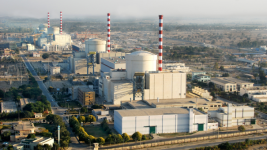
- Pakistan has five operable reactors, with a further unit under construction, with Chinese help.
- Pakistan's nuclear weapons capabilities have arisen independently of its civil nuclear fuel cycle, using indigenous uranium.
- Because Pakistan is outside the Nuclear Non-Proliferation Treaty, due to its weapons programme, it is largely excluded from trade in nuclear plant or materials, which hinders its development of civil nuclear energy. However, China is positive about nuclear cooperation with Pakistan, and a 2018 International Atomic Energy Agency programme further supports civil nuclear power.
Operable Reactors
ChashmaFive
2,242 MWe
Karachi
Two2,028 MWe
Reactor Shutdown
One90 MWe
Reactor Under Construction
One1,200 MWe
ghazi52
THINK TANK: CONSULTANT
- Thread starter
- #73
KARACHI: Unit 3 of the Karachi nuclear power plant in Pakistan – a Chinese-supplied Hualong One reactor – reached 100% capacity for the first time on 31 March 2022. The 1100 MWe pressurised water reactor is currently undergoing power ascension testing prior to entering commercial operation.
Construction of Karachi 3, the second of two Hu-along One units to be built near Paradise Point in the province of Sindh, began in May 2016. Hot functional testing of Karachi 3 – which simulate the temperatures and pressures that the reactor systems will be subjected to during normal operation and are carried out before loading nuclear fuel – was completed ahead of schedule on 4 November 2021. It achieved first criticality on 21 February and was connected to the grid on 4 March 2022.

FarhanSiddiqui
Registered Member

We need to build Chasma-6 and Chasma-7 with 1200 MW each. Pakistan needs to electrify villages and small towns and provide reliable electricity to industry. The Solar power has tremendous potential but we still need power plants. All coal power plants must be shut down due to pollution.Chashma Nuclear Power Plant, C-5
Pakistan is set to construct its largest nuclear power plant, Chashma Unit-5 (1,200MW), boosting clean, reliable energy!

gamaji
Registered Member
Totally agree that Pakistan should build Chasma-6 and Chasma-7 with 1200 MW each or even more plants at other locations. However, I would disagree with you on shutting down ALL coal power plants. It makes sense to shut down those ones currently running on the imported coal (or be switched over to use the domestic coal). Yes, the pollution factor is extremely important. However, technology is progressing fast to minimize pollution caused by such plants. It is surprising to note that the technology used for reducing pollution also increases the efficiency of the power plant (because a major factor contributing to the pollution is the heat/energy that escapes from the plant unused).We need to build Chasma-6 and Chasma-7 with 1200 MW each. Pakistan needs to electrify villages and small towns and provide reliable electricity to industry. The Solar power has tremendous potential but we still need power plants. All coal power plants must be shut down due to pollution.
Users who are viewing this thread
Total: 3 (members: 1, guests: 2)
Pakistan Defence Latest

Country Watch Latest
-
 Iran - Israel/US War: Israel-US declare war on Iran, Iran responds (71 Viewers)
- Latest: Persian Gulf
-

-

-
-

Latest Posts
-

-

-
-
India Emerges as key diesel supplier to Turkiye amid Russia Middle East disruptions (10 Viewers)
- Latest: vasanthm
-