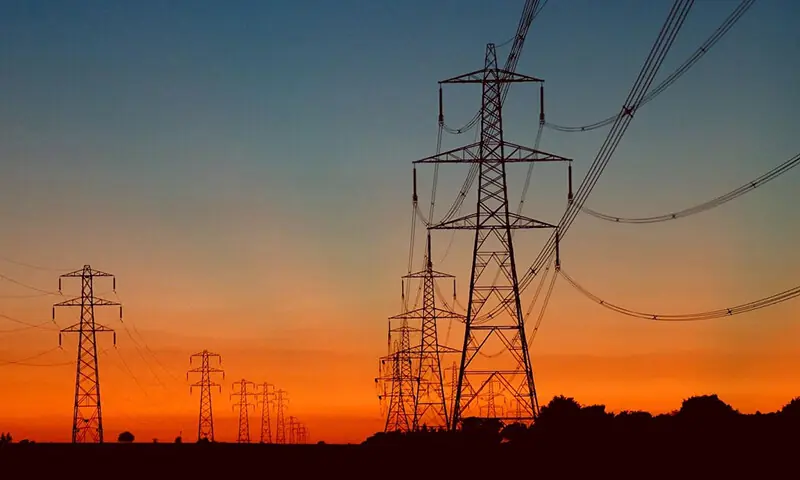
Pakistan planning massive new power capacity expansion

People dont need electricity from the government. It will be another scandal just like the current capacity payment fiasco!
People buy ev's whether its a scooter or a car to get freedom from government. They wont buy electricity. Already people are installing double the amount of batteries required just to ensure they dont use the grid. These textile owners, and the rest of the corrupt mafia in this country that has earned billions through capacity payments wants to starve the country. People like arif habib, mian mansha are the root cause of the downfall of this country.
 
@RealNapster

Nappy bro,

Yet we produce almost 20 unit each day consume it in day time while also charge batteries which are good till 1 am. Then only use wapda between 1 am and 9 am. Hundreds of thousands of homes have such systems.

I guess in a few years' time, everyone in Pak will have such systems. Then WAPDA can shut down their power plants at 9M and reopen them a 1 AM.

Regards
 
Are you being serious? Look at Pakistan, do you see any shortage of manpower in any age group?

If anything, the country is over populated, and majority of the population is living in extreme poverty.
India, China, Pakistan, BD are all over populated. Cities are stifling and the crowds are very dense - no disagreement there.

But see what happened to China when they started draconian population control - now they are staring at a bleak future where too many old people need be supported by too few youth. Japan is more advanced in that decay. Many european countries in the same fate.

India, whatever small gains it has made, is much better positioned for future. I think if Pakistan gets some sense into their leadership can also have a better future because the population demographics will be similar
 
@RealNapster

Nappy bro,

Yet we produce almost 20 unit each day consume it in day time while also charge batteries which are good till 1 am. Then only use wapda between 1 am and 9 am. Hundreds of thousands of homes have such systems.

I guess in a few years' time, everyone in Pak will have such systems. Then WAPDA can shut down their power plants at 9M and reopen them a 1 AM.

Regards


This is this ground reality. People were not investing alot in batteries because they were expensive. But now their prices are down by almost 50% as compare to prices 2 years ago. Soon everybody will have battery system good enough to fulfill whole night requirement.
No body want themselves to be subjected to extortion by wapda anymore. Just those are at disadvantage who live in multi-storey buildings and dont have their own open roof to install solar on.
 
Ideally, power generation should entail power consumption + distribution losses + X% capacity to cater to future demands.

In Pakistan’s context the whole equation has been lopsided. Gross mismanagement of IPPs have resulted in expensive electricity and constant load shedding due to failure of upgrading distribution infrastructure, which resulted in more losses, and to compensate for that, resulted in more expensive electricity. A classic slippery slope.

The problem has further been exacerbated by Pakistanis showing a middle finger to the government and importing solar panels en masse while taking advantage of net metering. Meanwhile, the government shot back through withdrawal of net metering. The Pakistanis showed another round of middle finger by installing batteries for storage.

During this cat and mouse game, the IPPs iron clad contracts meant government paying for fixed capacity, whether the units are consumed or not. Funny thing is that those prices are fixed in USD. We’ve got to hand it to the PMLN government at the time. Although PPP and Establishment players also benefited in this game.

Paradoxically, now the government wants to go with another round of signing IPP contracts. If there is any brain cell left, the government should go back to the drawing board, conduct public hearings, engage experts. Unfortunately that is unlikely to happen as the elites want this to go forward.

Firstly, the solution lies in being creative. There are nuclear reactors, hydroelectric power coming online in the next few years. In addition, more dams and renewable energy projects can be announced to meet for future energy demands.

Secondly, incentivize solar and battery storage manufacturing within Pakistan and provide tax rebates for such moves. The move will cater to demand and have less strain on distribution infrastructure.

Thirdly, invest in improving distribution losses. That would mean less losses and more power to the end consumer. That would mean less burden on power generation demands.

Fourthly, there will be some IPPs that will be out of commission and it may be a good option to renegotiate those contracts, if needed at a considerable discount and denominated in Pak Rs, rather than USD.

In addition, make sure the Iran Pakistan pipeline gas becomes a reality. That would mean lower input costs for gas generation plants in Pakistan therefore cheaper electricity generation.

Honestly, the solution is there but its a matter of will.
 
To view this content we will need your consent to set third party cookies.
For more detailed information, see our cookies page.


This is fear mongering. Govt have cancelled all future IPPs based on imported fuel or even local like Thar coal. 12k MW solar he is talking about will be private.

The rest are mostly dams
  • Diamer-Bhasha Dam: 4,500 MW
  • Dasu Hydropower Project (Stages I & II): 4,320 MW
  • Tarbela 5th Extension: 1,530 MW
  • Mohmand Dam: 800 MW

Bhasha dam is likely 10 years away. 1 Chasma 5 nuke plant 1200MW 2032. All these are not IPPs but government owned, there will be capacity charges to pay debt. But after 15-20 years these will be debt free. Nuke plant last over 60 years. Hydro dams hundreds of years.

The era of IPPs have ended for good.

All these dams will cost $25-30bn. Huge amount no doubt but Bhasha/Mohmand will store water. The govt will eventually own them 100% after paying back debt. No fuel needed. They will provide electricity in summer when demand is at peak. Unlike solar, they run for 24 hours a day.

N league made blunder in 2013-2017, their corrupt IPPs deals ruined Pakistan. But Asim Munir danda is working this time.
 
To all naysayers .... .. . ... All those inefficient powerplants based on imported fossil fuels ( other than coal ) will be phased out by 2035 and replaced by more efficient ones I e , nuclear, solar and hydel .... All of you who are fretting about oversupply shall know that this oversupply is temporary.......as some of you pointed out ! Transmission lines and grids are our Achilles heel , it needs to be fixed .....stay positive and keep your spirits high .

Exactly

"Pakistan is set to become a 90 percent clean energy country in power generation by 2034, announced Minister for Power Sardar Awais Ahmad Khan Leghari in the National Assembly. He highlighted that 55 percent of the electricity produced in 2024–25 already came from renewable and clean energy sources."

Pakistan electricity golden age is coming.
 
@Olympus81 @RealNapster @hydrabadi_arab

Good thing is Pakistan is a less densely populated country than IND or BD, land prices are reasonable and most people can afford to live in independent houses. Most of the country has immense solar and windpower potential. With solar and battery prices falling Pakistanis have the chance to live in a post fossil fuel world. It will have to take care of the energy needs of its poor though.

Meanwhile Pak needs to start using its Thar coal aggressively to substitute liquid fuels as far as possible. Which consumption would actually start stagnating as Pakistanis transition from fuel to electric (mobility, cooking, heating etc).

Regards
 
This is fear mongering. Govt have cancelled all future IPPs based on imported fuel or even local like Thar coal. 12k MW solar he is talking about will be private.

The rest are mostly dams
  • Diamer-Bhasha Dam: 4,500 MW
  • Dasu Hydropower Project (Stages I & II): 4,320 MW
  • Tarbela 5th Extension: 1,530 MW
  • Mohmand Dam: 800 MW

Bhasha dam is likely 10 years away. 1 Chasma 5 nuke plant 1200MW 2032. All these are not IPPs but government owned, there will be capacity charges to pay debt. But after 15-20 years these will be debt free. Nuke plant last over 60 years. Hydro dams hundreds of years.

The era of IPPs have ended for good.

All these dams will cost $25-30bn. Huge amount no doubt but Bhasha/Mohmand will store water. The govt will eventually own them 100% after paying back debt. No fuel needed. They will provide electricity in summer when demand is at peak. Unlike solar, they run for 24 hours a day.

N league made blunder in 2013-2017, their corrupt IPPs deals ruined Pakistan. But Asim Munir danda is working this time.
They are structured as IIP. Same is the case with RLNG plants and nuclear plants.

As far as end user is concerned there will be no difference on how it will impact his bill compared to private sector IPP.

They are not like how original government owned power plants were built paid off by PSDP or debt without any IRR commitments and therefore capacity payment obligations.

In the end, the projected capacity charges will burry the already dead industry and consumers who can’t move away from the grid.
 
@Olympus81 @RealNapster @hydrabadi_arab

Good thing is Pakistan is a less densely populated country than IND or BD, land prices are reasonable and most people can afford to live in independent houses. Most of the country has immense solar and windpower potential. With solar and battery prices falling Pakistanis have the chance to live in a post fossil fuel world. It will have to take care of the energy needs of its poor though.

Meanwhile Pak needs to start using its Thar coal aggressively to substitute liquid fuels as far as possible. Which consumption would actually start stagnating as Pakistanis transition from fuel to electric (mobility, cooking, heating etc).

Regards


Fertilizers as well. We can become a large exporter of fertilizers, made using thar coal.
 

Users who are viewing this thread

Pakistan Defence Latest

Back
Top