Navigation
Install the app
How to install the app on iOS
Follow along with the video below to see how to install our site as a web app on your home screen.
Note: This feature may not be available in some browsers.
More options
Style variation
You are using an out of date browser. It may not display this or other websites correctly.
You should upgrade or use an alternative browser.
You should upgrade or use an alternative browser.
Pakistan planning massive new power capacity expansion
- Thread starter Bilal
- Start date
More options
Who Replied?


hydrabadi_arab
Trusted Member
They are structured as IIP. Same is the case with RLNG plants and nuclear plants.
As far as end user is concerned there will be no difference on how it will impact his bill compared to private sector IPP.
They are not like how original government owned power plants were built paid off by PSDP or debt without any IRR commitments and therefore capacity payment obligations.
In the end, the projected capacity charges will burry the already dead industry and consumers who can’t move away from the grid.
Like IPP for initial years but not IPPs. There is difference.
Pakistan will have to pay back debt for nuclear power plant or dams. But government will own them and not private like IPPs and debt cycle last 15-20 years. Capacity charges will be much less as fuel cost will be 0.
In any case these are strategic projects that started long ago. Govt cannot abandon them. Basha dam is critical for water storage. All other planned IPPs on imported fuel were cancelled.
Bilal
THINK TANK: CONSULTANT
- Thread starter
- #78
Check what the industry is saying, we will hurry them and the consumer for other 20 years.Like IPP for initial years but not IPPs. There is difference.
Pakistan will have to pay back debt for nuclear power plant or dams. But government will own them and not private like IPPs and debt cycle last 15-20 years. Capacity charges will be much less as fuel cost will be 0.
In any case these are strategic projects that started long ago. Govt cannot abandon them. Basha dam is critical for water storage. All other planned IPPs on imported fuel were cancelled.
Also check the capacity payment calculation provided by the government in 6th post in this thread.
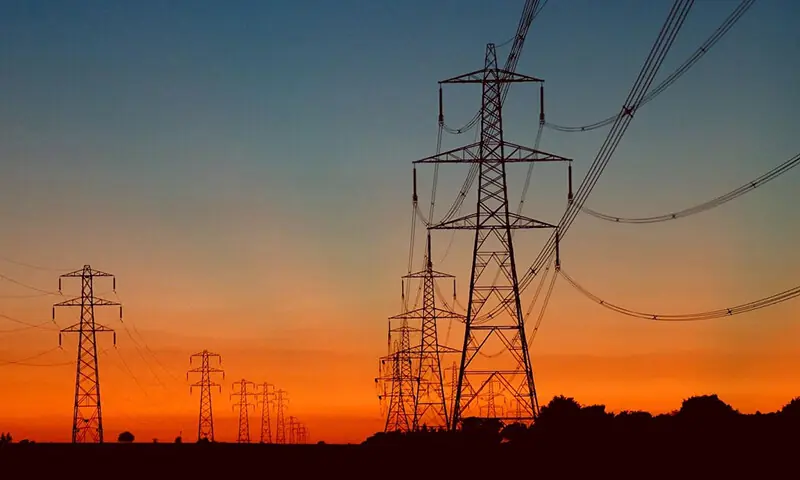
All Pakistan Textile Mills Association slams ‘unrealistic’ plan of power generation
Pakistan’s largest export body has questioned government targets to expand generation capacity by 50 per cent to 64,000 megawatts over 2025-35.
www.dawn.com
mythbuster
SpeedLimited
Textile industries RR never endsCheck what the industry is saying, we will hurry them and the consumer for other 20 years.
All Pakistan Textile Mills Association slams ‘unrealistic’ plan of power generation
Pakistan’s largest export body has questioned government targets to expand generation capacity by 50 per cent to 64,000 megawatts over 2025-35.www.dawn.com
Bilal
THINK TANK: CONSULTANT
- Thread starter
- #80
Bro, I used to be pissed at them thinking they are parasites. But then, when they were given exactly what they were asking for, they delivered on their promise in 1 year and our exports jumped.Textile industries RR never ends
This newer generation of industrialists really delivers when given the level playing field, unlike those of the 90s.
And the demands are logical, competitive energy, interest and tax rates. I mean that’s totally logical.
Last edited:
mythbuster
SpeedLimited
There are few efficient ones , you can count them on your fingers.....most are legacy ones...that short spike you feel good about was because our competitors were in trouble due to COVID.Bro, I used to be pissed at them thinking they are parasites. But then when they were given exactly what they were asking for, they delivered on their promise in 1 year and our exports jumped.
This newer generation of industrialist really delivers when given the level playing field, unlike those of the 90s.
And the demands are logical, competitive energy, interest and tax rates. I mean that’s totally logical.
Bilal
THINK TANK: CONSULTANT
- Thread starter
- #82
Or maybe because those competitive rates were taken away. There is a clear correlation.There are few efficient ones , you can count them on your fingers.....most are legacy ones...that short spike you feel good about was because our competitors were in trouble due to COVID.
It’s not that far fetched to understand that if my competitor has cost advantage in a commoditized industry, I won’t be able to sustain my market share.
mythbuster
SpeedLimited
Allow me to shortly delve in the industrial history of world.....start with the pioneer in industrialization UK then Europe , America , Japan, Korea , Singapore and China at the end .....all of them have one thing in common that's that textile industry was the first step in their industrialization process.....80 percent of the workforce in textile industries consisted of women..... you don't make money in this business unless you make ready made garments...... Pakistan , theoretically , had ample opportunity to develop textile industry from 60s onwards, however it couldn't avail it.....reason is our culture... until recently women weren't allowed to work , even now the participation of women workforce is limited.....our work ethics and labour productivity is very low , textile is very competitive business with very low profit margins.... another thing , robots are gradually replacing the human in this industry......in a nutshell , our textile industry is handicapped... don't expect any wonders from her .Or maybe because those competitive rates were taken away. There is a clear correlation.
It’s not that far fetched to understand that if my competitor has cost advantage in a commoditized industry, I won’t be able to sustain my market share.
hydrabadi_arab
Trusted Member
Check what the industry is saying, we will hurry them and the consumer for other 20 years.
Also check the capacity payment calculation provided by the government in 6th post in this thread.
All Pakistan Textile Mills Association slams ‘unrealistic’ plan of power generation
Pakistan’s largest export body has questioned government targets to expand generation capacity by 50 per cent to 64,000 megawatts over 2025-35.www.dawn.com
I have looked at that, the new generation is mostly from big dams already under construction and Chasma 5 1200MW nuclear power plant.
By 2035 all of current IPPs debt will be paid off. So capacity charges will drop by half. But fuel cost etc will still be there till CPEC 1.0 era IPPs contract expire in 2047.
Bilal
THINK TANK: CONSULTANT
- Thread starter
- #85
I appreciate but that. But the is real world evidence we have is that given the right cost inputs they performed. The only way to disprove it is to give them the same and see if they don’t.Allow me to shortly delve in the industrial history of world.....start with the pioneer in industrialization UK then Europe , America , Japan, Korea , Singapore and China at the end .....all of them have one thing in common that's that textile industry was the first step in their industrialization process.....80 percent of the workforce in textile industries consisted of women..... you don't make money in this business unless you make ready made garments...... Pakistan , theoretically , had ample opportunity to develop textile industry from 60s onwards, however it couldn't avail it.....reason is our culture... until recently women weren't allowed to work , even now the participation of women workforce is limited.....our work ethics and labour productivity is very low , textile is very competitive business with very low profit margins.... another thing , robots are gradually replacing the human in this industry......in a nutshell , our textile industry is handicapped... don't expect any wonders from her .
P.S.: now most of Pakistan’s textile exports are value added. The days of yarn export are gone.
Last edited:

Goenitz
Elite Member

Yup... all companies are leaving left and right, but not IPPs.Why can,t IPPs be forced to leave the country now?
Bilal
THINK TANK: CONSULTANT
- Thread starter
- #87
Because we gave sovereign guarantees to them. We have arm twisted the local investors (rightly so) to renegotiate their contract by passing the sovereign guarantees.Why can,t IPPs be forced to leave the country now?
But we can’t do the same to the Chinese backed IPPs that are now 50% of the capacity payment and we can’t do that to the governments own IPPs (like the RLNG plants where we did adjust the IRR as possible) because the fallout will obviously be on the government and as such on the public itself.
And of course we can’t open the alleged over pricing (of CAPEX) in the 2015 plants for obvious reason.
Therefore, the best approach for now is to increase the utilization of the current capacity to reduce capacity payments and fix our transmission and distribution bottlenecks and losses to bring efficiency in pricing. Not start loading more capacity on an already sick ecosystem.
Last edited:
Goenitz
Elite Member
While the popular narrative calls this an "attack on the poor," I explain why moving toward a free market is not only economically essential but also aligned with Islamic principles of commerce. We dive deep into:
• The inefficiency of artificial price controls.
• How "blanket subsidies" are often exploited by the middle and upper-middle class.
• The "Elite Capture" by local IPPs and industrialists who enjoy guaranteed dollar-pegged returns.
• A Sahih Hadith on price fixing that we should have been taught in school.
It’s time we stop looking for short-term "feel-good" fixes and start addressing the actual bottom-line problem: Energy.
In this episode of "Dil Ki Baat," we dive deep into the geopolitical shift of Cold War 2.0 and how energy supply chains are reshaping the entire world. With China controlling 80% of the solar supply chain and 77% of lithium-ion battery production, the traditional dominance of oil-rich Middle Eastern countries is under massive threat.
Bilal
THINK TANK: CONSULTANT
- Thread starter
- #89
What does it tell us? Let’s put the obvious emotions on the side.Yup... all companies are leaving left and right, but not IPPs.
If we provide profit making opportunities to any industry it will thrive. IPPs just have the right business environment so they thrived. Give it to our export and production industry, they will thrive too.
Samlee
Trusted Member
Fertilizers as well. We can become a large exporter of fertilizers, made using thar coal.
I Made A Lot Of Effort For This.In The End To No Avail.
I Can Create Entire Threads On This
Users who are viewing this thread
Total: 1 (members: 0, guests: 1)
Pakistan Defence Latest
-

-
 Can Pakistan Win Bangladesh’s Trust Without Apologizing for the Genocide of 1971? (17 Viewers)
- Latest: Muji.Iqbal
-
 Killings linked to illegal intrusion or criminal acts should not be called border killings: Salahuddin (4 Viewers)
- Latest: LeonBlack08
-

-


