Follow along with the video below to see how to install our site as a web app on your home screen.
Note: This feature may not be available in some browsers.
1. I accept that video I posted was of Pechora SAM, that is why I removed it.
2. You have been repeating this line that Indian MEA had claimed that "high speed missile attacks AFTER 0140 hrs "and I was wondering why were you not posting entire briefing, along with the MEA link
I went and checked on their website and lo and behold, here is the entire sentence MEA website.
"There were also several high-speed missile attacks noticed subsequently after 0140 hours in the night at several air bases in Punjab. However, limited damage was sustained to equipment and personnel at Indian Air Force stations at Udhampur, Pathankot, Adampur and Bhuj. "
3. You do realize missile interception took place in Sirsa at 00:15hrs which is a place Haryana, where as MEA is taking Pakistani missile attacks airbases in J&K, Punjab and Gujrat(along the Pakistani border)after 0140 Hrs . I am attaching some maps of these places for your reference, to show how far they are from Sirsa.
View attachment 197420
View attachment 197425
View attachment 197424
View attachment 197426
4. The missile which was intercepted in over Sirsa, was intercepted head on, ie it was approaching from the west, where as the interceptor approaching from the East.
5. The interception took place at supersonic speeds, i.e. as we can hear the sonic boom from interception few seconds later.
@Ak01
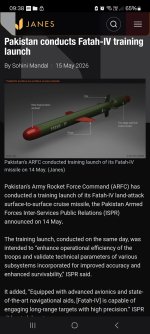
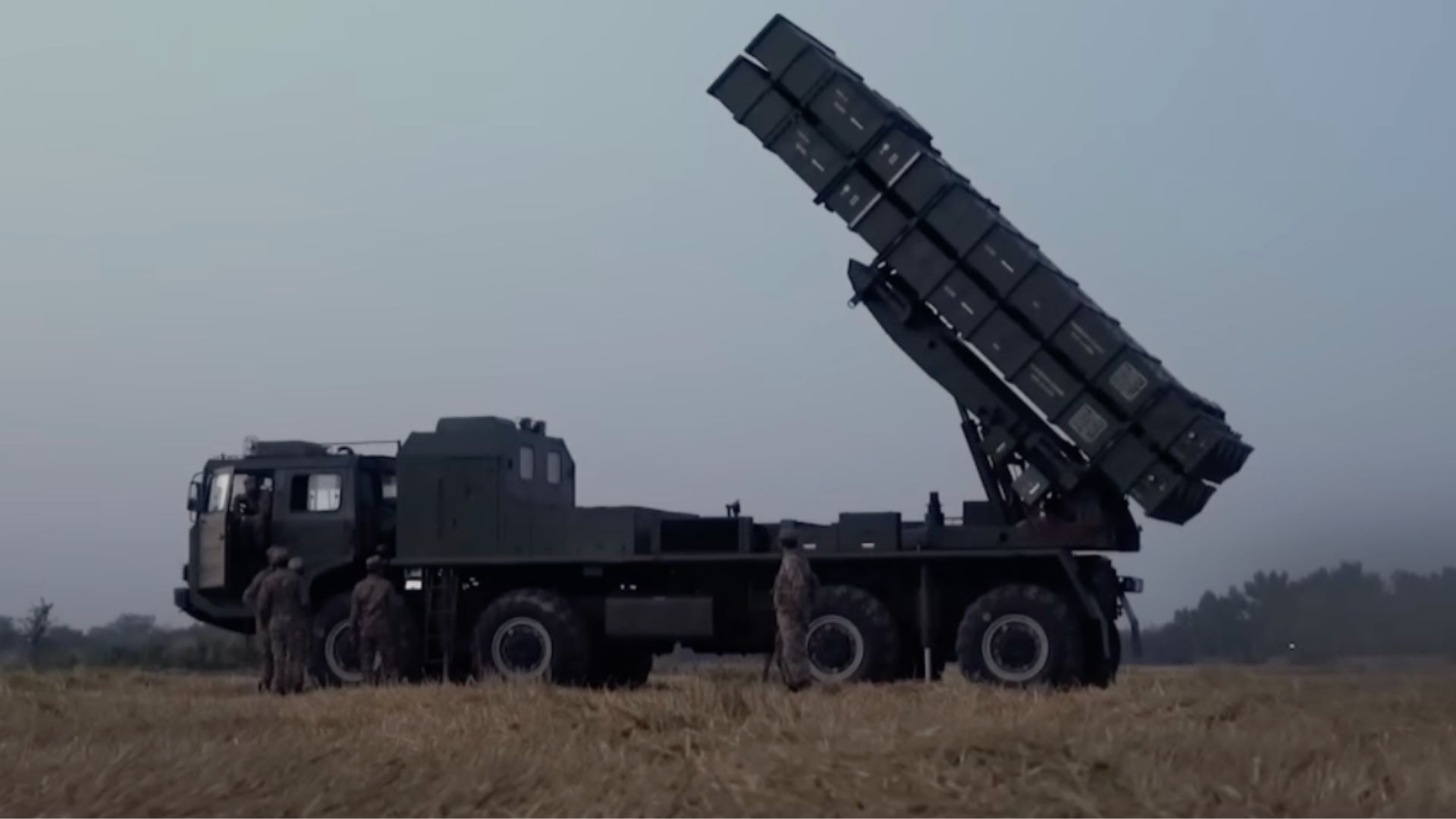
By the looks of it , the production of the IIR seeker seems to be increased isnt it?
Its being used in the Taimoor , Harbah and now the Fatah 4 .
Do you think a better version of the seeker will come in the near future?
I have heard from few people that we are actually procuring entire guidance modules in cover of civilian projects, like drones for agricultural and other stuff, don't how true that is but if the aim is to field hundreds of F4 and F5 quickly these guidance modules are the keyI suspect(my theory) that Pakistan is using off the shelf components from either Turkieye or China for the seeker, and other components with the overall design, certification and manufacturing being done in Pakistan. btw - this is "not" a bad thing, but a "good" thing, as Pakistan can develop its own seeker down the road if it really wants to. The ability to design, test, certify and operationally deployment is a very important skill to develop first.
share.google
Army doesnt let rotations happen that much , its pointlessJust a thought!
Why not Rocket force command under CJSC, involving rotation of all three services, giving operational control & exposure to all three services.
Why just under army & ultimately CDF only.
And yes I know CJSC position is no more!
In an hypothetical world, if that happened wouldn't it be much more plausible & dynamic approach.Army doesnt let rotations happen that much , its pointless
This sounds similar to Iranian missile cities, which is an approach that Pakistan should copy but problem is it's very expensive. Unlike Iranians, Russkies, Gulfies we can't just sell oil and gas and get megabucks.Alongside building up an arsenal of rockets, Pakistan should really look at building extensive tunnel networks (with many fake portals and backup exits similar to the MX missile shell game theory; including hidden ABM and air defenses) throughout the mountains of northern and western Pakistan. Also this should not only apply to rockets but also to small mini airbases, large enough to hide at most a few aircraft each, and able to deploy to near by motorways for operations similar to the American ACE concept (agile combat employment). We saw only a couple days ago the Iranians brought out a F-4 and used it against Kuwait.
The ability for extensive tunnel network in strategic (amassing forces without being seen), operational (organized Command and control to keep up tempo) and even tactical (less likely to be hit before launching) resilience can’t be underestimated.
Yes it’s expensive, but if we also offer to build similar missile cities to the Saudis (who have a considerable mountain range approx 150 km north of Riyadh), who are looking for a way to deter Iran (and any others with nefarious plans against them) as our defense alliance partners, we would gain the expertise, technology and possible some funding assistance to do it in Pakistan. If Pakistan is ever called upon to employ kinetic means against an adversary of the Saudis and the Pakistani state agrees, having the missile bases inside Pakistan would be just as capable as having those bases inside Saudi, so conventional missile bases in Pakistan could be of use to the Saudis defense as fulfilling the spirit of the defense treaty.This sounds similar to Iranian missile cities, which is an approach that Pakistan should copy but problem is it's very expensive. Unlike Iranians, Russkies, Gulfies we can't just sell oil and gas and get megabucks.
Wow that is some creative thinking ! Yeah that would be a great project.Yes it’s expensive, but if we also offer to build similar missile cities to the Saudis (who have a considerable mountain range approx 150 km north of Riyadh), who are looking for a way to deter Iran (and any others with nefarious plans against them) as our defense alliance partners, we would gain the expertise, technology and possible some funding assistance to do it in Pakistan. If Pakistan is ever called upon to employ kinetic means against an adversary of the Saudis and the Pakistani state agrees, having the missile bases inside Pakistan would be just as capable as having those bases inside Saudi, so conventional missile bases in Pakistan could be of use to the Saudis defense as fulfilling the spirit of the defense treaty.
Spread over the next 5-10 years, much could be built and could help employ a lot of Pakistani people, in Pakistan and Saudi.
Under the auspices of “mining”, much joint cooperation could be done.
We use essential cookies to make this site work, and optional cookies to enhance your experience.