Pakistan Solar Power: News & Updates

Pakistan experiences surge in solar as net-metering share jumps, grid usage slips​


Solar adoption surges 28.1% MoM as high tariffs drive shift, but grid underutilisation creates fiscal burden

Usman Hanif
November 11, 2025

tribune


KARACHI: Net metering's share in Pakistan's total power generation rose by 57 basis points year-on-year in September 2025, reflecting continued shift towards solar energy adoption and reduced reliance on the national grid, according to data compiled by Arif Habib Limited (AHL) based on NEPRA's latest figures.

Overall power generation increased 0.8% YoY in September 2025, while net metering units surged 28.1% month-on-month, underscoring growing contribution of distributed solar systems installed by households and industries. According to NEPRA estimates, power demand is projected to grow by 2.8% YoY in FY25, driven primarily by seasonal industrial activity and urban expansion. However, high tariffs continue to weigh on consumption patterns.

Energy analysts said the rise in net metering reflects both economic compulsion and environmental consciousness. Engineer Faiz Bhutta, Senior Solar and Battery Energy Storage Systems Consultant, told The Express Tribune that escalating electricity tariffs have made alternative energy sources necessary.

"Electricity has become so expensive that people are compelled to think of alternatives," he said. From an environmental perspective, this shift is positive. However, from the government's grid perspective, it's problematic. As capacity grows and consumption weakens, system underutilisation becomes a financial burden on the state.
 

Pakistan’s Solar Revolution: Who Really Benefits?


To view this content we will need your consent to set third party cookies.
For more detailed information, see our cookies page.


Pakistan has joined the global 25% solar club, one of only 17 countries generating over a quarter of its electricity from the sun. But behind this Shamsi Inquilab lies a tough question: Who really benefits and who’s paying the price? In this episode of The Story Behind, Nukta Pakistan Editor, Amber Shamsi unpacks Pakistan’s solar surge, cheap Chinese panels, circular debt, and what economists like Ammar H. Khan say about the future of our energy system. Watch till the end to find out how Pakistan’s solar dream could turn into a financial nightmare for those still stuck on the grid.
 

From marriage to machine: Pakistan’s solar revolution​

By Staff Reporter | Gwadar Pro
Nov 11, 2025

SAHIWA – “When my niece got married not long ago, her parents promised to install a solar panel system in the newlyweds’ home as soon as possible,” Ahmed, from a rural area in Punjab, told the reporter.

Chinese solar panels have become a stable investment for Pakistani families, a trend that is not only popular in cities but also sweeping across vast rural areas.

Despite gradual improvements in power supply, some areas of Pakistan still face daily power outages lasting 10-18 hours. On the one hand, electricity prices remain high, and regional power rationing still occurs frequently during peak hours. However, this country boasts abundant sunshine resources, with an average daily irradiance of 4.5-7.0 kWh/ square meter, providing a natural advantage for the development of local solar photovoltaic industry.
 
Data shows that to date, over 95% of Pakistan’s imported solar panels come from China. Furthermore, with the government’s renewable energy support policies introduced around 2020, Pakistan has imported over 39 GW of solar panels within five years, representing more than three-quarters of the country's total installed power generation capacity.

From marriage to machine: Pakistan’s solar revolution


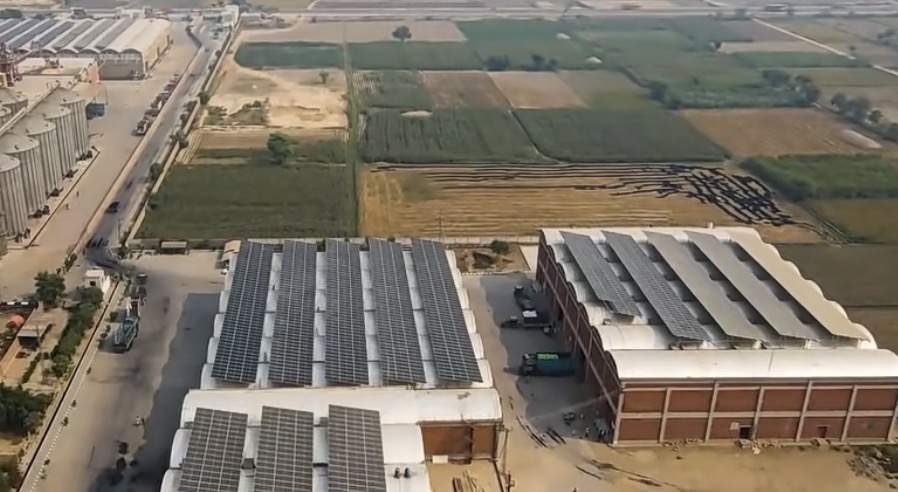
Hi-Tech Feed solar photovoltaic project [Photo provided to GP]

Hitech Industries, a local stocker and trading operator located on Arifwara-Sahiwal Road in Sahiwal, decided to turn to solar energy in response to persistently high electricity prices.

“Our main business is edible oil products, followed by different types of feed. To cope with high electricity prices, solar energy is naturally our best choice. I have many friends who have had positive experiences working with LONGi, thus I decided to choose them as well. Our experience has been excellent with their products give me exceeded expectations,” noted CEO Dr. Muhammad Arshad.
 
The data shows that the Hi-Tech Feed solar photovoltaic project is located in the Arifwara-Sahiwal region and has a total capacity of 3MW. It is estimated that the project will generate approximately 4.3 million kWh of electricity annually, saving about 21,000 tons of coal and reducing carbon dioxide emissions by about 32,850 tons.

From marriage to machine: Pakistan’s solar revolution


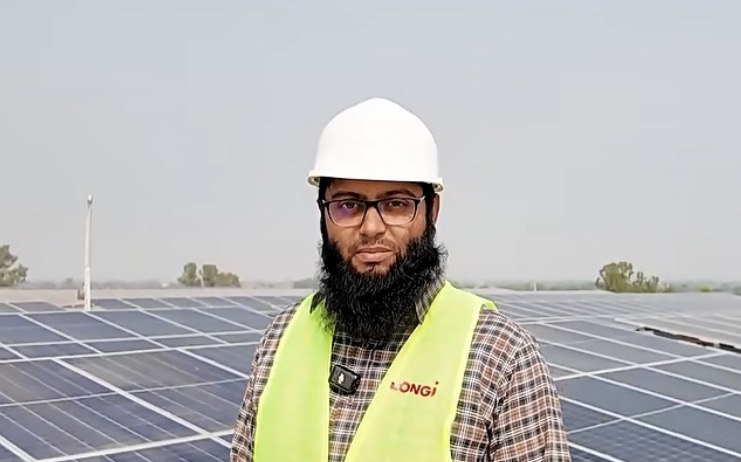
Usama Shahid at the project site [Photo provided to GP]

From marriage to machine: Pakistan’s solar revolution


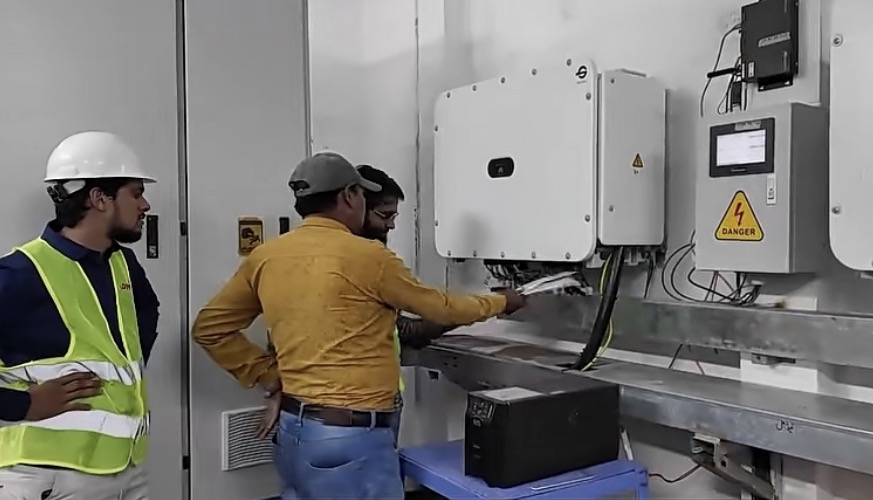
Pakistani engineers inspecting inverter equipments [Photo provided to GP]

“Our project saves a total of 12 megawatt-hours of energy every day,” Usama Shahid, a Site Engineer, told Gwadar Pro.

“In addition to LONGi solar panels, we also used Huawei inverters. Overall, our project effectively reduces local energy consumption and helps address electricity challenges. As we all know, solar energy is an excellent renewable green energy source, thus we look forward to more partners participating in this energy transformation to deal with climate change.”
 

Pakistan says rooftop solar output to exceed grid demand in some hubs next year​

By Sudarshan Varadhan
  • Country's emissions and some power bills are down
  • Electric utilities struggle with weak demand, high debt
  • Climate ministry says Lahore could see negative power demand
BELEM, Brazil, Nov 22 (Reuters) - Pakistan's rooftop solar generation will for the first time exceed power demand on the country's electrical grid during daytime hours in some major industrial regions next year, a senior government official told Reuters.

The outlook reflects a record boom in the country's solar panel installations in recent years that has delivered lower emissions and reduced power bills for some, but also disrupted the finances of debt-laden utilities due to a protracted decline in demand for grid-based electricity.


"Pakistan will experience negative grid-linked demand during certain daytime hours because behind-the-meter solar is offsetting grid consumption completely," Aisha Moriani, secretary of Pakistan's climate change ministry told Reuters on the sidelines of the COP30 climate conference in Brazil.

While regions in Europe and Australia sometimes experience negative electricity prices due to solar oversupply and low demand, Pakistan would be among the first major emerging markets where rooftop generation could exceed grid-linked demand in major areas entirely for lengthy periods.

"Negative demand" is likely in the northwestern city of Lahore, which has some of the country's highest solar penetration, followed by Faisalabad and Sialkot, where industrial areas are driving solar adoption, she said.

Power cuts and tariff hikes have pushed Pakistan's 250 million people to accelerate solar adoption and made it the world's third-largest panel importer, with solar's share in generation exceeding its neighbour China.

The south Asian nation will see more frequent negative-demand events, especially during bright summer afternoons, industrial holidays and moderate temperature days with high solar output, said Moriani, Pakistan's lead negotiator at COP30.

"Pakistan's challenge is not whether renewable energy will grow, it is how fast the grid, regulation, and market design can evolve to keep pace," she said.
The south Asian nation is planning to introduce new tariffs for large solar users, as well as changes to fee structures to ensure businesses with panels share equally in the costs of grid upkeep, she said.

Pakistan's grid-linked power demand is expected to grow 3-4% this year, slower than historical averages. Next year, consumption is expected to rise more steeply but could be impacted more by higher solar use, Moriani said.

The surge in solar use has also pushed Pakistan to renegotiate its LNG contracts with top supplier Qatar and cancel cargoes supplied by Italy's Eni, Moriani said.
Pakistan is looking for lower prices, flexible delivery schedules and potentially fewer cargoes, she said.

While there were no formal negotiations with Qatar at COP30, the event provided "diplomatic space for engagement with energy ministers and commercial representatives," she said.

"The key aim is to align Pakistan's gas import strategy with fiscal space, demand outlook, and seasonal patterns. Pakistan seeks stability and affordability, not expansion of LNG dependency."

Reporting by Sudarshan Varadhan; Editing by David Gregorio
 

Solar against fossil fuel-led energy generation dilemma​


Country has agreed to achieve 60% renewable energy share but is discouraging it under influence of IPPs

DR MUHAMMAD KHURSHID
December 01, 2025


tribune


ISLAMABAD: Pakistan possesses a solar power potential of 40 gigawatts as reported by the World Bank. This may help to push the share of solar to 60% in energy mix by 2030.

Historically, Pakistan depends on fossil fuels, especially oil and gas, for power generation; however, due to advances in solar technology and its increased supply low prices have shifted the energy mix paradigm more to renewable sources in recent years. Therefore, the government has developed the net metering policy, also referred to as net energy metering (NEM), which in fact is an electricity billing method that enables consumers generate their own power to sell it to the power generating company.

It involves customers with solar panels transferring the excess electricity they produce to the grid and receiving credits from the utility company on their electric bill. When solar panels generate more electricity than its consumption, the surplus power flows back to the grid.

The government has endorsed the Alternative and Renewable Energy Policy 2019, offering incentives and support for renewable energy ventures. However, challenges persist in executing the National Electricity Policy 2021, which was ratified by the Council of Common Interests in February 2021.

Reports indicate that the government plans to slash the price for solar power exported to the national grid from Rs21 per unit to Rs11 per unit, sparking widespread criticism. This is in sharp contrast to the tariff of Rs60 per unit for power generated from fossil fuel.
 
The installed capacity of solar net metering has surged to 3,000 megawatts. Pakistan Bureau of Statistics (PBS) data show that in 2020, fossil fuels constituted roughly 63% of total power generation, followed by hydropower at 29%, nuclear energy at 5% and renewable energy at approximately 3%. The proposed solar rate reduction is believed to be influenced by the independent power producers (IPPs), who fear loss of revenue with the rapid increase in solar power installations, potentially at the expense of consumers. Notably, regulatory bodies like the National Electric Power Regulatory Authority (Nepra) are perceived to favour IPPs over consumers and solar net metering users.

The surge in demand for solar panels has disrupted the government's capacity payment plan amid fears that IPPs will lose business. While the government contends that the current rate enables consumers to recoup their solar panel installation costs within 18 months, the IPPs are pushing for an extension in this payback period to 10 years. Globally, the Sustainable Energy for All (SE4All) initiative aims to achieve universal access to modern energy by 2030 and double the share of renewable energy and energy efficiency gains. Consequently, there's a rapid transition towards renewable and alternative energy sources for power generation.

The EU's revised Renewable Energy Directive elevates its binding renewable target for 2030 to a minimum of 42.5%, up from the previous 32%, with an ambition to reach 45% of total energy from renewable sources, nearly doubling the existing share. Similarly, other advanced countries are also committed to increasing the proportion of renewable energy in their energy mix by 2030.

The Sustainable Development Goal 7 (SDG-7) advocates for "affordable, reliable, sustainable, and modern energy for all" by 2030, with three core targets forming the foundation of this endeavour to ensure universal access to affordable, reliable, and modern energy services.

Pakistan has ratified the United Nations Framework Convention on Climate Change (UNFCCC) and adopted SDG-7 to align with global efforts to combat climate change and transition away from traditional fossil fuels and other carbon-intensive energy sources.

To meet its Nationally Determined Contributions (NDC) target, Pakistan aims to transition to 60% renewable energy and achieve 30% penetration of electric vehicles by 2030. Additionally, Pakistan plans to ban coal imports and expand nature-based solutions.

Solar net metering stands out as a rapidly growing sector, offering consumers the opportunity to leverage their own resources for energy generation. Through such initiatives, Pakistan can fulfil its commitments under the Paris Agreement, UNFCCC, and SDG-7.

Keeping in view the above national and global commitments, leveraging net metering facilities can significantly aid in fulfilling Pakistan's obligations under the UNFCCC and Paris Agreement. Therefore, reducing the per-unit price of solar energy from Rs21 to Rs11 could undermine the transition to renewable energy.

The irony is that Pakistan has committed to achieving a 60% renewable energy share, but is discouraging it under the influence of IPPs. The world is moving fast to renewable sources of energy as Australia is offering three hours a day of free solar energy to citizens, and the EU has already achieved renewable energy targets well ahead of the committed deadline of 2030.
 
The Sindh government has ordered a sweeping investigation into the World Bank-funded Sindh Solar Energy Project (SSEP) after uncovering serious financial and procedural irregularities, including fake import documents, improper contract alterations, and payments made for incomplete or missing work.

The directives were issued during a cabinet meeting chaired by Chief Minister Syed Murad Ali Shah on Monday, where the government also approved the blacklisting of the main contractor implicated in the alleged fraud.

Senior officials briefed the cabinet that despite the project’s near-full utilisation of funds, several major components, including solar parks, rooftop installations and large-scale distribution of home solar systems, remained unfulfilled.


According to the briefing, contract modifications were carried out without approvals, equipment reportedly imported for the project never reached Pakistan, and a number of NGOs were engaged for distribution tasks without competitive bidding.

Significant public funds were disbursed against “unclear, undocumented or unverifiable outputs,” the cabinet was told.

In light of these findings, the chief minister directed comprehensive audits, recovery processes, and accountability actions against all responsible parties, including private firms and officials involved in the project’s oversight.

The SSEP, scheduled to close in July 2025, was designed to expand clean-energy access across Sindh. But the cabinet noted that several flagship components l, such as the development of solar parks and installation of rooftop systems, failed to progress beyond early stages.

The most extensive activity under the project involved the Solar Home System (SHS) initiative, which aims to distribute 250,000 free solar kits to low-income, off-grid and low-power households.

Officials informed the cabinet that while distribution has been ongoing, critical gaps in documentation, monitoring and verification triggered concerns over the accurate tracking of beneficiaries and the quality of the systems supplied.

The Chief Minister emphasised that the provincial government “will not tolerate misuse of public resources” and that the case would be pursued to ensure financial discipline, transparency and protection of climate-related investments.

The cabinet also directed the Energy Department to strengthen oversight mechanisms for ongoing and future renewable-energy programmes to prevent similar breaches.

Further reports from the audit teams will be presented to the cabinet in the coming weeks, officials said.
 
PPP give grandiose speeches in international forums and talk about democracy blah blah but can't deliver basic civic services in their province or deal with corruption in their ranks.
 
Shouldnt be govt happy as because of solar boom we have cancelled the scheduled LNG cargoes which would have cost us many precious $$$
 

EXCLUSIVE INTERVIEW:

Rooftop solar adoption unlikely to slow down, says LONGi


‘Pakistan has effectively reached commercially viable economics for solar-plus-storage’

BR Research
December 5, 2025

With over 15 years of experience in solar PV technology, IPP development, and large-scale engineering projects, he has led major installations across Uzbekistan (300MW+), Kazakhstan (50MW), and Pakistan (125MW).

Before joining LONGi in 2022, Osman spent nine years at Reon Energy, where he built and led the engineering division and delivered high-impact projects, including a 60MW IPP in Kazakhstan, a 5.3MW solar project in Qatar, and multiple captive power plants in Pakistan. He began his career at Engro Powergen, working on a 220MW power plant and evaluating new renewable technologies.

A NUST Electrical Engineering graduate, Osman has played a key role in expanding advanced solar technologies in Pakistan and Central Asia, launching LONGi’s Back Contact panels and leading regional training programs that enabled Central Asia’s first MW-scale project.

In his recent conversation with BR Research, he shares his insights on the opportunities, challenges, and future trajectory of solar energy in Pakistan. Following are the edited excerpts:

BR Research: How do you assess the impact of the government’s recent proposals to revise net-metering tariffs and buyback rates? What implications do you foresee for rooftop solar adoption and investor sentiment?

Osman Maud: The proposed revisions to net-metering tariffs may influence consumer behavior, but rooftop solar adoption is unlikely to slow significantly. Net metering primarily benefits small and medium enterprises and residential consumers, while large industrial players rarely rely on it due to system size limits. Even if incentives are reduced, the high cost of grid electricity keeps solar economically attractive.

Battery-based hybrid systems now offer payback periods of two to three years, and declining battery costs make them increasingly appealing. Overall, rooftop solar adoption will continue, and daytime grid demand may gradually decline.

BRR: Pakistan now faces growing grid-balancing challenges due to high daytime solar injection. From LONGi’s technical perspective, what solutions can help manage the emerging “duck curve” and stabilize the grid?

OM: The duck curve is a real phenomenon in Pakistan, reflecting high daytime solar generation and evening demand peaks. Globally, battery energy storage systems (BESS) have been the most effective solution, storing excess energy during periods of low demand and releasing it later. Time-of-use (TOU) tariffs can also help by incentivizing consumption during peak solar production, such as encouraging EV charging at midday. Combining storage and smart demand management benefits both consumers and the grid, reducing the need for curtailment.

BRR: There is a policy debate between promoting distributed solar versus shifting toward utility-scale renewables. Where does LONGi see Pakistan’s optimal energy mix heading over the next decade?

OM: While utility-scale solar has a role, Pakistan’s strategy should prioritize distributed generation to maximize efficiency. Transmission infrastructure is a bottleneck for large plants, leading to underutilized lines and higher costs. Distributed solar reduces grid strain and allows energy to be generated near consumption points. Combining solar with productive land use, such as agriculture or small-scale farming, further enhances efficiency. Pakistan should avoid relying solely on utility-scale projects and instead build a balanced energy mix with distributed solar as the foundation.

BRR: With DISCOs reporting rising daytime surplus and evening shortages, does Pakistan risk large-scale solar curtailment in the coming years? What technical or regulatory measures should be prioritized?

OM: Large-scale curtailment of rooftop solar is unlikely because selectively controlling numerous installations is technically impractical. Instead, the focus should be on utilization strategies and TOU metering, incentivizing consumption when solar generation is high. Encouraging battery storage allows households to store daytime energy for evening use, making curtailment largely unnecessary while also promoting investment in hybrid systems.

BRR: Battery prices have fallen globally by more than 80 percent over the past decade. How close is Pakistan to reaching cost parity where solar-plus-storage becomes commercially viable for C&I and residential segments?

OM: Pakistan has effectively reached commercially viable economics for solar-plus-storage. Factories and households are already adopting these systems, often achieving payback in less than five years. Declining battery costs and rising electricity tariffs make hybrid systems increasingly attractive. Even if net-metering incentives are adjusted, adoption will continue, gradually reducing daytime grid demand and enhancing energy resilience.
 

Users who are viewing this thread

Back
Top