Navigation
Install the app
How to install the app on iOS
Follow along with the video below to see how to install our site as a web app on your home screen.
Note: This feature may not be available in some browsers.
More options
Style variation
You are using an out of date browser. It may not display this or other websites correctly.
You should upgrade or use an alternative browser.
You should upgrade or use an alternative browser.
Pakistan Solar Power: News & Updates
- Thread starter ghazi52
- Start date
More options
Who Replied?
Watandar
SpeedLimited


The solar cat is out of the bag, despite the efforts of the corrupt anti-common-man government. Pakistanis are quite resourceful and now that a market for solar panels and equipment can clearly be seen, I expect many people in workshops and "karkhanay" city clusters to begin building these solar panels and related equipment domestically. Anyone remember the satellite dish phenom in Pakistan in the 90's ? They were all imported initially and then domestic producers sprang up overnight to meet the huge demand. The solar panels demand is 50x that.

maxpane
Elite Member
sir in south punjab people who graze goat herd have a solar panel on their shoulder with a small fan. They use while staying under the roof. here people are adapting very well. start from single solar plate and then add one by one according their savings . they are using typical committe system or selling some animals or something like gold to be independent from wapda . Solar plates are every where. Those who cant afford ac's are using solar air cooler . if they cant get new batteries they are buying second hand . i mean people are too frustrated and dnt want to touch wapda unless its emergency .its happening now .When I visited Pakistan last year, I saw that all ... I was very happy to see this happen, but this will literally bankrupt the government. With the 18th Amendment, the federal government is at the mercy of the provinces. It seems that Pakistan is not one country but 4-5 countries living in order. Heartbreaking to see the country continue to slide into chaos and disorder every year. While the elite enjoy, the common man suffers, and nothing changes. All policies are made for the elite. Somehow, this slipped through the elite's fingers intentionally, as they want to benefit from it by installing solar for their factories and homes. However, the common middle-class person somehow used the opportunity to make the most of it. Still, the lower 40% are not able to get the benefit, hence suffer further. I know some people who have totally shut off the grid and just rely on batteries and solar panels. They do suffer at times, but 98% of the time they have power, literally free after the RoI duration completes. Outside Karachi, in various villages, they were able to install solar panels that can deliver power throughout the day, and, using low-cost batteries, they can run the power at night [but limited]. Not every villager can afford this arrangement. Hence this remains sketchy in rural sindh.
Last edited:
maxpane
Elite Member
i agree . they signed some exoensive agrements and thought that we have a huge market and people need energy at every cost and they did mot spend a single coin. they uses chinese loans to get their own benefits. Chinese loans owned by Pakistan in simole words on behalf of People of Paksitan. they will get their share without any worry just like leechesThe solar cat is out of the bag, despite the efforts of the corrupt anti-common-man government. Pakistanis are quite resourceful and now that a market for solar panels and equipment can clearly be seen, I expect many people in workshops and "karkhanay" city clusters to begin building these solar panels and related equipment domestically. Anyone remember the satellite dish phenom in Pakistan in the 90's ? They were all imported initially and then domestic producers sprang up overnight to meet the huge demand. The solar panels demand is 50x that.
NA71
Trusted Member
Pakistan's total estimated solar installed capacity is approximately 30 to 51 GW, largely driven by a massive, bottom-up rooftop and distributed solar revolutionwhat is Pakistan current install capacity of solar private or gov combined?
NA71
Trusted Member
Even with hybrid solar inverter and lithium cell based batteries have changed the game all over from common house needs to medium size industrial units ......all are catching up fast .....but as always Govt is creating hurdles......pathetic

hydrabadi_arab
SpeedLimited
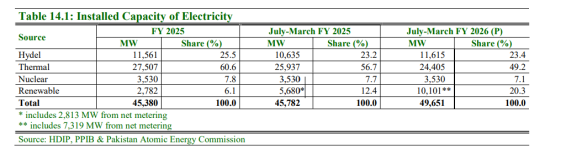
Solar net metering now 10k MW! Explosive growth.
hydrabadi_arab
SpeedLimited
Pakistan’s solar revolution: phase-two in full swing
Published July 9, 2026 Updated about 9 hours agoSave
For three years, the panel import numbers did the talking. Every fresh release from customs data showed another record: more megawatts, more containers, more households abandoning the grid. That story is slowing down. What is unfolding now is a different one, and the numbers say it started months ago, not years from now.
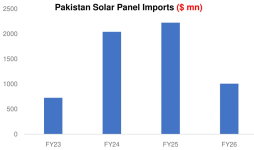
Panel imports have gone from deceleration to outright contraction. Between January and May 2026, Pakistan brought in 4,574MW of solar panels, against 11,781MW in the same five months of 2025, a drop of 61 percent. The dollar value fell almost as sharply, down 54 percent to $514 million from $1.12 billion.
None of this means the market is shrinking. Cumulative panel imports crossed 55,700MW by the end of May, still adding volume every month; the slowdown is in the rate of addition, not the base itself.
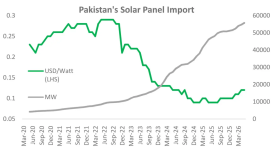
Four years ago, Pakistan was importing panels at under $0.30 per watt. It is now paying roughly a third of that. Module prices have fallen more than 70 percent since 2017, from $0.38/W to about $0.10-0.12/W through 2026.
Panels, in other words, have finished becoming a commodity. The room for a repeat of 2023-24’s import frenzy, when a single fiscal year briefly bought over 14,000MW, has narrowed on price grounds alone. There are only so much further module costs that can fall before manufacturers stop shipping.
On the surface, a slower panel market reads as demand exhaustion: early adopters saturated, urban rooftops full, the low-hanging fruit picked. Look one line item down the import bill, and a different picture appears.
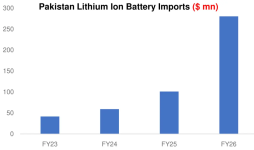
Lithium-ion battery imports have gone from a rounding error to a genuine trend. Battery imports rose from $42 million in FY23 to $280 million in FY26.Battery imports in 4QFY26 alone account for 50 percent of the fiscal year imports – suggesting the ground is warming up.
That inflection is the actual story. Pakistan’s solar market spent its first phase chasing capacity: getting panels onto as many roofs as possible, as cheaply as possible, to escape grid tariffs that kept climbing through 2023 and 2024. That phase is now mathematically slowing because most of the addressable, easy-to-convert demand has already been converted. What is left is a market that increasingly wants to store what it generates rather than simply generate it, a shift from displacing the grid during the day to leaving it altogether, or close to it.
There is corroborating evidence in the gap between panels imported and panels actually registered under net metering. By the close of FY25, cumulative panel imports stood at roughly 47,200MW. Officially net-metered installed capacity, as reported by distribution companies, was just 6,485MW, meaning at least 86 percent of everything imported never showed up as a formal, grid-tied net-metering connection.
Some of that gap is inventory sitting in warehouses; some is installation lag; but a meaningful share comprises systems that were never intended to touch the grid at all: commercial and industrial self-consumption setups, hybrid inverters paired with batteries, and off-grid installations in areas where net metering does not reach. The battery imports numbers suggest that share is growing, not shrinking.
None of this is guesswork dressed up as inevitability. It is one dataset decelerating exactly as a second, previously immaterial dataset, starts compounding, the kind of handoff that, in most commodity cycles, marks a market maturing rather than dying.
Pakistan’s solar story spent 2021 through 2024 being about access. What the fresher numbers now show is a market moving into a second, quieter phase: not who can plug in a panel, but who can afford to store what it produces. The panel boom bought Pakistan cheap daytime power. The battery numbers, still small in absolute dollar terms but unmistakable in their trajectory, suggest the next fight is over what happens after the sun goes down.
hydrabadi_arab
SpeedLimited
Pakistan’s solar revolution: phase-two in full swing
Published July 9, 2026 Updated about 9 hours ago
Save
For three years, the panel import numbers did the talking. Every fresh release from customs data showed another record: more megawatts, more containers, more households abandoning the grid. That story is slowing down. What is unfolding now is a different one, and the numbers say it started months ago, not years from now.
Panel imports have gone from deceleration to outright contraction. Between January and May 2026, Pakistan brought in 4,574MW of solar panels, against 11,781MW in the same five months of 2025, a drop of 61 percent. The dollar value fell almost as sharply, down 54 percent to $514 million from $1.12 billion.
None of this means the market is shrinking. Cumulative panel imports crossed 55,700MW by the end of May, still adding volume every month; the slowdown is in the rate of addition, not the base itself.
View attachment 205347
Four years ago, Pakistan was importing panels at under $0.30 per watt. It is now paying roughly a third of that. Module prices have fallen more than 70 percent since 2017, from $0.38/W to about $0.10-0.12/W through 2026.
Panels, in other words, have finished becoming a commodity. The room for a repeat of 2023-24’s import frenzy, when a single fiscal year briefly bought over 14,000MW, has narrowed on price grounds alone. There are only so much further module costs that can fall before manufacturers stop shipping.
On the surface, a slower panel market reads as demand exhaustion: early adopters saturated, urban rooftops full, the low-hanging fruit picked. Look one line item down the import bill, and a different picture appears.
Lithium-ion battery imports have gone from a rounding error to a genuine trend. Battery imports rose from $42 million in FY23 to $280 million in FY26.Battery imports in 4QFY26 alone account for 50 percent of the fiscal year imports – suggesting the ground is warming up.
View attachment 205348
That inflection is the actual story. Pakistan’s solar market spent its first phase chasing capacity: getting panels onto as many roofs as possible, as cheaply as possible, to escape grid tariffs that kept climbing through 2023 and 2024. That phase is now mathematically slowing because most of the addressable, easy-to-convert demand has already been converted. What is left is a market that increasingly wants to store what it generates rather than simply generate it, a shift from displacing the grid during the day to leaving it altogether, or close to it.
There is corroborating evidence in the gap between panels imported and panels actually registered under net metering. By the close of FY25, cumulative panel imports stood at roughly 47,200MW. Officially net-metered installed capacity, as reported by distribution companies, was just 6,485MW, meaning at least 86 percent of everything imported never showed up as a formal, grid-tied net-metering connection.
View attachment 205349
Some of that gap is inventory sitting in warehouses; some is installation lag; but a meaningful share comprises systems that were never intended to touch the grid at all: commercial and industrial self-consumption setups, hybrid inverters paired with batteries, and off-grid installations in areas where net metering does not reach. The battery imports numbers suggest that share is growing, not shrinking.
None of this is guesswork dressed up as inevitability. It is one dataset decelerating exactly as a second, previously immaterial dataset, starts compounding, the kind of handoff that, in most commodity cycles, marks a market maturing rather than dying.
Pakistan’s solar story spent 2021 through 2024 being about access. What the fresher numbers now show is a market moving into a second, quieter phase: not who can plug in a panel, but who can afford to store what it produces. The panel boom bought Pakistan cheap daytime power. The battery numbers, still small in absolute dollar terms but unmistakable in their trajectory, suggest the next fight is over what happens after the sun goes down.
There will be explosive growth in battery imports soon. Pakistan need to work on local assembly/manufacturing to save as much FX as possible.
By 2030 China will make $20/kwh battery possible. Thats when you will see everyone mama chacha buying batteries just like they brought solar panels when it hit $0.10 watt.

ACE OF HEARTS
Registered Member
If Pakistan cam convince CATL, BYD and others from China to establish an assembly/ repair plant in Pakistan, that would really help us in overcoming chronic electricity shortages / load shedding etc.
Ofcourse incentives need to be providing the kind of which were given to the automatic industry or even better:
1. Long-term tax holidays.
2. Duty-free machinery imports.
3. Stable, transparent investment policies.
Ofcourse incentives need to be providing the kind of which were given to the automatic industry or even better:
1. Long-term tax holidays.
2. Duty-free machinery imports.
3. Stable, transparent investment policies.
hydrabadi_arab
SpeedLimited
Solar Replaces Diesel As Pakistan’s Biggest Farm Irrigation Power Source
The 7th Agricultural Census 2024, conducted by the Pakistan Bureau of Statistics, shows that diesel-powered tubewells and lift pumps have fallen 36 percent since 2004, dropping from 833,953 units to 530,500.
Over the same twenty years, Pakistan’s total fleet of tubewells and lift pumps nearly doubled, rising 97 percent to 1.83 million units, a growth the census itself describes as a record increase since independence. In other words, farmers installed close to a million new pumps while simultaneously retiring more than 300,000 diesel ones.
ALSO READ
Pakistan Moves Toward Deregulating Petrol and Diesel Prices
The numbers tell the story of a collapse in market share. In 2004, diesel powered roughly nine out of every ten irrigation pumps in the country. Today it powers fewer than three in ten. Diesel has gone from the default choice of Pakistani farmers to a shrinking minority in a single generation of equipment.
What Replaced It
The answer, overwhelmingly, is the sun. Solar powered units did not even appear in the 2004 machinery census. Today there are 959,865 of them, making solar the single largest power source for farm irrigation in Pakistan at 52 percent of all units. That includes 912,327 solar tubewells and 47,538 solar lift pumps.Electricity has also gained ground. Electric units rose 320 percent to 407,887, though grid connected pumps remain hostage to load shedding and rising tariffs in much of the countryside. The economics behind the shift are not hard to read.
A diesel pump demands fuel every single day it runs, while a solar installation is a one time cost that then pumps water for free. As diesel prices climbed year after year, the math turned decisively against the fuel.
Punjab, which holds 1.54 million of the country’s pumps, led the transition. Solar now powers 862,238 tubewells in the province against 331,059 running on diesel. In Sindh, solar tubewells outnumber diesel ones by 36,246 to 25,017.
Where Diesel Still Rules
The fuel has retreated to the places the grid and the market have not fully reached. In Balochistan, diesel still powers 123,495 of the province’s 151,394 tubewells, more than eight out of ten. Khyber Pakhtunkhwa also remains a diesel majority province, with 33,834 of its 61,063 tubewells running on the fuel.Balochistan is a special case for another reason. Its tubewell count exploded 623 percent since 2004 as farmers chased falling groundwater, and much of that drilling happened in areas with no reliable electricity at all.
For deep wells in remote districts, diesel remains the only engine strong enough and available enough to do the job.
ALSO READ
How to Get 10% Discount on Islamabad Vehicle Token Tax
The quiet death of the diesel pump is one of the largest energy transitions Pakistan has ever recorded, and it happened farm by farm, without a national program driving it. It cuts the country’s fuel import bill, shields farmers from fuel price shocks, and lowers the daily cost of growing food.
But it also raises a harder question. Nearly a million solar pumps now draw groundwater at zero marginal cost, and water that is free to pump is water nobody has a reason to save. The census has measured the revolution. Managing what it does to Pakistan’s aquifers is the challenge that comes next.
hydrabadi_arab
SpeedLimited
Solar reshapes power demand patterns: Leghari
- Says structural shift in demand putting pressure on grid management
ISLAMABAD: Federal Minister for Energy (Power Division) Sardar Awais Ahmed Khan Leghari on Saturday warned that Pakistan’s rapidly expanding rooftop solar generation is reshaping electricity demand patterns and creating new operational challenges for the national grid, prompting the government to fast-track battery storage solutions.
Addressing the Battery Energy Storage Systems (BESS) Conference organised by the Pakistan Solar Association in Lahore, the minister said the surge in distributed solar installations has led to a sharp decline in daytime electricity demand and a significant burden on the grid during evening hours.
“This structural shift in demand is putting pressure on grid management, as surplus electricity generated during the day must be balanced with rising consumption after sunset,” he said.
Leghari emphasised that without adequate storage capacity, the growing solar footprint could undermine grid stability, increase inefficiencies and force continued dependence on costly peaking power plants.
He said Battery Energy Storage Systems (BESS) have emerged as a critical solution, enabling storage of excess solar power during the day and its dispatch during peak evening demand, thereby improving grid flexibility and reducing system costs.
Highlighting the urgency, the minister said the government has declared battery storage a strategic priority and constituted a Federal Steering Committee to formulate a comprehensive national BESS policy and accelerate implementation.
He noted that beyond the national grid, battery storage could address long-standing supply issues in remote and underserved regions, including Gilgit-Baltistan and Gwadar, while strengthening the resilience of the transmission network.
Leghari underscored that rapid deployment must be accompanied by strict regulatory oversight, stressing that only internationally certified battery systems should be allowed in Pakistan to ensure safety and reliability.
“The Ministry of Energy has directed stakeholders to adopt International Electrotechnical Commission (IEC) standards, making certification mandatory for all battery modules,” he said.
The minister also revealed that the government is working on a dedicated manufacturing policy aimed at promoting local production of battery systems, attracting foreign investment and facilitating technology transfer.
According to him, the policy will help develop local supply chains, create skilled jobs and position Pakistan as a regional hub for battery manufacturing.
He cautioned that the expected rise in electric vehicles would further strain the distribution network if not supported by adequate storage infrastructure.
The minister outlined the government’s vision of an integrated energy ecosystem combining rooftop solar, battery storage, smart grids and electric vehicles to optimise energy use and minimise grid stress.
“Pakistan’s energy transition is entering a defining phase where distributed generation and storage must evolve together,” he said.
Calling for coordinated efforts among regulators, investors and industry stakeholders, Leghari reaffirmed the government’s commitment to creating a policy environment conducive to innovation, investment and long-term sustainability in the power sector.
Copyright Business Recorder, 2026

ghazi52
THINK TANK: CONSULTANT
- Thread starter
- #329
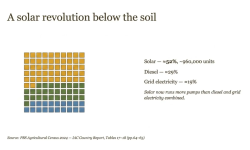
Each square is one in a hundred of Pakistan’s 1.83 million tubewells and lift pumps, by power source.
The social meaning is as important as the engineering. The colonial canal system created remarkable agricultural production, but it also made access to water dependent on settlement policy, official schedules, irrigation officials and upstream users.
The tubewell gives a farmer greater command over timing. It is a limited emancipation from the state and from the collective discipline of the watercourse.
Solar power strengthens that autonomy by replacing a recurring diesel or electricity bill with an upfront investment. Would this mean stronger rural classes or sub classes and their relative bargaining terms with urban classes? These are consequences that require more detailed study.
Each square is Pakistan’s irrigated land, split by source. Private tubewells (red) nearly doubled their share — from 18% to 31% — as surface canals lost ground.
But private freedom can create a public crisis.
A farmer who pumps groundwater receives the immediate benefit, while the falling water table, salinity and declining aquifer quality are shared by neighbours and future generations. Solar makes each additional hour of pumping appear almost costless.
The transition therefore demands much more research: Where are water tables falling fastest? How much pumping is replenished? Who can afford deeper wells? How are groundwater and river flows connected?
WarKa DaNG
Trusted Member
I think the people living in flats/apartments are the biggest losers in this whole solar boom
Users who are viewing this thread
Total: 7 (members: 0, guests: 7)
Pakistan Defence Latest


Country Watch Latest
-
 UAE passport ranks world's most powerful in 2026, offering access to 182 destinations (14 Viewers)
- Latest: clutch
-

-

-

-
Latest Posts
-
UAE passport ranks world's most powerful in 2026, offering access to 182 destinations (14 Viewers)
- Latest: clutch
-
-
-

-
