Pakistan Solar Power: News & Updates

View attachment 206470
Each square is one in a hundred of Pakistan’s 1.83 million tubewells and lift pumps, by power source.

The social meaning is as important as the engineering. The colonial canal system created remarkable agricultural production, but it also made access to water dependent on settlement policy, official schedules, irrigation officials and upstream users.

The tubewell gives a farmer greater command over timing. It is a limited emancipation from the state and from the collective discipline of the watercourse.

Solar power strengthens that autonomy by replacing a recurring diesel or electricity bill with an upfront investment. Would this mean stronger rural classes or sub classes and their relative bargaining terms with urban classes? These are consequences that require more detailed study.

Each square is Pakistan’s irrigated land, split by source. Private tubewells (red) nearly doubled their share — from 18% to 31% — as surface canals lost ground.
But private freedom can create a public crisis.

A farmer who pumps groundwater receives the immediate benefit, while the falling water table, salinity and declining aquifer quality are shared by neighbours and future generations. Solar makes each additional hour of pumping appear almost costless.

The transition therefore demands much more research: Where are water tables falling fastest? How much pumping is replenished? Who can afford deeper wells? How are groundwater and river flows connected?

This census was done when solar adoption didn't even peak. By 2030 solar tubewells will be 90%, saving billions in $ diesel imports.

Pakistan need to work on attracting investment in solar/battery manufacturing though and save $ as much as possible along with creating hundreds of thousands of jobs.
 

Sindh Announces Free Solar Home Systems for 275,000 Families​

By Arsalan Khattak | Published Jul 17, 2026 | 4:44 pm

The Sindh government will provide free solar home systems to 275,000 low-income families under an Rs. 18.206 billion initiative aimed at expanding access to affordable and renewable energy across the province.

The update came during a review meeting chaired by Chief Minister Murad Ali Shah on Friday. He directed the Energy Department to accelerate the distribution and installation of the solar systems, saying the project will help improve the living standards of underprivileged families.

Under the initiative, 132,000 off-grid households in remote, desert, mountainous, and riverine areas and 143,000 on-grid protected consumers using up to 100 electricity units per month will receive the systems. Each eligible family will be provided with a 180-watt solar panel, a lithium battery, a fan, and LED lights free of cost.


Officials said 11,571 solar home systems have already been installed in several districts, including Karachi, Ghotki, Umerkot, Dadu, Tharparkar, Thatta, and Shaheed Benazirabad.

The project, which began in April 2025, is scheduled for completion by June 2027. Families registered under the Benazir Income Support Program (BISP) will receive priority, while the government has pledged to ensure transparent distribution and timely completion of the project.
 

Pakistanis increasingly adopt battery storage as solar market evolves: report

  • Nearly 60% of total battery imports recorded so far arrived during 2025 alone

Pakistanis are increasingly investing in Battery Energy Storage Systems (BESS) alongside rooftop solar installations as changing energy policies, rising electricity costs, and concerns over power reliability drive consumers towards greater energy independence, according to a report.

According to a new analysis titled ‘From Solar Panels to Storage: Pakistan’s Battery Boom Begins’ by Renewables First, cumulative lithium-ion battery storage imports reached 7.6 gigawatt-hours (GWh) by the end of 2025, marking a 220% year-on-year increase. Nearly 60% of the total battery imports recorded so far arrived during 2025 alone.


The report attributes rapid growth to higher electricity tariffs, expanding base of rooftop solar users, declining battery prices, and reforms to the country’s net billing framework.

Senior Data Associate at Renewables First Huma Naveed said battery imports remained below 0.5 GWh annually between 2018 and 2023 before demand accelerated sharply over the past year.

The report noted that unlike many countries where battery storage is largely utility-driven, Pakistan’s market is being led by households.

Residential consumers account for 58% of all battery imports, with around one in every 26 solar-powered homes now equipped with battery storage, according to Naveed.

Program Director at Renewables First Muhammad Mustafa Amjad said Pakistan has already witnessed a consumer-led transition through rapid rooftop solar adoption, adding that battery storage is now following a similar but faster trajectory.

He stressed the need for policymakers to incorporate storage into energy planning at an early stage to ensure equitable and inclusive growth.

The report said Battery Energy Storage Systems would play a central role in Pakistan’s transition towards a more decentralised energy system. It added that global geopolitical uncertainties, volatile fuel prices, and recent changes to the net metering framework have reinforced the need to integrate consumer energy resources into national energy planning.

According to the report, greater adoption of battery storage could enhance energy security, reduce dependence on imported fossil fuels and improve the resilience of Pakistan’s power sector.
 

Pakistanis increasingly adopt battery storage as solar market evolves: report

  • Nearly 60% of total battery imports recorded so far arrived during 2025 alone

Pakistanis are increasingly investing in Battery Energy Storage Systems (BESS) alongside rooftop solar installations as changing energy policies, rising electricity costs, and concerns over power reliability drive consumers towards greater energy independence, according to a report.

According to a new analysis titled ‘From Solar Panels to Storage: Pakistan’s Battery Boom Begins’ by Renewables First, cumulative lithium-ion battery storage imports reached 7.6 gigawatt-hours (GWh) by the end of 2025, marking a 220% year-on-year increase. Nearly 60% of the total battery imports recorded so far arrived during 2025 alone.


The report attributes rapid growth to higher electricity tariffs, expanding base of rooftop solar users, declining battery prices, and reforms to the country’s net billing framework.

Senior Data Associate at Renewables First Huma Naveed said battery imports remained below 0.5 GWh annually between 2018 and 2023 before demand accelerated sharply over the past year.

The report noted that unlike many countries where battery storage is largely utility-driven, Pakistan’s market is being led by households.

Residential consumers account for 58% of all battery imports, with around one in every 26 solar-powered homes now equipped with battery storage, according to Naveed.

Program Director at Renewables First Muhammad Mustafa Amjad said Pakistan has already witnessed a consumer-led transition through rapid rooftop solar adoption, adding that battery storage is now following a similar but faster trajectory.

He stressed the need for policymakers to incorporate storage into energy planning at an early stage to ensure equitable and inclusive growth.

The report said Battery Energy Storage Systems would play a central role in Pakistan’s transition towards a more decentralised energy system. It added that global geopolitical uncertainties, volatile fuel prices, and recent changes to the net metering framework have reinforced the need to integrate consumer energy resources into national energy planning.

According to the report, greater adoption of battery storage could enhance energy security, reduce dependence on imported fossil fuels and improve the resilience of Pakistan’s power sector.

Good quality 16 kwh lithium battery cost Rs6-7 lakh in Pakistan. This can go down to Rs3 lakh if Pakistan start local manufacturing of sodium batteries by 2030.

Imagine Rs3 lakh 16kwh sodium battery that last 30 years. Future is bright thanks to China advancement.

Even if everything goes right, grid electricity will be Rs35/unit in best case scenario by 2035. Solar/battery combo that will last 30 years? Rs5/unit. Per capita electricity consumption will go sky high, matching average USA household electricity consumption with just Rs15 lakh solar/battery investment. Hopefully govt will make financing solar/battery easy when local manufacturing start.
 
I think the people living in flats/apartments are the biggest losers in this whole solar boom

I think now there are options in panels for balconies and windows as well. But obviously the covered area will be less. And now every flat have windows to exterior or building or balconies. And even if they have, it may not get sunlight for more tham 4 hours a day.
 
Good quality 16 kwh lithium battery cost Rs6-7 lakh in Pakistan. This can go down to Rs3 lakh if Pakistan start local manufacturing of sodium batteries by 2030

They were like 9-12 lakh not more than 2-3 years ago. So still a good pricing. But obviously there is room for further reduction.
 
They were like 9-12 lakh not more than 2-3 years ago. So still a good pricing. But obviously there is room for further reduction.
A relative in Pakistan told me his investment in solar panels and batteries for his house ranks among his best ever. The dreaded electric bill has been reduced to almost nothing.
 
A relative in Pakistan told me his investment in solar panels and batteries for his house ranks among his best ever. The dreaded electric bill has been reduced to almost nothing.

If pakistanis can similarly learn to invest in their health (by eating proper food) and their surrounding (cleaning and all).

On topic, we also put 8 plates of 640 watts last year. But now I have told my brother to add 2 more so that we can get more benefit from the solar system.
 
1784373051622.png

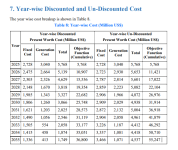
This is interesting chart, Pakistan produced 130 twh in 2025 and will produce 180 twh by 2035. But with 1/3 generation cost in USD! Fixed cost will increase by a bit because of debt of large dams and nuclear plant coming up.

Pakistan will produce 30% more electricity with 20% less dollars in 2035! When Pakistan GDP will be $1 trillion. So the days of electric grid being a burden on economy will end.
 

Solar Owners Could Earn Extra for Sharing Electricity With Grid At Night​

By Business Desk | Published Aug 2, 2026 | 2:38 pm


The Power Division has proposed a new incentive mechanism where solar battery owners can earn extra for supplying stored electricity during evening peak hours.

It proposed a Time-of-Use (ToU) net metering/net billing formula where solar owners with battery backups could earn Rs. 18-22 per kWh extra between 5 PM and 10 PM when demand is highest.

The proposal is gaining traction because Pakistan’s evening peak electricity demand has crossed 26,000 MW. The pressure on expensive grid system operators has spiked and they’re struggling to manage peak-hour electricity distribution.

The local battery storage market has expanded quickly. Lithium-ion battery imports have reached 6.004 GWh worth Rs. 126 billion ($454.7 million) between January 2024 and June 2026.

Monthly imports surged by 1,640 percent from 42 MWh in January 2024 to a record-high 652.2 MWh in April 2026.

Pakistan’s solar market is visibly shifting from simple rooftop generation toward off-grid battery-supported systems. We’re now storing daytime solar energy and using/supplying it during evening peak demand.


Telecom operators, commercial users, and larger projects are also quickly shifting towards battery storage.

But Pakistan’s battery sector is expanding faster than regulations. There isn’t enough work done on safety standards, grid connection rules, battery registration, and a formal tariff structure for storage services.

Without proper regulation, increasing solar adoption could lead to more consumers reducing dependence on the national grid. This way, struggling grid consumers will have to bear an even bigger chunk of power bills.

The proposed payment model aims to turn batteries into a grid-support tool by encouraging users to store solar power during the day and release electricity when the system faces its highest demand in the evening.
 
It proposed a Time-of-Use (ToU) net metering/net billing formula where solar owners with battery backups could earn Rs. 18-22 per kWh extra between 5 PM and 10 PM when demand is highest.

This could work, at current battery price of 16/32 kwh lithium battery it will take 4-5 years to recover cost and battery will easily last 12+ years.

Govt just need to speed up of localisation of batteries to reduce cost even more.
 
@hydrabadi_arab

Hydra bro,

Interestingly EVs could become auxiliary batteries. If they are stationary during the evening or morning peaks, they can make money by discharging power into the grid during those times.

Regards
 

Pakistan no longer faces power generation shortage, says power minister

  • Leghari said that the share of renewables in Pakistan's electricity mix has reached 55%

Pakistan no longer faces an electricity generation shortage but must invest in battery storage and grid flexibility to manage surplus solar power and meet rising evening demand, Federal Minister for Energy (Power Division), Sardar Awais Ahmad Khan Leghari, said on Tuesday.

“Let me be very direct about where we stand. Pakistan does not have a generation problem anymore… What we have is a flexibility problem. The inability to move abundant midday solar energy into the evening peak,” said Leghari while addressing the Solar Storage Flexibility 2026 (SSF26) Conference in Islamabad.

He said that the ongoing conflict between Iran and the United States has reminded us how external events shake energy markets.

“Oil price volatility, shipping risk through the Strait of Hormuz and uncertainty in the global fuel markets are not abstract concerns for policymakers in Washington or Riyadh.

“For a country like Pakistan, which still imports the bulk of the fuel that runs a large share of our thermal fleet, they are a direct threat to our fiscal stability and our people’s cost of living.”

He said that Pakistan went through a stress test in April when RLNG supplies from Qatar were disrupted, and the country reverted to load shedding during the night time, but had adequate power during the daytime due to solarisation.

“So when we talk of battery energy storage systems today, we are not simply talking about a grid balancing technology. We are talking about insulating Pakistan’s economy from a volatile world,” he said.

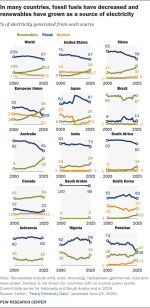
Leghari said that the share of renewables in Pakistan’s electricity mix has reached 55%. “Our target under this government is to take this figure to 90% clean energy by 2035,” he said.

The minister said that storage converts an ambitious target into “an operable, bankable and very deliverable plan”.

“Battery storage allows the grid operators the necessary flexibility to integrate a high share of renewables through the various use cases it offers. Put simply, without storage our solar success risks becoming a curtailment problem. With storage it becomes a national asset,” he said.

The minister said that the government wants to see local assembly of battery packs, not just installing imported ones.

To boost battery manufacturing in Pakistan, Leghari said that the Ministry of Industries is in the process of formulating the best local manufacturing policy, which will soon be finalised and will incentivise local production.

“We have established a National Steering Committee on Battery Energy Storage Systems, bringing together the regulators, the transmission and distribution companies and technical experts to give the sector coordinated national direction,” he said.
 

Users who are viewing this thread

Country Watch Latest

Latest Posts

Back
Top