Pakistan Space Related News & Discussions

What is Hyper spectral is it like one that maps like google maps ?
 

Suparco launches country’s first ‘hyperspectral satellite’

Umaid Ali
Published October 19, 2025

1760907154695.jpeg

Pakistan on Sunday launched its first Hyperspectral Satellite (HS-1) from a Chinese launch centre, the country’s space agency said, describing it as “a breakthrough achievement”.

Hyperspectral imaging is a type of advanced camera technology used in satellites to study the Earth and space, according to a study published in the Journal of Computational Intelligence and Neuroscience.

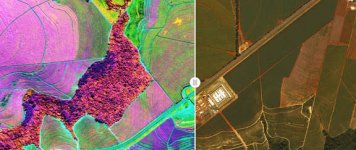
Unlike regular satellite cameras that capture only a few colours (like red, green, and blue), hyperspectral cameras capture hundreds of very narrow colour bands. This means they can detect tiny differences in light that the human eye, or even normal satellites, can’t see.

In a statement issued today, Pakistan Space and Upper Atmosphere Research Commission (Suparco) said, “The nation’s space agency today announced a breakthrough achievement with the successful launch of .”

To view this content we will need your consent to set third party cookies.
For more detailed information, see our cookies page.


Pakistan research environmental changes and geographical variations.

“This progress will prove to be an important milestone in combating the harmful effects of climate change,” PM Shehbaz said. “The satellite will significantly increase national capabilities in areas such as agriculture, environmental monitoring, urban planning and disaster management.”

Separately, in a statement issued today, the foreign office termed the development a major milestone and called it “a pivotal step forward in Pakistan’s space programme.”

To view this content we will need your consent to set third party cookies.
For more detailed information, see our cookies page.


FO said that the launch “reaffirms Suparco’s commitment to leveraging space technology for national development.”

It also “highlights the long-standing collaboration between Pakistan and China in the peaceful exploration of space and its application for socioeconomic progress.”

“Foreign Minister Mohammad Ishaq Dar commended the scientists/technical teams from Pakistan and China working on HS-1 for their commitment, professional excellence and exemplary cooperation,” the statement said.

On October 15, Suparco announced the upcoming launch of the HS-1 satellite from the Jiuquan Satellite Launch Centre in China.

Last month, a senior official from Suparco said the agency was integrating space-based applications into its disaster risk management framework, “paving a path anchored in science and international collaboration to better prepare for natural calamities”.

In July, the foreign ministry announced the successful launch of a remote sensing satellite from China, which aimed to “strengthen Pakistan’s agricultural monitoring and disaster management, among other capabilities”.

In August, Pakistan successfully launched a remote sensing satellite from a launch centre in China. The satellite aimed to strengthen Pakistan’s agricultural monitoring and disaster management, among other capabilities, according to a Foreign Office statement.

 
List of Pakistani Satellites

DateSatelliteTypeGov.Comment
10/01/1989UnknownExperimental / MilitaryPPPSecret 'payload" sent to space from Pakistani launch pad
09/12/1990BADR-1ExperimentalPML-N-
10/12/2001BADR-BExperimentalMilitary-
06/07/2002PAKSAT-1CommunicationsMilitaryLeased (formerly Anatolia 1)
11/08/2007PAKSAT-1RCommunicationsMilitaryFirst Pakistani owned/built Pakistani communications satellite
21/11/2013iCUBE-1Cube SatellitePML-NFirst Pakistani cube satellite
22/03/2018PAKSAT-MMICommunicationsPML-NAcquired (formerly AsiaSat 4)
09/07/2018PRSS-1Remote SensingCaretaker-
09/07/2018PakTES-1AExperimental Remote SensingCaretaker-
03/05/2024ICUBE-QamarCube Satellite / Lunar OrbiterPML-NFirst Pakistani Lunar Orbiter
30/05/2024PakSat-MM1CommunicationsPML-N-
14/01/2025PAUSAT-1Cube SatellitePML-N-
17/01/2025PRSC-EO1ImagingPML-N-
31/07/2025PRSC-S1ImagingPML-N-
19/10/2025HS-1ImagingPML-NPakistan’s first Hyperspectral imaging satellite.
 
To view this content we will need your consent to set third party cookies.
For more detailed information, see our cookies page.
 
To view this content we will need your consent to set third party cookies.
For more detailed information, see our cookies page.
 
To view this content we will need your consent to set third party cookies.
For more detailed information, see our cookies page.
 
Pakistan needs to send a dedicated military reconnaissance satellites to space and quit hiding behind these weather satellites.
 
What is Hyper spectral
Hyperspectral imaging is like giving a super-powered camera that doesn't just see colors (like red, green, blue on your phone), but instead scans hundreds of tiny "invisible color slices" across light we can't see with our eyes—like infrared (heat) or ultraviolet.
for example: Point it at a forest. A normal camera sees "green trees." Hyperspectral sees: "This tree is oak (healthy), that one has pine beetles (sick), and over there is hidden oil pollution."

Hyperspectral satellite using hyperspectral tech to scan huge areas (like entire countries) from 500+ km up. It beams back detailed "flavor maps" of the planet every day or so.

Easy Example: Like Google Earth, but instead of blurry colors, it reveals hidden secrets—e.g., "This desert has buried ancient ruins" or "That farm has secret illegal drugs growing."

So, these help regular people, farmers, scientists, and governments for good stuff like saving the planet or growing food. It can also be used for defense like spotting enemies or protecting troops i.e. Enemy Detection like US military found ISIS hideouts in 2017 that drones missed.

It can also be used for border security (Caught 1,000+ tons of cocaine in 2024 e.g., Israel's Ofek satellites), Weapon ID (It can identifies chemical weapons or bombs by their unique "flavor."), Battle Planning (Maps enemy supply routes hidden by clouds jaisay modi kahta tha cloud hai tau jahaz nazar nahi aaengay lolz), Spying on Ships/Planes (this is important it can Tracks submarines or stealth jets by exhaust "signatures.") and Mine hunting (Finds buried landmines in war zones.) etc.

e.g. Hyperspectral satellites are NASA's HyspIRI, Europe's EnMAP, India's EOS-06 etc.
 
Last edited:
Pakistan must continue with its work on satellites and drones for civilian purposes too- it could be a gamechanger for agricultural development.

Regards
 

Users who are viewing this thread

Pakistan Defence Latest

Latest Posts

Back
Top