Pakistan Telecom, IT, Tech updates

Officials said the Commission also faced political and corporate pressure to fast-track approval. Yet Chairman Dr Kabir Sidhu showed resolve by insisting on transparency and refusing to proceed without satisfactory responses.

The PTCL-Telenor review mirrors global telecom merger scrutiny. Vodafone's €17.5 billion deal with Three UK took nearly 23 months, while Sprint-T-Mobile in the US required 22 months. Against this backdrop, the CCP's 18-month process reflects international best practices for complex, market-shaping transactions.

Officials acknowledge the merger will create a concentrated operator by combining PTCL's Ufone with Telenor Pakistan, raising dominance risks. But the CCP's conditional approval framework is designed to mitigate these through safeguards on pricing, interconnection, infrastructure sharing, and fair competition.

The statement adds that, if enforced, the merger could deliver efficiencies, improve service quality, reduce infrastructure duplication, and generate savings.
 

Meta introduces Instagram Map in Pakistan


New feature allows Pakistanis to share their location, explore stories

BR Web Desk
October 4, 2025
https://defencepk.com/forums/javascript:void(0)
Meta has rolled out Instagram Map in Pakistan, giving users a fresh, interactive way to discover content and stay connected with friends, while maintaining strong privacy controls, the tech company said in a press release.

“The feature is available directly at the top of users’ DM inboxes,” it said.

The new feature allows Pakistanis to share their location and explore stories, reels, posts, and notes with location tags, making it easier to find what friends and favourite creators are sharing from concerts, cafes, or local hangouts. Users can also opt in to share their last active location with selected friends, close friends, or no one at all.

Meta said privacy remains central to the experience. Location sharing is always off by default and users have full control over who can see their location. A persistent indicator at the top of the map now clearly shows whether location sharing is active, while reminders appear when adding location tags.

“Parents supervising teens on Instagram also have full oversight, with options to view and manage their child’s sharing preferences,” read the press release.
 

‘Saudi Arabia is next big market for Pakistani IT companies’

https://defencepk.com/forums/javascript:void(0)
Follow us
KARACHI: Amid growing ties between Pakistan and the Kingdom of Saudi Arabia (KSA) on strategic and defence fronts, Pakistani IT companies are optimistic about tapping one of the biggest markets in the Gulf region in the field of cybersecurity.

Both Pakistan and Saudi Arabia secured top rankings in the latest Global Cybersecurity Index, alongside countries such as the US, Japan, Singapore, Australia and Malaysia. What’s more, Pakistan’s engagement with a neighboring country in a military conflict also revealed its capacity for cybersecurity and warfare strength, experts say.

Pakistan, Saudi Arabia sign landmark strategic mutual defense agreement


Federal Minister for IT and Telecommunication Shaza Fatima has in her recent speeches expressed the possibility of future collaboration between the two countries in IT and related areas.

Recently, she met the Governor of the National Cybersecurity Authority of Saudi Arabia, Eng. Majed bin Mohammed Al-Mazyed, to strengthen cooperation in cybersecurity capacity building, best practices, and joint initiatives for cyber resilience.

Pakistan and KSA have made significant progress in technological cooperation over the past two years. The Ministry of Investment of Saudi Arabia has established a help desk to assist Pakistani companies in registering quickly and easily in Saudi Arabia.

Abdul Sammad, a cybersecurity expert, told Business Recorder that Pakistani IT companies specializing in cybersecurity have the opportunity to foster collaborations and partnerships with Saudi public and private sector entities in the near future.

Saudi Arabia defence pact could open new doors for Pakistan’s economy

Saad Khan, an IT exporter and CEO of Hexalyze, said that Pakistani companies are setting up subsidiaries and regional offices in Saudi Arabia to explore multiple opportunities in the emerging economy, including cybersecurity, artificial intelligence, and fintech.

It is very easy for Pakistani IT companies to expand globally in Saudi Arabia compared to other countries, he said, in part due to mobility of staff from KSA to Pakistan being affordable.

“The Kingdom of Saudi Arabia is the next big market for Pakistani IT companies, as the state is promoting its economy through digital transformation under Vision 2030,“ he told Business Recorder.

“Various sectors, including energy, banking, and healthcare, are recruiting cybersecurity professionals or outsourcing IT companies to protect their systems from cyberattacks.”

Demand for cybersecurity professionals is rising worldwide

The World Economic Forum’s Global Cybersecurity Outlook 2023 report shows that the world needs 3.5 million cybersecurity experts to support today’s global economy, but the industry is currently struggling to fill that gap. The report also highlighted sectors such as electricity, banking and finance, and healthcare are most at risk because they face the largest critical gaps in access to skilled cybersecurity professionals.

What’s more, Pakistan has a population of 250 million, while carrying 75,000 annual IT graduates, 20,000 registered IT companies, the world’s third-largest freelancing workforce and the third-largest English-speaking population, according to the Pakistan Software Houses Association (P@SHA).

Speaking of the Gulf region as a whole, Abdul Sammad suggested that IT companies should enhance their capacity to provide services to states in the region as they are likely to be given priority over companies and professionals from other countries, considering the sensitivity of the field.

He pointed out that the demand for cybersecurity professionals is rising worldwide. Hence, Pakistani software houses should invest in human resources through capacity building of their staff in cybersecurity.

“It is high time for IT companies to set up bootcamps and degree programmes in cybersecurity in collaboration with universities,” he told Business Recorder, adding that Pakistani students should also acquire skills and degrees in cybersecurity and related subjects for better job prospects in Pakistan and the GCC region.
 

Pakistan’s IT Firms Make First-Ever Entry into Kuwaiti Market​

By Muhammad Bilal | Published Oct 6, 2025 | 8:45 pm


Pakistan’s IT exporters have officially entered the Kuwaiti market for the first time, marking a major step in the country’s efforts to diversify its tech exports across the Gulf region.

A delegation of 17 leading Pakistani IT companies, led by the Pakistan Software Export Board (PSEB), participated in a two-day Pakistan-Kuwait Tech Conference 2025 in Kuwait.

The event was jointly organized by the Pakistani Embassy in Kuwait and the Digital Cooperation Organization (DCO).

Among GCC countries, Kuwait has long remained a distant market for Pakistan’s IT firms due to strict visa restrictions.

However, following the recent relaxation of visa policies for Pakistani professionals, firms are now looking to tap into Kuwait’s $22.48 billion ICT market, which is projected to grow to $39.83 billion by 2025.

PSEB CEO Abu Bakar said the conference served as a platform to showcase Pakistan’s innovation and technical strength, calling it “the beginning of long-term collaboration” between Pakistan and Kuwait in technology, trade, and investment.


The visiting companies, including 10Pearls, TPS Worldwide, Abacus Consulting, Systems Limited, and Digifloat, displayed solutions in AI, machine learning, cloud computing, fintech, healthtech, agritech, and enterprise software.

Muhammad Zohaib Khan, CEO of A2Z Creators, said the delegation’s visit was historic, being the first after visa facilitation for Pakistani professionals.

“Kuwait’s digital transformation under Vision 2035 offers tremendous opportunities for Pakistani firms to contribute to its economic diversification,” he said.


PASHA Senior Vice Chairman Muhammad Umair Nizam noted that Pakistani IT exporters are expanding into Kuwait just as they have in Saudi Arabia and the UAE.

“It is high time to explore untapped markets when the country’s global image in technology and defense remains strong,” he added.

The event also saw participation from prominent Kuwaiti officials, including Aseel Al-Munifi (Undersecretary, Ministry for Economic Affairs and Investment), Dr. Khaled Mohammad Al Zamel (Chairman, CITRA), Najat Hussain Ebrahim Hamad (Acting GM, CAIT), and Athbi Jaber Al-Sabah (Head of Strategy, Planning & Governance).


Currently, Kuwait’s exports to Pakistan exceed $2 billion annually, mainly through petroleum products, while Pakistan’s exports to Kuwait hover around $200 million, a gap experts say could narrow with the inclusion of IT and digital services in bilateral trade.

The Pakistan-Kuwait Tech Conference 2025 is seen as a milestone for Pakistan’s IT industry, unlocking a new and promising market in the Gulf.
 

Amazon’s Project Kuiper to launch satellite broadband in Pakistan by 2026​


Ground infrastructure and global partnerships to support Pakistan’s digital transformation

Our Correspondent
October 09, 2025


photo reuters


ISLAMABAD: In a development poised to reshape Pakistan’s digital future, Amazon’s Project Kuiper plans to offer satellite broadband services in the country by the end of 2026.

The information was shared in a press release issued by the Ministry of Information Technology and Telecommunication on October 9, following a high-level meeting between the Federal Minister for IT and Telecommunication Shaza Fatima Khawaja and a delegation from Project Kuiper.

This project is designed to deliver high-speed, low-latency broadband through a constellation of Low Earth Orbit (LEO) satellites. With up to 3,236 satellites planned, the system aims to reach underserved and remote regions that have historically lacked reliable internet connectivity.

According to the Ministry, the Kuiper team shared plans to establish key infrastructure within Pakistan to support service rollout. This includes the installation of ground gateways and local points of presence (PoPs) to ensure stable performance and integration with the national network. The system is expected to offer internet speeds of up to 400 megabits per second through compact and affordable user terminals.

Minister Shaza Fatima welcomed the collaboration, describing it as a vital step toward expanding digital access and fostering economic inclusion. According to her, Project Kuiper’s entry into the Pakistani market “aligns with the government’s vision of a Digital Nation Pakistan,” where high-speed internet is accessible to all citizens regardless of location.

The initiative is expected to create significant opportunities for Pakistan’s growing IT sector. Improved connectivity is likely to support innovation, attract foreign investment, and enable digital services in sectors such as education, healthcare, and e-commerce.

According to officials from the Ministry, the government remains committed to facilitating international partnerships that contribute to a connected, modern, and inclusive digital economy. Project Kuiper’s rollout in Pakistan is seen as part of a broader strategy to bring cutting-edge technologies to the local market and accelerate progress toward national digital transformation goals.
facebook twitter whatsup linkded email
 

Saudi telecom giant launches AI hub in Pakistan


Kalbe Ali
October 19, 2025

1760880864440.png

Minister for IT and Telecommunication Shaza Fatima Khawaja, Saudi Ambassador Nawaf bin Said Al-Malki, National Coordinator SIFC Lt Gen Sarfaraz Ahmed and GO Group CEO Yahya bin Saleh Al-Mansour jointly press the button to inaugurate the GO AI Hub in Islamabad on Saturday.

ISLAMABAD: Saudi Arabia’s GO Telecommunications Group here on Saturday launched an artificial intelligence hub (AI Hub) in Pakistan to promote sharing knowledge, build skills and develop talent between the two countries.

Federal Minister for IT and Telecom Shaza Fatima Khawaja, Ambassador of Saudi Arabia to Pakistan Nawaf bin Said Al-Malki and others launched the initiative.

The AI Hub will help promote AI research, knowledge exchange, digital capacity building and co-creation of technology solutions to strengthen bilateral cooperation in the digital domain.

Minister Shaza Fatima said GO AI Hub was not a traditional agreement or a one-time transaction, but a sustainable digital platform enabling Pakistani professionals and entrepreneurs to engage directly with Saudi businesses without the need to travel or spend additional resources. “Through this hub, Pakistani freelancers can offer their services to Saudi companies remotely,” she said.

The minister said a major investment in data infrastructure would follow, supporting Pakistan’s growing digital ecosystem. She termed the project the first drop of many to come, and expressed confidence that Pakistan would soon witness billions of dollars in new investments.
 

Pakistan’s smartphone market remains a gold mine despite recent decline


BR Web Desk
October 20, 2025

Despite facing one of the most competitive smartphone markets in the region, Pakistan continues to offer significant growth potential, with around 1.4 to 1.5 million smartphones consumed every month. Over 14 active brands are battling for market share, but gaps in digital access and infrastructure still leave vast opportunities untapped.

According to industry estimates, more than 38% of Pakistan’s population still lacks proper access to 4G internet, leaving millions of potential consumers yet to transition to smartphones. This growing connectivity demand continues to drive optimism among global smartphone manufacturers, which see Pakistan as one of its fastest-growing markets in the Middle East.

Globally, Xiaomi has held the number three position in smartphone shipments for over 20 consecutive quarters. In Pakistan, the brand ranks second within Xiaomi’s Middle East division, trailing only behind Turkey and ahead of Saudi Arabia - an indicator of its growing regional significance.

In an interview with Business Recorder, Sufian Ahmad, Head of Marketing at Xiaomi Pakistan, said the local market still has “massive untapped potential” and could easily double in size if infrastructure and purchasing power improve. “If I talk about our own market share, I can easily double it because there are still a lot of consumers we haven’t tapped yet,” he said.

As of Q2 2025, Transsion Group, the parent company of Tecno and Infinix, leads Pakistan’s smartphone market with a 44% unit share, followed by Xiaomi at 18%, Vivo at 17%, Samsung at 10%, and Oppo at 6%.
 
Xiaomi saw a 41% year-on-year decline in shipments, reflecting changing global consumer behavior. “People are holding onto their phones longer instead of upgrading,” Ahmad explained.

Ahmad noted that Pakistan remains an independent retailer (IR)-driven market, where 95% of smartphone sales come from small shopkeepers instead of telecom carrier partnerships. “If you compare it with Turkey, about 85% of their smartphone market is telecom-driven through carriers like Vodafone and Orange. In Pakistan, we don’t have such partners, and 95% of sales are driven through independent retailers,” he said.

Xiaomi has worked to change the retail experience by opening flagship stores in major malls, though traditional hubs like Karachi’s Saddar and Serena markets continue to dominate sales. The company currently collaborates with five distributors; Airlink Communication, Mobisel, Kotech, Smartlink Technologies, and Deputech, with Airlink also serving as its local manufacturing partner.

“Over 85% of Airlink’s total mobile phone production capacity is utilised by Xiaomi,” Ahmad revealed. “All Xiaomi and Redmi Note series phones priced between $100 and $300 are locally assembled in Pakistan, while only flagship Xiaomi series devices are imported as CBUs.”

He added that the company plans to begin local assembly of premium devices as market share in that segment grows, aiming to make flagship models more accessible.

Beyond smartphones, Xiaomi is expanding into new categories. It recently began local assembly of smart TVs in collaboration with Airlink, with a new series expected to launch by December. “This new TV lineup marks our entry into another major category where we aim to aggressively grow our market share,” Ahmad said.
 
ISLAMABAD – Pakistan has officially entered the global semiconductor industry with the launch of the INSPIRE program, designed to develop skilled professionals in semiconductor research, education, and industry.

Unveiled by Prime Minister Shehbaz Sharif in Islamabad, INSPIRE is part of Pakistan’s National Semiconductor Initiative, spearheaded by the Ministry of Information Technology and Telecommunication (MoITT) and executed by the Pakistan Software Export Board (PSEB).

The initiative is poised to tap into the growing global semiconductor market, projected to surpass $1 trillion by 2030. Prime Minister Shehbaz Sharif highlighted the program’s role in Pakistan’s digital transformation, emphasizing the importance of innovation, research, and skilled human capital for economic growth.

The government has allocated Rs 4.5 billion under the Public Sector Development Programme (PSDP) to support INSPIRE, with a clear focus on preparing youth for future industries. The program aims to train 7,200 professionals in semiconductor design, verification, and research over the next five years.

INSPIRE marks the first phase of Pakistan’s National Semiconductor Development Roadmap, focusing on building a world-class ecosystem by linking academia, research, and industry. The program also includes partnerships with universities and the establishment of six Integrated Circuit (IC) labs across the country.

The initiative sets the stage for Pakistan’s involvement in Outsourced Assembly & Testing (OSAT) and semiconductor fabrication, positioning the country as a contributor to the global semiconductor supply chain.
 

IT exports surpass $1 billion mark in Jul–Sep​


By Staff Reporter | The Nation
Oct 20, 2025

Pakistan’s IT exports continued to show robust growth, with receipts surpassing $1 billion in the first quarter of the current financial year (2025–26), the first time this milestone has been achieved in a single quarter.

According to data released by the State Bank of Pakistan (SBP), exports of IT and IT-enabled services rose to $1.057 billion during July to September of the current fiscal year, compared to $877 million recorded in the same period of the previous year — an increase of $180 million or 20% year-on-year.

Muhammad Umair Nizam, Senior Vice Chairman of the Pakistan IT Industry Association (P@SHA), noted that the expansion of IT companies into emerging markets in the Gulf and Europe is yielding positive results, contributing to the sustained growth in IT exports.

Pakistani IT companies have actively participated in major tech trade fairs held across various countries; consequently, export growth has been exponential and impressive in this financial year.

He added that the growth in IT exports reflects the outcomes of policies and initiatives undertaken by the government and the Special Investment Facilitation Council (SIFC) over the past two years, in collaboration with IT associations and companies.

Pakistan’s IT exports surpassed the $1 billion mark for the first time in the 2017–18 financial year. Now, the industry has achieved this figure in just one quarter — a significant milestone. In September 2025, the IT sector posted record-high monthly receipts of $366 million, compared to an average monthly inflow of $330m, marking another achievement for the industry.

Dr Noman Said, CEO SI Global Solutions, highlighted that the contributions of IT professionals, remote workers, and freelancers are equally vital and instrumental in driving the growth of IT exports and services. While IT firms are focusing on ERP implementation, automation, digitization, cybersecurity, and AI adoption, small and mid-sized agencies are delivering various projects for int’l clients, including SEO, digital marketing, data analysis, and social media management.

He added that freelancers are working across multiple platforms, completing small to large-scale projects, earning respectable incomes for their families, and contributing to the national economy.

He also appreciated the role of skill development institutions and welfare organizations in providing technology education to the country’s growing youth population, urging freelancers to continue upgrading their skills to earn better wages online.
 
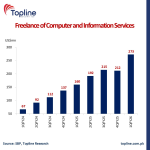
“Pakistan's freelance exports of computer and information services during 1QFY26 have shown a whopping growth of 71% YoY, thanks to the growing number of IT graduates in the country who are working for global companies.”

1761507560415.png

Looks like freelance exports will surpass $1.3bn.

Total $6bn with IT exports in 2025-26.
 
Last edited:

Meta, Pakistan IT ministry launch Urdu version for Meta AI


Meta AI’s ALIF enables users in Pakistan to interact with it in Urdu

BR Web Desk
October 27, 2025

1761573362319.png

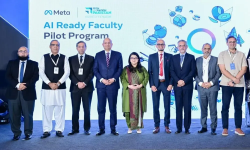
Ministry of Information Technology and Telecommunication (MoITT), in partnership with Meta, hosted ‘Future in Focus: AI and Innovation’ event in Islamabad on October 27, 2025. Photo: PID

The Ministry of Information Technology and Telecommunication (MoITT), in partnership with Meta, on Monday hosted ‘Future in Focus: AI and Innovation,’ an event dedicated to advancing digital transformation in Pakistan.

The gathering brought together government leaders, industry experts, and academia to accelerate the adoption of artificial intelligence (AI) and digital innovation nationwide, the Press Information Department (PID) said in a press release.

During the event, a series of initiatives designed to empower Pakistan’s public sector and the local community were announced. Among these, Meta revealed the expansion of Meta AI’s language capabilities, ALIF, enabling users in Pakistan to interact with Meta AI not only in English but also in Urdu.

This enhancement empowers more people to discover information, express themselves, and maintain connections with what matters most, the press release added.
 
Google’s latest move in Pakistan:

  • Local Chromebook assembly launched (Nov 4, 2025): The govt and Google kicked off Pakistan’s first Chromebook assembly line at NRTC, Haripur, with Tech Valley and Allied as partners. The plan targets up to 500,000 units by 2026, aimed first at education and then exports. thenews.com.pk+2dawn.com+2

  • Skills + AI MoU: Alongside the launch, Google and the Ministry of IT signed an MoU to train 100,000 developers, deliver 100,000 Google Career Certificates by 2025 (building on ~80k scholarships this year), stand up an AI Skills Lab, and support startups (incl. gaming policies and Google Cloud support under the Pakistan Startup Fund). thenews.com.pk+1

  • Local presence / “office” talk: On Nov 5, 2025, Finance Minister Muhammad Aurangzeb said Google will open an office in Pakistan and help make the country an export hub. Treat this as a government announcement; Google has not issued a formal corporate press release yet. (Note: Google has had a registered liaison office since 2022, so this would be an expansion beyond that.) SAMAA TV+2dawn.com+2
 

Users who are viewing this thread

Pakistan Defence Latest

Latest Posts

Back
Top