Navigation
Install the app
How to install the app on iOS
Follow along with the video below to see how to install our site as a web app on your home screen.
Note: This feature may not be available in some browsers.
More options
Style variation
You are using an out of date browser. It may not display this or other websites correctly.
You should upgrade or use an alternative browser.
You should upgrade or use an alternative browser.
Pakistan through history
- Thread starter ghazi52
- Start date
More options
Who Replied?


ghazi52
THINK TANK: CONSULTANT
- Thread starter
- #47
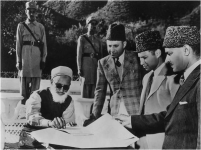
Miangul Abdul Wadud was the Wali of Swat and a descendant of the Akhund of Swat. He was elected Badshah Sahib (king) of Swat by a loya jirga held at Kabal in November 1918, and was recognised by the British authorities as ruler. He ruled from 1918 to 1949, when he abdicated in favour of his eldest son, Miangul Jahan Zeb.
As late as 1931, Swat had an area of 18,000 square miles and a population of 216,000. The state was predominantly Muslim, but with a small Hindu presence. Swat’s accession to Pakistan was complicated by its occupation of Kalam shortly before 1947, which was also claimed by Chitral and Dir.
Although Pakistan refused to recognise the occupation, the Wali, hoping to garner Pakistan’s support of Swat’s claim to Kalam, was eager to accede to Pakistan. Miangul Jahanzeb, the last Wali noted that, “with the creation of Pakistan, we immediately joined the new state. We were very patriotic… I talked to the political agent Nawab Shaikh Mehboob Ali over the telephone and told him we were going to sign the Instrument of Accession.”
The Wali executed the Instrument of Accession on November 24, 1947.
As late as 1931, Swat had an area of 18,000 square miles and a population of 216,000. The state was predominantly Muslim, but with a small Hindu presence. Swat’s accession to Pakistan was complicated by its occupation of Kalam shortly before 1947, which was also claimed by Chitral and Dir.
Although Pakistan refused to recognise the occupation, the Wali, hoping to garner Pakistan’s support of Swat’s claim to Kalam, was eager to accede to Pakistan. Miangul Jahanzeb, the last Wali noted that, “with the creation of Pakistan, we immediately joined the new state. We were very patriotic… I talked to the political agent Nawab Shaikh Mehboob Ali over the telephone and told him we were going to sign the Instrument of Accession.”
The Wali executed the Instrument of Accession on November 24, 1947.
ghazi52
THINK TANK: CONSULTANT
- Thread starter
- #48
British formally occupied Lahore on 30 Mar 1849 & effectively surrounded the city.
They already had troops inside the Fort. Troops were deployed inside walled city, Shahdara, tomb of Jahangir & Noor Jahan, around Minto Park, Shalamar Garden, Ichhra, Mozang & tomb of Qasim Khan.
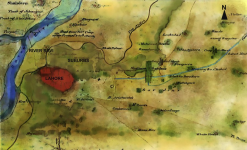
They already had troops inside the Fort. Troops were deployed inside walled city, Shahdara, tomb of Jahangir & Noor Jahan, around Minto Park, Shalamar Garden, Ichhra, Mozang & tomb of Qasim Khan.
ghazi52
THINK TANK: CONSULTANT
- Thread starter
- #49
British separated NWFP/KP from Punjab in 1901 and created districts of Peshawar, Kohat, Bannu, DI Khan & Hazara.
Later added Malakand territories; princely states of Dir, Swat & Chitral; tribal agencies of Khyber, Kurram, North & South Waziristan. Mohmand and Bajour were later creations.
Later added Malakand territories; princely states of Dir, Swat & Chitral; tribal agencies of Khyber, Kurram, North & South Waziristan. Mohmand and Bajour were later creations.
ghazi52
THINK TANK: CONSULTANT
- Thread starter
- #52
Though people think Anarkali's tomb was the first church created by British in Lahore, Pakistan.
First church of Lahore in Pakistan was constructed in 1595 near the Lahore Fort, during the Portuguese period when Jesuit missionaries were attending the court of the Mughal Empire.
Reference
Akbar and the Jesuits, An Account of the Jesuit Missions to the Court of Akbar by the Jesuit priest Father Pierre Du Jarric and published in France between 1608 and 1614.
First church of Lahore in Pakistan was constructed in 1595 near the Lahore Fort, during the Portuguese period when Jesuit missionaries were attending the court of the Mughal Empire.
Reference
Akbar and the Jesuits, An Account of the Jesuit Missions to the Court of Akbar by the Jesuit priest Father Pierre Du Jarric and published in France between 1608 and 1614.
ghazi52
THINK TANK: CONSULTANT
- Thread starter
- #53
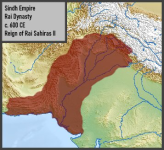
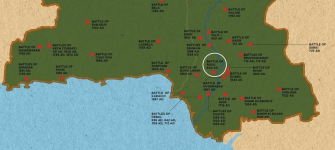
First Muslim invasion of Sindh occurred in 644 AD during Caliph Umar's time. Muslim army entered Sindh along Makran coast & defeated Raja Chach, father of Raja Dahir in Battle of Rasil, fought west of River Indus. Chach withdrew east of Indus.
Muslims did not go any further, then.
..
Muslims did not go any further, then.
..

ghazi52
THINK TANK: CONSULTANT
- Thread starter
- #57
Resting in the Raj
A network of Dak Bungalows & rest houses offered lodging to the ever-mobile British officials in colonial IndiaBy SYED ALI HAMID
November 17, 2024
KARACHI: British India was a vast colony and its officials were frequently on the move to oversee its affairs. Collectors and deputy collectors embarked on regular tours of their districts, managing diverse administrative tasks and ensuring revenue collection. Forest officers ventured deep into jungles to supervise their conservation and management, and DIGs and superintendents of the police toured their districts to survey law and order, and listen to complaints.
Officials of the Public Works Department (PWD) supervised various construction projects including roads and highways, while canals and irrigation officers spent months in the field overseeing the construction of major headworks and canals.
During their journeys, all these officials, as well as British traders, hunters, army officers (who toured areas from where their soldiers were recruited), and a host of others, needed a place to spend the night – except for Railway Officials who traveled in saloons.
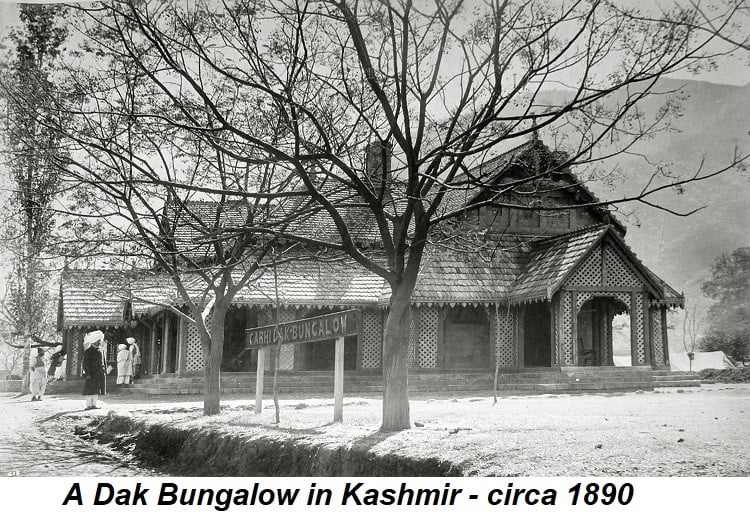
It was during the tenure of Lord Auckland as Governor General (1836 to 1842) that the first Dak Bungalows were commissioned by the East India Company (EIC) under a decree that stated that such structures “… would be a nice place to put your head to rest and belly in peace.” Dak Bungalows were primarily for the postal department, but they also provided accommodation for officials of other departments.
The word ‘dak’ is derived from the Urdu word for ‘post’. Before the British, the rulers in the Subcontinent established Dak Sarais which were staging posts for the carrier of the official mail. It is most likely that Dak Bungalows acquired this name because they were built where the staging posts had existed since earlier times.
The word bungalow originated from the Hindi word ‘bangla’ for the huts of peasants and in the hands of the engineering department of the EIC, it transformed from ‘bangla’ to ‘bangalla’, and finally, bungalow.
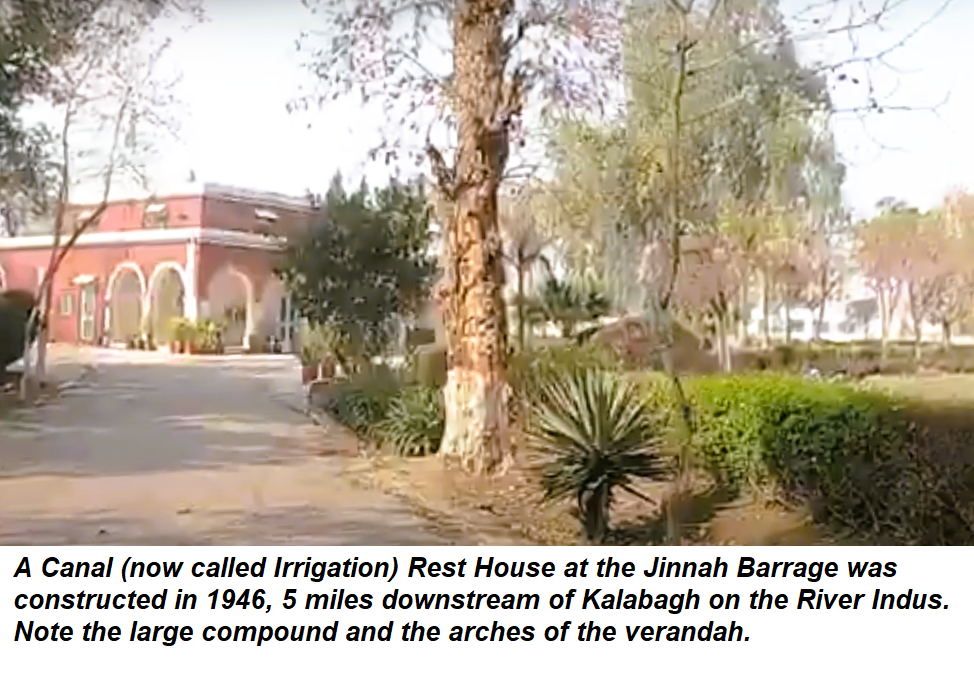
Dak Bungalows were 10 to 15 miles apart on the main arteries of communication so that a traveler did not require a tent and other necessities. On some less frequented routes, they were 40-50 miles apart adapted to a day's run in a palanquin. As the Crown extended itself into the countryside, so did the Dak Bungalows. A shade below in standard and cheaper were the rest houses that replicated the ‘khidmatgarh’ [resting houses] of the Mughals and provided accommodation for a broader range of travelers.
In 1855 the East India Company established the overarching PWD, which played a major role in laying the foundation for a modern infrastructure in colonial India. Under the PWD a fairly standard design emerged for the rest houses and exhibited the confluence of Indo-British architecture – with thick walls and high ceilings to ward off the heat.
They were constructed with bricks and painted a distinct yellow that was referred to as PWD Yellow. The inner structure consisted of a sitting and dining room with quaint fireplaces and two to three bedrooms. It was encircled by a verandah part of which was portioned off for a kitchen and bathrooms attached to the bedrooms. The compound was enclosed by a low wall to keep out grazing animals.
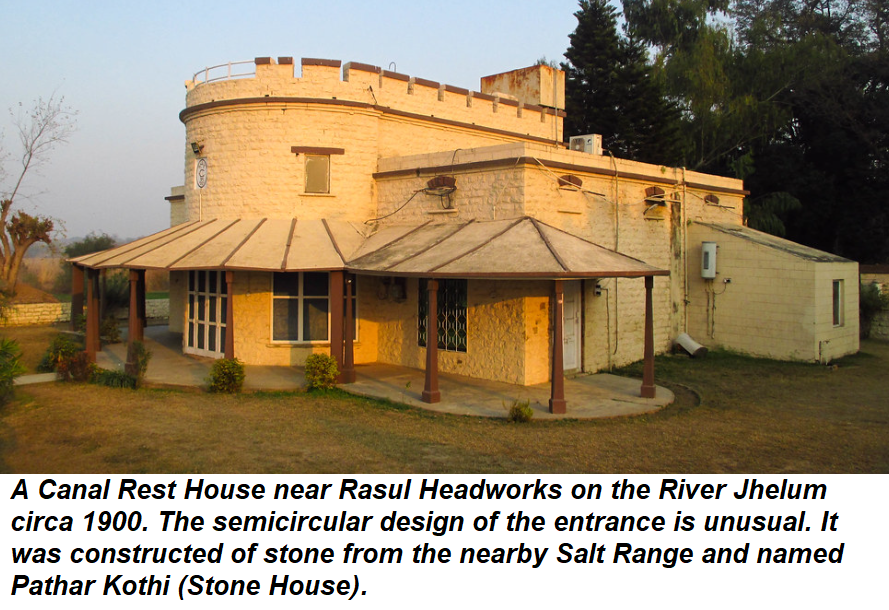
Like the words ‘dak’ and ‘bungalow’, ‘verandah’ and ‘compound’ were also derived from regional languages. Verandah is derived from the Persian word baramdah, which also means terrace. When adopted by Hindi, it meant a covered or partially enclosed outdoor space attached to a building, typically with a roof supported by columns. Compound may have been derived from kampungs [large enclosers] of the British factories in Malaya and from where it spread to other parts of the Empire.
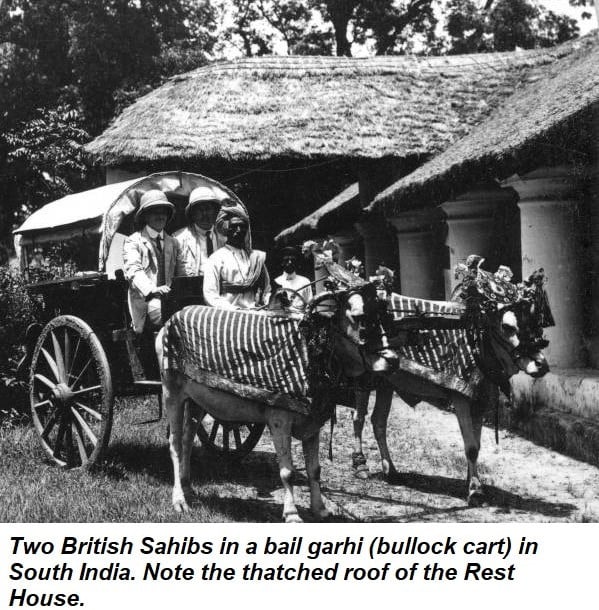
In warmer latitudes, the bungalows had a sloping thatched roof with a dirty grey cloth underneath to stop vermin and insects from falling on the unwary occupant. Reclining in bed after a hard day march, in the dim light of the lantern he was left to identify the species of vermin whose paws scuttled across the grey cloth chased by the occasional snake.
Henry Newman of the Statesman newspaper, who once found a leopard on the bed in the Central Provinces, wrote of “Civet cats who galloped across the ceiling cloth, snakes in the compound, bats which stink worse than a cartload of monkeys have flopped on my face or into my plate, red ants that sting, centipedes, to say nothing about jackals which howled like a woman in mortal agony, and, in the rains, millions of green flies and flying bugs were ordinary happenings”. Nights became less stressful when the grass roofs with their dirty grey clots were replaced by flat, terraced roofs.
ghazi52
THINK TANK: CONSULTANT
- Thread starter
- #58
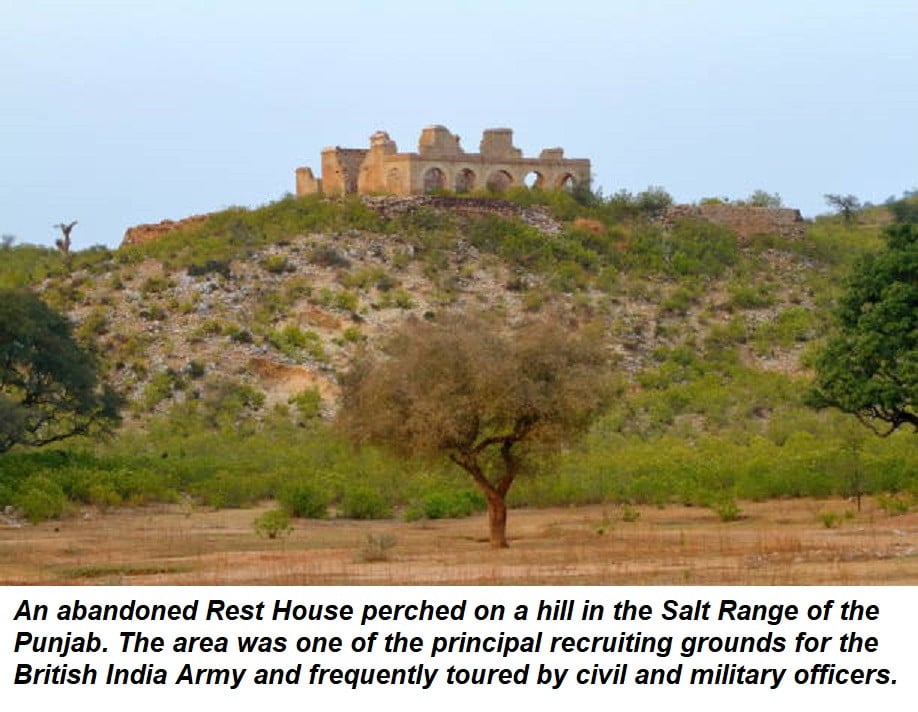
The designation of ‘rest house’ was adopted by other departments for the accommodation of their touring functionaries in some of the remotest and at times the most scenic places. In some regions, the density was very high and a travel writer in India identified over 100 rest houses and inspection bungalows north of Shimla within an arc of 45 degrees extending for 100 km.
Senior officers of the department stayed in Inspection Bungalows which had a higher standard of accommodation and service. There was yet another class of accommodation for government officials called circuit houses which were for the touring sessions judges. They were larger and more lavish and contained a large courtroom. For the various types of accommodations, I will use the generic name of Rest House.
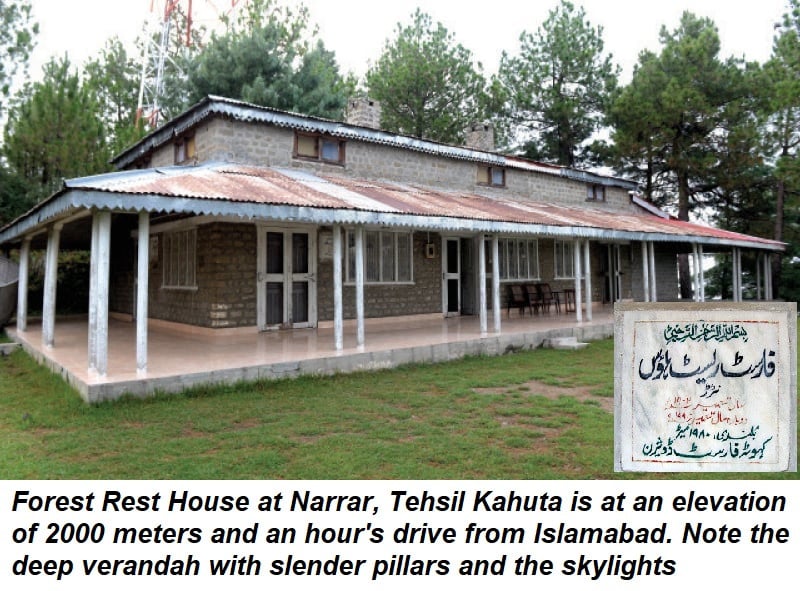
In the hills, the roofs of the rest houses were made of iron sheets (later replaced by corrugated sheets) and painted either red or green. Invariably the rooms had a false ceiling which provided only a few degrees of insulation but were a home for vermin.
During a hail storm, the clatter of hail was quite deafening. The walls were invariably of stone that protected the building from dampness creeping when the structure was surrounded by snow but it absorbed the cold. The inside temperature was very uncomfortable unless there was a roaring fire and the burning pine wood and cones had a charming aroma.
However, the woodstore could be home to a colony of scorpions which were inadvertently carried into the rest house with the wood and could be a nasty surprise for the guest. Add to this the occasional bat that refused to be netted and skimmed over the head to make it an exciting evening for the children.
The bathrooms were very basic. Water was provided in buckets filled from a creaking Persian well that was located in the rear of the compound. In later years it was replaced by a hand pump and ultimately when the rest houses became electrified water was pumped to an overhead steel tank.
The water from these tanks was scalding hot during summer and freezing cold in winter. A door led out from the bathroom to allow access to the sweeper to clean the thunderbox – a four-legged contraption with a metal bowl that preceded the WC. The wastewater drained out through a hole in the wall and upon entering the bathroom at night, it was prudent to shine the light of the lantern on the floor and in nooks and crannies to seek out a scorpion or worse a nesting snake.
While serving in the army, I spent many nights in Rest Houses. Sleeping outdoors or indoors, the best line of defense against unwelcome companions in bed was the mosquito net – a box-shaped canopy the size of the ‘charpoy’ made of finely woven gauze and supported by poles. It kept the mosquitos and larger vermin out, let the breeze in, and gave a feeling of security that was essential for a good night's sleep. As a golden rule even if the rest house had electricity, I never extinguished the lantern and ensured that it had enough kerosene to last the night.
One night as I got up to go to the washroom, I spotted a healthy black scorpion next to my bed and with one smart smack from my slipper, delivered it back to the underworld from which it scuttled out. My nightmare was finding a snake or a scorpion under the wooden frame on which one stood to bathe.
These bungalows provided the basics in furniture, crockery, lamps, steel buckets, and enamel mugs for the bathrooms, etc. The charpoys (bed frames) were either woven with a rope of natural fiber (hemp, jute, sisal, etc.) or Niwar – a type of strong and durable cord or webbing. At times they also provided bedding consisting of rock-hard pillow and bed linen that became a sickly pale yellow after being washed in muddy water from the well.
Depending on the region, the mattresses were stuffed with straw, or the fluff from the seed pods of Sumbal (kapok) tree, or pine needles (which pricked through the cover). Lucky was the traveler who did not wake up in the morning with the bite of bedbugs. An essential part of the travel kit was DDT Powder to disinfect the beds & mattresses, and Calamine Lotion and some antiseptic cream or ointment. My mother-in-law who frequently went on holidays to Kashmir during the 1930s remembers using Mosquito repellent oil made from Daises. Its smell was as repelling to insects as to human beings.
The age of the rest house could be determined from the number and size of the banyan trees in its compound which provided dense shade during summer. Under this cool canopy, the sahib held the Kachery (mustering of complainants) and then before lunch relax on a deck chair or a broken planter's chair and enjoy a tepid glass of beer or Gin and Tonic.
However, the branches of the Banyan tree often concealed a deadly surprise for the unwary – huge hives of Indian rock bees (Apis dorsata), the largest and most aggressive of its species in India.
Senior officers of the department stayed in Inspection Bungalows which had a higher standard of accommodation and service. There was yet another class of accommodation for government officials called circuit houses which were for the touring sessions judges. They were larger and more lavish and contained a large courtroom. For the various types of accommodations, I will use the generic name of Rest House.
In the hills, the roofs of the rest houses were made of iron sheets (later replaced by corrugated sheets) and painted either red or green. Invariably the rooms had a false ceiling which provided only a few degrees of insulation but were a home for vermin.
During a hail storm, the clatter of hail was quite deafening. The walls were invariably of stone that protected the building from dampness creeping when the structure was surrounded by snow but it absorbed the cold. The inside temperature was very uncomfortable unless there was a roaring fire and the burning pine wood and cones had a charming aroma.
However, the woodstore could be home to a colony of scorpions which were inadvertently carried into the rest house with the wood and could be a nasty surprise for the guest. Add to this the occasional bat that refused to be netted and skimmed over the head to make it an exciting evening for the children.
The bathrooms were very basic. Water was provided in buckets filled from a creaking Persian well that was located in the rear of the compound. In later years it was replaced by a hand pump and ultimately when the rest houses became electrified water was pumped to an overhead steel tank.
The water from these tanks was scalding hot during summer and freezing cold in winter. A door led out from the bathroom to allow access to the sweeper to clean the thunderbox – a four-legged contraption with a metal bowl that preceded the WC. The wastewater drained out through a hole in the wall and upon entering the bathroom at night, it was prudent to shine the light of the lantern on the floor and in nooks and crannies to seek out a scorpion or worse a nesting snake.
While serving in the army, I spent many nights in Rest Houses. Sleeping outdoors or indoors, the best line of defense against unwelcome companions in bed was the mosquito net – a box-shaped canopy the size of the ‘charpoy’ made of finely woven gauze and supported by poles. It kept the mosquitos and larger vermin out, let the breeze in, and gave a feeling of security that was essential for a good night's sleep. As a golden rule even if the rest house had electricity, I never extinguished the lantern and ensured that it had enough kerosene to last the night.
One night as I got up to go to the washroom, I spotted a healthy black scorpion next to my bed and with one smart smack from my slipper, delivered it back to the underworld from which it scuttled out. My nightmare was finding a snake or a scorpion under the wooden frame on which one stood to bathe.
These bungalows provided the basics in furniture, crockery, lamps, steel buckets, and enamel mugs for the bathrooms, etc. The charpoys (bed frames) were either woven with a rope of natural fiber (hemp, jute, sisal, etc.) or Niwar – a type of strong and durable cord or webbing. At times they also provided bedding consisting of rock-hard pillow and bed linen that became a sickly pale yellow after being washed in muddy water from the well.
Depending on the region, the mattresses were stuffed with straw, or the fluff from the seed pods of Sumbal (kapok) tree, or pine needles (which pricked through the cover). Lucky was the traveler who did not wake up in the morning with the bite of bedbugs. An essential part of the travel kit was DDT Powder to disinfect the beds & mattresses, and Calamine Lotion and some antiseptic cream or ointment. My mother-in-law who frequently went on holidays to Kashmir during the 1930s remembers using Mosquito repellent oil made from Daises. Its smell was as repelling to insects as to human beings.
The age of the rest house could be determined from the number and size of the banyan trees in its compound which provided dense shade during summer. Under this cool canopy, the sahib held the Kachery (mustering of complainants) and then before lunch relax on a deck chair or a broken planter's chair and enjoy a tepid glass of beer or Gin and Tonic.
However, the branches of the Banyan tree often concealed a deadly surprise for the unwary – huge hives of Indian rock bees (Apis dorsata), the largest and most aggressive of its species in India.
ghazi52
THINK TANK: CONSULTANT
- Thread starter
- #59
A touring official could spend up to a month living in rest houses on a daily travel allowance in the 1920s of Rupees 7 & Annas 8 for his meals, fodder for the horses, firewood, etc. The quality and types of dishes varied tremendously. If meat could be procured from a nearby bazar the decrepit cook cum chowkidar cum khidmatgar [manager] who was nearly as old as the bungalow could serve a watery ‘matan ishtoo’ [mutton stew].
The fiery Mutton Dak Bungalow, offered on the menu of Indian restaurants in the UK, originated from the kitchens of these rest houses. However, meat was seldom available in more remote locations and in Thirty-Eight Years in India, the civil servant William Tayler describes the basis of every meal: “...there is fowl, nothing but fowl, of every age, size, and degree of toughness.” Within minutes of receiving the guest’s preference, the leggy ‘Dak Bungalow Fowl’ running around the compound would meet a sudden death and it was astonishing how within an hour it could be served up as soup, grilled, curried, roasted, or as cutlets.
Rest houses developed a reputation for being haunted, likely kindled by their remoteness and by the abundant anecdotes, fairytales, and spine-chilling ghost stories of the chokidars. A common anecdote was about the spirit of the khansama [cook] who could not rest in peace.
He would make an occasional appearance at midnight with a tray of whisky and soda to frighten some young British magistrate on his first tour in India. Kipling recounts that some of the Dak bungalows along the Grand Trunk Road had “handy little cemeteries in their compounds”, which probably led to tales of the souls of these unfortunate wayfarers who lie buried and forgotten.
Considering the remoteness of many rest houses they were the last place on earth for a weary traveler or an official to fall sick. In 1857, the Viscountess Falkland stated that she saw an incomplete poem that a dying man had scratched on the wall of a dak bungalow near Karachi. Its first verse read:
As on this bed of pain I lie,
And count the hours of this long day,
And think, with terror, I must die.
And scarcely even dare to pray.
Henry Newman of the Statesman newspaper once found the dead body of an artillery subaltern on the bed in the Dak bungalow bed in Toungoo, Burma. He knew why the body was lying there unattended. Newman had stayed for a week in the Bareilly Dak bungalow; too ill to move and unattended because the servants had bolted, fearing the attention of the police in the event of his death.
After Independence, as mobility increased and road communication improved, the rest houses began to lose their purpose. Those used infrequently fell into disrepair, and others were abandoned. In Pakistan, some were taken over by the tourism department, while others were appropriated by politicians to accommodate their guests.
Syed Ali Hamid is a retired Pakistan Army major general and a military historian. He can be contacted at [email protected]
All facts and information are the responsibility of the writer
The fiery Mutton Dak Bungalow, offered on the menu of Indian restaurants in the UK, originated from the kitchens of these rest houses. However, meat was seldom available in more remote locations and in Thirty-Eight Years in India, the civil servant William Tayler describes the basis of every meal: “...there is fowl, nothing but fowl, of every age, size, and degree of toughness.” Within minutes of receiving the guest’s preference, the leggy ‘Dak Bungalow Fowl’ running around the compound would meet a sudden death and it was astonishing how within an hour it could be served up as soup, grilled, curried, roasted, or as cutlets.
Rest houses developed a reputation for being haunted, likely kindled by their remoteness and by the abundant anecdotes, fairytales, and spine-chilling ghost stories of the chokidars. A common anecdote was about the spirit of the khansama [cook] who could not rest in peace.
He would make an occasional appearance at midnight with a tray of whisky and soda to frighten some young British magistrate on his first tour in India. Kipling recounts that some of the Dak bungalows along the Grand Trunk Road had “handy little cemeteries in their compounds”, which probably led to tales of the souls of these unfortunate wayfarers who lie buried and forgotten.
Considering the remoteness of many rest houses they were the last place on earth for a weary traveler or an official to fall sick. In 1857, the Viscountess Falkland stated that she saw an incomplete poem that a dying man had scratched on the wall of a dak bungalow near Karachi. Its first verse read:
As on this bed of pain I lie,
And count the hours of this long day,
And think, with terror, I must die.
And scarcely even dare to pray.
Henry Newman of the Statesman newspaper once found the dead body of an artillery subaltern on the bed in the Dak bungalow bed in Toungoo, Burma. He knew why the body was lying there unattended. Newman had stayed for a week in the Bareilly Dak bungalow; too ill to move and unattended because the servants had bolted, fearing the attention of the police in the event of his death.
After Independence, as mobility increased and road communication improved, the rest houses began to lose their purpose. Those used infrequently fell into disrepair, and others were abandoned. In Pakistan, some were taken over by the tourism department, while others were appropriated by politicians to accommodate their guests.
Syed Ali Hamid is a retired Pakistan Army major general and a military historian. He can be contacted at [email protected]
All facts and information are the responsibility of the writer
Users who are viewing this thread
Total: 1 (members: 0, guests: 1)
Pakistan Defence Latest


Country Watch Latest
-
 Iran - Israel/US War: Israel-US declare war on Iran, Iran responds (63 Viewers)
- Latest: Persian Gulf
-
-
-

-

Latest Posts
-
Iran - Israel/US War: Israel-US declare war on Iran, Iran responds (63 Viewers)
- Latest: Persian Gulf
-

-
-

-