Navigation
Install the app
How to install the app on iOS
Follow along with the video below to see how to install our site as a web app on your home screen.
Note: This feature may not be available in some browsers.
More options
Style variation
You are using an out of date browser. It may not display this or other websites correctly.
You should upgrade or use an alternative browser.
You should upgrade or use an alternative browser.
Pakistan through history
- Thread starter ghazi52
- Start date
More options
Who Replied?


ghazi52
THINK TANK: CONSULTANT
- Thread starter
- #137
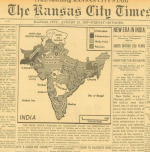
The ‘All India Muslim League’ was formed as a result of a section of people of the country, who were Muslims, who needed a separate political party, which they thought could satisfy their needs. The Muslims already lagged behind by 20 years of the Indian National Congress. This League was also formed to improve relations of the Muslims with the government and with nations living in the sub-continent.
Originally, Sir Syed Khan founded it in 1886 ad the Muhammadan Educational Conference, but a self-imposed ban prevented it from discussing politics. Eventually, the separatist and loyalist tendencies among a section of the Muslim nawabs and landlords reached a climax on 30 December 1906, when the All India Muslim League was founded under the leadership of Aga Khan, the nawab of Dhaka and nawab Mohsin-ul-Mulk. Its founder-members were Khwaja Salimullah, Vikar-ul-Mulk, Aga Khan III, Syed Amir Ali, Syed Nabiullah. Mostly, the league comprised of big zamindars, ex-bureaucrats and other upper class Muslims.
The main aim of the All India Muslim League was the attainment of an independent country where Muslims could flourish according to Islam. The league made no critique of colonialism that was basically formed to prevent the rights of the Indian Muslims and to place their needs and aspirations before the government in temperate language.
To increase its usefulness, the British also encouraged the Muslim League to approach the Muslim masses and to assume their leadership.
As a result of formation of the All India Muslim League, the entire Indian sub-continent finally got divided under the precincts of two different sentiments. The All India Muslim League got dissolved on the independence day of Pakistan.
After the partition and subsequent establishment of Pakistan, the Muslim League continued as a minor party in India where it was often part of the government. On the other hand, in Pakistan, the Muslim League became the original successor of the All India Muslim League, led by the founder of Pakistan, Muhammad Ali Jinnah. After the formation of Bangladesh, the Muslim League was revived in 1976, but it was reduced, rendering it insignificant in the political arena.
Originally, Sir Syed Khan founded it in 1886 ad the Muhammadan Educational Conference, but a self-imposed ban prevented it from discussing politics. Eventually, the separatist and loyalist tendencies among a section of the Muslim nawabs and landlords reached a climax on 30 December 1906, when the All India Muslim League was founded under the leadership of Aga Khan, the nawab of Dhaka and nawab Mohsin-ul-Mulk. Its founder-members were Khwaja Salimullah, Vikar-ul-Mulk, Aga Khan III, Syed Amir Ali, Syed Nabiullah. Mostly, the league comprised of big zamindars, ex-bureaucrats and other upper class Muslims.
The main aim of the All India Muslim League was the attainment of an independent country where Muslims could flourish according to Islam. The league made no critique of colonialism that was basically formed to prevent the rights of the Indian Muslims and to place their needs and aspirations before the government in temperate language.
To increase its usefulness, the British also encouraged the Muslim League to approach the Muslim masses and to assume their leadership.
As a result of formation of the All India Muslim League, the entire Indian sub-continent finally got divided under the precincts of two different sentiments. The All India Muslim League got dissolved on the independence day of Pakistan.
After the partition and subsequent establishment of Pakistan, the Muslim League continued as a minor party in India where it was often part of the government. On the other hand, in Pakistan, the Muslim League became the original successor of the All India Muslim League, led by the founder of Pakistan, Muhammad Ali Jinnah. After the formation of Bangladesh, the Muslim League was revived in 1976, but it was reduced, rendering it insignificant in the political arena.
ghazi52
THINK TANK: CONSULTANT
- Thread starter
- #139
The Pakistani Objectives Resolution proclaimed the following principles:
- Sovereignty over the entire universe belongs to Allah Almighty alone and the authority which He has delegated to the state of Pakistan, through its people for being exercised within the limits prescribed by Him is a sacred trust.
- This Constituent Assembly representing the people of Pakistan resolves to frame a constitution for the sovereign independent state of Pakistan.
- The state shall exercise its powers and authority through the chosen representatives of the people.
- The principles of democracy, freedom, equality, tolerance and social justice, as enunciated by Islam, shall be fully observed.
- The Muslims shall be enabled to order their lives in the individual and collective spheres in accordance with the teachings and requirements of Islam as set out in the Holy Quran and Sunnah.
- Adequate provision shall be made for the minorities to freely progress and practice their religions and develop their cultures.
- Pakistan shall be a federation and its constituent units will be autonomous.
- Fundamental rights shall be guaranteed. They include equality of status, of opportunity and before law, social, economic and political justice, and freedom of thought, expression, belief, faith, worship and association, subject to law and public morality.
- Adequate provisions shall be made to safeguard the legitimate interests of minorities and backward and depressed classes.
- The independence of the judiciary shall be fully secured.
- The integrity of the territories of the federation, its independence and all its rights, including its sovereign rights on land, sea and air shall be safeguarded.
- The people of Pakistan may prosper and attain their rightful and honored place among the nations of the world and make their full contribution towards international peace and progress and happiness of humanity.
ghazi52
THINK TANK: CONSULTANT
- Thread starter
- #141
“We must get Pakistan at any cost. For it we will live and for it we will die. The Musalmans have to struggle and struggle hard for their honourable existence … you must work and work hard. By doing so you will contribute substantially not only to the honour of ten crores of Muslims but to the crystallisation of a free Muslim state of Pakistan where Muslims will be able to offer – the ideology of Islamic rule.”
Muhammad Ali Jinnah (Address, Public Meeting, Mardan, 24th November 1945)
Muhammad Ali Jinnah (Address, Public Meeting, Mardan, 24th November 1945)
ghazi52
THINK TANK: CONSULTANT
- Thread starter
- #142
When some Muslim scholars started raising voices against the British Raj in 1857, they were tied to the front of cannons and blown to pieces in a public display of colonial British brutality.
No other religious group of Indian sub continent gave that much blood for freedom than the Muslims.

No other religious group of Indian sub continent gave that much blood for freedom than the Muslims.
ghazi52
THINK TANK: CONSULTANT
- Thread starter
- #143
SWAT, NOVEMBER 24, 1947
THE WALI ASSENTS

The Wali of the Princely State of Swat, Miangul Abdul Wadud, with members of his state police. — Excerpted with permission from Witness to Life and Freedom, Roli Books, Delhi
Swat owes its status as a ‘state’ to the decline of the Sikh and Afghan empires. When the British take over Peshawar in 1849, Swat is mainly inhabited by Yusufzai Pathans. The same year, the tribal jirga elects Syed Akbar Shah as king of Swat – although real power in Swat lies with the Akhund, a religious leader known as Saidu Baba.
Saidu Baba dies in 1887 and Swat lapses into factional fighting between his sons and his grandsons.
Finally, in 1917 the jirga appoints Miangul Abdul Wadud, one of the Akhund’s grandsons as king. Although Miangul Abdul Wadud controls most of Swat by 1923, the Government of India does not formally recognise him as the ruler. Instead, in 1926 the British grant him the title of Wali, an honorific religious title – because only the King Emperor in England has the right to the title of king.
Irrespective of the British position, the Wali of Swat is the only elected ruler of a Princely State, by virtue of the jirga.

Miangul Abdul Wadud signs the Instrument of Accession enabling Swat to join Pakistan in 1947. On the right are his son Miangul Abdul Haq Jahanzeb, his grandson Miangul Aurangzeb and the Chief Secretary of Swat, Mr Attaullah. — Courtesy Miangul Aurangzeb Archives, Swat
In 1931, Swat has an area of 18,000 square miles and a population of 216,000. The state is predominantly Muslim, but with a small Hindu presence. Swat’s accession to Pakistan is complicated by its occupation of Kalam shortly before 1947, which was also claimed by Chitral and Dir.
Although Pakistan refuses to recognise the occupation and tries to persuade Swat to revert to the status quo, the Wali, hoping to garner Pakistan’s support of Swat’s claim to Kalam, is eager to accede to Pakistan. Miangul Jahanzeb, the last Wali notes that “with the creation of Pakistan, we immediately joined the new state. We were very patriotic… I talked to the political agent Nawab Shaikh Mehboob Ali over the telephone and told him we were going to sign the Instrument of Accession.”
The Wali executes the Instrument of Accession on November 24, 1947.
THE WALI ASSENTS
The Wali of the Princely State of Swat, Miangul Abdul Wadud, with members of his state police. — Excerpted with permission from Witness to Life and Freedom, Roli Books, Delhi
Swat owes its status as a ‘state’ to the decline of the Sikh and Afghan empires. When the British take over Peshawar in 1849, Swat is mainly inhabited by Yusufzai Pathans. The same year, the tribal jirga elects Syed Akbar Shah as king of Swat – although real power in Swat lies with the Akhund, a religious leader known as Saidu Baba.
Saidu Baba dies in 1887 and Swat lapses into factional fighting between his sons and his grandsons.
Finally, in 1917 the jirga appoints Miangul Abdul Wadud, one of the Akhund’s grandsons as king. Although Miangul Abdul Wadud controls most of Swat by 1923, the Government of India does not formally recognise him as the ruler. Instead, in 1926 the British grant him the title of Wali, an honorific religious title – because only the King Emperor in England has the right to the title of king.
Irrespective of the British position, the Wali of Swat is the only elected ruler of a Princely State, by virtue of the jirga.
Miangul Abdul Wadud signs the Instrument of Accession enabling Swat to join Pakistan in 1947. On the right are his son Miangul Abdul Haq Jahanzeb, his grandson Miangul Aurangzeb and the Chief Secretary of Swat, Mr Attaullah. — Courtesy Miangul Aurangzeb Archives, Swat
In 1931, Swat has an area of 18,000 square miles and a population of 216,000. The state is predominantly Muslim, but with a small Hindu presence. Swat’s accession to Pakistan is complicated by its occupation of Kalam shortly before 1947, which was also claimed by Chitral and Dir.
Although Pakistan refuses to recognise the occupation and tries to persuade Swat to revert to the status quo, the Wali, hoping to garner Pakistan’s support of Swat’s claim to Kalam, is eager to accede to Pakistan. Miangul Jahanzeb, the last Wali notes that “with the creation of Pakistan, we immediately joined the new state. We were very patriotic… I talked to the political agent Nawab Shaikh Mehboob Ali over the telephone and told him we were going to sign the Instrument of Accession.”
The Wali executes the Instrument of Accession on November 24, 1947.
ghazi52
THINK TANK: CONSULTANT
- Thread starter
- #144
GILGIT & KASHMIR 1947
A PARTIAL VICTORY
November 1, 1947 is the day when Gilgit, Hunza and Baltistan accede to Pakistan.
Astore, Gilgit, Hunza and Nagar are part of territories conquered by the Dogra Maharajas. Their grip is tenuous and in 1889 the British create the Gilgit Agency as a means of turning the region into a buffer against the Russians. Then in 1935, the British lease the Gilgit Agency for a period of sixty years from Maharaja Hari Singh.
In 1947, Major William Brown, the Assistant Political Agent in Chilas, is informed that Lord Mountbatten has ordered that the 1935 lease of the Gilgit Agency (it still has 49 years to run) be terminated. Gilgit Agency, despite its 99% Muslim population, is to be allotted to the rule of Maharaja Hari Singh.
Meanwhile, stories of communal violence between Hindus, Sikhs and Muslims in the Punjab reach Gilgit, inflaming passions there. On October 26, 1947, the Maharaja signs the Instrument of Accession and joins India. (The signed document has never been seen.)
Sensing the discontent, Major Brown mutinies on November 1, 1947. He overthrows the governor, establishes a provisional government in Gilgit and telegraphs the chief minister of the NWFP asking Pakistan to take over. According to the leading historian Ahmed Hasan Dani, despite the lack of public participation in the rebellion, pro-Pakistan sentiments are strong amongst civilians.

Armed Pakhtoon tribesmen wait on a road between Peshawar and Rawalpindi for their leader Bacha Gul of the Mohmand tribe. — Excerpted with permission from Witness to Life and Freedom, Roli Books, Delhi
Upon hearing of Maharaja Hari Singh’s accession to India, these tribesmen wait for Bacha Gul to lead them into battle in Kashmir. They reach the outskirts of Srinagar before they are pushed back to the upper reaches of what constitutes today’s Azad Kashmir.
Resistance in Poonch starts over issues related to taxation, but soon turns into an armed uprising when a public meeting is fired upon by Kashmir state forces. Two days later, the chief minister of the NWFP organises a guerrilla force to attack the Maharaja’s forces in the Dheer Kot camp. According to Australian historian Christopher Snedden, it is the Muslims in the Poonch region of Kashmir who instigate the uprising and not Pakhtoon tribesmen invading from Pakistan, as India consistently maintains.
India’s case on Kashmir is built upon a version of events that asserts that India’s military intervention is in response to a tribal invasion supported by Pakistan. On January 1, 1948, India takes the issue to the UN Security Council. The Security Council pass a resolution calling for Pakistan to withdraw from Jammu and Kashmir and for India to reduce its forces to a minimum level, following which a plebiscite is to be held to ascertain the people’s wishes.
Dispute erupts over the implementation mechanism because of which the Kashmir problem remains unresolved to this day.
A PARTIAL VICTORY
November 1, 1947 is the day when Gilgit, Hunza and Baltistan accede to Pakistan.
Astore, Gilgit, Hunza and Nagar are part of territories conquered by the Dogra Maharajas. Their grip is tenuous and in 1889 the British create the Gilgit Agency as a means of turning the region into a buffer against the Russians. Then in 1935, the British lease the Gilgit Agency for a period of sixty years from Maharaja Hari Singh.
In 1947, Major William Brown, the Assistant Political Agent in Chilas, is informed that Lord Mountbatten has ordered that the 1935 lease of the Gilgit Agency (it still has 49 years to run) be terminated. Gilgit Agency, despite its 99% Muslim population, is to be allotted to the rule of Maharaja Hari Singh.
Meanwhile, stories of communal violence between Hindus, Sikhs and Muslims in the Punjab reach Gilgit, inflaming passions there. On October 26, 1947, the Maharaja signs the Instrument of Accession and joins India. (The signed document has never been seen.)
Sensing the discontent, Major Brown mutinies on November 1, 1947. He overthrows the governor, establishes a provisional government in Gilgit and telegraphs the chief minister of the NWFP asking Pakistan to take over. According to the leading historian Ahmed Hasan Dani, despite the lack of public participation in the rebellion, pro-Pakistan sentiments are strong amongst civilians.
Armed Pakhtoon tribesmen wait on a road between Peshawar and Rawalpindi for their leader Bacha Gul of the Mohmand tribe. — Excerpted with permission from Witness to Life and Freedom, Roli Books, Delhi
Upon hearing of Maharaja Hari Singh’s accession to India, these tribesmen wait for Bacha Gul to lead them into battle in Kashmir. They reach the outskirts of Srinagar before they are pushed back to the upper reaches of what constitutes today’s Azad Kashmir.
Resistance in Poonch starts over issues related to taxation, but soon turns into an armed uprising when a public meeting is fired upon by Kashmir state forces. Two days later, the chief minister of the NWFP organises a guerrilla force to attack the Maharaja’s forces in the Dheer Kot camp. According to Australian historian Christopher Snedden, it is the Muslims in the Poonch region of Kashmir who instigate the uprising and not Pakhtoon tribesmen invading from Pakistan, as India consistently maintains.
India’s case on Kashmir is built upon a version of events that asserts that India’s military intervention is in response to a tribal invasion supported by Pakistan. On January 1, 1948, India takes the issue to the UN Security Council. The Security Council pass a resolution calling for Pakistan to withdraw from Jammu and Kashmir and for India to reduce its forces to a minimum level, following which a plebiscite is to be held to ascertain the people’s wishes.
Dispute erupts over the implementation mechanism because of which the Kashmir problem remains unresolved to this day.
ghazi52
THINK TANK: CONSULTANT
- Thread starter
- #147
علم وعشق
علم نے مجھ سے کہا عشق ہے ديوانہ پن
عشق نے مجھ سے کہا علم ہے تخمين و ظن
بندہ تخمين و ظن! کرم کتابی نہ بن
عشق سراپا حضور، علم سراپا حجاب
عشق کی گرمی سے ہے معرکۂ کائنات
علم مقام صفات، عشق تماشائے ذات
عشق سکون و ثبات، عشق حيات و ممات
علم ہے پيدا سوال، عشق ہے پنہاں جواب
عشق کے ہيں معجزات سلطنت و فقر و ديں
عشق کے ادنی غلام صاحب تاج و نگيں
عشق مکان و مکيں، عشق زمان و زميں
عشق سراپا يقيں، اور يقيں فتح باب
شرع محبت ميں ہے عشرت منزل حرام
شورش طوفاں حلال، لذت ساحل حرام
عشق پہ بجلی حلال، عشق پہ حاصل حرام
علم ہے ابن الکتاب، عشق ہے ام الکتاب
علامہ اقبال
علم نے مجھ سے کہا عشق ہے ديوانہ پن
عشق نے مجھ سے کہا علم ہے تخمين و ظن
بندہ تخمين و ظن! کرم کتابی نہ بن
عشق سراپا حضور، علم سراپا حجاب
عشق کی گرمی سے ہے معرکۂ کائنات
علم مقام صفات، عشق تماشائے ذات
عشق سکون و ثبات، عشق حيات و ممات
علم ہے پيدا سوال، عشق ہے پنہاں جواب
عشق کے ہيں معجزات سلطنت و فقر و ديں
عشق کے ادنی غلام صاحب تاج و نگيں
عشق مکان و مکيں، عشق زمان و زميں
عشق سراپا يقيں، اور يقيں فتح باب
شرع محبت ميں ہے عشرت منزل حرام
شورش طوفاں حلال، لذت ساحل حرام
عشق پہ بجلی حلال، عشق پہ حاصل حرام
علم ہے ابن الکتاب، عشق ہے ام الکتاب
علامہ اقبال
ghazi52
THINK TANK: CONSULTANT
- Thread starter
- #149
Pratyusha
@RSSChaddiGang
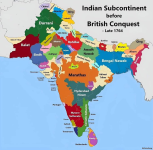
The British constructed the idea of modern-day India, that is Bharat.
Today's India was never a single nation until 1947, it was a collection of Mahajanapadas, it had 16 powerful kingdoms between 600 BCE – 345 BCE.
Over centuries, various dynasties ruled, with borders constantly shifting every 100–300 years.
It was the British who, for administrative convenience, unified this land into what Hindu fascists called Akhand Bharat in 1836.
Indian Subcontinent before British conquest was a mosaic of Marathas, Nawabs, Sultanates, tribal regions & coastal colonies.
@RSSChaddiGang
The British constructed the idea of modern-day India, that is Bharat.
Today's India was never a single nation until 1947, it was a collection of Mahajanapadas, it had 16 powerful kingdoms between 600 BCE – 345 BCE.
Over centuries, various dynasties ruled, with borders constantly shifting every 100–300 years.
It was the British who, for administrative convenience, unified this land into what Hindu fascists called Akhand Bharat in 1836.
Indian Subcontinent before British conquest was a mosaic of Marathas, Nawabs, Sultanates, tribal regions & coastal colonies.
ghazi52
THINK TANK: CONSULTANT
- Thread starter
- #150
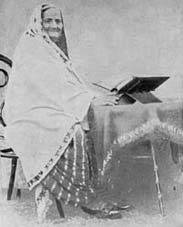
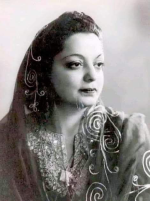
Her mother was from a Brahmin family who converted to Christianity.
She started her career as a teacher from Gokhale Memorial School Kolkata.
After doing Masters in 1931, he was appointed as Professor of Economics at Indar Parastha College, Delhi.
Do you know who is this most famous in Pakistani history?
Personality were?
Sheila Iron Paint became the first Prime Minister of Pakistan in 1932.
Respected Liaquat Ali Khan married with Shaheed (may Allah have mercy on him).
Then after becoming a Muslim, he named his wife Rana Liaqat Ali.
So she had a very good manner and a great character.
But one truth that very few people probably know is that when she became Pakistan's ambassador and went to Holland.
So the Queen of Holland became his very close friend.
One day the queen of Holland told him that if you win chess today, I will give my personal fortress to you.
Wife Rana accepted this and shortly after wife Rana won the chess game of Liaquat Ali.
The queen named the royal fort after her as promised.
A wonderful and pleasant aspect of this true event of the past is that as an ambassador...when his job was over there, he gifted his personal fort to the Pakistani embassy.
Even today, the Pakistani Embassy is located in the same royal fortress.
When I read this whole incident, I compared the role of Begum Rana with the famous and well-known politicians of today.
Allah Almighty had given this country such fertile people in the past.
But alas ...
Sadly today we have forgotten their sacrifices.
She started her career as a teacher from Gokhale Memorial School Kolkata.
After doing Masters in 1931, he was appointed as Professor of Economics at Indar Parastha College, Delhi.
Do you know who is this most famous in Pakistani history?
Personality were?
Sheila Iron Paint became the first Prime Minister of Pakistan in 1932.
Respected Liaquat Ali Khan married with Shaheed (may Allah have mercy on him).
Then after becoming a Muslim, he named his wife Rana Liaqat Ali.
So she had a very good manner and a great character.
But one truth that very few people probably know is that when she became Pakistan's ambassador and went to Holland.
So the Queen of Holland became his very close friend.
One day the queen of Holland told him that if you win chess today, I will give my personal fortress to you.
Wife Rana accepted this and shortly after wife Rana won the chess game of Liaquat Ali.
The queen named the royal fort after her as promised.
A wonderful and pleasant aspect of this true event of the past is that as an ambassador...when his job was over there, he gifted his personal fort to the Pakistani embassy.
Even today, the Pakistani Embassy is located in the same royal fortress.
When I read this whole incident, I compared the role of Begum Rana with the famous and well-known politicians of today.
Allah Almighty had given this country such fertile people in the past.
But alas ...
Sadly today we have forgotten their sacrifices.
Users who are viewing this thread
Total: 1 (members: 0, guests: 1)
Pakistan Defence Latest


Country Watch Latest


Latest Posts
-

-
 New record: China wins 90% of global shipbuilding orders in August (5 Viewers)
- Latest: Beijingwalker
-
-
-
