Pakistan UAVs News & Discussions

It does highlight that local manufacturing has been achieved and demonstrated.

Something that design centres can eventually leverage. A nascent ecosystem is forming.

Can you share the 4 engines pics or details?

The correct order is a) invest into universities and education to build a large pipeline of engineers, b) to build a local manufacturing ecosystem of other peoples designs, get manufacturing sites set up, people trained and still maintain defensive capability, c) work on selective parts substitution of strategic items eg GaN etc. d) At the "mid point of the manufacturing buildout stage", create "design centers" to create new designs that these manufacturing sites can then build using a combination of COTS and local manufactured items. This is the approach Türkiye took and is why they have had so much success.

Sure a more fine grained list can be done, but this is a start.
 
The correct order is a) invest into universities and education to build a large pipeline of engineers, b) to build a local manufacturing ecosystem of other peoples designs, get manufacturing sites set up, people trained and still maintain defensive capability, c) work on selective parts substitution of strategic items eg GaN etc. d) At the "mid point of the manufacturing buildout stage", create "design centers" to create new designs that these manufacturing sites can then build using a combination of COTS and local manufactured items. This is the approach Türkiye took and is why they have had so much success.

Sure a more fine grained list can be done, but this is a start.
Our way of doing things. We will get there (eventually, following a very random path, full of pitfalls and stupid avoidable failures):
To view this content we will need your consent to set third party cookies.
For more detailed information, see our cookies page.
 
If am not wrong all our uavc drones will be for defense purpose but real investment would be on suicide drones.
 
This confirms a quiet but evidently big shift in nat-sec policy. Some weeks ago MoDP called a meeting with private UAS firms (co-chaired with a Lt. Gen, so a real meeting) to tell them they’ve got the reins to develop and build for armed forces requirements. Basically, SOEs were not necessarily going to get in the way for certain classes of UAS development and production. Between AKAL, Woot Tech, Sysverve and a bunch of others, it seems they meant it.
 
It does highlight that local manufacturing has been achieved and demonstrated.

Something that design centres can eventually leverage. A nascent ecosystem is forming.

Can you share the 4 engines pics or details?
Actually, Pakistan has enough local manufacturing to make lot of UAV parts in house. For suicide, one way drones, you can reduce the quality standards a bit too because its not a 100 million F-16 that is expected to come back.

Government just needs to prioritize the right sectors and ensure enough business is fed to them and UAV tech and parts, 90% Pakistan can create and manufacture in house.
 
This confirms a quiet but evidently big shift in nat-sec policy. Some weeks ago MoDP called a meeting with private UAS firms (co-chaired with a Lt. Gen, so a real meeting) to tell them they’ve got the reins to develop and build for armed forces requirements. Basically, SOEs were not necessarily going to get in the way for certain classes of UAS development and production. Between AKAL, Woot Tech, Sysverve and a bunch of others, it seems they meant it.
The barrier to entry for UAVs/Drone manufacturing is very low......which is why most governments are awarding contracts and funding to private sectors only. You just need to ensure that enough orders are placed for the private sector investment to make it feasible.

For Pakistan this is a very easy problem to solve.
 

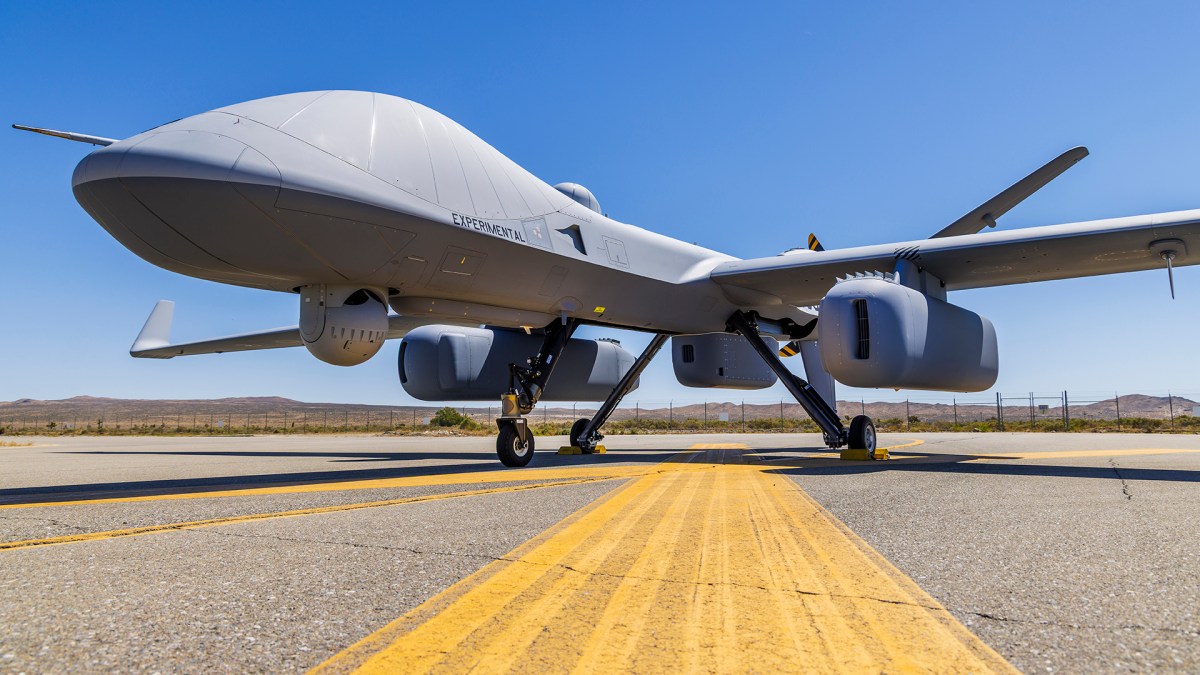
MQ-9 Getting Airborne Early Warning Radar Is A Huge Deal​


Interesting changes for MQ-9, something for PAF to think about with its drone programme.
 

MQ-9 Getting Airborne Early Warning Radar Is A Huge Deal​


Interesting changes for MQ-9, something for PAF to think about with its drone programme.
Akincis could be a viable platform for such a project. Expanding our airborne early warning fleet
 

Why Pakistan Is Turning to Private Firms to Build Its Drones​


Bilal Khan·
June 18, 2026·

Silver aircraft model on display, suspended by wires, showing wings and fuselage with blue markings along the side.


On 14 May 2026, the Ministry of Defence Production (MoDP) held a session on drone technology with several of Pakistan’s private-sector unmanned aerial systems (UAS) developers, chaired by the Secretary Defence Production, Lt Gen (Retd) Muhammad Chiragh Haider, at the ministry’s Directorate General Research and Development Establishment in Rawalpindi.

The official account describes the session’s purpose as strengthening coordination between the public and private sectors on drone warfare and surveillance, with the participating firms presenting their operational challenges and recommendations directly to the ministry.

The MoDP committed to providing the regulatory procedures, testing infrastructure, procurement mechanisms, and research support that a domestic drone ecosystem requires, and it described locally produced unmanned capability as a national priority.

That commitment is already observable in the field of loitering munitions (LM) and one-way attack (OWA) drones, where private firms have been supplying designs to the armed forces for the past two years.

Quwa’s November 2025 review of the one-way effector (OWE) market and its May 2026 update listed at least a half-dozen new distinct loitering-munition (LM) designs in development or early production across Pakistan’s state-owned enterprises (SOEs) and private firms, with a meaningful share originating from the private sector.

Woot-Tech Aerospace is the most prominent of these private firms. Founded in 2021, it has moved from commercial vertical take-off-and-landing drones for agriculture and survey work into a defence catalogue that now covers target drones, the Juggernaut armed multirotor, piston-powered LMs, the HiMark-25 TJ turbojet OWA, the Nimbus 2K cruise missile, and the SHARDS drone-swarm system.

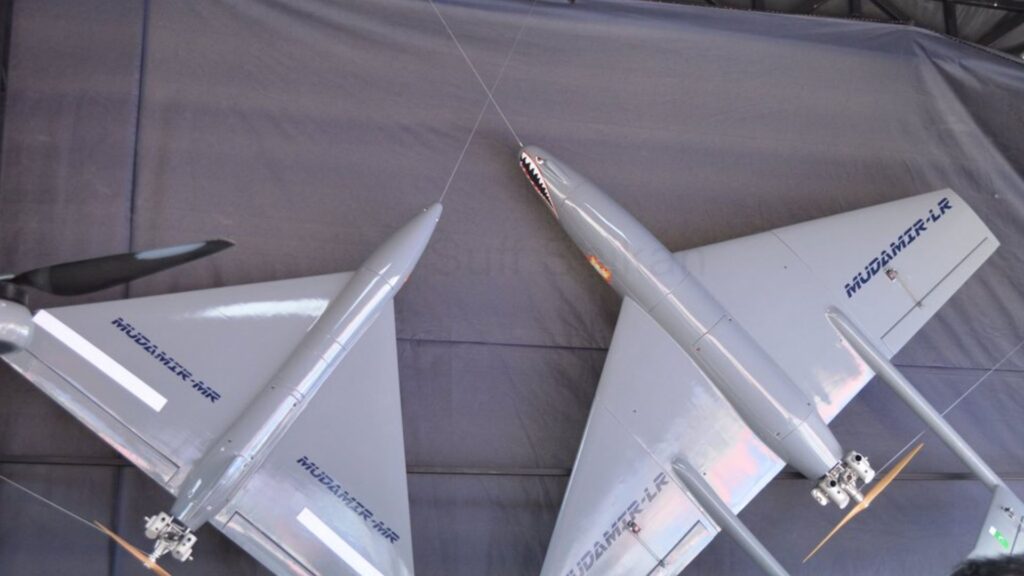
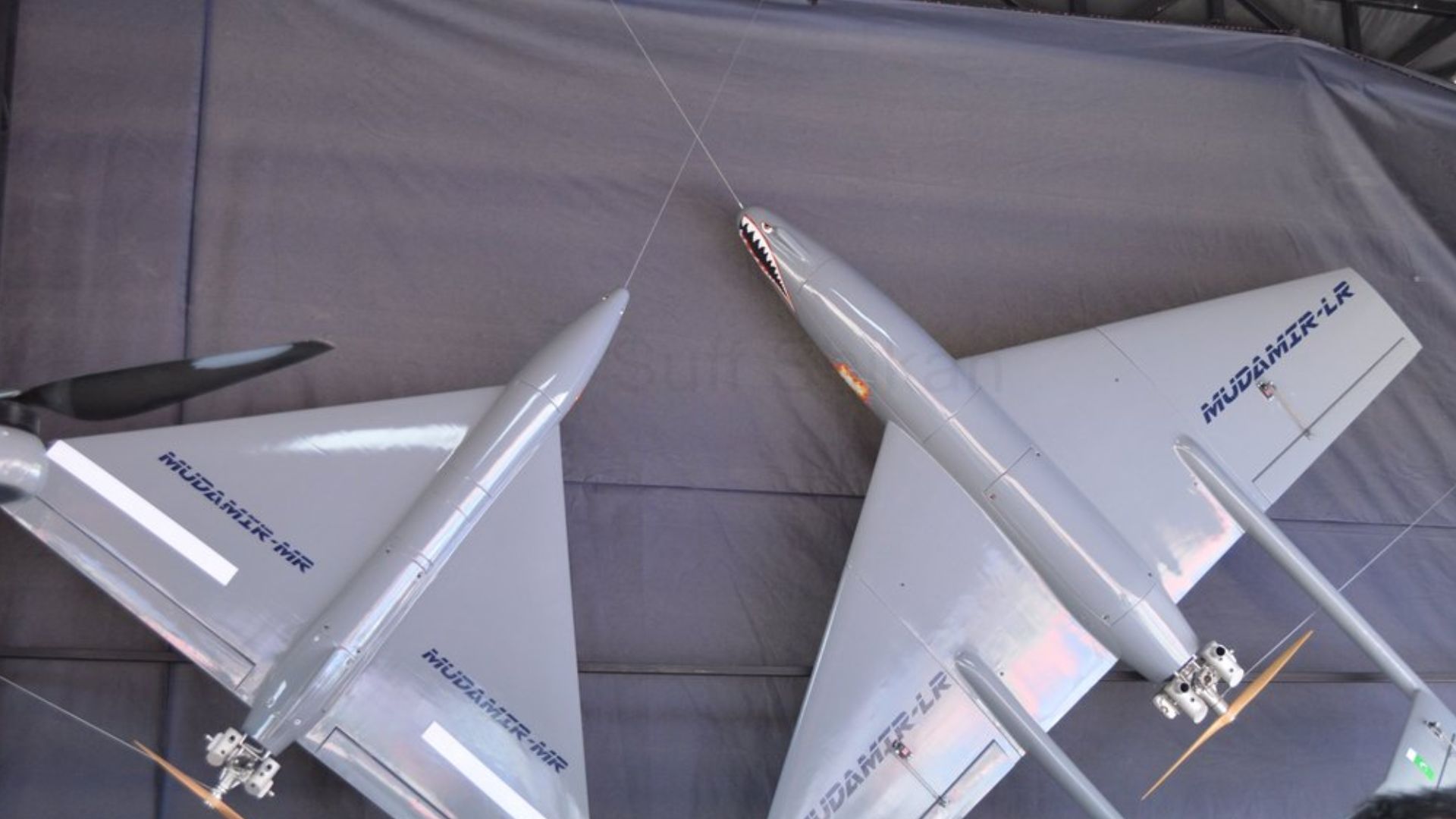
Sysverve Aerospace, a Rawalpindi-based company, sits alongside it and describes itself as Pakistan’s largest indigenous UAS developer. It built its reputation on the Hadaf and Saad target-drone families before entering the strike domain with the Mudamir-LR, a Shahed-style pusher-propeller OWA drone credited with a range beyond 600 km and intended for sea-denial operations in the Arabian Sea.

Several observations indicate that this demand comes directly from the armed forces. Sysverve has displayed inspection lines holding more than 130 assembled Mudamir-LR airframes, which points to the company’s investment in tooling for sustained production. That investment would only have occurred in response to an actual armed forces procurement requirement.

The Pakistan Navy (PN) live-fired the Mudamir-LR against surface targets in the North Arabian Sea in January 2026, in an exercise that also ran air-defence drills.


No Airfields Needed? Pakistan Tests New Tech to Launch Drones From Anywhere​


Pakistan just tested a private rocket booster that eliminates the need for airfields—a major tactical shift inspired by lessons from the Ukraine war.

Bilal Khan
·June 7, 2026
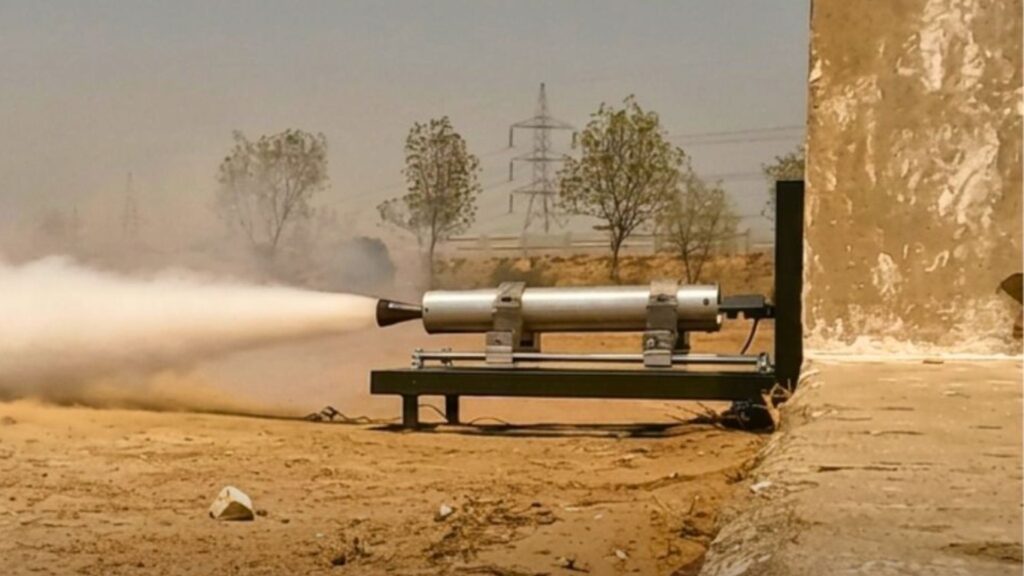
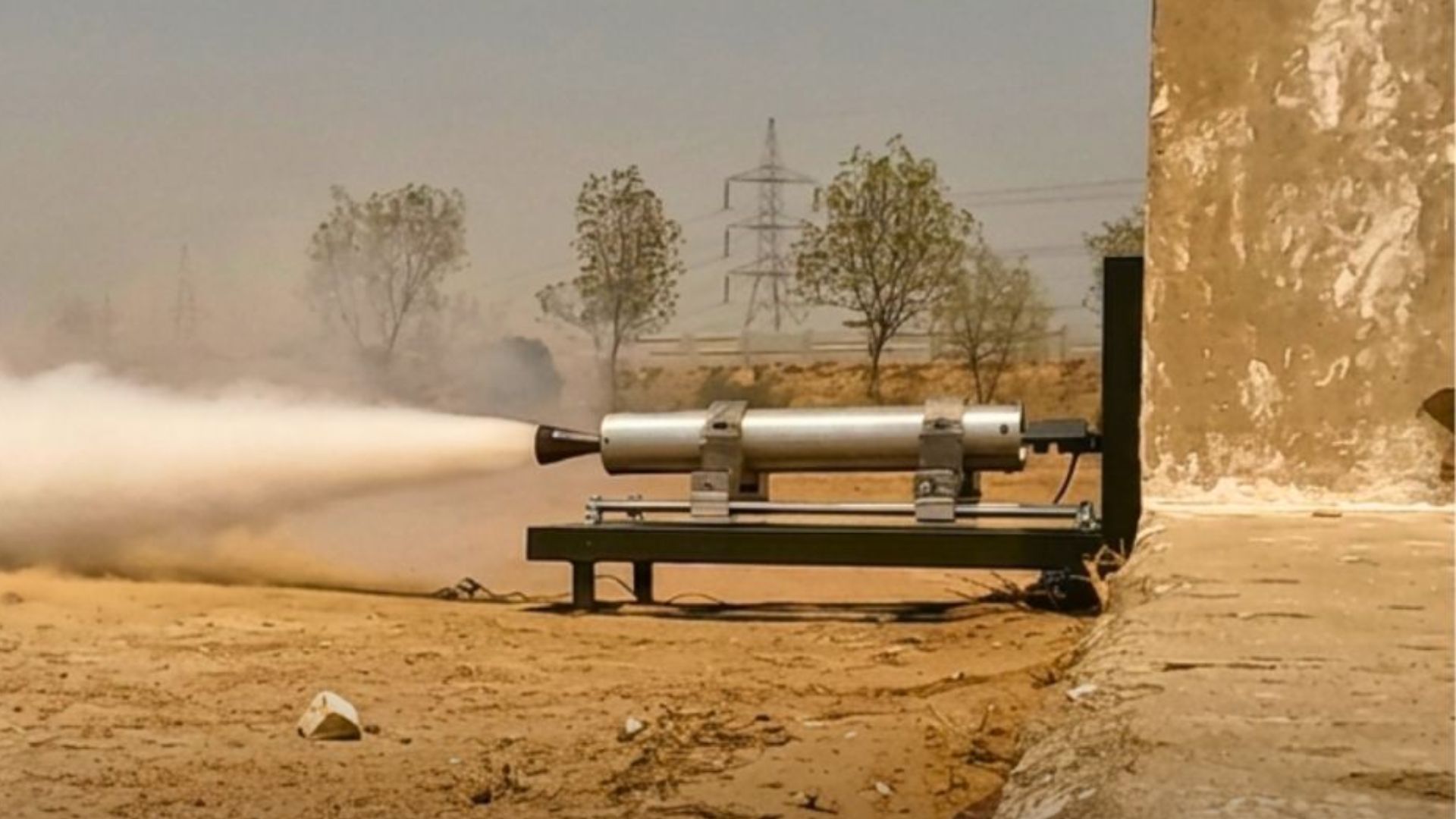
Rocket motor firing on a test stand in a dusty desert site, exhaust plume blowing to the left.


On 06 June, Woot-Tech, a privately owned Pakistani defence contractor, revealed that it had tested a rocket-assisted take-off (RATO) booster for unmanned aerial vehicles (UAV).

Designated RATO-150, Woot-Tech describes it as a 2,500 Ns-class system built for reliable assisted launch. In a company announcement, Woot-Tech pitched the booster as both cost-effective and mass-producible, enabling the end-user to dispense with large pneumatic catapults and long runways, while supporting rapid deployment/launch from austere sites. Woot-Tech is marketing the RATO for tactical, reconnaissance, and defence missions, and tagged for zero-length launch and loitering munition use.

Overall, Woot-Tech is positioning the RATO-150 to support loitering or one-way attack (OWA) munitions, which currently comprise the majority of Woot-Tech’s solution offerings. In other words, the RATO-150 is primarily a launch enabler for the systems Woot-Tech is already producing and marketing.

A 2,500 Ns Booster and Its Class​

Woot-Tech specifies 2,500 Ns – i.e., Newton-seconds – a measure of total impulse rather than thrust. The total impulse is the quantity that determines how much momentum a booster can transfer to an air vehicle, so it sets the ceiling on what the RATO-150 can launch.

A RATO booster is a short-burn solid- or hybrid-rocket motor. It accelerates an air vehicle to flying speed from a rail, canister, or zero-length launcher, then separates once the air vehicle’s own engine takes over.

This is the standard launch method across the loitering-munition and OWA class. IAI’s Harpy and Harop fire from sealed canisters with rocket assist before unfolding their wings, while the Shahed-136 launches via RATO from truck-mounted rails.

Internally, RATO solutions range from 2.5 kN · s to 200 kN · s of total impulse, covering everything from small tactical drones and OWAs to heavy-payload, retrievable systems. Providing 2,500 Ns, Woot-Tech’s RATO-150 sits at the floor of that range, indicating that it is designed for lighter-weight UAS.

A Launch Backbone for Woot-Tech’s Effector Stack​


Illustration of the Woot-Tech HiMark-25 Turbojet loitering munition. Image used as a hero image for an article on Pakistan's new jet-powered loitering munitions programs.

Woot-Tech Aerospace, founded in 2021, began with commercial vertical take-off and landing (VTOL) drones for agriculture and survey work before moving into defence.


Users who are viewing this thread

Pakistan Defence Latest

Back
Top