Pakistan Weather News / Updates

More monsoon downpours, flooding, landslides expected from Tuesday: Punjab PDMA


Emergency control rooms, disaster response teams on high alert

BR Web Desk
August 2, 2025

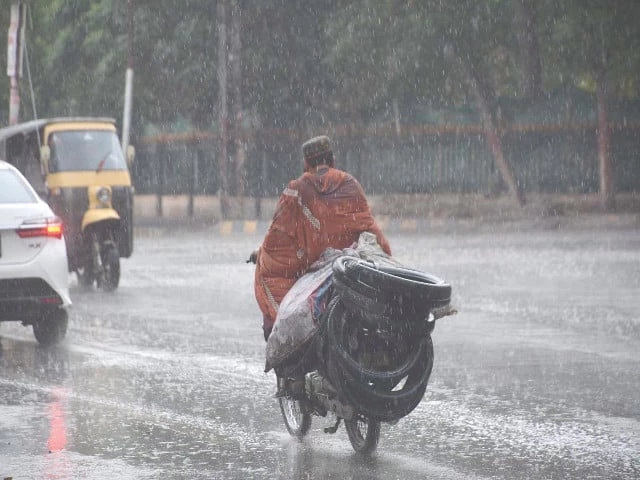
The Punjab Provincial Disaster Management Authority (PDMA) has issued an alert for the sixth spell of monsoon rains expected to begin on August 5, warning of heavy rainfall across most districts of the province.

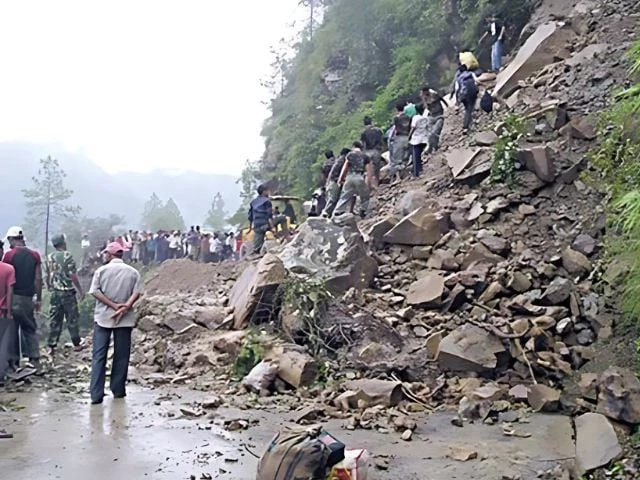
The alert highlights potential flooding in the Chenab and Jhelum rivers, as well as risks of landslides in hilly areas such as Murree and Galiyat.

The Punjab PDMA spokesperson said district commissioners and administrative officials province-wide have been notified to remain on high alert.

“Heavy rains are forecasted for districts including Murree, Galiyat, Attock, Chakwal, Jhelum, Mandi Bahauddin, Gujrat, Gujranwala, Lahore, Sialkot, Narowal, Sargodha, Faisalabad, Dera Ghazi Khan, Rajanpur, Bahawalpur, and several others,” the official said.

Relief Commissioner Punjab Nabeel Javed has directed all district administrations and concerned agencies to be fully prepared. Emergency control rooms and disaster response teams, including Rescue 1122, have been placed on high alert.

PDMA Director General Irfan Ali Kathia stated that, as per the directives of Punjab Chief Minister Maryam Nawaz, all relevant departments have been instructed to complete pre-emptive arrangements. Rainfall in August is expected to be more intense compared to the previous month. There is also a significant threat of urban flooding and flash floods, particularly in low-lying areas.
 

Death toll from monsoon rains climbs to 299, including 140 children: NDMA


Dawn.com
August 3, 2025

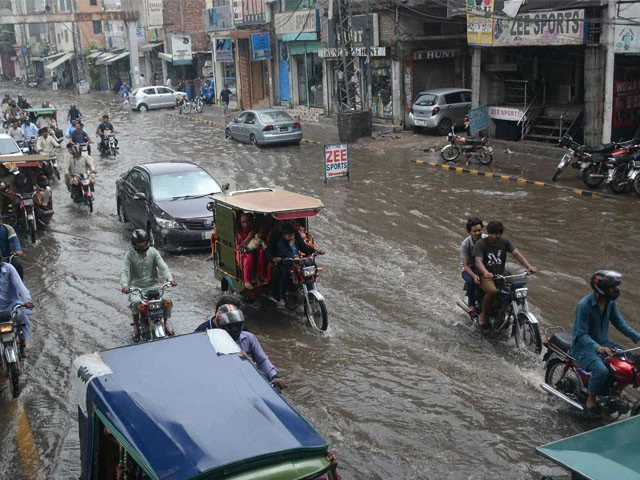
The nationwide death toll from monsoon rains has risen to 299, up from 234, as the season that began in late June continues to cause widespread devastation, the National Disaster Management Authority said on Sunday, according to state-owned PTV News.

Monsoon rains fall across the region from June to September, offering respite from the summer heat and are crucial to replenishing water supplies. However, heavy downpours also trigger deadly floods, landslides and displacement, particularly in vulnerable, poorly drained, or densely populated areas.

According to earlier NDMA estimates, the death toll stood at 234, while 596 people have been injured since June 26.

According to the latest figures, “at least 299 people have lost their lives in this year’s flash floods and torrential rains, while another 715 people were reported injured. Out of the total death toll — 140 were children, 102 men and 57 women,” the report said.

Out of the 715 injured, 239 were children, 204 were women, while 272 were men, it added.

Detailing the damage to public property sustained during the rains and floods triggered by heavy rain, the report estimated that a total of 1676 houses were damaged, out of which 562 homes were destroyed completely.

Around 428 livestock were lost during the rains, the report said.

Since June 26, NDMA has rescued and evacuated 2,880 people from impacted regions, while relief efforts were also underway. Per the report, the authority distributed 13,466 relief items including 1,999 tents, 61 ration bags, 958 blankets, 569 quilts, 613 mattresses, 1,282 kitchen sets, 1,163 food packs, 350 life jackets, 1,122 Hygiene home kits, 2,170 tarpaulins, and 146 de-watering pumps among other essential supplies.

On Saturday, the Pakistan Meteorological Department (PMD) forecasted more rain, with wind-thundershowers in the upper and central regions of the country over the coming week. PMD prompted provincial disaster management authorities and district administrations to take preventive measures against possible urban flooding.

As per PMD’s latest forecast, rain, wind and thundershowers, with isolated heavy falls, are expected to hit the northern parts of the country, starting from August 4 till August 7.

Rainfall is expected in Khyber Pakhtunkhwa, Punjab, and Islamabad between these dates, while Gilgit Baltistan will receive rainfall starting from August 5.

Meanwhile, Balochistan is forecast to experience mainly hot and humid weather, although rain, wind and thundershowers are expected in the northeastern and southern parts on Aug 6.

Sindh is likely to see hot and humid conditions in most parts, with cloudy weather and light rain expected in coastal areas.
 

PMD forecasts heavy rains across country from Aug 4​


Authorities alerted on landslide, flooding risks especially between Aug 6-7 in Punjab, K-P

Naeem Asghar
August 03, 2025

a view of vehicles passing through rain water photo inp


A view of vehicles passing through rain water. Photo: INP

ISLAMABAD: The Pakistan Meteorological Department (PMD) warned on Sunday of heavy monsoon rains across the country from August 4 to 7, urging citizens and tourists to exercise caution.

According to the department, downpours are expected in Kashmir, Gilgit-Baltistan, Islamabad, upper Punjab and Khyber-Pakhtunkhwa (K-P) during the period.

The heaviest rainfall is forecast for August 6 and 7 in Islamabad, Rawalpindi, Lahore, Gujranwala, Sialkot, Narowal, Murree and the Galiyat region. Authorities cautioned that tourists should remain vigilant as there is a risk of landslides in Murree, the Galiyat and Azad Kashmir.

The department also predicted rain and windstorms in parts of north-eastern Balochistan on August 6, warning that low-lying areas could face flooding. Citizens were advised to take necessary precautions.

“All relevant institutions have been directed to remain on alert and take advance measures,” the meteorological office said.

It further advised tourists to avoid travelling during heavy rains and to stay updated on the weather situation.

Earlier, the National Disaster Management Authority (NDMA) said at least 299 people, including 140 children, have lost their lives, and 715 others—among them 239 children—have been injured in flash floods and torrential rains that have swept through vulnerable areas of the country since June 26.

A total of 299 people were killed, including 140 children, 102 men, and 57 women, according to the data. Among the 715 injured, 239 were children, 204 were women and 272 were men sustained injuries.

Since June 26, flash floods and torrential rains have caused widespread destruction, damaging a total of 1,676 houses across the affected areas.

Of these, 562 homes were destroyed, while 1,114 sustained partial damage. The severe weather also led to the loss of 428 livestock, compounding the impact on local communities.

The National Disaster Management Authority (NDMA) has carried out 223 extensive rescue operations, successfully evacuating 2,880 individuals from flood-hit regions.
 

Death of a delta: Pakistan’s Indus sinks and shrinks


AFP
August 5, 2025

1754393921560.png

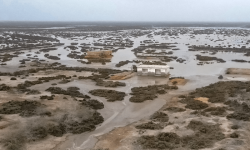
In this aerial photograph taken on June 25, 2025, abandoned houses are pictured in one of the villages of Kharo Chan town, in the Indus delta. — AFP

Salt crusts crackle underfoot as Habibullah Khatti walks to his mother’s grave to say a final goodbye before he abandons his parched island village on the Indus delta.

Seawater intrusion into the delta, where the Indus River meets the Arabian Sea in the south of the country, has triggered the collapse of farming and fishing communities.

“The saline water has surrounded us from all four sides,” Khatti told AFP from Abdullah Mirbahar village in the town of Kharo Chan, around 15 kilometres from where the river empties into the sea.

As fish stocks fell, the 54-year-old turned to tailoring until that too became impossible with only four of the 150 households remaining.

“In the evening, an eerie silence takes over the area,” he said, as stray dogs wandered through the deserted wooden and bamboo houses.

Kharo Chan once comprised around 40 villages, but most have disappeared under rising seawater.

The town’s population fell from 26,000 in 1981 to 11,000 in 2023, according to census data.

Khatti is preparing to move his family to nearby Karachi, a city swelling with economic migrants, including from the Indus delta.

The Pakistan Fisherfolk Forum, which advocates for fishing communities, estimates that tens of thousands of people have been displaced from the delta’s coastal districts.

However, more than 1.2 million people have been displaced from the overall Indus delta region in the last two decades, according to a study published in March by the Jinnah Institute, a think tank led by a former climate change minister.

The downstream flow of water into the delta has decreased by 80 per cent since the 1950s as a result of irrigation canals, hydropower dams and the impacts of climate change on glacial and snow melt, according to a 2018 study by the US-Pakistan Centre for Advanced Studies in Water.

That has led to devastating seawater intrusion.

The salinity of the water has risen by around 70pc since 1990, making it impossible to grow crops and severely affecting the shrimp and crab populations.

“The delta is both sinking and shrinking,” said Muhammad Ali Anjum, a local World Wide Fund for Nature (WWF) conservationist.
 

71 dead, 86 injured in KP rains, flash floods since June 25


Zahid Imdad
August 6, 2025

At least 71 people have died — over half of them children — and another 86 have been injured in rain-related incidents across Khyber Paktunkhwa since the start of the monsoon season in late June, according to the latest figures by KP Provincial Disaster Management Authority (PDMA).

Monsoon rains, which fall across the region from June to September every year, continue to lash many parts of the country. Starting in late June, Monsoon rains have wreaked havoc across the country in the past month by triggering deadly floods, landslides and displacement, particularly in vulnerable, poorly drained, or densely populated areas.

According to the latest data provided by KP PDMA, the total death toll from rain-related incidents this monsoon season stands at 71, out of which 40 are children, 17 men and 14 women.

Swat district recorded the highest number of lives lost, at 22, during heavy rains. According to PDMA, most of the deaths occurred due to floods, landslides and infrastructure collapse.

On June 27, 17 people, mostly tourists, went missing after unprecedented flash floods struck areas of Swat and Malakand divisions. 12 bodies were recovered, four people were rescued, and the dead body of one person remains missing, according to PDMA. The delay in rescue efforts sparked outrage across the country.

According to the PDMA report, on July 21, a woman died after drowning in a nullah while two children were swept away and reported dead. The same day, three children died after the roof of their house collapsed in the Bahrain tehsil of Swat.

The total death toll, broken down district-wise, currently stands at: Swat (22), Buner (4), Malakand (5), Charsadda (3), Upper Dir (3), Torghar (2), Mansehra (3), Hangu (2), Khyber (3), Abbotabad (5), Shangla (2), Bajaur (3), Lower Kohistan (2), Lakki Marwat (3), Battagram (2).

Karak, Haripur, Upper Kohistan, Nowshera and Kohat recorded one death each.

The report estimated that a total of 86 people have been injured in rain-related incidents across the province, including 38 men, 15 women and 33 children.

Detailing the infrastructure damage, the report recorded the total number of houses damaged at 358, out of which 54 were destroyed completely. The highest number of houses destroyed was in Swat at 63, followed by 38 in Karak and 22 in Buner.

The number of cattle that perished as a result of the rain was 142.

Meanwhile, PDMA has issued a rainfall alert for KP today, forecasting isolated rainfall and thunderstorms over the next 12 -24 hours in parts of the province, including Chitral, Dir, Swat, Kalam, Mansehra, Battagram, Abbottabad, Haripur, Swabi, Mardan, Noshwera, Peshawar, Charsada, Kohat, Lakki Marwat, Parachinar, Bannu and Dera Ismail Khan.

In a statement issued on Sunday, KP PDMA directed the district administrations and other relevant organisations to remain on high alert as the Pakistan Meteorological Department (PMD) forecast more intermittent to heavy rains, wind, and thunderstorms across KP from August 4 to 7.
 

Glacial flood sweeps away part of Karakoram Highway

Jamil Nagri Published August 11, 2025

1754914108748.png

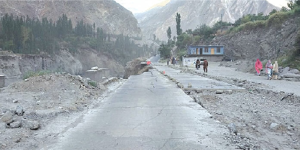
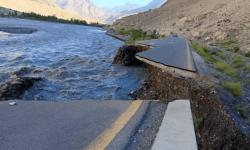
A glacial lake outburst flood destroys several link roads, besides a portion of the Karakoram Highway in Hunza, on Sunday.—Dawn

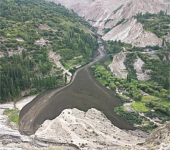
GILGIT: Climate change-driven disasters continued to batter Gilgit-Baltistan (GB) where a glacial lake outburst flood (Glof) from the Shishper Glacier tore through Hassanabad Nullah, sweeping away part of the Karakoram Highway and destroying public and private properties.

Officials described the event as the most severe in the area since 2018. “The volume of today’s flood was the highest in the Nullah since 2018,” said Zubair Ahmed Khan, assistant director of the Gilgit-Baltistan Disaster Management Authority (GBDMA) for Hunza and Nagar.

The flood severed the main road link for much of Hunza’s population, with traffic diverted via the Sas Valley Road from Murtazabad, he said.

The torrent, fuelled by accelerated glacier melt, ripped through agricultural land, uprooted trees and damaged public and private property.

Houses damaged in Hassanabad

In Hassanabad, residents were left counting the cost. “The flood eroded land near multiple homes and put more than 50 houses near Hassanabad Nullah at risk,” Saleem Bercha, a local resident, told Dawn.

“Several homes have developed cracks. Ten houses were dismantled recently to try to save them from the water,” he added.

This latest destruction follows a similar Glof last month that damaged four homes and swathes of farmland.

Authorities said Sunday’s disaster struck after the Shishper Glacier’s water discharge was blocked for around an hour before bursting through, obliterating protective walls and damaging irrigation and drinking-water channels to Aliabad and nearby villages.

Elsewhere in GB, flash floods triggered by heavy glacier melt surged through Supultar Nullah in Nagar Khas, blocking the Hoper Valley road and cutting off a popular tourist destination.

The flood damaged irrigation systems, destroyed a bridge and severed the Hisper Valley road in Tokorkot village, where several homes are now under threat.

In Hunza’s Shimshal Valley, rising river levels damaged the only access road and the protective walls safeguarding it.

Across the region, restoration work on irrigation and water supply systems wrecked by recent cloudbursts, flash floods and Glofs remains stalled. Communities are facing acute shortages of drinking and irrigation water.

In Danyor, residents said the destruction of main water channels had left thousands without water.

“Crops and trees have dried up,” a resident said.

Volunteers are now working to repair the damage, as communities here depend almost entirely on glacier-fed water for survival.

Experts warn that unprecedented high temperatures and repeated heatwaves this year have accelerated glacier melt, making Glofs and extreme flooding more frequent.

Published in Dawn, August 11th, 2025
 
1754914644119.png

• Rapid melting of glaciers due to record temperatures causes floods in Hunza, Diamer, Chilas, Nagar
• Karakoram Highway blocked at multiple points; locals evacuated as homes damaged
• Downpour leads to urban flooding in several parts of Punjab

GILGIT / LAHORE: Record-high summer temperatures in Gilgit-Baltistan have accelerated the melting of glaciers, leading to heavy flooding in districts across the region.


The melting of ice, which resulted in glacier lake outburst floods (Glofs), blocked roads, damaged homes and left people stranded across GB on Tuesday.
 

Eight killed as landslide hits damaged water channel in Gilgit​


Rescue officials fears more workers, volunteers trapped under construction debris as water way was undergoing repair

Web Desk
August 11, 2025

tribune


At least eight volunteers were killed and several others feared trapped when a landslide hit a flood-damaged water channel in Gilgit's Danyor Nullah during repair work, police said on Monday.

The volunteers were restoring the channel when a mass of earth collapsed, burying them under debris, said police.

Hospital sources confirmed all the dead were members of a local volunteer team, while three others were injured.

As the search goes on for more survivors, the authorities have declared an emergency at local hospitals.

A provincial government spokesperson said accelerated glacial melt, driven by climate change, had increased water flow in several streams.

The Shishper glacier recently flooded, damaging farmland and closing part of the Karakoram Highway (KKH) towards Hunza. Traffic was being diverted via Nagar Road.

Officials have warned of further rains and landslides in the region.

A significant stretch of the KKH in Upper Hunza’s Morkhun area was destroyed by river erosion, severing the overland link between Pakistan and China, the Gilgit-Baltistan (G-B) government said.

"River erosion remains a key contributor to highway blockages in the region," a cryosphere expert told The Express Tribune. "Although disruptions on the KKH are not unusual, the current intensity of river swelling and the scale of damage are significantly higher."

G-B government spokesperson Faizullah Faraq confirmed that the increased river flow led to the erosion of a section of the KKH, rendering it impassable.
 

PDMA forecasts next spell of monsoon rains in Punjab​


Citizens told to contact PDMA helpline 1129 in case of emergencies

Our Correspondent
August 11, 2025

a motorcyclist makes his way through rain in balochistan s capital which faces a perennial shortage of water photo inp


A motorcyclist makes his way through rain in Balochistan’s capital, which faces a perennial shortage of water. PHOTO: INP

The Punjab Provincial Disaster Management Authority (PDMA) has forecast the next spell of monsoon rains from August 13 and issued a flood advisory.

According to a PDMA spokesperson, advisories have been issued for the Sutlej, Ravi, Chenab and Jhelum rivers, as well as adjacent streams and nullahs, warning of potential flooding due to the rains.

The PDMA warned that water levels in major rivers across Punjab could rise during the seventh spell of monsoon rains.

Commissioners, deputy commissioners and relevant departments across the province have been instructed to remain on alert.

Departments placed on high alert include local government, agriculture, irrigation, health, forests, livestock and transport.

PDMA Director General Irfan Ali Kathia directed all departments to complete preparations in advance in line with the Punjab Chief Minister’s instructions.
 

Next rain spell to hit country from August 14: PMD​


Alert issued for flash floods in hilly streams, urban flooding in major cities, landslides in mountainous areas

Web Desk
August 12, 2025


a vendor trudges through a rain swamped street in lahore pushing his cart through floodwaters after relentless monsoon downpours photo afp


A vendor trudges through a rain-swamped street in Lahore, pushing his cart through floodwaters after relentless monsoon downpours. PHOTO: AFP

The Pakistan Meteorological Department (PMD) has issued a high-alert advisory for a strong monsoon system expected to hit the country from August 14 to 22.

The last rain spell left over 300 dead and scores injured across Khyber-Pakhtunkhwa (K-P) and Punjab, with most fatalities attributed to electrocution and roof collapses.

The new system is likely to bring widespread rain, wind, and thundershowers, with heavy to very heavy falls predicted in parts of Punjab, Islamabad, K-P and Gilgit-Baltistan between August 18 to 21.

Balochistan and Sindh are also expected to receive rain, with isolated heavy showers from August 18 to 21.

The PMD had earlier forecast rains from August 13 to 15, but later revised its advisory predicting rains to include a longer time frame.

The department warned of potential flash floods in hilly streams, urban flooding in major cities, and landslides in mountainous areas.

Rivers and reservoirs

The rivers Sutlej, Ravi, and Chenab are expected to receive heavy inflows, with the Sutlej at Ganda Singh Wala likely to remain at low flood levels over the next three days but with the potential to rise further due to rainfall and releases from Indian reservoirs.

Medium to high flood levels are possible in rivers Chenab, Khanki, and Qadirabad, along with nullahs of River Ravi, while the Indus at Taunsa is expected to see increased water flow in the next 24 hours.

PMD urged respective river authorities to take precautionary measures besides directing travellers and residents in vulnerable zones have been advised to remain alert and follow official updates.

Pakistan’s major reservoirs recorded a slight increase in water levels over the past 24 hours as weak monsoon activity continued in the country’s upper regions, the latest data showed.
 
To view this content we will need your consent to set third party cookies.
For more detailed information, see our cookies page.
 
To view this content we will need your consent to set third party cookies.
For more detailed information, see our cookies page.
 
According to official figures issued on August 12, the Tarbela reservoir rose by 0.5 feet to 1,546.50 feet, just 3.5 feet below its maximum capacity of 1,550 feet.

Mangla increased by 0.3 feet to 1,206.50 feet, compared to its full capacity of 1,242 feet. Khanpur also rose 0.5 feet to 1,975.20 feet, while Simly remained stable at 2,284.85 feet.

Rawal Dam was the only reservoir to register a decline, falling 1.8 feet to 1,749.40 feet below its full capacity of 1,752 feet.
 

Users who are viewing this thread

Latest Posts

Back
Top