‘Search and rescue, and flood relief operations’
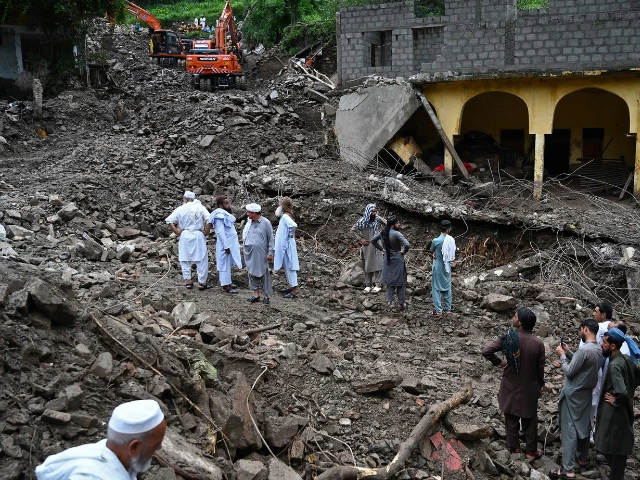
The ISPR DG, as per Dawn.com, provided a summary of the efforts by the military in the northern areas in the wake of the monsoon rains. He said that KP received eight units of Infantry and Frontier Constabulary (FC), who were directly involved in search and rescue, and flood relief operations, while GB had one, taking the total to nine units.
He also said that one engineer brigade, two engineer battalions and two urban search and rescue teams were deployed in KP, while two engineer battalions were sent to GB, where they were “working on road opening and removing landslides”.
“Three medical units were deployed in KP, while nine medical camps were deployed in GB. More than 6,304 people have been treated.”
“In search and rescue operations, 6,903 people have been rescued,” he added.
Gen Chaudhry also said that one-day rations were allocated, amounting to 585 tonnes, adding that army aviation was deployed to oversee medical casualty evacuation, emergencies, and transportation of food and medicine.
He highlighted that multiple bridges and roads were repaired, while the telecommunication infrastructure in affected areas, including Shangla and Buner, was being repaired alongside the Pakistan Telecommunication Authority.
Speaking more specifically about affected regions, the DG ISPR said that the army deployed two battalions in Buner, two battalions in Shangla, one in Swat, one FC wing each in Bajaur and Dir, and one company in Swabi.
“These are dedicated resources … which were deployed 24 hours for flood relief rescue operations,” he said.
While speaking about logistics support, the DG said, “In Peshawar, there were 2,500 ready-to-eat meals and 20 tonnes of rations. In Nowshera, there are 5,000 ready-to-eat meals and 505 tonnes of rations,” he said, adding that they were being transported by road and helicopters.
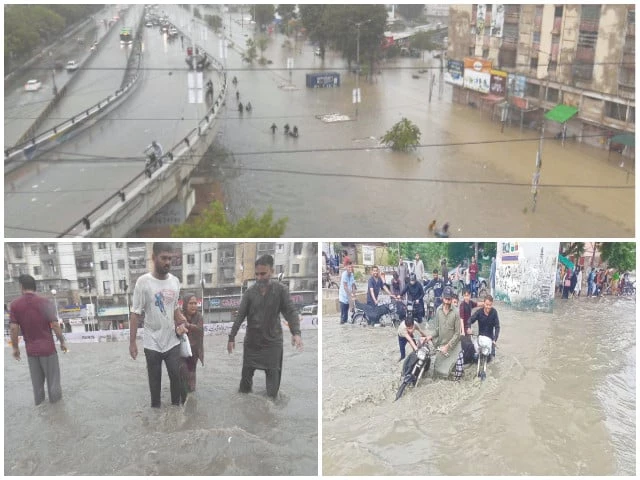
He also highlighted that 90 roads were damaged in KP. Of those, nine roads were fully operational and 86 were partially restored, he added.








 Federal cabinet gives nod to imposition of emergency in KP; summary sent to president (31 Viewers)


