Navigation
Install the app
How to install the app on iOS
Follow along with the video below to see how to install our site as a web app on your home screen.
Note: This feature may not be available in some browsers.
More options
Style variation
You are using an out of date browser. It may not display this or other websites correctly.
You should upgrade or use an alternative browser.
You should upgrade or use an alternative browser.
Pakistan's Special Operations Forces: SSG | SSGN | SSW | SOW | SOG
- Thread starter ghazi52
- Start date
More options
Who Replied?


DESERT FIGHTER
Elite Member

ghazi52
THINK TANK: CONSULTANT
- Thread starter
- #253
Overview
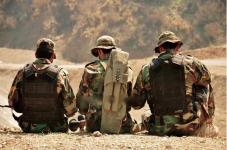
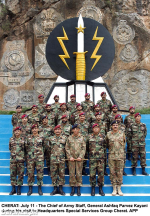
In 1953-54 the Pakistan Army raised an elite commando formation with US Army assistance. To disguise its true mission the new unit was simply designated 10 Bn. of The Baluch Regiment The battalion was posted to a new headquarters at Cherat near Attock City.
In march 1964 a Mobile Training Team from the US Army Special Forces Group (Airborne) went to Pakistan to set up a new airborne school at Peshawar for 19 Baluch. The school included basic and jumpmaster courses. All members of 19 Baluch were airborne-qualified. The training team also included four riggers, who helped train Pakistani counterparts.
By this time 19 Baluch was already considered the SSG (Special Services Group) which was divided into 24 companies. Each company had specialization units, specialized in desert, mountain, ranger, and underwater warfare. The desert companies participated in training exercises with US Army Special Forces Mobile Training Team in late 1964. The scuba company in Karachi was renowned for its tough physical training.
In 1970 an anti-terrorist role was added. This mission was given to the Musa Company, an independent formation within SSG. The name was given after the name of Prophet Musa (Moses).
The company was originally formed in 1970 as a combat diver unit. In 1980 however each company was given a diver unit. After the Musa company was converted to an anti-terrorist unit, it received training by British SAS advisors in Cherat during mid-1981.
In 1986 SSG began a large-scale basic training program for Sri Lankan Paramilitary militia forces. Commando and airborne training was given to members of the Sri Lankan Commando Regiment.
SSG units have also been seconded in covert operations in Afghanistan during the Afghan war, as air marshals on passenger airlines and as VIP security. At present, the SSG maintains its headquarters at Cherat and runs the Airborne School at Peshawar.
Two SSG battalions are normally rotated through Cherat with a third battalion divided between the border and other strategic locations such as the Terbella Dam and nuclear research facilities. Each SSG battalion numbers 700 men in four companies. Each company is split into platoons and further sub-divided into 10 men teams. Battalions are commanded by Lieutenant Colonels, the group is currently run by a Colonel
Training
SSG officers must have at least two years of prior military experience and volunteer from other formations for three-year assignments with the SSG; NCO and enlisted men volunteer from other formations to serve permanently in the SSG. All trainees must participate in an eight-month SSG course at Cherta.
The SSG course course emphasizes tough physical conditioning. Included is a 36-mile march in 12 hours, a grueling requirement that was first institutionalized by 19 Baluch. They are also required to run 5 miles in 40 minutes with full gear. Following the SSG course, trainees must volunteer for Airborne School. The course last four weeks, with wings awarded after seven (five day, two night) jumps. none SSG airborne students only have to complete a the five day jump.
Many in the SSG school are selected for additional specialist training. A HALO course is given at Peshawar with a 'skydiver' tab awarded after 5 freefall jumps. A "Mountain Warfare" qualification badge is given after completing a course at the Mountain Warfare School in Abbotsbsd; and a "Combat Diver" badge is awarded awarded for the course held by the Naval Special Services Group SSGN at Karachi. three classes of combat swimmers were recognized: 1st class to those completing an 18-mile swim; 2nd class to those finishing a 12-mile swim; and 3rd class for a 6-mile swim. SSG regularly sends students to the US for special warfare and airborne training. later on due to Siachen crisis, a Snow and High Altitude Warfare School was also established.
SSG Weapons and Uniforms
While they were designated 19 Baluch, the Pakistani special forces were distinguished by a green beret with the Baluch Regt. beret insignia on a maroon flash. A 'Baluch' tab, black with a maroon background, went on left shoulder. Combat uniforms were Khaki.
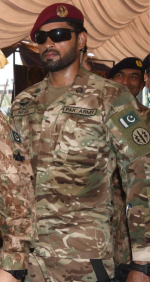
The SSG dropped the green beret in favor of a maroon beret. A silver metal SSG beret is worn in a light blue felt square. A bullion SSG para wing with a black cloth background is worn on the left chest. A red cloth version is worn by master parachutist who has at least 50 jumps. SSG "Riggers" wear a wing with the English word 'Rigger' stitched across the wing.
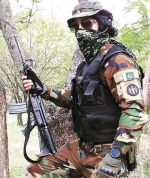
A distinctive SSG badge featuring a dagger framed by lightening bolts, used since 1964 by members of 19 Baluch goes on the left shoulder; qualification tabs and badges such as Skydiver, SCUBA, or Mountain Warfare go on the right shoulder. A silver metal SSG insignia is occasionally worn on shoulder straps.
Any SF operator worth his salt will tell you this that the proportion of failures is higher than the successes in Special Operations. This is due to the fact that most special operations by their nature are difficult and very risky.
Another thing to keep in mind is that you cannot compare the successes and failures of two SF outfits simply because one may have been employed a whole lot more than the other.
SSG have had their fair share of successes and failures. Among the failures that you mention, the 65 operations were indeed that, however there were very many mistakes committed in the employment of SSG. About 150 operators were dropped on three IAF bases and 100 or so were captured (10 or so KIA) and the rest exfiltrated.
I don't want to give a very detailed account of what led to their failure, however the biggest one was loss of initiative and improper employment. The SSG HQ was given an ultimatum to send the teams into India on the first day of the declared war when the Indian vigilance was the highest. They were sent in without any support once they were in and were given no way out. The fact that not one of the operators opted out is a testament of discipline and dedication to service and Pakistan. Lets not forget that.
During operation Qiyadat at Siachen, SSG suffered reverses as well and we can blame improper planning and an underestimation of the enemy strength.
PANAM issue was one due sheer bad luck. The newly trained SSG CT team had decided on moving against the plane but before they could, the aircraft lost power and the hijackers started shooting the passengers out of panic. This led to a hurried SSG intervention without having cleared the passengers out of harms way...as a result many died. It was sheer badluck in my opinion.
On the success side, the 1973 Baluch CI operations were spearheaded by the SSG and they were able to contain those very effectively along with the regular Army. The same goes for the extensive SSG support for operations inside of Afghanistan throughout the Soviet occupation of the country. The advising on the ground and training was again spearheaded by the SSG. Many successful operations in Siachen have been led by the SSG.
On UNPK duties, as part of MONUC, SSG operators have led the way in combat.
The issue is that if you want newspaper headline type of successes then there may not be many, however from the standpoint of importance, the SSG has done more than its fair share.
Let me end by stating that in 1966, it was decided by the PA to disband the SSG owing to its failures in the 65 war. A complete anlysis was done by the GHQ on these ops and it was found that it was not really the SSG capabilities but unrealistic expectations and improper employment that led to failures. When senior commanders from SSG started getting into the higher echelons of the Army, this perception was corrected greatly and SSG has been used very effectively in many operations such as those I have highlighted above. The SSG performance in the 1971 war was very good (but was overshadowed by the fall of EP). Otherwise in West Pakistani border and even during the CI ops by the SSG Bns, success rate was very high.
ghazi52
THINK TANK: CONSULTANT
- Thread starter
- #254
SSG has its own Frogman (Combat Diver) training program at Tarbela. Initially SSG used to train with the Navy so this frogman company was based in Karachi but it has since moved.
Currently the SSG is not under a joint SF command, but in the future we may see SSG (Army, Navy, PAF) under one command similar to the JSOC in the US. Its fairly expensive to do so, thus we have not seen this happen, however it would help in streamlining this capability.
The SSG is commanded by the GOC SSG (A Major General). The GOC SSG reports back to the Chief of General Staff (CGS), Pakistan Army who is a Lt. Gen and in most cases the one primed for leadership of the Army (CGS post is the most important of the PSO posts within the PA). This ensures that no specific Corps Commander holds sway over a central capability such as the SSG.
In the past this has been an irritant for some Corps Commanders who happen to have the SSG assets in their areas of responsibility...but the chain of command for the SSG precludes the Corps Commanders. The CGS obviously reports back to the COAS and as such it is ensured that all SSG activities and missions remain under the purview of the Army's higher command.
In Pakistan, the SSG have a specific team that has been imparted training for VVIP/CP security detail. This team is professionally trained in this role and is actually tasked with it. So its not a matter of pulling any Tom, Dick and Harry from the SSG to carry out this task. They have put funding, manpower and training into this requirement.
2007
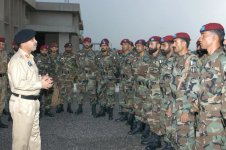
Currently the SSG is not under a joint SF command, but in the future we may see SSG (Army, Navy, PAF) under one command similar to the JSOC in the US. Its fairly expensive to do so, thus we have not seen this happen, however it would help in streamlining this capability.
The SSG is commanded by the GOC SSG (A Major General). The GOC SSG reports back to the Chief of General Staff (CGS), Pakistan Army who is a Lt. Gen and in most cases the one primed for leadership of the Army (CGS post is the most important of the PSO posts within the PA). This ensures that no specific Corps Commander holds sway over a central capability such as the SSG.
In the past this has been an irritant for some Corps Commanders who happen to have the SSG assets in their areas of responsibility...but the chain of command for the SSG precludes the Corps Commanders. The CGS obviously reports back to the COAS and as such it is ensured that all SSG activities and missions remain under the purview of the Army's higher command.
In Pakistan, the SSG have a specific team that has been imparted training for VVIP/CP security detail. This team is professionally trained in this role and is actually tasked with it. So its not a matter of pulling any Tom, Dick and Harry from the SSG to carry out this task. They have put funding, manpower and training into this requirement.
2007
ghazi52
THINK TANK: CONSULTANT
- Thread starter
- #255
A very good article on the SSG!
The phantom soldiers at the Lal Masjid
By Javed Hussain
IN the first week of August 1965, in the early hours of the morning, Indian soldiers guarding a vital bridge in Indian-held Kashmir (IHK) came under a sudden attack from close quarters. Five minutes later, they and their bridge were no more.
On a sultry night in September 1965, a convoy of heavy trailers carrying tanks was moving on a road in IHK when it suddenly came under rocket and machine gun fire. A dozen tanks exploded and burst into flames.
In early December 1971, shortly after midnight, a column of Indian infantry was moving towards the front in IHK to reinforce one of their positions that was under attack, when it was hit from a flank by sweeping machine gun fire. Within minutes of the attack, the column had perished.
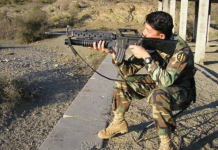
In all three cases the phantom soldiers who conducted these attacks were the chosen ones of the Pakistan Army commandos of the Special Service Group (SSG). Skilled in the use of weapons, they handle machine guns, sub-machine guns and pistols as if these were an extension of their hands, firing from the hip with speed and accuracy, even on the move. They are masters of the close quarter battle.
Designed to conduct operations behind the enemy lines, SSG also specialises in guerrilla, anti-guerrilla and anti-terrorist operations. Of these, the most demanding operations are the ones that are carried out deep behind the enemy lines. Such operations require the highest state of physical and mental toughness, resourcefulness, and the ability to remain cool and motivated, far beyond the bounds of conventional human endurance.
Selection for service with the SSG is, therefore, tough. Volunteers from all over the army apply but two-thirds are rejected during the selection phase, and one-third of the selected during the training phase. Those who finally make it, earn the distinction to wear the maroon beret and the coveted SSG badge on their chest. These men are too precious to be wasted on activities of conventional soldiers, yet those who should know better, continue to misuse them on guard duties and personal security functions.
Occasionally, SSG troops too, tend to misuse their skills! One of the SSG units was due to be inspected by a GHQ team. There was a growing sense of anxiety in the unit as many of their jeeps had become unserviceable for want of spare parts, and these were not forthcoming. They solved the problem their way. A night before the inspection, a few men stealthily penetrated the motor park of an artillery unit, some 20 kilometres away, and went about removing the required parts from the jeeps parked there, quickly and in silence. Job done, they returned to base, and come inspection time, the unserviceable jeeps were ready and running.
The following morning, when the commanding officer of the artillery unit learned that his jeeps had been mysteriously cannibalised, he nearly collapsed and had to undergo overnight hospitalisation. SSG commandos are trained to find a way or make one they had done just thatbut GHQ was not amused.
Conducted in five phases (planning, preparation, infiltration, attack, and exfiltration), an SSG operation depends entirely on the achievement of surprise to succeed. When the plan is not based on precise and accurate intelligence, the element of surprise is compromised, as happened to the SSG operations in September 1965 against the Indian airbases at Pathankot, Adampur and Halwara. Planned hastily and based on outdated intelligence and maps, they had ended in disaster. The topographical changes that had taken place in the area of operations, were missing from the maps.
The result was that most of the commandos had landed in settlements that were not supposed to be there. As a consequence, within minutes of their landing, the alarm was raised. With surprise lost, the odds were now stacked against them. The next 48 hours saw them fighting running battles with their pursuers until their ammunition ran out. The cream of the army had been sacrificed in a needless operation against targets that were subsequently taken out by the PAF, many times over.
SSG teams are infiltrated behind the enemy lines either by land, air or sea. Insertion by land is hazardous and time-consuming as it involves crossing the frontlines, whereas the air option, in which the preferred means is by helicopter, is the least hazardous and quickest.
But when helicopter insertion is precluded, freefall parachutes are used to make either HALO (high altitude, low opening) or HAHO (high altitude, high opening) jumps. HALO jumps are made inside the enemy territory, with the parachute being opened low, while HAHO jumps are made inside ones own territory close to the border, with the parachute being opened high, and then manoeuvred towards the area designated for landing inside the enemy territory.
Having landed, whether by helicopter or parachute, they begin the final approach to the target, and once they get within striking distance, all hell is let loose. Minutes later, they are gone as suddenly as they had come, leaving behind a trail of blood and destruction.
Now begins exfiltration, the most challenging of all phases. The quickest way is extraction by helicopter. But the real challenge starts, especially in the plains, when this is ruled out. It is now that their physical and mental toughness, resourcefulness and the ability to remain cool and motivated, come under severe test, as they struggle to get back across a broad expanse of hostile territory with the enemy in hot pursuit.
SSG is a small force, but when employed correctly, it can create effects on the enemy out of all proportion to its size. When viewed against the fact that the Pakistan army will have to fight a future conventional war outnumbered and win it, SSG is a force multiplier. Therefore, it is best used in support of the armys strategic offensives to create a strategic impact on the enemy.
For instance, in 1965, if the army had followed up Operation Grand Slam with another offensive in Ravi-Chenab corridor, the SSG could have been employed simultaneously against the headworks on River Ravi and the crossings on River Beas, ahead of the offensive. These actions would have isolated the Ravi-Chenab corridor and delayed the induction of Indian army formations into the Ravi-Beas corridor, thus giving a decisive lead to Pakistani war directors in all the dimensions of operational strategy.
Having missed the opportunity to win the war in 1965, they should have atoned for it by doing the same in October 1971 when the build-up of Indian forces against East Pakistan was well underway. Unfortunately for Pakistan, they missed this opportunity too. In the two wars directed by them, their performance was marked by lack of imagination and daring. Stated simply, they had the force, but did not know how to use it. But, that is another story. Fortunately for Pakistan, the Indian captains of war too, were equally incompetent, if not more.
Operation Silence, the SSG operation against Jamia Hafsa/Lal Masjid complex was quite unlike Operation Nimrod, the British SAS (Special Air Service) operation in May 1980 against six terrorists who had seized the Iranian embassy in London and made 26 people hostage. The SAS had complete information about the terrorists, hostages and the 50-room six-storeyed embassy, and had carried out rehearsals on full size replicas. The result was that the operation involving 50 SAS troops, took only 17 minutes to eliminate the terrorists and rescue the hostages.
On the other hand, the SSG operation against the Jamia Hafsa was launched on what was at best, sketchy information about the people holed up inside the complex. Even today a controversy is raging about the number of people present in the complex at the time of the operation. How many were there and how many among them were hostages? If there were hostages, were they lodged separately, if so, where? How many militants were armed and what weapons were held by them? Where were the militants deployed?
These questions must have been raised by the SSG, but were clearly left unanswered. The fact that none inside the complex survived the attack, clearly shows that the SSG was given to understand that everyone inside was armed and dangerous.
That those inside were able to resist the SSG for so long and inflict casualties on them, is a testimony to their preparadness and grit, as much as it is to the courage, dash and skill of the SSG under adversity.
DAWN - Opinion; August 28, 2007

The phantom soldiers at the Lal Masjid
By Javed Hussain
IN the first week of August 1965, in the early hours of the morning, Indian soldiers guarding a vital bridge in Indian-held Kashmir (IHK) came under a sudden attack from close quarters. Five minutes later, they and their bridge were no more.
On a sultry night in September 1965, a convoy of heavy trailers carrying tanks was moving on a road in IHK when it suddenly came under rocket and machine gun fire. A dozen tanks exploded and burst into flames.
In early December 1971, shortly after midnight, a column of Indian infantry was moving towards the front in IHK to reinforce one of their positions that was under attack, when it was hit from a flank by sweeping machine gun fire. Within minutes of the attack, the column had perished.
In all three cases the phantom soldiers who conducted these attacks were the chosen ones of the Pakistan Army commandos of the Special Service Group (SSG). Skilled in the use of weapons, they handle machine guns, sub-machine guns and pistols as if these were an extension of their hands, firing from the hip with speed and accuracy, even on the move. They are masters of the close quarter battle.
Designed to conduct operations behind the enemy lines, SSG also specialises in guerrilla, anti-guerrilla and anti-terrorist operations. Of these, the most demanding operations are the ones that are carried out deep behind the enemy lines. Such operations require the highest state of physical and mental toughness, resourcefulness, and the ability to remain cool and motivated, far beyond the bounds of conventional human endurance.
Selection for service with the SSG is, therefore, tough. Volunteers from all over the army apply but two-thirds are rejected during the selection phase, and one-third of the selected during the training phase. Those who finally make it, earn the distinction to wear the maroon beret and the coveted SSG badge on their chest. These men are too precious to be wasted on activities of conventional soldiers, yet those who should know better, continue to misuse them on guard duties and personal security functions.
Occasionally, SSG troops too, tend to misuse their skills! One of the SSG units was due to be inspected by a GHQ team. There was a growing sense of anxiety in the unit as many of their jeeps had become unserviceable for want of spare parts, and these were not forthcoming. They solved the problem their way. A night before the inspection, a few men stealthily penetrated the motor park of an artillery unit, some 20 kilometres away, and went about removing the required parts from the jeeps parked there, quickly and in silence. Job done, they returned to base, and come inspection time, the unserviceable jeeps were ready and running.
The following morning, when the commanding officer of the artillery unit learned that his jeeps had been mysteriously cannibalised, he nearly collapsed and had to undergo overnight hospitalisation. SSG commandos are trained to find a way or make one they had done just thatbut GHQ was not amused.
Conducted in five phases (planning, preparation, infiltration, attack, and exfiltration), an SSG operation depends entirely on the achievement of surprise to succeed. When the plan is not based on precise and accurate intelligence, the element of surprise is compromised, as happened to the SSG operations in September 1965 against the Indian airbases at Pathankot, Adampur and Halwara. Planned hastily and based on outdated intelligence and maps, they had ended in disaster. The topographical changes that had taken place in the area of operations, were missing from the maps.
The result was that most of the commandos had landed in settlements that were not supposed to be there. As a consequence, within minutes of their landing, the alarm was raised. With surprise lost, the odds were now stacked against them. The next 48 hours saw them fighting running battles with their pursuers until their ammunition ran out. The cream of the army had been sacrificed in a needless operation against targets that were subsequently taken out by the PAF, many times over.
SSG teams are infiltrated behind the enemy lines either by land, air or sea. Insertion by land is hazardous and time-consuming as it involves crossing the frontlines, whereas the air option, in which the preferred means is by helicopter, is the least hazardous and quickest.
But when helicopter insertion is precluded, freefall parachutes are used to make either HALO (high altitude, low opening) or HAHO (high altitude, high opening) jumps. HALO jumps are made inside the enemy territory, with the parachute being opened low, while HAHO jumps are made inside ones own territory close to the border, with the parachute being opened high, and then manoeuvred towards the area designated for landing inside the enemy territory.
Having landed, whether by helicopter or parachute, they begin the final approach to the target, and once they get within striking distance, all hell is let loose. Minutes later, they are gone as suddenly as they had come, leaving behind a trail of blood and destruction.
Now begins exfiltration, the most challenging of all phases. The quickest way is extraction by helicopter. But the real challenge starts, especially in the plains, when this is ruled out. It is now that their physical and mental toughness, resourcefulness and the ability to remain cool and motivated, come under severe test, as they struggle to get back across a broad expanse of hostile territory with the enemy in hot pursuit.
SSG is a small force, but when employed correctly, it can create effects on the enemy out of all proportion to its size. When viewed against the fact that the Pakistan army will have to fight a future conventional war outnumbered and win it, SSG is a force multiplier. Therefore, it is best used in support of the armys strategic offensives to create a strategic impact on the enemy.
For instance, in 1965, if the army had followed up Operation Grand Slam with another offensive in Ravi-Chenab corridor, the SSG could have been employed simultaneously against the headworks on River Ravi and the crossings on River Beas, ahead of the offensive. These actions would have isolated the Ravi-Chenab corridor and delayed the induction of Indian army formations into the Ravi-Beas corridor, thus giving a decisive lead to Pakistani war directors in all the dimensions of operational strategy.
Having missed the opportunity to win the war in 1965, they should have atoned for it by doing the same in October 1971 when the build-up of Indian forces against East Pakistan was well underway. Unfortunately for Pakistan, they missed this opportunity too. In the two wars directed by them, their performance was marked by lack of imagination and daring. Stated simply, they had the force, but did not know how to use it. But, that is another story. Fortunately for Pakistan, the Indian captains of war too, were equally incompetent, if not more.
Operation Silence, the SSG operation against Jamia Hafsa/Lal Masjid complex was quite unlike Operation Nimrod, the British SAS (Special Air Service) operation in May 1980 against six terrorists who had seized the Iranian embassy in London and made 26 people hostage. The SAS had complete information about the terrorists, hostages and the 50-room six-storeyed embassy, and had carried out rehearsals on full size replicas. The result was that the operation involving 50 SAS troops, took only 17 minutes to eliminate the terrorists and rescue the hostages.
On the other hand, the SSG operation against the Jamia Hafsa was launched on what was at best, sketchy information about the people holed up inside the complex. Even today a controversy is raging about the number of people present in the complex at the time of the operation. How many were there and how many among them were hostages? If there were hostages, were they lodged separately, if so, where? How many militants were armed and what weapons were held by them? Where were the militants deployed?
These questions must have been raised by the SSG, but were clearly left unanswered. The fact that none inside the complex survived the attack, clearly shows that the SSG was given to understand that everyone inside was armed and dangerous.
That those inside were able to resist the SSG for so long and inflict casualties on them, is a testimony to their preparadness and grit, as much as it is to the courage, dash and skill of the SSG under adversity.
DAWN - Opinion; August 28, 2007
DAWN - Opinion; August 28, 2007
Again at a crossroads By Shahid Javed Burki WILL the next series of elections, promised by General Pervez Musharraf...
www.dawn.com
Users who are viewing this thread
Total: 4 (members: 0, guests: 4)
Pakistan Defence Latest


Country Watch Latest

Latest Posts
-
Makkah Defence Alliance: Turkey, Saudi Arabia, and Pakistan, news & updates (36 Viewers)
- Latest: Owaiz
-
-
-

-