Pharmaceutical and Hospital facilities updates

Pakistan’s Liven Pharma announces first export to Arab region


Liven Pharma Limited announced on Thursday its first successful export to the Arab region.

The company disclosed in its notice to the Pakistan Stock Exchange (PSX) on Thursday.

The company said that the order was received last year and it had been completed this year.

Last month, the company announced plans to raise Rs200 million via a rights issue to strengthen its financial position and support business expansion.

According to the disclosure, the company will issue 20 million ordinary shares at Rs10 per share — representing around 21.5% of its existing paid-up capital. This translates into 21.496 rights shares for every 100 ordinary shares held by shareholders at the close of the share transfer books.

Liven Pharma Limited was incorporated in Pakistan as a private Limited Company on October 21, 1991 and was converted into a public limited company on April 30, 1992, under the Companies Ordinance, 1984 (Repealed with the enactment of the Companies Act, 2017). The principal activity of the company is the manufacturing of pharmaceuticals and allied products.
 

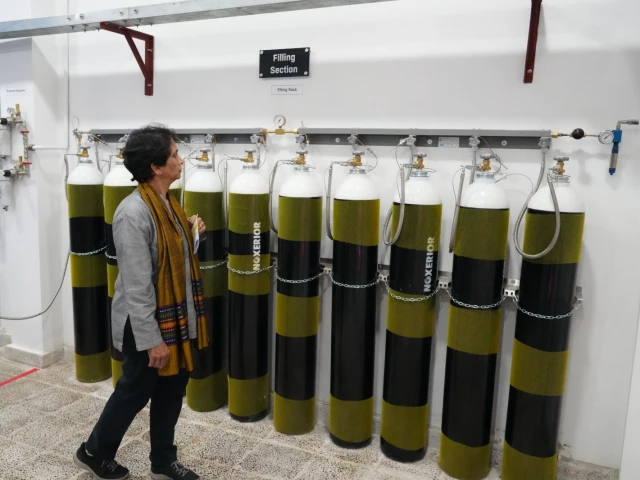
UNDP, Pakistan partner to install 36 oxygen plants in public hospitals​


UN-backed project boosts emergency care through oxygen infrastructure upgrades

Our Correspondent
October 09, 2025


photo shuja hakim undp pakistan

Photo: Shuja Hakim/UNDP Pakistan

In a major move to strengthen Pakistan’s public health infrastructure, the United Nations Development Programme (UNDP), in partnership with the Government of Pakistan and the Global Fund, is spearheading a project to procure and install 36 oxygen generation plants in public hospitals across the country. The effort, running from March 2022 through December 2025, is backed by a total budget of $52 million.

The project will be rolled out across all four provinces, Balochistan, Khyber-Pakhtunkhwa, Punjab and Sindh, as part of a strategic push to close critical gaps in medical oxygen supply, a vulnerability that was starkly revealed during the COVID-19 pandemic.

At its core, the initiative focuses on delivering physically installed and fully operational oxygen generators. But according to UNDP, the blueprint goes much further. It includes training of healthcare and technical staff in maintenance, commissioning of systems under third-party oversight to meet safety standards, and a structured transfer to local hospital management to ensure long-term sustainability.

To future-proof the system, the program also incorporates upgrades to related infrastructure. These include integrating solar-powered HVAC systems for climate control in health facilities, modern warehouse racking for safer medicine and vaccine storage, and enhancements to medical logistics systems.

The embedding of renewable energy and resilient storage solutions is intended to reduce dependency on external supply chains and improve service continuity in the face of environmental or logistical challenges.

UNDP expects that, once complete, the project will significantly reinforce Pakistan’s capacity to respond to respiratory emergencies and critical care demands. Hospitals will gain reliable access to medical-grade oxygen, and staff in both hospitals and central maintenance units will acquire the technical know-how to run, service and sustain the new systems independently.
 
To view this content we will need your consent to set third party cookies.
For more detailed information, see our cookies page.


1760139722391.png
 

BF Biosciences brings GLP-1 manufacturing to Pakistan​


The biopharmaceutical company is producing tirzepatide – marketed globally by Eli Lilly as Zepbound – at a factory built with its IPO proceeds

20/10/2025

BF-biosciences-696x363.jpg


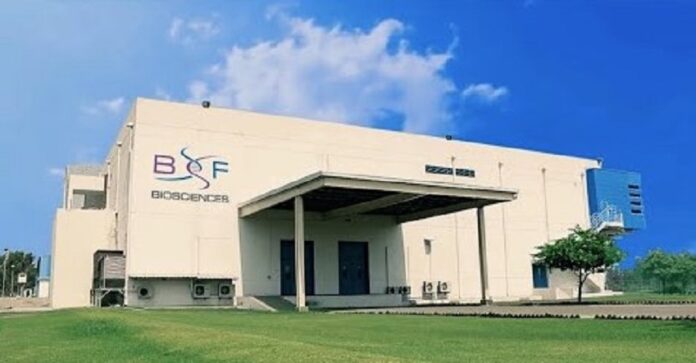
BF Biosciences Ltd has begun local manufacturing of tirzepatide, bringing one of the world’s most sought-after metabolic drugs into production on Pakistani soil. In a material disclosure to the Pakistan Stock Exchange, the company said it has launched Zeptide (tirzepatide) in an easy-to-use pre-filled syringe, produced at its new European-specification pre-filled syringes facility. The company added that developing Zeptide was included in the utilisation plan for its initial public offering (IPO) proceeds, signalling that funds raised from public investors are now translating into tangible capacity and product roll-out.


Tirzepatide – an injectable therapy that acts as a dual agonist of the GLP-1 (glucagon-like peptide-1) and GIP (glucose-dependent insulinotropic polypeptide) receptors – is approved by the United States Food and Drug Administration (FDA) for treating type-2 diabetes and obesity. The formulation is being released in patient-friendly, pre-filled syringes, a format the company says reduces dosing errors. Independent testing of Zeptide’s quality and potency has been conducted at leading mass spectrometry facilities in the US and at a national university in Pakistan, according to the filing.
 

Local production of vaccines: Govt asks DRAP to come up with comprehensive roadmap

https://defencepk.com/forums/javascript:void(0)
Follow us
ISLAMABAD: The government has decided to end reliance on the imported vaccines and formulate a viable policy so that bulk of vaccines could locally be produced for which Drug Regulatory Authority of Pakistan (DRAP) is tasked to come up with a comprehensive roadmap.

Pakistan, with its substantial domestic market ranking fifth globally, currently faces a critical reliance on imported vaccines, accounting for more than 95 percent of its supply. Around 49 percent vaccines are being imported and 51 percent are being donated by the global partners.

A meeting of the Prime Minister’s Committee on Incentivizing Local Manufacturing of Vaccines in Ministry of National Health Services, Regulations and Coordination was held here to discuss and review policy-related matters. The meeting was chaired by Special Assistant to the Prime Minister (SAPM) on Industries and Production, Haroon Akhtar Khan. Beside others, the meeting was attended by the senior officials of the health ministry, the National Institute of Health (NIH), and the Drug Regulatory Authority of Pakistan (DRAP).


The prime minister has constituted a committee to assess the total annual requirement of essential vaccines, cost of their import as well as the viability of local production, to explore the options for local production of essential vaccine in Pakistan particularly by encouraging leading vaccine manufacturing companies and to recommend measures for incentivizing local production.

The meeting was informed that DRAP has conducted a series of consultative sessions on local manufacturing of vaccines with all relevant stakeholders.

The meeting discussed in detail the local manufacturing of vaccines, formulation of a National Vaccine Policy, existing hurdles, and the way forward. Pakistan’s annual vaccine demand is currently met almost entirely through imports and donor-supported programmes.

The vaccines imported and used for Expanded Programme on Immunization (EPI), Bivalent Oral Polio Vaccine (bOPV), BCG and Tetanus-Diphtheria are 100 percent procured from the WHO-PQ sources through Government of Pakistan funding. For the fiscal year 2025-26, the country share by Government of Pakistan stands 49 percent and the GAVI shares 51 percent.

Local production of vaccine is limited to the “ready-to-fill”, lacking end-to-end manufacturing capabilities, for 4 products only. Pakistan has a growing pharmaceutical manufacturing base that can contribute to locally producing WHO-prequalified Anti-TB, HIV, and Malaria medicines which are critical for both national health security and international credibility. Expanding into WHO PQ for these products will complement vaccine self-reliance efforts and strengthen Pakistan’s role as a regional supplier.

Haroon Akhtar Khan stated that as per the directions of Prime Minister, all-out efforts are being made to promote indigenous vaccine production in Pakistan. He informed that a high-level committee has already been constituted under the Prime Minister’s instructions to facilitate local manufacturing of vaccines.

He emphasized that local vaccine production is essential for Pakistan’s national health security and economic resilience.

“The government is developing a comprehensive policy to promote local manufacturing of vaccines, which will not only reduce the import bill but also strengthen the national economy,” he said.

Haroon Akhtar Khan further stated that the National Vaccine Policy will soon be finalized.

“Local production of vaccines will ensure health security and economic self-reliance for Pakistan,” he added.

Highlighting the broader impact, the SAPM said that the development of the biotechnology and pharmaceutical sectors will create new employment opportunities in the country.

“Local vaccine production will enhance our preparedness to effectively respond to future pandemics and emergencies,” he noted.

He also mentioned that the government is in active contact with international organisations for technology transfer and investment partnerships. The establishment of a Pakistan Vaccine Manufacturers Alliance will strengthen institutional coordination, while steps are being taken to enhance the capacity of the NIH and the DRAP.

Copyright Business Recorder, 2025
 
"Pakistan Pharmaceutical Manufacturers’ Association unveiled its plans to launch PharmEx Pakistan, a dedicated export facilitation platform aimed at coordinating efforts to boost annual pharmaceutical exports to USD 3BN within three years and USD 10BN within eight years."
To view this content we will need your consent to set third party cookies.
For more detailed information, see our cookies page.
 

PIMS Just Completed First-Ever Successful Robotic Surgery in Islamabad​

By Rija Sohaib | Published Nov 13, 2025 | 7:07 pm

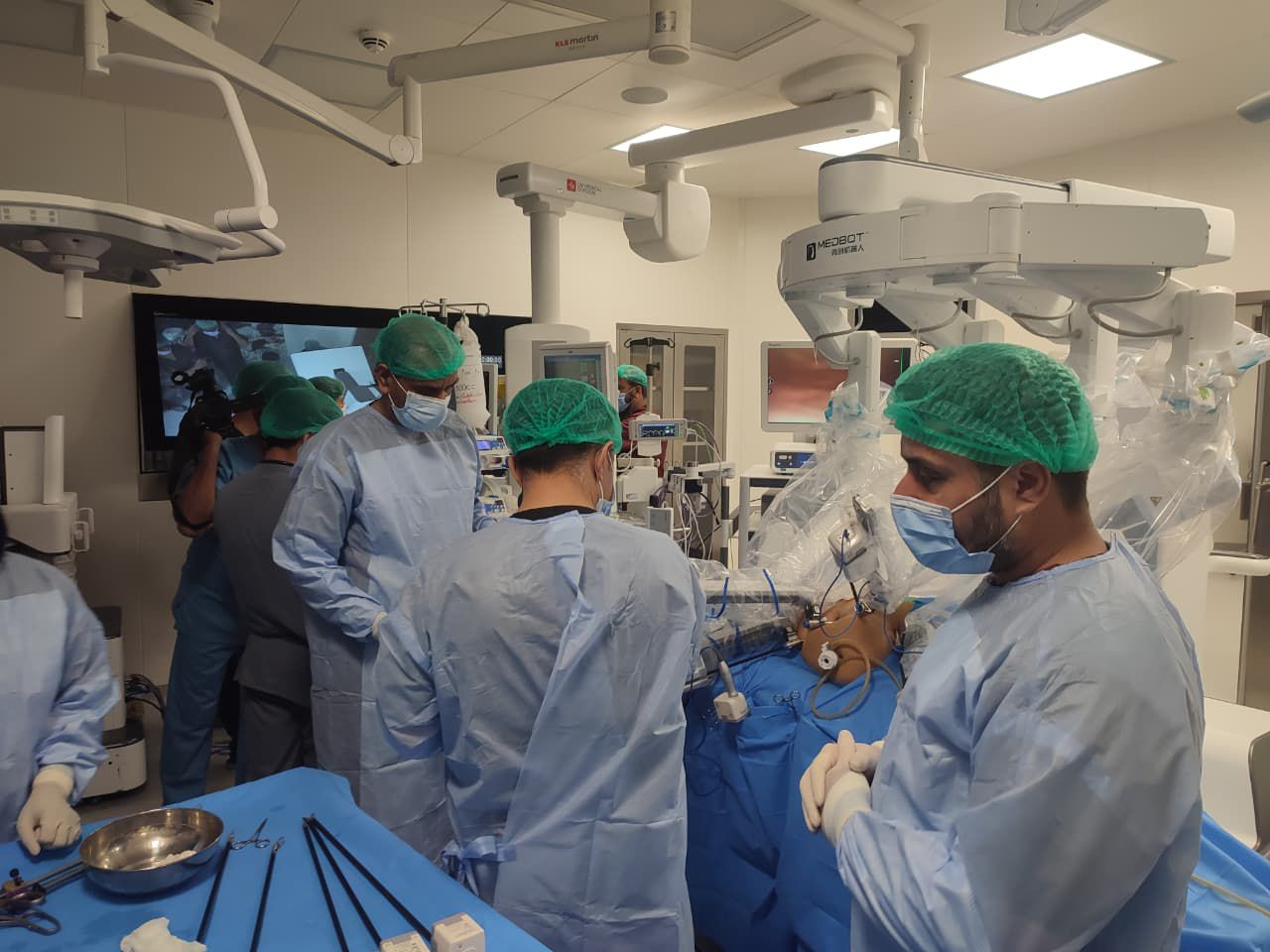
Islamabad made history as the Pakistan Institute of Medical Sciences (PIMS) successfully conducted the first-ever robotic surgery in the capital.

The landmark procedure marks a major technological advancement in Pakistan’s healthcare system, enabling greater precision and safety in complex surgeries.

According to hospital officials, the advanced “To My Surgical Robot” system was used for the operation, which was carried out successfully at PIMS.

The procedure was performed with the participation of international experts from the United Kingdom, who collaborated with local surgeons to ensure its success.

ALSO READ
Punjab Releases Rs. 3.3 Billion for Monthly Stipend of PG Trainee Doctors
The medical team leading the operation included Professor Shamim Khan, Professor Mateen Sharif, and Dr. Javed Burki, who guided throughout the procedure.

Their expertise played a crucial role in the successful implementation of robotic technology at the hospital.


According to PIMS medical experts Dr. Atif Inam Shami, Dr. Burhan-ul-Haq, and Dr. Khalid Saeed, robotic surgery will make complex operations significantly safer and more effective in the future.

ALSO READ
Pakistan Conducts First-Ever Advanced Heart Surgery for Free
The technology allows for minimal incisions, quicker recovery times, and greater accuracy compared to conventional surgical methods.
 

China-made robot enables Islamabad’s first robotic surgery at PIMS​


By Tahir Ali | Gwadar Pro
Nov 14, 2025

China-made robot enables Islamabad’s first robotic surgery at PIMS


Surgical team gathers around the patient performing robotic surgery. [Photo provided to Gwadar Pro]

ISLAMABAD, Pakistan Institute of Medical Sciences (PIMS) has performed its first-ever fully robotic surgery, using a Chinese-developed surgical system to complete a complex procedure with enhanced precision, which is a breakthrough that places Islamabad’s largest public hospital among the few government institutions in the country offering advanced robotic care.

Hospital officials said the operation of a female patient was carried out with the Toumai Robotic Surgical System, manufactured by Shanghai MicroPort MedBot (Group) Co., Ltd.

The next-generation Chinese platform enabled surgeons to operate through tiny incisions with greater accuracy, stability and control than conventional techniques. The machine installed at PIMS carries the same branding seen on official Toumai units, including the tagline “Hope of Life.”

The hospital’s surgical team, supported by international observers, completed the procedure using the robot’s four-arm system, high-definition 3D imaging and tremor-free instrument control, the features that have positioned Toumai among China’s most advanced surgical technologies.
 

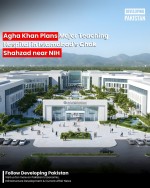
Aga Khan University Teaching Hospital to be established in Islamabad​


ISLAMABAD - Chairman Capital Development Authority (CDA) and Chief Commissioner Islamabad, Muhammad Ali Randhawa, met with Aziz Jan, Chief of Facilities and Administrative Services of Aga Khan University, at the CDA Headquarters on Saturday. The meeting discussed the establishment of a state-of-the-art teaching and tertiary care hospital in Islamabad. Muhammad Ali Randhawa, assured full support for the establishment of the Aga Khan University Teaching Hospital in Islamabad.

He said that this hospital would play a significant role not only in healthcare services but also in the fields of research and medical education. Chairman CDA said that this project of Aga Khan University would prove to be an important milestone in the field of health and medical education in the federal capital. He said that the establishment of the Aga Khan University Teaching Hospital in Islamabad would be a major advancement in the health care sector.

Chief of Facilities and Administrative Services at Aga Khan University, Aziz Jan, said that the Aga Khan University Teaching Hospital would provide patients with the best medical care and facilities. Muhammad Ali Randhawa said that the expertise of Aga Khan University would be utilized to improve the medical facilities provided to CDA employees at CDA Hospital. He expressed the desire to have partnership with Aga Khan University to further enhance the educational facilities under the administration of the CDA. He added that providing the best facilities to the citizens of Islamabad is among our top priorities.

1764697162969.png
 

Aga Khan University Teaching Hospital to be established in Islamabad​


ISLAMABAD - Chairman Capital Development Authority (CDA) and Chief Commissioner Islamabad, Muhammad Ali Randhawa, met with Aziz Jan, Chief of Facilities and Administrative Services of Aga Khan University, at the CDA Headquarters on Saturday. The meeting discussed the establishment of a state-of-the-art teaching and tertiary care hospital in Islamabad. Muhammad Ali Randhawa, assured full support for the establishment of the Aga Khan University Teaching Hospital in Islamabad.

He said that this hospital would play a significant role not only in healthcare services but also in the fields of research and medical education. Chairman CDA said that this project of Aga Khan University would prove to be an important milestone in the field of health and medical education in the federal capital. He said that the establishment of the Aga Khan University Teaching Hospital in Islamabad would be a major advancement in the health care sector.

Chief of Facilities and Administrative Services at Aga Khan University, Aziz Jan, said that the Aga Khan University Teaching Hospital would provide patients with the best medical care and facilities. Muhammad Ali Randhawa said that the expertise of Aga Khan University would be utilized to improve the medical facilities provided to CDA employees at CDA Hospital. He expressed the desire to have partnership with Aga Khan University to further enhance the educational facilities under the administration of the CDA. He added that providing the best facilities to the citizens of Islamabad is among our top priorities.

View attachment 163011

This is great news for Islamabad, Agha Khan Karachi hospital is world class. I always wondered why they didn't build one in Islamabad and Lahore.
 

Antibiotic misuse driving deadly resistance in Pakistan​


Up to 300,000 deaths linked to antimicrobial resistance every year, experts say

Dua Abbas
December 17, 2025


photo file


Pakistan is facing a growing public health crisis due to the unnecessary use or incomplete doses of antibiotics, with medical experts warning that antimicrobial resistance (AMR) is claiming between 200,000 and 300,000 lives in the country every year — either directly or indirectly.

Doctors say there has been a sharp rise in the number of critically ill patients whose infections are caused by multidrug-resistant organisms, particularly in ICUs. They warn, if the current trend continues, AMR could emerge as one of the leading causes of death.

According to the World Health Organisation (WHO), AMR occurs when bacteria, viruses, fungi or parasites evolve over time and become resistant to medicines, rendering standard treatments ineffective and making infections increasingly difficult — and in some cases impossible — to treat.

“AMR has become a global threat as it prolongs illness, significantly increases treatment costs, raises the risk of complications and leads to higher mortality,” Professor Dr Saeed Khan, Head of the Molecular Pathology Laboratory at Dow University of Health Sciences, told The Express Tribune.
 

Antibiotic misuse driving deadly resistance in Pakistan​


Up to 300,000 deaths linked to antimicrobial resistance every year, experts say

Dua Abbas
December 17, 2025


photo file


Pakistan is facing a growing public health crisis due to the unnecessary use or incomplete doses of antibiotics, with medical experts warning that antimicrobial resistance (AMR) is claiming between 200,000 and 300,000 lives in the country every year — either directly or indirectly.

Doctors say there has been a sharp rise in the number of critically ill patients whose infections are caused by multidrug-resistant organisms, particularly in ICUs. They warn, if the current trend continues, AMR could emerge as one of the leading causes of death.

According to the World Health Organisation (WHO), AMR occurs when bacteria, viruses, fungi or parasites evolve over time and become resistant to medicines, rendering standard treatments ineffective and making infections increasingly difficult — and in some cases impossible — to treat.

“AMR has become a global threat as it prolongs illness, significantly increases treatment costs, raises the risk of complications and leads to higher mortality,” Professor Dr Saeed Khan, Head of the Molecular Pathology Laboratory at Dow University of Health Sciences, told The Express Tribune.

To effectively combat antibiotic resistance, it is essential to prohibit over-the-counter sales and mandate that antibiotics be dispensed only as full-course treatments. Adding to this challenge is the Pandora’s box of low-quality and counterfeit drugs, which further drives resistance and undermines global health efforts.
 

Pharma industry booms in 2025, thanks to deregulation and structural reforms

  • Several local manufacturers expanded into new lines such as vaccines, biotechnology-based products
Salman Siddiqui
January 1, 2026

Pakistan’s pharmaceutical industry is flying high in the wake of deregulation and structural reforms, which gave strength to an ailing industry that was facing shutdowns.

The reforms have helped improve the domestic healthcare system by enabling pharma firms to overcome a medicine shortage crisis and remove fake and black medicine markets. They have managed to advance manufacturing through innovation and hit a historic boom in exports in the outgoing year 2025.


Pakistan Pharmaceutical Manufacturers Association (PPMA) Senior Vice Chairman Kamran Nasir told Business Recorder that the pharmaceutical industry in 2025 witnessed a significant positive shift, primarily driven by the deregulation of non-essential medicine pricing in February 2024, in which SIFC [Special Investment Facilitation Council] played a critical role.

“The development has been centric in restoring commercial viability across the sector and has paved the way for renewed investment in pharmaceutical manufacturing, infrastructure, and export-oriented growth,” he said.
 
As a direct outcome of deregulation, the industry recorded a remarkable growth of approximately 34% in pharmaceutical exports in fiscal year 2025.

Equally important, it helped resolve persistent shortages of medicines that had become unviable to manufacture due to prolonged price controls.

“Prior to these reforms, margins had been severely compressed, plants were nearing closure, and several multinational companies were contemplating or executing exits from the market,” said Nasir, who is also Group MD of pharma firm OBS & CEO AGP Limited.

Stakeholders aiming to position Pakistan as a $5 billion to $10 billion pharmaceutical export industry by 2030.

“Deregulation has reversed this trend by enabling sustainable operations, improving medicine availability, and ensuring continued patient access.”

Furthermore, improved financial viability and availability of monetary resources have allowed pharmaceutical companies to diversify and invest in advanced therapeutic segments.

“In 2025, several local manufacturers expanded into new lines such as vaccines, biotechnology-based products, and other advanced pharmaceutical solutions.

These investments are critical in positioning Pakistan beyond conventional generics and provide the country with greater leverage to emerge as a competitive, top-tier player in the global pharmaceutical landscape, capable of offering higher-value and innovative healthcare solutions,” the PPMA VC said.
 

Users who are viewing this thread

Pakistan Defence Latest

Latest Posts

Back
Top