POST WAR assessment of recent conflict.

Question: Why didn’t Anza make an appearance during the anti-drone campaign? Aren’t we supposed to have it in very large numbers because we produce it locally?
 
Most of the damage in Pakistan's strikes were done to C&C of AFSs, don't why people aren't looking around
 
To view this content we will need your consent to set third party cookies.
For more detailed information, see our cookies page.
 
  • Like
Reactions: TAC
@maverick
To view this content we will need your consent to set third party cookies.
For more detailed information, see our cookies page.

just intro is powerful..
The US/China/Turkish drones are not authentic solutions compared to Ru/UKr
@Panzerkiel

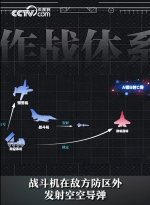
all about conserving power .. and activating …
 
This Indo-Pak air war. Some analysts believe that Pakistan used the legendary “ABC tactics”.

“A” to lock the target; “B” to launch missiles; “C” to guide missiles to attack the target. In Chinese, it's called “A锁B射C导 (A-lock, B-shoot, C-guide)”.

This mode is characterized by the following:
“A": usually a large ground-based air defense radar. It is very large and is capable of detecting and locking on to targets at very long ranges.
“B": usually a fighter carrying a BVR AAM. It is entirely possible for it to be invisible to enemy fighter targets the entire time, and for the enemy to be completely invisible to it. It receives a signal from the ground radar via the datalink and simply launches the missile, then maneuvers to hide or return, completely ignoring the target and the missile already launched.
“C": usually means AEW&C. it hides at a very safe distance and continuously directs the BVR AAM at the target. It also analyzes and evaluates the final effect.

Of course, this is analyst speculation. Pakistani official agencies have not elaborated on the technical details of this Indo-Pak air war.

However, the official Chinese organization CCTV put out this today ......
632b7966gy1i1kn6xi7ncj20zk252q9t.jpg

If the PAF continues to strengthen its “ABC tactics” and replenish the system with relevant weaponry in the coming years. Then, how will IAF respond?

Obviously, all IAF's current means cannot cope with this system. Even if IAF urgently procures 5th-Gen fighters like the F-35, it will be difficult to escape the lock of the large ground-based anti-stealth radars introduced by PAF, not to mention the Rafale, Su-30MKI, and LCA .......

Perhaps, IAF using all its old fighters to exhaust PAF's missiles is one way to do it. Just, I wonder how many IAF pilots are left who dare to go to the battlefield to die ...... However, the fully automated production line at the China Air-Air Missile Research Institute (CAAMRI) is capable of unmanned, automated production 24 hours a day, and is said to be capable of producing up to 1,000 PL-15E AAM per day under extreme conditions ......
 
Last edited:
This Indo-Pak air war. Some analysts believe that Pakistan used the legendary “ABC tactics”.

“A” to lock the target; “B” to launch missiles; “C” to guide missiles to attack the target. In Chinese, it's called “A锁B射C导 (A-lock, B-shoot, C-guide)”.

This mode is characterized by the following:
“A": usually a large ground-based air defense radar. It is very large and is capable of detecting and locking on to targets at very long ranges.
“B": usually a fighter carrying a BVR AAM. It is entirely possible for it to be invisible to enemy fighter targets the entire time, and for the enemy to be completely invisible to it. It receives a signal from the ground radar via the datalink and simply launches the missile, then maneuvers to hide or return, completely ignoring the target and the missile already launched.
“C": usually means AEW&C. it hides at a very safe distance and continuously directs the BVR AAM at the target. It also analyzes and evaluates the final effect.

Of course, this is analyst speculation. Pakistani official agencies have not elaborated on the technical details of this Indo-Pak air war.

However, the official Chinese organization CCTV put out this today ......
View attachment 122261

If the PAF continues to strengthen its “ABC tactics” and replenish the system with relevant weaponry in the coming years. Then, how will IAF respond?

Obviously, all IAF's current means cannot cope with this system. Even if IAF urgently procures 5th-Gen fighters like the F-35, it will be difficult to escape the lock of the large ground-based anti-stealth radars introduced by PAF, not to mention the Rafale, Su-30MKI, and LCA .......

Perhaps, IAF using all its old fighters to exhaust PAF's missiles is one way to do it. Just, I wonder how many IAF pilots are left who dare to go to the battlefield to die ...... However, the fully automated production line at the China Air-Air Missile Research Institute (CAAMRI) is capable of unmanned, automated production 24 hours a day, and is said to be capable of producing up to 1,000 PL-15E AAM per day under extreme conditions ......
I think you giving PAF too much credit.
What did IAF aim for and didn't achieve?
And PAF mission objectives what they achieve?
 
"What was the success rate of YIHA-III?"

We have not much proof about that but I think its underperforming. Personally I think Pakistan should get more Shaheed drones from Iran, but that is not possible.

Other than that, I agree with your points.

Even the best weapons experience failure. And, of course, if a weapon system is being employed frequently then it stands to reason that a certain percentage may be intercepted or crash. That should not come as a surprise. What will determine the effectiveness of YIHA-III in my eyes is the overall success rate on the battlefield.

We also have need to entertain the possibility that our tactics could be improved, or some army pinhead in Pindi thought Pakistan needs to 'send a message' to India and so the drone was crashed in an open field on outskirts of Gujarat.

Question: Why didn’t Anza make an appearance during the anti-drone campaign? Aren’t we supposed to have it in very large numbers because we produce it locally?

What goes up must come down.

Safety may have been a concern for using Anza in urban setting. Our alternative was the locally-made Oerlikon 35mm rounds for some hard kills. I know it was stated during the press brief that at least one kill was credited to HIMAD.

There is a wide variety of domestic weapon systems (Taimur, Rasoob, Blaze drones, etc) that we decided not to use in response to Indian attacks, all of which points to the fact that Pakistan was searching for an off-ramp.
 
To view this content we will need your consent to set third party cookies.
For more detailed information, see our cookies page.
 
I feel Pakistan did not have the initiative in the recent conflict and was simply reacting to India.

Pakistani foreign policy making and understanding of the world is still poor, and it shows when appealing to global audiences. India was shocked first by the Pakistani response and then Trump leveraging the conflict in trade negotations with India, but I wonder how many Pakistanis in govt were smart enough to see and understand those angles.


How much stock of ammunition/food/fuel does Pakistan actually have in a conflict with India ? Is it few weeks , few months , is there any stock at all ? A minimum of 6 months stockpile is needed for future conflicts.
The bold parts is what frustrates me to no avail. The amount of sheer hatred the whole world (minus the Israelis) have for the Indians and Pakistan can't get its act straight in the PR world. Ive never seen a nation so afraid of its own strength.

Even the "retaliation" came two days after the Hindu savages murdered innocent Pakistanis and bombed a Mosque. I watched the artillery shells shot by the soldiers in the field and it was pathetic. A single drone could've taken them out easily given how lax they were when shooting the rockets or artillery shells and then proclaiming it as a massive attack. They would rather target Kashmiris on the other side of the border than Hindu areas in India proper.

I even doubt that 5 or 6 enemy planes were shot down, just like the 2019 SU-30 Bullsh*t saga.

Then you have borderline re*arded members here leaking intel by trying to one up each other. Every Hindu here is either collecting data points and or spreading disinformation while majority of the Pakistanis danced around as they accomplished something big.

They didn't hit the Indians hard enough and shed their blood. A few token strikes here and there and then brag that your strikes were "massive" when clearly they were limited in scope because again, these guys are afraid of their own shadows.

Every Pakistani base was hit hard, but there's nothing to show on the enemy side except some power point that those bases were targeted.

Sad, pathetic, weak. No wonder not a single country takes South Asians serious. Ya'll are bunch of limp-d*ck f*ggots more suited to song and dance than actual masculine warfare.
 
Ill reserve my comments for a thread I am creating on the same subject
 
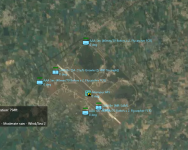
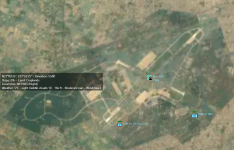
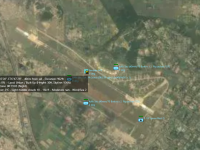
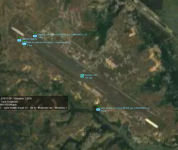
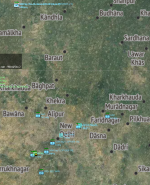
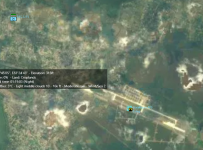
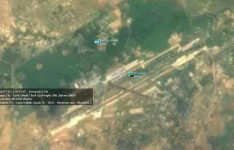
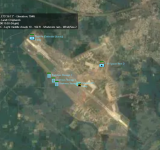
So part of the additional analysis I think is required - is to look at what was actually deployed on BOTH sides.

We'll start with an assessment of AD capabilties at Airbases
Starting with Indian ones likely most active.

What I have is old baseline - this is likely updated - Let get members thoughts based on what was heard and known ORBAT what could be deployed. We can build the Indian ADGE picture and then move to Pakistan.

Provide your input by saying e.g
Adampur - expected AD = QRSAM x 1 (can even tell where it could be)
AAA x 4 Bofors 70mm
etc etc

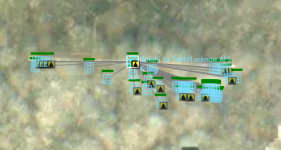
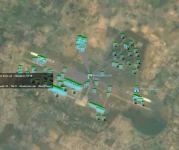
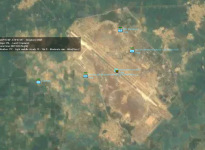
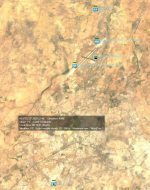
adampur - Copy.png

Agra - Copy.png

ambala - Copy.png

avanipur - Copy.png

Bakshi ka talab - Copy.png

Bareili - Copy.png
 

Users who are viewing this thread

Back
Top