What you describe of PPP is what PTI has on steroids in terms of support in KPK and IK is a bigger political figure than Bhutto ever was across the provinces let alone just KPK but that didn't stop establishment from completely going apeshit in dismantling it. The reason is PTI/IK pose real existential threat to its power whereas PPP and Zardari/Bhutto clans are useful proxies for the moment. When its convenient PPP too has been made irrelevant as it was in the 80s under Zia and in the early 2000's under Mushy.
Look, the whole “PPP is the same as PTI in KPK” argument falls apart the moment you look at how these parties actually function on the ground.
PTI’s support in KPK is
organic, young people, urban voters, middle‑class families, professionals, and even rural pockets who vote out of conviction, not compulsion. It’s a mobilized, ideological vote that doesn’t depend on who controls the thana, the patwari, or the local wadera.
PPP’s support in Sindh is the opposite. It’s a
patronage ecosystem. It survives because the state machinery, the bureaucracy, and the feudal structure keep it alive. If you unplug that machinery, PPP’s vote bank shrinks overnight. PTI’s doesn’t.
That’s why the Establishment treats them differently. One is a
threat to the system. The other
survives because of the system.
PTI challenges the power structure; PPP fits inside it
PTI questions the military’s political role, the patronage economy, and the entire “managed democracy” model. PPP doesn’t. PPP negotiates, adjusts, and stays within the boundaries drawn for it.
When a party can win without permission, it becomes a problem. When a party needs permission to stay relevant, it becomes useful.
PPP was crushed but only when it behaved like PTI
People usually forget that PPP was dismantled under Zia and sidelined under Musharraf
because it was confrontational. Today’s PPP is not that PPP.
Today’s PPP is predictable, compliant, and dependent. It’s not trying to rewrite the rules. It’s trying to survive within them.
PTI is trying to rewrite the rules, and that’s why the hammer came down.
PTI’s threat is national; PPP’s threat is provincial
PTI can win Punjab, dominate KPK, take urban Sindh, and influence Balochistan. PPP can’t do any of that. A party with national mobilization power is a threat. A party with one provincial stronghold is a bargaining chip.
IK’s political capital is independent; PPP’s is inherited and transactional
Imran Khan doesn’t rely on feudal networks or bureaucratic capture. His support is emotional, ideological, and self‑sustaining. He can shut down cities without needing a single government lever.
PPP’s leadership relies on patronage, not passion. Their vote bank is maintained, not inspired. The Establishment fears
independent legitimacy, not provincial machinery.
The Establishment dismantled PTI because PTI can replace the system
This isn’t about who’s “bigger” or who’s “more popular.” It’s about who can
change the architecture of power.
PTI’s support is cross‑class, cross‑ethnic, cross‑provincial, and deeply anti‑interference. PPP’s support is localized, dependent, and fully compatible with the status quo.
That’s the whole story.
Regional players while praising Hafiz Asim Munir, keeping a close eye on Pakistani politics. Establishment wants to take Pakistan back to 90s politics, new political engineering, new games with same old players.
Pakistan needs a fresh start, pass 28th amendment, make Karachi, Gawadr and coastal area under Federal government.
Pakistan needs a clean start, a governance model that actually works for people instead of trapping them in chaos. One approach is to bring Karachi, Gwadar, and the coastal belt under federal administration so they can function as national economic zones rather than political battlegrounds.
The goal is straightforward, build a system that delivers. A one‑window model for services. Simple, predictable rules for businesses. Reliable water, electricity, gas, and fuel. Digital payments and POS systems tied to transparent ledgers so tax collection becomes real. Jobs created through investment, not paperwork. Security that gives investors and residents confidence.
And inside Karachi, stop the endless sprawl. The city needs structure, not expansion. That’s where the idea of
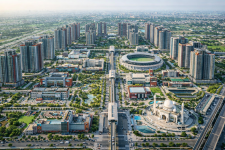
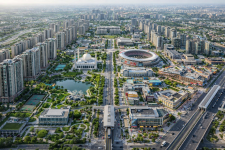
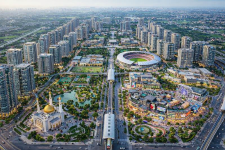
vertical cities come in, a compact, well‑planned clusters for 5,000 to 20,000 residents each. Six locations have already been identified. These vertical communities would have their own utilities, transport links, digital governance, and public services, reduce land pressure and give people a dignified, modern living environment.
This isn’t about turning Pakistan into a corporation. It’s about removing the dysfunction that keeps the country stuck and replacing it with a system that is simple, fast, and fair for the awam, a system where cities grow upward with planning instead of outward with chaos.



 I can never land a winning punch because I loose track of what we are actually talking about .


