PTI news, updates and discussions part ll

In the political Olympix of Pakistan, a new chapter has started. A strange one. A quiet one. But a very real one.

It looks like the Establishment is getting ready to release IK but only on ONE condition that he follows their line. And the first task they want from him is to hit the Zardari group in Sindh. That’s the vibe coming out right now.

It feels like the Establishment is quietly moving toward separating Karachi from Sindh. This might be on the request of China. And in that equation, they might actually prefer PTI over MQM or there might be mutual understanding. So the possible setup could be PMLN holding Punjab, and PTI being used in Sindh.

This is just my assessment. Nothing final. Let’s see how things unfold as we move toward November 2026.
Bhai jaan itnay nunnay munnay nahi hai establishment walay. If they wan't they can close Zardari/PPP chapter overnight forever with a single raid of a Sindh Rangers' brigadiar as they did with MQM on that fateful night when they made Altaf bhai's forty years reign of terror irrelevant with a single raid on nine zero....baqi sab conjecture hai....
 
In the political Olympix of Pakistan, a new chapter has started. A strange one. A quiet one. But a very real one.

It looks like the Establishment is getting ready to release IK but only on ONE condition that he follows their line. And the first task they want from him is to hit the Zardari group in Sindh. That’s the vibe coming out right now.

It feels like the Establishment is quietly moving toward separating Karachi from Sindh. This might be on the request of China. And in that equation, they might actually prefer PTI over MQM or there might be mutual understanding. So the possible setup could be PMLN holding Punjab, and PTI being used in Sindh.

This is just my assessment. Nothing final. Let’s see how things unfold as we move toward November 2026.
Bohot acha tabsara hai. But I think there is a flaw in this plan that Mr Khan stopped listening to Establishment a long time ago and Mr Zardari is an old hand who will be preparing as we speak to foil this effort.

Btw I would absolutely love if Mr Zardari writes a tell-all bio before he kicks the bucket. The guy has seen Pakistani politics inside out and over a very long period.
 
Zardari, Nawaz, Shehbaz, Imran Khan etc etc they are all close to their final call, four more years may be. No mai ka lal can skip that call .. they will all become history. A dark, corrupt, incompetent, inefficient, incapable, nikami history, no Pakistani school child should be taught a thing about them.

What then, after their much needed departure? Mariam? Bilawal? and whatever janisheen PTI has ... all these will fail, erased without their Piyooz.

In addition to Jarnail mafia, there are two more constants which Pakistanis very conveniently miss .. bureaucracy and judiciary, both are enablers of military trespassing and both are corrupt to their core. Buzdil dalay.
 
Bhai jaan itnay nunnay munnay nahi hai establishment walay. If they wan't they can close Zardari/PPP chapter overnight forever with a single raid of a Sindh Rangers' brigadiar as they did with MQM on that fateful night when they made Altaf bhai's forty years reign of terror irrelevant with a single raid on nine zero....baqi sab conjecture hai....

Every now and then, someone confidently claims that the Establishment can do this and that…..could “finish PPP in one night,” just like it neutralized MQM’s power in Karachi. It sounds bold. It sounds simple. But it ignores how power actually works in Pakistan.

MQM was never a purely militant outfit, it was a political party with a strong urban base and a militant wing that enforced its writ. That wing created a parallel power structure inside Karachi. Once the state decided that structure had become too costly, the dismantling was quick. A raid can break a militant wing. A raid can scatter armed cadres. A raid can collapse a centralized command.

PPP is nothing like that.

PPP is not a headquarters you raid. It’s not a militant wing you disarm. It’s a province-wide ecosystem tied to land, biradaris, feudal networks, and administrative machinery. You can storm a building. You cannot storm a province.

And here’s the real point…..If the Establishment wanted PPP gone, it had countless perfect moments, NAB crackdowns, hybrid eras, arrests, reshuffles. Yet PPP’s control of Sindh stayed untouched. That’s not weakness. That’s a choice.

To some analysts, PPP isn’t a threat. PPP is useful.

It offers predictability. A stable rural vote bank. A cooperative provincial government. A counterweight to PTI in Sindh. A structure that doesn’t revolt. MQM’s militant wing created volatility; PPP creates stability. The state dismantles what threatens it. It manages what benefits it.

Even the recurring talk of “separating Karachi” tells the real story. You could look at things from many different angles. One theory is that carve out Karachi isn’t to destroy PPP. carving it out to protect PPP’s rural dominance while managing urban politics separately.

So the question was never “Can they end PPP in one raid?”
The real question is: Why would they?

PPP survives not because the Establishment is weak but because PPP is part of the architecture.
 
Bohot acha tabsara hai. But I think there is a flaw in this plan that Mr Khan stopped listening to Establishment a long time ago and Mr Zardari is an old hand who will be preparing as we speak to foil this effort.

Btw I would absolutely love if Mr Zardari writes a tell-all bio before he kicks the bucket. The guy has seen Pakistani politics inside out and over a very long period.


For months, a quiet theory floated around Pakistan’s political circles:
the Establishment might eventually free Imran Khan, not to restore democracy, but to use PTI as a counterweight to PPP in Sindh, especially Karachi.
It made sense.
PTI dominates Karachi’s urban vote. PPP controls rural Sindh. And the Establishment always prefers leverage over loyalty.

But politics in Pakistan rarely stays linear.
Just as the PTI‑vs‑PPP theory was gaining traction, the ground shifted under everyone’s feet.

The Supreme Court ruling in MQM’s favor didn’t just settle a legal matter, it re‑activated MQM as a political instrument.
A party that had been fading into irrelevance suddenly had institutional wind behind it again.

For the Establishment, this meant something simple:
PTI was no longer the only tool available in Sindh.

The public tug‑of‑war between Mustafa Kamal and Khalid Maqbool exposed MQM’s internal fractures.
But fractured parties aren’t a problem for the Establishment, they’re an opportunity.

A divided MQM gives the state:

• multiple factions to influence
• multiple loyalties to exploit
• multiple leaders competing for approval

And this isn’t new.
MQM was weakened long before Nine Zero was raided.
The creation of MQM‑Haqiqi didn’t happen by accident. It was part of a long, state-enabled fragmentation that plunged Karachi into years of turf wars. Thousands of people died in violence the state allowed to burn because it served a purpose:
break MQM from within before breaking it from above.

That history matters today.

Rumors of MQM‑London’s Return Thickened the Plot

As if the infighting wasn’t enough, whispers of a possible MQM‑Karachi + MQM‑London merger, even talk of Altaf Hussain returning, suddenly resurfaced.
These rumors don’t float on their own.
They float when someone benefits from the uncertainty.

A rumored MQM is often more useful than a stable MQM.

It keeps Karachi’s political market unsettled.
It keeps PPP nervous.
It keeps PTI guessing.
And it reminds everyone that MQM can be revived, reshaped, or re‑engineered at any moment.

This Complicates the “Imran Khan vs PPP in Sindh” Theory

My original analysis still holds:
Imran Khan could be used as a weapon against PPP in Sindh.
But the recent developments have layered the script:

• MQM is legally strengthened
• MQM is internally divided
• MQM‑London is back in the conversation
• Altaf’s shadow has re‑entered Karachi politics
• Karachi’s administrative future is being debated again

What once looked like a simple plan, PTI vs PPP in Sindh; has now evolved into a multi‑front engineering environment involving:

• MQM factions
• MQM‑London rumors
• Supreme Court intervention
• Karachi’s political vacuum
• PPP’s rural fortress
• PTI’s urban vote bank
• Imran Khan’s uncertain future

The plot didn’t collapse.
It just became more layered, more unpredictable, and far more interesting.

Sindh’s political chessboard is no longer a two‑player game.
It’s a crowded table and the Establishment is keeping all the pieces in motion.
This means the Establishment suddenly has multiple levers, not just PTI.

And when the state has multiple levers, it rarely relies on one.
 
Last edited:
I essentially meant when a political party does something good or protests, it brings its flag or colours to show where it stands. Now, how much it should be is debateable.

That I shared to endorse my point that the GHQ went to that extent on that day for its image, compared to the colour thing.

I may not reach your mental faculty and perspective as I am not that well-read. However, I can assure you I will not change my principles for one man or party.
I still appreciate it if the Army does something great or object if PTI does something wrong. In fact, I am not as such pro-democracy and freedom of expression, but pro-justice in whatever stable, structured system. It is this that hurts me.

For sure, in a physical battle between an infinite (army) and a finite (political parties) system, the infinite player would always win. The face doesn't matter here. Unless the finite player has the backing of an external infinite player.
Or the game is different, like SMedia management.
Pro democracy does not mean you can make AI naked pictures of other sister and mother, make fake sexual claims than when someone files an fir you claim that I said and did it because Pakistan grants me freedom of speech and expression just like Imran Khan did an fir on Shehbaz Sharif on March 2022 when he said in interview that Imran Khan's wife use to do black magic on generals and use to give advice who to select or not to.

Pti is the most nasty party ever formed.
 
I would have bargained and taken more and given part to charity , maybe a school or hospital.... but I suppose that 2 million is better because good old biradari in action?
Mera sardar, meri zaat, mera Imran Khan..

not invested in an idea but a man.. this is why EVERY movement fails because this good old centuries old devotion to the person and not the idea..

meanwhile the man who supposedly talks to Riyasat e Medina has followers who think of status acts... I am the most devoted. My honor and identity is tied to this man.

This is precisely how Pakistan has reset to zero after every "movement" in its history. Bhuttoism died with Bhutto. Ayub's "decade of development" died with Ayub. The idea was never bigger than the person because the person was always the idea.

Every hour spent valorizing a signed bat is an hour not spent asking:
why did the movement fail structurally?
What institutions were built?
What changed in the land ownership laws, the braderi courts and mentality, the madrassa curriculum?
Was even a single corrupt individual prosected? Did the military get in line?


The answer to all of those is: nothing.

Because the movement was always about the man, not the mechanism.

The messiah fantasy is dangerous not because the messiah is always corrupt or wrong but it teaches an entire society to wait rather than build.

And a society that has been waiting for a savior since 1947 has, by now, developed waiting into a civilization-level habit.... PROVE ME WRONG.

Also, bet you the bat that your immediate response is whataboutism on the military, implying either I support their actions or the existing system or some form of blanket statements that helps you calm your nerves and be able to use some existing script or "US vs them" Narrative.

Keep the bat.
But understand what it actually is: a very expensive mirror showing you exactly why the system cannot change.
It's all a bit chicken or egg in my opinion. Pakistan is a tribal society masquerading as a democracy. The head-honcho model has always been whats historically worked. Our politics hasn't evolved past that. People vote for personalities. Those personalities fail to build systems/parties.

PPP is Bhutto, beyond that brand it doesn't matter. PML has become the PMLN brand, nobody cares what it was anymore, it's got another 2 generations of "leaders" lined up atm. PTI beyond IK - doesn't exist. The fact people voted for them is a credit to our people resisting dictatorship through the ballot.

Until a political party demonstrates they can function based on ideology and manifesto, rather than personality and lingo - then why blame the brother for holding onto the bat? It'll be worth a lot more in the future, especially in the years after IK passes away.
 
Every now and then, someone confidently claims that the Establishment can do this and that…..could “finish PPP in one night,” just like it neutralized MQM’s power in Karachi. It sounds bold. It sounds simple. But it ignores how power actually works in Pakistan.

MQM was never a purely militant outfit, it was a political party with a strong urban base and a militant wing that enforced its writ. That wing created a parallel power structure inside Karachi. Once the state decided that structure had become too costly, the dismantling was quick. A raid can break a militant wing. A raid can scatter armed cadres. A raid can collapse a centralized command.

PPP is nothing like that.

PPP is not a headquarters you raid. It’s not a militant wing you disarm. It’s a province-wide ecosystem tied to land, biradaris, feudal networks, and administrative machinery. You can storm a building. You cannot storm a province.

And here’s the real point…..If the Establishment wanted PPP gone, it had countless perfect moments, NAB crackdowns, hybrid eras, arrests, reshuffles. Yet PPP’s control of Sindh stayed untouched. That’s not weakness. That’s a choice.

To some analysts, PPP isn’t a threat. PPP is useful.

It offers predictability. A stable rural vote bank. A cooperative provincial government. A counterweight to PTI in Sindh. A structure that doesn’t revolt. MQM’s militant wing created volatility; PPP creates stability. The state dismantles what threatens it. It manages what benefits it.

Even the recurring talk of “separating Karachi” tells the real story. You could look at things from many different angles. One theory is that carve out Karachi isn’t to destroy PPP. carving it out to protect PPP’s rural dominance while managing urban politics separately.

So the question was never “Can they end PPP in one raid?”
The real question is: Why would they?

PPP survives not because the Establishment is weak but because PPP is part of the architecture.
What you describe of PPP is what PTI has on steroids in terms of support in KPK and IK is a bigger political figure than Bhutto ever was across the provinces let alone just KPK but that didn't stop establishment from completely going apeshit in dismantling it. The reason is PTI/IK pose real existential threat to its power whereas PPP and Zardari/Bhutto clans are useful proxies for the moment. When its convenient PPP too has been made irrelevant as it was in the 80s under Zia and in the early 2000's under Mushy.
 
I essentially meant when a political party does something good or protests, it brings its flag or colours to show where it stands. Now, how much it should be is debateable.

That I shared to endorse my point that the GHQ went to that extent on that day for its image, compared to the colour thing.

I may not reach your mental faculty and perspective as I am not that well-read. However, I can assure you I will not change my principles for one man or party.
I still appreciate it if the Army does something great or object if PTI does something wrong. In fact, I am not as such pro-democracy and freedom of expression, but pro-justice in whatever stable, structured system. It is this that hurts me.

For sure, in a physical battle between an infinite (army) and a finite (political parties) system, the infinite player would always win. The face doesn't matter here. Unless the finite player has the backing of an external infinite player.
Or the game is different, like SMedia management.
In that case from a principled stance this particular political party is no longer an effective vessel and is lost in personality and plain mud slinging. None of which are providing an actual growing frustration and resentment a path forward.

I get two LinkedIn connection requests every month which lead to “Please get us out of this hellhole - will do ANYTHING and go ANYWHERE!”

That is horrible but also a sign that the change “potential” has no outlet other than either “GTFO” or “Lets wait and see”

Clearly PTI has no attraction anymore on these venues and is now purely tied to its own political specific issues or plain meme level uncouth warfare which is great for 10 second cackles but utterly useless for infusing the literacy and ideals needed for change
 
What you describe of PPP is what PTI has on steroids in terms of support in KPK and IK is a bigger political figure than Bhutto ever was across the provinces let alone just KPK but that didn't stop establishment from completely going apeshit in dismantling it. The reason is PTI/IK pose real existential threat to its power whereas PPP and Zardari/Bhutto clans are useful proxies for the moment. When its convenient PPP too has been made irrelevant as it was in the 80s under Zia and in the early 2000's under Mushy.

Look, the whole “PPP is the same as PTI in KPK” argument falls apart the moment you look at how these parties actually function on the ground.

PTI’s support in KPK is organic, young people, urban voters, middle‑class families, professionals, and even rural pockets who vote out of conviction, not compulsion. It’s a mobilized, ideological vote that doesn’t depend on who controls the thana, the patwari, or the local wadera.

PPP’s support in Sindh is the opposite. It’s a patronage ecosystem. It survives because the state machinery, the bureaucracy, and the feudal structure keep it alive. If you unplug that machinery, PPP’s vote bank shrinks overnight. PTI’s doesn’t.

That’s why the Establishment treats them differently. One is a threat to the system. The other survives because of the system.

PTI challenges the power structure; PPP fits inside it
PTI questions the military’s political role, the patronage economy, and the entire “managed democracy” model. PPP doesn’t. PPP negotiates, adjusts, and stays within the boundaries drawn for it.
When a party can win without permission, it becomes a problem. When a party needs permission to stay relevant, it becomes useful.

PPP was crushed but only when it behaved like PTI
People usually forget that PPP was dismantled under Zia and sidelined under Musharraf because it was confrontational. Today’s PPP is not that PPP.
Today’s PPP is predictable, compliant, and dependent. It’s not trying to rewrite the rules. It’s trying to survive within them.
PTI is trying to rewrite the rules, and that’s why the hammer came down.

PTI’s threat is national; PPP’s threat is provincial
PTI can win Punjab, dominate KPK, take urban Sindh, and influence Balochistan. PPP can’t do any of that. A party with national mobilization power is a threat. A party with one provincial stronghold is a bargaining chip.
IK’s political capital is independent; PPP’s is inherited and transactional
Imran Khan doesn’t rely on feudal networks or bureaucratic capture. His support is emotional, ideological, and self‑sustaining. He can shut down cities without needing a single government lever.
PPP’s leadership relies on patronage, not passion. Their vote bank is maintained, not inspired. The Establishment fears independent legitimacy, not provincial machinery.

The Establishment dismantled PTI because PTI can replace the system
This isn’t about who’s “bigger” or who’s “more popular.” It’s about who can change the architecture of power.
PTI’s support is cross‑class, cross‑ethnic, cross‑provincial, and deeply anti‑interference. PPP’s support is localized, dependent, and fully compatible with the status quo.

That’s the whole story.

Regional players while praising Hafiz Asim Munir, keeping a close eye on Pakistani politics. Establishment wants to take Pakistan back to 90s politics, new political engineering, new games with same old players.

Pakistan needs a fresh start, pass 28th amendment, make Karachi, Gawadr and coastal area under Federal government.

Pakistan needs a clean start, a governance model that actually works for people instead of trapping them in chaos. One approach is to bring Karachi, Gwadar, and the coastal belt under federal administration so they can function as national economic zones rather than political battlegrounds.

The goal is straightforward, build a system that delivers. A one‑window model for services. Simple, predictable rules for businesses. Reliable water, electricity, gas, and fuel. Digital payments and POS systems tied to transparent ledgers so tax collection becomes real. Jobs created through investment, not paperwork. Security that gives investors and residents confidence.

And inside Karachi, stop the endless sprawl. The city needs structure, not expansion. That’s where the idea of vertical cities come in, a compact, well‑planned clusters for 5,000 to 20,000 residents each. Six locations have already been identified. These vertical communities would have their own utilities, transport links, digital governance, and public services, reduce land pressure and give people a dignified, modern living environment.

This isn’t about turning Pakistan into a corporation. It’s about removing the dysfunction that keeps the country stuck and replacing it with a system that is simple, fast, and fair for the awam, a system where cities grow upward with planning instead of outward with chaos.
 
Look, the whole “PPP is the same as PTI in KPK” argument falls apart the moment you look at how these parties actually function on the ground.

PTI’s support in KPK is organic, young people, urban voters, middle‑class families, professionals, and even rural pockets who vote out of conviction, not compulsion. It’s a mobilized, ideological vote that doesn’t depend on who controls the thana, the patwari, or the local wadera.

PPP’s support in Sindh is the opposite. It’s a patronage ecosystem. It survives because the state machinery, the bureaucracy, and the feudal structure keep it alive. If you unplug that machinery, PPP’s vote bank shrinks overnight. PTI’s doesn’t.

That’s why the Establishment treats them differently. One is a threat to the system. The other survives because of the system.

PTI challenges the power structure; PPP fits inside it
PTI questions the military’s political role, the patronage economy, and the entire “managed democracy” model. PPP doesn’t. PPP negotiates, adjusts, and stays within the boundaries drawn for it.
When a party can win without permission, it becomes a problem. When a party needs permission to stay relevant, it becomes useful.

PPP was crushed but only when it behaved like PTI
People usually forget that PPP was dismantled under Zia and sidelined under Musharraf because it was confrontational. Today’s PPP is not that PPP.
Today’s PPP is predictable, compliant, and dependent. It’s not trying to rewrite the rules. It’s trying to survive within them.
PTI is trying to rewrite the rules, and that’s why the hammer came down.

PTI’s threat is national; PPP’s threat is provincial
PTI can win Punjab, dominate KPK, take urban Sindh, and influence Balochistan. PPP can’t do any of that. A party with national mobilization power is a threat. A party with one provincial stronghold is a bargaining chip.
IK’s political capital is independent; PPP’s is inherited and transactional
Imran Khan doesn’t rely on feudal networks or bureaucratic capture. His support is emotional, ideological, and self‑sustaining. He can shut down cities without needing a single government lever.
PPP’s leadership relies on patronage, not passion. Their vote bank is maintained, not inspired. The Establishment fears independent legitimacy, not provincial machinery.

The Establishment dismantled PTI because PTI can replace the system
This isn’t about who’s “bigger” or who’s “more popular.” It’s about who can change the architecture of power.
PTI’s support is cross‑class, cross‑ethnic, cross‑provincial, and deeply anti‑interference. PPP’s support is localized, dependent, and fully compatible with the status quo.

That’s the whole story.

Regional players while praising Hafiz Asim Munir, keeping a close eye on Pakistani politics. Establishment wants to take Pakistan back to 90s politics, new political engineering, new games with same old players.

Pakistan needs a fresh start, pass 28th amendment, make Karachi, Gawadr and coastal area under Federal government.

Pakistan needs a clean start, a governance model that actually works for people instead of trapping them in chaos. One approach is to bring Karachi, Gwadar, and the coastal belt under federal administration so they can function as national economic zones rather than political battlegrounds.

The goal is straightforward, build a system that delivers. A one‑window model for services. Simple, predictable rules for businesses. Reliable water, electricity, gas, and fuel. Digital payments and POS systems tied to transparent ledgers so tax collection becomes real. Jobs created through investment, not paperwork. Security that gives investors and residents confidence.

And inside Karachi, stop the endless sprawl. The city needs structure, not expansion. That’s where the idea of vertical cities come in, a compact, well‑planned clusters for 5,000 to 20,000 residents each. Six locations have already been identified. These vertical communities would have their own utilities, transport links, digital governance, and public services, reduce land pressure and give people a dignified, modern living environment.

This isn’t about turning Pakistan into a corporation. It’s about removing the dysfunction that keeps the country stuck and replacing it with a system that is simple, fast, and fair for the awam, a system where cities grow upward with planning instead of outward with chaos.

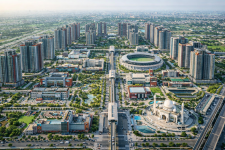
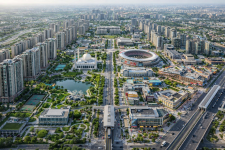
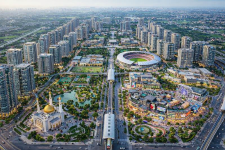
Clean City with 100,000 to 200,00 residents, commercial area, sports area, Education (Schools, Colleges, technical college), masjid and transportation (Bus and Train). 1781856648367.png
1781856551735.png

1781857180506.png
 
You do see the contradiction in your post.

"IK means nothing to me as a person"… then why the bat? Right there and then you are hypocritical - perhaps to your own self consciousness.

You open by saying IK as a person means nothing to you and only his principles do.
I respect that framing.


But then you close by saying you look at a bat with his picture on it and feel gratitude for becoming a better person.
Not a picture of justice.
Not a symbol of anti-corruption.
His face.
That's not following an idea but venerating a man.
The massive gap between those two statements is worth highlighting here.

Then another very high minded ideal (appreciated) You say you'd vote for someone better tomorrow if they existed. That's a rational, admirable position.

But notice what happens every time his failures come up and how you are responding: Bajwa, COVID, inexperience, short timeline, conspiring generals.
Every exit is blocked.
This hypothetical better leader never gets a real chance to exist because the current one's shortcomings are always someone else's fault. IK cannot be flawed to you so YOU WILL NEVER SEE A BETTER LEADER... ZInda hai Bhutto ZInda hai all over again. Messiah, cult - and then it gets more acerbic.

Saying you are replacing tribal loyalty with leader loyalty isn't the same as replacing it with principled thinking. Educated people form cults too and they just call them movements.

None of this means IK hasn't done good or that your values aren't real. They clearly are. But the bat with his face on it isn't a symbol of an idea and the moment your ethics need a face on them to stay alive...you can figure where this goes.


Your posts always makes me feel as if I am arguing with my wife:) I can never land a winning punch because I loose track of what we are actually talking about .

Heads I win, tails you lose.

You first compared my loyalty to baradari system …. Which I clearly am not because I despise Pandoo mentality and having born and raised in Karachi that nonsense was never part of our upbringing despite us being from a Kashmiri Punjabi background .

We all need role models …. Kids need parents as a role model and grownup needs a successful person ( success can be defined in many shapes and forms and in my case an honourable corruption free principled person and not rich or celebrity) …. Role model who can teach me something I don’t already have … my whole life I have strived to become an honest person and thus my liking to people like Edhi , my dad and Ik.


Not a picture of justice.
Not a symbol of anti-corruption.
His face.
That's not following an idea but venerating a man.”

Sometimes a picture says thousand words … a closed book with a million good ideas can be represented by a picture … I didn’t ask for the pic but the bat came with it. To me bat alone would have been a great symbol of a great man but I didn’t choose to have his pic on it.


“Every exit is blocked.
This hypothetical better leader never gets a real chance to exist because the current one's shortcomings are always someone else's fault. IK cannot be flawed to you so YOU WILL NEVER SEE A BETTER LEADER... ZInda hai Bhutto ZInda hai all over again. Messiah, cult - and then it gets more acerbic.”


Again Thats not true at all. I have in my past posts criticized IK as a mediocre politician because he trusted snakes and let them get too close to him . A smart politician will never fall for this fatal fault…. His choice of wife leaves a lot to desire ( but it’s a rather personal business ) and his worthy principles are also his biggest obstacles as a politician in one of the most corrupt country in the world .

When I got my first job in Toronto , I had a horrible experience of working for the owner who ended up in jail for few years for beating his wife almost to death . In his private office hung a picture stating top 10 things that will make one hapoy …. Number one was who you end up marrying …. I hope you get the point here .

“Saying you are replacing tribal loyalty with leader loyalty isn't the same as replacing it with principled thinking. Educated people form cults too and they just call them movements.”

And who teaches principled thinking ?? Is it possible to learn anything without a teacher ? And politics and awakening without a leader ? One day IK is going to die and yes some will worship him like a saint but not me …. His principled politics and honesty will forever stay with me for as long as I live .
 
For months, a quiet theory floated around Pakistan’s political circles:
the Establishment might eventually free Imran Khan, not to restore democracy, but to use PTI as a counterweight to PPP in Sindh, especially Karachi.
It made sense.
PTI dominates Karachi’s urban vote. PPP controls rural Sindh. And the Establishment always prefers leverage over loyalty.

But politics in Pakistan rarely stays linear.
Just as the PTI‑vs‑PPP theory was gaining traction, the ground shifted under everyone’s feet.

The Supreme Court ruling in MQM’s favor didn’t just settle a legal matter, it re‑activated MQM as a political instrument.
A party that had been fading into irrelevance suddenly had institutional wind behind it again.

For the Establishment, this meant something simple:
PTI was no longer the only tool available in Sindh.

The public tug‑of‑war between Mustafa Kamal and Khalid Maqbool exposed MQM’s internal fractures.
But fractured parties aren’t a problem for the Establishment, they’re an opportunity.

A divided MQM gives the state:

• multiple factions to influence
• multiple loyalties to exploit
• multiple leaders competing for approval

And this isn’t new.
MQM was weakened long before Nine Zero was raided.
The creation of MQM‑Haqiqi didn’t happen by accident. It was part of a long, state-enabled fragmentation that plunged Karachi into years of turf wars. Thousands of people died in violence the state allowed to burn because it served a purpose:
break MQM from within before breaking it from above.

That history matters today.

Rumors of MQM‑London’s Return Thickened the Plot

As if the infighting wasn’t enough, whispers of a possible MQM‑Karachi + MQM‑London merger, even talk of Altaf Hussain returning, suddenly resurfaced.
These rumors don’t float on their own.
They float when someone benefits from the uncertainty.

A rumored MQM is often more useful than a stable MQM.

It keeps Karachi’s political market unsettled.
It keeps PPP nervous.
It keeps PTI guessing.
And it reminds everyone that MQM can be revived, reshaped, or re‑engineered at any moment.

This Complicates the “Imran Khan vs PPP in Sindh” Theory

My original analysis still holds:
Imran Khan could be used as a weapon against PPP in Sindh.
But the recent developments have layered the script:

• MQM is legally strengthened
• MQM is internally divided
• MQM‑London is back in the conversation
• Altaf’s shadow has re‑entered Karachi politics
• Karachi’s administrative future is being debated again

What once looked like a simple plan, PTI vs PPP in Sindh; has now evolved into a multi‑front engineering environment involving:

• MQM factions
• MQM‑London rumors
• Supreme Court intervention
• Karachi’s political vacuum
• PPP’s rural fortress
• PTI’s urban vote bank
• Imran Khan’s uncertain future

The plot didn’t collapse.
It just became more layered, more unpredictable, and far more interesting.

Sindh’s political chessboard is no longer a two‑player game.
It’s a crowded table and the Establishment is keeping all the pieces in motion.
This means the Establishment suddenly has multiple levers, not just PTI.

And when the state has multiple levers, it rarely relies on one.
Bhai sahab do you write your posts or generate them via AI ?

Your tabsara is very good.
 

Users who are viewing this thread

Back
Top